
From Component Arrival to Rack Deployment: The Logistics Behind High-Tech Manufacturing
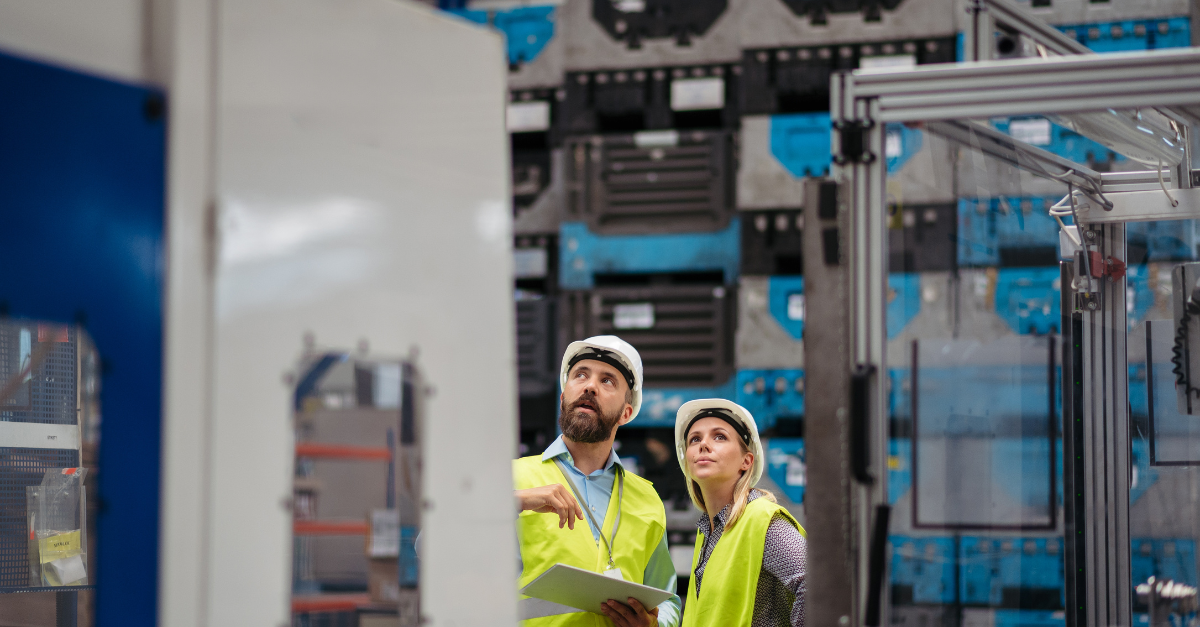
When people think about technology manufacturing, they often picture assembly lines, engineers, and finished products rolling off the production floor.
What they don't always see is the logistics operation working behind the scenes to keep that production moving.
For manufacturers building servers, networking equipment, data center infrastructure, and other high-value technology products, success depends on much more than production capacity. It depends on having the right components in the right place at the right time, maintaining accurate inventory, supporting production schedules, and ensuring finished equipment arrives safely at its final destination.
From the moment a component arrives at a facility to the day a server rack is deployed in a data center, logistics plays a critical role in every step of the process.
It Starts Long Before Assembly
Modern technology products are built from hundreds, sometimes thousands, of individual components sourced from suppliers around the world.
Processors, memory modules, power supplies, networking hardware, cables, and specialized components often arrive from multiple locations on different timelines.
The challenge isn't simply receiving these parts. It's ensuring they are available exactly when production needs them.
A missing component can delay an entire build. A receiving error can create inventory discrepancies that ripple through production schedules. Even when materials are physically in the building, inaccurate inventory records can leave teams searching for parts they believe should be available.
For manufacturers operating on lean inventory models, those issues create immediate consequences.
Inventory Accuracy Is More Important Than Inventory Volume
Many manufacturers focus heavily on inventory levels, but inventory accuracy is often the bigger operational challenge.
Production planners make decisions based on what inventory systems say is available. When physical inventory and system inventory don't match, problems emerge quickly.
An inaccurate count can lead to:
- Production delays caused by missing components
- Unnecessary emergency shipments
- Excess inventory purchases
- Scheduling disruptions across multiple builds
For high-tech manufacturers, inventory visibility is only valuable when the underlying data is accurate.
That's why physical inventory management remains one of the most important foundations of successful manufacturing logistics.
Supporting Just-in-Time Production
Many technology manufacturers rely on just-in-time principles to improve efficiency and reduce carrying costs.
The concept is simple: components arrive when they're needed instead of sitting in storage for extended periods.
The reality is more complicated.
Just-in-time manufacturing depends on a logistics network that can execute consistently. Suppliers, transportation providers, warehouses, and production teams must remain synchronized.
When everything works as planned, manufacturers benefit from:
- Lower inventory carrying costs
- Reduced warehouse space requirements
- Improved cash flow
- Greater operational efficiency
When transportation delays occur or inventory data becomes unreliable, however, production schedules can quickly become vulnerable.
That's why many manufacturers are balancing lean operations with greater supply chain resilience than they did in the past.
The Transition From Manufacturing to Deployment
Once products are assembled and tested, logistics enters a new phase.
Finished equipment must move from the production environment into distribution, staging, and ultimately deployment.
For many industries, that process ends with delivery.
For technology infrastructure, it's often just beginning.
Servers, networking equipment, and rack-mounted systems frequently require specialized handling, appointment-based deliveries, and coordination with installation teams. These shipments are often tied to strict deployment schedules that support larger projects.
A delay doesn't just affect transportation timelines. It can affect installation schedules, facility readiness, and customer operations.
The Complexity of Data Center Deliveries
Data center deployments create a unique set of logistics challenges.
Unlike standard freight deliveries, many technology deployments require:
- Appointment-based scheduling
- Secure chain-of-custody procedures
- Specialized handling for high-value equipment
- Coordination with facility teams
- Precise delivery timing
In many cases, server racks are delivered to environments where installation crews, contractors, and technical teams are already scheduled and waiting.
Missing a delivery window can create delays that extend far beyond transportation.
That's why visibility, communication, and execution become increasingly important during the final stages of deployment.
Why End-to-End Logistics Matters
Manufacturers often evaluate logistics in separate pieces.
Inbound transportation is one function. Warehousing is another. Final delivery is managed independently.
But from an operational perspective, the customer experiences one process.
A receiving issue can affect production. A production delay can impact deployment. A missed delivery appointment can disrupt installation schedules.
The strongest logistics strategies connect these functions rather than managing them in isolation.
When inventory, transportation, warehousing, and delivery teams operate from the same plan, organizations gain:
- Better inventory accuracy
- More predictable production schedules
- Improved visibility
- Faster response to disruptions
- Greater confidence throughout the product lifecycle
Building Technology Supply Chains That Support Growth
As demand for data center infrastructure, cloud computing, artificial intelligence, and connected technologies continues to grow, manufacturers face increasing pressure to scale operations without sacrificing reliability.
That requires more than transportation capacity.
It requires logistics systems that support every stage of the product journey, from inbound component management to final deployment.
Because in high-tech manufacturing, logistics is not simply about moving products.
It's about supporting production, protecting schedules, and ensuring critical infrastructure arrives exactly where it's needed, exactly when it's needed.
Ready to Strengthen Your Manufacturing Logistics Strategy?
If inventory challenges, production schedules, or deployment timelines are creating friction in your operation, it may be time to evaluate the logistics systems supporting your business. Contact us to learn how integrated warehousing, transportation, and delivery solutions can help keep high-value technology products moving from component arrival to final deployment.
Ready to optimize your supply chain?
Contact us today to discover how JIT Transportation can take your business to the next level.
Related Articles
How to Stress-Test Your Supply Chain Before Peak Season
Stress-testing your supply chain before peak season helps expose capacity, inventory, transportation, and communication weaknesses while there is still time to fix them.

How Supply Chains Support Product Launches
A successful product launch depends on a supply chain that can keep components, inventory, transportation, and final delivery aligned with one critical date.

Why Inventory Accuracy Matters More Than Inventory Levels
Having more inventory cannot protect production if teams cannot confidently account for the specific components required for the next build.