
Logistics Lessons from Fast-Growing Tech Manufacturers
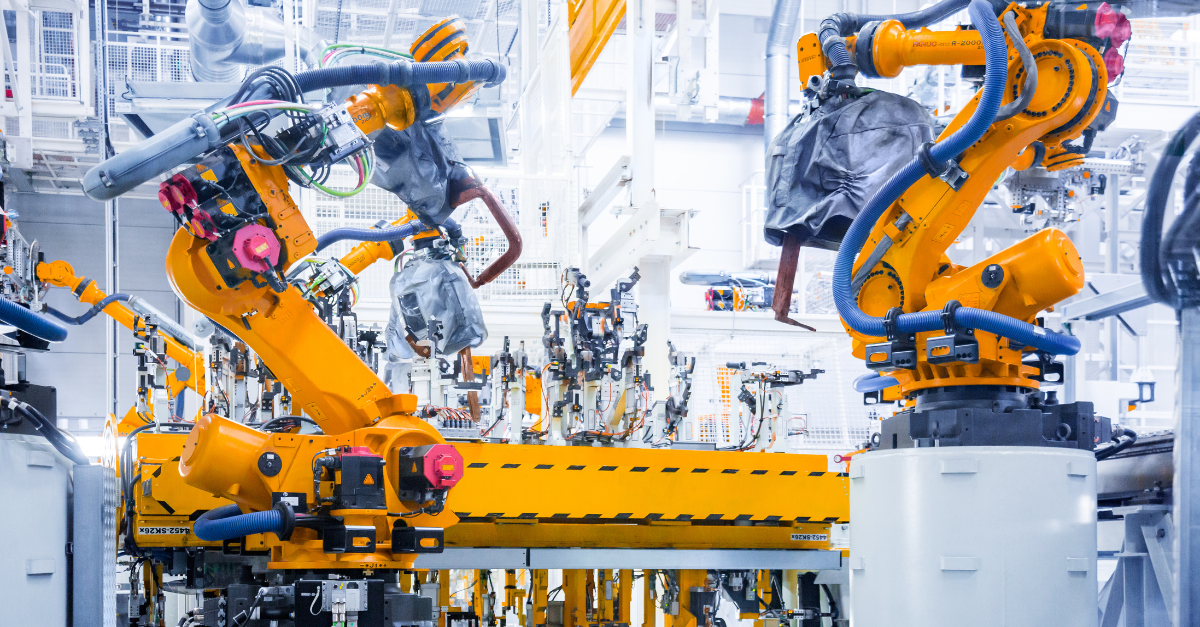
Growth is exciting. It means new customers, larger orders, expanded production, and greater market opportunity.
But for many tech manufacturers, growth also introduces a new challenge: the logistics operation that supported yesterday's business isn't always equipped to support tomorrow's.
As production volumes increase, supply chains become more complex. More components need to be managed. More shipments move through the network. More customers depend on precise delivery schedules.
The manufacturers that scale successfully don't simply add more trucks or warehouse space. They strengthen the logistics systems supporting the entire operation.
Here are a few lessons growing manufacturers continue to learn.
Growth Magnifies Small Problems
At lower volumes, it's possible to work around inefficient processes.
A missing component can be found manually. An inventory discrepancy can be corrected quickly. A delayed shipment may only affect one customer.
As production scales, those same issues become much harder to manage.
Small inefficiencies turn into larger operational problems because they affect more products, more orders, and more customers.
Growth doesn't create weaknesses. It exposes them.
Inventory Accuracy Becomes a Competitive Advantage
One of the first challenges many manufacturers face is maintaining accurate inventory as SKU counts and production volumes increase.
Without reliable inventory data, production schedules become more difficult to manage and purchasing decisions become less precise.
Successful manufacturers invest in processes that ensure inventory remains accurate long before products reach the assembly line.
That includes:
- Regular cycle counting
- Organized warehouse layouts
- Standardized receiving procedures
- Clear inventory accountability
As operations grow, trustworthy inventory becomes one of the most valuable operational assets a business can have.
Production Depends on Reliable Logistics
Building a product is only one part of the manufacturing process.
Components must arrive when production expects them. Finished goods must move quickly to customers or deployment sites. Warehouses, transportation providers, and production teams all need to stay aligned.
When logistics falls behind, manufacturing eventually follows.
The strongest manufacturers recognize that transportation is part of production planning, not simply something that happens after products are finished.
Visibility Helps Teams Make Better Decisions
Fast-growing companies generate more information than ever before.
The challenge is turning that information into actionable decisions.
Visibility allows operations teams to identify inventory shortages before production stops, monitor shipments before delays become critical, and adjust schedules before customers are affected.
More importantly, it gives leaders confidence that decisions are based on accurate information instead of assumptions.
Scalability Requires Standardization
As companies grow, relying on tribal knowledge becomes increasingly difficult.
Processes that once depended on a few experienced employees need to become documented, repeatable systems.
That applies across warehousing, transportation, inventory management, and fulfillment.
Standardized operations make it easier to:
- Train new employees
- Maintain quality across locations
- Reduce operational variability
- Support continued growth without increasing complexity
The companies that scale efficiently are often the ones with the simplest, most repeatable processes.
Strong Partnerships Matter More as You Grow
Growth brings new challenges that few manufacturers solve alone.
Reliable logistics partners become an extension of the operation by helping businesses adapt to changing demand, manage transportation capacity, improve inventory flow, and maintain service levels as volumes increase.
The relationship becomes less about moving freight and more about supporting long-term operational success.
Building for the Next Stage of Growth
Every growing manufacturer reaches a point where logistics shifts from being a support function to a competitive advantage.
Companies that invest in inventory accuracy, standardized processes, visibility, and reliable transportation are better positioned to grow without sacrificing customer service or operational performance.
The goal isn't simply to move more freight.
It's to build a supply chain that grows as confidently as the business itself.
Ready to Scale Your Supply Chain?
If your manufacturing operation is growing faster than your logistics processes, now is the time to strengthen the foundation. Contact us to learn how integrated warehousing, transportation, and fulfillment solutions can support your next stage of growth.
Ready to optimize your supply chain?
Contact us today to discover how JIT Transportation can take your business to the next level.
Related Articles
How to Stress-Test Your Supply Chain Before Peak Season
Stress-testing your supply chain before peak season helps expose capacity, inventory, transportation, and communication weaknesses while there is still time to fix them.

How Supply Chains Support Product Launches
A successful product launch depends on a supply chain that can keep components, inventory, transportation, and final delivery aligned with one critical date.

Why Inventory Accuracy Matters More Than Inventory Levels
Having more inventory cannot protect production if teams cannot confidently account for the specific components required for the next build.