
Why Physical Inventory Accuracy Matters More Than Real-Time Tracking
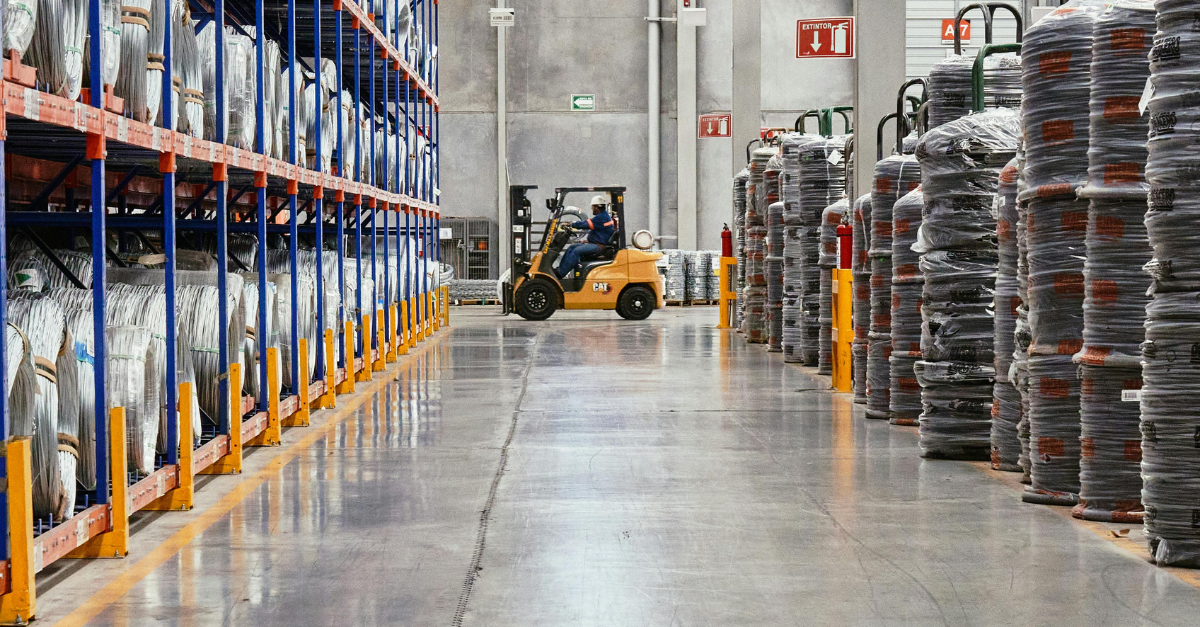
Ask most supply chain leaders what they need more of, and you'll often hear the same answer: visibility.
Real-time tracking platforms, dashboards, and monitoring tools have become standard across modern logistics operations. Companies want to know where shipments are, when they'll arrive, and whether disruptions are developing.
Those capabilities are important.
But there is a foundational issue that often gets overlooked: visibility is only valuable when the underlying inventory data is accurate.
You can track a shipment in real time, monitor warehouse activity, and receive automated alerts throughout the supply chain. Yet if the inventory management system says you have ten units available when there are actually six, the visibility doesn't solve the problem.
In manufacturing, fulfillment, and high-value logistics environments, physical inventory accuracy remains one of the most important drivers of operational success.
Visibility Starts With Trustworthy Data
Supply chain technology has improved dramatically over the last decade. Today's systems can provide near-instant updates on inventory levels, shipment status, and warehouse activity.
But those systems only report what they believe to be true.
If inventory counts are inaccurate because of receiving errors, misplaced products, damaged goods, or transaction discrepancies, every decision built on that data becomes less reliable.
Production planners schedule builds based on available components. Procurement teams make purchasing decisions based on inventory levels. Fulfillment teams commit to delivery timelines based on stock availability.
When inventory data is wrong, those decisions become guesswork.
The Hidden Cost of Inventory Inaccuracy
Inventory inaccuracies rarely create one isolated problem.
Instead, they create a chain reaction that spreads throughout the operation.
A production team may believe all required components are available for an upcoming build. Only when assembly begins does the missing inventory become apparent.
At that point, organizations often face difficult choices:
- Delay production schedules
- Expedite replacement inventory
- Reallocate inventory from other projects
- Adjust customer delivery commitments
None of those options are ideal.
What started as a simple inventory discrepancy becomes a transportation issue, a production issue, and potentially a customer service issue.
Why This Matters in High-Tech Manufacturing
Inventory accuracy becomes even more important when products are built from numerous components sourced from multiple suppliers.
In industries like server manufacturing, electronics, automation, robotics, and medical devices, production often depends on hundreds of individual parts arriving and being tracked correctly.
A manufacturer may have 99% of the required components available, but production still cannot proceed if one critical item is missing.
That reality makes inventory accuracy just as important as inventory availability.
The question is not simply whether parts exist somewhere in the facility. It's whether teams can trust the data enough to plan around it.
Physical Inventories Still Matter
As technology advances, some organizations assume automated systems can replace rigorous inventory verification.
The most successful operations know otherwise.
Physical inventories, cycle counts, and inventory audits remain essential because they validate what systems report.
These practices help identify:
- Receiving discrepancies
- Inventory shrinkage
- Misplaced products
- Transaction errors
- Process failures within warehouse operations
Without regular verification, small discrepancies accumulate over time and eventually become major operational problems.
Tracking Cannot Fix Missing Inventory
Real-time tracking is incredibly valuable once inventory begins moving through the supply chain.
It provides visibility into:
- Shipment location
- Transit status
- Estimated arrival times
- Potential delays
But tracking cannot solve inventory problems that originate inside the warehouse.
If inventory is missing, counted incorrectly, or unavailable when production needs it, no amount of shipment visibility can recover the lost time.
This is why organizations focused on operational excellence prioritize inventory integrity before optimizing transportation visibility.
Inventory Accuracy Supports Just-in-Time Operations
Many manufacturers continue to operate with just-in-time principles, where inventory arrives close to the point of use rather than sitting in storage for extended periods.
That strategy only works when inventory records are accurate.
When counts are wrong, organizations may discover shortages too late to recover without disruption. Production schedules become vulnerable, emergency freight costs increase, and efficiency gains disappear.
Strong inventory management creates the foundation that allows just-in-time operations to succeed.
Without it, even well-designed logistics strategies become difficult to execute consistently.
Technology and Process Must Work Together
Inventory accuracy is not achieved through technology alone.
The most successful organizations combine modern inventory management systems with disciplined operational processes.
Technology provides visibility and reporting. Processes ensure the information remains reliable.
That combination includes:
- Structured receiving procedures
- Regular cycle counting
- Inventory audits
- Warehouse organization standards
- Clear accountability across teams
When those elements work together, inventory becomes a trusted source of information rather than a potential source of risk.
The Most Valuable Visibility Is Accurate Visibility
Supply chain leaders often focus on gaining more visibility, but the better question may be whether the visibility they already have can be trusted.
Because knowing exactly where a shipment is provides little value if the inventory data behind it is inaccurate.
The strongest supply chains are not built solely on real-time tracking.
They are built on accurate information from the warehouse floor to the final delivery destination.
Ready to Improve Inventory Accuracy Across Your Operation?
If inventory discrepancies are creating production delays, fulfillment challenges, or unnecessary costs, it may be time to evaluate the processes supporting inventory management. Contact us to learn how stronger warehousing and inventory practices can improve visibility, accuracy, and operational performance.
Ready to optimize your supply chain?
Contact us today to discover how JIT Transportation can take your business to the next level.
Related Articles
How to Stress-Test Your Supply Chain Before Peak Season
Stress-testing your supply chain before peak season helps expose capacity, inventory, transportation, and communication weaknesses while there is still time to fix them.

How Supply Chains Support Product Launches
A successful product launch depends on a supply chain that can keep components, inventory, transportation, and final delivery aligned with one critical date.

Why Inventory Accuracy Matters More Than Inventory Levels
Having more inventory cannot protect production if teams cannot confidently account for the specific components required for the next build.