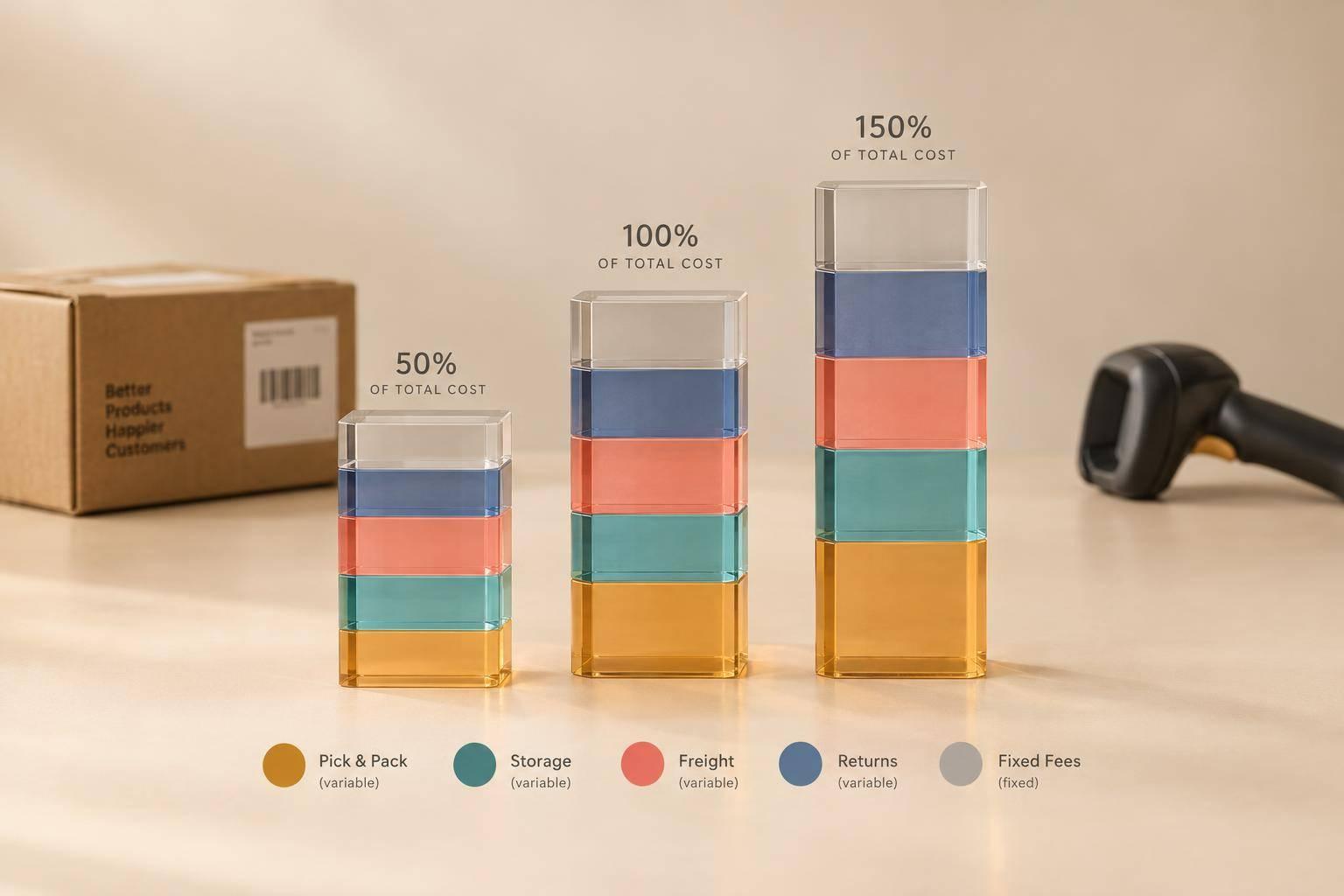
Cross-Docking in 3PL: How It Speeds Up Fulfillment
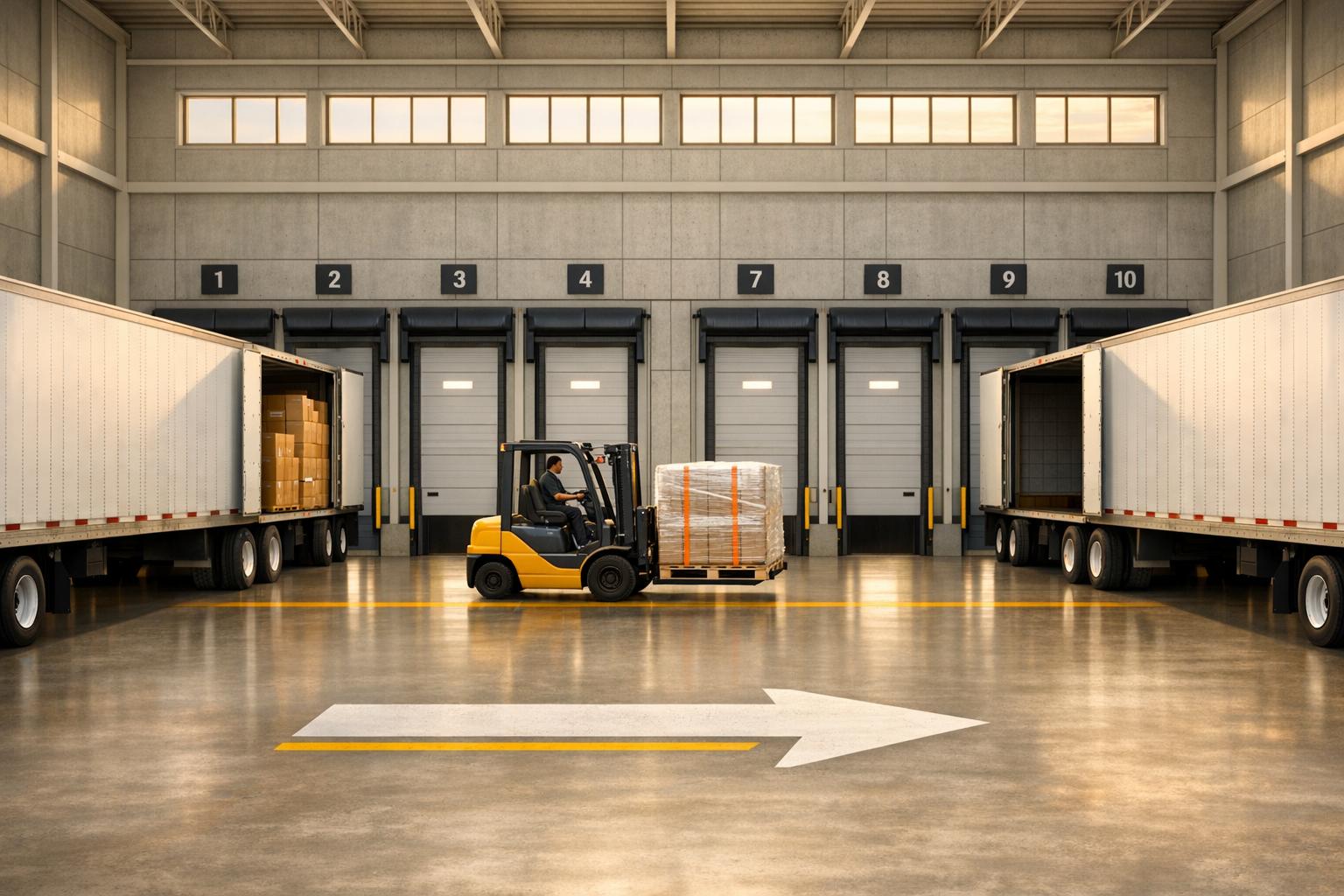
Cross-docking is a supply chain strategy that skips traditional storage, moving goods directly from inbound to outbound trucks - often within 24 hours. This approach is transforming e-commerce fulfillment by cutting delivery times, lowering costs, and meeting consumer demand for same-day shipping. Here's why it works:
- Fast Turnaround: Reduces handling steps, with goods processed in just 2–12 hours.
- Lower Costs: Cuts storage expenses by up to 65% and reduces labor needs.
- Improved Delivery Speed: Helps achieve same-day or next-day shipping by eliminating storage delays.
- Reduced Inventory Risks: Minimizes the chance of unsold or obsolete products.
For e-commerce businesses, cross-docking offers a faster, cost-effective way to handle high order volumes while keeping customers happy. Providers like JIT Transportation use technology and nationwide networks to streamline this process, ensuring products move efficiently from suppliers to customers.
Want to meet rising delivery expectations? Cross-docking could be the solution.
How Cross-Docking Speeds Up Fulfillment
The Cross-Docking Process
Cross-docking is all about speed and precision, moving goods quickly through a facility without traditional storage. The process unfolds in four key stages: receiving inbound shipments, sorting or breaking down goods based on their destination, consolidating orders (which might include labeling or reconfiguring pallets), and loading them directly onto outbound trucks. This entire process typically takes just 2–12 hours, with goods leaving the facility in under 24 hours.
What makes this approach so efficient is the elimination of unnecessary handling steps. In a traditional warehouse setup, items might be touched 4 to 6 times - through receiving, put-away, storage, picking, packing, and shipping. Cross-docking cuts that down to just 2 or 3 touches: receiving, sorting, and shipping. By skipping storage and picking stages, products stay in motion rather than sitting on shelves. This not only saves time but also reduces labor costs and lowers the risk of product damage.
"Cross-docking has been a major shift for us in ecommerce fulfillment. Trucks unload, sort, and reload in under 4 hours. No storage needed. Cuts inventory costs by about 30 percent but requires precise timing or it turns into chaos."
- Ecommerce fulfillment manager
Reducing Turnaround Times
The streamlined flow of cross-docking doesn’t just save labor - it also slashes fulfillment times. By moving products directly from receiving to shipping, storage delays are completely avoided. This allows businesses to achieve same-day or next-day shipping, which is critical as over 56% of consumers aged 18–34 now expect same-day delivery.
On average, cross-docking can cut 1 to 3 days from standard delivery timelines. For fast-growing e-commerce brands, this speed means quicker order fulfillment, reduced inventory holding costs, and the ability to meet tight delivery deadlines without relying on costly expedited shipping. To put it in perspective, traditional storage costs range from $0.50 to $2.00 per unit per month, while cross-docking reduces these costs to almost nothing. This approach aligns perfectly with the lean inventory strategies that modern e-commerce businesses require, offering a way to efficiently manage growth while keeping costs in check.
sbb-itb-eafa320
What is Cross Docking In Supply Chain Management | How It Works Step By Step | Real World Example
Efficiency Gains Supported by Research

Cross-Docking vs Traditional Warehousing: Key Metrics Comparison
Cross-docking isn’t just a theoretical efficiency booster - research backs up its benefits with hard numbers.
Lower Handling and Storage Costs
One of the biggest advantages of cross-docking is how it slashes costs by cutting out storage and picking. Traditional warehouses need large storage areas, which means higher expenses for rent, utilities, insurance, and upkeep. Cross-docking eliminates these steps entirely, bypassing the most labor-intensive and costly parts of traditional fulfillment.
A study from Tongji University highlights just how impactful this can be. It found that cross-docking reduces distribution center inventories by up to 65.10% and lowers overall system inventory by an average of 23.99%. This isn’t just about saving space - it’s about reducing the costs tied to holding inventory, like capital investment, depreciation, and the risk of unsold products becoming obsolete.
"At the distribution center (DC) and in the system, CD reduces the inventories by as much as 65.10% and 23.99% on average, respectively, suggesting that CD not only reduces the total inventory in the system but also re-distributes the inventory from the DC to the stores for some products."
- Yongrui Duan, Professor, Tongji University
Fewer handling steps also mean reduced labor costs and less wear and tear on equipment. This streamlined system not only minimizes product damage but also supports just-in-time replenishment, keeping operations lean and efficient.
Faster Throughput and Delivery Speed
Speed is where cross-docking truly shines. By moving goods directly from inbound to outbound transportation, it avoids the storage delays that slow down traditional warehousing. This makes it ideal for meeting the high demands of same-day and next-day delivery - an essential feature for staying competitive in today’s e-commerce landscape.
Cross-Docking vs. Standard Warehousing
Here’s how cross-docking stacks up against traditional warehousing when you break it down:
| Metric | Cross-Docking | Standard Warehousing |
|---|---|---|
| Storage Duration | Minimal to none (usually <24 hours) | Long-term (weeks or months) |
| Inventory Levels at DC | Up to 65.10% lower | Higher due to safety stock requirements |
| Handling Steps | Receiving, Sorting, Shipping | Receiving, Storing, Picking, Packing, Shipping |
| Labor Requirements | Lower (no picking/put-away) | Higher (intensive picking and packing) |
| Delivery Speed | Optimized for same-day/next-day | Limited by storage and processing time |
| System-Wide Inventory | Average 23.99% reduction | Baseline |
| Primary Cost Drivers | Technology, coordination, rapid sorting labor | Storage space, picking labor, inventory carrying costs |
While cross-docking requires precise coordination and advanced technology, such as Warehouse Management Systems, the payoff is clear. It delivers faster throughput, lower costs, and reduced inventory levels. For e-commerce businesses grappling with rising real estate and labor costs, these benefits make cross-docking a smart choice in 2026 and beyond.
Benefits for High-Growth E-Commerce Brands
For rapidly expanding e-commerce brands, cross-docking offers more than just cost savings - it's a game-changer for maintaining agility and meeting the demand for faster delivery.
Improved Supply Chain Velocity
Cross-docking speeds up the entire order-to-delivery process by skipping the delays associated with traditional warehousing. By moving goods within just 2–12 hours, it can shave off 1–3 days from lead times. This faster turnaround keeps inventory flowing smoothly, which is vital for brands operating in a market where one- or two-day delivery is now the norm.
This approach is especially beneficial for high-velocity SKUs - the top 10% to 20% of products that account for 40% to 60% of total shipments. Instead of sitting idle on warehouse shelves, these fast-moving products keep generating revenue.
"Orders that once waited for weekly replenishment now move the same day inventory arrives. That speed protects marketplace SLAs, retail appointments, and customer delivery promises."
Better Customer Satisfaction
When orders are fulfilled quickly, customers notice. Shipping products the same day they arrive ensures brands can consistently meet tight delivery windows without relying on costly expedited shipping. This reliability builds trust, and trust is key to customer loyalty. In fact, 73% of customers are likely to spend less with a company they don't trust. On-time delivery is essential for fostering repeat business.
Cross-docking also makes returns more efficient. By applying the same streamlined approach to reverse logistics, returned items can be routed to local hubs for immediate verification and restocking. This reduces return processing costs from around $35 per unit to just $5. At the same time, inventory becomes available for resale much faster. The result? Happier customers, quicker refunds, and less capital tied up in transit. These efficiencies enhance customer satisfaction while protecting brands from operational setbacks.
Avoiding Penalties and Optimizing Shipments
For brands working with major retailers like Walmart or Target, hitting delivery appointment windows is non-negotiable. Late shipments can lead to penalties and chargebacks. Cross-docking ensures products arrive on time, safeguarding margins and preserving strong relationships with retail partners.
It also supports smarter logistics. Small inbound shipments from multiple suppliers can be sorted and consolidated into full truckload (FTL) shipments for regional distribution. This reduces outbound freight costs, maximizes truck capacity, and can cut logistics expenses by up to 20%. These efficiencies align with JIT Transportation's coordinated network, designed to help high-growth e-commerce brands streamline fulfillment while staying competitive in a fast-paced market.
Implementation Requirements and JIT Transportation's Capabilities
Technology and Coordination Needs
Cross-docking relies heavily on real-time digital coordination among suppliers, carriers, and warehouse operations. Two key systems make this possible: Warehouse Management Systems (WMS) and Transportation Management Systems (TMS).
- WMS keeps track of inventory as it moves through the facility, enabling automated processes like picking, scanning, and routing.
- TMS focuses on logistics - optimizing carrier routes, offering live tracking, and analyzing performance to address disruptions quickly.
Studies show that API-integrated systems can reduce errors by 30% and improve throughput by up to 70%. Without proper coordination, the speed advantage of cross-docking diminishes. For example, shared EDI platforms and real-time GPS tracking can prevent idle dock times, which might otherwise increase turnaround times by 50%. In short, advanced technology isn't just helpful - it's essential for scaling cross-docking operations effectively.
These systems also serve as the backbone for tapping into a strong nationwide logistics network.
JIT Transportation's Nationwide Network
JIT Transportation leverages its integrated technology to operate a nationwide cross-docking network. The company manages 14 warehouses across the United States, covering over 2.5 million square feet of space. These facilities are strategically located near major ports and urban centers, cutting transit times and enabling efficient regional hubs.
The transportation infrastructure includes:
- A dedicated fleet of over 200 trucks.
- A network of 500+ carrier partners.
This setup ensures reliable, on-time performance, even during peak seasons. With operations running 24/7/365, JIT's network can scale with demand, giving high-growth brands the ability to expand without investing in warehouses or managing carrier contracts themselves.
"JIT has been a trusted logistics partner for Seagate for years, and their reliability is unmatched. Day in and day out, they prove their commitment to seamless operations, ensuring our supply chain stays on track."
- Hal Shapiro, Seagate Technology
Value-Added Services for E-Commerce Fulfillment
JIT Transportation doesn't just move products - it also offers value-added services that enhance e-commerce fulfillment. These include:
- Pick & pack
- Kitting & assembly
- Testing
- White glove handling
By integrating these services into the workflow, processing times are reduced by 40%. For instance, a growing apparel brand combined cross-docking with pick & pack and kitting services to consolidate shipments and prepare seasonal kits within 24 hours. This allowed them to achieve 2-day delivery nationwide while lowering storage costs by 25% [context].
Custom API integrations with platforms like Shopify, Magento, and WooCommerce further streamline operations. These integrations automate order processing and tracking, ensuring a smooth flow of data from the point of sale to final shipment.
Conclusion
Cross-docking transforms storage facilities into fast-moving transit hubs by shifting inventory directly from inbound to outbound trucks, often within 24 hours. This streamlined approach skips the traditional "put-away" and "pick" processes entirely. For e-commerce brands managing 10,000+ orders per month, it means quicker fulfillment, lower operational costs, and happier customers.
These operational improvements also bring clear financial advantages. Traditional pick-and-pack operations cost between $3.50 and $6.00 per unit in labor, but cross-docking significantly reduces these expenses by keeping inventory in constant motion. Plus, with fewer product touches, the risk of damage drops, ensuring items arrive in excellent condition.
JIT Transportation plays a key role in making these efficiencies possible. With a nationwide network of strategically placed facilities and advanced technology, JIT operates 24/7 to handle peak-season demands and support ongoing growth. Their scalable infrastructure highlights how cross-docking can meet the speed and efficiency needs of rapidly expanding e-commerce businesses.
"In logistics, consistency is everything - and that's exactly what JIT delivers. Their transportation services are dependable, seamless... Working with JIT has made a tangible difference in our efficiency and customer satisfaction." - Armando Otiz, Manager 3pl/Inventory, Exclusive Networks
FAQs
When is cross-docking a bad fit for my products?
Cross-docking doesn’t work well for products that need long-term storage or come with high inventory holding costs. It’s also a poor fit for items requiring detailed customization before delivery, those with complex handling needs, or products not built for quick transfer, sorting, or immediate outbound shipping.
What data and systems do I need to run cross-docking smoothly?
To ensure cross-docking operates efficiently, you need tools and systems that handle unloading, sorting, and transferring goods quickly - without relying on storage. Some essential tools include:
- Real-time inventory tracking: Keeps tabs on shipments and ensures goods are routed correctly.
- Transportation management systems (TMS): Helps optimize delivery routes and schedules for better efficiency.
- Dock management software: Simplifies the loading and unloading process, reducing delays.
- Integration with warehouse management systems (WMS): Ensures smooth coordination and precise handling of goods.
How do I measure whether cross-docking is improving my fulfillment speed and costs?
To determine whether cross-docking improves fulfillment speed and lowers costs, focus on tracking these key metrics:
- Dwell time: Shorter dwell times mean quicker processing.
- On-time departure rate: Higher rates reflect better timeliness.
- Load consolidation ratio: Indicates how effectively loads are combined.
- Touch count per unit: Fewer touches per unit suggest smoother operations.
- Error rate: Lower error rates point to improved accuracy.
- Throughput per dock/hour: Higher throughput shows enhanced efficiency.
By examining these metrics, you can gauge how well the system is performing. Additionally, compare freight, handling, and storage costs with these KPIs to evaluate cost reductions and overall performance.
Related Blog Posts
Related Articles

Demand-Driven Replenishment for Multi-Node 3PL

3PL Models Compared for Reverse Logistics Carbon