
3PL Role In Reverse Logistics Standardization
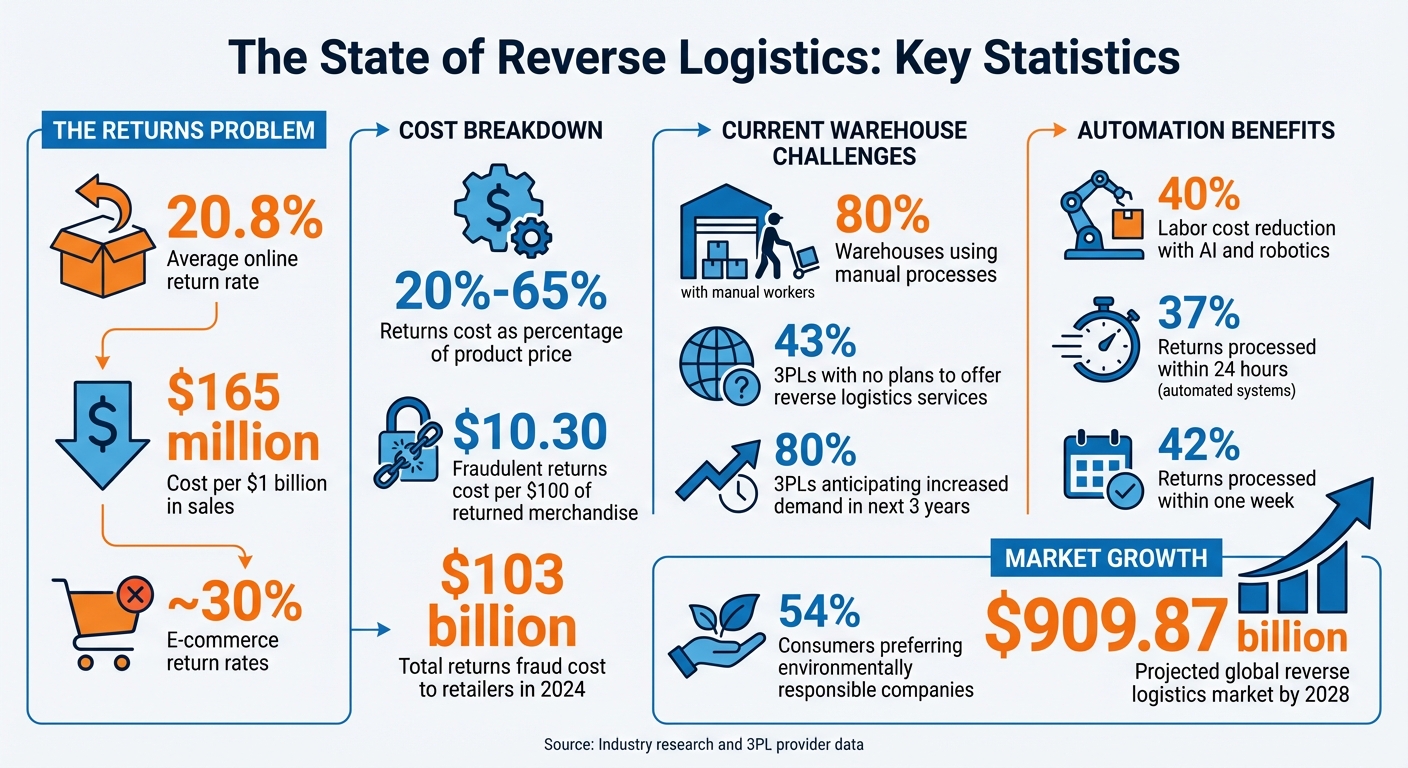
Reverse logistics - managing returns, recalls, repairs, recycling, repackaging, and replacements - is a growing challenge for businesses as online return rates average 20.8%, and returns cost $165 million per $1 billion in sales. Third-party logistics (3PL) providers play a key role in simplifying this process by introducing systems and technologies that improve efficiency and reduce costs.
Key Insights:
- High Return Costs: Returns can cost 20%–65% of a product's price. Fraudulent returns alone cost $10.30 per $100 of returned merchandise.
- Challenges: 80% of warehouses use manual processes, leading to delays, inconsistent policies, and inventory issues.
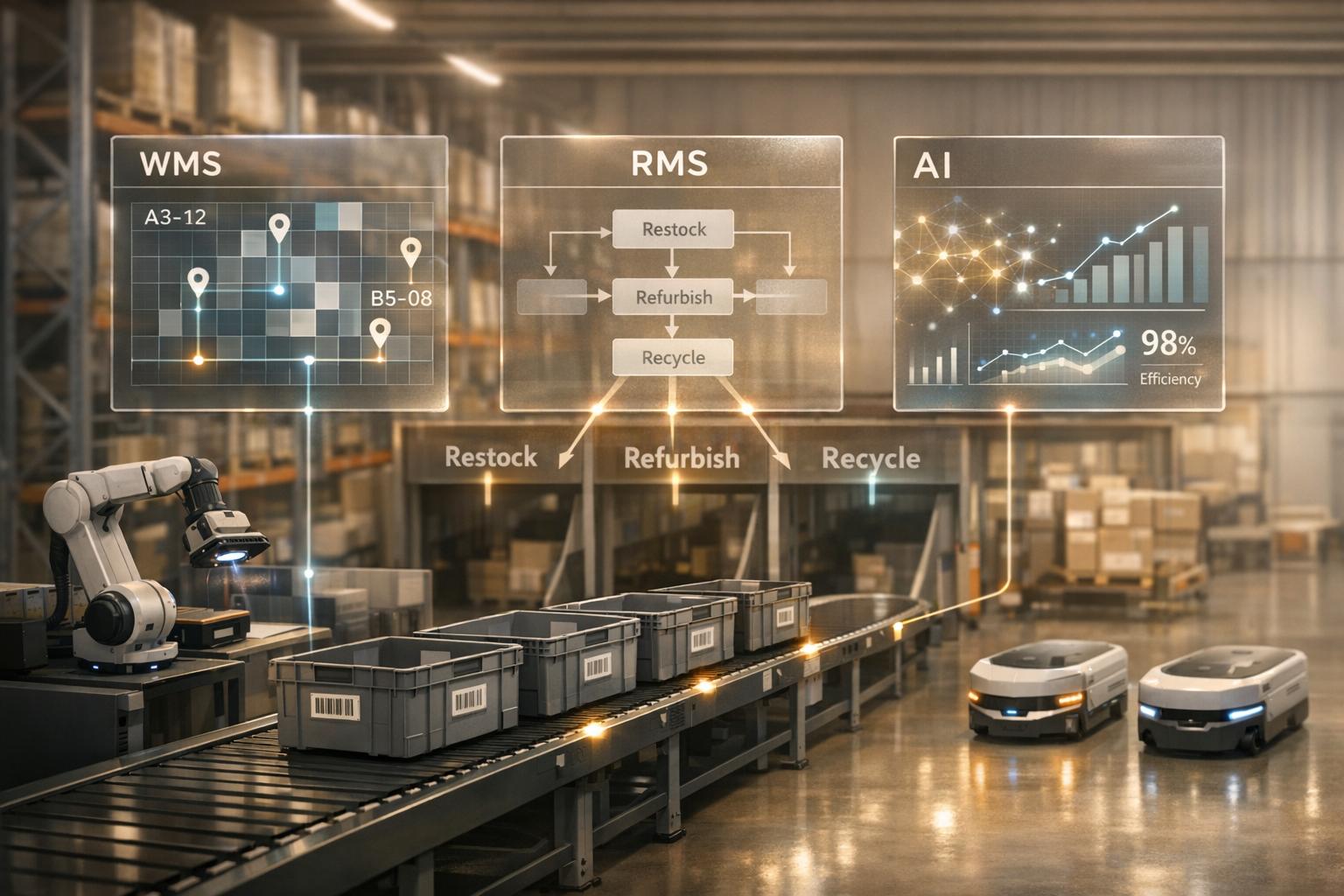
- 3PL Solutions: Providers like JIT Transportation use advanced systems (WMS, RMS, IoT, AI) to automate returns, ensure consistent policies, and recover value through refurbishment, recycling, and secondary markets.
- Scalability: AI and robotics help 3PLs process high volumes efficiently, especially during demand spikes like post-holiday returns.
Why It Matters:
Reverse logistics can shift from a cost burden to a profit opportunity when standardized processes and technology are applied. With the global reverse logistics market projected to reach $909.87 billion by 2028, businesses must choose 3PL providers that align with their needs for efficiency, visibility, and sustainability.
Reverse Logistics Costs and Statistics: Returns Impact on E-commerce
1. JIT Transportation
Standardization Frameworks
JIT Transportation simplifies reverse logistics by introducing consistent protocols for handling returned goods. This means every item - whether it's being received, inspected, or processed - is treated the same way across all facilities, ensuring efficiency and uniformity.
Technology Infrastructure
JIT Transportation relies on a sophisticated Warehouse Management System (WMS) to streamline the inspection, categorization, and labeling of returns. By automating these processes, they minimize manual mistakes and speed up operations. Their tech setup includes IoT sensors, RFID tags, and barcode systems, which provide real-time tracking and instant inventory updates. Automated conveyors and AI-powered systems further enhance efficiency by sorting returns into clear categories, such as items fit for resale (A-grade) or those needing refurbishment (B-grade). This tech-driven approach ensures smooth and effective handling of returns.
Value-Added Services
JIT Transportation doesn’t just process returns - it adds value to them. Through refurbishment, they repair and restore returned goods, extending their usability and reducing waste. Their asset recovery operations take this a step further by salvaging components or materials for reuse, resale, or repurposing. For items that can quickly re-enter inventory, they offer services like cleaning, steaming, re-tagging, and repackaging. These efforts transform what could be losses into revenue opportunities.
Scalability
Thanks to standardized processes and advanced technology, JIT Transportation is built to handle fluctuations in demand. By using Logistics ERP systems, they dynamically allocate resources and reconfigure workflows to manage seasonal peaks or unexpected surges, like product recalls. AI-powered predictive analytics help forecast return patterns, ensuring warehouses are staffed appropriately during busy periods. Automated solutions - such as robotic arms, autonomous mobile robots, and conveyors - enable them to handle varying volumes of returns with ease. This adaptability ensures businesses can scale operations without disruptions.
sbb-itb-eafa320
2. Other Leading 3PL Providers
Standardization Frameworks
In the world of reverse logistics, the "Six Rs" framework - Returns, Recalls, Repairs, Recycling, Repackaging, and Replacements - serves as a foundation for managing products moving backward through the supply chain. Building on this, GlobalTranz employs a detailed 7-step process. It starts with creating and sharing a clear returns policy, followed by gathering and analyzing data, setting up dedicated return areas, organizing inbound shipping, establishing workflows for product disposition, assessing product usability, and finally, auditing the entire system. These structured methods make it easier to integrate advanced technologies, improving efficiency across the board.
Technology Infrastructure
Top-tier providers rely on interconnected software systems like Warehouse Management Systems (WMS), Returns Management Systems (RMS), and Logistics ERPs to centralize operations and automate tasks like return authorizations. A standout example is GEODIS, which, in early 2025, introduced a tailored speed cell solution using AutoStore at their Asheville, OH facility. This system, designed for managing fashion returns for Maurices, combines AutoStore CarouselPort with mobile speed cell carts to reintegrate resalable items into inventory while cutting down on manual labor. Meanwhile, in 2024, Arvato implemented AI-driven Nomagic robotic arms at their Dortmund, Germany facility. These "Dora" model robots automate the sorting and placement of fashion returns, processing 37% of returns within a day and 42% within a week.
Value-Added Services
Beyond the basics, leading providers add value through specialized services. For instance, they use fraud detection systems with standardized verification processes to identify suspicious return patterns and validate purchase histories. This is critical, as returns fraud cost retailers $103 billion in 2024. Providers also manage secondary market channels to extend product lifecycles and recover value. In October 2025, The Home Depot partnered with Glad Trash Bags to create a circular program. The initiative collects used plastic stretch wrap from distribution centers, repurposing it into recycled material for new trash bags.
Troy Campbell, Director of Reverse Logistics Centers, spearheaded this effort, noting its dual benefits of reducing landfill waste and creating a sustainable raw material source.
Additionally, The Home Depot teamed up with nonprofit Good360 to streamline the donation of surplus inventory.
As Campbell explained, "When one of our donation partners faces a shortage, we determine if there is product we can provide - often items that would otherwise be sold through our liquidation channels".
Scalability
Standardized processes and cutting-edge technology enable these providers to scale their operations to meet growing demand. Flexibility frameworks, which categorize adaptability into operational (product and volume) and strategic (network and organizational design) dimensions, play a key role. This preparation is crucial, as 80% of 3PLs anticipate increased demand for reverse logistics over the next three years.
Mary Cho, Director of Client Solutions at Liquidity Services, highlights the value of direct-to-consumer marketplaces: "Direct-to-consumer marketplaces provide great engagement with the end buyers. And the closer we can get to the end buyers, the higher the revenue recovery".
Joe Desormiers, Product Leader for Returns and Circularity at DHL North America, adds, "Local buyers have the option to purchase and collect liquidated goods directly from a warehouse. This secondary market option is attractive because it cuts out shipping costs and the possibility of returns".
Automating Holiday Returns in 3PLs: Peak Season, Peak Solutions | E13
Pros and Cons
When comparing different 3PL strategies for reverse logistics standardization, the contrast between technology-driven and process-focused approaches becomes clear. JIT Transportation stands out with its custom ERP-integrated returns management system, which offers both visibility and scalability. This approach caters to businesses needing tailored workflows without immediately committing to extensive automation.
On the other hand, automated 3PL providers that utilize AI and robotics can slash labor costs by up to 40% and handle 37% of returns within 24 hours. However, these high-tech systems typically demand a hefty upfront investment. Process-standardized models, which rely on consolidated shipping and manual triage, are more cost-conscious but face scalability challenges. With 80% of warehouses still lacking automation, manual operations often lead to delays, while automated systems enable faster turnarounds, like same-day processing. This highlights the advantage of JIT Transportation's balanced approach, combining tech-enabled solutions with flexibility.
Interestingly, 43% of 3PLs have no plans to offer reverse logistics services, despite 80% anticipating rising demand in the next three years. This gap presents an opportunity for providers like JIT Transportation, which already deliver robust returns management solutions.
Managing returns is expensive, with costs ranging from 20% to 65% of the original product price. Technology-driven 3PLs address this by employing AI-powered sorting and real-time tracking tools like RFID and IoT. In contrast, process-focused providers control costs through consolidated transportation and designated return areas, avoiding the need for significant tech investments.
Another key factor is how effectively 3PLs recover value from returned products. Advanced providers use AI-driven sorting to channel items into secondary markets, refurbishment programs, or recycling within seven days of receipt. This capability is growing in importance as 54% of consumers now prefer companies that prioritize environmental and social responsibility. In this context, JIT Transportation’s services - like testing, revision upgrades, and white glove handling - offer clients a way to support circular economy initiatives without additional costs.
Conclusion
Standardizing reverse logistics can turn returns from a financial drain into a strategic advantage. With e-commerce return rates averaging nearly 30%, and the cost of processing a single return ranging from 20% to 65% of the product's price, the need for efficient systems is clear. Streamlined processes not only cut cycle times but also ensure consistent grading across facilities. This readiness is crucial as the global reverse logistics market is expected to hit $909.87 billion by 2028.
When evaluating a 3PL provider, integration capabilities should be a top priority. Their Warehouse Management System (WMS) and Order Management System (OMS) must connect seamlessly with your e-commerce platform to provide real-time updates. It's essential to establish clear SLAs that outline expectations for processing times, grading accuracy, and value recovery. A solution like JIT Transportation's ERP-integrated returns management system offers this level of visibility while also scaling effortlessly during high-demand periods, such as post-holiday return spikes. Systems like these allow businesses to adjust smoothly to market shifts.
"When reverse logistics stalls, margin erosion follows; when returns management is disciplined, value recovery rises and revenue is protected." - ISM (Institute for Supply Management)
Understanding the specific refurbishment and disposition needs of your product category is equally important. For instance, electronics may require specialized refurbishment processes, while apparel might demand different handling. Choose 3PL providers equipped to process returns efficiently and redirect items into secondary markets, refurbishment programs, or recycling. With 54% of consumers preferring companies that prioritize environmentally responsible practices, these capabilities align with both profitability and sustainability goals.
These standardized approaches build on earlier discussions about technology integration and scalability. The growing gap between supply and demand in reverse logistics services presents a unique opportunity. While 80% of 3PLs expect demand to increase in the next three years, 43% have no plans to expand their offerings. By adopting standardized processes, companies can achieve greater efficiency and support sustainability. Partnering with providers like JIT Transportation, which offers services such as testing, revision upgrades, and white-glove handling, can transform returns from a cost center into a revenue-generating operation.
FAQs
What should I standardize first in my returns process?
To handle returns more effectively, begin by creating consistent return policies and procedures. This means offering clear and straightforward return instructions, ensuring all necessary documentation is easy to complete, and organizing workflows to reduce mistakes. A well-structured approach not only saves time but also makes the process smoother for everyone involved.
How do WMS, RMS, and ERP systems improve reverse logistics?
Warehouse Management Systems (WMS), Returns Management Systems (RMS), and Enterprise Resource Planning (ERP) systems play a key role in improving reverse logistics. Here's how:
- WMS: These systems help optimize inventory tracking and streamline warehouse operations, ensuring returned items are efficiently managed and stored.
- RMS: By organizing and simplifying the returns process, RMS ensures faster handling of returned goods, reducing bottlenecks.
- ERP: ERP systems bring everything together by integrating supply chain functions, improving coordination across departments.
By automating workflows, enhancing visibility, and supporting standardized processes, these systems work together to minimize errors, boost efficiency, and cut costs - making reverse logistics more seamless and accurate.
What SLAs should I require from a 3PL for returns?
When setting up service level agreements (SLAs), focus on metrics that matter: high order accuracy (99.5%–99.9%), on-time delivery rates (95%–99%), real-time inventory tracking, and quick issue resolution. To make these goals achievable, rely on advanced tools like warehouse management systems and barcode scanning. These technologies play a key role in keeping reverse logistics efficient and dependable.
Related Blog Posts
Related Articles

8 Ways 3PLs Handle Seasonal Workforce Swings

Marketplace API vs EDI for Fulfillment
