
Best Practices for Returns Reconciliation in 3PL
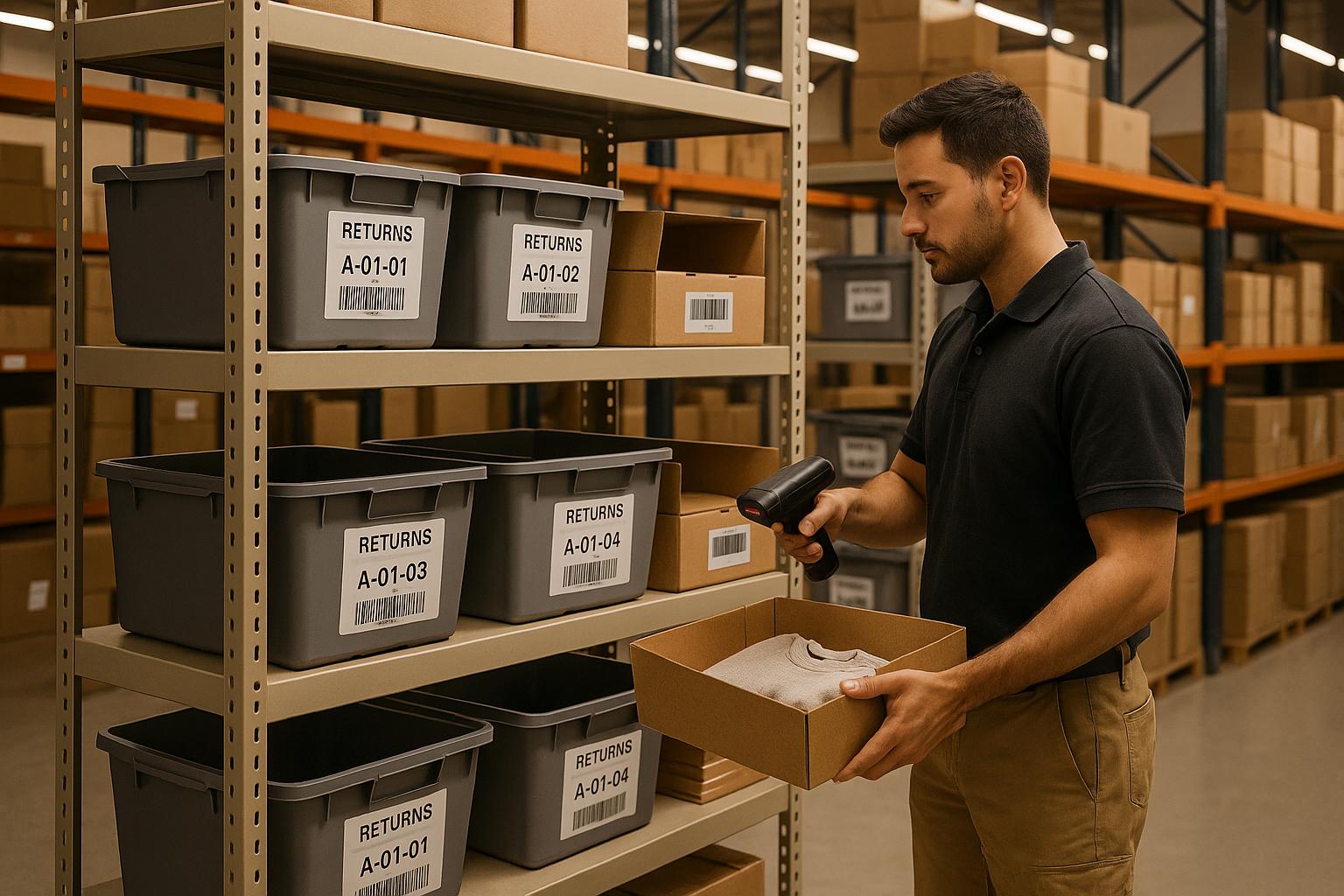
Returns reconciliation in third-party logistics (3PL) is the process of aligning returned goods with data records to maintain inventory accuracy and ensure proper financial transactions. For U.S.-based e-commerce brands, this is critical as online return rates can range from 15% to 30%, and even higher for categories like fashion.
Key Takeaways:
- Challenges: High return volumes, inconsistent documentation, and varying product conditions create complexity. Issues like lost items, duplicate refunds, and incorrect billing can arise without proper workflows.
- Core Solutions:
- Standardized Workflows: From RMA creation to inspection and disposition, clear steps prevent errors.
- Dedicated Returns Zones: Separate spaces for returns processing minimize cross-contamination with outbound inventory.
- Technology Integration: Systems like WMS, TMS, OMS, and ERP ensure real-time updates for inventory and billing.
- Automated Tools: Barcode/RFID scanning and automated RMA workflows reduce manual errors and speed up processing.
- Benefits: Faster refunds, accurate inventory updates, and actionable insights on high-return SKUs or recurring issues.
Returns reconciliation isn’t just about logistics - it impacts customer satisfaction and profitability. By implementing structured workflows and leveraging technology, 3PLs can turn returns into an efficient, insight-driven process.
The Future of Fulfillment How Returns, Shipping Carriers, and 3PL Strategy Is Being Reinvented
Core Steps in the Returns Reconciliation Process
Returns reconciliation is all about creating a structured process that ties together physical goods, data records, and financial transactions. For 3PL providers, breaking this down into clear, repeatable steps ensures they can manage large volumes efficiently without compromising accuracy. The aim is to track every returned item from the moment it arrives at the dock until it’s either restocked, refurbished, or disposed of - while ensuring every action is reflected in inventory and billing systems. These steps lay the groundwork for the integration of technology and financial systems, which will be discussed later.
Standardized Returns Management Workflow
A well-defined workflow is essential for keeping returns organized and manageable. Without it, items can get lost, misgraded, or stuck in limbo, leaving warehouse teams scrambling to figure out what to do next. A solid workflow covers every stage: RMA creation, return authorization, receiving, inspection, grading, disposition, and inventory and billing updates.
RMA creation and authorization is the first checkpoint. Each return should have a unique RMA number tied to the original order. The system must verify eligibility based on the client’s policy, checking factors like the return window, product category, and reason code. Essential data like SKU, order ID, reason code, and photos should also be captured. For instance, if someone tries to return a product 45 days after purchase but the policy allows only 30 days, the system should flag it for manual review instead of auto-approving it. This prevents non-compliant returns from entering the pipeline, easing the reconciliation process later. Automated emails and portal updates can confirm the RMA issuance and provide prepaid labels if needed, keeping everyone informed as the process moves forward.
Receiving and logging is where traceability begins. Warehouse teams should scan return labels upon arrival, validating them against the order and policy. Each return must be time-stamped (e.g., using Eastern Time for a New Jersey facility) and assigned to a dedicated returns zone. Scanning tracking numbers, carton IDs, and noting the initial condition with handheld devices ensures every item can be traced back to the original shipment and financial entry, aiding audits.
Inspection and grading is where decisions are made. Teams verify the SKU, check serial or lot numbers (if applicable), assess packaging, and test functionality for relevant items. They also confirm that the return reason matches the item’s condition. A grading matrix can speed up this process. For example:
- Grade A: New and unopened
- Grade B: Open box but like-new
- Grade C: Functional defect
- Grade D: Non-functional or damaged
Each grade should align with a specific action - restock, refurbish, return-to-vendor, liquidation, or recycling. Standardized visual guides, checklists, and photo examples at workstations help inspectors make consistent decisions quickly. For high-risk items like electronics or luxury apparel, digital checklists with mandatory photo capture can deter fraud and provide evidence for disputes or chargebacks.
Disposition routing comes next. Once graded, items need to move to their next destination without delay. Restockable goods return to active inventory, refurbishable items go to repair areas, liquidation items are prepared for bulk sale, and non-recoverable items are sent for recycling or disposal. Each outcome must trigger an update to inventory and billing systems to reflect the item’s new status accurately.
With a clear workflow in place, dedicated zones and precise inspection protocols can further streamline returns processing.
Dedicated Returns Zones and Inspection Protocols
Mixing returns with outbound orders creates unnecessary confusion. When returned goods share space with new inventory, the chances of cross-contamination, misplacements, and picking errors increase significantly. That’s why leading 3PLs establish dedicated returns zones with clear workflows: inbound dock → quarantine → inspection → sort-to-disposition. Separate receiving docks or clearly marked areas, including quarantine zones for non-RMA or unknown items, help prevent returned goods from mixing with outbound stock before reconciliation is complete.
A dedicated returns zone also allows for specialized staffing. Inspecting returns requires different skills than picking and packing outbound orders. Returns associates must be trained in grading criteria, fraud detection, and documentation requirements. They also need access to properly equipped inspection stations, including barcode scanners, photo capture devices, testing tools for electronics, and digital checklists to guide them through each step.
Inspection protocols should be standardized but adaptable for different product types. For example, apparel inspections might focus on wear, stains, or missing tags, while electronics require functional testing and serial number checks.
The physical layout of the returns zone plays a big role in efficiency. Inspection stations should minimize unnecessary handling and movement. Once an item is graded, it should be easy to route it to its next destination, whether that’s a restock shelf, refurbishment area, liquidation pallet, or recycling bin. Clear signage, color-coded bins, and barcode-driven routing systems help reduce errors and speed up the process.
Inventory and Billing Updates
Accurate inventory and billing updates are the final piece of the reconciliation puzzle. Without these, the physical work done in the returns zone doesn’t translate into reliable records, leading to disputes and discrepancies.
Building on the standardized workflow, real-time updates ensure that every physical action is mirrored in the system. Inventory updates should happen as soon as an item is graded and dispositioned. Restocked items should be added back to available inventory, refurbishable items moved to a “pending refurbishment” status, and liquidated or scrapped items removed from active inventory entirely.
Billing updates need to account for all costs tied to returns processing, including labor for receiving and inspection, materials like repackaging supplies, freight charges, and value-added services like testing or refurbishment. Each cost should be linked to the specific RMA or SKU. For example, if a returned laptop requires functional testing and repackaging, those costs should be itemized on the invoice so the client knows exactly what was done.
Automated freight reconciliation can save a 3PL between $250,000 and $300,000 per month by matching carrier invoice estimates to actual costs. This level of financial precision is only possible when returns data is captured accurately and integrated with accounting systems.
For clients, detailed and transparent invoicing builds confidence. When they can see a breakdown of returns activity - how many items were received, restocked, or refurbished, and the associated costs - they’re less likely to dispute charges. It also helps identify areas for improvement, like reducing return rates for certain SKUs or finding better ways to recover value from returned items.
For brands with specific needs, like electronics testing or white-glove inspections, working with a 3PL that integrates these services into the main reconciliation process is crucial. Companies like JIT Transportation ensure that every step is tracked, every cost is recorded, and every item is reconciled properly, even for complex workflows.
Using Technology for Accurate Reconciliation
The old-school method of managing returns - relying on spreadsheets, email chains, and handwritten notes - simply doesn’t cut it anymore. It’s prone to errors, time-consuming, and impossible to scale. By automating data capture, enforcing business rules, and introducing real-time updates, companies can significantly reduce mistakes and speed up the entire process. This shift doesn’t replace the established workflow but enhances it by making every step automated and traceable.
Integrating WMS, TMS, OMS, and ERP Systems
To streamline the returns process, integrating key systems is a game-changer. Four systems form the backbone of returns reconciliation: the warehouse management system (WMS), transportation management system (TMS), order management system (OMS), and enterprise resource planning (ERP) platform. Each plays a unique role in managing the process, and their integration ensures reconciliation happens smoothly without unnecessary manual intervention.
- WMS: Tracks returns from arrival to final disposition. For example, when a return is marked as "restockable" during inspection, the WMS updates inventory and logs associated costs instantly.
- TMS: Handles the logistics side, tracking carrier performance, freight costs, and delivery status. It syncs with the WMS and ERP to verify shipments and reconcile carrier invoices against estimates. One 3PL using Microsoft Dynamics 365 automated this process, recovering an impressive $250,000–$300,000 per month in previously lost freight discrepancies.
- OMS: Acts as the central hub for customer-facing information, including order details, return authorizations, and refund statuses. Once a return is processed, the OMS updates the customer on whether the item was restocked, refurbished, or scrapped.
- ERP: Manages the financial side, recording inventory changes, costs, write-offs, and fees. For instance, restocked items adjust inventory values, while scrapped items are logged as losses. Inspection and repackaging fees are also processed here, ensuring accurate billing.
For these systems to work seamlessly, consistent data fields - like RMA numbers, SKUs, tracking numbers, and labor costs - are essential. For example, when a return arrives, the WMS pulls order details from the OMS, logs the receipt, and updates the ERP. Similarly, the TMS matches carrier invoices to shipment records and flags discrepancies for ERP adjustments.
A case study highlights how one 3PL reduced unbilled freight discrepancies from $250,000–$400,000 per month to nearly zero by automating reconciliation. This recovered $3–$3.6 million annually. Such precision is only possible when systems are tightly integrated and data flows without manual bottlenecks.
For U.S.-based operations, these systems should reflect local standards, such as using USD for monetary values (e.g., $25.75), familiar date formats (e.g., 07/15/2025), and service-level metrics like refund issuance timelines. Providers like JIT Transportation are excellent examples of companies leveraging these integrations to create a transparent, efficient returns process across their networks.
| Topic | Manual / Low-Tech Approach | Tech-Enabled Approach (WMS/TMS/OMS/ERP, Automation) |
|---|---|---|
| Returns authorization | Email/phone approvals; manual checks; prone to inconsistencies | Automated RMA creation with policy validation and workflow rules |
| Freight/handling charges | Manual invoice comparison; frequent write-offs | Automated invoice matching with billing adjustments and GL updates |
Barcode and RFID Scanning for Returns
Tracking each returned item accurately is critical for proper reconciliation. Barcode and RFID scanning provide the data needed to reduce errors and maintain a reliable audit trail, which directly supports both inventory and financial accuracy.
Barcode Scanning: This is the foundation of returns processing. When a return arrives, warehouse staff scan the return label or tracking barcode to validate the shipment against the RMA. During inspection, scanning the product SKU ensures it matches the return authorization. If a serial number is present, scanning links that specific unit to its original sale. Finally, scanning the disposition bin (e.g., restock, refurbish, or scrap) updates inventory and billing systems automatically.
To avoid errors, standardizing these steps is essential. Associates should follow a consistent routine: scan the return label upon receipt, the SKU during inspection, and the disposition bin after grading. Handheld devices can guide them through the process, ensuring no steps are skipped and reducing the risk of inventory discrepancies or billing disputes.
RFID Scanning: In high-volume environments, RFID offers a faster alternative. Unlike barcodes, RFID tags don’t require line-of-sight and can be read in bulk from a distance. For example, an RFID portal can scan an entire pallet of returned goods as it passes through. This is especially useful in industries like apparel, where returns are frequent and need to be processed quickly. RFID also works well for items with damaged packaging or missing labels, as the tags remain readable.
Although RFID requires upfront investment in equipment and infrastructure, its efficiency can justify the cost in the long run. However, for many 3PLs, barcode scanning remains the go-to solution, with RFID serving as a complementary tool for scaling operations or meeting specific client needs.
Automated RMA Workflows
Automation eliminates the tedious manual steps in returns management, from order review to system updates. Accurate scanning data feeds into automated RMA workflows, cutting down on human intervention.
These workflows start with customer-initiated returns via a self-service portal or API. The system validates the request against the client’s return policy - checking factors like return windows, product categories, and condition requirements. If the return meets the policy, the system generates an RMA number and a prepaid return label. For out-of-policy requests, it escalates to a supervisor for review.
As the return progresses, tracking updates from the TMS keep everyone informed, reducing customer inquiries like "Where’s my refund?" Once the return arrives, the WMS guides the inspection process, prompting staff to record the condition, reason, and disposition. These outcomes are then automatically sent to the OMS for customer updates and to the ERP for financial adjustments.
Automation not only speeds up the process but also ensures consistency, accuracy, and transparency, making it an essential tool for modern returns management.
Inventory Reconciliation and Accuracy Measures
Once returns are scanned and inspected, the hard part kicks in: making sure the physical inventory matches the system records. This isn't just about counting boxes - it's about maintaining client trust, avoiding costly write-offs, and ensuring the accuracy of available-to-sell quantities, especially when same-day fulfillment is on the line. In a 3PL environment, where items can shift between conditions - sellable, damaged, refurbished, or scrapped - staying on top of reconciliation becomes even more important.
The objective is simple: the physical inventory must align with the system records. When discrepancies pop up, they need to be flagged immediately, thoroughly investigated, and documented. This not only protects the 3PL’s operations but also safeguards the client’s financial health. Addressing these discrepancies paves the way for continuous cycle counting, ensuring long-term accuracy.
Cycle Counting and Prioritization
Full physical counts can disrupt operations, so many modern 3PLs rely on cycle counting to keep things running smoothly while verifying inventory. Instead of counting everything at once, smaller sections of the warehouse are checked on a rolling schedule. This approach helps maintain accuracy without halting operations.
Prioritization is key to effective cycle counting. Not all SKUs carry the same level of risk. High-value items, fast-moving products, and SKUs with frequent returns require more frequent checks. Enter ABC analysis:
- "A" items (high-dollar or high-velocity) are counted daily or weekly.
- "B" items are counted monthly.
- "C" items, which pose lower risk, are counted quarterly.
Returns locations often receive additional attention, especially for SKUs with high return rates or recurring inspection issues. For instance, a 3PL handling electronics might count laptops and tablets daily, while accessories like cables are counted monthly. If a specific SKU keeps showing discrepancies, it gets bumped into a higher-priority category until the issue is resolved.
Execution is just as important as planning. Teams should follow a strict process: lock the location to prevent movement, scan and count every item, compare results with system data, and resolve discrepancies immediately. Once variances are addressed and documented, the location can reopen for putaway. Handheld scanners integrated with the WMS guide staff through each step, minimizing errors like skipped counts or incorrect data entry.
Data shows that businesses conducting regular cycle counts often reduce shrinkage by 20–30% compared to those relying on infrequent full physical counts. This is a significant improvement, particularly when U.S. ecommerce returns account for 15–20% of online sales in many categories.
Variance Analysis and Root Cause Documentation
The key to long-term improvement is understanding and addressing discrepancies. Variance analysis digs into the details, categorizing each issue and identifying its root cause.
Cycle counts ensure regular checks, while variance analysis resolves deviations. Common types of variances in returns include:
- Quantity differences (overages or shortages)
- Condition mismatches (e.g., an item marked as sellable but found damaged)
- Mislabeling or mis-slotting
- Shrinkage or theft
- Process timing issues (e.g., system updates lagging behind physical movements)
Each variance should be logged with specific details: SKU, lot or serial number, location, variance type, root cause, process step responsible, and the financial impact (e.g., $127.50 for a missing unit).
A structured approach like the "5 Whys" method helps pinpoint root causes. For example, if an item is missing, the first question might be: "Why is it missing?" The answer could be: "It wasn’t scanned during putaway." The next question: "Why wasn’t it scanned?" This process continues until the root issue - whether a training gap, system bug, or layout problem - is uncovered.
Cross-functional collaboration is crucial. Teams from operations, inventory control, quality, and IT should regularly review top variances, confirm root causes, assign corrective actions, and track progress. This ensures the fixes address the underlying problem, not just the symptoms.
Thorough documentation supports this process. For significant variances, a digital record should include time-stamped count data, photos (for damage or packaging issues), staff user IDs, approvals for adjustments, and any related RMA or order references. The system should also log financial adjustments (e.g., write-offs or recoveries) and link them to corrective actions. This creates a clear audit trail for client reviews, internal checks, and external audits.
Client-Facing Inventory Accuracy Reports
When it comes to inventory management, transparency is everything. Clients want to know their inventory is being handled accurately, especially when returns are involved. Providing detailed, client-facing reports on inventory accuracy and reconciliation results sets top-tier 3PLs apart.
Key metrics in these reports include:
- Inventory accuracy percentages by facility
- Returns location accuracy
- SKU variance counts
- Write-off/recovery values
- Discrepancy trends
Visual tools make the data easier to understand. Heat maps can highlight problem SKUs, Pareto charts can identify the most common variance types, and time-series graphs can track accuracy and shrinkage trends over time. These tools help clients quickly identify areas for improvement.
But reports shouldn’t just present data - they should encourage action. For example, if a particular SKU consistently shows damage during returns, the report might recommend changes to packaging or return policies. Regular business reviews can use this data to agree on actionable steps, like adjusting how fragile items are stored or increasing inspections for high-return SKUs before restocking.
Another critical aspect is aligning reconciliation with clients’ financial processes. Coordinating cycle counts and reconciliations with month-end and quarter-end closes ensures inventory records in the WMS match financial balances in the ERP. This alignment simplifies audits and helps clients close their books faster.
Advanced 3PLs with integrated systems - like JIT Transportation - offer visibility across multiple locations. Their scalable infrastructure and strong tech integrations ensure accurate stock tracking, even during high-return periods. This capability is especially valuable for brands managing complex returns programs across different regions.
Financial Reconciliation and Billing Alignment
Accurate billing is essential for reflecting every step of the returns process. Each return involves varying costs - whether it’s labor, handling, refurbishment, or disposal - that must be properly accounted for. For third-party logistics providers (3PLs), any misalignment in these records can directly impact profitability.
Returns present a unique financial challenge. Unlike outbound shipments, which follow a predictable process, returned items can take multiple paths. Some are restocked immediately, others require refurbishment, and a portion may go straight to disposal. Each of these paths comes with distinct labor needs, costs, and billing requirements. If the financial records don’t align with the warehouse activities, 3PLs risk either undercharging or overcharging their clients, potentially damaging those relationships.
The goal is straightforward: every action taken on a returned item - whether it’s receiving, inspecting, refurbishing, or disposing - needs to leave a clear financial record. This requires a system that captures detailed activities and costs, ensuring invoices are transparent and easy for clients to verify. Achieving this level of precision starts with closely monitoring labor and handling costs.
Tracking Labor and Handling Costs
Processing returns involves a range of tasks, such as unloading, scanning, inspecting, repackaging, refurbishing, and disposal. Each of these tasks needs to be tracked individually. Bundling all these activities into a single "returns handling" fee can lead to inaccurate billing.
A better approach is task-based tracking. Assigning unique codes to each task in the warehouse management system (WMS) ensures precise cost allocation. For example, codes like "R-INSP" for inspection, "R-REFURB" for refurbishment, "R-DISP" for disposal, and "R-RELABEL" for relabeling allow warehouse associates to log specific activities. By scanning an item and selecting the corresponding code, the system records the time, user, and SKU, creating a detailed log of labor usage. This granular tracking not only ensures accurate billing but also provides clients with an itemized breakdown of costs.
Some US-based 3PLs, such as JIT Transportation, incorporate returns reconciliation into a broader range of services like pick and pack, kitting, testing, and white-glove handling. This integration makes it easier to link specialized returns activities to specific billable services and service-level agreements (SLAs). For instance, a contract requiring same-day processing will naturally incur higher labor costs than one allowing for 48-hour processing. Using clear, tiered rate cards can help avoid billing disputes and maintain profitability.
One 3PL managing over $3 million in freight charges monthly faced significant losses from returns-related carrier invoice discrepancies. By implementing automated reconciliation and chargeback workflows, they reduced unbilled discrepancies by $250,000 to $300,000 per month - leading to an annual margin improvement of $3 million to $3.6 million.
Once labor costs are accurately tracked, the next step is integrating this data into real-time financial reconciliation.
Real-Time Financial Reconciliation
Relying on month-end reconciliation for returns can lead to mounting discrepancies and delayed resolutions. Near real-time reconciliation addresses these issues by connecting operational systems - like WMS, TMS, and OMS - with financial platforms such as ERP systems. This integration allows for immediate updates and reduces the time needed for reconciliation.
For example, when a returned item is scanned upon receiving, the WMS updates the inventory status and simultaneously creates a financial entry for the labor cost. As the item moves through inspection, refurbishment, or disposal, additional entries are logged to reflect the associated costs. This process minimizes manual data entry and flags discrepancies - like mismatches between packing slips and scanned units - right away, enabling quick resolution.
Real-time dashboards further enhance visibility by showing pending reconciliations, outstanding credits, and accrued expenses. Finance teams can easily track which returns are in progress, billed, or awaiting client approval. Automated systems can also compare initial freight estimates with actual carrier invoices, logging any discrepancies for billing adjustments. For US-based operations, these systems should present all returns-related billing in US dollars, clearly separating taxes, fuel surcharges, and disposal fees to streamline month-end closings in compliance with US GAAP standards.
Itemized Invoicing for Returns Services
Integrated systems make it possible to generate detailed, itemized invoices for returns processing. Consolidated invoices, which lump all activities under a single line item, can obscure costs and make it difficult for clients to verify charges. Itemized invoicing solves this by breaking down charges into specific categories, such as receiving, inspection, refurbishment, and disposal. Each line item should reference relevant details like RMA numbers, dates, and item SKUs, along with metrics such as unit counts, weight, or handling hours.
Here’s an example of what an itemized invoice might look like:
- Returns Receiving (RMA-12345): 50 units @ $2.00/unit = $100.00
- Inspection and Categorization (RMA-12345): 50 units @ $1.50/unit = $75.00
- Refurbishment (RMA-12345): 12 units @ $15.00/unit = $180.00
- Disposal (RMA-12345): 8 units @ $3.00/unit = $24.00
- Relabeling (RMA-12345): 30 units @ $0.75/unit = $22.50
This level of detail allows clients to audit charges against their own records, clearly distinguishing between labor costs, material expenses, and pass-through fees like carrier charges. Including performance metrics, such as processing times or inspection accuracy rates, adds another layer of transparency and demonstrates the value of the service provided.
Research on US e-commerce shows that return logistics - including processing, transportation, and handling - can consume 20–30% of the value of returned goods. By implementing structured financial reconciliation and precise cost tracking, 3PLs can recover a portion of these costs through fees, refurbishment, and secondary sales opportunities.
sbb-itb-eafa320
Performance Metrics and Continuous Improvement
Managing returns effectively isn’t just about balancing the books; it’s about creating a system that emphasizes both operational efficiency and financial precision. To achieve consistent improvement, it’s essential to focus on the right metrics - those that highlight immediate challenges and reveal long-term trends. Top-tier 3PLs rely on a core set of KPIs to monitor and refine their returns processes.
KPIs for Returns Reconciliation
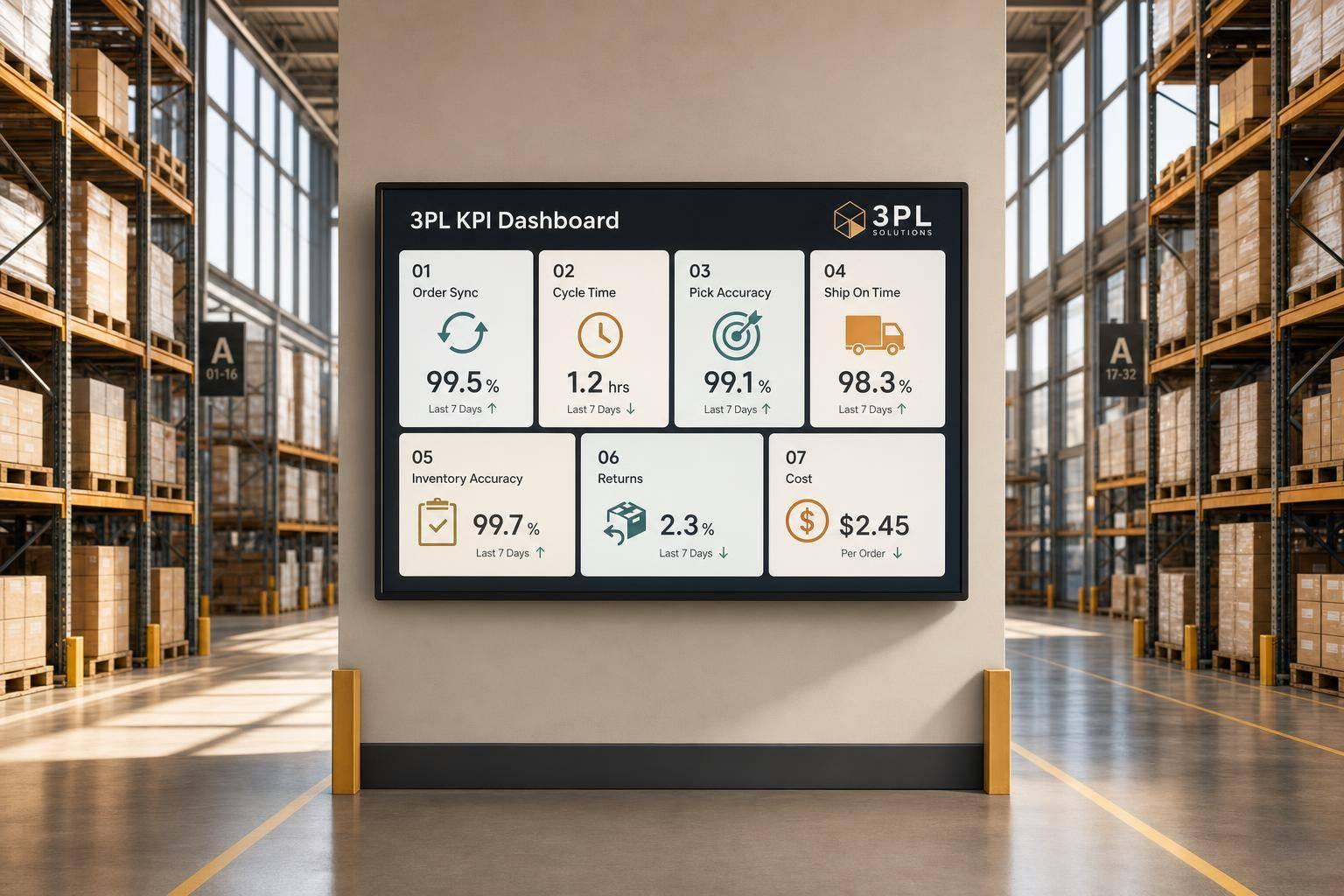
Choosing the right metrics gives insight into how well the returns process is functioning and where adjustments are needed. The five key KPIs for returns reconciliation are: returns processing time, reconciliation accuracy, cost per return, value recovered, and preventable return rate.
- Returns processing time tracks how long it takes for a returned item to move from the dock to its final outcome - whether that’s restocking, refurbishment, or disposal - and for the related financial tasks to be completed. This metric is crucial for identifying bottlenecks. Advanced systems have shown reductions in processing times by as much as 40–50%, speeding up refunds and getting recoverable inventory back into circulation. For many U.S.-based e-commerce brands, meeting customer expectations for refunds within 24–72 hours makes this metric especially critical.
- Reconciliation accuracy measures the percentage of returns where the item’s condition, inventory updates, and financial entries align with the RMA and client agreement on the first attempt. Automated reconciliation tools can push inventory accuracy levels to nearly 99%, minimizing disputes and rework.
- Cost per return calculates total expenses - such as labor for check-in and inspection, storage, and packaging - divided by the number of returns. Since costs vary by product type, tracking them separately ensures pricing models remain profitable.
- Value recovered looks at the total value salvaged from returned items (through resale, refurbishment, or liquidation) after deducting handling and disposition costs. Analyzing this by SKU and client helps identify which products are worth refurbishing and which are better suited for disposal.
- Preventable return rate identifies returns caused by avoidable issues, such as incorrect product listings, defects, or fulfillment errors. For example, if 30% of returns for a specific SKU are due to items being "not as described", it points to a problem with the product listing or photos. Reducing preventable returns not only cuts costs but also improves the customer experience.
Monitoring these KPIs via real-time dashboards and historical trend analysis is essential. During high-return periods, such as January’s post-holiday surge, temporary adjustments to targets may be necessary, but core accuracy metrics should remain consistent. Over time, baselines can be fine-tuned for each client and product category, allowing for seasonal and product-specific variations.
Using Data for Root Cause Analysis
KPI patterns are more than just numbers - they’re a roadmap to uncovering actionable insights. Root cause analysis turns raw returns data into a diagnostic tool that helps address underlying issues.
Start by standardizing return reason codes to reflect common drivers like product defects, transit damage, size or fit problems, incorrect shipments, or mismatched customer expectations. Grouping these reasons by SKU, supplier, carrier, or fulfillment center can reveal patterns. For instance, a high rate of damaged goods for a specific SKU might point to packaging issues, while frequent "not as described" returns could signal inaccurate product listings.
Time-series analysis can help identify whether an issue is a one-time event or a recurring problem. Cohort analysis - such as examining returns from a specific warehouse or shift - can uncover operational gaps or training needs. Adding qualitative data, like inspection photos and customer feedback linked to RMAs, provides additional context to validate trends. Advanced analytics platforms can flag high-return SKUs and distinguish between preventable and unavoidable returns, empowering teams to make targeted improvements.
The ultimate goal is to go beyond efficiently processing returns and work toward reducing unnecessary ones. Sharing these insights with brand partners transforms returns data into a strategic tool rather than a simple operational record.
Refining SOPs and Resource Planning
Once KPIs and root causes are identified, it’s time to refine processes. Standard operating procedures (SOPs) should be regularly reviewed and updated based on actual performance data, ensuring that operations remain efficient and relevant.
If metrics reveal frequent mismatches between physical returns and system records, SOPs for check-in, inspection, or inventory adjustments may need clearer steps or additional checkpoints. Similarly, if processing times are increasing, it could indicate overly complex workflows that need simplifying. Using process mapping workshops with real data can help eliminate unnecessary steps and improve efficiency.
For quality-related returns, updates might include revising inspection checklists, improving photographic documentation, or adopting tiered inspection levels based on risk. Each change should have a clear goal - such as reducing reconciliation errors by a specific percentage - and be measured post-implementation using the same KPIs.
Resource planning also needs to adapt to returns patterns. Historical data on return volumes, SKU mix, and processing times can help forecast labor needs during peak periods like Black Friday or post-holiday January. By combining these forecasts with labor benchmarks, 3PLs can schedule staff proactively rather than scrambling to react to volume spikes.
Dedicated returns zones should be designed to handle peak volumes, with flexibility to scale up or down as needed. For U.S.-based providers like JIT Transportation, integrating returns with other services - such as kitting, testing, and white-glove handling - can optimize resources and reduce fixed costs tied to separate operations.
Regular performance reviews with clients, incorporating KPI trends and root cause findings, create a framework for mutual accountability. This collaborative approach turns returns management into a strategic advantage rather than a cost burden.
Specialized 3PL Capabilities for Advanced Reconciliation
Handling returns for high-value items like electronics, medical devices, furniture, or subscription kits comes with unique challenges. These products often require serial-number tracking, functional testing, multi-component verification, and specialized packaging - tasks that go far beyond basic "receive-and-restock" processes. As mentioned earlier, standard workflows and tech integrations lay the groundwork, but when returns involve disassembly, testing, or refurbishment, specialized 3PL capabilities are critical to maintaining both inventory accuracy and financial integrity.
Value-Added Services
For complex products, a simple visual inspection isn’t enough. For instance, a returned laptop might need diagnostic testing to determine if it’s fully functional, repairable, or only usable for parts. A furniture set could arrive with one damaged piece that needs replacement before it can be resold. Subscription kits often come back with missing components, requiring a thorough check to identify what’s present.
- Kitting and assembly services are essential for reconciling multi-component returns. By reconfiguring incomplete bundles, 3PLs ensure inventory records reflect complete, saleable units.
- Testing and diagnostic capabilities are used to grade returned electronics, appliances, and other technical items. Functional tests help determine the condition and assign the appropriate disposition codes.
- Refurbishment and light repair services maximize value recovery by replacing damaged parts or performing cosmetic fixes. Each action - whether it’s labor time or parts used - is logged to create an auditable record tied to the original return authorization.
- White-glove handling is especially important for fragile or high-value items. This includes careful unpacking, detailed inspections with photos, and specialized repackaging, ensuring clear documentation to minimize disputes.
Companies like JIT Transportation integrate these value-added services into their returns processes. By offering kitting, testing, upgrades, and white-glove handling as part of a unified workflow, they eliminate the inefficiencies of transferring products between separate facilities. This streamlined approach improves both the speed and accuracy of returns reconciliation, especially when paired with a distributed facility network.
Nationwide Network and Scalability
A distributed returns network can significantly enhance both the speed and precision of reconciliation efforts. When a 3PL operates multiple facilities across the U.S., returns can be routed to the nearest center instead of a single hub. This reduces transit times, allowing for quicker inspections, faster inventory updates, and more timely refunds - key in a market where customers expect refunds within 48–72 hours. Shorter transit also lowers the risk of items being lost or damaged, improving alignment between carrier data and warehouse records.
A nationwide network also allows for product-specific segmentation. For example, high-touch items needing technical testing can be sent to specialized facilities, while standard returns are processed at high-volume centers. Consistent SOPs across all locations ensure uniform inspection standards, disposition codes, and system updates, enabling centralized reconciliation. Scalable infrastructure - featuring flexible labor, modular warehouse layouts, and advanced technology - also ensures 3PLs can handle seasonal spikes without sacrificing accuracy.
JIT Transportation operates facilities in California, Louisiana, Nevada, Texas, Tennessee, and Mississippi, offering nationwide coverage. Their distributed model reduces both transit costs and delays, ensuring returns are processed efficiently no matter where customers are located.
Integrated Returns Management
Specialized services and a nationwide network are most effective when paired with an integrated returns management system. Fragmented processes - where return authorization, receiving, inspection, and billing occur in disconnected systems - often lead to reconciliation gaps. An integrated approach connects every step into a single workflow, complementing the automated systems discussed earlier.
- Centralized RMA management captures all return details at the authorization stage, including original order info, reason codes, and special handling requirements. This master record follows the item through every stage, ensuring continuity.
- Automated receiving and inspection workflows reduce manual errors by using barcode or RFID scanning to verify items on arrival. Inspection results - like condition grades, test outcomes, and component checks - are logged in the Warehouse Management System (WMS) along with photos and notes. These outcomes trigger disposition codes (e.g., restock, refurbish, liquidate) and update inventory in real time.
- Activity-based billing ensures that every labor hour, test, or replacement part is logged as a billable line item tied to the RMA, bridging the gap between operational costs and invoicing.
- Disposition and secondary-market routing track items marked for liquidation, recycling, or resale with the same rigor as restocked items. This ensures full reconciliation of both inventory and financial records.
JIT Transportation’s technology and infrastructure enable this integrated approach. By managing transportation, warehousing, inspection, testing, refurbishment, and final disposition within a unified system, they eliminate the inefficiencies and data gaps that often complicate returns reconciliation.
As Hal Shapiro from Seagate Technology puts it, "JIT has been a trusted logistics partner for Seagate for years, and their reliability is unmatched. Day in and day out, they prove their commitment to seamless operations, ensuring our supply chain stays on track."
For e-commerce brands with complex product lines, evaluating a 3PL’s capabilities goes beyond reviewing a service list. Visiting facilities to inspect testing equipment, kitting areas, and white-glove stations can confirm these services are fully operational. Requesting sample returns reports or case studies for similar products can demonstrate how inspection results tie directly to inventory updates and billing. Piloting with a subset of SKUs and comparing metrics like reconciliation accuracy, processing times, and dispute rates before and after onboarding helps validate the impact of specialized capabilities on returns management.
Collaborating with E-Commerce Brands for Better Returns
When third-party logistics (3PL) providers and e-commerce brands operate independently, even the best technology and services can fall short. Achieving accuracy in returns reconciliation requires both parties to work together - sharing data in real time, reviewing performance collaboratively, and adapting quickly to changes in products or policies. Without this alignment, issues like mismatched reason codes, incomplete return merchandise authorization (RMA) data, and unexpected billing disputes can erode trust and slow down the entire returns process. A unified approach to policies and data sharing is the key to avoiding these pitfalls.
Aligning Returns Policies and Data Sharing
Collaboration starts with creating a shared Returns Operations Playbook. This document outlines everything from return windows and acceptable reasons to disposition rules and billing triggers. By following the same playbook, both the brand and 3PL eliminate ambiguity. For instance, it clearly defines how to handle a "damaged in transit" return versus a "change of mind" return. Each scenario should specify expected product conditions upon arrival, the appropriate disposition path (restocking, refurbishing, scrapping, or returning to the vendor), who bears the cost (brand, 3PL, or carrier), and any fraud-related red flags.
Standardizing reason codes is another critical step. Codes like "Damaged in transit", "Wrong item shipped", "Quality issue", "Size/fit", and "Change of mind" must be consistent across the brand’s e-commerce platform, order management system (OMS), and the 3PL’s warehouse management system (WMS). This consistency allows for detailed analysis at the reason-code level. For example, if 15–20% of returns for a specific SKU are flagged as "damaged in transit", it signals a potential packaging or carrier issue that needs immediate attention.
Real-time data sharing bridges the gaps that often delay month-end reconciliation. Both the brand and 3PL should exchange RMA data (order ID, SKU, quantity, reason code, channel, approval status), tracking and carrier details for inbound returns, inspection outcomes (including photos for disputes), disposition updates (restocked, quarantined, scrapped, or sent for refurbishment), and financial details like handling steps and billable activities. Advanced 3PLs with integrated technology can provide these insights through dashboards, offering clients the same operational transparency their warehouse teams rely on.
For instance, JIT Transportation uses collaborative dashboards to give clients detailed visibility into returns processing, inventory updates, and billing. This transparency eliminates manual reconciliation work, reducing delays and disputes at the end of the month. Shared practices like these form the foundation for effective governance and regular performance reviews.
Governance and Regular Reviews
Shared policies and data only work when both sides actively monitor performance and adjust as needed. A solid governance model includes quarterly business reviews (QBRs) where the brand and 3PL evaluate key performance indicators (KPIs) like returns processing time, inventory reconciliation accuracy (often targeted at 98–99% or higher), and cost per return. These reviews also analyze top reason codes and high-return SKUs to identify potential product or listing issues. Discrepancy reports - such as mismatches between approved RMAs and received items or between expected and billed handling steps - are also addressed during these sessions.
Operational huddles held monthly or biweekly can focus on exceptions and immediate corrective actions, while QBRs set or refine shared targets for reconciliation accuracy, service level agreement (SLA) adherence, and customer satisfaction. Documenting meeting minutes, assigning responsibilities, and setting deadlines ensure that improvements are implemented.
Key metrics to track include:
- Return-to-refund cycle time: Time from carrier delivery at the 3PL to when the refund or credit is issued (often 2–5 business days for U.S. e-commerce).
- Inventory reconciliation accuracy: Best-in-class operations approach 99% accuracy using real-time WMS and automated reconciliation.
- Complete data percentage: The proportion of returns with full RMA data, reason codes, and inspection results.
- Discrepancy rate: The gap between what RMAs specify and what is actually received.
- Cost per return: Broken down into labor, materials, and write-offs.
Setting shared goals and tying them to quarterly reviews aligns priorities and clarifies where adjustments are needed. For example, one 3PL using automated reconciliation technology saved $250,000–$300,000 per month by accurately reconciling carrier invoices against estimates and charging discrepancies back to clients. This demonstrates the financial benefits of transparent, automated reconciliation processes.
Change Management for Evolving SKUs
E-commerce brands frequently update SKUs, packaging, or product configurations - whether due to seasonal changes, supplier updates, or new product bundles. Without a structured change-management process, these updates can lead to reconciliation errors. For example, unexpected dimensions, missing components, or altered packaging can delay inspections, cause incorrect disposition codes, and spark billing disputes. Regular reviews should include a focus on managing these changes to ensure the Returns Operations Playbook stays current.
A strong change-management process involves advance notice and digital SKU setup before the first shipment. Brands should provide updated master data - such as dimensions, weight, packaging type, and tracking rules - which the 3PL then loads into its WMS and ERP systems. Revised inspection and disposition rules should accompany any new or modified SKUs, and visual aids for returns teams should reflect these changes. For packaging updates that affect damage rates or dimensions, the brand and 3PL can monitor data before and after implementation to validate improvements.
3PLs offering additional services like kitting and assembly or testing can adapt to changes more seamlessly. For instance, if a brand introduces a new subscription kit with five components instead of three, a 3PL that handles kitting in-house can update its processes without needing to transfer products to another facility. This ensures consistent reconciliation rules even as the physical product evolves.
Clear communication and documentation are essential to avoid misunderstandings. Change logs should track every update to policies or SKUs, and all changes should be confirmed in writing - via a ticketing system, for example - before implementation. Visual standards, including photos of "restockable", "refurbishable", and "damaged" items, along with billing examples for different scenarios (e.g., no-fault carrier damage versus customer remorse), help reduce ambiguity and speed up dispute resolution.
For U.S. brands, working with a 3PL that has multiple facilities strategically located across the country can cut transit times for returns and get inventory back online faster. A unified WMS and OMS layer ensures consistent handling of returns across different states, while consolidated dashboards provide real-time visibility into returns volume, conditions, and financials nationwide. Providers like JIT Transportation, which combine a nationwide presence with advanced technology and additional services, can centralize reconciliation processes while executing returns locally, giving brands a clear, itemized view of both physical and financial outcomes.
In addition to improving reconciliation accuracy, collaboration between brands and 3PLs can directly reduce avoidable returns. Analyzing returns data to identify SKUs with high return rates due to sizing, color, or expectation issues can lead to better product pages, size charts, or images. Reviewing reason-code and carrier data can highlight packaging or handling problems, prompting redesigns for cartons or cushioning. Testing different return options - like "no-box, no-label" drop-offs versus mail-ins - and measuring their impact on damage and fraud rates can refine the returns experience. Feeding inspection insights - such as recurring defects or quality issues - back to product and supplier teams creates a feedback loop. As avoidable returns decrease, reconciliation becomes more predictable, and both parties benefit from smoother operations.
Conclusion
Returns reconciliation is where operational discipline meets financial precision. When a third-party logistics provider (3PL) adopts standardized workflows and integrates systems like WMS, TMS, OMS, and ERP, inventory accuracy can soar to 99%, while processing times can drop by as much as 40–50%.
The best 3PLs treat returns reconciliation as an ongoing, collaborative process - not as a last-minute task. By sharing detailed data with e-commerce brands, such as SKU-level reason codes, inspection results, disposition paths, and billable activities, both sides gain the insights needed to minimize preventable returns, improve product listings, and optimize packaging before small issues become big problems. Regular governance meetings - whether monthly check-ins or quarterly reviews - keep key metrics like processing speed, reconciliation accuracy, cost per return, and customer satisfaction in focus. This constant collaboration ensures that reconciliation processes can adjust seamlessly to changes like new SKUs, seasonal demand spikes, or shifting customer preferences, all without sacrificing speed or precision. Ultimately, this level of operational excellence translates directly into a better experience for customers.
For U.S.-based e-commerce brands, strong returns reconciliation isn’t just about internal efficiency - it’s a cornerstone of a customer-friendly return process. Standardized inspections and integrated systems enable faster refunds, clearer status updates, and fewer lost or misdirected returns.
Providers like JIT Transportation demonstrate how advanced technology and specialized services can transform the returns process. Offering fast, prepaid return options for U.S. customers, along with value-added services like pick and pack, kitting, assembly, testing, and white-glove handling, JIT Transportation helps e-commerce brands manage peak seasons without compromising accuracy. Their tech solutions integrate seamlessly with clients' WMS, OMS, and ERP systems, ensuring that inventory and billing stay aligned as returns move through inspection, refurbishment, and restocking. This approach turns returns into a more predictable, insight-driven part of the customer lifecycle, rather than a costly headache.
To get started, conduct a thorough review of your current workflows and system integrations. Measure your key performance indicators - like processing times, inventory accuracy, and return costs - against the benchmarks in this guide. Then, partner with a 3PL that can craft a standardized, technology-driven reconciliation model tailored to your product mix, seasonal needs, and U.S. customer base. By doing so, you’ll build a returns process that protects your bottom line, enhances customer trust, and scales alongside your business.
FAQs
How does using tools like WMS, TMS, OMS, and ERP improve returns reconciliation in 3PL operations?
Integrating advanced systems like Warehouse Management Systems (WMS), Transportation Management Systems (TMS), Order Management Systems (OMS), and Enterprise Resource Planning (ERP) can transform how 3PL providers handle returns reconciliation. These tools simplify operations by automating data collection, improving inventory tracking, and offering real-time insights into every step of the returns process.
With these systems in place, 3PL providers can minimize errors, accelerate processing times, and deliver precise reporting. The result? Smoother operations and happier customers. Faster refunds or replacements and clear communication throughout the returns journey create a better overall experience for everyone involved.
What are the advantages of creating dedicated returns zones in a 3PL warehouse, and how do they help maintain separation from outbound inventory?
Establishing dedicated areas for returns within a 3PL warehouse can bring about noticeable improvements in both organization and workflow. By setting aside specific zones for managing returned items, warehouses can simplify tasks like inspection, sorting, and restocking. This approach helps reduce delays and minimizes mistakes in the process.
Another key benefit is the prevention of cross-contamination with outbound inventory. Keeping returned goods separate ensures that items that are damaged or defective don’t accidentally make their way back into the supply chain. This not only protects the quality of products but also helps maintain customer satisfaction. This level of separation becomes even more critical when dealing with large volumes of returns or specialized items that demand extra attention.
How can a well-organized returns workflow enhance customer satisfaction and boost profitability for e-commerce businesses?
A well-organized returns process plays a key role in creating a seamless experience for customers. When returns are handled efficiently, customers are more likely to feel valued, which strengthens their trust and loyalty. By simplifying the process, businesses can cut down on mistakes, speed up processing times, and ensure quick refunds or replacements - steps that go a long way in boosting customer satisfaction.
From a business standpoint, a streamlined returns system can significantly lower operational costs. By effectively managing labor, technology, and inventory, companies can save resources while also gaining useful insights from return data. These insights can help spot trends, reduce the number of returns, and enhance product quality. Altogether, this approach not only improves customer relationships but also helps e-commerce brands stay competitive and increase their revenue.
Related Blog Posts
Related Articles
7 WooCommerce 3PL KPIs Teams Track

Centralized vs Decentralized Replenishment
