
Buffer Inventory in E-commerce Fulfillment
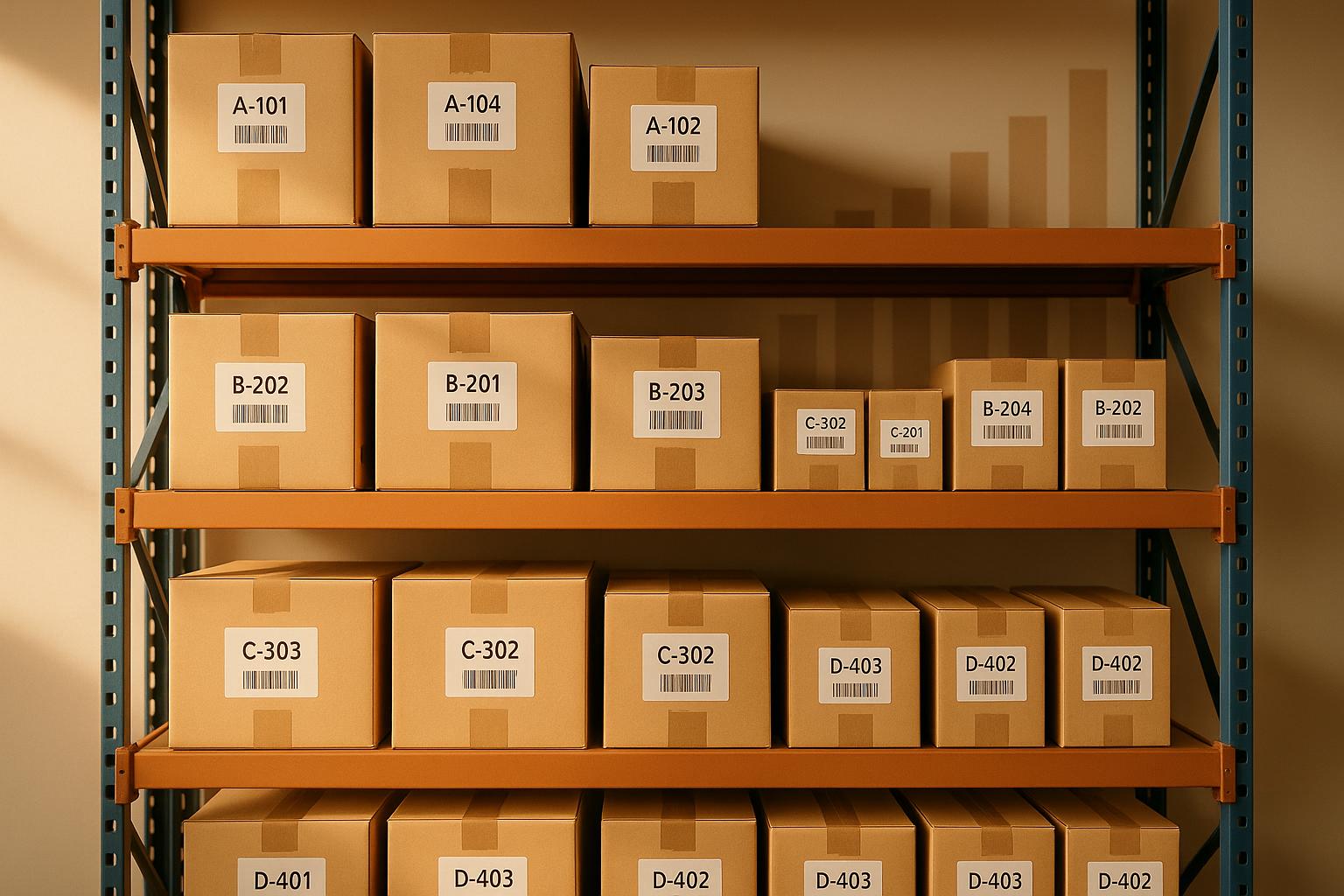
Buffer inventory, also known as safety stock, is the extra inventory e-commerce businesses keep to handle unexpected demand spikes, supplier delays, or shipping issues. It ensures smooth order fulfillment, especially in fast-paced markets where customers expect quick delivery.
Key Points:
- Purpose: Prevent stockouts, maintain customer satisfaction, and avoid late deliveries.
- Why It's Important: Essential for managing risks like sudden demand surges (e.g., Black Friday) and supply chain disruptions.
- Challenges: Balancing costs (storage, tied-up capital) with the risk of losing sales due to stockouts.
- Solutions: Use data-driven methods to calculate safety stock, adjust for seasonal demand, and work with 3PL providers for flexibility and efficiency.
Buffer inventory is a safeguard that protects revenue and builds customer trust by ensuring products are available when needed. The right balance prevents overstocking while minimizing stockouts, making it a cornerstone of effective e-commerce fulfillment.
Buffer Stock Automation | How to set up buffer stock for marketplace inventory accuracy
Strategies for Managing Buffer Inventory
Managing buffer inventory is all about striking the right balance - keeping enough stock to handle unexpected surges in demand without tying up too much cash in excess inventory. With thoughtful planning and the right tools, even beginners can develop strategies to prevent stockouts while staying financially efficient. These strategies ensure your buffer inventory supports unexpected demand while aligning with your overall fulfillment goals. Let’s dive into how to quantify and manage this essential safety net.
How to Calculate Buffer Inventory Levels
To set effective buffer inventory levels, you first need solid baseline data. Start by gathering 12–24 months of order history for each SKU, including daily or weekly order quantities, returns, and cancellations. You'll also need detailed supplier and carrier lead times - not just the average, but the minimum and maximum times, since variability is exactly what buffer inventory is designed to address. Finally, determine your target service level, such as fulfilling 95% or 99% of orders without backorders, and consider constraints like warehouse space or budget limitations.
Once you have this data, you can calculate safety stock using a widely applicable formula. Start with your average daily demand and its standard deviation, then apply a service factor (e.g., 1.65 for 95% or 2.33 for 99%) to account for variability. The formula is straightforward: multiply the service factor by the demand variability during the lead time. Many inventory management systems can handle these calculations for you, or you can set up a simple spreadsheet to automate the process.
Your reorder point, the inventory level that triggers a new purchase order, is calculated as:
average daily demand × average lead time + safety stock.
For instance, if you sell an average of 50 units per day, your supplier’s lead time is 14 days, and your safety stock calculation is 150 units, your reorder point would be:
(50 × 14) + 150 = 850 units.
When inventory dips to 850 units, it’s time to reorder.
Different methods suit different businesses. A fixed buffer (e.g., keeping an extra 50 units of a SKU) works well for smaller catalogs with stable demand and low carrying costs. It’s simple to implement and easy for teams to manage. A percentage-based buffer (e.g., holding 10–20% of forecast demand as safety stock) is better for fast-moving catalogs where demand is somewhat predictable but doesn’t yet justify detailed statistical modeling. For high-volume, multi-channel operations, statistical methods that account for demand and lead-time variability are ideal, as they balance capital efficiency with service-level goals. Many businesses start with fixed or percentage-based buffers for their top-selling SKUs and transition to statistical models as they grow.
Using Technology for Inventory Management
Modern inventory management tools, ERPs, and order management systems can streamline buffer inventory management by offering real-time visibility and automated reorder points.
The key is setting up centralized, SKU-level inventory records that consolidate data from all your sales channels - whether it’s your website, Amazon, or retail partners. These systems should clearly show available-to-sell quantities, excluding buffer inventory, to prevent overselling the stock you’ve reserved for emergencies. This is particularly important for omnichannel operations where inventory is spread across multiple fulfillment centers and sales platforms.
Automate reorder points and low-stock alerts based on your buffer inventory calculations. Ideally, your system should trigger alerts or even generate purchase orders when inventory drops below a set threshold. You can also configure exception alerts for sudden changes in lead times or demand, giving you time to adjust before issues arise.
Integration is critical. Use APIs or EDI connections with your 3PL to ensure real-time updates on warehouse stock, in-transit inventory, and reserved quantities. This minimizes the risk of overselling or overstocking due to outdated information.
Your system should also track key performance indicators (KPIs) like fill rate by SKU and channel, stockout instances, inventory turnover, and days of inventory on hand. These metrics can reveal whether your buffer inventory is too low (frequent stockouts) or too high (excess stock tying up cash). Regularly monitoring forecast accuracy, lead time variability, and carrying costs will help you refine your buffer levels over time. The goal is to measure how effectively your buffer inventory prevents stockouts while minimizing unnecessary capital investment.
Adjusting Buffer Inventory for Seasonal Demand
Seasonal demand shifts make it essential to adjust buffer inventory proactively. Major shopping events like Black Friday, back-to-school season, and the December holidays often result in sales spikes that far exceed normal weekly or monthly activity. Without planning, you risk running out of stock during these critical periods - or paying a premium for expedited shipments to restock.
Start by analyzing historical sales data for each peak season by SKU and channel. Identify how much sales increased compared to a typical period, and use that uplift to temporarily adjust your safety stock and reorder points for the 6–12 weeks surrounding the event. Don’t just apply a blanket percentage increase; factor in longer lead times, as suppliers and carriers are often stretched thin during busy seasons.
Plan for potential delays by extending lead time estimates during peak periods. Lock in carrier and 3PL capacity early to secure the resources you’ll need. Create scenario plans to handle demand fluctuations, such as, “If demand exceeds forecast by 20%, we’ll add X units of buffer.” This ensures your seasonal buffers are based on strategy, not last-minute reactions.
To avoid overstocking, shorten planning horizons for highly seasonal or trend-sensitive items. For instance, if you sell fashion or limited-edition products, keep buffers conservative and rely on quicker replenishment cycles for evergreen items. Coordinate closely with marketing and merchandising teams to align inventory levels with promotional campaigns. Establish clear plans for liquidating excess inventory after the season ends, such as markdowns or flash sales, to free up space and cash.
Some brands use test buys or limited pre-orders to refine demand forecasts before committing to larger seasonal buffers. This approach is especially useful for new or unproven products.
Partnering with a 3PL can simplify seasonal buffer management. Providers with multi-node warehousing and flexible capacity can position inventory closer to customers, reducing the need for excessive safety stock. Logistics partners like JIT Transportation offer services such as pick-and-pack, kitting, and white-glove handling, which can help you meet tight delivery timelines without overloading your own resources. Their flexible infrastructure allows you to ramp up storage and fulfillment capacity for peak seasons, then scale back down afterward, avoiding unnecessary year-round costs.
Experts recommend starting small - focus on your top-selling and high-margin SKUs - and using spreadsheets for initial calculations. As your business grows, you can move to automated systems. Review buffer levels regularly, especially after major disruptions or supplier changes. By treating buffer inventory as an investment in customer satisfaction rather than just extra stock, you can strike the right balance between service levels and financial efficiency.
Challenges of Buffer Inventory in E-commerce
Buffer inventory plays a crucial role in preventing stockouts and keeping customers happy, but it comes with its own set of challenges. These hurdles can put pressure on your finances, operations, and decision-making processes. Striking the right balance between having enough buffer inventory and controlling costs is a constant challenge for e-commerce businesses. Let’s dive into the financial and operational complexities that come with maintaining buffer stock.
Managing Costs and Inventory Levels
One of the most immediate challenges of buffer inventory is the financial strain it imposes. Every unit of inventory sitting in storage ties up cash, and the costs don’t stop there. Storage fees, utilities, insurance, labor for handling, and even the opportunity cost of locked-up capital all add up quickly. For small and mid-sized e-commerce brands operating with tight cash flow, these expenses can significantly limit growth.
Carrying costs can range from 20% to 30% of the inventory’s value annually for many U.S. e-commerce businesses. Beyond these direct expenses, there’s the risk of products becoming obsolete, expiring, or going out of season, which often leads to markdowns or write-offs. These losses directly eat into gross margins.
Managing a diverse product catalog across multiple sales channels only makes things more complicated. Each SKU and platform may require its own buffer levels. Without careful planning, you might end up with excess stock in one location and shortages in another. To stay on top of these challenges, it’s essential to calculate your total carrying costs and weigh them against the potential costs of stockouts - such as lost sales, expedited shipping, and customer dissatisfaction. For example, aiming for a 99% fulfillment rate might sound great, but the extra buffer inventory required could cost more than the occasional revenue loss from stockouts. A more realistic target, like 95% or 97%, could be a better financial decision.
Key performance indicators like inventory turnover and days of inventory on hand can help you gauge whether your buffer levels are too high or too low. Fast-moving items might aim for six to ten inventory turns per year, meaning stock gets replenished every 36 to 60 days. If turnover slows or days on hand increase, it’s a sign you’re carrying too much inventory. On the flip side, frequent stockouts and backorders suggest your buffers are too thin.
Segmenting your inventory can also help optimize costs. Focus on maintaining higher buffer levels for your best-sellers, high-margin products, or items critical to your brand. For slower-moving SKUs, consider leaner buffers or even a make-to-order approach. This strategy ensures your resources are concentrated on what matters most, rather than being spread thinly across less impactful items.
Overstocking vs. Understocking Risks
Striking the right balance with buffer inventory is tricky. Overstocking and understocking each come with their own set of risks and consequences.
Overstocking inflates carrying costs and ties up capital that could be used for growth. It often leads to a cycle of discounting and clearance sales to offload excess inventory. Crowded warehouses can slow down operations, and products that sit too long are more likely to get damaged or shrink in value. If your inventory turnover slows, holding days increase, or you’re frequently marking down products, these are clear signs of overstocking.
Understocking, on the other hand, can be just as damaging. Stockouts result in backorders, canceled orders, and delayed deliveries, all of which hurt customer satisfaction. In the competitive e-commerce space, a single out-of-stock experience can drive customers to competitors. Platforms like Amazon also penalize stockouts, as consistent availability is critical for search rankings and winning the Buy Box.
The financial impact of these scenarios varies. Overstocking leads to higher storage costs, markdowns, and write-offs, while understocking causes lost sales and customer churn. To find the right balance, it’s helpful to model these costs. For instance, compare the expense of a 5% increase in safety stock to the revenue lost from a 5% rise in stockouts. This kind of analysis can help you determine the optimal buffer levels for your business.
An apparel brand facing overstock issues segmented its SKUs by sales velocity. By reducing buffer levels for slow-moving items and increasing safety stock for high-demand products, they improved cash flow and minimized discounting without increasing stockouts. Similarly, a consumer electronics seller struggling with frequent stockouts brought in a secondary supplier and increased buffer stock from 10 to 18 days of coverage. This adjustment improved their ratings and boosted net revenue, which more than offset the additional carrying costs.
To manage these risks effectively, track data like historical demand by SKU, supplier lead times, shipment delays, and return rates. This information can help you fine-tune safety stock levels, reorder points, and purchasing schedules before issues like stockouts or excess inventory arise.
Supply Chain Disruptions and Buffer Inventory
Supply chain disruptions - whether caused by port congestion, carrier delays, supplier shortages, or geopolitical events - can throw even the best buffer inventory strategies into disarray. While buffer stock is meant to handle normal fluctuations, extended disruptions can deplete safety stock before new inventory arrives, leading to stockouts.
Since the COVID-19 pandemic, many U.S. retailers have shifted from lean, just-in-time inventory models to more cautious, just-in-case strategies. This shift has led to increased buffer levels, but it also comes with higher carrying costs. For example, warehouse vacancy rates have plummeted as businesses like Amazon, Target, and Walmart expand their fulfillment networks to accommodate greater inventory levels.
Smaller e-commerce brands, however, often lack the resources to adopt such strategies across their entire catalog. Limited cash flow and storage space mean they usually focus on maintaining buffers for best-sellers or mission-critical items. This leaves them vulnerable to disruptions like delayed shipments or supplier outages, which can quickly erode their buffer stock and disrupt operations.
Disruptions can also create uneven inventory arrivals. A delayed shipment arriving all at once can overwhelm storage capacity, complicating space management and driving up costs. To make buffer inventory more resilient, contingency planning is essential. Start by setting different buffer policies based on the importance of each SKU. For high-priority products, maintain higher safety stock and consider backup suppliers. For less critical items, you might accept a higher risk of temporary stockouts. Diversifying suppliers and carriers can also reduce the risk of disruptions. If one supplier or carrier experiences delays, having alternatives in place can help maintain steady inventory levels.
These challenges highlight the importance of proactive management and strategic planning, which we’ll explore further in the solutions section.
sbb-itb-eafa320
Solutions for Better Buffer Inventory Management
Managing buffer inventory effectively means adopting the right tools, forming strategic partnerships, and implementing smart approaches. The focus should shift from reactive management to proactive, data-informed strategies.
Working with a 3PL Provider
Teaming up with a third-party logistics (3PL) provider can transform how you manage buffer inventory. Instead of handling warehousing, fulfillment, and inventory optimization yourself, you gain access to specialized expertise, advanced infrastructure, and cutting-edge technology - without the hefty upfront costs.
A reliable 3PL offers flexibility that’s hard to replicate in-house. As sales fluctuate due to seasonal trends, promotions, or unexpected spikes in demand, a 3PL can scale operations accordingly. This prevents you from committing to long-term leases or hiring additional staff. For e-commerce brands, this adaptability is particularly useful when managing buffer inventory across multiple locations to reduce shipping costs and delivery times.
The financial advantages are clear. By outsourcing, you avoid tying up capital in warehouse space, equipment, and labor. Instead, you pay for services based on usage, maintaining cash flow while ensuring sufficient buffer inventory to avoid stockouts. Additionally, 3PLs often negotiate better shipping rates due to their high shipping volumes, which can help offset service fees.
Take JIT Transportation, for example. With a network spanning cities like San Francisco, Los Angeles, Austin, and Memphis, JIT enables brands to position inventory regionally. This not only speeds up delivery but also strengthens resilience against disruptions.
"JIT has been a trusted logistics partner for Seagate for years, and their reliability is unmatched. Day in and day out, they prove their commitment to seamless operations, ensuring our supply chain stays on track. We know we can count on JIT to deliver, every time." - Hal Shapiro, Seagate Technology
When choosing a 3PL, look for providers offering integrated technology platforms. Features like real-time inventory tracking, automated reorder alerts, and API connections to your storefronts are crucial for maintaining accurate buffer levels. Strong partnerships also include regular performance reviews to evaluate metrics such as order fill rates, stockout frequency, and inventory turnover. These insights help refine safety stock rules based on actual data.
Additional services like pick and pack, kitting, returns processing, and special handling further enhance inventory management. These extras streamline operations, offering better control and visibility over your stock across all sales channels.
"JIT sets the bar high in logistics. Their on-time performance, ability to handle last-minute requests, and expertise in material handling are game-changers for us. Add to that their competitive pricing and professional service, and it's clear why they're one of our most valued partners." - Curtis Martin, Senior Operations Manager, Synnex
Incorporating data analytics into these partnerships can take your inventory management to the next level by dynamically adjusting safety stock levels.
Using Data Analytics for Inventory Planning
Gone are the days of static buffer inventory rules. Data analytics now allows businesses to dynamically adjust safety stock levels based on real-time conditions. By analyzing historical sales data, seasonal trends, and channel-specific performance, you can forecast demand with greater precision. Instead of guessing how much buffer stock is needed, you can calculate it using proven methods that factor in lead-time variability and desired service levels.
For instance, using analytical methods that multiply lead-time variability by average demand and a service factor provides a statistically sound foundation for calculating safety stock . When planning, consider both average and maximum replenishment lead times. If your typical lead time is 14 days but occasionally stretches to 21 days, your buffer inventory should account for that worst-case scenario to avoid stockouts, especially for critical products.
Continuous monitoring is key. Systems that track demand variability, supplier performance, and stockout incidents allow you to adjust buffer levels automatically as conditions change. Automated reorder points, configured through your warehouse or order management systems, ensure timely replenishment by triggering orders when inventory reaches a calculated threshold .
Segmentation is another game-changer. Not all products require the same level of buffer protection. High-demand items, best-sellers, and high-margin products should have higher service-level targets and more generous buffers. Meanwhile, slower-moving or lower-margin items can tolerate a higher risk of temporary stockouts. Tailoring buffer levels by segment ensures optimal inventory investment .
For seasonal businesses, analyzing historical demand is essential. If sales spike during November and December, you can build buffer inventory in advance instead of scrambling to keep up. Similarly, you can scale back during slower months, freeing up cash and warehouse space .
Many e-commerce brands now rely on advanced forecasting tools that incorporate diverse data sources. These tools go beyond past sales, factoring in marketing campaigns, competitor pricing, and even weather forecasts for seasonal products. The more data you feed into these models, the more accurate your buffer inventory planning becomes.
Combining advanced analytics with specialized logistics bridges the gap between strategy and execution.
JIT Transportation for E-commerce Fulfillment

For e-commerce brands aiming to optimize buffer inventory while ensuring fast, reliable fulfillment, JIT Transportation offers a comprehensive solution. Their approach blends nationwide distribution infrastructure with tailored services and advanced technology designed specifically for e-commerce.
With a national network of fulfillment centers, JIT helps brands strategically position buffer inventory. This setup reduces shipping times, cuts last-mile costs, and provides resilience against regional disruptions like severe weather or carrier delays.
JIT focuses on speed and reliability - key factors when replenishing stock quickly to meet demand spikes or avoid stockouts. Whether you need local delivery, full truckload shipping, or white glove service for delicate or high-value items, JIT’s carrier network ensures timely and secure transportation.
Their pick and pack services enhance fulfillment speed and accuracy, while kitting and assembly capabilities handle complex orders with ease. For products requiring special care, JIT’s white glove handling ensures that high-value or fragile items are managed with precision - ideal for electronics, medical devices, or luxury goods.
"In logistics, consistency is everything - and that's exactly what JIT delivers. Their transportation services are dependable, seamless, and backed by a team that truly understands our business needs. Working with JIT has made a tangible difference in our efficiency and customer satisfaction." - Armando Otiz, Manager 3pl/Inventory, Exclusive Networks
JIT’s technology provides real-time inventory visibility across all locations and channels. By integrating with your ERP, storefronts, and marketplaces, their system ensures accurate buffer levels and timely replenishment.
As part of Riverhorse Logistics, JIT leverages an extensive network to offer cost-effective fulfillment. This allows brands to implement sophisticated inventory strategies - such as maintaining higher safety stock in high-demand regions while keeping leaner buffers elsewhere - without the complexity of managing multiple warehouses independently.
Conclusion
Buffer inventory acts as a safeguard for revenue and customer loyalty, helping businesses handle sudden demand surges and supply chain hiccups. When managed effectively, it ensures orders are fulfilled without delays, directly impacting delivery speed and customer trust.
For U.S. e-commerce brands promising 2-day or next-day delivery, this strategy is crucial. Consistently keeping items in stock and delivering on time builds trust in your reliability and boosts customer lifetime value. By avoiding stockouts - especially for core products or during high-stakes periods like Black Friday, Cyber Monday, or viral sales moments - you can prevent customers from turning to competitors and protect your revenue during peak demand.
Finding the right buffer inventory balance is key. Too little stock risks missed sales and unhappy customers, while too much ties up cash and increases storage costs. Striking this balance requires ongoing effort. Demand shifts, lead times vary, and service goals evolve, so regular reviews - monthly or quarterly - are necessary to stay on top of changes.
Start by auditing metrics like stockout frequency, holding costs, and service levels. Use safety stock formulas that factor in demand and lead-time variability to set your buffer targets. Implement reorder points in your warehouse or order management system and keep an eye on inventory turnover to catch potential issues early. As new data on sales and supplier performance comes in, adjust your safety stock levels to reflect current conditions.
Real-time data is your ally here. It allows you to fine-tune buffer thresholds and address problems before they snowball. Tools like automated reorder triggers and data-driven forecasting enable you to scale your buffer strategy across multiple locations and sales channels while maintaining control. The better your data, the more precise your inventory planning will be.
Buffer inventory also plays a critical role in building a resilient supply chain. While no strategy can eliminate all risks, a well-thought-out buffer plan helps absorb shocks from delays, carrier issues, or unexpected demand spikes, ensuring smooth operations. This approach works hand-in-hand with proactive planning and adaptable logistics. For brands aiming to streamline buffer inventory placement, storage, and replenishment, working with a skilled 3PL can make a big difference. Providers like JIT Transportation offer nationwide fulfillment networks, transportation services, and specialized capabilities - like pick and pack, kitting, and white glove handling - that support advanced inventory strategies. With strategically located warehouses and integrated technology, brands can position safety stock regionally, cutting shipping times and costs while staying flexible enough to scale with demand.
FAQs
How can e-commerce businesses calculate the right buffer inventory levels to minimize costs while ensuring customer satisfaction?
Determining the right buffer inventory levels is all about finding a sweet spot: having enough stock to handle unexpected demand without overloading on storage costs. Start by diving into your historical sales data, factoring in seasonal trends and supplier lead times. This will give you a clearer picture of potential demand swings and help you set appropriate safety stock levels.
Key considerations include your average order volume, how dependable your suppliers are, and the costs tied to holding inventory. As your business evolves or market conditions shift, it’s important to regularly reassess and tweak these levels. Using advanced inventory management tools can make this process smoother, offering real-time insights to keep your supply chain running efficiently.
How does technology help manage buffer inventory to avoid stockouts and overstocking?
Technology plays a key role in managing buffer inventory effectively by offering real-time insights into stock levels, demand patterns, and supply chain activities. With the help of advanced inventory management systems, businesses can use data analytics and forecasting tools to predict demand with greater precision. This ensures they maintain just the right amount of buffer stock - avoiding both overstocking and the risk of running out of inventory.
Automation and seamless integration with supply chain partners further simplify the inventory replenishment process. For instance, these systems can automatically place reorder requests when stock levels fall below a set threshold, cutting down on delays. By adopting these tools, companies can boost operational efficiency, lower costs, and consistently meet customer expectations in the fast-paced world of e-commerce.
How can e-commerce businesses adapt their buffer inventory strategies to handle seasonal demand changes and supply chain disruptions?
To handle seasonal demand shifts and supply chain hiccups effectively, e-commerce businesses should adopt a flexible buffer inventory strategy. The first step? Dive into your historical sales data. By pinpointing peak seasons, you can adjust inventory levels to ensure you’re well-stocked to meet customer needs - without the risk of overstocking.
It’s also crucial to build solid partnerships with your suppliers and logistics providers. Strong relationships can make all the difference when quick responses are needed during unexpected disruptions. On top of that, using tools for real-time inventory tracking and demand forecasting can give you the data you need to make smarter, faster decisions. And if you’re looking for extra logistical support, teaming up with a 3PL provider can simplify operations and strengthen your supply chain.
Related Blog Posts
Related Articles
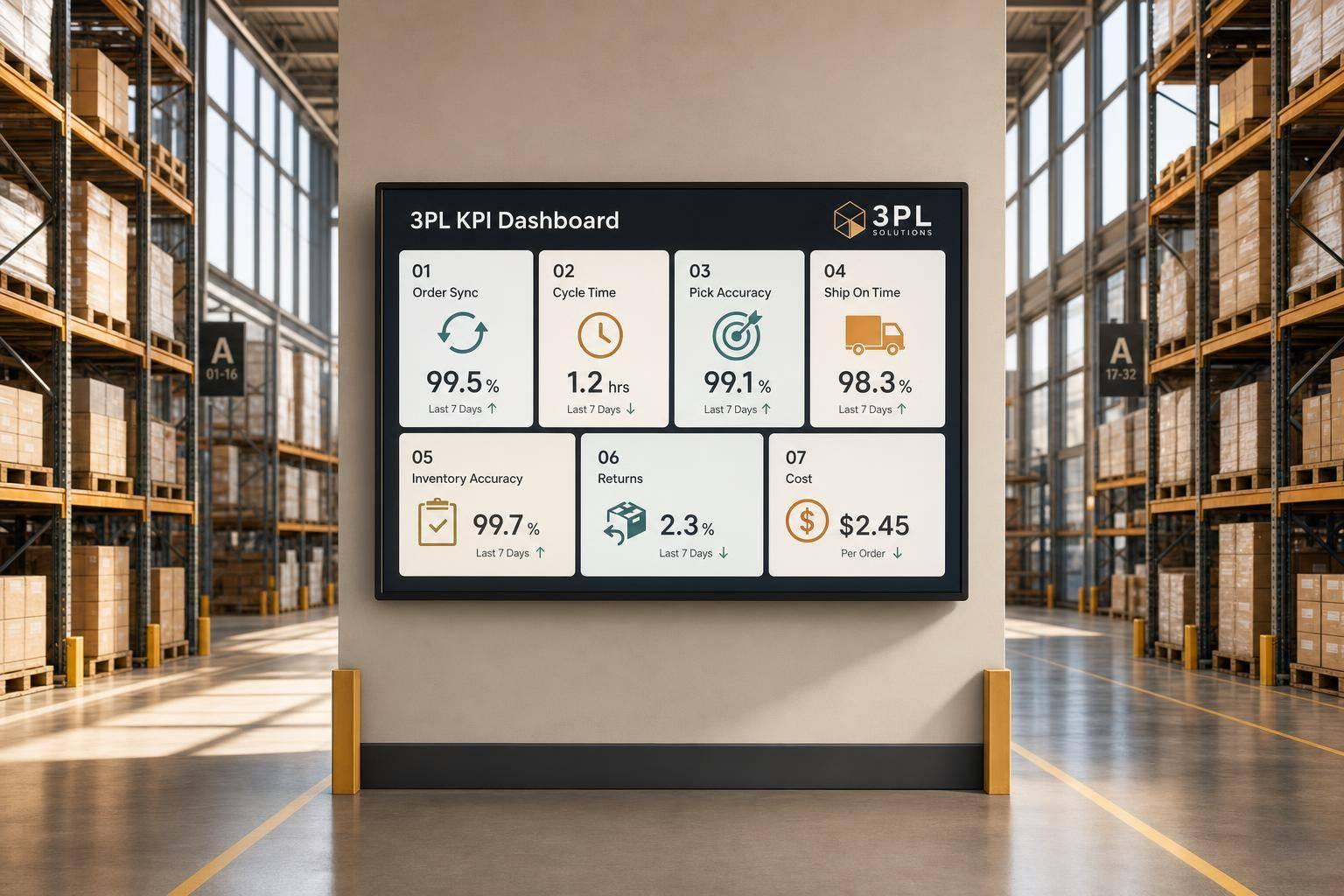
7 WooCommerce 3PL KPIs Teams Track

Centralized vs Decentralized Replenishment
