
Custom Packaging vs. Standard Packaging
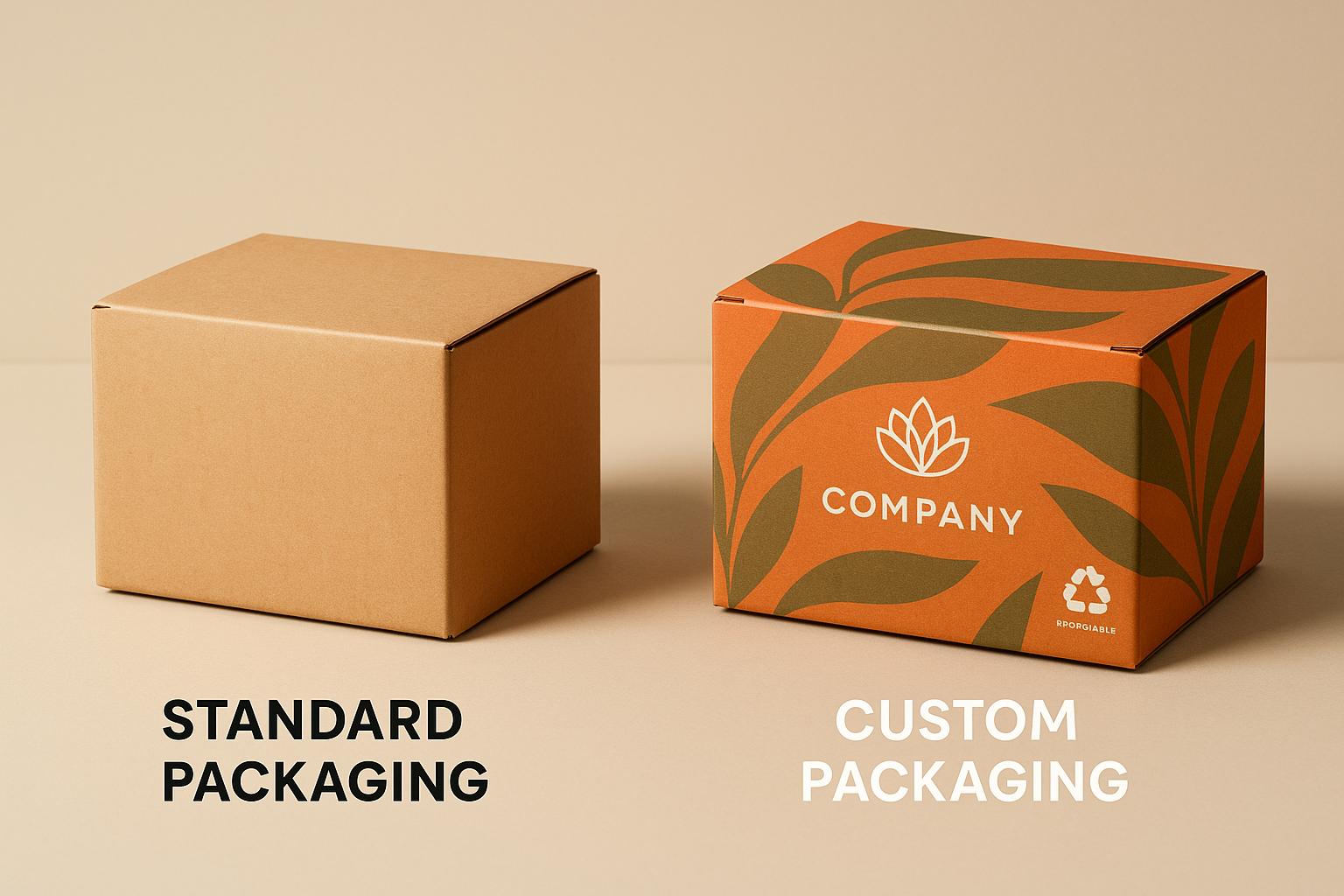
When it comes to packaging, your choice between custom and standard options can significantly impact your brand, costs, and customer experience. Here’s the key takeaway:
- Standard packaging is affordable, quick to source, and ideal for startups or businesses focused on cost savings. However, it lacks branding opportunities and may lead to higher shipping costs due to oversized boxes.
- Custom packaging enhances brand identity, improves product protection, and creates a memorable unboxing experience. While more expensive upfront, it can reduce shipping costs and boost customer loyalty over time.
Quick Comparison
| Feature | Standard Packaging | Custom Packaging |
|---|---|---|
| Cost | $0.50–$1.00 per box | $1.50–$5.00 per box |
| Branding | Minimal (e.g., stickers or tape) | Fully branded with logos, colors, and designs |
| Shipping Efficiency | May require void fill; higher dimensional weight | Snug fit reduces void fill and shipping costs |
| Customer Experience | Basic, functional | Premium, enhances unboxing |
| Lead Time | Ready-made, quick availability | 4–8 weeks for design and production |
| Flexibility | No minimum order quantities | Often requires bulk orders |
| Best For | Startups, non-fragile items, cost-conscious brands | Established brands, premium products, scaling |
Key Insight:
For startups or businesses testing the market, standard packaging is a practical choice. As your brand grows, investing in custom packaging can strengthen customer loyalty and reduce long-term costs.
Standard Packaging Explained
What is Standard Packaging?
Standard packaging refers to ready-made, off-the-shelf materials designed to safely transport products from one place to another. Think of common items like corrugated boxes, bubble wrap, foam pellets, tape, and wraps. These materials are available in fixed sizes, making them a quick and scalable option for shipping needs without requiring custom designs or dimensions.
One key feature of standard packaging is its plain, unbranded look. While some businesses might add a sticker or branded tape to personalize their shipments, the materials themselves are generic and widely used across industries. This simplicity makes standard packaging easy to source from multiple suppliers and ideal for scaling operations as demand grows. For e-commerce startups, standard packaging often comes included in fulfillment services at no additional cost, offering a practical and affordable solution for safe product delivery.
Benefits of Standard Packaging
The biggest perk of standard packaging? It saves money. Small direct-to-consumer (DTC) brands can cut their fulfillment costs by 15–25% by sticking to standard packaging. Since these materials don’t require custom designs, minimum order quantities, or lengthy production times, businesses can avoid unnecessary expenses. Plus, the widespread availability of standard packaging reduces the risk of vendor dependency and simplifies inventory management, helping warehouses run smoothly.
This type of packaging works particularly well for non-fragile items like clothing, beauty tools, accessories, or bulk products. It’s also a practical choice for dropshipping businesses and newer DTC brands looking to keep operations lean. The money saved can be redirected toward other priorities, such as marketing campaigns or product development.
Limitations of Standard Packaging
While cost-effective, standard packaging isn’t without its downsides. One major issue is the lack of tailored protection. Since the boxes aren’t custom-sized for specific products, items may shift during transit, increasing the risk of damage. This can lead to higher return rates and potentially harm customer satisfaction.
Shipping costs can also pile up when oversized boxes are used. Carriers often calculate fees based on dimensional weight - factoring in both the size and weight of a package. This means you could end up paying extra to ship unnecessary void fill, which adds no value.
Another drawback is the missed opportunity for branding. Standard packaging doesn’t allow for custom unboxing experiences or personalized touches like QR codes or promotional inserts. In competitive markets, this lack of visual distinction can make it harder for your brand to leave a lasting impression.
Lastly, there’s the environmental impact to consider. Oversized boxes often require more void fill, much of which isn’t recyclable. This not only generates more waste but also increases the package’s weight and size, leading to higher transportation emissions.
Next, we’ll dive into custom packaging to see how it stacks up against these pros and cons.
Custom Packaging Explained
What is Custom Packaging?
Custom packaging is all about creating boxes and protective materials tailored specifically to your product's dimensions, ensuring a snug fit and efficient shipping. Everything - box size, materials, inserts, printing, and branding elements like logos and colors - is crafted to suit your product and reflect your brand.
Think of it this way: standard packaging is like buying clothes off the rack, while custom packaging is a bespoke suit designed just for you. With custom packaging, you can add personalized touches, such as branded boxes, bags, tape, fillers, thank-you notes, QR codes, promotional inserts, and loyalty messages. This transforms your packaging from a simple shipping container into a powerful extension of your brand.
Custom packaging also allows for individual order personalization, making each delivery feel unique. While it ensures your product is well-protected and fits perfectly, it also doubles as a marketing tool. It’s a thoughtful approach that combines practicality with a strong brand presence, setting the stage for what comes next.
Benefits of Custom Packaging
Custom packaging does more than just protect your products - it elevates your brand. Every box becomes a mobile billboard, showcasing your professionalism and quality. In today’s "unboxing" culture, eye-catching packaging can turn your customers into enthusiastic promoters of your brand.
The impact on customer loyalty is undeniable. Studies reveal that 40% of shoppers are more likely to make repeat purchases from brands that offer premium or personalized packaging. In the beauty sector, this effect is even stronger, with custom packaging boosting repeat purchase rates by up to 30%. Since packaging is often the first physical interaction a customer has with your brand, a well-designed box sends a message of quality before they even see the product inside.
Custom packaging also makes financial sense. By designing boxes that fit your products perfectly, you avoid wasting money on oversized packaging and the extra shipping costs tied to unused space. Plus, snug packaging reduces movement during transit, lowering the risk of damage and returns. This means happier customers and fewer operational headaches.
There’s also room for creativity. Adding QR codes, promotional inserts, or loyalty messages creates a more engaging and interactive delivery experience. On top of that, custom packaging can help reduce waste. A Deloitte survey found that over 70% of companies using sustainable custom packaging reported long-term cost savings. It’s a win-win for your brand and the planet.
However, while custom packaging offers plenty of advantages, it’s not without its challenges.
Limitations of Custom Packaging
As appealing as custom packaging is, it does come with some hurdles. The biggest concern is cost. Custom designs and printing can be pricey, which may be a tough pill to swallow for startups or businesses operating on tight budgets.
Another issue is minimum order quantities (MOQs). Many suppliers require you to order large quantities upfront, which can strain your cash flow and leave you with excess packaging if your product lineup changes or sales fall short. This lack of flexibility can be a significant obstacle for businesses still finding their footing in the market.
Lead times are another challenge. Unlike standard boxes that are ready to go, custom packaging involves a longer process - design approvals, artwork creation, production, and shipping. This can take weeks or even months, requiring careful planning to avoid disruptions in your fulfillment operations.
Then there’s the complexity of the design process itself. Developing artwork and ensuring it’s error-free takes time and effort. Mistakes can lead to wasted packaging that can’t be used, while managing storage for product-specific packaging adds another layer of difficulty. Balancing the branding benefits with these operational challenges is key.
To navigate these obstacles, working with experienced logistics partners like JIT Transportation can make a big difference. They can help streamline production, manage inventory, and ensure your fulfillment processes run smoothly, making custom packaging a more manageable investment.
Cost Comparison: Custom vs. Standard Packaging
Upfront Costs and Minimum Order Quantities
The cost difference between custom and standard packaging starts right from the beginning. Standard packaging typically has no upfront costs - no design fees, tooling charges, or minimum order requirements. This makes it a practical choice for startups and small businesses that are just getting started or experimenting with their product offerings.
Custom packaging, on the other hand, comes with initial expenses like design, production, and tooling. These upfront costs can strain the budgets of businesses still finding their footing in the market. On top of that, many suppliers require minimum order quantities, which means committing to large batches before fully validating your product's demand.
When it comes to per-unit costs, custom packaging is noticeably more expensive - typically two to five times higher than standard options. For small direct-to-consumer brands, this price gap can significantly affect their fulfillment budgets, making standard packaging the go-to option during early growth phases.
That said, the packaging landscape is gradually shifting. Some modern fulfillment providers now offer flexible custom packaging solutions, allowing businesses to order smaller quantities without minimum order requirements as they grow. While these upfront costs are a key factor, they also influence downstream expenses, especially when it comes to shipping and storage.
Shipping and Storage Costs
Your choice of packaging doesn’t just affect upfront costs - it can also impact shipping and storage expenses. Standard packaging, especially oversized boxes, can lead to higher shipping fees. Carriers often calculate rates based on dimensional weight, which considers the space a package takes up rather than its actual weight. This means extra room in the box can translate to extra costs.
Custom-sized packaging solves this problem by perfectly fitting your product’s dimensions. This reduces dimensional weight charges and minimizes or even eliminates the need for void fill materials like bubble wrap or air pillows. Not only does this cut costs, but it also reduces waste.
Storage is another consideration. Standard packaging is often easier to manage since it’s widely available and can be ordered in smaller quantities as needed, avoiding the need for large storage spaces. By contrast, custom packaging often requires bulk orders to justify production costs, which can lead to higher storage expenses and tie up capital in inventory.
The trade-off is straightforward: custom packaging can save on shipping by reducing dimensional weight fees and void fill needs, but it often requires a bigger investment in storage. Standard packaging, while cheaper to store, may lead to inefficiencies and higher shipping costs.
Long-term Cost Considerations
Looking beyond the immediate costs, the long-term benefits of custom packaging can make it worth the investment. Custom boxes that fit snugly around your product reduce movement during transit, which helps lower damage rates. Fewer damaged items mean fewer returns, replacements, and customer complaints - all of which save money over time.
Custom packaging also plays a role in customer retention. For example, in the beauty industry, custom packaging has been shown to increase repeat purchase rates by up to 30%. Each custom box doubles as a marketing tool, turning a simple delivery into a branded experience that reinforces your business identity without additional advertising costs.
As your business grows, economies of scale can help bring down the per-unit cost of custom packaging. Many businesses find that the cost gap between custom and standard packaging narrows as they reach mid-stage growth with consistent order volumes and a solid brand presence.
Sustainability is another factor to consider. According to a Deloitte survey, over 70% of companies that invested in sustainable packaging reported long-term savings. These savings came from reduced material waste, lighter shipping weights, and the growing appeal of eco-friendly practices to consumers.
Ultimately, the choice between custom and standard packaging depends on your business’s current priorities. For dropshipping sellers or businesses still testing the market, standard packaging offers a cost-effective way to stay flexible and conserve capital. For established brands aiming to stand out, the higher costs of custom packaging can be seen as an investment in customer loyalty and long-term brand value.
Packaging and Brand Experience
Impact on Brand Perception
Packaging is often the first physical interaction customers have with your brand, making it a crucial part of their experience. Custom packaging - featuring your logo, brand colors, and unique design details - immediately conveys a sense of professionalism and quality. This not only boosts recognition but also builds trust with your audience. Investing in personalized or premium packaging reinforces your brand's identity and demonstrates a commitment to detail and customer care. It also shapes expectations about the quality and durability of your product.
On the flip side, standard packaging - typically plain corrugated boxes with minimal branding - gets the job done in terms of protection but misses out on creating a memorable brand moment. In today’s "unboxing economy", platforms like YouTube and Instagram have turned packaging into a marketing opportunity. Eye-catching, thoughtfully designed packaging can surprise and delight customers during the unboxing process, often prompting them to share their experience online. This transforms each delivery into free advertising. Adding interactive elements like QR codes that link to loyalty programs or including handwritten thank-you notes can deepen customer engagement even further.
Product Protection and Customer Satisfaction
The primary role of packaging is to ensure your products arrive in perfect condition. Custom packaging is designed to fit your products like a glove, reducing movement during transit and lowering the risk of damage. This tailored approach not only protects fragile or high-value items but also reduces the need for excessive void fill materials like bubble wrap or air pillows. Fewer damaged goods mean fewer returns, which leads to happier customers and higher satisfaction levels.
In contrast, standard packaging often uses one-size-fits-all boxes, which can leave extra space inside. This requires additional materials to fill the gaps, increasing both costs and the chance of damage during shipping. Delivering products in flawless condition is essential for earning positive reviews and fostering long-term trust and loyalty from your customers.
Operational Efficiency
Your choice of packaging also impacts your fulfillment process. Standard packaging is simple and scalable, making it a practical choice for startups or brands watching their budgets. Many third-party logistics (3PL) providers offer standard packaging as part of their services, often at no extra cost. However, adding branding elements like stickers, custom tape, or inserts can introduce extra steps, potentially slowing down the packing process.
Custom packaging, while requiring more upfront planning, can actually streamline operations in the long run. Boxes designed to fit your products precisely eliminate the need for excessive void fill, and pre-printed branding can reduce or even eliminate manual labeling. These efficiencies speed up order processing and lower labor costs over time. As your order volumes grow, fulfillment teams often become more proficient with custom solutions, further improving efficiency. Partnering with experienced 3PL providers like JIT Transportation, which offers flexible infrastructure and advanced technology, ensures that whether you choose standard or custom packaging, your operations can scale smoothly as your business expands.
sbb-itb-eafa320
Design Custom Packaging with Sandra Staub
How to Choose the Right Packaging for Your Business
Deciding between custom and standard packaging is all about aligning your packaging approach with your business goals, product requirements, and customer expectations. The right choice depends on where your business stands today and where you want it to go in the future. It’s also essential to think about how each packaging option fits your product type and growth stage.
When to Use Standard Packaging
Standard packaging is often the best choice in the early stages of your business or when keeping costs low is more important than creating a unique brand experience. Startups and direct-to-consumer (DTC) brands testing new products can benefit from the cost savings standard packaging provides. These savings can then be funneled into other critical areas, like marketing, product development, or acquiring new customers - key priorities when you’re still working to establish product-market fit.
For example, startups shipping non-fragile items can use simple corrugated boxes to keep expenses in check. Similarly, dropshipping businesses, which rely on flexibility and avoid large commitments to branded materials, can rely on standard packaging to remain agile.
Standard packaging also works well when speed and flexibility are essential. Since materials are readily available from multiple suppliers, you can reorder quickly and scale up with demand without waiting weeks for custom production. This makes it a practical choice for businesses targeting price-sensitive customers, where every saved dollar can strengthen competitive pricing.
When to Use Custom Packaging
Custom packaging becomes a priority as your business grows and customer experience takes center stage. When your brand is focused on building recognition and loyalty, custom packaging shifts from being an expense to a smart investment.
Data shows that consumers are much more likely to make repeat purchases from brands that offer premium or personalized packaging. This is especially true in industries like beauty and cosmetics, where presentation plays a big role in customer perception. Additionally, custom packaging can double as a marketing tool, particularly when your customers share unboxing experiences on platforms like Instagram or YouTube, creating organic buzz and advocacy for your brand.
Custom packaging also communicates professionalism and quality, which is vital for premium brands. It’s especially practical for shipping fragile or high-value items, as custom-sized boxes offer better protection, reducing the chances of damage and lowering return rates. A snug fit also eliminates the need for excessive void fill materials and helps you avoid extra shipping costs tied to dimensional weight fees.
For brands aiming to appeal to environmentally conscious customers, custom packaging allows you to incorporate sustainable materials that reflect your values. Interestingly, over 70% of companies that adopted sustainable packaging reported long-term cost benefits.
Transition Strategies
Most successful e-commerce businesses don’t jump straight to custom packaging - they ease into it as they grow. This phased approach balances cost management with the goal of creating a premium brand experience.
Start with standard packaging during your early stages to validate demand and establish reliability without hefty upfront costs. Focus on getting your products to customers affordably and efficiently. As your order volumes grow and you identify your bestselling products, you can begin introducing custom packaging for those top-performing items or premium product lines, while continuing to use standard packaging for entry-level offerings.
One way to test the waters is by adding small branded touches to standard packaging, such as logo-printed tape or personalized thank-you cards. These details can elevate the customer experience without requiring the same financial or time investment as fully custom-designed boxes.
As your brand matures and sustainability becomes more important, consider transitioning to eco-friendly custom packaging solutions that align with your values. Keep in mind that custom packaging often involves longer timelines for design, production, and shipping, so plan ahead to avoid delays.
Working with flexible third-party logistics providers can also streamline this transition. For instance, JIT Transportation offers scalable solutions that let you switch between standard and custom packaging without disrupting your operations. With their nationwide network and advanced technology, you can adapt your fulfillment processes as your business evolves.
The key is to match your packaging strategy to your current needs while staying prepared for future growth. Standard packaging is a cost-effective way to get started, while custom packaging helps you scale thoughtfully and build stronger connections with your customers.
Implementation Considerations
Once you've weighed the financial and operational trade-offs, the next step is implementing your packaging strategy effectively. This means managing timelines, inventory, and how packaging integrates into your fulfillment operations. These details are crucial - they connect your packaging decisions to seamless fulfillment and can spell the difference between smooth processes and costly hiccups.
Lead Times and Production Timelines
The time it takes to prepare your packaging depends heavily on the type you choose. Standard packaging - like corrugated boxes and bubble wrap - is readily available, making it a quick option. On the other hand, custom packaging requires more time due to the design process, revisions, printing setup, and production. Generally, you should plan for 4–8 weeks for custom packaging, especially if you're working with a new supplier or creating intricate designs.
This extended timeline is especially important during seasonal peaks or promotional campaigns. Building in buffer time can help you avoid delays that could disrupt your operations.
Inventory Management and Storage
Your packaging choice has a direct impact on how you manage inventory. Standard packaging offers flexibility, allowing you to order smaller quantities as needed, which helps minimize storage demands and preserve cash flow. Custom packaging, however, often comes with minimum order requirements - ranging from 500 to 5,000 units, depending on the design - which means you'll need to store more materials. This can lead to higher storage costs and increased warehouse space requirements.
Storage expenses can add up quickly, from warehouse fees to handling charges. Some third-party logistics (3PL) providers offer solutions to mitigate these costs, such as free storage periods (often up to 90 days). For businesses with variable product sizes or those using dropshipping models, the adaptability of standard packaging can be especially beneficial.
Working with Third-Party Logistics (3PL) Providers
Partnering with a 3PL provider can simplify the implementation of your packaging strategy. These providers handle inventory, storage, and packaging application as part of their fulfillment workflows. Companies like JIT Transportation incorporate packaging directly into their services, offering options like pick & pack, kitting & assembly, and white glove handling. Whether you're using standard or custom packaging, an experienced 3PL can enhance operational efficiency and reduce costs.
"JIT has been a trusted logistics partner for Seagate for years, and their reliability is unmatched. Day in and day out, they prove their commitment to seamless operations, ensuring our supply chain stays on track. We know we can count on JIT to deliver, every time." – Hal Shapiro, Seagate Technology
A dependable 3PL not only manages the logistics of receiving, storing, and applying packaging materials but also integrates with your order management and inventory systems. This real-time connection ensures fewer errors and a consistent brand experience across all customer interactions.
When choosing a 3PL partner, look for providers with a strong track record, the ability to handle last-minute requests, and expertise in material handling. These qualities are essential for a smooth and efficient packaging implementation process.
Conclusion
Both packaging options offer unique benefits tailored to different stages of business growth. Standard packaging is ideal for startups and smaller businesses, thanks to its speed, adaptability, and lower upfront costs. It’s especially practical for companies testing product-market fit, dealing with variable product sizes, or shipping fewer than 500 orders per month. On the other hand, custom packaging becomes increasingly effective as your business scales and branding takes center stage - particularly when you consider that 40% of consumers are more likely to make repeat purchases from brands that use premium packaging.
Many successful e-commerce businesses adopt a hybrid approach to balance cost efficiency with a memorable customer experience. For instance, custom packaging is often reserved for flagship or high-value items where the unboxing experience can boost customer retention, while standard packaging is used for routine shipments or products with varying dimensions. This flexibility is especially beneficial during periods of growth, allowing businesses to gradually scale their use of custom packaging as order volumes rise.
When deciding on your packaging strategy, consider your overall business goals. If building brand recognition and customer loyalty is a priority, custom packaging transforms each delivery into a branding opportunity. If your focus is on operational efficiency and cost control, standard packaging keeps your fulfillment process streamlined and adaptable. For businesses shipping over 500 orders per month with consistent product dimensions, custom packaging often pays off within 6–12 months, thanks to savings on shipping costs and fewer returns.
Partnering with a 3PL provider like JIT Transportation can simplify the process. They can manage both packaging types, scale fulfillment as your business grows, and even conduct packaging audits to offer tailored recommendations based on your shipping costs, return rates, and inventory needs.
FAQs
When should a business switch from standard packaging to custom packaging?
Deciding between standard and custom packaging comes down to your business goals and what your customers value most. Custom packaging can be a game-changer if you're looking to strengthen your brand identity, offer a standout unboxing experience, or ensure extra protection for unique or delicate items during shipping. It’s especially worth considering once your business reaches a stage where standing out in a competitive market becomes essential.
That said, standard packaging is often the smarter choice for businesses prioritizing cost savings or those just starting out. To figure out the right time to make the leap, consider factors like your budget, the nature of your products, and what your customers expect. While custom packaging can add a polished touch to your brand, it’s crucial to make sure it fits seamlessly with your overall strategy and logistical setup.
How does custom packaging compare to standard packaging in terms of environmental impact?
Custom packaging comes with its own set of environmental pros and cons when compared to standard packaging. On the positive side, it’s designed to fit products more precisely, which helps cut down on waste and eliminates the need for extra filler materials. Businesses also have the option to select environmentally friendly materials, like recycled or biodegradable options, to lessen their overall impact on the planet.
However, there’s a flip side. Custom packaging can sometimes demand more energy and resources during its design and production stages, particularly for smaller production runs. In contrast, standard packaging, which is mass-produced, often has a smaller carbon footprint per unit. To make the best choice for the environment, it’s important to weigh factors like the materials used, the production process, and how easily the packaging can be recycled at the end of its life.
How does custom packaging enhance customer loyalty and brand perception compared to standard packaging?
Custom packaging isn’t just about wrapping a product - it’s about creating an experience that sticks with customers long after the purchase. Unlike plain, functional packaging, custom designs can transform the unboxing process into something memorable, reinforcing your brand’s identity in the process.
By using distinctive designs, bold colors, and personalized branding elements, custom packaging sends a clear message: this is a brand that values quality and pays attention to the details. That level of care doesn’t go unnoticed. Customers often associate it with a premium experience, which helps build trust and keeps them coming back. Plus, eye-catching packaging has another bonus - it’s more likely to make its way onto social media, boosting your brand’s visibility and drawing in new customers.
Related Blog Posts
Related Articles
7 WooCommerce 3PL KPIs Teams Track

Centralized vs Decentralized Replenishment
