
ERP Integration for E-Commerce Returns: Benefits
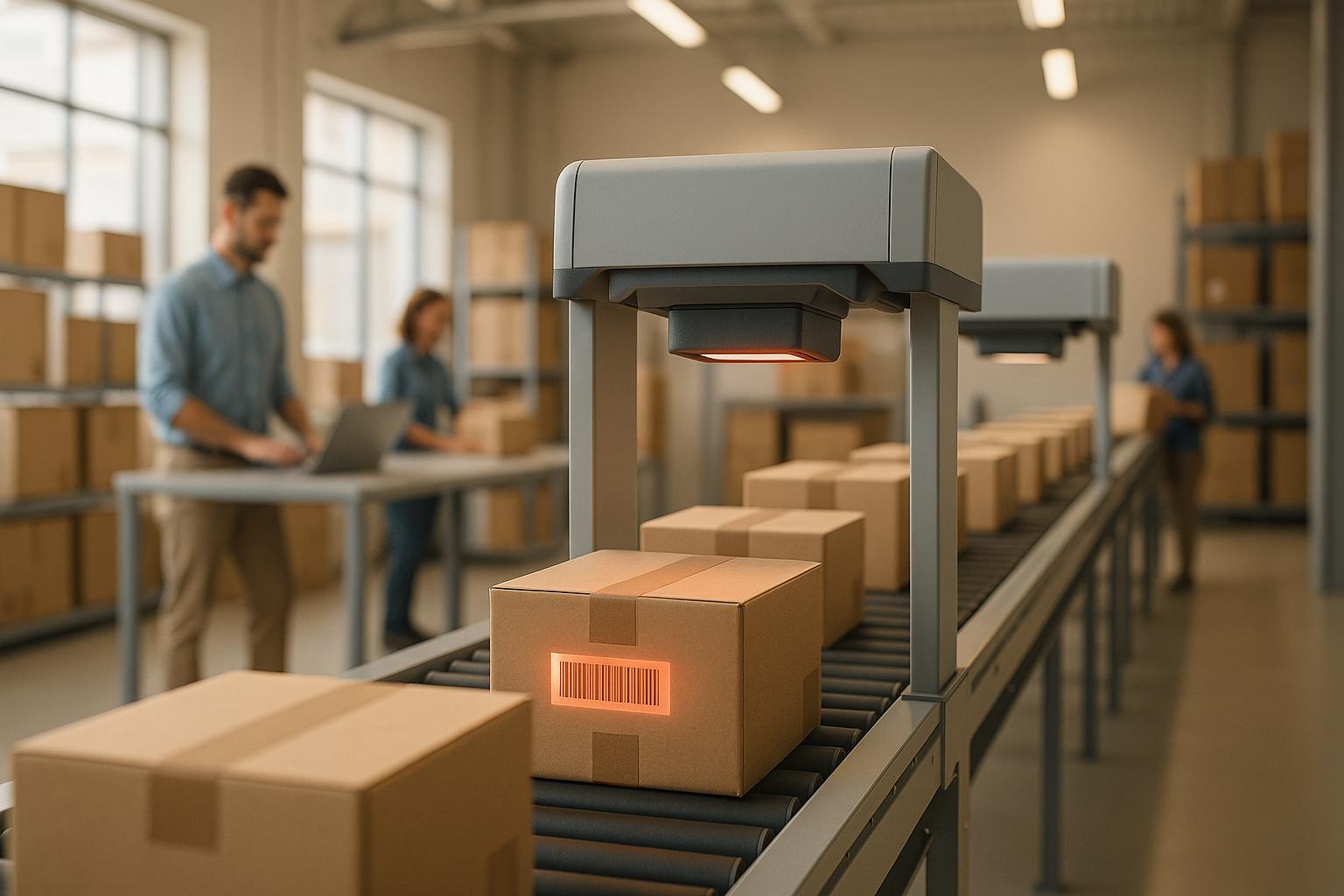
E-commerce returns are a growing challenge for U.S. businesses, with $743 billion in merchandise returns processed in 2023 alone. Online orders face higher return rates (17.6%) than in-store purchases (8-10%), causing operational inefficiencies and customer dissatisfaction. Without connected systems, businesses struggle with manual workflows, inaccurate inventory, and delayed refunds.
ERP integration solves these problems by automating returns management across e-commerce platforms, warehouses, and finance systems. Key benefits include:
- Automation: Eliminates manual data entry for RMAs, inventory updates, and refunds.
- Real-Time Updates: Synchronizes data across systems, improving accuracy and transparency.
- Faster Refunds: Speeds up processing, enhancing customer satisfaction.
- Better Inventory Tracking: Prevents overselling and optimizes stock levels.
- Scalability: Supports high-volume returns with consistent processes across locations.
Partnering with 3PL providers like JIT Transportation further enhances efficiency by streamlining reverse logistics and offering services like inspection, refurbishment, and real-time status updates. ERP integration transforms returns from a hassle into an opportunity to improve operations and customer loyalty.
What should I connect my 3PL to? eCommerce or Inventory/ERP System
Returns Processing Challenges Without ERP Integration
Disconnected systems create hurdles that slow down returns, increase errors, and leave customers frustrated. Businesses juggling separate e-commerce, warehouse, and accounting platforms often face rising operational costs and declining satisfaction levels. The lack of integration leads to manual data handling, which only worsens as return volumes grow. These issues typically show up in three major areas: inefficient workflows, inaccurate inventory, and delayed refunds.
Manual and Disconnected Workflows
When systems aren’t integrated, processing returns becomes a tedious task requiring multiple entries across e-commerce, warehouse, and finance platforms. This not only slows things down but also increases the likelihood of errors. Re-entering the same data at every stage creates inconsistencies and wastes valuable time.
In 2022, a mid-sized U.S. apparel retailer found that handling a single return required inputting data into three separate systems - online store, warehouse management, and accounting. This resulted in an average processing time of 5–7 days and a 15% error rate in refunds and credits. After integrating their systems, they reduced processing time to under 48 hours and cut errors by over 80%.
Similar delays of 3–5 days for issuing refunds and frequent inventory mismatches have been reported in industries ranging from apparel to B2B suppliers.
The lack of coordination affects more than just individual returns. Customer service teams often lack real-time updates to answer inquiries about return statuses. Finance teams, relying on scattered email confirmations, struggle to track refund timelines. Meanwhile, warehouse staff work with outdated or isolated data, forcing them to spend more time chasing information than efficiently processing returns.
Poor Inventory Visibility
One of the biggest challenges lies in the gap between physical inventory movements and system updates. When a customer returns an item, it often sits in the warehouse for days before the e-commerce platform reflects the updated inventory. This creates a disconnect where returned items exist physically but remain invisible to the systems that drive sales and planning.
Research on warehouse management and ERP integration found that lacking real-time inventory accuracy can increase overselling incidents by up to 95% when systems aren’t synchronized.
For e-commerce businesses, this can result in customers ordering items that are actually out of stock or returned products sitting unsold because they aren’t promptly added back to available inventory. Both scenarios hurt revenue and customer satisfaction.
There’s also the issue of "phantom inventory." If damaged or unsellable returns aren’t marked correctly in the system, they appear as available stock. This misrepresentation can lead to stockouts, failed orders, and costly emergency reorders, eating into profit margins.
These inaccuracies also distort key business metrics. Planners and buyers might over-order due to underestimated stock levels, tying up cash in excess inventory. On the flip side, unrecorded returns could lead to underestimations, resulting in missed sales opportunities. Metrics like sell-through rates, return rates by SKU, and gross margins become unreliable, complicating decisions on reordering and discounting - especially during high-demand periods like Black Friday or Cyber Monday.
To compensate, many businesses increase safety stock levels, keeping extra inventory "just in case." While this reduces the risk of stockouts, it ties up capital and warehouse space. This is particularly burdensome in the U.S., where storage costs remain high.
A 2023 study on ERP solutions showed that integrated systems could reduce overall operational costs by 23% and administrative costs by 22%, highlighting the financial impact of disconnected processes over time.
Delayed Refunds and Customer Frustration
In the competitive U.S. e-commerce market, customers expect quick and easy returns. When refunds are delayed or status updates are unclear, trust is lost. Without ERP integration, warehouse teams log returns in local systems or spreadsheets and manually forward the information to customer service or finance for approval. This manual process introduces delays at every step - returns may sit idle waiting for data entry, quality control checks, or financial review before a refund is issued.
Because e-commerce platforms, payment processors, and accounting systems rely on separate records, staff often hold off on issuing refunds until all systems confirm the return. This manual verification can delay refunds by several days, especially during busy seasons.
Fast, automated returns and exchanges significantly boost customer satisfaction and loyalty. On the flip side, slow and opaque processes damage trust. Customers waiting days or weeks for refunds, without real-time updates, are more likely to contact support repeatedly, leave negative reviews, or switch to competitors. Returns are a critical moment in online retail - poor handling can undo the goodwill earned through fast delivery and quality products.
Financial reconciliation adds another layer of complexity. Without ERP integration, refunds processed through payment gateways, adjustments in accounting software, and inventory updates in warehouse systems are all recorded separately. Over time, these discrepancies can distort revenue figures, complicate tax reporting, and increase audit risks.
Warning signs that returns processes are breaking down include rising manual data entry hours compared to order volume, growing inventory discrepancies, more frequent overselling or stockouts, and refund timelines exceeding customer expectations. Persistent mismatches between refund totals in payment gateways and accounting records, along with delays in closing financial books, are additional red flags. When these patterns persist - especially during Q4 peak seasons - it’s a clear signal that deeper system integration is needed to restore efficiency and accuracy while keeping customers happy.
How ERP Integration Improves Returns Management
Manual returns processing can be a headache for businesses, but ERP integration changes the game by connecting e-commerce, warehouse, and payment systems into a single, cohesive workflow. Instead of employees manually entering the same data across multiple platforms, ERP integration allows information to move automatically through each step of the process. The result? A smoother returns process that benefits every department, from customer service to finance to warehouse operations.
The real power of ERP integration lies in its automation and real-time updates. For example, when a customer initiates a return online, the ERP system instantly pulls all relevant order details - like SKU numbers, prices, taxes, and discounts. This triggers automated workflows that handle tasks such as approvals, generating return labels, updating inventory, and posting financial adjustments. With everyone working from the same up-to-date information, follow-up inquiries and miscommunications drop dramatically.
Now, let’s take a closer look at how automation transforms the returns process.
Automated Returns Processing
With ERP integration, manual tasks like creating Return Merchandise Authorizations (RMAs) become a thing of the past. Instead, when a customer starts a return online, the ERP automatically generates an RMA that includes the order number, product details, and reason for the return. This not only speeds up the process but also reduces the likelihood of errors.
Automation doesn’t stop there. The system can also generate shipping labels based on predefined rules, such as product type, customer location, or return reason. The ERP emails the label to the customer, and once a tracking number is assigned, it’s linked to the RMA, giving customer service instant access to shipment updates.
The efficiency continues when the returned item arrives at the warehouse. Scanning the package triggers the ERP to update inventory and route the item for inspection, refurbishment, or restocking, depending on its condition. Sellable products are quickly added back to inventory, ensuring the e-commerce site reflects accurate stock levels and helping prevent overselling.
This level of automation significantly shortens turnaround times. What used to take days of manual effort can now be completed in just a few hours, from the customer’s return request to restocking the item.
Real-Time Data Updates Across Systems
Real-time updates are another key advantage of ERP integration. Every time a return progresses - whether it’s created, received, inspected, or refunded - the status is instantly updated across all connected systems, including e-commerce platforms, warehouse management tools, and financial modules.
This means customer service teams can quickly check the status of a return without having to contact other departments. Finance teams get immediate visibility into pending refunds, improving cash flow planning. Warehouse managers can also prepare for incoming returns by adjusting labor and space allocation based on real-time data.
Having a single, accurate source of information eliminates the inconsistencies that often arise when different systems hold conflicting data. For instance, if a customer calls to ask about their refund, a service rep can see in real time that the item has been received and inspected, allowing them to process the refund without delay. Real-time inventory updates also help purchasing teams make informed decisions, such as adjusting order quantities or addressing quality issues before they escalate.
Financial processes benefit as well. Refunds are calculated based on the original order data - covering taxes, discounts, and shipping charges - and the ERP automatically posts credit memos or processes refunds once the return is approved. This speeds up refund timelines and ensures accurate revenue tracking.
Building on this foundation of automation and real-time data, ERP systems can also integrate with third-party logistics (3PL) providers to take returns efficiency to the next level.
Connecting with 3PL Providers Like JIT Transportation

For many U.S. e-commerce businesses, third-party logistics (3PL) providers play a critical role in handling warehousing, transportation, and other services. ERP integration extends to these partners, enabling seamless communication through APIs or electronic data interchange (EDI). This ensures that 3PL providers receive accurate return orders and RMAs without delays.
Take JIT Transportation, for example. This 3PL integrates with ERP systems to manage reverse logistics, automatically receiving return orders and coordinating shipments for inspection, refurbishment, or restocking. When a customer initiates a return, the ERP sends the RMA details directly to JIT’s system. From there, JIT handles everything - from pickup to consolidating returned goods at one of its facilities and performing inspections or refurbishments as directed by the ERP.
As these steps are completed, status updates flow back into the ERP in real time. This keeps customer service in the loop, ensures inventory records are accurate, and allows finance teams to quickly process refunds or record write-offs.
JIT’s extensive network and flexible operations are particularly useful for managing high-volume returns across different regions. By integrating with JIT, retailers can route returns to the most efficient facility based on factors like location, capacity, and demand. This minimizes transportation costs and idle times while supporting extra services like kitting, assembly, and testing. The result is a scalable, efficient returns process that enhances customer satisfaction and operational efficiency.
sbb-itb-eafa320
Benefits of ERP-Integrated Returns Management
ERP-integrated returns management builds on the advantages of automated workflows and real-time updates, offering measurable improvements like quicker processing, fewer errors, and happier customers.
Faster and More Accurate Processing
Tasks that once took hours - like order verification and inventory updates - now wrap up in minutes. When a customer submits a return request, the ERP system instantly retrieves the original order details and generates a Return Merchandise Authorization (RMA) without requiring manual input. As soon as the returned item arrives at the warehouse or 3PL facility, a simple barcode scan matches it to the order, confirms quantities, and updates inventory records seamlessly.
Research indicates that ERP solutions can lower operational costs by 23% and administrative costs by 22% through automation and system integration. Additionally, real-time inventory tracking can reduce overselling incidents by as much as 95%.
In the warehouse, the ERP system takes care of decisions like whether to restock, refurbish, scrap, or redirect items based on condition codes entered during inspection. On the financial side, it automatically handles accounting tasks, such as creating credit memos, write-offs, and freight adjustments in USD. This ensures precise tracking of revenue, cost of goods sold, and inventory valuation throughout the returns process without manual calculations.
Better Customer Experience
A fast, accurate returns process significantly enhances the customer experience. ERP integration supports self-service portals where customers can check product availability, view order history, and initiate returns at any time. These systems allow shoppers to see return eligibility and fees upfront and generate return labels instantly - no waiting for customer service to step in.
Real-time updates during the return process further improve customer satisfaction. As carrier scans and warehouse receipts sync with the ERP, status updates automatically appear on customer-facing platforms. Customers can track their return’s progress - whether it’s requested, approved, in transit, received, inspected, or refunded - without needing to contact support. Plus, automation ensures refunds are processed quickly, often within hours of the item being scanned at the warehouse. This efficiency builds trust and encourages repeat business.
Better Inventory and Financial Tracking
ERP integration provides real-time visibility across all connected channels, including websites, marketplaces, warehouse systems, and financial records. This unified view allows purchasing and planning teams to make smarter decisions, avoiding unnecessary reorders when sellable returned items are already available.
For items deemed sellable after inspection, the ERP updates available-to-promise quantities immediately, helping to reduce stockouts and capture additional sales. Damaged or unsellable items, on the other hand, are flagged in the system to prevent fulfillment errors. All return-related activities - such as refunds, credits, freight charges, handling costs, and write-offs - are consolidated into one auditable ledger in USD. This ensures accurate tracking of inventory valuation and cost of goods sold.
Integration with 3PL providers further streamlines operations by feeding standardized condition codes and associated costs back into the ERP. This keeps inventory valuation and margin tracking consistent across the entire network, making it easier to scale returns management as your business grows.
Growing Returns Operations with 3PL and ERP Integration
Once you've streamlined your processes with ERP integration, the next step is scaling your returns operations. As e-commerce businesses grow across the U.S., handling returns at scale becomes a more intricate challenge. Integrating your ERP with third-party logistics (3PL) providers simplifies high-volume returns while maintaining speed and accuracy.
This section expands on earlier benefits by exploring how scalable operations and dynamic coordination can transform your returns management.
Managing High-Volume Returns Across Multiple Locations
Handling returns across several warehouses or regional centers can be a logistical headache. Ensuring consistent processes everywhere is tough, but ERP integration solves this by centralizing returns data. From RMAs and receiving statuses to disposition decisions and credit memos, every location follows the same rules, no matter where it's situated. For example, if your policy requires testing for electronics over $200 before restocking, that rule applies whether the return happens in Los Angeles or Memphis.
With real-time updates, the ERP records item conditions, quantities, and final dispositions the moment a return is scanned. Saleable items are restocked automatically, refurbishable goods are routed to the right facilities, and refunds only process once the 3PL confirms receipt. This consistency allows your operations to grow from one warehouse to many without reinventing the wheel each time.
An ERP serves as a central hub for tracking returns volume, turnaround times, and costs across your network. Real-time visibility into processing activity at each location enables better workload balancing, staffing adjustments, and decisions about where to open new return centers. For instance, partnering with 3PL providers like JIT Transportation, which operates warehouses in key locations like San Francisco, Los Angeles, Memphis, and Houston, ensures nationwide coverage with centralized control.
"From e-commerce fulfillment to retail and wholesale distribution, we handle it all. With a national footprint and flexible network, JIT scales with your demand - wherever and whenever you need it." – JIT Transportation
Additional Services for Reverse Logistics
Returns often require more than just storage - they might need inspection, testing, refurbishment, or even disassembly before being resold. Many 3PL providers, such as JIT Transportation, offer these value-added services, including testing, quality checks, kitting, light repairs, and specialized handling for high-value or oversized items.
When these services are integrated into your ERP, every activity becomes trackable and linked to specific SKUs and RMAs. Costs for labor, materials, and handling are fully transparent, allowing you to see the true cost of each step. For example, if JIT tests a returned electronic item, the warehouse management system updates the ERP to reflect the item’s new condition - such as "Refurbished – B Grade." The system then moves the item to the appropriate sales channel, whether that’s primary inventory, outlet stores, or secondary marketplaces.
This level of integration lets you measure the recovery value of returns by comparing write-off costs to actual resale revenue. You can also analyze which services - like testing, full refurbishment, or immediate liquidation - deliver the best margins. Specialized RMAs can include details such as required equipment, technician needs, and packaging materials, which are passed to the 3PL’s systems. As each step is completed, updates flow back to the ERP, giving customer service teams real-time visibility and enabling proactive communication with customers.
"We're more than a logistics provider - we're your partner in building smarter, more efficient solutions. From pick & pack and kitting & assembly to testing, upgrades, and white-glove handling - we've got you covered." – JIT Transportation
Just-in-Time Principles for Returns
Traditional returns management often relies on fixed schedules, which can lead to higher holding costs and delayed refunds. By applying just-in-time principles, you can reduce inventory dwell time and align returns processing with your refurbishment, resale, or disposal capacity.
ERP-driven forecasting makes this possible by analyzing order volumes, return rates, seasonality (like post-holiday surges in January), and promotions. This data helps 3PL providers prepare transportation, labor, and warehouse space in advance. Real-time updates from the 3PL to the ERP provide visibility into the returns pipeline, allowing you to time secondary sales, replenishment orders, or liquidation events so inventory moves quickly instead of sitting idle.
For transportation, the ERP can trigger events like reaching a return volume threshold or meeting a service-level agreement, automatically generating pickup orders for the 3PL. The system consolidates RMAs into shipments based on geography, carrier capacity, and service levels, while also providing real-time visibility into return volumes. This allows transportation planners to build efficient routes on short notice. Integration with transportation management systems automates rate comparisons, tendering, and tracking, with milestones feeding directly back into the ERP and e-commerce platforms.
This dynamic approach replaces static schedules with demand-driven pickups, reducing delays, speeding up refunds, and minimizing risks like damage or shrinkage. The result? Lower holding costs, faster cash flow, and reverse logistics that seamlessly integrate into your overall supply chain strategy. With a partner like JIT Transportation, whose name reflects this philosophy, just-in-time principles become a natural part of your operations.
"With a strong network, smart technology, and a team that knows logistics inside and out, we make sure your shipments arrive on time, every time." – JIT Transportation
Conclusion
ERP integration turns e-commerce returns into a strategic advantage for U.S. retailers, shifting them from a costly burden to an opportunity for growth. By automating workflows, businesses can eliminate manual data entry, reduce errors by up to 70%, and cut processing times from days to mere hours. Real-time inventory updates ensure returned items are quickly categorized - whether as sellable, refurbishable, or scrap - helping to prevent overselling and improving stock accuracy across all sales channels. These efficiencies address both financial and customer service challenges head-on.
From a financial perspective, ERP integration is a game-changer. It enables precise tracking of costs, write-offs, and recovery values, which is essential for maintaining profitability. By automatically recording return-related transactions directly into the general ledger, businesses gain clear insights into the true cost and margin impact of their reverse logistics operations.
Customer satisfaction also sees a significant boost. Faster refund processing - completed in 3–5 days instead of the typical 10–14 days - and real-time return tracking via self-service portals enhance the overall shopping experience. This speed and transparency reduce the need for customer support interventions, foster trust, and encourage repeat purchases, which are crucial in today’s competitive e-commerce environment.
Operationally, ERP integration supports scalable logistics solutions. When paired with 3PL partners like JIT Transportation, which offers services such as distribution, fulfillment, pick and pack, kitting, testing, and white-glove handling, retailers create a unified returns network. JIT Transportation integrates directly with ERP systems to receive electronic return instructions and provide real-time updates on item conditions and dispositions. This creates standardized, automated workflows across multiple warehouses and regions without adding manual effort or additional workforce, ensuring consistency and efficiency.
To get started, assess your current pain points - processing delays, refund bottlenecks, or inventory inaccuracies. Review your ERP system’s returns capabilities and identify integration gaps, especially in areas like multi-location inventory management and 3PL connectivity. Consider partnering with a provider like JIT Transportation, which offers advanced technology, nationwide coverage, and seamless ERP integration. Start small by piloting an integrated returns process for a subset of SKUs or specific regions. Measure improvements in processing time, refund speed, and cost per return, and scale based on the results.
ERP-integrated returns management is no longer just a back-office function - it’s a strategic tool for boosting customer loyalty, profitability, and long-term growth in U.S. e-commerce. When combined with a capable 3PL like JIT Transportation, retailers can build a streamlined, data-driven returns process that’s ready to handle peak seasons and support future expansion.
FAQs
How does integrating an ERP system help speed up and improve the accuracy of e-commerce return processing?
Integrating an ERP system with your e-commerce platform can simplify and speed up the return process. By automating key tasks, it reduces manual errors and keeps your inventory updates accurate. This means faster return approvals, quicker restocking, and real-time data updates - all of which make operations run more smoothly.
On top of that, ERP integration improves the customer experience. Customers get timely updates on their return statuses and refunds, which helps build trust. A seamless return process not only saves time but also strengthens customer loyalty, paving the way for repeat business.
How do third-party logistics providers like JIT Transportation improve ERP-integrated returns management?
Third-party logistics providers, such as JIT Transportation, are key players in simplifying ERP-integrated returns management. Their expertise in transportation, distribution, and fulfillment helps ensure returns are processed more quickly and efficiently.
Beyond the basics, JIT Transportation offers extra services like pick and pack, kitting, and assembly, making reverse logistics even more manageable. With advanced technology and a robust nationwide network, they deliver dependable and scalable solutions that boost both operational efficiency and customer satisfaction.
What financial advantages can e-commerce businesses gain by integrating ERP systems into their returns process?
Integrating ERP systems into your e-commerce returns process can bring substantial financial advantages. By simplifying operations, businesses can handle returns more efficiently, cutting down on labor costs and reducing the risk of errors. This streamlined approach also enhances inventory management, allowing returned items to be restocked or sold faster, which can improve cash flow.
On top of that, effective returns management plays a key role in boosting customer satisfaction. Happy customers are more likely to stick around and make repeat purchases, which can drive revenue growth and lower the expenses tied to acquiring new customers. For companies using advanced logistics tools like those provided by JIT Transportation, ERP integration can take supply chain management to the next level, offering even more efficiency and cost reductions.
Related Blog Posts
Related Articles
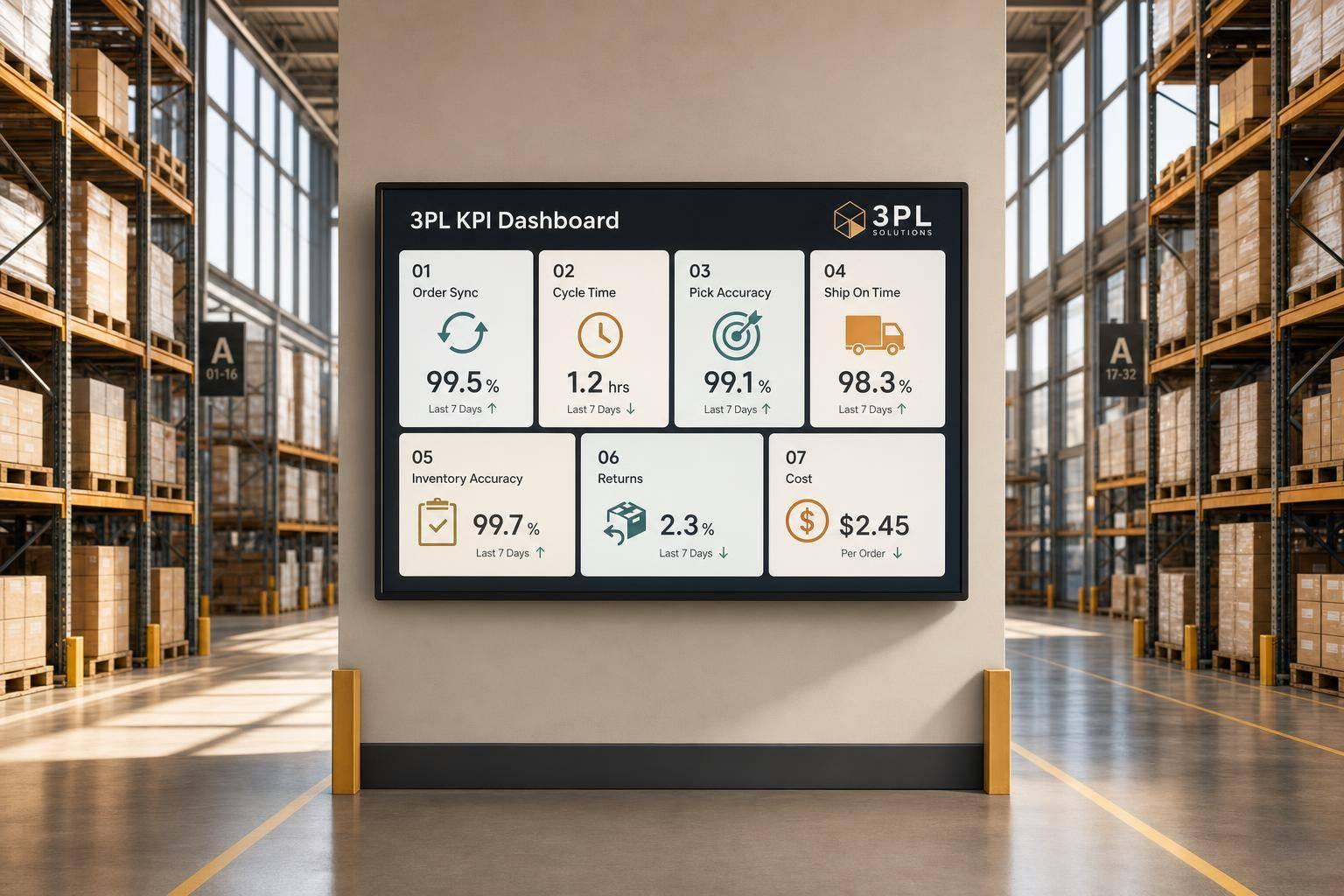
7 WooCommerce 3PL KPIs Teams Track

Centralized vs Decentralized Replenishment
