
Top 7 Factors for Choosing Warehouse Locations
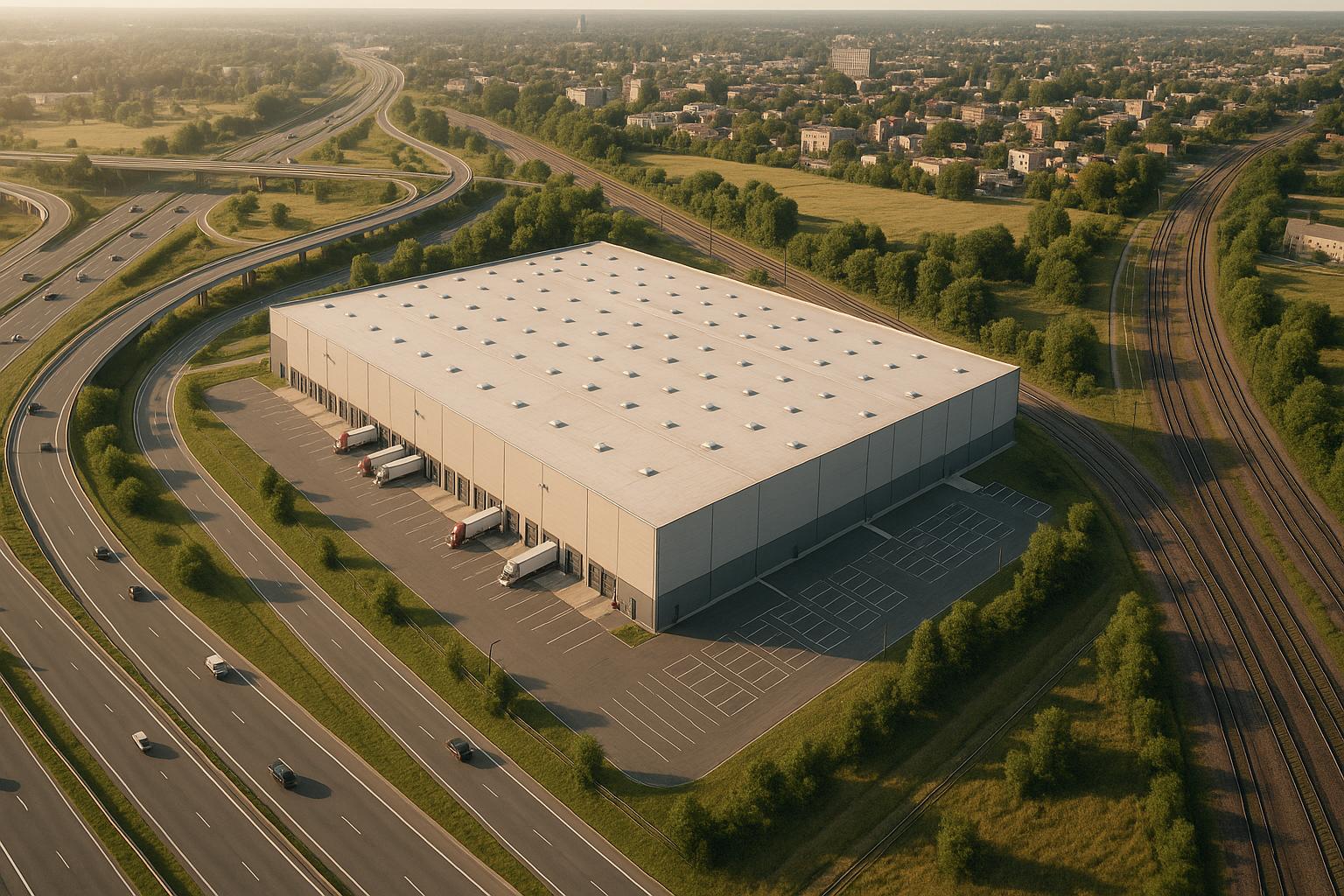
Choosing the right warehouse location can make or break your logistics strategy. Here's what matters most:
- Customer Proximity: Being close to your customers reduces delivery times and shipping costs.
- Access to Transportation Hubs: Locations near highways, airports, or ports cut transit times and offer flexibility.
- Labor Availability: A skilled, stable workforce within commuting distance is essential for smooth operations.
- Cost Considerations: Factor in real estate, taxes, utilities, and transportation to assess total costs.
- Scalability: Ensure the site can handle growth in storage, shifts, or automation over the next 5–10 years.
- Proximity to Suppliers: Reduces inbound logistics costs and improves inventory flow.
- Local Infrastructure: Reliable roads, utilities, and minimal disaster risks help maintain efficiency.
Balancing these factors ensures better delivery performance, lower costs, and fewer operational disruptions. Read on for actionable insights into each factor.
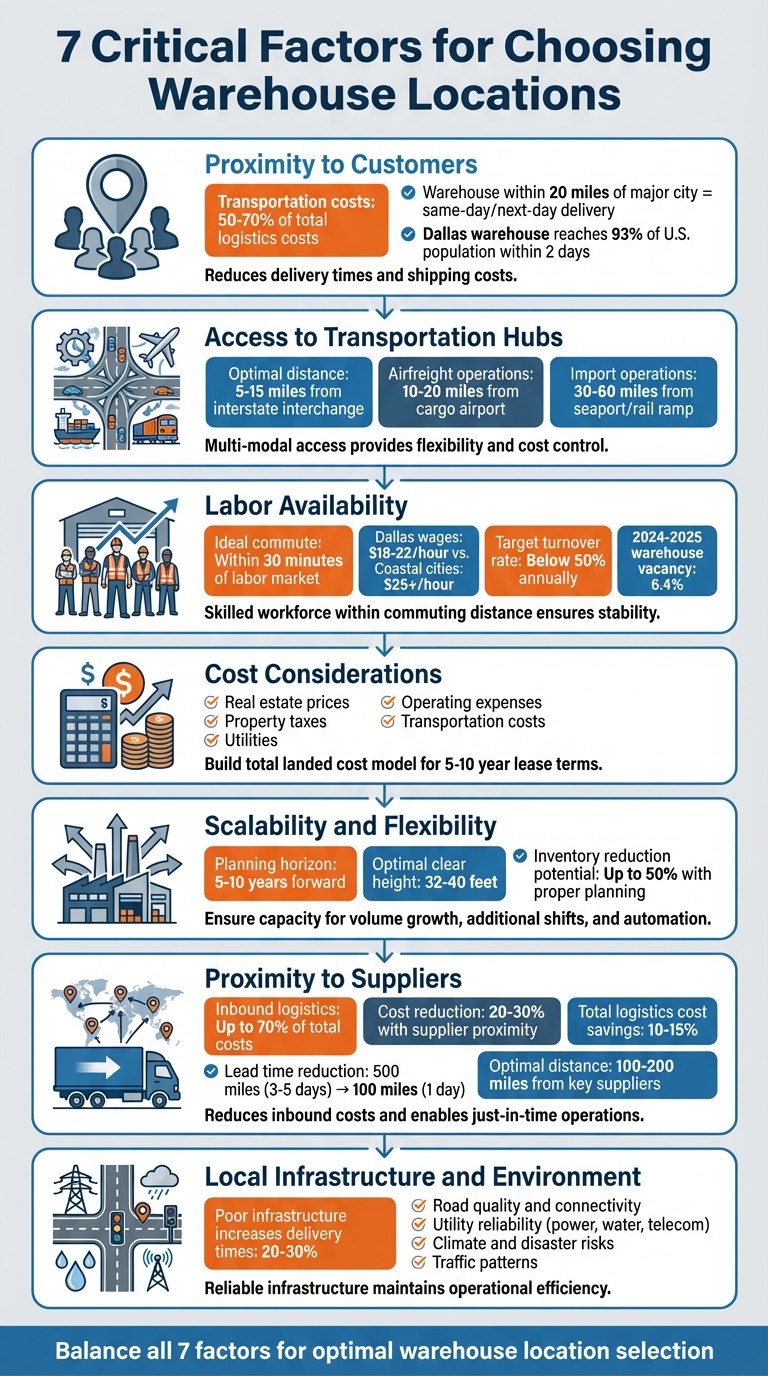
7 Critical Factors for Warehouse Location Selection
Choosing The Best Location For Your Warehouse | 6 Considerations
1. Proximity to Customers
Choosing a warehouse location close to your customers is a game-changer. Why? Because it directly impacts delivery times, transportation costs, and how competitive you are in the market. By cutting down transit distances, you’re not just saving time - you’re also slashing costs.
For instance, shorter distances mean lower fuel expenses and fewer shipping zones. A warehouse within 20 miles of a major city can make same-day or next-day delivery a breeze. Considering that transportation can eat up 50–70% of total logistics costs, trimming shipping distances can lead to substantial yearly savings.
To get started, map out customer ZIP codes and analyze order volumes to identify high-density areas. If your customers are spread across the U.S., multiple locations might make sense. For example, a warehouse in Dallas can reach 93% of the U.S. population within two days. If you’re operating from a single site, services like JIT Transportation’s nationwide distribution can help you strategically position inventory closer to your customers.
But proximity isn’t just about being close - it’s also about accessibility. A great location should have efficient highway connections, easy access to parcel hubs, and nearby LTL terminals. A warehouse near customers but stuck in traffic-prone areas or far from carrier hubs can still face delays. Being closer to your customers also means shorter lead times, which helps reduce safety stock and inventory carrying costs.
2. Access to Transportation Hubs
The location of a warehouse in relation to major transportation hubs - like highways, airports, seaports, and rail terminals - plays a huge role in determining shipping speed and cost. With transportation making up 50–70% of total logistics costs, being close to these hubs isn't just a nice-to-have; it’s a financial necessity.
For most companies, the sweet spot is within 5–15 miles of an interstate interchange. Businesses that rely on airfreight, especially for high-value or express shipments, often need to be within 10–20 miles of a major cargo airport or parcel hub, such as Memphis (FedEx) or Louisville (UPS), to meet tight shipping deadlines. Similarly, import-heavy operations benefit from being within 30–60 miles of a seaport or intermodal rail ramp, which helps cut down on drayage costs and speeds up container turnaround times. These proximity benchmarks allow businesses to adopt flexible, multi-modal strategies.
Why does multi-modal access matter? It gives businesses the ability to adjust when shipping costs or capacity shift. For instance, if highway transportation becomes more expensive due to rising fuel costs or traffic congestion, freight can be moved to intermodal rail. Likewise, if a port faces delays, shipments can be rerouted through alternative airports or rail terminals without significantly disrupting operations. This kind of flexibility keeps supply chains running smoothly and ensures customers stay happy.
Take warehouses near key locations like Southern California ports, Savannah, or New York/New Jersey. These sites enable import-heavy businesses to quickly unload containers and move inventory into the supply chain faster, reducing delays and improving efficiency.
But proximity alone isn’t enough. Real-world factors like traffic congestion, road conditions, and truck restrictions can make or break a location’s effectiveness. For example, a warehouse just 10 miles from an interstate could face delays if it’s stuck in urban traffic, while one 20 miles away with clear truck access might perform better. That’s why it’s important to evaluate peak-hour traffic, designated truck routes, and local road conditions.
To make the most of hub-adjacent locations, companies like JIT Transportation use nationwide carrier networks and advanced transportation management systems. These tools optimize mode selection and routing, reducing delays, maximizing the use of assets, and ensuring businesses get the full benefit of their location.
3. Labor Availability
Having access to a skilled workforce is key to keeping warehouse operations running smoothly. From picking and packing to managing inventory and fulfilling orders, workers play a critical role in day-to-day operations. When there’s a shortage of skilled workers, inefficiencies can creep in, affecting overall business performance.
Ideally, your warehouse location should be within a 30-minute commute of a strong labor market. This makes it easier to attract and retain employees, helping ensure your operations stay stable. While large population centers provide access to bigger talent pools, they also come with challenges - such as increased competition for workers, which can push labor costs up by 15–20% in oversaturated markets. Balancing labor availability with location accessibility and cost considerations is crucial.
Labor costs vary significantly across the U.S., and these differences can impact your warehouse’s bottom line. For example, in logistics hubs like Dallas, TX, hourly wages for warehouse workers typically range between $18–$22, offering a balance between affordability and workforce availability. On the other hand, coastal cities often see wages exceeding $25 per hour, driven by higher living costs and intense competition for talent. To make an informed decision, compare wage data from state labor reports and focus on areas with annual turnover rates below 50%, as this indicates a more stable workforce.
Local training programs can also make a big difference in building a skilled team. Vocational schools offering certifications for tasks like forklift operation or logistics apprenticeships can shorten onboarding times and enhance your team’s capabilities - especially for specialized roles like pick-and-pack operations or managing warehouse systems.
Regions such as Texas, the Southeast, and the Midwest are known for their strong labor markets. In these areas, warehouse vacancy rates have stabilized around 6.4% for 2024–2025, reflecting a balanced supply of workers.
Before finalizing a location, take the time to conduct a detailed labor market analysis. Look at workforce demographics, commute times, and the availability of training programs. Partnering with experienced 3PL providers like JIT Transportation can offer valuable insights into workforce scalability while helping you weigh labor availability against other factors like transportation access.
4. Cost Considerations
Understanding the full range of costs is a critical step in selecting the right warehouse location. These costs typically include real estate, property taxes, utilities, and operating expenses like maintenance, insurance, and equipment upkeep. Transportation costs should also be factored in alongside facility expenses to create a complete picture. This approach allows for a clear and thorough comparison of potential locations.
Real estate is often the biggest cost factor. Prices vary widely depending on the region, with areas near ports and major interstates commanding higher rates. While these premium locations may reduce transportation and lead time costs, they come at a price. For example, warehouses near Los Angeles ports tend to have high real estate costs, but facilities in the Inland Empire offer more affordable options while still providing solid access to key shipping routes. When evaluating real estate, consider the net effective rent, which accounts for escalations and concessions over the lease term - typically 5 to 10 years. This ensures the facility's cost aligns with your profit goals.
Property taxes are another important factor and can sometimes offset lower base rents. Some areas offer tax incentives, such as abatements, credits, or fee reductions, tied to job creation or capital investments. These incentives can make higher-tax markets more appealing. Additionally, permit, impact, and compliance fees can influence both short-term payback and long-term profitability.
Operating expenses like utilities, maintenance, insurance, and security services are equally important to evaluate, as they can significantly affect profit margins if underestimated. Warehouses require dependable power and robust internet to support management systems and automation. While areas with strong municipal infrastructure may have slightly higher utility rates, they often provide greater reliability, reducing downtime risks and ensuring long-term stability.
To make an informed decision, build a total landed cost model that combines facility, operating, and transportation costs. This model helps optimize costs, boosting operational efficiency and delivery performance. Calculating metrics like cost per order or per unit can clarify how location impacts your margins. Additionally, working with JIT Transportation can turn fixed costs into variable, usage-based expenses, improving cash flow and lowering capital risk.
sbb-itb-eafa320
5. Scalability and Flexibility
Your warehouse needs to keep pace with your business as it grows. With e-commerce and omnichannel fulfillment pushing demand across the U.S., order volumes, SKUs, and service expectations are constantly evolving. Experts in site selection recommend picking facilities with a 5–10 year forward view to anticipate growth in both volume and complexity. This means assessing whether the site can handle increased throughput, a broader range of SKUs, additional shifts, or upgrades like automation. Physical capacity and regulatory considerations are key to ensuring the site can adapt to your operational needs.
Start with physical expansion capacity. Does the property have adjacent land or neighboring units available for future use? Are there enough setbacks for adding dock doors or trailer parking? High clear heights (32–40 feet) are another factor to look for, as they allow for vertical storage expansion. For instance, a 250,000 sq. ft. warehouse on a 20-acre lot with unused land nearby offers far more room to scale than a similar facility in a dense urban area. Also, check if the utilities can support future automation or extended operational hours.
Zoning regulations and permitting processes are equally important. Local zoning laws will dictate whether you can expand the building, increase its height, add loading docks, or even run 24/7 operations. Some municipalities impose restrictions on noise, traffic, hours of operation, and outdoor storage, which could limit your growth options. During due diligence, it’s essential to consult with local planning departments to understand what’s allowed, what’s restricted, and how long approvals might take.
Don’t forget the local labor market. A scalable location should have a workforce capable of supporting additional shifts and seasonal demand spikes.
When physical expansion isn’t immediately feasible, partnering with a scalable 3PL like JIT Transportation can provide a solution. With a nationwide network, advanced technology, and services like pick & pack, kitting & assembly, testing, and white-glove handling, JIT can help you manage overflow, seasonal peaks, or specialized tasks. This approach allows you to maintain high service levels across the U.S. without committing to new warehouse investments right away.
6. Proximity to Suppliers
When it comes to strategic warehouse placement, being close to suppliers can significantly improve efficiency and lower costs. Shorter distances mean quicker replenishment, reduced safety stock, and lower inventory holding costs. Instead of storing weeks’ worth of inventory, you can receive shipments in just days - or even hours - helping minimize holding costs and the risk of spoilage or obsolescence, especially for perishables and high-turnover items.
Inbound logistics can account for as much as 70% of total costs, but locating warehouses near suppliers can slash those expenses by 20–30%. For instance, cutting a transportation route from 500 miles to 100 miles can reduce lead times from 3–5 days to just one day when shipping by truck. A great example of this is the U.S. automotive industry, where manufacturers in the Midwest cluster warehouses near supplier hubs to enable just-in-time sequencing. This strategy has helped reduce inventory levels by as much as 50%. Beyond quicker lead times, proximity to suppliers also delivers substantial savings in transportation costs.
Being close to suppliers also allows for real-time coordination, which is vital for industries like food and beverage. For these sectors, proximity to temperature-controlled production facilities ensures freshness and minimizes spoilage. It also enables synchronized production and forecasting, reducing disruptions. The ability to make same-day adjustments strengthens supplier relationships and builds a more resilient supply chain.
Just as being near customers improves outbound logistics, supplier proximity enhances inbound operations. Ideally, you should map out key suppliers and aim for warehouse locations within 100–200 miles for better coordination. Research shows that optimizing supplier proximity can cut total logistics costs by 10–15%, largely through reduced inbound freight expenses.
If setting up facilities near every supplier isn’t feasible, partnering with a third-party logistics (3PL) provider like JIT Transportation can offer a smart alternative. With warehouses strategically located in states like California, Louisiana, Nevada, Texas, Tennessee, and Mississippi, JIT Transportation can streamline inbound shipments from multiple suppliers while ensuring efficient outbound distribution. They also provide value-added services like kitting and assembly, consolidating supplier shipments into finished goods closer to your customers.
7. Local Infrastructure and Environment
The quality of roads and connectivity plays a major role in your operational efficiency. Poor road conditions, heavy traffic, and limited highway access can increase delivery times by 20–30%. When evaluating locations, consider proximity to major interstates, typical traffic patterns during peak hours, and overall road conditions. For example, warehouses near the Los Angeles port often struggle with significant congestion on older highways like I-710. In contrast, facilities in the Inland Empire benefit from more modern, less crowded routes, reducing transportation costs and delays. Being close to dependable highways can help streamline fleet operations and enhance delivery performance.
Utility reliability is just as important. Power outages can bring warehouse operations - like picking, packing, and inventory management - to a standstill. Similarly, unreliable water or telecom services can disrupt 24/7 operations, especially when handling temperature-sensitive goods. To mitigate these risks, review the history of outages in the area and ensure the site has access to redundant power grids, backup generators, and stable fiber-optic internet. These utilities are essential for maintaining real-time inventory tracking and smooth warehouse workflows.
Climate and natural disaster risks are critical factors for long-term planning. Use data from NOAA, FEMA, and USGS to evaluate risks like extreme heat, humidity, hurricanes, earthquakes, floods, or wildfires. Depending on the risks, you might need to invest in stronger building structures, advanced cooling systems, or higher insurance coverage.
To make an informed decision, conduct on-site visits during peak hours to observe traffic flow and test internet speeds. Review utility bills and historical disaster data to uncover patterns that may affect operations. By including these infrastructure and environmental considerations in your total cost of ownership analysis, you can more accurately compare locations, even when rental rates differ.
For expert guidance in navigating these challenges, consider partnering with JIT Transportation. Their strategically positioned facilities in key states ensure access to reliable infrastructure and scalable operations, all supported by cutting-edge technology. Hal Shapiro of Seagate Technology shares:
"JIT has been a trusted logistics partner for Seagate for years, and their reliability is unmatched."
Conclusion
Choosing the right warehouse location means carefully balancing seven key factors: customer proximity, transportation hubs, labor access, cost, scalability, supplier proximity, and local infrastructure. These elements work together to optimize service levels, build resilience, and manage costs effectively. For instance, a cheaper location might seem appealing at first glance, but without reliable labor or easy highway access, it could lead to inefficiencies. On the other hand, a slightly more expensive site near major interstates and customer markets can save on logistics costs and speed up deliveries.
When these factors are aligned, your supply chain operates like a well-oiled machine. Strategic planning ensures inventory is positioned close to customers and main transportation routes, which reduces delivery times, lowers fuel and freight costs, and minimizes the need for excess safety stock. Additionally, strong local infrastructure and a dependable labor force help eliminate operational slowdowns, leading to smoother workflows and better on-time performance. As Curtis Martin, Senior Operations Manager at Synnex, puts it:
"Their on-time performance, ability to handle last-minute requests, and expertise in material handling are game-changers for us. Add to that their competitive pricing and professional service, and it's clear why they're one of our most valued partners."
FAQs
Why is being close to customers important for reducing logistics costs?
Staying close to your customers can help trim logistics costs by reducing transportation expenses and speeding up delivery times. When distances are shorter, fuel consumption drops, transit delays are less likely, and orders get fulfilled faster - leading to happier customers. On top of that, it lowers the need for large inventory stockpiles, streamlining your supply chain and saving money in the process.
Why is it important for warehouses to be near transportation hubs?
Proximity to transportation hubs plays a crucial role for warehouses, ensuring goods move faster and more reliably. This not only cuts down transit times but also helps reduce shipping costs and supports on-time deliveries - key factors in keeping the supply chain running smoothly.
Warehouses located near major hubs such as airports, seaports, rail terminals, or highways gain the ability to respond quickly to customer demands, minimize delays, and improve overall efficiency. This advantage is especially important for industries where speed and dependability are absolute necessities.
What should you consider to ensure a warehouse can scale with future growth?
To set up a warehouse that’s ready for future growth, start with a flexible infrastructure - think modular layouts or technology systems that can scale as your needs evolve. Choose a location near transportation hubs to make distribution quicker and more efficient. Also, ensure the area has a dependable labor pool to support your operations. Finally, evaluate if the site offers room for physical expansion to handle growing demand down the line.
Related Blog Posts
Related Articles
7 WooCommerce 3PL KPIs Teams Track

Centralized vs Decentralized Replenishment
