
How 3PL WMS Improves Supply Chain Scalability

A 3PL Warehouse Management System (WMS) is a game-changer for businesses managing multiple clients and looking to grow without operational bottlenecks. It simplifies warehouse operations, integrates with e-commerce and ERP platforms, and automates repetitive tasks, enabling efficient handling of high order volumes.
Key points:
- Real-time visibility: Keeps inventory accurate and updated, reducing stockouts and overselling.
- Automation: Cuts costs by up to 55% in order picking and reduces errors significantly.
- Seamless integrations: Syncs with tools like Shopify, NetSuite, and transportation systems for smooth data flow.
- Scalability: Onboards new clients or warehouses quickly using cloud-based systems, avoiding heavy IT investments.
- Cost savings: Optimizes resources, space, and labor while converting capital expenses into manageable monthly fees.
With the global WMS market projected to reach $8.18 billion by 2028, adopting a 3PL WMS is a smart move for businesses aiming to grow efficiently while staying competitive.
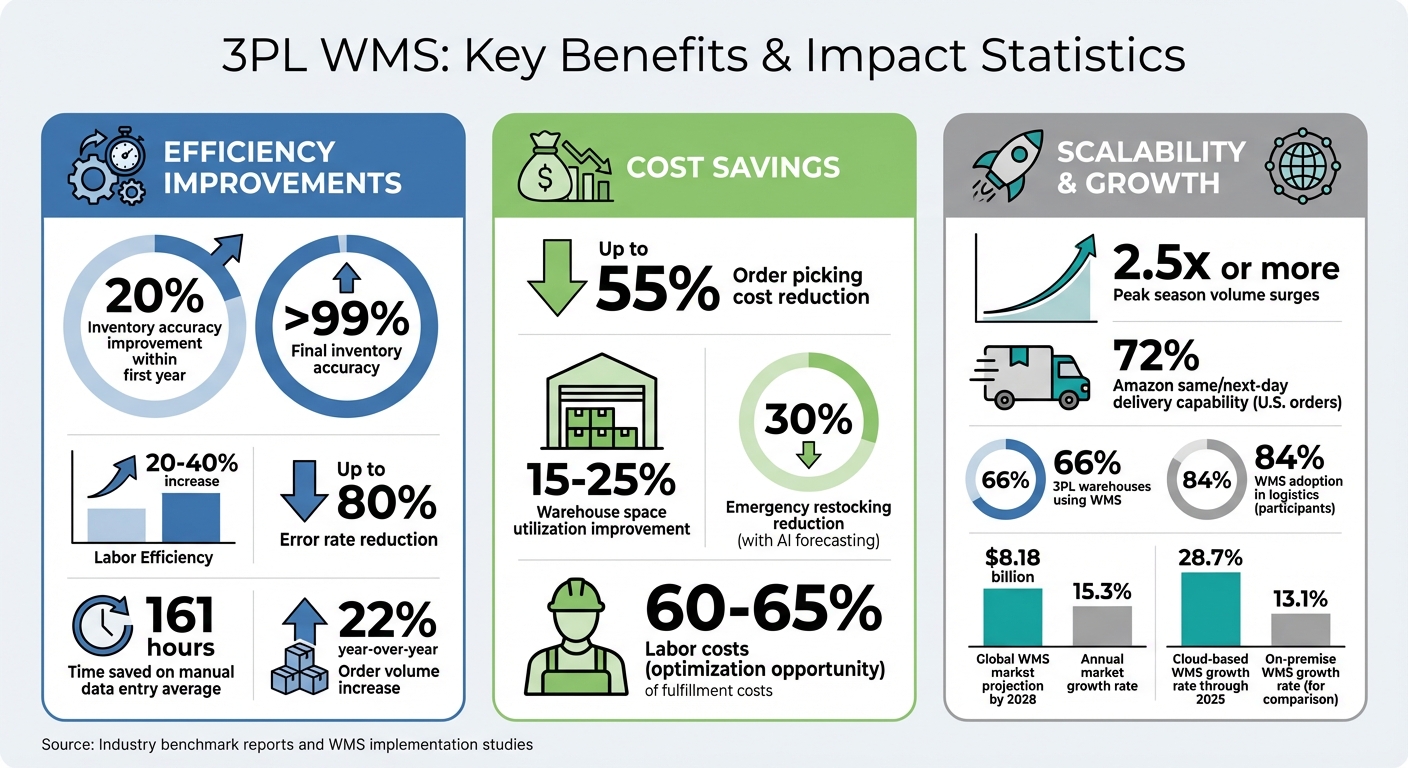
3PL WMS Key Benefits: Statistics on Efficiency, Cost Savings, and Growth
How Are 3PLs Embracing Warehouse Automation and AI?
sbb-itb-eafa320
What Is a 3PL Warehouse Management System?
As businesses grow and supply chain demands increase, having a reliable 3PL Warehouse Management System (WMS) becomes essential. Unlike traditional software built for single-brand operations, a 3PL WMS is designed to handle the complexities of managing inventory and fulfillment processes for multiple clients. Each client often comes with unique requirements, such as tailored fulfillment rules, specific billing needs, and distinct service level agreements.
At its core, a 3PL WMS streamlines the entire lifecycle of goods - covering receipt, storage, picking, packing, and coordinating with carriers. It also integrates seamlessly with external systems like e-commerce platforms (e.g., Amazon, Shopify), ERP systems (e.g., NetSuite, QuickBooks), and transportation management systems. These integrations ensure smooth data transfer, eliminating the need for manual input and reducing errors.
For businesses looking to scale, this technology offers a cost-effective, flexible solution. Instead of investing in their own warehouses or software, companies can tap into the existing infrastructure of a 3PL provider. Subscription-based pricing turns hefty capital expenditures into manageable monthly costs. Plus, cloud-based setups can be implemented within weeks, enabling businesses to seize market opportunities quickly without the delays of building their own infrastructure.
What sets a 3PL WMS apart is its ability to go beyond the capabilities of traditional warehouse systems. Features like multi-client billing, 24/7 client portals, and support for custom inventory rules (such as FEFO or serial tracking) make it a powerful tool for third-party logistics providers. Thanks to its multi-tenant architecture, 3PLs can onboard new clients or expand operations to additional warehouses without needing extensive system upgrades. This adaptability makes it a key resource for businesses aiming to grow efficiently.
Key Features of 3PL WMS That Support Scalability
Real-Time Inventory Visibility
A 3PL WMS provides live data tracking, ensuring stock levels are updated instantly. This reduces stockouts and overselling - no small feat when inventory accuracy improves by an average of 20% within a year of implementation.
But this feature goes beyond simple stock counts. Real-time data helps businesses make smarter decisions about scaling, such as hiring more staff or adding delivery trucks, avoiding capacity overload. The system can even automate stock replenishment at predefined thresholds, keeping operations smooth. With AI-driven forecasting, emergency restocking tasks can drop by as much as 30%.
What’s more, all stakeholders - suppliers, 3PL providers, and retailers - access the same centralized data. This means faster responses to changing demand. Warehouse teams using handheld devices or tablets can update inventory on the go, eliminating data lags between the floor and management systems.
This level of visibility sets the stage for streamlined, automated fulfillment processes.
Automated Order Fulfillment
Automation takes the hassle out of repetitive tasks like SKU validation, expiration checks, picking, packing, and shipping. By reducing errors and cutting costs, it enables businesses to handle high order volumes with ease.
Take Amazon, for example. Its AI-driven system, paired with robotics, enables same-day or next-day delivery for 72% of U.S. orders. While most companies don’t operate at Amazon’s scale, the principle holds: automated systems allow businesses to scale up quickly without hefty investments in time or money.
These systems also support human operators. They can be programmed to adjust for different order volumes, making it easy to ramp up capacity during peak seasons. Unified commerce features ensure orders are distributed efficiently across all sales channels - an essential capability for rapidly growing businesses.
Integration with ERP and E-Commerce Platforms
A 3PL WMS thrives on seamless integration, ensuring smooth data flow across systems. This is especially crucial during growth phases.
For instance, direct connections to e-commerce platforms like Shopify, Magento, BigCommerce, Amazon, and Walmart eliminate the need for manual order entry. Similarly, integrations with ERP and accounting systems such as NetSuite, SAP, Microsoft Dynamics, and QuickBooks keep inventory, financial, and order data synchronized organization-wide. It’s no surprise that 84% of participants in the Third-Party Logistics Benchmark Report use a WMS, largely due to these integration features.
"3PL Central has taken a pivotal role in our growth - which was 247%. We are at maximum efficiency, 99.9% inventory accuracy, and customers are ecstatic." - LMS Logistics Solutions
Modern WMS platforms also use REST APIs to create custom integrations with legacy or proprietary systems, allowing businesses to update their tech stack without overhauling everything. For 3PLs working with big-box retailers like Macy’s or Walmart, EDI (Electronic Data Interchange) capabilities ensure compliance with strict communication requirements.
Multi-Client and Multi-Warehouse Management
What sets a 3PL WMS apart from standard warehouse software is its ability to manage multiple clients and warehouse locations from a single system. Each client can have tailored workflows, unique billing rules, and specific service level agreements.
This multi-tenant design makes it easy for 3PLs to onboard new clients or expand into additional warehouses without major system upgrades. Real-time visibility allows businesses to replicate efficient processes across new facilities quickly. Whether opening a new warehouse or entering a new market, the WMS can be deployed swiftly.
Additionally, the system captures billable events automatically, speeding up cash flow while minimizing the need for extra administrative staff. Currently, about 66% of 3PL warehouses use a WMS, and cloud-based solutions are projected to grow at a rate of 28.7% through 2025.
Benefits of 3PL WMS for High-Growth Businesses
With its ability to streamline operations and automate complex processes, a 3PL Warehouse Management System (WMS) offers substantial advantages for businesses experiencing rapid growth.
Improved Efficiency in Daily Operations
Automation handles tasks like SKU validation, inventory checks, and expiration tracking, replacing time-consuming manual processes with continuous workflows powered by advanced algorithms. For 3PL companies, this shift translates into saving an average of 161 hours previously spent on manual data entry.
The benefits don’t stop there. WMS automation can improve labor efficiency by 20–40% and reduce error rates by up to 80%, pushing inventory accuracy to over 99%. These improvements allow businesses to scale operations without constantly increasing their workforce.
Companies using a WMS also report an average 22% increase in order volume year-over-year. This growth is made possible by the system’s ability to handle larger workloads seamlessly. Features like wave, batch, and zone picking reduce unnecessary movement across the warehouse, while smart algorithms assign tasks based on worker skills and location within the facility.
"A well-implemented WMS is, therefore, not an expense but a strategic investment for 3PL companies striving for excellence." - Jeff Botsch, Industry Field Executive, Infor
These operational gains also make it easier to manage fluctuations in demand, especially during seasonal peaks.
Flexibility to Handle Seasonal Demand Changes
During peak seasons, logistics hubs in North America often experience volume surges of 2.5x or more. A 3PL WMS is built to handle these spikes without requiring major changes to infrastructure. By analyzing historical data and current trends, AI-powered demand forecasting helps businesses prepare for surges, avoiding costly overstocking or stockouts.
Temporary staff can be onboarded quickly with streamlined interfaces and automated workflows. Real-time data on demand spikes or supply chain disruptions allows managers to respond immediately, whether by restocking inventory or reallocating resources. Integration with Yard Management Systems (YMS) and Transport Management Systems (TMS) further enhances efficiency, reducing trailer dwell times and ensuring smooth dock operations.
"The smartest facilities are engineered to adapt, observe, and respond in real time, designed for variability, integrated across systems, and built to support people." - Jason Walker, Head of Maersk Contract Logistics, North America
Cloud-based WMS platforms offer instant scalability, enabling businesses to increase processing power during busy periods without waiting for new hardware installations. Advanced put-away logic and modular designs also help maximize storage capacity, allowing businesses to handle higher volumes within their existing space.
This adaptability not only meets seasonal demands but also reduces operational costs.
Cost Savings Through Better Resource Use
A 3PL WMS delivers cost savings in multiple areas. Intelligent slotting and optimized floor layouts improve warehouse space utilization by 15-25%. Automated rate shopping tools compare carrier quotes in real time, while box optimization minimizes dimensional weight (DIM) charges by selecting the most efficient packaging.
Real-time visibility and automated reporting reduce the need for intensive management oversight. Activities and charges are tracked automatically, ensuring accurate billing and minimizing chargebacks. Additionally, products with ESG-related claims supported by WMS tools see 28% growth on average, compared to 20% for those without such claims.
Cloud-based subscription models eliminate the need for upfront investments in hardware and IT staff, replacing those costs with predictable monthly fees. This approach simplifies budgeting while reducing long-term capital expenses.
How 3PL WMS Manages Fluctuating Demand
Modern 3PL WMS platforms have evolved to tackle the challenges of fluctuating demand head-on. Instead of simply adding more staff during peak times, these systems now rely on AI-driven predictive analytics and machine learning. By analyzing historical data and market trends, they can forecast demand spikes before they happen, replacing outdated spreadsheet-based forecasting with automated pattern recognition. This predictive approach integrates seamlessly with real-time dashboards to provide actionable insights.
These dashboards offer a clear view of inventory levels, order statuses, and workforce performance across multiple locations. When bottlenecks arise or order volumes surge, resources like labor and equipment can be quickly reallocated to where they’re needed most. Considering that labor accounts for 60-65% of fulfillment costs, optimizing worker schedules based on actual demand patterns can lead to substantial cost savings.
But it doesn’t stop there. Emerging technologies are pushing demand management to the next level. Take digital twin technology, for example. This innovative tool creates virtual models of warehouse operations, allowing 3PLs to test potential process improvements or layout changes in a simulated environment. That way, adjustments can be made without disrupting live operations. In fact, a McKinsey & Company report shows that 86% of respondents found digital twins applicable to their organizations.
"Automating distribution centers is one of the best things we can do for the success of our business. I want to point out, this does not have to mean robots. There are many practical automations, software, and day-to-day hardware tools that can provide significant automation without investing in giant robotic projects." - Jeremy Bodenhamer, Author of The (Flex) Factor
JIT Transportation is a prime example of how these capabilities come together. By integrating advanced WMS with existing ERP systems, along with leveraging a network of strategically located warehouses, the company ensures efficient inventory coordination and resource allocation. Their cloud-based tools allow businesses to maintain smooth operations during demand fluctuations, making scalability achievable through technology-driven supply chain solutions.
Implementing a 3PL WMS for Scalable Operations
To make the most of a 3PL WMS and support scalable growth, it’s essential to follow a structured implementation process. Here’s how to get started.
Assess Current Supply Chain Needs
Start by taking stock of your current warehouse operations. Map out your processes, identify any bottlenecks - such as outdated systems or inaccurate inventory counts - and evaluate your operational scale. This includes reviewing the number of clients, users, and locations you’re managing. Don’t forget the technical side: assess your needs for tools like barcode scanning, EDI integration, and e-commerce shopping cart connectivity. Collaborate with Sales and Business Development teams to understand client-specific requirements that the WMS needs to meet.
Integrate with Existing Systems
Choose a cloud-based deployment for faster integration and easier updates. Form a cross-functional team, including a Project Lead, Manager, Operations staff, and Department Leads, to oversee the implementation process. Before migrating your data, standardize key elements like SKUs, bin locations, and units of measure. This step is crucial - relying on manual spreadsheets, for example, can lead to error rates as high as 88%. Use APIs and a microservices framework to connect the WMS with your existing ERP, CRM, and e-commerce platforms. This approach minimizes disruptions by avoiding a complete system overhaul. Finally, conduct thorough testing, including system, integration, and user acceptance tests, to ensure everything runs smoothly.
Once integration is complete, you can unlock the full potential of the WMS by leveraging its operational features.
Use Features Like Pick & Pack and Vendor-Managed Inventory
During the rollout, activate features that directly support scalability. For instance, JIT Transportation's pick & pack operations streamline picking routes and cut down handling time. Vendor-managed inventory (VMI) shifts the responsibility for stock levels to suppliers, reducing the risk of stockouts while maintaining ideal inventory levels. Additionally, kitting and assembly services let you bundle products within the warehouse, saving time and lowering shipping costs. These features work in tandem with your ERP system, eliminating the need for manual data entry and creating a more flexible operation that’s ready to adapt as your business grows.
Monitor KPIs for Continuous Improvement
Keep a close eye on key performance indicators (KPIs) like order accuracy, fulfillment times, and labor productivity - especially during the first 90 days. This helps you quickly address issues like routing errors or barcode mismatches. Real-time dashboards provide instant insights into inventory levels, order statuses, and shipment progress across all locations. Automated reporting frees up time by shifting the focus from data collection to trend analysis and demand forecasting. For perspective, 84% of participants in Third-Party Logistics Benchmark Reports have adopted WMS technology, with cloud-based solutions projected to grow at 28.7% annually through 2025, compared to 13.1% for on-premise systems. To stay on track, set measurable goals for metrics like space utilization and cost savings, and conduct regular audits post-launch to ensure your system continues to meet your needs as your business evolves. By consistently monitoring KPIs, you’ll keep your operations scalable and efficient as they grow.
Conclusion
A 3PL WMS (Third-Party Logistics Warehouse Management System) is more than just a tool - it's a forward-thinking investment that can drive your supply chain toward long-term growth. With the global WMS market projected to hit $8.18 billion by 2028, growing at an annual rate of 15.3%, the demand for advanced solutions is clear. Add to that the power of cloud-based systems, which allow businesses to scale effortlessly, handle seasonal fluctuations, and expand into new markets without the burden of physical hardware.
These scalable platforms also help cut costs by shifting capital expenditures to predictable operating expenses. They eliminate the need for in-house IT infrastructure maintenance while offering access to continuous updates and cutting-edge features, like AI-driven demand forecasting. Additionally, real-time visibility across multiple locations helps reduce mis-shipments and protect profit margins.
Modern WMS platforms shine when it comes to integration. They connect seamlessly with ERPs, e-commerce platforms, and transportation management systems, ensuring smooth data flow and removing manual entry bottlenecks. By incorporating value-added services such as pick and pack, kitting and assembly, and vendor-managed inventory, as provided by companies like JIT Transportation, businesses can elevate their operational flexibility and strengthen their growth strategies.
FAQs
How does a 3PL warehouse management system (WMS) streamline operations for multiple clients?
A 3PL warehouse management system (WMS) simplifies logistics by centralizing and managing each client’s inventory, orders, and specific needs on one platform. It assigns key details - like SKUs, lot numbers, and storage locations - to every product, ensuring precise stock tracking and eliminating the risk of mixing up clients’ goods. This precision is especially important for industries with strict compliance requirements.
The system also automates client-specific workflows, such as preferences for picking, packing, and shipping, without needing constant manual adjustments. Its flexible design allows 3PL providers, such as JIT Transportation, to quickly onboard new clients, handle fluctuating inventory levels, and maintain consistent service quality. Real-time dashboards add another layer of efficiency, giving providers the tools to track performance, resolve bottlenecks, and adapt resources as demand changes.
By centralizing information and automating essential tasks, a 3PL WMS enables logistics companies to manage multiple clients smoothly, minimize errors, and expand their operations with ease.
How does integrating a 3PL WMS with e-commerce and ERP systems benefit supply chain operations?
Integrating a 3PL warehouse management system (WMS) with e-commerce platforms and ERP systems simplifies operations by bringing inventory, orders, and financial data into one seamless system. This eliminates the need for manual processes, ensuring faster and more precise order fulfillment while keeping all systems in sync in real time.
Here’s how it helps:
- Real-time inventory updates: Synchronizes stock levels across all sales channels, reducing issues like stock-outs or overselling.
- Automated workflows: Handles tasks like importing orders and updating shipping statuses, cutting down on manual errors.
- Support for growth: Scales alongside your business without adding hefty operational costs.
By connecting these systems, businesses can turn scattered processes into a streamlined supply chain that delivers the speed and reliability U.S. customers expect.
How does a 3PL WMS help businesses manage seasonal demand changes?
A 3PL warehouse management system (WMS) equips businesses to handle seasonal demand changes with ease. With real-time inventory tracking, a WMS allows 3PL providers to quickly move stock to areas where demand is highest, helping to prevent both stock shortages and overstock situations. Additionally, advanced analytics can anticipate short-term demand surges, streamlining processes like picking, labor scheduling, and storage management to handle higher order volumes without the need for a larger permanent workforce.
Automation features, such as barcode scanning, order batching, and label printing, help cut labor costs while enabling workers to focus on more critical tasks - especially helpful when seasonal hiring is either limited or expensive. Modern cloud-based WMS platforms are designed to scale instantly, making it simple to add users, warehouses, or new fulfillment channels without any delays. Companies like JIT Transportation rely on this technology to maintain smooth and efficient operations during peak seasons, ensuring that inventory, labor, and shipping stay in sync with fluctuating demand.
Related Blog Posts
Related Articles
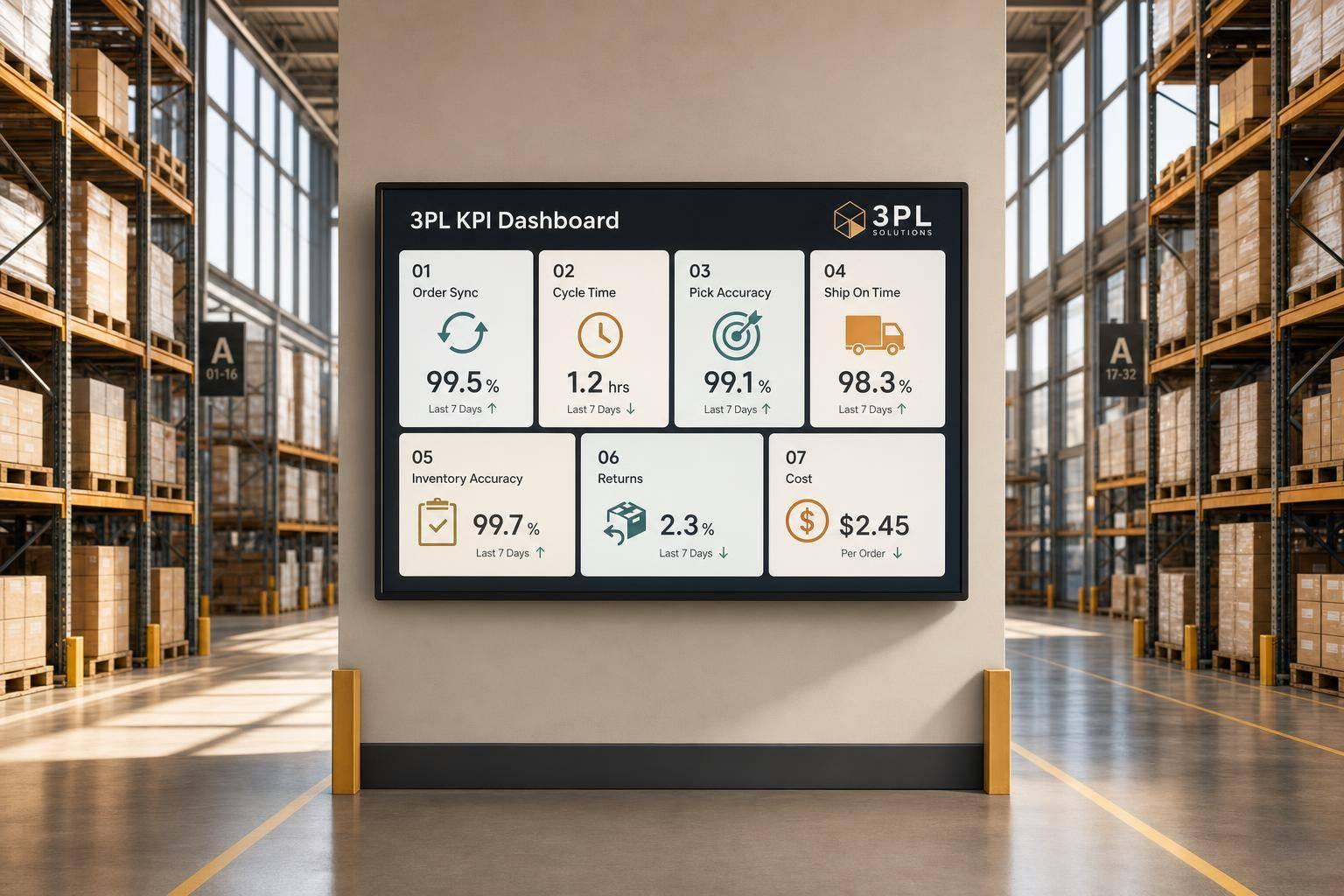
7 WooCommerce 3PL KPIs Teams Track

Centralized vs Decentralized Replenishment
