
How 3PLs Enable Multi-Channel Order Sync

Managing orders across multiple sales channels like Shopify, Amazon, TikTok Shop, and Walmart can be overwhelming without the right system in place. Third-party logistics providers (3PLs) solve this by centralizing inventory and automating order processes, ensuring accuracy and efficiency. Here's what you need to know:
- Centralized Inventory: 3PLs use a shared inventory pool, updating stock levels across all platforms in real time to prevent overselling or underselling.
- Real-Time Updates: With API connections and webhooks, 3PLs instantly sync orders and inventory, reducing errors and delays.
- Multi-Warehouse Support: Distributing inventory across multiple locations shortens delivery times and cuts shipping costs by aligning stock with regional demand.
- Cost Savings: Automation reduces fulfillment costs by 15-25% while improving order accuracy.
- Customer Satisfaction: Faster deliveries and fewer errors lead to fewer complaints and higher retention rates.
For brands selling on three or more platforms, partnering with a 3PL is no longer optional - it’s the key to scaling operations and maintaining customer loyalty.

Key Benefits of 3PL Multi-Channel Order Synchronization
Amazon Multichannel Fulfillment (MCF) vs 3PL: Which Is Better for You | AMZ Prep

sbb-itb-eafa320
How 3PLs Handle Multi-Channel Order Sync
Third-party logistics (3PL) providers act as the glue that ties your sales channels to your inventory. Instead of juggling separate systems for platforms like Shopify, Amazon, and TikTok Shop, a 3PL's Warehouse Management System (WMS) serves as a centralized hub. This hub simplifies operations by consolidating data from all your sales channels into one place, forming the backbone for seamless technical integration.
At the heart of this integration are API connections. These direct links enable your sales platforms to communicate with the 3PL's WMS in real time. When a customer places an order on any channel, the details are sent to the warehouse system within minutes, eliminating manual data entry and reducing errors. As 3PL Center aptly notes, "API integrations are not optional at scale. They are foundational."
The unified inventory pool is another essential piece of the puzzle. Instead of splitting stock across channels - like setting aside 100 units for Amazon and 50 for Shopify - the 3PL operates with a shared inventory pool. This means that when an item sells on one platform, the system instantly updates stock levels across all others. This approach can cut total inventory investment by 20% to 30% compared to maintaining separate safety stocks.
How 3PLs Keep Inventory Updated in Real Time
3PLs take the unified inventory model a step further with real-time updates. These updates rely on webhooks - automated alerts triggered as soon as a customer clicks "buy." The WMS responds immediately, allocating inventory and updating stock levels within seconds. This method is far more efficient than older batch-based systems, which might only refresh every few hours. Real-time API connections not only prevent overselling but also reduce customer inquiries like "Where is my order?" by up to 65%.
Why Centralized Order Management Matters
3PLs combine technical precision with smart order routing to simplify even the most complex operations. A well-designed WMS handles inventory tracking and automates tasks like channel-specific order routing. For example, it can ensure Shopify orders are sent with branded packaging while Amazon FBA shipments meet compliance labeling requirements - all from the same shared inventory pool. This level of automation explains why nearly 90% of Fortune 500 companies depend on 3PLs for their logistics needs.
Centralized management also provides real-time visibility. Instead of flipping through multiple dashboards, you get a single, clear view of stock levels, order statuses, and warehouse activity. Bryan Wright of G10 Fulfillment warns, "A bad WMS system will not track inventory 100 percent as it should." A reliable system becomes your command center, making it easier to manage multi-channel operations without drowning in spreadsheets.
How 3PLs Manage Inventory Across Multiple Locations
Selling across multiple channels can quickly become complicated if you rely on just one warehouse. A single location often creates bottlenecks, delaying deliveries and driving up costs. That’s where a third-party logistics provider (3PL) with a network of warehouses comes in. By distributing your inventory across several strategic locations, 3PLs position your products closer to your customers. This approach reduces shipping zones, cuts costs, and speeds up delivery times. It’s a smart way to streamline multi-warehouse operations while ensuring better inventory tracking.
All these warehouses are connected by a unified system. This centralized view ensures smooth coordination and avoids order mishaps. For example, when a customer in Seattle places an order, the system quickly identifies which warehouse - whether in Los Angeles, Dallas, or New Jersey - has the stock and can deliver the fastest. As G10 Fulfillment explains, "Inventory sync becomes more complex when products live across multiple warehouses. Without a unified system, each location becomes a separate island. Orders misroute. Inventory misallocates."
How Multi-Warehouse Coordination Works
3PLs rely on tools like demand forecasting and logistics analytics to manage inventory efficiently across locations. These tools help identify where products are selling the fastest. For instance, if sales data shows high demand in the Northeast, more stock will be shifted to a New Jersey warehouse to serve that region. This targeted placement can lower shipping costs by 15% to 25% compared to relying on a single warehouse for all orders. By aligning inventory with real-time order data, 3PLs ensure all operations across channels stay in sync.
If one region experiences a sales surge, the system reallocates inventory from nearby warehouses to prevent stockouts. This proactive approach can also help avoid the high costs of expedited restocking. For example, between October 2024 and September 2025, beverage retailer Poppi used Amazon's Multichannel Fulfillment service to implement this strategy, cutting their total order fulfillment costs by 30%.
Automation also plays a big role in efficiency. Automated order routing considers factors like distance, warehouse capacity, carrier rates, and available stock to determine the best fulfillment option. During high-demand periods like Black Friday, if a primary warehouse hits 85% of its daily capacity, the system automatically redirects orders to a backup location, keeping everything on track.
In addition to optimizing stock placement, 3PLs use advanced tracking tools to refine inventory management further.
How 3PLs Use Tracking and Visibility Tools
Centralized systems allow real-time tracking across all warehouses, ensuring smooth order fulfillment. From stock levels to inbound shipments and outgoing orders, everything is visible on a single dashboard. This level of transparency helps you anticipate potential stockouts and adjust reorder points before they become an issue.
Customers also benefit from this tracking. When an order ships from the nearest warehouse, the system sends updates with accurate delivery estimates. This transparency reduces customer inquiries about order status and helps build trust in your brand.
Benefits of Multi-Channel Order Sync with 3PLs
Synchronizing with third-party logistics providers (3PLs) enhances accuracy, speeds up operations, and reduces costs. With multi-channel sales becoming the standard, having a unified system is no longer optional - it’s crucial. A unified sync tackles the chaos of fragmented systems, which often lead to overselling, stockouts, and delayed deliveries.
Consolidating inventory within a single system eliminates the need for excess safety stock. In fact, brands often cut their total inventory investment by 20% to 30% when they adopt a unified multi-channel fulfillment model. Beyond streamlining order processing, this synchronization sets the stage for smoother operations, as explained below.
How 3PLs Improve Efficiency for E-Commerce Brands
Real-time API integration ensures that inventory updates across all platforms instantly after a sale. For example, if an item sells on TikTok, the stock levels on Amazon and Shopify adjust immediately. This prevents the delays that can result in penalties or damage to seller ratings.
Leading 3PLs excel at precision, thanks to verified pick-and-pack workflows. Automated order routing ensures that orders follow the correct fulfillment processes based on platform-specific requirements - such as branded packaging for Shopify or compliant labeling for Amazon FBA. This automation reduces the errors that often occur when staff manage multiple systems manually.
Centralized reverse logistics streamline returns by processing them at a single location. Sellable items are inspected and restocked into the unified inventory pool quickly, making them available for resale across all platforms within hours. This efficient returns process reinforces the system’s ability to maintain smooth operations.
How 3PL Integration Lowers Costs
Efficiency improvements directly translate into cost savings. Automation reduces fulfillment expenses by 15% to 25%. These savings come from streamlined labor, lower storage costs, and optimized shipping routes. On the flip side, brands relying on disconnected or manual 3PL systems face 23% higher fulfillment costs and experience shipping delays of up to two days compared to those with integrated operations.
Real-time inventory management across multiple channels also reduces order inaccuracies by up to 25%. This prevents costly mistakes like duplicate shipments, incorrect items, or emergency restocking fees. With a single dashboard providing visibility into inventory, order statuses, and shipping performance, manual reconciliation and side spreadsheets become unnecessary.
Safety stock buffers offer an extra layer of protection. Advanced systems allow you to set reserve thresholds, such as marking a product as out of stock on secondary platforms when only a few units remain. This ensures inventory is preserved for priority channels during viral demand spikes and prevents overselling caused by sync delays.
How JIT Transportation Supports Multi-Channel Order Sync
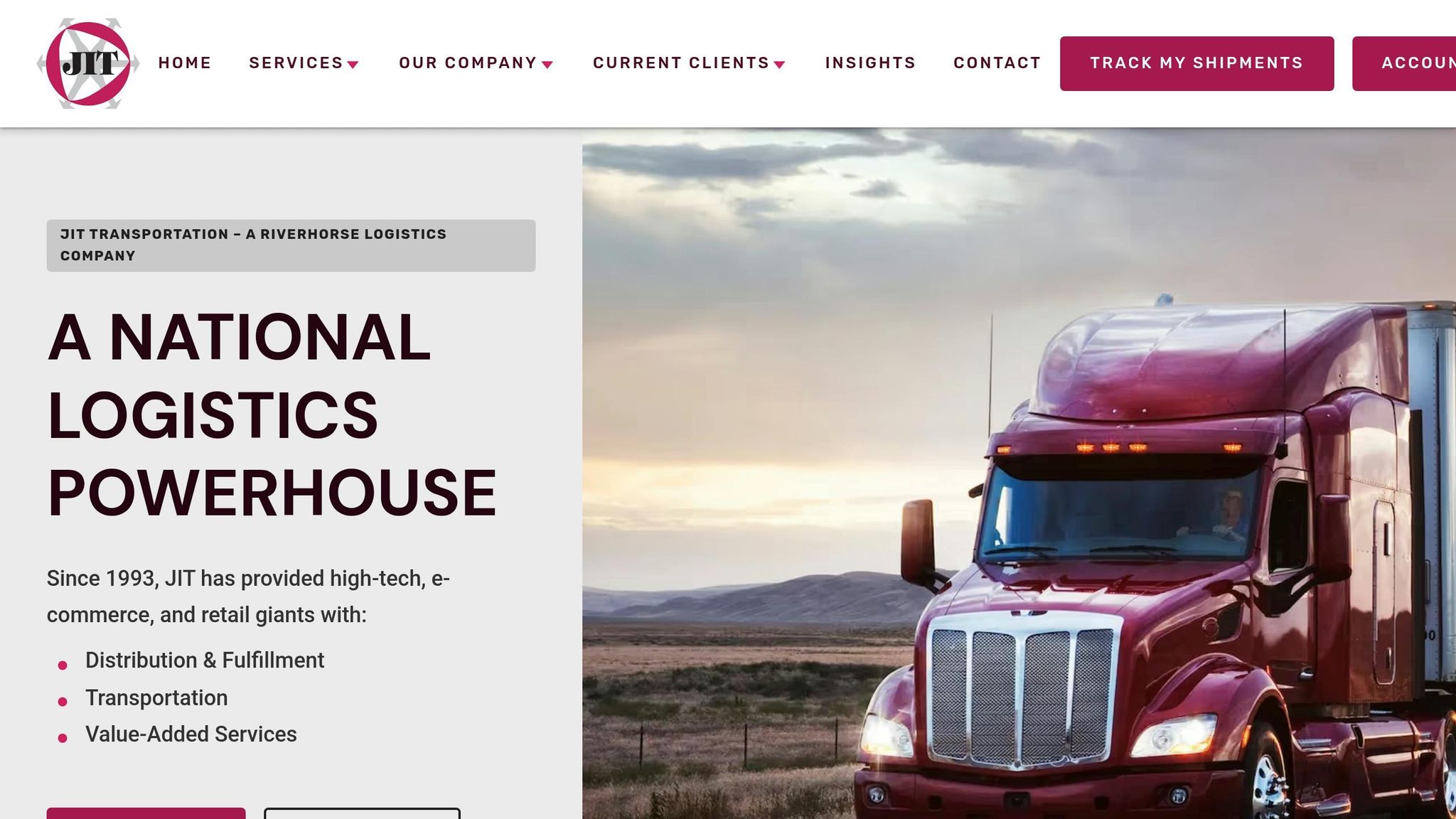
JIT Transportation combines over 30 years of experience with cutting-edge technology to streamline e-commerce operations across multiple sales channels. By integrating directly with platforms like Shopify, Magento, WooCommerce, and BigCommerce, they automate order processing as soon as a customer makes a purchase. This automation removes the need for manual data entry, reducing the risk of delays and inventory errors.
What Services JIT Transportation Offers
JIT Transportation operates through a network of 14 U.S. warehouses, covering a total of 2.5 million square feet. This extensive setup allows brands to position their inventory closer to customers, which helps cut down on both delivery times and shipping costs. The company’s advanced Warehouse Management System (WMS) ensures real-time visibility into stock and shipment statuses, with custom API integrations that connect seamlessly to ERP systems.
Beyond standard fulfillment, JIT Transportation provides a range of additional services tailored to meet the demands of multi-channel operations. These include kitting, assembly, product localization, and returns management. For high-value items, their White Glove services ensure careful handling and secure delivery. Their flexible pricing models are designed to accommodate seasonal fluctuations, enabling brands to scale operations without committing to long-term costs.
This infrastructure is built to support efficient and real-time order processing.
How JIT Transportation Enables Real-Time Sync and Growth
JIT’s Transportation Management System (TMS) takes this infrastructure a step further by optimizing routes and offering live shipment tracking. With a fleet of 200+ trucks and partnerships with over 500 carriers nationwide, JIT ensures 24/7 delivery operations.
"Technology is the difference between 'on time' and 'too late.'" - JIT Transportation
Orders move seamlessly through pick, pack, and ship workflows, enabling same-day or next-day shipping options. Predictive analytics help balance inventory levels and timing across the network, while client dashboards provide real-time insights into performance, order accuracy, and delivery tracking. This eliminates the need for manual reconciliation. Additionally, JIT’s in-house IT team develops custom integrations and automated reporting to meet the unique needs of growing brands, ensuring scalable support as they expand.
Conclusion
In 2026, staying competitive in e-commerce means mastering multi-channel order synchronization. With 86% of brands now operating on two or more sales channels, keeping inventory unified and processing orders in real time isn't just helpful - it’s essential for maintaining revenue and keeping customers happy. Brands selling on three or more platforms can see up to 287% higher revenue compared to single-channel sellers, but only if their logistics systems are equipped to handle the added complexity.
Third-party logistics (3PL) providers make this possible by simplifying inventory management across platforms like Amazon, Shopify, and TikTok Shop. By consolidating stock into a single source of truth, they eliminate manual errors and prevent costly issues like overselling or shipping delays. Real-time API integrations ensure smooth operations, resulting in reduced fulfillment costs, faster delivery speeds, and the flexibility to handle peak seasons.
This is where advanced 3PL infrastructure becomes a game-changer. JIT Transportation, for example, operates 14 warehouses totaling 2.5 million square feet, equipped with cutting-edge warehouse management systems (WMS), custom integrations, and a nationwide carrier network. Their expertise, backed by 30 years of experience, extends beyond basic logistics to include specialized services like kitting, returns management, and white glove handling. This allows brands to grow into new markets without the added stress of managing logistics.
"Whether you're scaling eCommerce or coordinating national retail rollouts, JIT brings the infrastructure and responsiveness to move your business forward." - JIT Transportation
This quote sums it up perfectly: choosing the right 3PL partner, one that excels in both technology and logistics, can turn growth challenges into opportunities for success.
FAQs
What data needs to sync between my sales channels and a 3PL?
To keep things running smoothly, it's crucial to sync inventory levels, order details, and fulfillment status. Keeping this data aligned helps avoid problems like overselling, shipping delays, or errors in order processing. This way, multi-channel fulfillment stays efficient and hassle-free.
How long does multi-channel inventory sync take to update after a sale?
Multi-channel inventory sync works by updating stock levels almost instantly - either in real time or within seconds after a sale. This keeps inventory accurate across all platforms, reducing the chances of overselling or running out of stock.
What should I ask a 3PL about their WMS and API integrations before switching?
Before partnering with a 3PL, it’s crucial to ask about their Warehouse Management System (WMS) and API integrations to guarantee smooth order fulfillment. Here are some key areas to address:
- Compatibility: Can their WMS seamlessly integrate with your current e-commerce platforms and ERP systems?
- Real-Time Updates: Do their APIs support automatic syncing for orders, inventory, and tracking information?
- Scalability: How easy is it to set up and maintain these integrations as your business grows?
- Multi-Channel Support: Are they equipped to handle multiple sales channels without hiccups?
By addressing these points, you’ll be better prepared to ensure efficient and adaptable operations.
Related Blog Posts
Related Articles
7 WooCommerce 3PL KPIs Teams Track

Centralized vs Decentralized Replenishment
