
How 3PLs Optimize Warehouse Locations for DTC
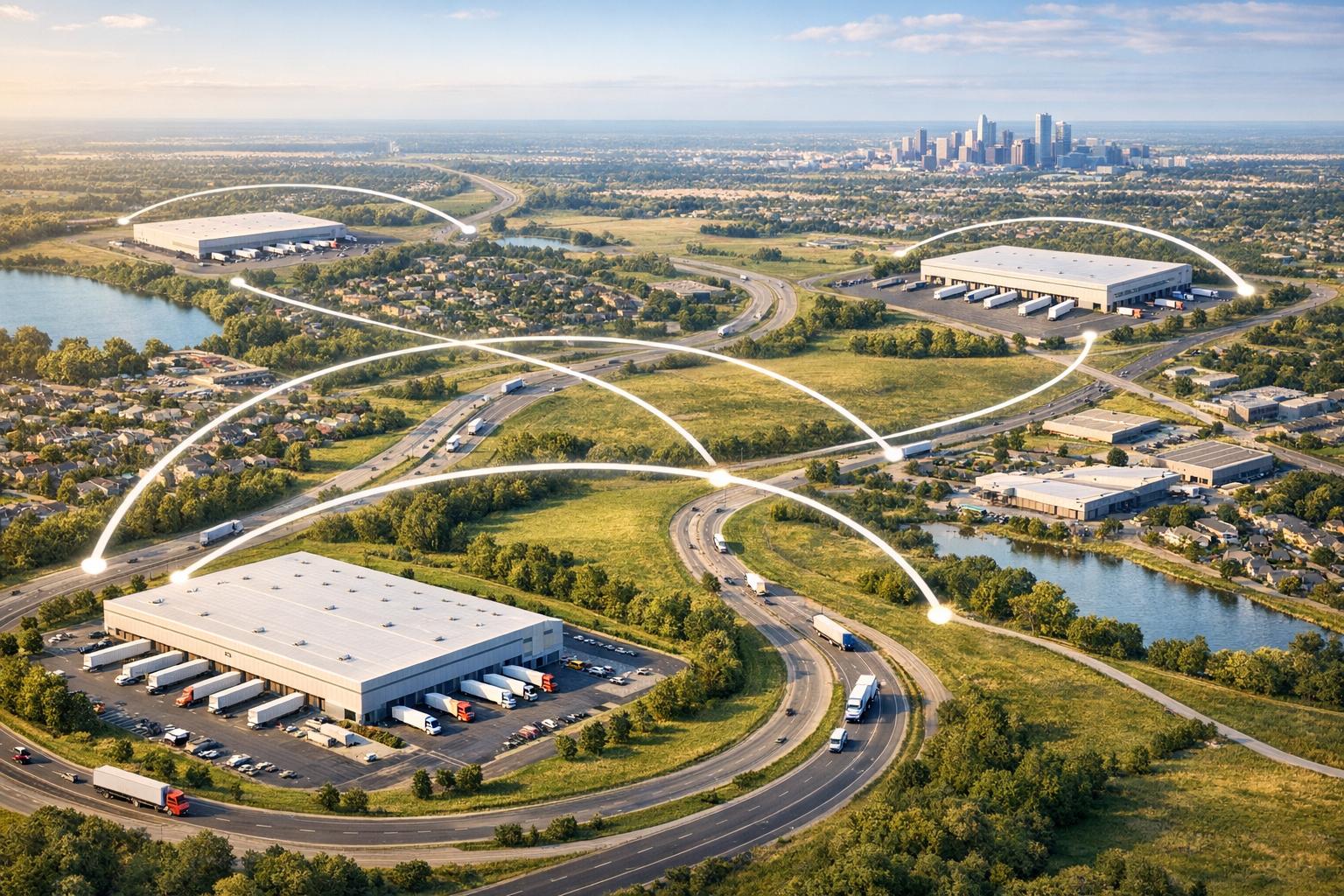
Want to save on shipping costs and speed up deliveries? Optimizing warehouse locations is the key for Direct-to-Consumer (DTC) brands. Here's the bottom line:
- Shipping costs can eat up 8–12% of revenue, and poor warehouse placement can slash profit margins by 3–5%.
- A single well-placed warehouse can reach 73% of the U.S. population with two-day shipping. Add more, and coverage increases dramatically (90% with two centers, 95% with four).
- Customers demand fast delivery - 67% expect two-day shipping. Brands that fail to meet this expectation risk losing loyalty.
Third-party logistics (3PL) providers solve this by using data to analyze customer demand, shipping zones, and transportation networks. They strategically place warehouses near major shipping hubs, highways, and airports to cut costs and reduce delivery times.
Key takeaways:
- Using tools like K-means clustering, 3PLs pinpoint the best locations to minimize shipping distances.
- Multi-node warehouse networks lower costs by up to 25% and improve delivery times by 15–40%.
- Regional hubs near demand clusters reduce transit times, shipping zones, and last-mile expenses.
Example: JIT Transportation operates 14 U.S. warehouses, strategically located in cities like Los Angeles, Memphis, and Austin, helping brands scale and save during peak seasons.
Bottom line: By working with 3PLs, DTC brands can cut shipping costs, improve delivery speed, and stay competitive in a fast-paced market.
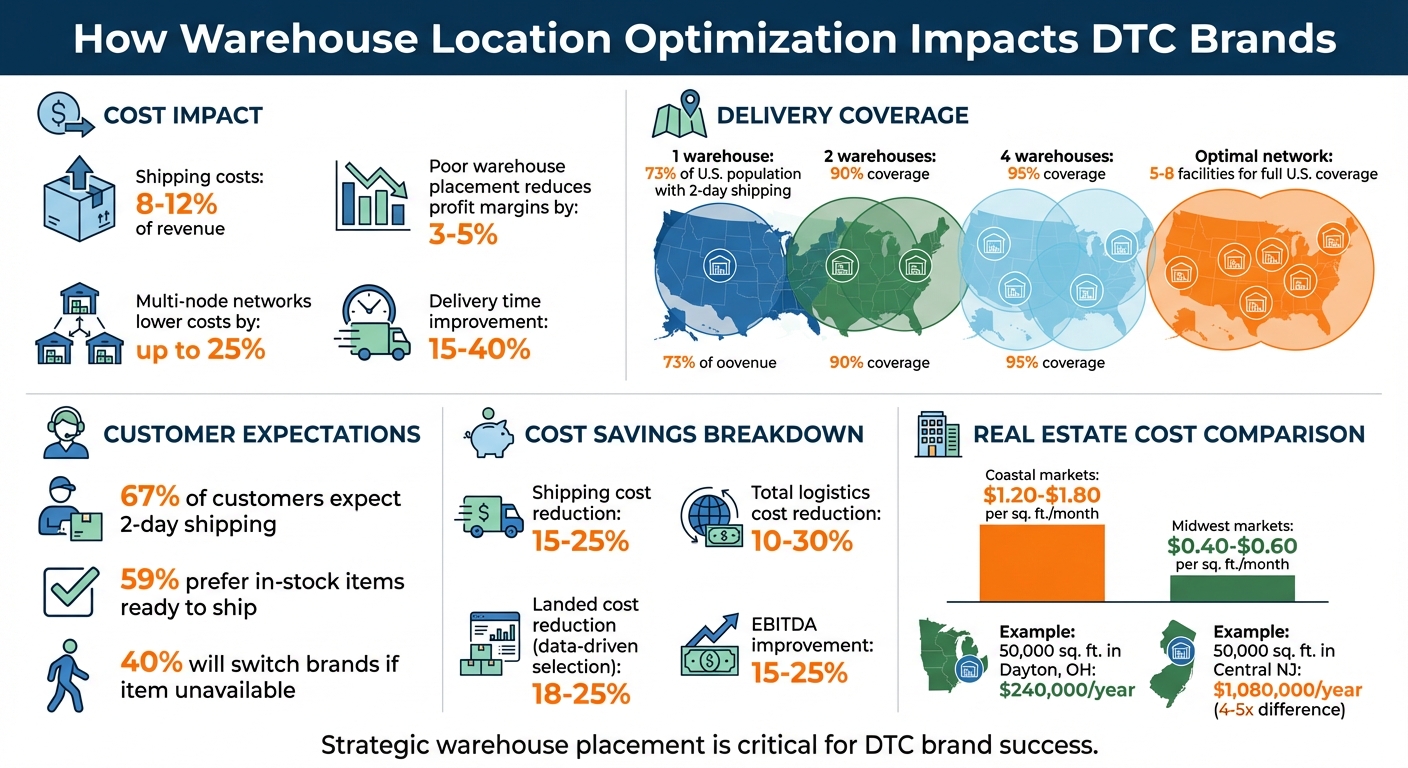
Warehouse Location Optimization: Impact on Shipping Costs and Delivery Coverage
3PL Warehousing & Fulfillment Centers: 5 Locations to Cut Costs and Improve Delivery
sbb-itb-eafa320
Analyzing Customer Demand and Geographic Data
The first step in optimizing a warehouse is figuring out where your customers are located. Leading 3PL providers analyze 12 months of historical order data, mapping customer ZIP codes to create demand heatmaps. These maps reveal patterns like coastal clusters, a national spread, or regional concentrations.
Some advanced 3PLs take it a step further by using K-means clustering. This machine learning algorithm groups cities into regional clusters and pinpoints the "centroid" location - the spot that minimizes the average distance to the largest number of customers. To refine this process, they factor in elements like order frequency, revenue potential, and population density. By doing so, they can adjust the centroid location to better align with high-value markets.
Reviewing Order Volume by Region
Another key metric 3PLs analyze is order volume by region. They calculate a weighted average shipping zone by mapping historical order ZIP codes against carrier shipping zones. A score under 3.5 indicates that more than 75% of orders are in cost-effective Zones 2–4. Additionally, they evaluate the average distance to customers using this formula:
Σ(Distance from warehouse to customer ZIP × Order count) ÷ Total orders
An average distance under 400 miles is considered excellent.
Brands that use a detailed scoring system for warehouse selection can cut landed costs by 18–25% compared to those that base location decisions solely on factors like rent. This systematic approach helps determine if a single warehouse is enough or if a multi-node strategy is required. For instance, while a central location might seem efficient, it could lead to higher costs if 60–70% of the customer base is concentrated on the coasts. These insights are crucial for making informed decisions about warehouse placement.
Placing Warehouses Near Target Customers
All these methods work toward one goal: reducing transit distances and costs. Once high-demand regions are identified, 3PLs position warehouses strategically to minimize shipping times. With the right placement, brands can reach 90% of U.S. customers within two days using ground shipping, cutting down on the need for expensive air freight.
Fast shipping is a priority for many shoppers - 67.77% of U.S. consumers value two-day delivery for online purchases. For example, a 1,200-mile distance might push delivery times to three or four days and increase costs. But shrinking that distance by 400 miles can enable one- to two-day delivery and reduce fees significantly. Strategic warehouse placement makes all the difference.
Selecting Regional Distribution Hubs
After identifying demand patterns, the next step for 3PLs is selecting hub locations. This decision involves much more than just finding the cheapest warehouse space. It’s about weighing multiple factors that influence both cost efficiency and service quality. By using an 8-point framework - covering demand proximity, carrier zone coverage, labor availability, facility costs, tax environment, transportation infrastructure, weather risks, and economic incentives - 3PLs can achieve 18–25% lower landed costs.
For instance, the annual cost of a 50,000 sq. ft. warehouse in Dayton, OH is approximately $240,000, compared to $1,080,000 for the same space in Central New Jersey - a 4–5x difference. However, the cheapest option isn’t always the smartest. Poorly chosen locations can lead to unexpected expenses. For example, a Memphis fulfillment center faced $143,000 in unplanned Year 1 costs due to labor competition with FedEx and weather-related disruptions. Smart hub selection also supports multi-node distribution networks, enabling faster deliveries and building on earlier demand analysis to optimize distribution.
Take JIT Transportation as an example - they operate 14 strategically located warehouses across the U.S., near key transportation hubs like San Francisco SFO, Los Angeles LAX, Houston IAH, and Memphis MEM. This network supports zone skipping strategies, where orders are consolidated and shipped in bulk to regional hubs closer to customers. This approach replaces expensive individual parcel shipping with more economical freight options.
Proximity to Transportation Infrastructure
Once hubs are chosen, their proximity to transportation infrastructure becomes critical. Easy access to highways, airports, and carrier hubs significantly impacts both speed and cost of order movement. Most 3PLs aim for hubs located within 30 minutes of major carrier centers and less than 5 miles from interstate on-ramps, allowing for extended processing windows and later pickup times.
Strategically placed hubs in cities like Knoxville, Tennessee, and Salt Lake City, Utah, can reach 96% of U.S. households within two days or less using ground shipping. Local transit conditions are also carefully assessed to avoid unnecessary trucking costs.
For brands importing goods, being near ports can cut drayage costs and reduce delays in container handling. That said, many 3PLs now route freight from ports like Los Angeles/Long Beach to inland fulfillment centers. These inland centers offer more available labor and space, avoiding the high costs and scarcity issues common in coastal markets, while still ensuring quick delivery to most of the country.
Choosing Between Urban and Suburban Locations
The decision between urban and suburban locations involves clear trade-offs. Urban hubs near major ports, such as Los Angeles/Long Beach or NY/NJ, reduce drayage costs and position inventory closer to dense customer bases. However, these benefits come with higher rents, labor shortages, and traffic congestion. For example, coastal primary markets charge $1.20–$1.80 per sq. ft. per month, compared to $0.40–$0.60 in secondary Midwest markets like Dayton, OH. Similarly, labor costs in coastal areas range from $23–$28 per hour, while the Midwest averages $17–$19.
"Coastal fulfillment centers are more likely to struggle with capacity constraints than inland fulfillment centers... you may pay too much to store more inventory in such a crowded area."
During peak seasons like Q4, coastal markets often add $4–$6 per hour in seasonal labor premiums, compared to $2–$3 in the Midwest. Inland and suburban hubs, on the other hand, offer more predictable costs and fewer congestion issues. They avoid the capacity bottlenecks that often plague urban coastal centers. For DTC brands prioritizing national distribution rather than same-day local delivery, suburban locations frequently strike the best balance between affordability and accessibility.
Creating Multi-Node Distribution Networks
Expanding beyond a single warehouse, multi-node distribution networks spread inventory across multiple locations, helping DTC brands save on costs and improve delivery times. By positioning products closer to customers, this approach reduces transit times and lowers shipping expenses. However, it’s not without challenges - inventory costs can rise by as much as 30% when moving from a single hub to a multi-node setup. The key lies in striking the right balance between cost and coverage.
To fine-tune these networks, data-driven tools play a crucial role. Third-party logistics providers (3PLs) often use techniques like the Elbow Method and K-Means Clustering to determine where additional warehouses make sense without diminishing returns. These tools analyze customer order patterns to identify ideal locations, while also considering factors like site affordability and revenue potential. Research shows that operating 5–8 strategically placed facilities provides optimal coverage across the U.S.. This strategy can cut logistics costs by 10–30% and improve delivery times by 15–40%. For brands just starting out, simpler configurations like a bi-coastal setup (one facility on the East Coast and another on the West Coast) or a single central hub can serve as practical starting points.
Using Regional Fulfillment Centers for Faster Delivery
Once the right number of nodes is established, regional fulfillment centers help further shorten delivery times. By spreading these centers across the country, brands can minimize the distance packages travel. Instead of shipping orders from a single California warehouse to customers nationwide, a multi-node system allows orders to ship from the nearest location. This setup enables ground shipping to reach 96% of U.S. households in two days or less.
This distributed approach also offers a safety net. If one fulfillment center runs out of a specific product, others can step in to fulfill orders, preventing lost sales. Considering that 59% of shoppers prefer items that are in stock and ready to ship, and nearly 40% of U.S. consumers will switch brands if their desired item is unavailable, maintaining inventory across multiple locations is critical, especially during demand spikes or regional disruptions.
To manage these complexities, 3PLs rely on Distributed Order Management (DOM) systems. These tools provide real-time inventory visibility across all nodes and automatically route orders to the facility that offers the best combination of low shipping costs and fast delivery times. Some 3PLs even set up temporary pop-up distribution centers to handle seasonal surges or loyalty program demands, avoiding the expense of maintaining permanent warehouses.
Lowering Costs Through Zone Skipping
Multi-node networks also enable cost-saving strategies like zone skipping. This method consolidates individual orders into bulk shipments, bypassing costly long-distance parcel zones. The U.S. is divided into 8 shipping zones, and the more zones a package crosses, the higher its cost and transit time. Zone skipping works by shipping bulk orders via freight to a regional hub closer to the destination, where they are then delivered locally at lower parcel rates.
For example, instead of shipping individual packages from Los Angeles to New York at high national rates, a 3PL can consolidate those orders into one truckload, send it to a hub in New Jersey, and deliver the packages locally at Zone 2 or Zone 3 rates. This reduces touchpoints, lowering the risk of package damage and cutting labor costs tied to sorting. Zone skipping is particularly effective for high-volume e-commerce brands with steady regional order density, although it requires specialized infrastructure like dock doors and conveyor systems to streamline operations. Despite occasional visibility challenges during transit, the cost benefits often outweigh the drawbacks.
"When brands can diversify their direct-to-consumer (DTC) operations, they are in a better position to navigate disruptions such as supply chain bottlenecks, weather issues, labor shortages and transportation costs." - Michael Wright, VP of Marketing and Solutions, PFS
JIT Transportation exemplifies this strategy with its network of warehouses near key U.S. transportation hubs, including San Francisco (SFO), Los Angeles (LAX), Houston (IAH), and Memphis (MEM). By consolidating shipments and moving them in bulk to regional hubs, 3PLs can replace costly individual parcel shipping with more affordable freight options, delivering both speed and cost savings for DTC brands.
Using Data Analytics for Warehouse Optimization
Data analytics takes warehouse placement decisions to the next level, turning what was once guesswork into a precise, science-driven process. Third-party logistics providers (3PLs) now rely on advanced modeling tools to pinpoint the best locations for facilities while boosting operational efficiency. This data-first approach builds on the cost and delivery benefits we’ve already discussed, helping 3PLs stay ahead in a competitive market. By analyzing historical order patterns, real estate costs, labor availability, and carrier zones, they strike a balance between fast delivery times and facility expenses. These insights are especially vital for two key tasks: predicting future demand and tracking real-time performance.
Applying Predictive Analytics for Demand Forecasting
Predictive analytics allows 3PLs to forecast where demand is likely to grow. Using methods like weighted K-Means clustering, providers group geographic data into clusters based on factors like population density (accessibility), real estate costs (affordability), and potential revenue (profitability). This clustering approach leads to better demand forecasting and smarter facility placement.
This method works for both new and existing logistics networks. For example, a greenfield analysis identifies the ideal location for a new facility from scratch, while brownfield optimization focuses on improving the efficiency of current infrastructure. In areas with limited historical data, population density and real estate affordability often serve as stand-ins to estimate demand. Considering that transportation costs can account for 50–70% of total logistics expenses, accurate demand forecasting becomes critical to keeping costs under control.
Predictive models also simulate scenarios like sudden demand spikes, seasonal surges, or unexpected disruptions. By running these simulations, 3PLs can optimize their networks to strike the right balance - lower transportation costs, reduced fixed expenses, and minimized inventory risks - all while ensuring the network can handle real-world challenges.
Monitoring Real-Time Performance Metrics
While predictions help set the stage for warehouse placement, real-time performance monitoring ensures those decisions remain effective over time. Once a warehouse is up and running, live metrics help confirm whether its location is truly optimized. For example, 3PLs monitor transit times and on-time shipment rates by region to determine if inventory is positioned close enough to customers. If a significant number of orders are being sent to high-cost zones, it might signal the need for a new warehouse in that area.
Metrics like picking accuracy, order cycle time, and inventory turnover quickly highlight operational bottlenecks. Top-performing direct-to-consumer (DTC) brands typically achieve order accuracy rates of 96–98%, while rates below 95% often indicate underlying issues. Modern 3PLs track these metrics hourly and analyze monthly trends to fine-tune their long-term strategies. The payoff can be substantial - organizations using data-driven analytics have reported EBITDA improvements of 15–25%. With cloud-based dashboards providing a centralized view of their operations, 3PLs can make continuous adjustments to their networks without the delays of manual data collection.
Technology Tools for Warehouse Location Optimization
Choosing the right technology can turn warehouse location decisions into precise, data-backed strategies. For DTC brands, this means faster deliveries and lower costs - key factors for staying competitive. Modern 3PLs rely on two essential systems to make this happen: Warehouse Management Systems (WMS) and route optimization software. Together, these tools ensure warehouses are not only well-placed but also operate efficiently, delivering orders quickly and cost-effectively.
Warehouse Management Systems (WMS)
A WMS is more than just a tool for tracking inventory - it’s the backbone of continuous optimization and real-time monitoring. By leveraging the data provided by WMS, brands can fine-tune warehouse performance and achieve 18–25% lower landed costs compared to those focusing solely on cheaper rent.
This system ensures smooth inventory coordination across all locations. Orders are automatically routed to the warehouse nearest to the customer, cutting down on shipping zones and associated costs. Inside the warehouse, AI-driven slotting places high-demand items closer to shipping docks, reducing worker travel time and increasing throughput. Real-time dashboards track key metrics like pick status and on-time delivery rates, ensuring each facility meets service-level agreements.
The benefits are clear: 71% of companies using a WMS save 11 or more hours per month, and 23% of 3PLs report a 50% or greater increase in order volume after implementation. While WMS optimizes internal operations, route optimization software ensures deliveries are handled efficiently once orders leave the warehouse.
Route Optimization Software
The last mile is crucial for DTC brands, and route optimization software ensures deliveries are fast and cost-effective. Unlike static routing, AI-driven platforms adjust routes in real time, accounting for variables like traffic, weather, and vehicle capacity. Deliveries are grouped into localized zones to avoid route overlaps, reducing travel distances and increasing the number of orders completed per trip.
These advanced systems can deliver impressive results. Some implementations achieve 99.5% on-time delivery rates, while also increasing the number of orders fulfilled per vehicle without needing to expand fleets. Additionally, incorporating driver behavior data can trim total travel time by 5%.
Benefits of Optimized Warehouse Locations for DTC Brands
Strategically placing warehouses can transform how Direct-to-Consumer (DTC) brands operate, offering quicker deliveries, lower costs, and the ability to scale efficiently. By leveraging customer demand data and transportation networks, third-party logistics (3PL) providers like JIT Transportation help DTC brands meet growing consumer expectations while keeping expenses in check. Here’s how optimized warehouse locations make a difference.
Faster Delivery Times
When warehouses are closer to customers, delivery speeds improve dramatically. With inventory positioned near end consumers, packages travel fewer shipping zones, cutting transit times. In fact, warehouses strategically placed can provide up to 95% two-day ground coverage, a major advantage compared to relying on a single facility. This matters because over half of shoppers now see two-day delivery as a baseline expectation. Faster deliveries not only keep customers happy but also encourage repeat purchases and build loyalty.
JIT Transportation, for example, operates 14 warehouses in key locations such as Memphis, Austin, Los Angeles, and San Francisco. This network ensures nationwide coverage, meeting delivery standards that customers demand. Plus, faster shipping doesn’t just improve satisfaction - it also brings down costs, creating a win-win scenario for brands.
Lower Shipping and Fulfillment Costs
Choosing the right warehouse locations can significantly cut shipping expenses. In the U.S., shipping rates are based on zones - the farther a package travels, the higher the cost. By placing warehouses close to dense customer clusters, brands can reduce zone charges, saving anywhere from 15% to 25% on shipping costs. Transitioning from a single 3PL warehouse to multiple regional facilities can yield even greater savings, with average reductions of around 25%.
"As you save dollars on supply chain & fulfillment, you increase Contribution Profit. That increased Contribution Profit can then be used to increase your target customer acquisition cost (CAC)." - Drivepoint
Shorter delivery routes also reduce last-mile expenses like fuel, labor, and vehicle wear-and-tear. Inland locations such as Salt Lake City or Nashville often strike a balance between cost and service, offering lower real estate taxes, utility bills, and labor rates compared to coastal hubs. Additionally, methods like zone skipping - where orders are bulk-shipped to regional centers - help brands avoid high long-haul shipping costs. Some warehouse locations even allow for tax and duty exemptions on shipments under $800, which can save up to 15% on the cost of goods.
Support for High-Growth Brands
Optimized warehouse networks don’t just save money - they also enable growth. By streamlining operations, brands can handle increasing order volumes without the need for new infrastructure. JIT Transportation, for example, offers over 2.5 million square feet of scalable warehousing space, allowing brands to expand their reach without significant capital investments. This flexibility is especially helpful during peak seasons or rapid growth periods, as it ensures performance remains steady.
Strategic warehouse placement can improve delivery times by 15–40% and cut total logistics costs by 10–30%. These savings free up resources for other priorities like product development or marketing. As brands grow into new regions, analyzing customer demographic data can help pinpoint emerging markets, ensuring inventory is always in the right place to maintain speed and quality.
Conclusion
The location of warehouses plays a crucial role in shaping delivery speed, shipping costs, and a brand's ability to scale. By positioning inventory closer to customers, businesses can cut costs, speed up deliveries, and ultimately enhance customer satisfaction while improving profit margins and operational flexibility.
As consumer expectations evolve, the trend toward multi-node distribution networks becomes increasingly important. With two-day delivery now considered the standard, brands must strategically place warehouses across the country to meet demand efficiently. Inland hubs, in particular, help bypass capacity issues and reduce costs while ensuring reliable two-day coverage.
A great example of this strategy in action is JIT Transportation's network of warehouses situated near key U.S. markets like Memphis, Austin, Los Angeles, and San Francisco. This setup highlights how well-planned warehouse placement can give brands a competitive edge. Their custom 3PL solutions provide DTC brands with the infrastructure needed to stay competitive.
As Commonwealth Inc emphasizes:
"A thoughtfully designed network creates competitive advantage through both cost efficiency and service excellence, while a suboptimal approach can create a permanent disadvantage that no amount of operational excellence can overcome".
For fast-growing brands, working with a 3PL that excels in strategic warehouse placement is no longer optional - it’s essential. Aligning warehouse locations with data-driven strategies and advanced 3PL practices enables DTC brands to thrive in today’s competitive landscape.
FAQs
How do 3PLs determine the best warehouse locations for DTC brands?
3PL providers leverage data analytics to determine optimal warehouse locations for direct-to-consumer (DTC) brands. By diving into order histories, shipping costs, transit times, and inventory levels, they identify demand hotspots and key cost factors across the U.S., enabling them to design a fulfillment network that cuts delivery times and lowers shipping expenses.
To fine-tune these decisions, 3PLs analyze customer distribution by ZIP code and use predictive models to anticipate future demand patterns. Tools like geographic mapping and cost analysis help ensure warehouses are strategically placed to maximize efficiency and meet delivery speed targets. For example, a single strategically located warehouse can serve about 73% of U.S. customers within two days, while a network of four warehouses can extend coverage to approximately 95% of the country.
JIT Transportation takes this a step further, using real-time order data and advanced software to recommend warehouse locations tailored to the specific needs of DTC brands. This approach ensures fast, dependable delivery across the nation.
What are the cost advantages of using multiple warehouses for DTC brands?
Using a network of multiple distribution centers can lead to substantial savings in logistics costs - typically ranging from 10–30%. These savings come from shorter transportation routes, reduced shipping expenses, and lower inventory holding costs.
Positioning warehouses closer to where your customers are located allows you to deliver orders faster while cutting down on the expenses tied to long-distance shipping and storage. This strategy not only streamlines operations but also boosts customer satisfaction, making it a practical move for DTC brands aiming to grow efficiently.
Why is it important for warehouses to be close to transportation hubs?
Warehouses located close to major transportation hubs - such as highways, ports, and carrier terminals - can significantly cut down on transit times and shipping costs. Considering that shipping often accounts for 50–70% of logistics expenses, this proximity can translate into substantial savings. Beyond cost, it also boosts delivery reliability by tapping into established freight networks, enabling faster and more efficient service for customers.
Related Blog Posts
Related Articles
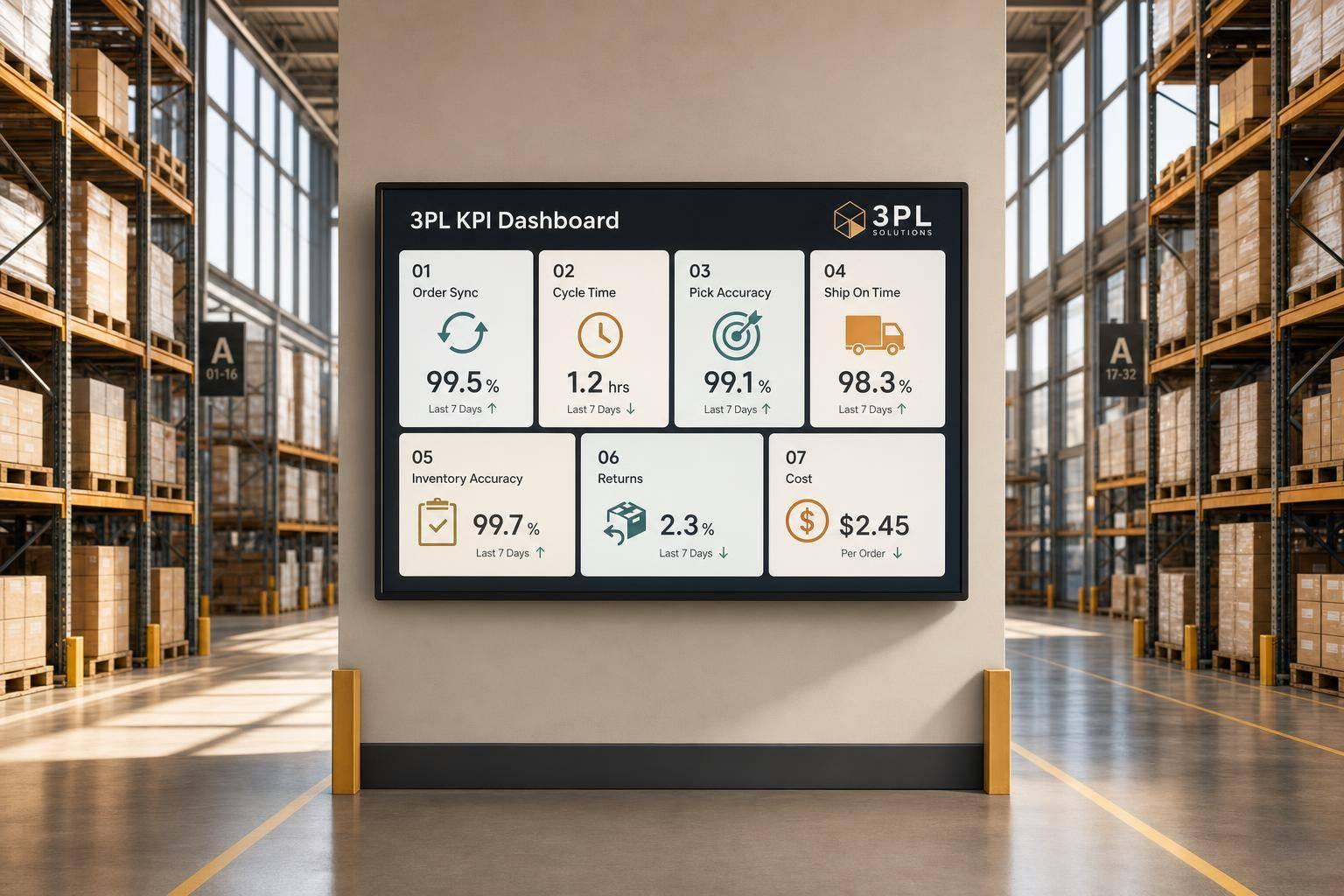
7 WooCommerce 3PL KPIs Teams Track

Centralized vs Decentralized Replenishment
