
Mobile Returns Apps for High-Volume E-commerce
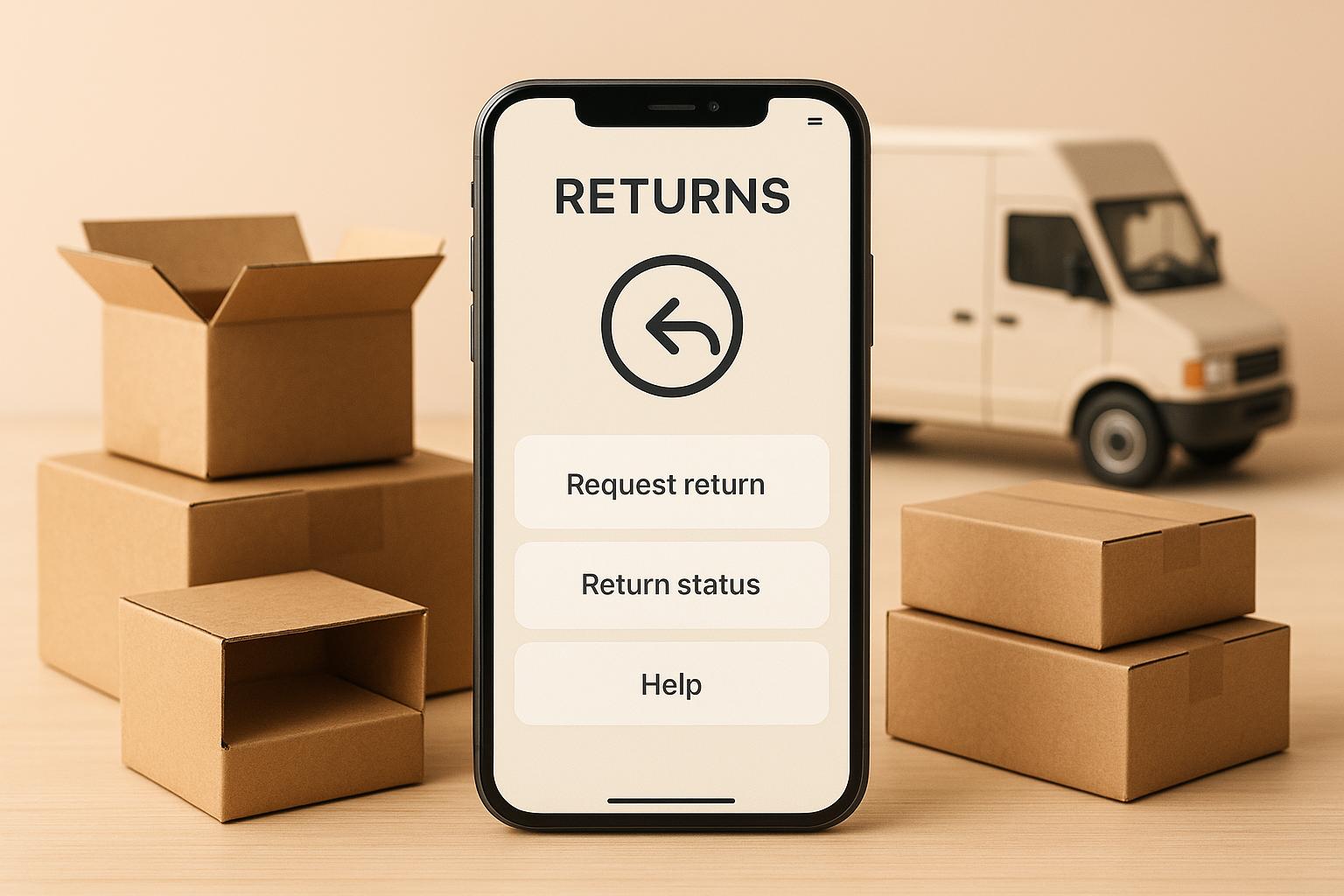
Managing returns efficiently is critical for U.S. e-commerce brands handling over 3,000 monthly orders, especially with return rates reaching 15–20%. Mobile returns apps simplify this process by automating returns through smartphone-friendly interfaces. These apps allow customers to initiate returns, upload photos, choose refunds or exchanges, and generate return labels without contacting support. This reduces labor costs, speeds up resolutions, and meets customer expectations for quick, mobile-first solutions.
Here’s a quick look at three popular mobile returns platforms:
- Loop Returns: Focuses on self-service returns and exchanges, reducing support tickets by 20–40%. Encourages exchanges over refunds, integrates with Shopify, and automates reverse logistics tasks like routing and restocking.
- Happy Returns by PayPal: Combines digital returns with physical drop-off points across the U.S., offering instant refunds and box-free returns. Prioritizes exchanges but may have limited rural accessibility.
- Narvar: Optimizes post-purchase experiences with AI-driven personalization, predictive inventory allocation, and high-volume processing capabilities. Supports custom integrations but may require additional developer resources.
These platforms not only improve the customer experience but also help brands cut costs, increase exchanges, and streamline logistics. Choosing the right app depends on your brand’s volume, logistics setup, and return priorities.
Ecommerce Returns Management: Choosing the Right Platform for 2025
1. Loop Returns
Loop Returns gives customers the ability to handle returns and exchanges directly from their phones, cutting out the need for support tickets and simplifying the entire process. Through this platform, shoppers can initiate a return or exchange, specify the reason, decide between a refund or a product swap, and generate a prepaid label - all in one smooth workflow. This mobile-first system can reduce support ticket volumes by 20–40% for high-volume programs, allowing customer service teams to focus on more complex tasks. Plus, it often brings return resolution times down to under 24 hours. By integrating seamlessly with backend systems, Loop ensures efficient return management across all channels.
Mobile User Experience
The mobile interface is designed to make returns easy while boosting efficiency. It emphasizes exchanges over refunds, encouraging customers to explore size, color, or product alternatives through a touch-friendly layout. This approach can lead to a 5–10% increase in exchanges, helping businesses retain more revenue. Additionally, the platform offers options like store credit and a "shop now" feature, which encourages shoppers to make a new purchase instead of waiting for a refund.
Customization options let brands match the interface with their own colors, logos, and policies, ensuring a consistent brand feel. With Google research showing that over half of users abandon slow or clunky mobile experiences, Loop’s optimized mobile flow not only improves return completion rates but also encourages repeat purchases. This builds trust and loyalty over time.
3PL Integration
Loop integrates seamlessly with popular e-commerce platforms like Shopify and BigCommerce, using APIs or middleware to send return authorizations, shipping labels, and disposition data directly to 3PL warehouse management systems. This is especially beneficial for brands that use external warehouses or logistics partners. For example, U.S.-based providers like JIT Transportation can coordinate transportation, receiving, and specialized services - such as kitting, testing, or white-glove handling - for returned items. These integrations streamline processes like testing and mapping, cutting down the time from "return initiated" to "restocked" and reducing manual errors. To handle peak seasons like Black Friday or the holidays, establishing clear SLAs with 3PL partners is essential for scalability.
Reverse Logistics Features
Loop automates critical reverse logistics tasks, including RMA creation, policy-based eligibility checks, label generation, and routing returns based on the product’s condition. Items can be directed to a refurbishment center, a liquidation partner, or back into sellable inventory, depending on their state. This automation lowers the overall cost per return by cutting down on handling and support overhead.
The platform also provides detailed reporting on return reasons, item outcomes, exchange versus refund rates, and geographic trends. U.S. merchants can use this data to identify recurring issues - such as sizing problems, color mismatches, or shipping damage - and make improvements to areas like product descriptions, sizing charts, packaging, or supplier quality. Over time, these insights can help reduce return rates and logistics costs, turning returns into a valuable source of feedback for refining operations and products.
2. Happy Returns by PayPal
Happy Returns by PayPal combines a user-friendly mobile process with physical drop-off locations across the U.S., letting customers handle returns without needing to log in. It checks return eligibility instantly, provides immediate refunds or store credits, and guides users to nearby, box-free drop-off points. This efficient approach reduces customer inquiries about refund statuses. By blending digital convenience with physical access, it creates a smooth return experience, especially for mobile users.
Mobile User Experience
The mobile interface simplifies the return process by guiding users through steps like item selection, reason codes, refund or exchange options, and drop-off location routing - all in one seamless experience. For brands with high return volumes, especially in apparel, the system can prioritize instant exchange options, showing real-time inventory updates and clear price differences in USD. Strategies such as offering free return shipping for exchanges or bonus store credit instead of refunds can shift 10–20% of returns into exchanges, helping brands retain more revenue. The drop-off map enhances clarity by showing distances in miles and using the shopper's local time format, while highlighting which locations support box-free returns. Even a small shift, like 3–5% more exchanges, can mean tens of thousands of dollars in extra monthly revenue for brands processing thousands of returns.
3PL Integration
Happy Returns handles the customer-facing return process and the initial reverse logistics before integrating with third-party logistics (3PL) providers for warehousing and redistribution. For U.S. brands working with custom providers like JIT Transportation, it’s essential to ensure smooth data flow between the returns platform and the 3PL partner. Key considerations include whether consolidated returns can be routed to specific JIT facilities and how services like testing or refurbishment are triggered through the platform. This coordination ensures mobile-initiated returns align with the 3PL’s operations and service agreements.
Reverse Logistics Features
The platform groups small returns into bulk shipments to lower per-unit shipping and handling costs. Centralized sorting and inspection allow for consistent quality checks and quicker restocking - critical for fast-moving inventory. Automated rules manage item dispositions and send digital updates directly to the merchant’s order management system. Detailed reporting provides insights into return rates by SKU, structured reason codes (like issues with fit, color, or damage), geographic trends by ZIP code, and the ratio of exchanges to refunds. High-volume brands can use this data to identify problematic SKUs, improve product descriptions or size guides, and adjust mobile incentives to reduce refund preferences.
sbb-itb-eafa320
3. Narvar
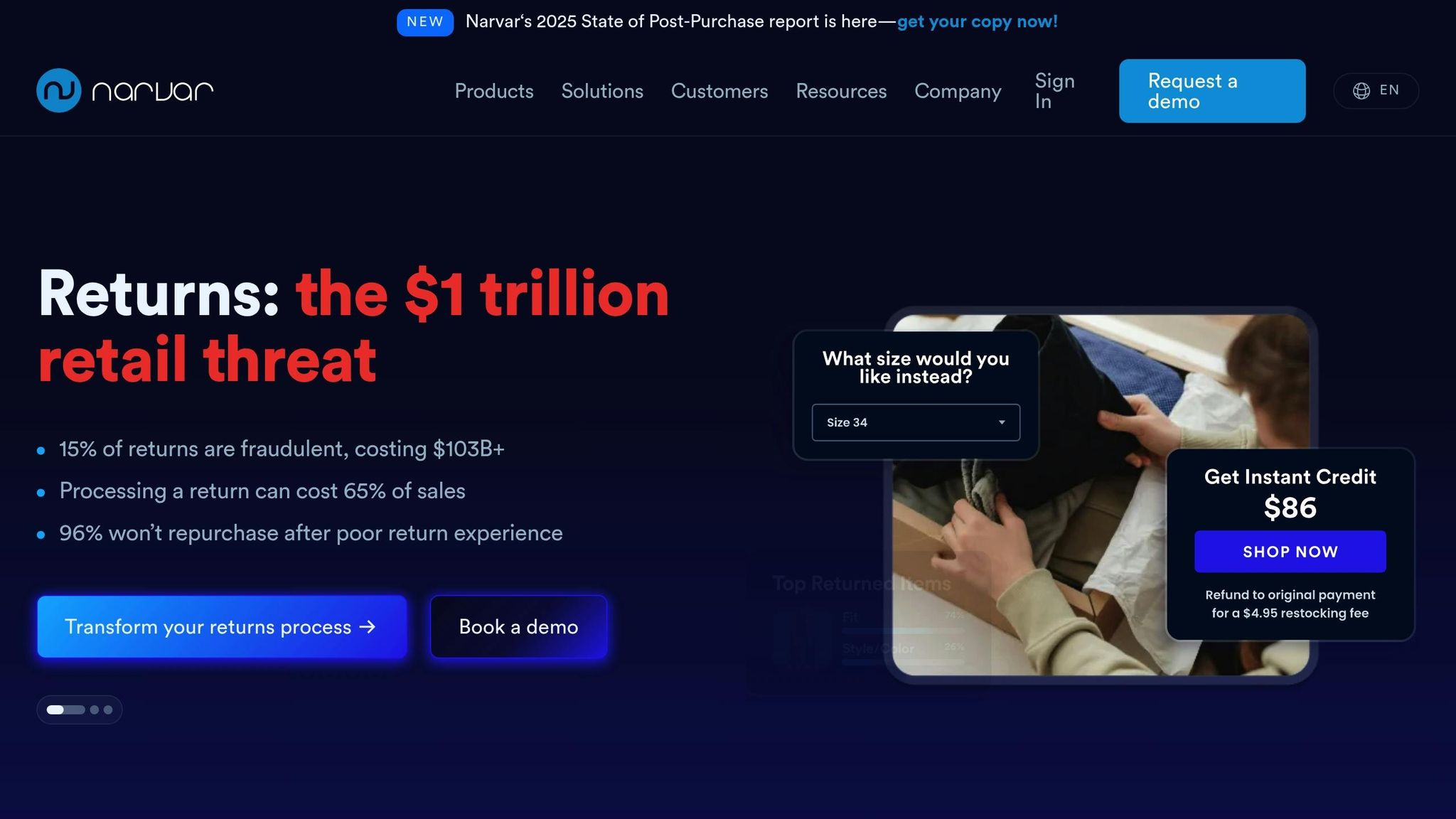
Narvar is a post-purchase experience platform designed to handle everything that happens after a customer clicks "buy." From shipment tracking to delivery updates, it ensures a smooth journey for shoppers after checkout. By setting clear expectations early, Narvar helps minimize confusion and frustration, which can make the returns process more efficient. For e-commerce brands managing over 3,000 orders a month, Narvar’s mobile-friendly returns portal offers self-service options capable of processing thousands of returns daily without slowing down. This platform is built to deliver a seamless mobile experience, especially for businesses with high order volumes.
Mobile User Experience
Narvar’s mobile interface simplifies returns with features like one-tap initiation, real-time tracking, and personalized dashboards accessible through mobile apps. Brands such as Alo Yoga have seen a 30–50% reduction in return friction by using tools like AR previews and photo uploads to verify item conditions. Push notifications keep customers updated on return statuses, while in-app label printing eliminates the need for a desktop. During the return process, AI-driven recommendations suggest alternative sizes or colors based on previous purchases, helping customers find what they need. This mobile-first approach leads to 40% higher completion rates compared to mobile websites, with some brands experiencing returns processed three times faster.
3PL Integration
Narvar’s open API architecture makes it easy to integrate with third-party logistics (3PL) providers, automating carrier selection and reverse logistics. For U.S.-based brands partnering with 3PL solutions like JIT Transportation, the platform supports services like pick-and-pack, kitting, and even white-glove handling for returned items. Real-time inventory syncing through API connections reduces manual errors by 70%, making it easier to manage nationwide fulfillment networks. Returns initiated through Narvar’s app are automatically routed to the right facility based on pre-set rules, cutting fulfillment costs by 20–25% for high-volume brands through smarter routing and tracking.
Reverse Logistics Features
Narvar’s automated return reason analytics and dynamic shipping label generation streamline logistics while reducing costs by up to 35%. Its microservices-based architecture is built to scale, enabling the system to handle over 10,000 daily returns. Brands like Everlane have reported 50% faster cycle times by using predictive inventory allocation, which helps prevent stockouts during peak return periods. These tools not only lower handling costs but also boost customer loyalty. By proactively engaging with customers through mobile, Narvar helps cut overall return rates by 25% while achieving retention rates that are four times higher.
Strengths and Weaknesses
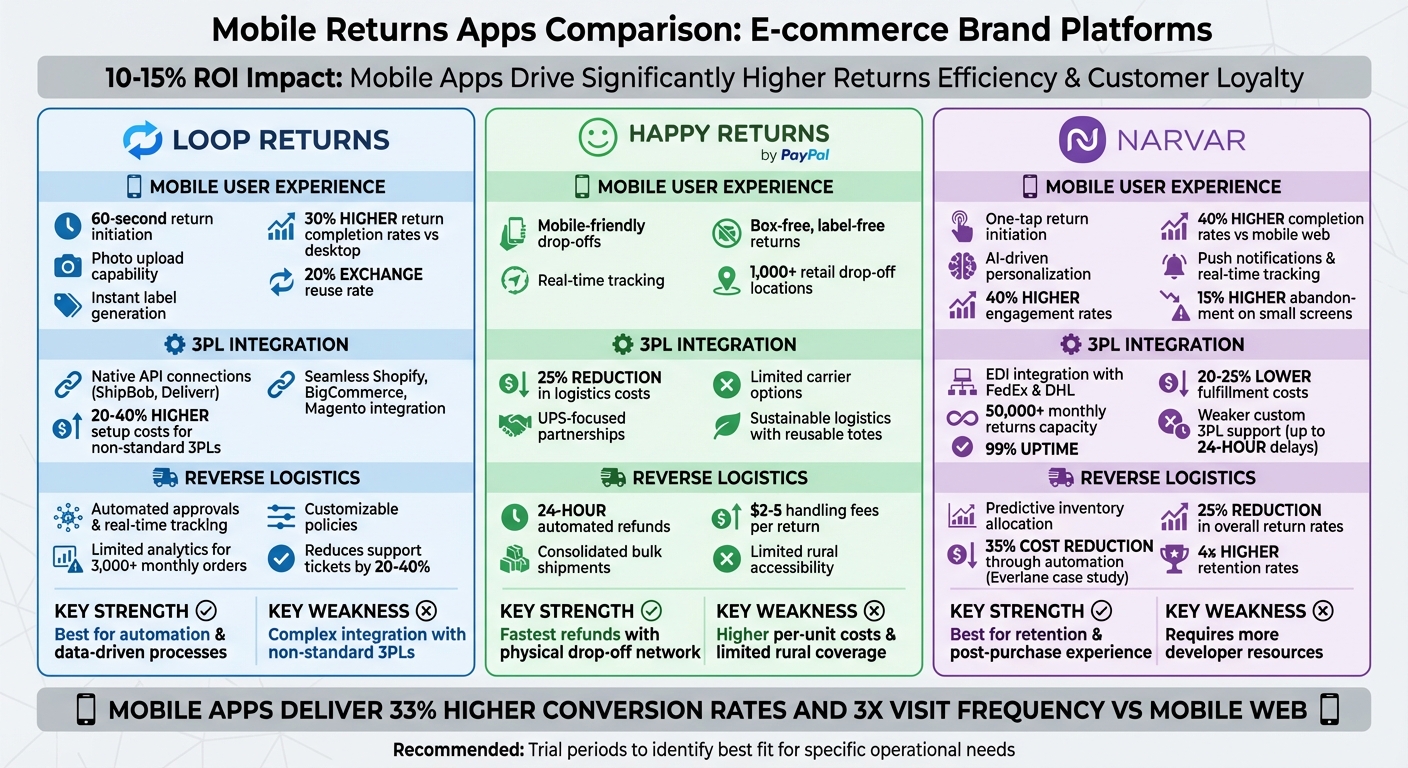
Mobile Returns Apps Comparison: Loop Returns vs Happy Returns vs Narvar
Analyzing the performance of these mobile returns apps reveals their unique advantages and challenges, especially for high-volume e-commerce brands. Here's a closer look at how they stack up:
Loop Returns stands out for its seamless mobile experience. Customers can initiate returns in under 60 seconds, complete with photo uploads and instant label generation. This efficiency boosts return completion rates by as much as 30% compared to desktop workflows. For brands handling thousands of returns each month, this streamlined process reduces support demands, making operations more efficient. However, its reliance on native API connections with specific partners like ShipBob and Deliverr can complicate integration with non-standard 3PLs, leading to setup costs that are 20–40% higher. Additionally, the platform's limited analytics may pose challenges for brands processing over 3,000 monthly orders. For those working with logistics providers like JIT Transportation, smooth integration is crucial to maintaining efficiency. By contrast, Happy Returns offers a different approach, relying on physical drop-off points to simplify the returns process.
Happy Returns by PayPal reduces logistics costs by 25% through its extensive network of over 1,000 retail drop-off locations and automated refunds processed within 24 hours. This approach has been successfully implemented by brands like Everlane. Its box-free, label-free returns system, which uses reusable totes, appeals to businesses prioritizing sustainability. These features help manage peak-season returns by cutting processing time per item. However, the platform's reliance on physical Return Bars limits accessibility in rural areas and adds handling fees of $2–5 per return. Additionally, its carrier-agnostic label printing is somewhat restrictive, favoring UPS partnerships. Effective collaboration with 3PLs like JIT Transportation ensures that consolidated returns integrate seamlessly into fulfillment workflows. Meanwhile, Narvar offers a data-driven approach to post-purchase management.
Narvar leverages AI to deliver personalized experiences, achieving 40% higher engagement rates through push notifications and tracking updates. Its EDI integration with FedEx and DHL enables it to handle over 50,000 returns monthly with 99% uptime. The platform's predictive inventory allocation has helped brands like Everlane reduce cycle times by 50%. These advanced features support scalability by automating routing decisions and minimizing manual intervention. However, its user interface can feel cluttered on smaller screens, leading to a 15% higher abandonment rate for complex returns. Additionally, weaker support for custom 3PLs might require middleware, which can add up to 24 hours of processing delays. Ensuring compatibility with partners like JIT Transportation is essential to capitalize on Narvar's efficiency benefits.
| App | Mobile User Experience | 3PL Integration | Reverse Logistics Features |
|---|---|---|---|
| Loop Returns | Self-service portal with 60-second initiation and photo uploads | Native APIs with select partners; higher setup costs for non-standard integrations | Automated approvals, real-time tracking, and customizable policies, though analytics are limited |
| Happy Returns | Mobile-friendly drop-offs with real-time tracking | Sustainable logistics with over 1,000 retail partners; UPS-focused with limited carrier options | Box-free returns and 24-hour refunds; handling fees and limited rural coverage remain challenges |
| Narvar | AI-driven personalization with higher engagement, though small-screen interface issues persist | EDI integration with FedEx/DHL for high-volume processing; weaker custom 3PL support | Predictive restocking with faster cycles and fraud prevention; implementation complexity may arise |
For many brands, the choice of returns platform can impact ROI by 10–15%, depending on 3PL compatibility. Loop Returns excels in driving a 20% exchange reuse rate, Happy Returns prioritizes speed with faster refunds despite higher per-unit costs, and Narvar optimizes inventory through analytics-based routing. Experts recommend trial periods to identify the best fit for specific operational needs.
Conclusion
For U.S. merchants managing over 3,000 orders a month, selecting the right returns app boils down to defining operational priorities. As outlined, Loop Returns stands out for its modular design and native integrations with Shopify, BigCommerce, and Magento. This makes it a strong choice for brands focusing on automation and data-driven processes without the need for custom coding. On the other hand, Happy Returns by PayPal offers a nationwide drop-off network to cut shipping costs, though its reliance on PayPal may pose challenges for businesses with diverse payment systems. Meanwhile, Narvar shines for brands emphasizing retention and delivering a rich post-purchase experience, though it often requires more developer resources for full setup.
Mobile apps play a critical role in boosting performance, delivering 33% higher conversion rates, a 16% lift in average order value, and three times the visit frequency compared to mobile web experiences. A real-world example? Sleefs saw a 40% jump in conversion rates through mobile-optimized returns processes, proving the measurable benefits of investing in returns management.
At high order volumes, logistics integration becomes essential. Whether it’s Loop’s data-centric tools, Happy Returns’ physical drop-off network, or Narvar’s omnichannel capabilities, ensuring your returns app seamlessly connects with your 3PL provider is a must. For brands already partnered with established 3PLs, smooth integration speeds up return-to-restock cycles, which is key to operational efficiency.
After integration, thorough testing is crucial. Use a staging environment to evaluate metrics like processing speed (aiming for under 3 seconds on mobile) and return-to-restock times. Exchange-first workflows and store credit options can help recover 10–15% more revenue per return. By combining the right returns technology with a scalable logistics setup, U.S. e-commerce brands can confidently handle peak order volumes while keeping customers happy.
FAQs
How can mobile returns apps help e-commerce businesses save on labor costs?
Mobile returns apps are a game-changer for e-commerce businesses looking to cut labor costs and simplify their return processes. By automating essential steps, these apps let customers handle returns directly from their smartphones, eliminating much of the need for manual involvement. This not only speeds things up but also helps reduce errors along the way.
What’s more, these apps often integrate seamlessly with logistics systems. This means tasks like generating labels and tracking packages become smoother and quicker, improving overall efficiency. For businesses handling thousands of orders every month, this kind of automation is invaluable - it helps them manage high volumes without needing to rely on a massive customer service team.
Why is it better to promote exchanges instead of refunds in mobile returns apps?
Promoting exchanges instead of refunds in mobile return apps offers multiple advantages for e-commerce brands. For starters, it boosts customer satisfaction by providing a straightforward way for shoppers to get the right product without the inconvenience of returning it entirely. Many customers appreciate the option to swap items rather than forfeiting their purchase altogether.
On top of that, exchanges help cut down on return-related expenses while maintaining sales revenue. Refunds can strain cash flow, but encouraging exchanges keeps customers connected to your brand, creating a positive outcome for both the shopper and the business.
How do mobile returns apps work with 3PL providers to simplify reverse logistics?
Mobile returns apps work hand-in-hand with 3PL providers to simplify the returns process by automating crucial steps like return authorizations and real-time tracking. Through API-driven integrations, these systems seamlessly handle tasks such as pickups, inspections, and restocking.
By tapping into the resources of a 3PL provider, businesses can boost efficiency, gain better oversight, and offer a quicker, more dependable returns experience. This approach makes it much easier for e-commerce brands to handle large volumes of returns without breaking a sweat.
Related Blog Posts
Related Articles
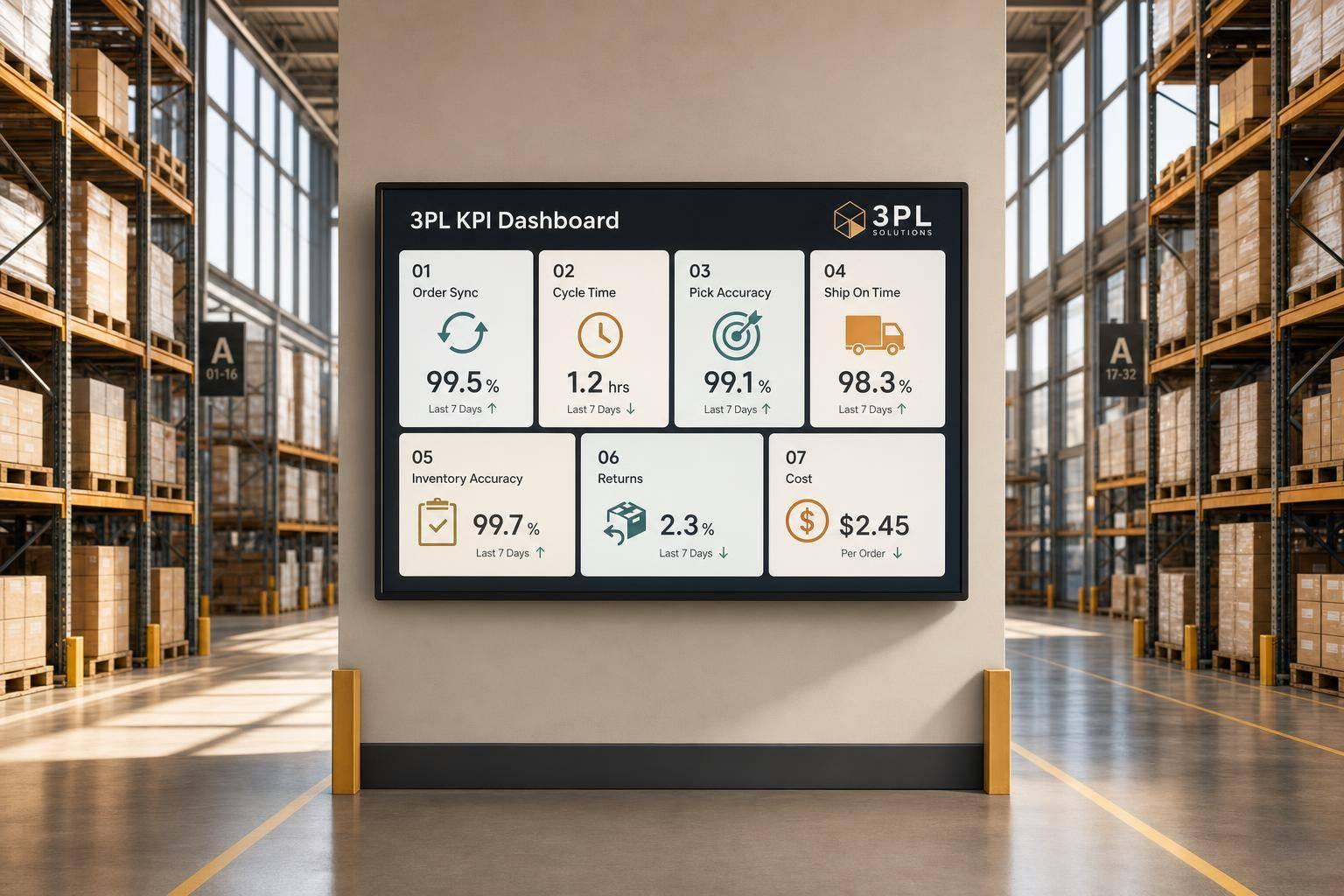
7 WooCommerce 3PL KPIs Teams Track

Centralized vs Decentralized Replenishment
