
Pick and Pack Metrics to Track for Success

Pick and pack operations are the backbone of e-commerce. To ensure efficiency, profitability, and customer satisfaction, you need to track the right metrics. Here’s what matters most:
- Order Accuracy Rate: Measures how often orders are shipped without mistakes. Aim for 96–99% to minimize returns and keep customers happy.
- Picking Speed: Tracks how many order lines workers pick per hour. Faster speeds reduce delays but must balance with accuracy.
- Cost Per Order: Calculates the total cost of picking, packing, and shipping each order. Keeping this low ensures financial efficiency.
- Order Cycle Time: Monitors the time between order placement and shipping. Shorter times improve customer satisfaction.
- Perfect Order Rate: Combines accuracy, timeliness, and condition of deliveries. Higher rates mean fewer complaints and better reviews.
- Inventory Accuracy: Ensures your stock records match physical inventory. Accurate data prevents delays and errors.
Tracking these metrics with tools like real-time dashboards and warehouse management systems (WMS) allows businesses to identify inefficiencies, improve processes, and make data-driven decisions. Combining technology with regular employee training ensures continuous improvement, helping you stay competitive in a fast-paced industry.
How Do You Measure Picking And Packing Accuracy?
Core Pick and Pack Metrics
To run an efficient pick and pack operation, there are three key metrics you need to keep an eye on. These metrics reveal how well your warehouse is performing, from ensuring orders are accurate to making the most of your resources.
Order Accuracy Rate
The order accuracy rate tells you the percentage of orders shipped without any mistakes. An order is considered accurate if it includes the correct items, in the right quantities, and is delivered to the proper location. The formula is simple: divide the number of error-free orders by the total orders processed, then multiply by 100.
For instance, if a logistics company processes 500 orders in a week and 475 are correct, the accuracy rate is 95%. Similarly, if a brand fulfills 1,000 orders but makes 20 mistakes, the accuracy rate jumps to 98%.
Why does this matter? High order accuracy minimizes returns, refunds, and additional shipping costs while keeping customers happy. Mistakes can lead to frustrated calls to customer service and extra work for your team. Industry benchmarks for accuracy often range from 96% to 98%, but top-tier operations aim for over 99%. Measuring accuracy at different levels - whether by order, line, or unit - can help pinpoint where things might be going wrong.
Picking Speed
Picking speed measures how many order lines a worker can pick in an hour. To calculate it, divide the total number of order lines picked by the total labor hours spent on picking.
Balancing speed with accuracy is critical. If you push too hard for speed, mistakes can creep in. On the other hand, focusing too much on accuracy might slow things down. Factors like warehouse layout and efficient picking paths can make a big difference. For example, organizing inventory to reduce travel time and designing smarter picking routes can help increase speed without sacrificing precision.
In the fast-moving world of e-commerce, improving picking speed is essential to meet tight delivery deadlines and avoid delays in your fulfillment process.
Cost Per Order
Cost per order calculates the total expenses tied to picking, labeling, and packing, divided by the number of orders fulfilled. This metric sheds light on how financially efficient your operations are.
Labor costs are typically the biggest factor. Other costs include packaging materials (like boxes, tape, and labels), equipment (such as scanners or conveyor belts), and overhead expenses (warehouse rent, utilities, etc.).
Tracking this metric allows warehouse managers to spot areas where processes can be improved. For example, investing in automation or technology might require upfront spending, but it can save time, reduce labor needs, and cut down on errors in the long run. That said, cost-cutting measures need to be handled carefully - slashing too much can lead to mistakes that end up costing more in the end.
Additional Performance Metrics
To get a complete picture of your fulfillment performance, it's essential to include additional metrics that connect the dots between various processes in your operation. These metrics go beyond the basics to offer deeper insights into how effectively your system runs.
Order Cycle Time
Speed is just as important as accuracy in fulfillment, and that's where order cycle time comes in. This metric measures how long it takes from the moment a customer places an order to when it’s shipped. For example, if an order is placed on Monday and ships out on Wednesday, your cycle time is two days. A shorter cycle time not only keeps customers happy but also helps you stay competitive in your market.
Several factors influence cycle time. Your warehouse layout plays a huge role - if pickers are trekking long distances between items, everything slows down. Similarly, the complexity of an order matters; a simple order with a few items from nearby shelves will always process faster than one requiring products from multiple areas of the warehouse.
To improve cycle time, consider rethinking your warehouse layout to reduce travel distances for pickers. Grouping similar items together (batching) can also save time. Investing in automation tools like pick-to-light systems or voice-directed picking can make a big difference. Regularly reviewing your processes helps you identify and fix bottlenecks before they escalate.
For e-commerce businesses, a one- to two-day cycle time is often the standard to stay competitive. B2B companies may have more leeway, but it’s crucial to analyze your own data and consider peak season demands when setting targets. If your competitors ship in two days, you’ll likely need to match that to keep your customers coming back.
Perfect Order Rate
If you want to measure the quality of your fulfillment process, track your perfect order rate. This metric shows the percentage of orders that meet four key criteria: delivered on time, complete, undamaged, and with accurate documentation. It’s a comprehensive way to assess the customer experience, covering everything from picking and packing to delivery.
To calculate it, divide the number of orders that meet all four criteria by the total number of orders shipped, then multiply by 100. For instance, if 95 out of 100 orders meet the standard, your perfect order rate is 95%.
Why does this matter? Because it directly affects customer loyalty and your brand’s reputation. When customers receive exactly what they ordered, on time and in good condition, they’re more likely to leave positive reviews and come back for more. On the flip side, mistakes lead to returns, complaints, and potentially lost customers.
The perfect order rate reflects how well your entire operation works together. You might have great picking accuracy, but if shipments arrive late or damaged, your score will suffer. High picking accuracy - 99% or higher - often leads to better perfect order rates because it ensures customers get what they ordered.
This metric highlights the importance of maintaining high standards across all stages of fulfillment. It’s not just about getting one thing right; it’s about every part of the process working seamlessly together.
Inventory Accuracy
Reliable fulfillment starts with inventory accuracy, which measures how closely your recorded inventory matches what’s actually on your shelves. Without accurate inventory, it’s nearly impossible to fulfill orders efficiently.
To calculate inventory accuracy, compare the number of units recorded in your system to the actual physical count. For example, if your system shows 1,000 units of a product but a physical count reveals only 980, your accuracy is 98%. Top-performing warehouses aim for accuracy rates of 97% or higher, with industry benchmarks typically ranging between 95% and 98%+.
Inaccurate inventory can create a domino effect of problems. Pickers might grab the wrong items, orders could be delayed because of stock discrepancies, and customers might receive incorrect products. These issues can lead to overselling, stockouts, and unhappy customers.
Common causes of poor inventory accuracy include errors during receiving, improper put-away procedures, picking mistakes, and a lack of regular cycle counts. For instance, if items aren’t scanned correctly when received or placed in the wrong location, it creates discrepancies right from the start.
To maintain high accuracy, implement mandatory barcode scanning at every stage - receiving, put-away, and picking. Establish clear procedures for storing items in designated locations. Regular cycle counts, whether daily or monthly, can catch errors early. Proper training for employees is also critical, so they understand the importance of accuracy and follow procedures correctly. Accurate inventory records are the backbone of efficient order fulfillment.
How These Metrics Work Together
These three metrics - order cycle time, perfect order rate, and inventory accuracy - are deeply interconnected. Poor inventory accuracy slows pickers down, increasing cycle time and leading to incomplete or incorrect orders, which lowers your perfect order rate. On the other hand, when inventory is accurate, pickers can locate items faster, reducing cycle time and ensuring on-time, error-free deliveries. Warehouses that excel in these areas consistently outperform competitors in customer satisfaction, reduce return rates, and boost profitability.
sbb-itb-eafa320
How to Monitor and Improve Your Metrics
Tracking pick and pack metrics is just the beginning; the real progress comes from actively monitoring and using that data to make meaningful changes. Without the right tools and strategies, these metrics are just numbers on a screen. But when monitored effectively, they can lead to better picking, packing, and overall fulfillment processes - key factors in boosting warehouse performance.
Real-Time Dashboards
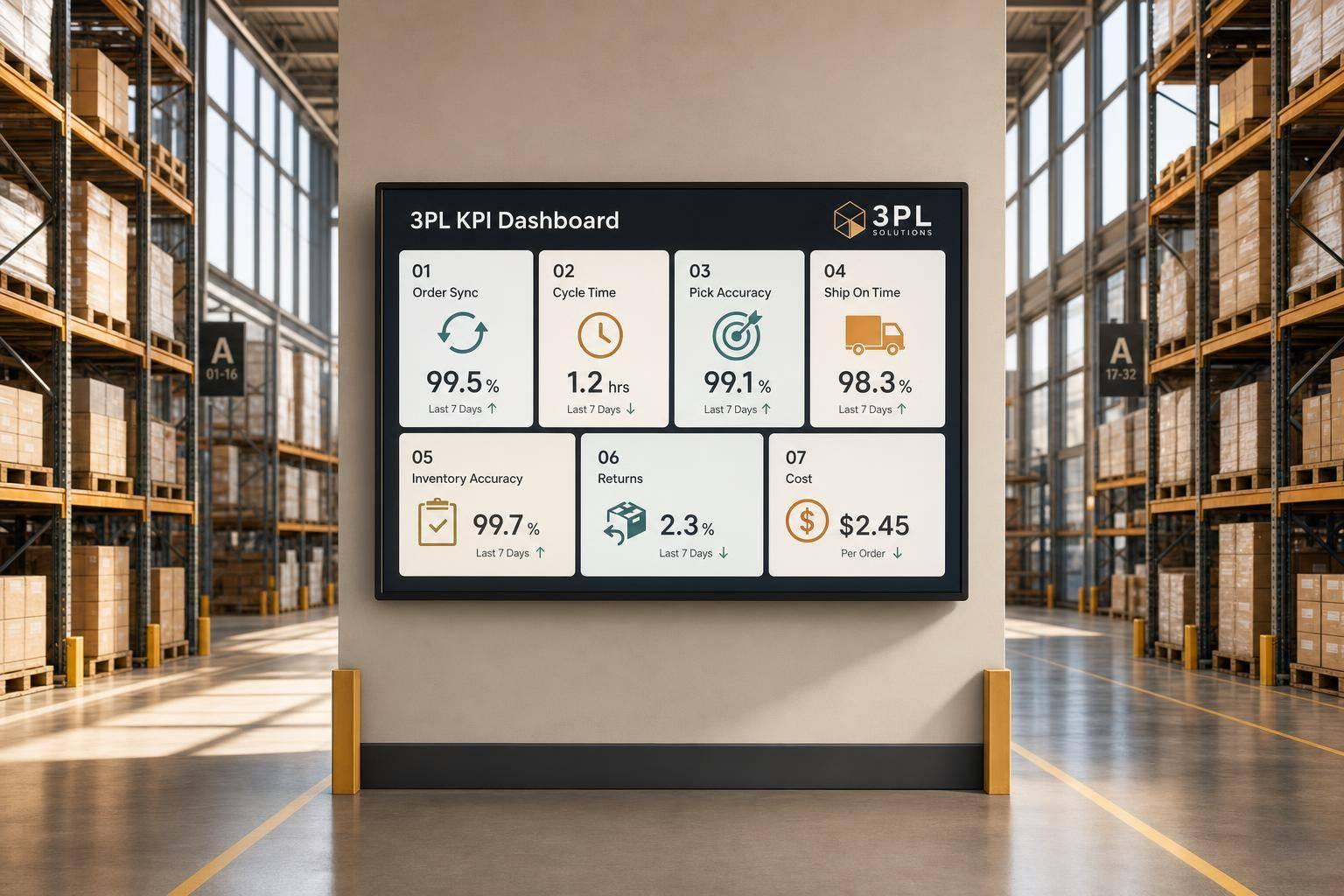
Real-time dashboards offer a clear, up-to-the-minute view of what’s happening on your warehouse floor. Instead of waiting for end-of-day reports, you can monitor picking productivity, accuracy rates, and cycle times as they happen. This instant access allows you to tackle issues before they snowball - for instance, identifying when pickers are taking too long to navigate aisles or when accuracy starts to slip.
The beauty of real-time monitoring is its ability to catch problems early. If you notice that picking speed is increasing but accuracy is dropping, you can address the imbalance during the shift, avoiding bigger headaches later. Dashboards should focus on key metrics like productivity, accuracy, and cycle times. Adding metrics such as cost per order, inventory accuracy, and packing error rates gives you a fuller picture. By analyzing these metrics together, you can uncover trends - like how changes in your warehouse layout may be cutting down the distance traveled during picking.
With real-time data, decisions are based on facts, not outdated reports or gut instincts. This sets the stage for using technology and automation to further optimize performance.
Technology and Automation
Real-time insights become even more powerful when paired with advanced technology. Warehouse management systems (WMS) and automation tools are game-changers for improving performance metrics. A strong WMS provides the framework to track essential indicators like units picked per hour, order accuracy, and average travel distance. These systems lay the groundwork for meaningful process improvements.
Automated picking and bagging systems take things a step further, speeding up order fulfillment while reducing costs and errors. Advanced WMS features, such as optimized picking paths, labor tracking, and real-time inventory updates, ensure operations run smoothly and efficiently.
When selecting a WMS, prioritize systems that offer automated reports and user-friendly dashboards with clear performance indicators. This makes it easier to track progress and spot areas for improvement.
Employee Training and Process Reviews
While technology can revolutionize efficiency, it’s the people behind the machines who drive sustainable success. Even the most advanced systems won’t deliver results without skilled, well-trained employees. Regular training is critical for maintaining accuracy in picking - a cornerstone of warehouse performance. If accuracy starts to drop, it’s often a sign that additional training or support is needed.
Training ensures employees understand proper picking techniques, inventory systems, and quality standards, which directly reduces costly errors like mispicks. Teaching workers the most efficient navigation routes and how to use equipment effectively can also improve productivity.
In addition to training, regular process reviews help identify inefficiencies by examining metrics like picking cycle times, packing times per order, and error rates. By analyzing the entire workflow - from receiving orders to shipping - you can pinpoint delays and implement targeted fixes.
These reviews also help establish performance benchmarks. By comparing current performance against these baselines, you can track progress and ensure continuous improvement. Combining process reviews with real-time data allows you to measure whether changes are having the desired impact. Set a regular review schedule, analyze trends, and refine your workflows based on solid evidence.
For example, if you introduce automated picking systems and see a 15% drop in picking cycle time but notice a small rise in packing errors, you can focus additional training on the packing process while still benefiting from the automation. This iterative approach ensures every adjustment is guided by measurable results, keeping your operations on the path to improvement.
How JIT Transportation Supports Pick and Pack Operations

Once you’ve established the key metrics for your logistics goals, finding the right partner to maintain those standards is crucial. JIT Transportation offers a suite of 3PL solutions that streamline pick and pack operations by combining specialized services, advanced technology, and adaptable infrastructure. Let’s break down what makes their approach so effective.
JIT Transportation goes beyond basic warehousing with value-added services like pick and pack, kitting and assembly, testing, and white glove handling. By offering a wide range of capabilities under one roof, they simplify the order fulfillment process, reduce the need for managing multiple providers, and make performance tracking more straightforward.
Their nationwide network of strategically located warehouses ensures inventory is positioned closer to customers, cutting down on shipping times and costs. Key locations include California (San Francisco, Sacramento, Los Angeles), Louisiana (Shreveport), Nevada (Reno), Texas (Austin, Houston), Tennessee (Memphis), and Mississippi (Olive Branch). This setup directly impacts metrics like pick and pack cycle times and cost per order, helping businesses achieve faster fulfillment and more efficient operations.
When it comes to technology, JIT Transportation employs smart tools that provide real-time inventory visibility. This not only improves picking accuracy but also reduces the time spent searching for items, ensuring smoother operations and better performance.
One of the biggest hurdles in pick and pack operations is managing fluctuating demand, especially during peak seasons. JIT Transportation’s scalable infrastructure offers the flexibility to handle these spikes without requiring additional warehouse space or temporary staff. This adaptability ensures that critical metrics like order accuracy and fulfillment speed remain consistent, even when demand surges.
"JIT isn't just another trucking company - they are true logistics innovators. Their ability to anticipate industry shifts, build long-term relationships, and deliver tailored, high-impact solutions sets them apart as a leader in the field. We trust JIT to move our business forward."
– Ron Okamoto, Nippon Express USA, INC.
For businesses handling delicate or high-value items, JIT Transportation’s white glove handling service provides an extra layer of care. This service ensures items are handled and packaged with precision, reducing the risk of errors and damage while meeting specific packing requirements.
In addition to their logistics expertise, JIT Transportation offers advanced integration capabilities that make tracking metrics seamless. Their ERP integration and returns management (RMA) solutions allow businesses to sync systems with their 3PL provider, resulting in more accurate data on order cycle times, inventory levels, and fulfillment costs. This reduces manual errors and provides real-time insights to support better decision-making.
"Add to that their competitive pricing and professional service, and it's clear why they're one of our most valued partners."
– Curtis Martin, Senior Operations Manager, Synnex
Conclusion
Keeping a close eye on pick and pack metrics is a cornerstone for long-term success in e-commerce. These metrics provide a clear window into your fulfillment operations, highlighting both strengths and areas where changes can lead to meaningful improvements.
Metrics like order accuracy rates, picking speed, and cost per order, paired with supporting data such as cycle time and inventory accuracy, offer valuable insights. They help reduce returns, cut labor costs, and ensure timely, accurate deliveries. The financial impact is undeniable - raising picking accuracy from 95% to 99% can slash return rates by 40-60%, which directly boosts your bottom line. Beyond profitability, these improvements also strengthen customer loyalty.
Research shows that customers receiving their orders on time and without errors are 3-5 times more likely to make repeat purchases. In a market where fast and precise delivery is the norm, using data-driven insights gives you a competitive edge. A single mispick, which can cost $5-$15 in return processing, doesn’t just affect your finances - it can also harm customer relationships. This makes accuracy improvements one of the smartest investments you can make.
Leveraging technology, such as real-time dashboards, turns these metrics into actionable insights. Instead of waiting until the end of the day to identify issues, you can address them as they happen. This real-time approach, combined with regular process reviews and employee training, fosters a culture of continuous improvement that becomes part of daily operations.
Use these insights to make practical changes - optimize warehouse layouts, invest in automation for better accuracy, and adjust staffing based on cycle time data. Even small improvements can have a big impact. For mid-sized e-commerce businesses, just a 5% boost in these metrics can lead to a 10-20% increase in customer retention and a 15-30% reduction in return-related costs. These gains not only enhance operational efficiency but also reinforce the key strategies discussed throughout this article.
FAQs
How can businesses optimize picking speed while maintaining high order accuracy in pick and pack operations?
Balancing speed and accuracy in pick and pack operations is crucial for keeping customers happy and ensuring smooth operations. One way to achieve this balance is by integrating technology tools like barcode scanners or automated picking systems. These tools not only cut down on human errors but also make the process faster and more efficient.
Another key factor is employee training. Well-trained staff who understand best practices and the importance of precise order fulfillment can make a huge difference in maintaining accuracy.
Tracking performance metrics such as order accuracy rate, average pick time, and cost per order is also a smart move. These numbers can highlight areas that need improvement. On top of that, organizing inventory for quick access and refining workflows can boost efficiency without sacrificing accuracy.
By focusing on these approaches, businesses can build a dependable pick and pack process that consistently meets customer expectations.
How does technology enhance pick and pack operations, and how can it be smoothly integrated into current systems?
Technology plays a key role in transforming pick and pack operations, making them faster, more accurate, and more efficient. It simplifies essential tasks like order picking, packing, and inventory management, helping businesses fulfill orders quickly while minimizing mistakes.
With tools like barcode scanners, warehouse management software (WMS), and automated sorting systems, companies can fine-tune their workflows and monitor important metrics such as order accuracy and pick times in real-time. These technologies often integrate smoothly with existing systems, making implementation easier while enhancing productivity and improving the customer experience.
Why is inventory accuracy important in pick and pack operations, and how can it be improved?
Inventory accuracy plays a critical role in pick and pack operations, as it directly influences how quickly and accurately orders are fulfilled - key factors in keeping customers happy. When inventory records are reliable, businesses can avoid common mistakes like shipping the wrong items or dealing with delays caused by stock mismatches. This not only saves time but also cuts unnecessary costs.
To keep inventory records accurate, consider strategies like conducting regular cycle counts, using barcode scanning technology, and adopting real-time inventory tracking systems. Training employees on proper inventory management and maintaining well-organized, clearly labeled storage areas can also make a big difference. By focusing on these practices, businesses can run smoother operations and improve overall efficiency.
Related Blog Posts
Related Articles
7 WooCommerce 3PL KPIs Teams Track

Centralized vs Decentralized Replenishment
