
Top AI Tools for E-commerce Fulfillment

E-commerce fulfillment is being transformed by AI, making processes faster, more accurate, and cost-effective. From demand forecasting to automated order routing, these tools are streamlining operations while enhancing customer satisfaction. Here’s a quick rundown of the top AI tools reshaping fulfillment:
- Cin7's ForesightAI: Predicts demand to prevent overstocking or stockouts.
- Zapier: Automates tasks like inventory updates and shipping label generation.
- Prediko: Offers detailed sales forecasts to optimize inventory.
- Tidio Lyro: Provides AI-powered customer service with lightning-fast responses.
- JIT Transportation: Focuses on AI-driven logistics, real-time tracking, and inventory management.
- ShipBob: Uses machine learning for logistics optimization and demand forecasting.
- Skubana: Simplifies multi-channel inventory and order management.
- 6 River Systems: Combines AI and robotics for warehouse automation.
- Blue Yonder: Optimizes supply chain operations with machine learning.
- Returnly: Automates and simplifies the returns process.
- ClearMetal: Leverages predictive analytics for e-commerce logistics.
These tools help businesses save time, reduce costs, and improve delivery efficiency. Whether you're managing inventory, handling returns, or automating order fulfillment, there’s an AI solution tailored to your needs.
7 Proven AI Systems Giving Ecommerce Stores an Edge in 2025
1. JIT Transportation

JIT Transportation offers a nationwide, tech-driven network designed to simplify e-commerce fulfillment, providing tailored third-party logistics (3PL) solutions. Their approach integrates smart logistics tools with added services to streamline the journey from warehouse to customer doorstep.
AI-Powered Logistics for Smarter Fulfillment
JIT Transportation relies on advanced technology to optimize routing, resource management, and automation across its fulfillment network. This tech-first strategy helps e-commerce brands cut shipping times and lower transportation costs by refining every step of the process.
Their scalable infrastructure adjusts automatically to fluctuating demand, a critical advantage during peak seasons when order volumes spike. By strategically placing inventory in distribution centers nearer to customer hubs, JIT shortens delivery distances. This setup enables faster shipping options without the hefty price tag of expedited services. These optimizations are supported by an end-to-end tracking system, ensuring smooth and efficient fulfillment.
Real-Time Tracking and Transparency
Transparency is at the core of JIT Transportation’s fulfillment process. E-commerce brands can track orders at every stage - from warehouse pick-and-pack to final delivery confirmation. This system also provides a clear view of inventory levels across distribution centers, shipment locations, and delivery statuses.
This real-time visibility helps reduce customer support inquiries about order updates, allows businesses to share accurate delivery timelines, and builds trust with customers. Shoppers benefit from timely notifications, easing concerns about when their packages will arrive.
Smarter Inventory Management and Forecasting
Beyond physical distribution, JIT’s platform offers tools for inventory tracking and coordination across multiple locations. E-commerce brands can monitor stock levels in real time and manage replenishment schedules based on demand trends.
For businesses needing advanced forecasting, JIT integrates with AI-powered inventory management platforms. This connection ensures optimal stock levels, avoiding both shortages and overstock situations that can drain resources. By streamlining inventory coordination, JIT supports a more efficient fulfillment process and sets the stage for greater automation.
Automating the Fulfillment Process
JIT Transportation adds value by automating labor-intensive fulfillment tasks. Their pick-and-pack services simplify item selection and shipping prep, while kitting and assembly options allow brands to bundle items or assemble components before shipment - ideal for subscription boxes, promotional kits, or products requiring final assembly. Additionally, product testing services catch defects before shipping, reducing returns and protecting customer satisfaction.
For high-value or fragile items, JIT offers white glove handling with premium packaging and delivery options. These automation efforts significantly reduce fulfillment cycle times and improve order accuracy, both of which directly enhance customer satisfaction and encourage repeat purchases.
JIT’s platform integrates smoothly with major e-commerce platforms like Shopify, WooCommerce, BigCommerce, and Magento. Orders flow directly from online stores into JIT’s system, eliminating manual data entry and ensuring seamless communication between sales and fulfillment. For added automation, brands can use tools like Zapier to connect JIT with their existing systems, streamlining order routing, inventory updates, and customer notifications.
2. ShipBob

ShipBob handles warehousing and shipping for e-commerce businesses, connecting merchants with a network of fulfillment centers. By using algorithms to decide where inventory should be stored and how orders should be routed, ShipBob streamlines the entire fulfillment process. Here's a closer look at how its AI-powered tools make fulfillment more efficient.
AI-Driven Logistics Optimization
ShipBob’s logistics system works behind the scenes to find the most cost-effective way to fulfill orders. It evaluates factors like order volume, customer locations, warehouse capacity, and shipping rates to determine the best routes. Orders are automatically sent to the nearest fulfillment center, cutting down on shipping distances and costs while keeping delivery times quick.
The platform also uses machine learning to study historical order data, seasonal trends, and customer behavior. This data-driven approach allows ShipBob to predict demand and position inventory in advance, rather than reacting to orders as they come in. By anticipating where products will be needed, businesses can lower their per-unit fulfillment costs while ensuring fast delivery - two things that directly influence customer satisfaction and loyalty.
Order Tracking and Real-Time Visibility
ShipBob doesn’t just optimize logistics; it also makes the entire process transparent. Customers can track their orders in real time, reducing the need for them to contact support for updates. This frees up customer service teams to focus on more complex issues.
For merchants, ShipBob provides real-time dashboards that show order statuses, inventory levels across fulfillment centers, and key performance metrics. This visibility allows businesses to address potential delivery issues before they escalate. From order placement to final delivery, merchants have a clear view of every step, helping them make smarter decisions about inventory and shipping.
Inventory Management and Demand Forecasting
With machine learning, ShipBob fine-tunes inventory placement to align with customer demand. Its demand forecasting tools analyze sales history, seasonal trends, market conditions, and even external factors to predict future needs. These forecasts are highly detailed, breaking down data by SKU, product category, and fulfillment center location. By identifying patterns that might not be obvious at first glance, the system helps businesses maintain just the right amount of stock.
This precision prevents both stockouts and overstocking. For e-commerce brands managing multiple products across various sales channels, staying on top of inventory levels is critical - and ShipBob makes it easier to strike the perfect balance.
Automation of Fulfillment Processes
ShipBob automates many steps in the fulfillment process. Intelligent order routing, optimized picking, barcode scanning, and automated label generation reduce manual work and minimize errors. Returns are also handled efficiently, with automated inspections and restocking decisions. These automations speed up the entire workflow, ensuring faster shipments and fewer mistakes - both of which are essential for staying competitive in e-commerce.
The platform integrates seamlessly with major e-commerce platforms like Shopify, Amazon, WooCommerce, and Magento. These integrations keep inventory levels synced across channels, automatically send orders to fulfillment centers, and provide tracking updates to customers. This prevents overselling and ensures accurate delivery information, no matter where the purchase was made.
3. Skubana

Skubana is a smart inventory and order management platform designed for multi-channel e-commerce businesses. It consolidates data from platforms like Amazon, Shopify, eBay, and Etsy, helping sellers avoid overselling and streamline operations.
AI-Powered Logistics Optimization
Skubana uses AI to analyze fulfillment data - such as order details, warehouse locations, and shipping options - to automatically route orders for faster, more cost-effective delivery. This dynamic approach allows growing e-commerce businesses to scale without adding unnecessary complexity to their fulfillment processes.
For businesses partnering with multiple fulfillment providers or third-party logistics (3PL) companies, Skubana offers seamless integration. For instance, companies using JIT Transportation - which provides services like pick-and-pack, kitting, and distribution - can benefit from improved data flow between systems. This enhanced coordination reduces errors, ensures consistent information sharing, and supports better inventory management and demand planning.
Smarter Inventory Management and Demand Forecasting
Skubana uses historical data, seasonal patterns, and market trends to predict demand, helping businesses make informed purchasing decisions. This minimizes the risk of stockouts or overstocking. The platform also calculates reorder points automatically and keeps inventory levels updated across multiple locations and sales channels. Over time, as Skubana processes more data, its demand forecasts become increasingly precise, allowing businesses to fine-tune inventory strategies and improve cash flow.
With accurate forecasting in place, businesses can also automate their fulfillment processes more effectively, ensuring stock is allocated where it’s needed most.
Streamlining Fulfillment Through Automation
Skubana simplifies fulfillment by automating routine tasks. It syncs inventory across all channels, assigns orders to the best fulfillment centers, and generates pick-and-pack lists to speed up warehouse operations. By integrating with warehouse management systems and shipping carriers, Skubana creates a fully automated workflow - from receiving an order to sending out shipping notifications.
This automation is especially beneficial during high-demand periods. Whether handling 100 orders or 10,000 in a single day, Skubana scales seamlessly without requiring additional labor. On top of that, the platform provides detailed reporting and analytics, tracking metrics like order fulfillment times, shipping costs, inventory turnover rates, and accuracy. These insights help businesses identify trends and make data-driven decisions to improve their operations further.
4. 6 River Systems

6 River Systems is a platform designed to optimize logistics and fulfillment operations for e-commerce businesses. By combining artificial intelligence and robotics, it automates warehouse processes, making it easier for mid-to-large e-commerce companies to handle high order volumes without a significant increase in labor costs.
Smarter Logistics with AI
6 River Systems uses advanced AI algorithms to refine warehouse layouts, streamline routing, and allocate resources more effectively. It evaluates order trends, inventory levels, and worker performance to create workflows that adjust in real time. This dynamic approach helps identify bottlenecks and improve processes on the fly, ensuring warehouses can maintain high efficiency - even during busy periods.
Automating Fulfillment Tasks
The platform takes automation to the next level by handling intelligent routing, optimizing picking strategies, and suggesting smart packing methods. It assigns tasks to workers, offers real-time guidance, and incorporates quality checks to manage complex orders, split shipments, and priority requests with ease.
Real-Time Tracking and Demand Forecasting
6 River Systems provides dashboards that give businesses a clear view of order progress, inventory levels, and fulfillment metrics in real time. This transparency reduces the need for customer inquiries and ensures inventory aligns with demand. Additionally, the platform uses AI-driven demand forecasting to analyze historical sales data, seasonal trends, and market conditions. These insights help businesses maintain the right stock levels across various locations, avoiding both overstock and stockouts.
A Full-Service Fulfillment Strategy
Beyond internal improvements, 6 River Systems can enhance overall logistics strategies. For a seamless end-to-end solution, e-commerce brands can pair its warehouse automation capabilities with third-party logistics providers like JIT Transportation. While 6 River Systems focuses on optimizing in-house operations, JIT Transportation offers tailored services such as distribution, pick-and-pack, and kitting & assembly, ensuring smooth order fulfillment and delivery.
sbb-itb-eafa320
5. Blue Yonder

Blue Yonder is a platform powered by AI that focuses on optimizing supply chain and logistics operations, making fulfillment more efficient. Using machine learning, it analyzes supply chain data to make real-time decisions, ensuring orders move seamlessly from warehouses to customers. It's especially well-suited for mid-sized and large e-commerce brands managing significant order volumes across multiple channels or regions.
AI-Driven Logistics Optimization
Blue Yonder leverages AI to improve routing, warehouse operations, and carrier selection. By analyzing historical data, inventory levels, and demand trends, the platform identifies the best fulfillment strategies for various order types and destinations. The result? Faster shipping, reduced transportation costs, and happier customers.
What sets it apart is its ability to adapt and refine its algorithms with each order processed. This ongoing improvement can lead to operational cost savings of 10-20% by optimizing warehouse efficiency and making smarter carrier choices.
Order Tracking and Real-Time Visibility
The platform simplifies tracking by consolidating updates from multiple carriers into a single, easy-to-use dashboard. This gives businesses and customers real-time visibility into order progress.
Inventory Management and Demand Forecasting
Blue Yonder uses machine learning to accurately predict future demand, enabling businesses to make smarter inventory decisions. This reduces carrying costs by 15-25% and helps avoid overstocking while ensuring products are available when customers need them. The platform can also suggest how to allocate inventory across warehouses, positioning stock closer to customers for quicker delivery.
By combining precise forecasting with automation, Blue Yonder offers a comprehensive solution for fulfillment optimization, aligning with the growing trend of AI-driven supply chain management.
Automation of Fulfillment Processes
Beyond forecasting and visibility, Blue Yonder automates many fulfillment tasks to reduce manual effort and errors. It handles order routing, pick-and-pack processes, batch processing, shipping label creation, and carrier rate comparisons. By taking over these routine tasks, the platform allows teams to focus on more strategic goals and complex challenges.
E-commerce brands can further enhance Blue Yonder’s capabilities by collaborating with JIT Transportation. While Blue Yonder focuses on AI-driven optimization, JIT Transportation provides the physical infrastructure and services - like pick-and-pack, kitting, and distribution - to execute those strategies effectively.
Most businesses see measurable improvements within 6-12 months after implementation, which typically takes just 2-4 months. These improvements include better on-time delivery rates, faster fulfillment times, and lower shipping costs. Plus, its integration capabilities mean Blue Yonder works seamlessly with major e-commerce platforms, order management systems, and warehouse management systems, so there’s no need for a complete tech overhaul.
6. Returnly

Returnly simplifies the often-complicated returns process by automating every step - from the moment a return request is made to the reintegration of products into inventory. What used to be a hassle for businesses can now become a chance to retain customers and recover revenue.
The platform handles the entire returns workflow automatically. It processes customer requests, generates shipping labels, approves refunds, and decides whether a returned item should go back into inventory, be liquidated, or disposed of.
Automation of Fulfillment Processes
By automating routine tasks, Returnly reduces processing times and allows teams to focus on more complex customer concerns. The system evaluates the condition of returned products and routes them based on predetermined rules. Items in good condition are quickly restocked, while those requiring additional attention are flagged for special handling.
Order Tracking and Real-Time Updates
A unified dashboard offers real-time tracking, giving both businesses and customers instant visibility into the returns process. Customers can monitor the status of their returns and know exactly when to expect their refunds, reducing uncertainty and cutting down on support inquiries.
This tracking feature integrates seamlessly with Returnly’s broader automation system. It works in tandem with major e-commerce and logistics platforms, ensuring smooth data flow. Businesses benefit from accurate inventory updates and consistent operations, especially when managing multiple fulfillment channels or working with third-party logistics providers.
Returnly also complements other logistics solutions like JIT Transportation, which focuses on outbound fulfillment. Together, they create an end-to-end system that handles both deliveries and returns efficiently.
For e-commerce brands dealing with high return volumes, the advantages of automation are clear. Faster processing, reduced labor costs, and smoother refunds not only improve profit margins but also strengthen customer loyalty.
7. ClearMetal

ClearMetal is designed to streamline order fulfillment processes, much like other AI tools we've discussed. This AI-driven platform focuses on improving e-commerce logistics by leveraging features such as predictive analytics, real-time tracking, inventory management, and automated fulfillment. However, publicly available information about its specific functionalities remains limited. For the most accurate and detailed insights into its features, integration compatibility, and overall performance, it's best to refer to ClearMetal's official resources.
While details may be sparse, ClearMetal's emphasis on advanced analytics places it among the top AI tools aimed at optimizing fulfillment operations.
How to Choose the Right AI Tools for Your Business
Picking the right AI fulfillment tool is all about aligning it with your business size, technical setup, and growth plans. The right choice can save you time, money, and headaches while boosting efficiency.
Start with your business size and complexity. If you're running a smaller e-commerce operation - let's say under $5 million in annual revenue - look for tools with simple pricing and quick setup. These are often ideal for businesses that need to get up and running without a steep learning curve. On the other hand, if you're managing a larger enterprise with complex supply chains, platforms like Blue Yonder or 6 River Systems might be worth the investment to handle multi-location logistics.
Integration is key. Before diving into any tool, make sure it plays nice with your existing systems - whether it's your e-commerce platform, inventory management software, or accounting tools. Create a list of your current systems and verify compatibility with potential tools. Seamless integration ensures accurate demand forecasting and smooth automation, saving you from headaches down the line.
Demand forecasting can make or break your bottom line. Accurate predictions are essential for managing inventory and meeting customer demand. When evaluating tools, dig into the technology behind their forecasting capabilities. Ask for historical accuracy rates and case studies to see how well their predictions hold up. Better yet, test the tool with your own sales data during a trial period - 14 to 30 days is ideal - to see how it performs in real-world scenarios.
Don’t overlook the full cost. Subscription fees are just one piece of the puzzle. Factor in implementation costs, training, and the return on investment (ROI) from reduced labor and improved accuracy. Many tools, like Zapier, offer tiered pricing to grow with your business. For example, Zapier’s free plan covers basic automations, while their Pro plan ($29.99/month) offers unlimited workflows. Be sure to calculate the total cost of ownership, including any hidden fees for support or integrations.
Ease of implementation and usability matter. A tool that’s easy to set up and use can significantly impact your ROI. Tools like Lyro AI, for instance, can be deployed in minutes, automating FAQs and product data right away. For more complex enterprise solutions, expect a longer setup process that might involve system integration, data migration, and staff training. Ask vendors for details on average implementation time, technical requirements, and available training resources. Request a demo environment so your team can test workflows before committing.
Scalability is a must. As your business grows, you’ll need a tool that can handle increasing order volumes and inventory complexity. Look for features like multi-location inventory support, multiple supplier management, and compatibility with fulfillment methods like dropshipping or third-party logistics (3PL). If you work with a 3PL provider like JIT Transportation, make sure your AI tool integrates seamlessly with their systems for real-time tracking and smooth inventory management.
Vendor credibility and support are critical. A tool is only as good as the support behind it. Check reviews on platforms like G2 and TrustRadius - Optimizely, for example, scores 4.2 out of 5 on G2 and 8.6 out of 10 on TrustRadius. Ask for references from businesses similar to yours and test the vendor’s customer service responsiveness. Look for 24/7 support options, dedicated account managers, or active community forums. Also, verify the tool meets security and compliance standards, especially if you’re handling sensitive customer data.
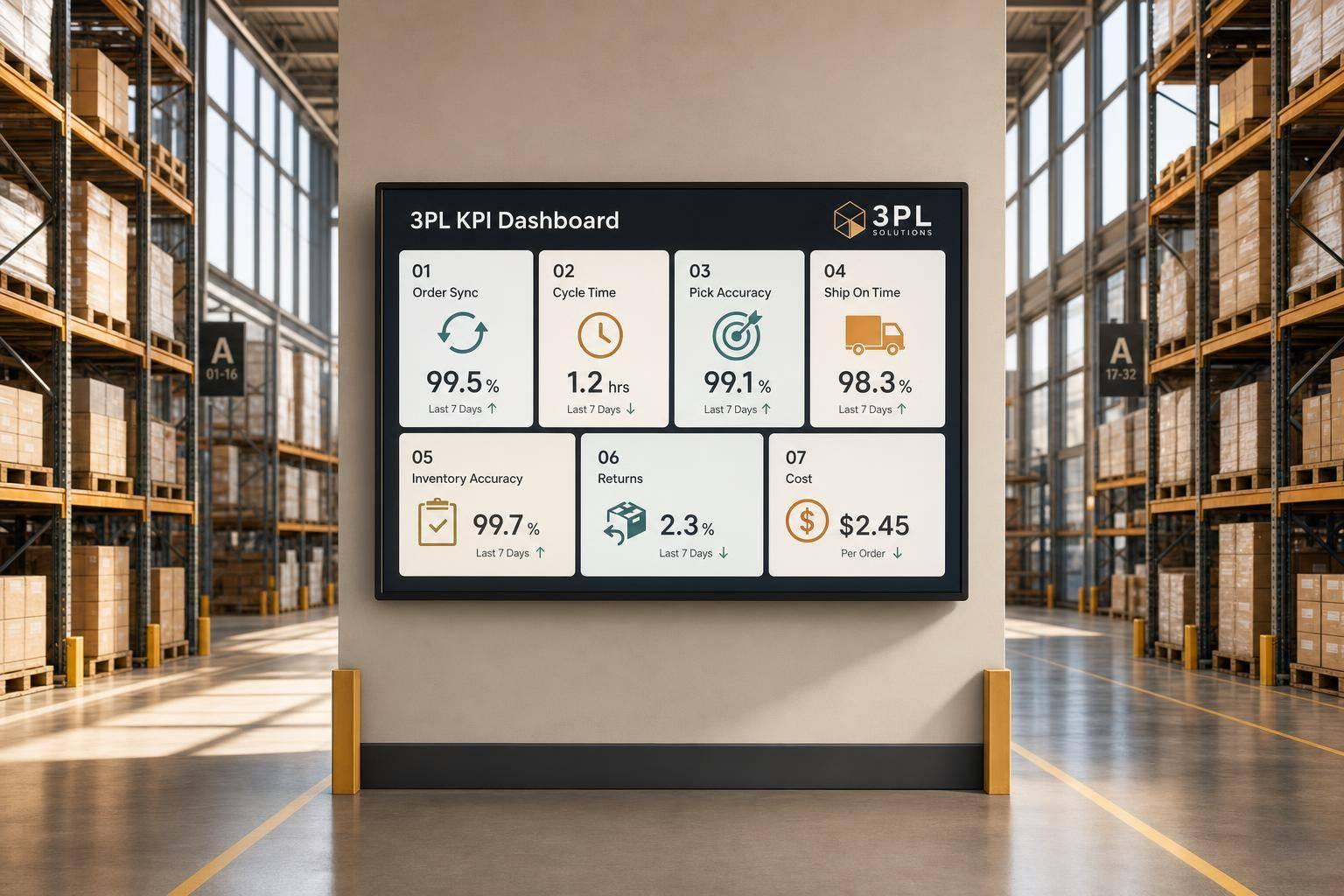
Track the right metrics to measure success. Before implementing a tool, set baseline measurements to track improvements. Focus on key performance indicators (KPIs) like order processing time (aim for under 24 hours), picking accuracy (99% or higher), fulfillment costs, inventory turnover, and on-time delivery rates. Tools should also help reduce stockouts by 20-30% compared to manual forecasting. Many modern tools come with built-in dashboards - make sure they include the metrics that matter most to your business.
AI fulfillment tools are no longer optional. Automated processes can slash order processing times from hours to minutes. They cut labor costs, reduce errors, and speed up vendor payments. Real-time tracking, faster fulfillment, and better inventory visibility enhance the customer experience while reducing returns. Businesses that fail to adopt modern fulfillment technology risk falling behind in customer satisfaction, operational efficiency, and profitability.
Take the time to evaluate, test, and negotiate contracts carefully. Pay special attention to service level agreements, data ownership, and exit clauses to ensure a smooth experience and long-term benefits for your business.
FAQs
How can AI-powered solutions like JIT Transportation enhance delivery speed and cut costs for e-commerce businesses?
JIT Transportation uses cutting-edge technology and a flexible infrastructure to simplify supply chain management, making deliveries quicker and more dependable. With a vast network across the country and customized third-party logistics (3PL) solutions, it supports e-commerce businesses in cutting costs while staying efficient.
Its range of services includes transportation, distribution, pick and pack, as well as kitting and assembly. These offerings streamline fulfillment operations, helping businesses deliver on customer demands with accuracy and speed.
What should e-commerce businesses look for in an AI tool for order fulfillment, and how can they ensure it works smoothly with their current systems?
When choosing an AI tool for order fulfillment, e-commerce businesses should focus on features that make operations smoother and improve customer experience. Key capabilities to look for include real-time inventory tracking, predictive analytics, and personalized order processing. These tools can help streamline processes and keep customers happy.
It's equally important to pick a solution that works well with your current setup. Look for tools that integrate easily with platforms you already use, like your inventory management system or e-commerce storefront.
To make the transition as smooth as possible, check that the AI tool offers strong API support, works seamlessly with your existing software, and provides thorough onboarding or training resources. Testing the system regularly during the integration phase can help catch and fix any issues early, making the adoption process much easier.
How can AI-driven demand forecasting help e-commerce businesses manage inventory effectively?
AI-driven demand forecasting tools use historical sales data, market trends, and customer behavior to predict future product demand with precision. These insights allow businesses to keep just the right amount of inventory, cutting down on the risks of overstocking or running out of stock.
For e-commerce brands, these tools are especially valuable. They make it easier to respond swiftly to shifts in demand, ensuring top-selling products stay in stock while avoiding unnecessary surplus. The result? Happier customers and reduced expenses on storage and operations.
Related Blog Posts
Related Articles
7 WooCommerce 3PL KPIs Teams Track

Centralized vs Decentralized Replenishment
