
What Are Autonomous Supply Chains?
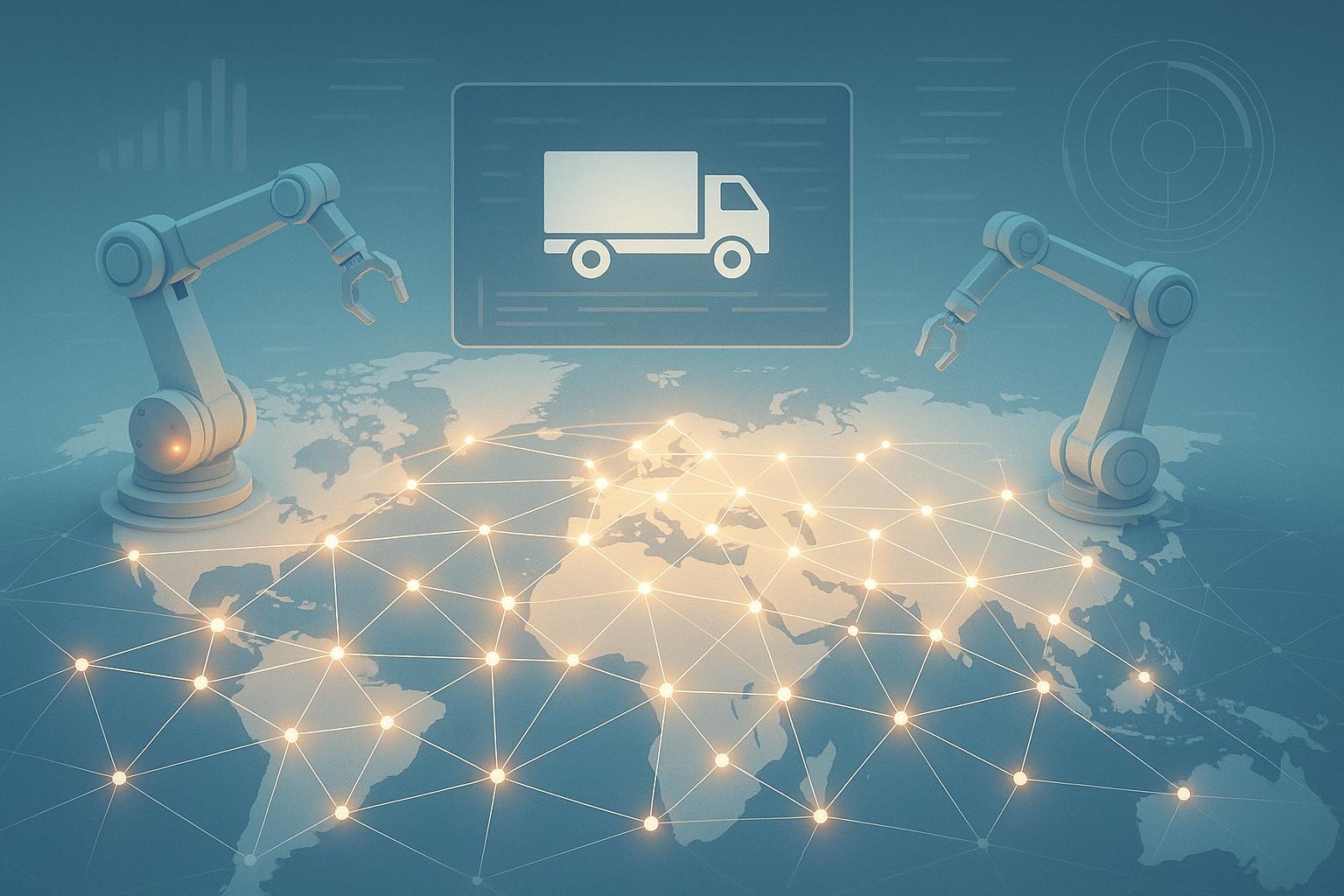
Autonomous supply chains are logistics systems that operate with minimal human involvement. They use artificial intelligence (AI), machine learning (ML), and automation to manage tasks like inventory, order processing, and transportation. Unlike older systems that rely on manual decisions, these supply chains continuously analyze data in real time to make decisions and respond to disruptions automatically.
Key Points:
- What They Do: Automate tasks like order creation, dock scheduling, and inventory management.
- Why They Matter: They address inefficiencies in supply chains exposed by events like the COVID-19 pandemic, making operations faster, more resilient, and cost-effective.
- Core Technologies:
- AI & ML: Analyze data and make decisions without predefined rules.
- IoT Sensors: Provide real-time data for better visibility.
- Automation & Robotics: Handle physical tasks like sorting and delivery.
- Adoption Trends: Currently, 40% of companies use AI in supply chains, and this is expected to grow to 50% by 2030.
Autonomous supply chains are transforming industries like e-commerce by reducing costs, improving delivery speed, and enhancing customer satisfaction. However, implementing them requires investments in technology, data integration, and workforce training.
Autonomous Supply Chains
Technologies That Enable Autonomous Supply Chains
To achieve a fully autonomous supply chain, a network of advanced technologies must work together seamlessly. These technologies form the backbone of intelligent logistics systems that can adapt to changing circumstances without constant human involvement.
Artificial Intelligence and Machine Learning
Think of AI and machine learning as the brains behind autonomous supply chains. These systems analyze real-time data to make quick, informed decisions that go well beyond basic automation.
AI doesn't just follow pre-set rules - it learns and adapts. For instance, it can adjust plans during execution based on real-world feedback, handling tasks like order changes, dock scheduling, and inventory management without human input. AI can even predict demand trends and place orders automatically, streamlining procurement processes.
The numbers show how widely AI is being adopted. Around 40% of companies already use AI in their supply chain operations, and another third are testing applications like inventory management or route optimization. By 2030, Gartner estimates that half of all supply chain management tools will use AI to make decisions autonomously.
What makes AI so effective is its ability to interpret complex data, prioritize risks, and create solutions before disruptions become major issues. It transforms rigid, reactive systems into dynamic, proactive ones that keep operations running smoothly.
Internet of Things (IoT) and Real-Time Data
IoT devices and sensors act as the eyes and ears of an autonomous supply chain, providing the real-time data that AI systems rely on. A real-time digital supply chain network is crucial for eliminating conflicts and ensuring everyone operates with the same up-to-date information.
This constant flow of IoT data gives AI the ability to make decisions based on current conditions, not outdated assumptions. By integrating diverse data streams - like operational metrics, risk factors, and unstructured information - supply chain systems gain a comprehensive view of the entire network.
For example, knowledge graphs can connect unstructured data, such as shipment delays or disruptions in the supply base, to create a digital twin of the supply chain. This digital twin enables end-to-end visibility and smarter decision-making across logistics networks.
IoT applications extend across the supply chain. Warehouse sensors monitor conditions like temperature and humidity for sensitive goods, while GPS trackers provide real-time shipment locations. This steady stream of data enables autonomous systems to react instantly to actual conditions, ensuring optimal performance across the supply chain.
Automation Tools and Robotics
Automation tools are the hands that move, sort, and manage goods in an autonomous supply chain.
In warehouses, robotics powered by AI handle tasks like inventory management, sorting, and packaging. Automated Guided Vehicles (AGVs) transport goods between storage and fulfillment areas, reducing errors and speeding up operations. Robotic Process Automation (RPA) takes care of repetitive digital tasks, such as data entry and processing invoices, freeing up human workers for more complex responsibilities.
Delivery and distribution have also seen major advancements. Autonomous vehicles and drones ensure timely deliveries, while intelligent routing systems and automated sorting optimize the final mile of delivery - the most expensive and challenging part of the process.
The COVID-19 pandemic accelerated the adoption of these technologies, as companies recognized the need for systems that could operate during workforce disruptions and scale to meet changing demands.
What sets modern automation tools apart is their ability to work as part of an interconnected network. For instance, a warehouse robot doesn't just follow a fixed route - it takes instructions from AI systems that consider inventory levels, incoming orders, and optimal picking paths. This level of coordination boosts efficiency and minimizes human involvement, making these tools an essential part of autonomous supply chains.
How Autonomous Supply Chains Operate
Autonomous supply chains rely on advanced AI and IoT systems to integrate real-time data, make automated decisions, and fine-tune operations on an ongoing basis. These interconnected processes create a self-sustaining system that adjusts dynamically to ever-changing conditions.
Data Integration and Analysis
At the center of an autonomous supply chain is a digital network designed to gather and analyze data from various sources. This includes suppliers, carriers, and warehouses, along with external factors like weather patterns, port delays, and geopolitical developments. These platforms combine operational data - such as inventory levels and shipment tracking - with external signals like emails, meeting notes, and market updates to provide a full-spectrum view.
Technologies like knowledge graphs help create a digital twin of the supply chain, offering a level of visibility that replaces outdated, inconsistent spreadsheets with a single, real-time dashboard. This enhanced visibility streamlines compliance, speeds up responses to disruptions, and strengthens long-term planning.
This unified data system serves as the backbone for automated decision-making processes.
Automated Decision-Making and Execution
Once the data is consolidated, AI and machine learning algorithms take over as decision-makers. These systems analyze complex information, evaluate risks, and determine the best course of action automatically. For instance, they can create or adjust orders, reschedule dock appointments, update inventory policies, or modify master data such as lead times. In warehouses, automation handles inventory management, sorting, and packaging, while in distribution, it powers autonomous vehicles, drones, and intelligent route optimization.
One standout feature is the use of digital twins - virtual models of the physical supply chain - to simulate scenarios before decisions are executed. For example, if a port closure occurs, the system can test various rerouting options, weigh their costs and delivery times, and immediately implement the most efficient solution.
According to Gartner, by 2030, half of all supply chain management solutions will utilize agentic AI to autonomously make and execute decisions. While human oversight will still play a role in addressing exceptional or unforeseen circumstances, the majority of routine decisions will be handled without manual intervention.
These decisions are not one-and-done; they feed into a continuous cycle of improvement.
Feedback Loops and Continuous Improvement
What sets autonomous supply chains apart is their ability to learn and improve over time. Beyond merely executing tasks, these systems monitor outcomes and adjust their processes based on real-world feedback. For example, if traffic delays a shipment, the system logs this information and uses it to refine future route planning. Similarly, if a supplier frequently misses delivery windows, the system updates its assumptions to better align with actual performance.
This feedback-driven approach transforms reactive processes into proactive systems. Predictive analytics enable these systems to identify potential disruptions early and take preemptive actions, such as adjusting production schedules, finding alternative suppliers, or redistributing inventory, before problems escalate. Early applications have shown success in areas like emissions tracking, automated dispute resolution, and ERP-driven equipment creation, all with minimal human involvement.
As these systems gain more operational experience, their decision-making becomes sharper and more reliable, setting the stage for supply chains that are both efficient and resilient.
Benefits of Autonomous Supply Chains for E-Commerce
E-commerce businesses face challenges that traditional retail never had to tackle. Customers now expect two-day delivery as the norm, real-time tracking, and flawless order fulfillment. Autonomous supply chains are stepping in to meet these high expectations in ways that manual systems simply can't match.
Greater Scalability and Efficiency
One standout advantage of autonomous systems is their ability to grow alongside a business without a corresponding rise in operating costs. Unlike traditional systems, which require significant investments to scale, autonomous systems manage increased demand seamlessly. During peak seasons, when orders skyrocket, these systems adjust instantly - no need to hire and train temporary staff or deal with the errors that come from inexperience.
Automation also greatly reduces picking and shipping mistakes, protecting both your bottom line and your reputation with customers. By tracking inventory at the item level in near real-time, these systems help prevent stockouts and avoid overstocking.
The result? Faster, more reliable service that keeps customers happy while streamlining operations.
Improved Customer Experience
Operational efficiency directly translates into a better experience for customers. Speed and transparency are key in today’s e-commerce landscape, and autonomous supply chains deliver on both fronts. Orders that once took hours to process are now handled in seconds, enabling quicker fulfillment.
These systems also create a real-time digital network, often referred to as a "single version of truth", which gives customers up-to-the-minute updates on their orders.
When problems arise - like a supplier issue or a delayed shipment - autonomous systems act immediately. They can reroute shipments, source alternatives, or adjust production schedules to minimize disruptions. This proactive approach ensures fewer missed deliveries and cancellations, keeping customers satisfied.
"In logistics, consistency is everything - and that's exactly what JIT delivers. Their transportation services are dependable, seamless, and backed by a team that truly understands our business needs. Working with JIT has made a tangible difference in our efficiency and customer satisfaction."
– Armando Otiz, Manager 3pl/Inventory, Exclusive Networks
By resolving issues before they escalate, businesses can recover from disruptions in hours instead of days, safeguarding both customer relationships and revenue. This level of agility not only reduces operational headaches but also strengthens customer loyalty.
Cost Savings and Environmental Benefits
Beyond improving service, autonomous supply chains also deliver significant cost and environmental advantages. These systems use AI-driven optimization to make decisions that manual processes simply can't replicate. For example, advanced route planning analyzes real-time conditions, cutting delivery times, reducing miles traveled, and lowering fuel consumption - all while slashing emissions by 15–25% in high-volume operations.
Additionally, shipment consolidation reduces the number of vehicles on the road, further decreasing carbon footprints. Enhanced order accuracy also means fewer returns and less waste, which translates to cost savings and a smaller environmental impact.
Looking ahead, Gartner predicts that by 2030, half of all supply chain management solutions will use AI to make autonomous decisions. This shift will make the cost and environmental benefits of autonomous supply chains the new standard in the industry. By offering faster delivery without premium charges, maintaining competitive shipping rates, and handling demand surges without extra fees, these systems help businesses retain customers and boost their lifetime value - delivering returns that far outweigh the upfront investment in technology.
sbb-itb-eafa320
Challenges and Considerations for Implementation
Autonomous supply chains bring numerous advantages, but making them a reality requires careful planning and investment.
Data Integration and Quality
One of the biggest hurdles is dealing with fragmented data systems. Many companies store information in separate silos - covering inventory, procurement, finance, and customer records - that don’t communicate with each other. This lack of integration makes it tough to make well-informed decisions.
Adding to the challenge, critical supply chain data often arrives in unstructured formats. For example, shipment delays, updates on manufacturing progress, or reports of supply disruptions might come in as emails, handwritten notes, or market news instead of organized, structured data. When AI or machine learning tools rely on incomplete or outdated data, the decisions they generate can lead to costly mistakes across the entire supply chain.
To overcome these issues, businesses need to create a unified digital twin - a single, reliable source of truth. Alongside this, they must implement strict data validation processes, standardized formats, continuous monitoring for anomalies, and clear governance policies to ensure data quality and reliability.
Technology Infrastructure Requirements
Building an autonomous supply chain requires investing in cutting-edge, cloud-based technology capable of handling real-time data processing.
Key components of this infrastructure include platforms that use predictive algorithms and real-time analytics, secure networks to protect sensitive data, and tools that integrate older systems with newer technologies. Organizations also need IoT devices for live tracking, robotics for warehouse automation, and robust computing power to handle large-scale data processing.
These investments can take a big bite out of supply chain budgets - not just in terms of upfront costs but also for ongoing maintenance, software updates, and cybersecurity measures. On the bright side, about 40% of companies are already using autonomous AI in their supply chains, with another third testing applications like inventory or route optimization. By phasing these investments, businesses can spread out costs, build internal expertise, and prove the value of their efforts over time.
But upgrading technology is only part of the equation - companies also need to prepare their workforce for the shift.
Managing Organizational Change
Once the technical barriers are addressed, the focus shifts to managing internal changes. Transitioning to autonomous operations often means rethinking how the workforce operates.
Employees must move away from repetitive tasks and instead focus on overseeing AI systems, interpreting data, and managing exceptions. This shift requires comprehensive retraining programs and a cultural adjustment - from reactive management to a more proactive, orchestrated approach. It’s essential to communicate that these systems are meant to enhance human capabilities, not replace jobs.
Successful change management often starts with forming cross-functional teams that include supply chain experts, IT specialists, data scientists, and frontline workers. Many companies start small, implementing autonomous solutions in specific areas - like inventory management or route planning - before scaling up. This approach helps build confidence, refine best practices, and demonstrate value.
Another critical piece is establishing clear protocols for human intervention. When autonomous systems encounter situations outside their programmed parameters, a quick and coordinated human response is crucial. Gartner predicts that by 2030, half of all supply chain management solutions will rely on autonomous AI to make decisions independently. With 48% of organizations planning to integrate AI agents into their digital systems within the next three years, managing this transition effectively is more important than ever.
Bringing together efforts in data management, technology upgrades, and workforce transformation is key to unlocking the full potential of autonomous supply chains.
The Future of Autonomous Supply Chains
The supply chain industry is steadily moving toward full autonomy, aiming to revolutionize how goods are transported and managed.
Current Applications and Limitations
Right now, supply chain systems operate in a semi-autonomous state. Many processes - like order management, inventory updates, dock scheduling, data adjustments, warehouse operations, and route optimization - are automated. However, human involvement is still critical when unexpected situations arise.
Research from Economist Impact reveals that nearly 40% of companies already employ agentic AI in their supply chain operations. Another third are testing AI applications, including inventory and route optimization. Some early advancements include real-time emissions tracking, automated dispute resolution, ERP-driven equipment creation, and embedded quality checks.
Despite these advancements, human oversight remains essential for handling unforeseen challenges. To achieve full autonomy, supply chains must be capable of managing complex, sequential operations without human intervention.
One of the biggest hurdles is the absence of a unified, real-time data system across the entire supply chain. Without this single source of truth, AI systems rely on outdated information, limiting their ability to optimize operations effectively.
Building on current semi-autonomous systems, new technologies are emerging to accelerate the journey toward full autonomy.
Emerging Trends and New Developments
Several technological breakthroughs are driving the shift toward fully autonomous supply chains. Knowledge graphs are helping connect unstructured data - such as shipment delays, manufacturing updates, and supply disruptions - across different domains to create digital replicas, or "digital twins", of entire supply chains. Modern orchestration platforms are integrating operational data, risk signals, supplier details, and other inputs to provide a real-time, comprehensive view of supply chain operations. Combined with intra-company planning data, generative and agentic AI tools enable more adaptive decision-making.
Blockchain technology is also gaining traction as a secure method for data sharing within supply chain networks. Additionally, advanced AI systems are being developed to predict demand changes and supply chain disruptions before they occur.
The pandemic exposed vulnerabilities in traditional supply chains, prompting companies to invest heavily in autonomous mobile robots (AMRs), self-driving trucks, and AI-driven decision-making platforms. These investments highlighted the need for resilience and agility to navigate future disruptions.
AI-driven agents are now capable of interpreting complex planning data, prioritizing risks, generating mitigation strategies, and optimizing supply chain decisions across inventory and demand levels.
Although these advancements are promising, the road to full autonomy remains a gradual process.
Timeline for Full Autonomy
While fully autonomous supply chains are often described as a possibility, the timeline for widespread adoption is still uncertain. The industry is currently in a transitional phase, with many companies adopting hybrid approaches that blend traditional automation with emerging autonomous technologies.
Gartner predicts that by 2030, half of all supply chain management solutions will use agentic AI to make autonomous decisions. However, this milestone doesn’t mean full autonomy across all operations will be achieved.
The shift to full autonomy will take time, influenced by factors like technological readiness, data infrastructure, and organizational capabilities. Currently, only 10% of companies are using the most advanced autonomous technologies, which means industry-wide adoption is still years away. Over the next three to five years, progress will hinge on integrating AI agents and developing unified, real-time data systems. Early adopters of these technologies are likely to gain a competitive edge as solutions mature.
Today’s autonomous supply chain platforms remain fragmented, with limited automation capabilities. However, advancements in AI, agent-based systems, and cloud-based solutions enriched with predictive analytics are expected to accelerate their development.
For full autonomy to become a reality, achieving a real-time, unified data system is essential. This foundation allows optimization engines to work with up-to-date, item-level data, enabling more effective autonomous decision-making. Without it, even the most advanced AI tools will fall short of delivering impactful results.
As technology evolves, hybrid models that combine traditional systems with autonomous capabilities are likely to dominate. The focus will shift from debating the arrival of autonomous supply chains to determining how quickly companies can build the infrastructure needed to take advantage of them.
Conclusion
Autonomous supply chains represent a major leap from traditional, human-driven logistics to systems powered by AI and machine learning. Unlike automation, which relies on pre-set instructions and human oversight, autonomous systems are designed to independently analyze data, adapt, and make decisions in real time.
Currently, around 40% of companies are using AI-driven tools in their supply chain operations, and another third are exploring applications like inventory management and route optimization. By 2030, Gartner predicts that half of all supply chain solutions will incorporate AI capable of making decisions autonomously. Early adopters are already reaping benefits, reporting cost savings of 5–6%, improved inventory turnover by 8–12%, and a 30% reduction in out-of-stock penalties.
To succeed in this transition, businesses need unified data systems, real-time visibility, and a proactive approach to management. A hybrid strategy - blending traditional supply chain practices with emerging autonomous capabilities - allows companies to adapt gradually while building the necessary infrastructure.
For industries like e-commerce, where precision and speed are critical, autonomous supply chains offer improved scalability, better customer experiences, and the ability to respond quickly to changing demand. Companies adopting these systems are making decisions up to five times faster and reducing data-related expenses by 50%, gaining a clear competitive edge. These operational improvements pave the way for long-term transformation.
Starting with high-impact areas such as demand forecasting and inventory optimization is key. Investing in robust data infrastructure and governance, coupled with a strong change management strategy, ensures that the workforce is prepared for the shift. Collaborating with logistics providers that have advanced technology, extensive networks, and deep expertise can further smooth the transition, ensuring reliable operations and on-time deliveries.
"JIT isn't just another trucking company - they are true logistics innovators. Their ability to anticipate industry shifts, build long-term relationships, and deliver tailored, high-impact solutions sets them apart in an industry moving rapidly toward autonomy."
– Curtis Martin, Senior Operations Manager at Synnex
As highlighted throughout this guide, building an integrated, autonomous supply chain is no longer a choice - it's a necessity. By focusing on data integration, adopting the right technologies, and preparing their organizations for change, businesses that start this journey now will position themselves to lead in a future defined by autonomous logistics systems.
FAQs
What challenges do businesses face when adopting autonomous supply chains?
Adopting autonomous supply chains comes with its fair share of challenges. One of the biggest obstacles is the hefty upfront investment needed to get advanced technologies like AI, robotics, and IoT devices up and running. These tools don’t just cost a lot to implement - they also require ongoing maintenance, which adds to the financial commitment. On top of that, integrating these cutting-edge systems into existing supply chain processes often demands substantial adjustments and specialized expertise.
Another significant concern revolves around data accuracy and security. Autonomous supply chains are powered by real-time data, so even small inaccuracies or security breaches can throw operations off track. And let’s not forget the human factor - automation can lead to shifts in job roles, which means businesses need to focus on retraining employees and managing these changes effectively to ensure a smooth transition.
What are autonomous supply chains, and how do they enhance efficiency and customer satisfaction in e-commerce?
Autonomous supply chains leverage cutting-edge technologies such as artificial intelligence, machine learning, and automation to oversee logistics with minimal human input. These systems excel at analyzing real-time data, forecasting demand, fine-tuning inventory levels, and optimizing transportation processes. The result? Faster, more precise deliveries that keep pace with customer expectations.
By minimizing delays, boosting accuracy, and adjusting to shifting demands, these supply chains elevate operational efficiency while enhancing the customer experience. For e-commerce businesses, this translates to quicker order processing, fewer mistakes, happier customers, and lower costs - along with a reduction in unnecessary waste.
What technologies power autonomous supply chains, and how do they work together?
Autonomous supply chains depend on a blend of cutting-edge technologies working together to simplify operations and limit the need for human involvement. The key players here include artificial intelligence (AI) for analyzing data and supporting decisions, machine learning (ML) for forecasting and predictive insights, Internet of Things (IoT) devices to track and monitor shipments in real time, and robotics to handle automation tasks in warehouses and distribution hubs.
These tools work as a team to improve both efficiency and precision. For instance, IoT sensors gather live data on the location and condition of shipments. AI and ML then process this data to fine-tune delivery routes and anticipate possible delays. Meanwhile, robotics take over repetitive tasks like sorting and packing, speeding up fulfillment processes while ensuring reliability. Together, these technologies create a supply chain that’s not only responsive but also resilient, adapting to shifting demands and reducing disruptions.
Related Blog Posts
Related Articles
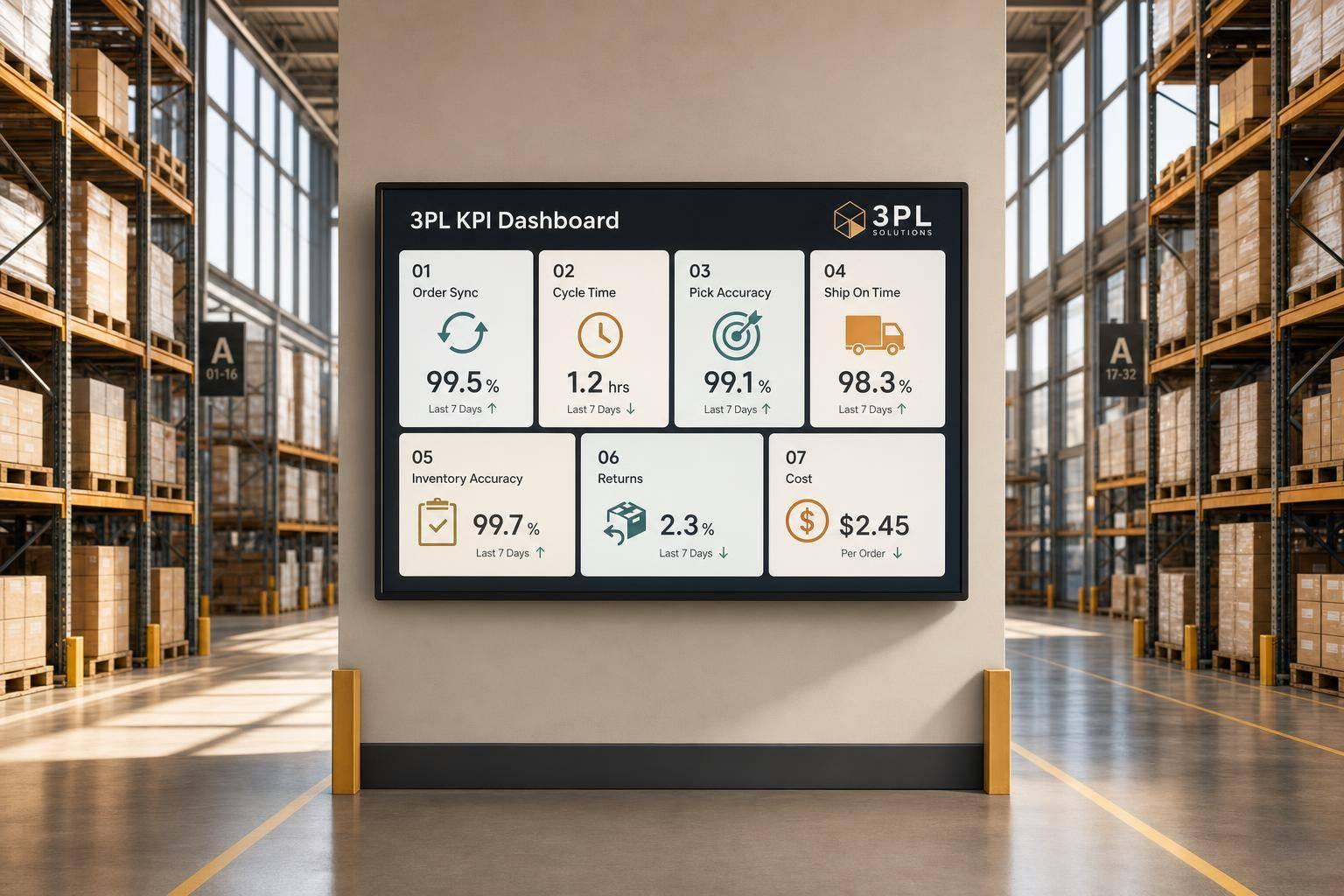
7 WooCommerce 3PL KPIs Teams Track

Centralized vs Decentralized Replenishment
