3PL KPIs for Smarter Workflow Decisions
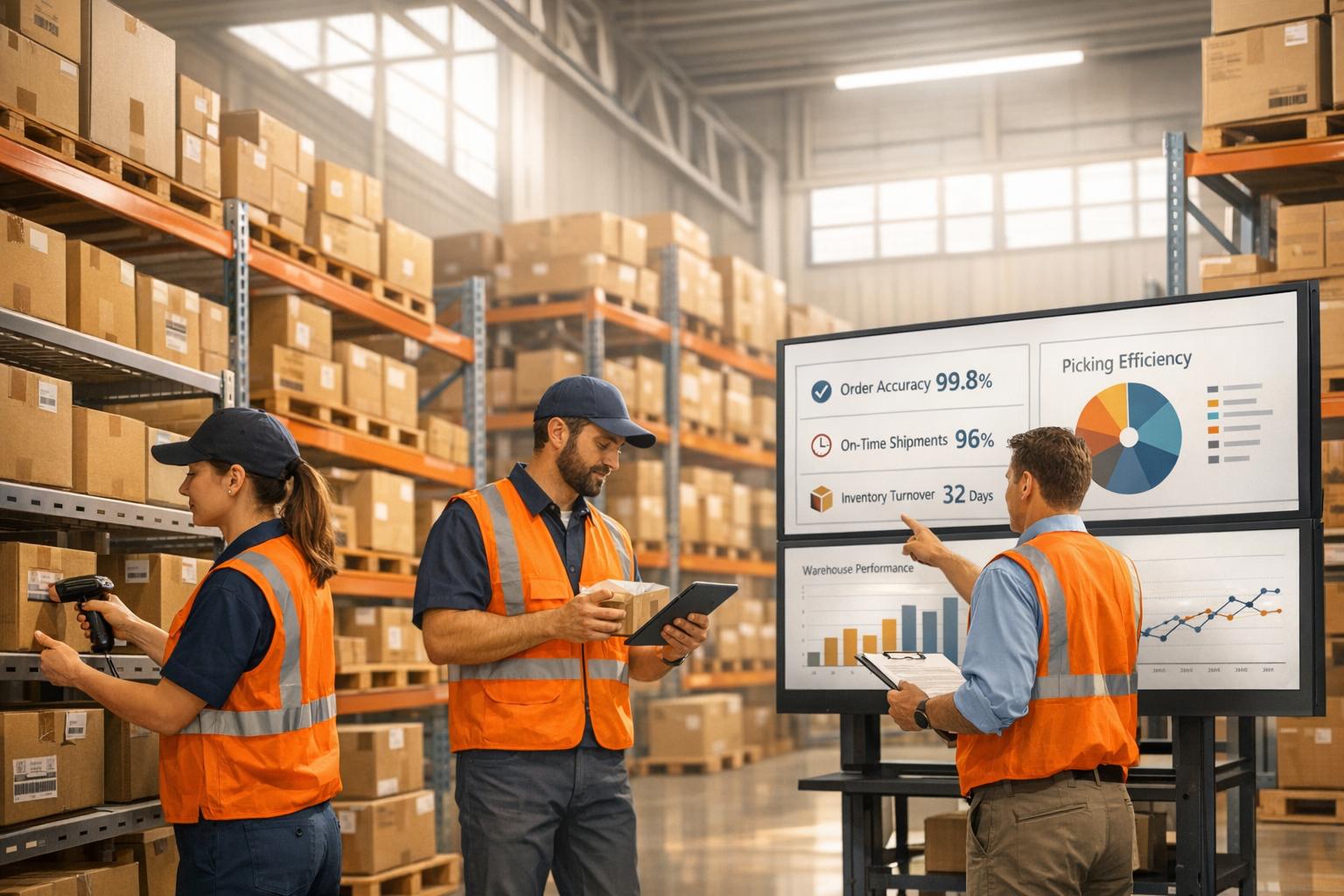
Running a business without tracking 3PL KPIs is risky. Late deliveries drive away 69% of customers, and 16% stop buying after one incorrect order. Monitoring key metrics like order accuracy, fulfillment speed, and inventory levels is essential to avoid costly mistakes, like losing $50,000 annually due to errors.
Key takeaways:
- Leading providers achieve 99.9% order accuracy vs. the 96-98% industry average.
- Metrics like dock-to-stock time, inventory accuracy, and cost per unit shipped help identify inefficiencies.
- Tools like WMS and TMS enable real-time tracking for better decisions.
- JIT Transportation excels with same-day shipping, 24-hour dock-to-stock, and tailored solutions.
Choosing the right 3PL can boost efficiency, cut costs, and improve customer satisfaction.
1. JIT Transportation
Inbound and Inventory KPIs
JIT Transportation keeps a close eye on Dock-to-Stock time, a metric that shows how quickly incoming shipments move from the dock to inventory shelves. While most providers average about 48 hours, the top performers cut that time down to under 24 hours. This quick turnaround means products are ready for sale faster, reducing the risk of revenue loss caused by inventory delays.
The company also maintains an impressive 98% Inventory Accuracy, ensuring that physical stock matches the records in the warehouse management system (WMS). This accuracy helps prevent issues like stockouts or overselling. Another key metric is Inventory Turnover, which measures how fast products move through the system. By focusing on this, JIT helps e-commerce brands save on storage costs and avoid tying up cash in slow-moving items. Using ABC Analysis, they prioritize frequent cycle counts for high-demand products, ensuring the most critical inventory stays accurate. Together, these metrics highlight how JIT Transportation streamlines inventory management for maximum efficiency.
Order Processing and Outbound KPIs
JIT Transportation boasts a 99.9% Order Accuracy Rate, ensuring orders are free from errors like wrong items, incorrect quantities, or missing products. This is critical because just one mistake can cost a company future business - 1 in 5 customers won’t reorder after a single error. They also maintain a 95–99% On-Time Shipping Rate by leveraging barcode scanning and automated order routing. These tools prevent mistakes in real time and keep operations running smoothly.
Orders received by 1 PM are shipped the same day, thanks to their focus on On-Time Shipping Rate. They also monitor Order Fulfillment Speed, which tracks the time from order receipt to shipment. Among leading third-party logistics (3PL) providers, over half process orders in under an hour.
"Cadence WMS provides us real time data to allow us to monitor our daily activities in all of our warehouses. It has provided us the visibility to flex our staff across our network and also provides our clients the transparency they want into our daily operations." - Dave Jesse, COO, Bonded Logistics
This level of efficiency not only improves workflows but also helps control costs and boost labor productivity.
Cost and Productivity KPIs
To keep expenses in check, JIT Transportation tracks Cost Per Unit Shipped, which helps identify hidden costs like unnecessary expedited shipping, inefficient routing, or storage overcharges. They also monitor Capacity Utilization to ensure warehouses operate efficiently, whether during normal operations or peak seasons. On average, fulfillment costs range between $3 and $15 per order.
Metrics like Picker Productivity and Labor Efficiency help optimize staffing and warehouse layouts. Real-time WMS dashboards provide actionable insights, allowing brands to decide when to scale up operations or invest in automation.
Customer Experience and Service KPIs
Customer satisfaction is a top priority, and JIT Transportation tracks metrics that directly impact the end-user experience. The Perfect Order Rate - measuring orders that are accurate, on-time, and undamaged - is their gold standard. Leading providers consistently reach rates of 95% or higher. This matters because 85% of consumers won’t return to a retailer after a poor delivery experience.
Return Processing Speed is another focus, with JIT ensuring returns are processed within 24–48 hours. This speeds up refunds and restocking, improving cash flow and keeping customers happy. Additionally, their Support Responsiveness is under two hours, ensuring issues are addressed promptly before they escalate. For brands experiencing rapid growth, JIT monitors Peak Order Capacity to handle seasonal or unexpected spikes in volume without compromising service quality.
sbb-itb-eafa320
The 10 Best Supply Chain & Logistics KPIS in Excel (Key Performance Indicator)
2. Other 3PL Providers
JIT Transportation may set a high bar in the logistics industry, but many other third-party logistics (3PL) providers still rely on standard benchmarks. Unlike JIT Transportation's customized strategies, these providers often stick to common industry metrics, which can be broken down into key performance indicators (KPIs) across several areas.
Inbound and Inventory KPIs
When it comes to Dock-to-Stock time, the industry average is 48 hours, though top performers manage to cut that down to under 24 hours. Most contracts require about 98% Inventory Accuracy, but the best providers aim for 99.5%. Interestingly, about 28% of 3PLs still handle inventory reactively rather than using data-driven insights. Leading companies, however, rely on advanced Warehouse Management Systems (WMS) equipped with barcode scanning and frequent cycle counts instead of outdated annual physical inventories. Another critical metric is the Inventory Turnover Rate, which reflects how quickly products sell and replenish. This is especially important given that inventory management represents a massive $759 billion slice of the $2.3 trillion spent on business logistics. Strong inventory management directly supports smoother order processing operations.
Order Processing and Outbound KPIs
Efficient inventory management naturally lays the groundwork for streamlined order processing. Most 3PL providers strive for a 99.9% Order Accuracy Rate, as even a single picking error can cost around $42. For shipping, the On-Time Shipping Rate typically ranges between 95% and 99%, with same-day shipping offered for orders placed before carrier cutoff times, usually between 2:00–3:00 PM. This is crucial, as 87% of online shoppers say delivery speed significantly affects their purchasing decisions. To improve accuracy and speed, many providers are turning to automation, including barcode scanning, robotic picking systems, and AI-powered demand forecasting.
Steve Rajeckas, Content Marketing Manager at Red Stag Fulfillment, highlights the importance of data-driven transparency in 3PL partnerships:
"Your 3PL partnership shouldn't feel like operating in a black box... The solution isn't more frequent check-ins or heated phone calls - it's implementing a systematic approach to measuring, monitoring, and improving performance through data-driven accountability."
Cost and Productivity KPIs
Cost Per Unit Shipped varies significantly depending on the product type. Simple items typically cost $5–$8 per order, standard items range from $8–$12, and complex or fragile products can cost $12–$20 or more. Providers also track Labor Cost per Order to identify inefficiencies and maintain profitability. For returns, the average Return Processing Cost is $3.90 per item, with total costs often falling between $10 and $30. Since roughly 30% of online orders are returned, effective reverse logistics is essential. To stay ahead of potential issues, many providers rely on real-time WMS dashboards instead of waiting for monthly reports, allowing them to optimize staffing and address problems proactively. These cost metrics play a critical role in shaping strategies for e-commerce fulfillment.
Customer Experience and Service KPIs
The Perfect Order Rate is a key indicator of fulfillment success, measuring orders that are complete, accurate, on time, and undamaged. Industry standards range from 90% to 94.9%, while the best providers consistently hit 95% or higher. This is vital because 85% of consumers say they won't shop with a retailer again after a poor delivery experience, and retaining customers is far more cost-effective than acquiring new ones - up to 25 times cheaper.
Other important metrics include Return Processing Time, which averages 4–5 days across the industry but is reduced to 2–3 days by top performers. Providers also focus on Support Response Times, with elite operations responding within two hours, and aim to resolve Claim Approvals for lost or damaged items within 7–14 days. These service KPIs are critical for maintaining customer satisfaction and loyalty in an increasingly competitive market.
Pros and Cons

JIT Transportation vs Standard 3PL Providers: Performance Metrics Comparison
Deciding between JIT Transportation and other 3PL providers comes down to understanding how each option impacts your business operations. JIT Transportation delivers customized 3PL solutions, integrating advanced technology like ERP connectivity and offering specialized services such as kitting, assembly, and white glove handling. Backed by a nationwide network and scalable infrastructure, their approach is designed to grow alongside your business. However, pricing requires a direct consultation.
On the other hand, standard 3PL providers tend to rely on industry benchmarks, making their services easier to compare at first glance. These providers often achieve 99% order accuracy and 95% on-time shipping rates. Their pricing models are transparent, but challenges can arise during peak seasons when increased demand may strain their operations.
Technology plays a critical role in optimizing workflows. High-performing providers use proprietary Warehouse Management Systems (WMS) with real-time tracking and automated error checks to boost efficiency. JIT Transportation meets these standards with ERP integration and vendor-managed inventory (VMI) capabilities, making it a strong choice for businesses needing specialized handling. These systems not only improve order accuracy but also streamline operations, helping businesses make smarter decisions. In contrast, standard providers often lack such advanced integrations, which can lead to inventory issues like overselling or stockouts - problems that could result in permanent sales losses of 10% to 40%.
Here’s a closer look at how the two options compare:
| Factor | JIT Transportation | Standard 3PL Providers |
|---|---|---|
| Service Customization | Tailored solutions with added services | Standardized offerings, limited flexibility |
| Technology Integration | ERP, VMI, and advanced tracking | Basic WMS, less robust integration |
| Pricing Transparency | Requires custom quotes | Transparent pricing |
| Scalability | Nationwide network, adaptable infrastructure | May face challenges during peak seasons |
| Specialized Services | White glove, kitting, testing, assembly | Basic pick-and-pack operations |
When evaluating costs, it’s important to look beyond upfront fees. Standard providers may offer predictable pricing, but hidden costs - like unexpected expedited shipping fees or untracked shrinkage - can quietly chip away at your margins. JIT Transportation addresses these issues with a more comprehensive service model, focusing on proactive management to avoid such pitfalls. The key question is whether the potential long-term savings from fewer errors and better inventory control justify the higher initial investment.
Conclusion
Keeping a close eye on 3PL KPIs can completely change how e-commerce operations run. It helps pinpoint issues quickly - whether it's slow dock-to-stock times or costly $42 picking mistakes - giving you the chance to fix them before they spiral out of control. Data shows that late deliveries and fulfillment errors can lead to losing customers, which is no small matter considering it costs 5 to 25 times more to acquire a new customer than to keep an existing one. These numbers make tracking KPIs not just helpful but critical for protecting your bottom line.
Beyond identifying inefficiencies, these insights also play a key role in choosing the right 3PL partner. JIT Transportation, for example, offers tailored solutions like ERP integration, VMI, and white glove services to bridge operational gaps and cut hidden expenses. On the other hand, standard providers often fall short, with problems like untracked shrinkage that can rack up losses exceeding $50,000 a year. The focus shouldn't just be on cost per order - it’s about having a partner who provides real-time visibility and seamless tech integration to maintain 99.9% order accuracy and avoid overselling or stockouts.
Set clear SLAs with measurable benchmarks, such as 99% inventory accuracy, dock-to-stock times under 24 hours, and over 95% on-time shipping rates. Use tools like monthly scorecards and root cause analysis techniques (think "5 Whys") to quickly resolve issues. Real-time dashboards are another must-have for staying on top of operations.
The right 3PL partner does more than just move products - they bring the transparency and infrastructure that can turn logistics into a competitive edge. Whether you go with JIT Transportation's tech-savvy, scalable solutions or another provider, let the data guide your decision. Your efficiency, customer loyalty, and profit margins all depend on making the right choice.
FAQs
What key 3PL KPIs should I track to improve order accuracy and delivery speed?
To improve order accuracy and expedite delivery, it’s essential to focus on a few key performance indicators (KPIs) that reveal how well your 3PL is performing. For accuracy, keep an eye on these metrics:
- Order Accuracy Rate: The percentage of orders that are error-free.
- Pick Accuracy: How often the correct items are selected during order picking.
- Perfect Order Rate: A comprehensive measure that combines accuracy, on-time shipping, damage-free delivery, and proper documentation.
- Inventory Accuracy: How closely your system records match the actual stock on hand.
Ideally, these metrics should stay above 96–98% to keep customers happy and avoid the expense of returns.
When it comes to speed, focus on the following KPIs:
- Order Fulfillment Speed: The time it takes to process an order from receipt to shipment.
- On-Time Shipping Rate: The percentage of orders shipped by the promised date.
- Dock-to-Stock Time: The time required to make received inventory available for picking.
Tracking these KPIs helps pinpoint delays, refine workflows, and ensure deliveries are both timely and accurate. Tools like JIT Transportation’s advanced technology and real-time reporting make it simpler to monitor these metrics and fine-tune your supply chain for smoother operations.
How does real-time tracking improve 3PL operations and customer satisfaction?
Real-time tracking technology gives 3PL providers and their e-commerce clients the ability to instantly see where shipments are and their current status. This live data makes it easier to make quick decisions, like rerouting around traffic or handling delays caused by weather, helping to keep deliveries on schedule and minimize hiccups along the way.
For customers, this technology takes the guesswork out of waiting for packages. With up-to-the-minute updates, proactive alerts, and accurate delivery times, it creates a much smoother experience. Companies like JIT Transportation incorporate these tools directly into their systems, offering a clear and dependable service. This approach not only streamlines internal processes but also builds customer trust and satisfaction - key factors in the fast-paced U.S. market, where reliable delivery is a must.
Why is advanced technology important when choosing a 3PL provider?
Choosing a 3PL provider equipped with advanced technology can completely change how your supply chain operates, making it more transparent and efficient. With tools that offer real-time updates on inventory, order statuses, and shipments, you can quickly pinpoint and address bottlenecks. This not only improves on-time delivery but also helps cut down on costly mistakes.
Technology also takes the guesswork out of tracking important metrics like dock-to-stock time, order accuracy, and cost per order. Instead of relying on manual spreadsheets, automated platforms provide faster, data-driven insights that boost profit margins and keep your customers happy. For example, JIT Transportation’s integrated systems offer real-time visibility, automated workflows, and in-depth analytics. These features ensure shipments are fast and accurate while keeping your supply chain adaptable enough to manage seasonal fluctuations. With tools like these, you can concentrate on growing your business without being bogged down by logistical headaches.
Related Blog Posts
Related Articles

Demand-Driven Replenishment for Multi-Node 3PL

3PL Models Compared for Reverse Logistics Carbon