
Best Practices for 3PL Returns Processing
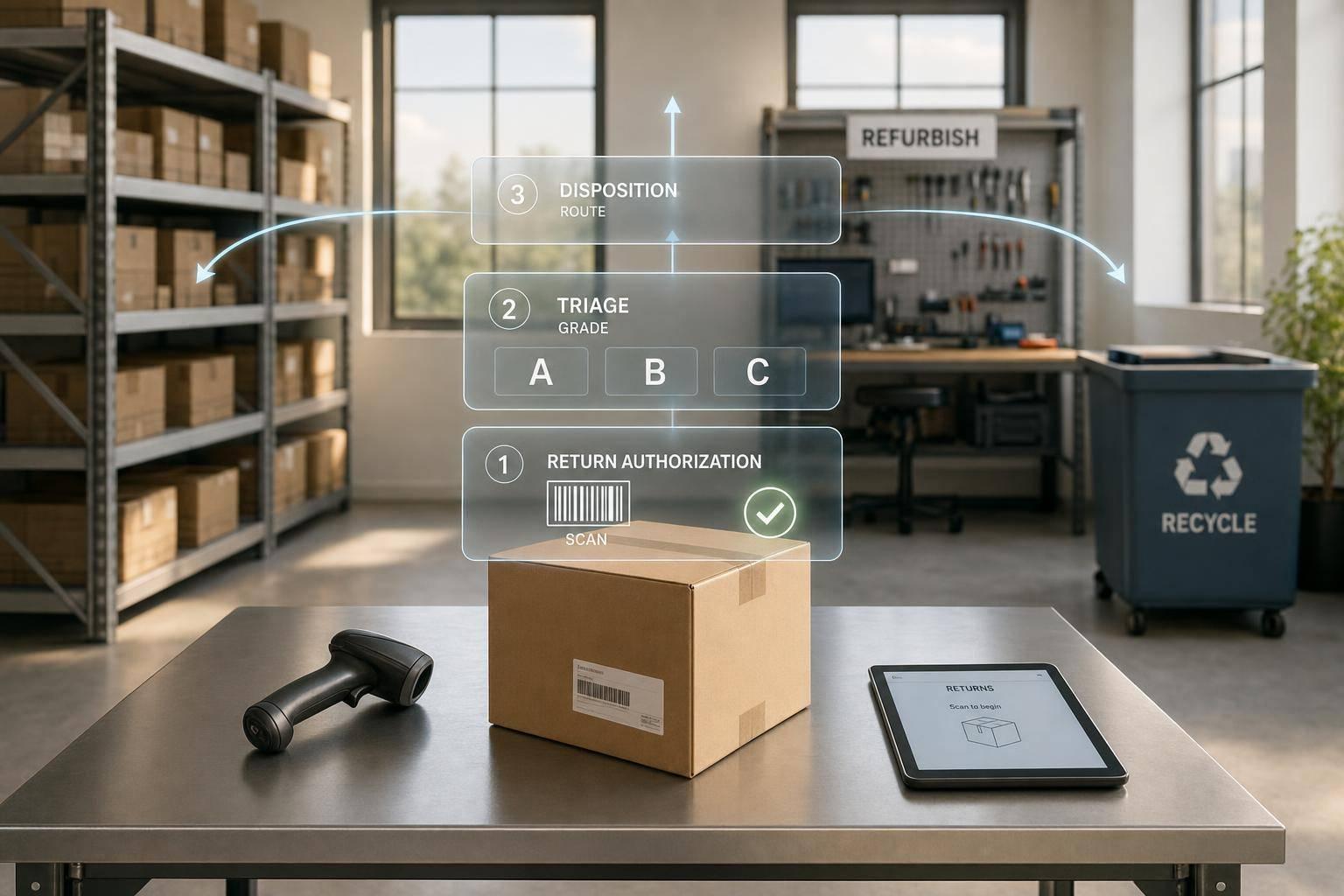
Returns move money, labor, and inventory every day. In U.S. retail, returns reached $849.9 billion in 2025, and online return rates are about 20.8%. So if you run returns through a 3PL, the main job is simple: process items fast, grade them the same way, and send each unit to the right next step without delay.
If I had to sum up the article in plain English, I’d put it this way:
- Start with a standard RMA flow so every return follows the same path
- Connect WMS, TMS, and ERP data so scans update records right away
- Scan at the dock and triage fast to cut idle time
- Use fixed grading rules so inspectors make the same call each time
- Route items by value: restock, resale, refurbish, recycle, donation, or scrap
- Pool reverse freight when it fits to cut miles and freight spend
- Track return data by SKU, carrier, and reason code to find repeat issues
- Control compliance and chain of custody for regulated or high-risk products
- Measure cycle time, recovery rate, and cost per return so you know what’s working
A few numbers from the article make the point fast: automated returns workflows can cut processing time by 40% to 50%, top warehouses beat weaker ones on dock-to-stock by about 44.1 hours, and refurbishment can recover 70% to 90% of original item value in the right cases.
Quick comparison
- RMA Handling: Use a standardized returns workflow for every return merchandise authorization (RMA) to reduce processing errors and eliminate unnecessary delays.
- Systems Integration: Connect your warehouse management system (WMS), transportation management system (TMS), and ERP platform so inventory, order, and refund data remain synchronized throughout the returns process.
- Receiving: Scan returned items immediately upon arrival and route them through predefined processing lanes to prevent inventory from sitting unnoticed at the receiving dock.
- Grading: Apply a consistent grading scale and product inspection process to ensure returned items are evaluated accurately and routed appropriately for resale, repair, or disposal.
- Value Recovery: Refurbish, repair, or repackage returned products whenever the potential resale value exceeds the cost of recovery, helping maximize revenue and reduce waste.
- Transportation: Consolidate reverse logistics shipments whenever timing allows to reduce freight expenses and minimize empty miles.
- Analytics: Monitor returns by SKU, carrier, shift, and return reason to identify recurring product defects, shipping issues, or operational inefficiencies.
- Compliance: Document every step of the returns process for regulated products to reduce compliance risks and maintain a complete audit trail.
- KPIs: Track key performance indicators such as return cycle time, value recovery rate, and cost per returned unit to measure program effectiveness and identify opportunities for improvement.
So the core idea is simple: good 3PL returns processing is not just about taking items back. It’s about turning returns into usable inventory, resale stock, recycled material, or documented disposal as fast as possible.

3PL Returns Processing Best Practices: Key Metrics & Disposition Paths
eCommerce Returns Strategy: How to Turn Returns Into Profit - Shipedge WMS | 3PL | OMS
Why Returns Processing Is a Core 3PL Function
Returns now shape day-to-day warehouse decisions. In 2025, U.S. retail returns hit about $849.9 billion, or 15.8% of annual sales. Online return rates are now about 20.8%, so around one in five e-commerce orders comes back. That kind of volume doesn’t sit on the sidelines. It affects inventory, cash flow, labor planning, and transportation costs every single day.
Speed has a direct effect on margin. Every return that sits unprocessed ties up inventory and pushes resale recovery further out. Those delays increase per-unit handling cost and slow resale recovery. Dock-to-stock time - the gap between a returned item arriving at the warehouse and becoming available for resale - links processing speed to cash recovery in a very direct way. When 3PLs move faster on receiving, inspection, and grading, they can route each unit to restock, resale, refurbish, or disposal sooner. That also helps keep inventory records in line with what’s actually on hand.
Returns also shape whether shoppers come back. A return policy affects purchase decisions for 82.8% of consumers. If a 3PL handles returns well - with fast check-in, accurate grading, quick refund triggers, and steady updates - the process feels smooth. If returns drag on or mistakes pile up, trust starts to slip.
Transportation costs add another layer of pressure. Reverse shipments that move without consolidation create extra miles and higher carrier spend. A 3PL with the right network and systems can group inbound return flows, cut duplicate movements, and control transportation costs. That’s why the first priority is a standardized RMA workflow that sends every return through the same path.
1. Build Standardized RMA Workflows
The first control point is the RMA workflow because every step after that depends on it. A Return Merchandise Authorization (RMA) workflow sits at the center of fast, orderly returns processing. Without it, tracking falls apart, visibility shrinks, and work starts to drag.
Set up one documented path that every return follows. That includes automated RMA number generation, shipping labels, and real-time WMS integration so the warehouse knows about the return before it shows up. When the WMS logs the return as soon as the RMA is issued, the team can plan labor and dock space ahead of arrival. The workflow should also send automated notifications to both the client and the end customer throughout the return lifecycle.
That clean RMA flow makes receiving and triage much easier. It also saves time in a big way: automated workflows can cut processing time by 40% to 50%, reduce labor costs by 25% to 30%, and push inventory accuracy to 99%.
Physical separation matters too. Keep returns away from outbound fulfillment so one stream of work doesn't jam the other. Use mobile scanning and digital inspection checklists to move grading along and keep decisions consistent. Detailed SOPs for each RMA step, including quality checks and troubleshooting, help the process stay steady from one return to the next.
Once the RMA is standardized, the next move is linking it with WMS, TMS, and ERP systems.
2. Use a 3PL with Integrated WMS, TMS, and ERP Connectivity
A standard RMA workflow works better when the systems behind it talk to each other. When WMS, TMS, and ERP data stay connected, you cut out manual handoffs and keep records lined up across the board. That means returned items can move to restock, refurbish, or recycle with less lag. After an RMA is issued, every scan, label, and status update stays in sync.
This matters most at the dock. That’s where one scan should update warehouse, transportation, and ERP records at the same time. The biggest payoff is real-time inventory sync: the second a returned item is scanned at the dock, WMS and ERP records update together. Linked inspection workflows can also trigger grading and routing right away, which helps shorten return-to-stock cycles and customer refunds. Advanced integrated returns management systems can cut total processing time by 40% to 50% and improve inventory accuracy to up to 99%.
For brands comparing 3PL partners, ERP connectivity is what turns returns data into action right away. JIT Transportation supports ERP-connected returns processing, which helps keep data moving cleanly between warehouse operations and a brand's back-office systems. That link reduces manual handoffs, delays, and errors.
3. Set Up Fast Receiving and Dock Triage
With RMA data already in place, the next control point is the dock. Once your systems are in sync, dock speed often becomes the next bottleneck. If a returned item sits for hours without a scan, it’s basically invisible to the inventory system and the planning team.
APQC benchmarking data shows that top-performing operations complete dock-to-stock cycles about 44.1 hours faster than bottom performers. That gap has a direct effect on how fast returned goods can be resold, put back into stock, or sent to refurbishment.
Set up a dedicated returns zone near the dock, separate from outbound flow. Give it clear lanes for:
- Restock
- Refurbish
- Recycle
- Vendor returns
Add good lighting, scales, and photo capture at triage. That sounds simple, but it saves time and cuts down on messy handoffs.
On-dock scanning is non-negotiable. Every return should be scanned at the dock door, with the WMS updated right there at the dock. For high-value, fast-depreciating products like consumer electronics and fashion, every idle day eats into recovery value. Those items should move to the front of the triage queue and get routed fast into refurbishment or recommerce channels.
Track dock turnaround time and dock-to-stock time as separate metrics. Then set SLAs for 48- to 72-hour processing and same-day inventory updates after inspection. Fast triage helps, but it only holds up when inspection and grading rules are just as consistent.
4. Apply Consistent Inspection and Grading Rules
Once returns make it through dock triage, the next job is simple: grade them the same way every time. It shouldn’t matter which inspector looks at the item or which facility receives it. If the rules shift from person to person, returns slow down and recovery value slips.
A practical way to handle this is with a two-layer grading framework. The first layer is one shared company scale:
- Grade A: like new
- Grade B: open-box or light wear
- Grade C: visible damage or missing parts
- Grade D: unsellable or nonfunctional
Then the second layer adds category-level checks. For electronics, that can mean power-on checks, battery health, and whether all accessories are included. For apparel, it can mean stitching, stains, odors, and tag condition. That setup keeps grading aligned across categories without forcing the same checklist onto every product type.
Each grade also needs a clear disposition path. Grade A returns to primary inventory at full price. Grade B moves into an open-box or refurbished channel at a discount. Grade C goes to liquidation or repair. Grade D heads to recycling or scrap. These grade-to-disposition rules should live inside the WMS and ERP, so each scan pushes the item to the next step on its own.
The grading rubric should be owned by the brand, not the 3PL. That means the brand sets the rules and supplies photo examples that show what counts as acceptable or unacceptable for each grade. Those rules should be written into the 3PL contract and SOPs. Inspectors also need training, plus periodic recertification, so standards don’t drift over time. It also helps to run calibration sessions where multiple inspectors grade the same items and compare results. That’s one of the best ways to spot mismatches early.
You’ll also want to track inter-inspector variance - in plain terms, how often different inspectors give different grades to similar items. If that number is high, it usually points to a training issue or a rubric that leaves too much room for guesswork. When you pair that with grading accuracy and recovery value by grade, you get a much clearer read on whether the inspection process is doing its job. Clear grades also make refurbishment and repackaging calls much easier.
5. Create Refurbishment and Repackaging Programs
After inspection and grading confirm a return’s condition, the next step is simple: move anything that works but isn’t ready for primary resale into refurbishment or repackaging.
This is where a lot of lost margin can come back. Cleaning, minor repair, and relabeling can put items back into sellable condition instead of sending them straight to liquidation. That keeps more units in circulation and cuts waste before you chase cost recovery.
These programs tend to work best for electronics, apparel, home goods, and sporting equipment with steady secondary demand. The payoff can be strong. Refurbishment can recover 70–90% of an item’s original value, and the usual per-unit cost is about $5–$15 for cleaning, minor repair, and repackaging.
Just like inspection, this only works if the process is repeatable. A good workflow follows a clear path:
- intake
- functional testing
- cleaning and minor repair
- repackaging
- final QA
- relabeling before put-away
Repackaging also depends on timing. If boxes, inserts, cables, manuals, and labels aren’t ready before the unit gets to the bench, the whole line slows down. In plain terms, the item is ready, but the package isn’t.
Each refurbished unit should have its own distinct SKU. That gives the WMS and ERP what they need to route the item to the right sales channel and price it the right way.
Stock boxes, inserts, cables, manuals, and labels ahead of time so units can go back to sale-ready on the first pass. Once they are ready to sell, the focus shifts to moving them through the reverse network with as few touches as possible.
6. Consolidate Reverse Transportation Flows
One of the clearest ways to cut return shipping cost is to consolidate reverse freight. Once items have been inspected, sorted, and marked for pooling, they can move from regional hubs to a central returns facility in fuller truckloads. But this setup doesn't run on autopilot. It depends on tight control over load timing and lane choice.
Returns usually don't face the same delivery pressure as outbound orders. That gives 3PLs more room to focus on cost and emissions instead of speed. When returns are grouped by zone or carrier lane and moved on scheduled linehauls only when loads are full, trailer use improves and wasted miles drop.
The payoff can be meaningful. Reverse logistics optimization can cut transportation miles by up to 30%, and ODW Logistics case studies reported 12.4% freight savings and shipments that were 1.2 days faster on average.
Consolidation also lowers emissions by cutting down on partially filled reverse shipments.
That said, not every return should go into a pooled flow. High-value, time-sensitive, temperature-sensitive, or regulated returns may still need direct routing or special handling. Those rules should live inside the RMA so each return is placed into the right reverse path from the start.
JIT Transportation's nationwide network and pool distribution support consolidated reverse flows across dispersed return points.
sbb-itb-eafa320
7. Automate Tracking, Scanning, and Status Updates
Once transportation is consolidated, automation helps you keep every return in view from arrival through disposition.
Start at the receiving dock with barcode or QR scanning. When a return comes in and gets scanned, the system ties it back to the original order and RMA, updates inventory counts, and sends it to inspection. That first scan acts as the anchor for everything that follows. Cloud WMS platforms that use scan-based intake process 37% of returns within one day and 42% within one week.
From there, each scan should update connected systems on its own. One scan event can push changes to your WMS, ERP, e-commerce storefront, and customer service tools through API or webhook integrations. That keeps inventory, order, and RMA records aligned. It also kicks off milestone alerts such as label generated, in transit, received, inspected, refunded, and replaced through email, SMS, or a customer portal. The result is fewer support contacts and better satisfaction, without more manual effort.
If return volume is high enough, RFID can take the place of item-by-item scanning. Readers at dock doors can scan many items at once without line-of-sight, which speeds up check-in. For most teams, barcode scanning is still the default. RFID makes more sense in high-volume operations.
Those same scan events also give you the data you need to spot return patterns and trace root causes.
8. Use Returns Analytics and AI for Root-Cause Insights
When scan data starts flowing into your system, analytics helps turn return events into root-cause insight. That makes it much easier to see where the problem lives: the product, the carrier, the warehouse, or the process itself. Once returns are scanned, graded, and routed, the numbers start showing where things are going off the rails.
Track returns by SKU, supplier, carrier, warehouse, shift, and reason code. Those slices make patterns show up fast. If the same SKU keeps coming back from multiple facilities with the same defect, the issue is probably with the product. If returns pile up in one pick zone or during one shift, the problem is more likely tied to training or slotting. In plain English, this kind of segmentation helps you tell product defects apart from fulfillment mistakes.
AI adds another layer here. It can process comments, inspection notes, and photos at scale, which extends the same returns decisions already used in grading and disposition. Repeated photos of crushed corners may point to poor void fill. A spike in comments saying the item didn’t match the listing may point to a product page that needs an update. AI can also group similar comments and flag return spikes within hours, which gives teams a chance to step in before a small issue turns into a bigger mess. One practitioner report says AI can predict whether an item will be returned at order entry with about 85% accuracy.
There’s also a direct cost angle. AI-powered reverse logistics can cut labor costs by roughly 30% and make returns processing 50% to 60% faster. So analytics isn’t just a reporting layer. It’s a day-to-day tool for cutting cost and improving sustainability.
Once a pattern appears, assign ownership right away. Each finding should lead to a specific corrective action, such as:
- a carrier-performance review
- a carton redesign
- a packaging audit
- another process fix
Then track the fix through resolution and compare post-fix return rates against the baseline. That’s what makes the data actionable.
9. Design Clear Disposition Paths
Once a return has been inspected, the next step is simple: decide where it goes.
If that decision isn't already mapped out, returns pile up fast. You get bottlenecks, mixed handling, and less money recovered from each item. Disposition paths are the written rules that tell your team what to do with a returned product based on its condition, product type, and recovery value. That can mean sending it back to primary inventory at full price, moving it to an open-box or resale channel, routing it to refurbishment, donation, recycling, or scrap.
Use a fixed disposition code for every return: restock, resale, refurbish, donate, recycle, or scrap. Grade D items should move to recycling or scrap, while donation needs its own separate, policy-based path. When these rules are built into your WMS and returns SOPs, an associate can scan the item and see the right code and next-step workflow on the spot.
Speed matters. A lot.
Items that are graded fast and put back into inventory within 24 to 48 hours can still recover full or near-full resale value. Wait too long, and markdowns start stacking up while obsolescence risk grows. Fast routing works best when every disposition path is already coded and easy to see in the WMS.
This isn't just about margin. It's also about waste.
A 2022 Optoro study found that 9.5 billion pounds of returned goods in the U.S. ended up in landfills, producing about 24 million metric tons of CO₂ in a single year. So accurate, fast disposition affects both profit and sustainability.
Donation and recycling need the same level of structure as resale. For donation, define which product categories qualify, set a maximum dwell time before items are shipped out, and build a standing relationship with a nonprofit or redistribution partner that can manage scheduled bulk pickups. For recycling, classify materials during inspection - such as textiles, electronics, plastics, batteries, and packaging - and work with certified recyclers that can provide documentation for compliance and audit needs.
Track time-to-disposition and recovery value by path so your WMS rules get better over time. For example, if a certain SKU keeps getting routed to refurbishment but comes back with thin margins after labor and parts costs, the data may show that discounted resale or recycling is the better move.
Those paths must also follow product-specific handling and chain-of-custody rules.
10. Strengthen Compliance, Chain of Custody, and Product-Specific Handling
Once a disposition is assigned, the next question is simple: can this item move safely to the next step? That’s where compliance comes in.
Chain of custody means you can show exactly where a returned item has been, who touched it, and what happened to it at each stage, from receipt to inspection, transfer, and final disposition. For regulated returns, especially pharmaceuticals, hazardous materials, and life sciences products, that record is often a legal requirement. If parts of that record are missing, the business can face compliance trouble and liability risk. Traceability also helps confirm whether the item can be resold, refurbished, recycled, or destroyed.
Each return record should include the RMA or other return ID, item details like SKU or serial/lot number, condition at receipt, time and location stamps for each touchpoint, the handler’s ID, hazmat, drug, or other compliance flags, and the final disposition code.
Handling rules also change by product type. A returned phone doesn’t follow the same path as a returned vial of medication or a leaking aerosol can.
- Electronics need anti-static handling, diagnostic testing, and verified data wiping before resale or refurbishment.
- Pharmaceuticals need immediate segregation, tamper-evident seal checks, DSCSA verification, and clear rules for restock versus destruction. Any temperature excursion or package damage should send the item to destruction or recycling.
- Hazardous materials such as batteries, aerosols, and chemicals must follow DOT/49 CFR reverse logistics rules for packaging, labeling, and documentation. Staff also need training to spot hazmat labels and use the right PPE.
Those handling rules shouldn’t live in a binder no one opens. They should flow straight into WMS holds, releases, and exception alerts.
There’s also a money side to this. Strong compliance records make chargebacks easier to dispute, cut insurance exposure, and reduce the risk of reselling product that should never have gone back into inventory.
In the WMS, set critical fields like hazard class, lot number, and inspection result as required before a return can move forward. If the system flags a possible breach, quarantine the item both physically and in the system, rebuild its path from scan records, and run a root-cause review before updating SOPs or retraining staff. That detect-quarantine-investigate-correct cycle helps stop one bad return from turning into the same problem next week.
Comparison Points to Make the Advice Actionable
Once the main workflows are set up, these side-by-side choices make the next step much easier. They help you pick the fastest path with the least waste, based on return volume, speed needs, and how much value you can recover.
RMA standardization vs. ad hoc handling - Start with RMA standardization.
A standard process moves returns faster and cuts down on mistakes compared with ad hoc handling. Automated RMA systems also give you clear SLAs and real-time status alerts, which makes the whole flow easier to track. On top of that, structured reason codes feed your analytics. Ad hoc handling gives you little to work with. And when volume jumps, a standard process holds up a lot better while ad hoc methods tend to fall apart.
Manual data entry vs. integrated WMS/TMS/ERP - Manual entry slows refunds and adds errors. Integrated scanning keeps WMS, TMS, and ERP updated in real time, which means fewer handoff problems and less delay.
Grade-to-disposition mapping - A simple grade ladder keeps routing decisions consistent:
- A = restock to primary inventory at full price
- B = refurbish or repackage for open-box or secondary channel
- C = liquidate or route to secondary marketplace
- D = recycle or dispose responsibly
Individual parcel returns vs. consolidated reverse shipments - After routing is set, the next call is how to move the returns.
Use individual parcels for fast DTC returns when refund speed matters most for customer satisfaction. Use consolidation for pooled store or B2B volume when cost control comes first. Consolidation cuts cost per returned unit and reduces total miles traveled.
Refurbishment vs. liquidation vs. donation vs. recycling - The right path depends on item condition, recovery value, and processing capacity.
- Refurbish when the item works and there is demand in a secondary channel
- Liquidate when volume is high and per-unit processing cost is higher than the margin from refurbishment
- Donate when the item fits partner criteria and the goal is tax benefit or brand impact
- Recycle when there is no resale or donation path and landfill diversion is the priority
Those routing choices shape transportation strategy, cost, and emissions.
Where JIT Transportation Fits in a Modern Returns Strategy
The workflows above start to work in day-to-day operations when a 3PL can run them inside one connected model. JIT Transportation supports the main returns workflows covered in this article through integrated systems, reverse shipping, recovery services, and compliance handling. Its custom 3PL model lets returns processes line up with product type, return volume, and disposition rules.
At the system level, JIT's ERP integration, RMA support, scanning, and automated notifications keep status data in sync from dock receipt through disposition.
On the transportation side, JIT's pool distribution and load consolidation help cut reverse freight cost. In plain terms, fewer separate moves can mean fewer miles and lower freight spend through consolidated reverse transportation.
For value recovery, JIT's testing, inspection, refurbishment, kitting, and assembly move returns to the right next step. If a returned item needs functional testing before it can go back into stock, or a bundle needs to be broken apart and put together again, that can happen inside one returns workflow.
For controlled handling, JIT's white glove handling and chain-of-custody controls support sensitive and regulated returns across JIT's nationwide U.S. network.
Key Metrics to Track After Implementation
Once scans, routing, and disposition are live, KPIs tell you if the returns program is doing its job. Without them, it’s easy to think things are getting better while costs creep up or recovery rates slide. The metrics below track the impact of the standardized RMA, dock triage, grading, refurbishment, consolidation, automation, analytics, and disposition rules already covered. The goal stays the same: speed, recovery, landfill diversion, and freight efficiency.
Start with speed. Return cycle time runs from RMA creation to final WMS disposition. Dock-to-stock time tracks the gap between the dock scan and put-away or disposition. Break both out by product category. Apparel, electronics, and bulky goods move through returns at very different speeds.
Then look at the dollars. Cost per returned unit should include the whole process: inbound transportation, handling, inspection, repackaging, refurbishment, and disposal, divided by total units processed during the period. Put that next to recovery rate - recovered value divided by original retail value - and resale rate - units resold as-new or open-box divided by total units returned. That combination shows where value is being kept and where it’s leaking away. Refurbishment yield adds one more check. If a large share of refurbished items still ends up scrapped, the triage rules probably need work.
For sustainability reporting, track recycling percentage and donation percentage. These show how much volume stays out of landfills. They also support ESG disclosures and may help with compliance tied to state-level e-waste and packaging rules. When disposition codes are set up in the WMS, reporting these numbers each month becomes much simpler.
Transportation needs its own view too. Claim rate - damage or loss claims divided by total return shipments - can point to weak carriers, problem lanes, or poor packaging practices. Carrier cost per consolidated return movement = total carrier charges ÷ units or pallets moved. That metric shows whether consolidation is actually cutting freight spend and claims, or if it only looks good on paper.
Use dashboards segmented by channel, SKU, and time period. Include averages and 90th-percentile results so outliers don’t hide in the mix. It also helps to define timestamps and data sources in the 3PL contract, so reporting stays consistent from one period to the next.
These metrics give the final read on whether the returns process is faster, cheaper, and less wasteful.
Conclusion
For 3PLs, returns processing now has a direct impact on margin, customer satisfaction, and sustainability. Returns aren't going away. They're part of day-to-day operations, and 3PLs that treat reverse logistics like something they can control are in a better spot to protect margin, the customer experience, and sustainability.
The fix isn't fancy. It's disciplined reverse-logistics execution. The main levers are pretty simple: standardize RMAs, connect WMS, TMS, and ERP, triage items fast, grade them the same way every time, send each unit to the right disposition, and consolidate reverse freight. That's how returns stop being just a cost center and start becoming a controlled recovery process.
Brands that make returns processing part of core operations now, instead of treating it like an afterthought, recover more value, waste less, and keep customers coming back.
FAQs
How do I know if my returns process is too slow?
Your returns process may be too slow if you’re dealing with phantom stock, long quarantine periods, frequent manual reconciliation, billing disputes, or inventory shrinkage. That kind of friction usually shows up when grading rules for restock, refurbishment, liquidation, or disposal aren’t consistent from one item to the next.
You may also have a speed problem if products sit unprocessed for as long as two weeks, losing 1% to 3% of residual value every week. High return-status inquiries and a heavy dependence on manual triaging and sorting are red flags too.
Which returned items should be refurbished instead of liquidated?
Repairable items, or products with light wear that often fall under Grade B, should go to refurbishment first.
With standardized inspection and grading, 3PLs can spot items that only need minor repairs, cleaning, or repackaging to be sold again. That matters because refurbishment can recover 70–90% of a product’s original value. In many cases, that return is far better than liquidation.
What systems should a 3PL connect for faster returns?
A 3PL should connect its WMS with the main systems that touch returns. That setup helps move items through the return process faster and gives teams a clearer view of what’s happening at each step.
The core integrations are:
- RMS for reverse logistics workflows
- OMS for original order tracking
- ERP for inventory and financial sync
It also helps to connect TMS, customer service platforms, and IoT data. When those systems work together, teams can cut down on silos, spend less time on manual tasks, and make sure every return is tracked and dispositioned the right way.
Related Blog Posts
Related Articles
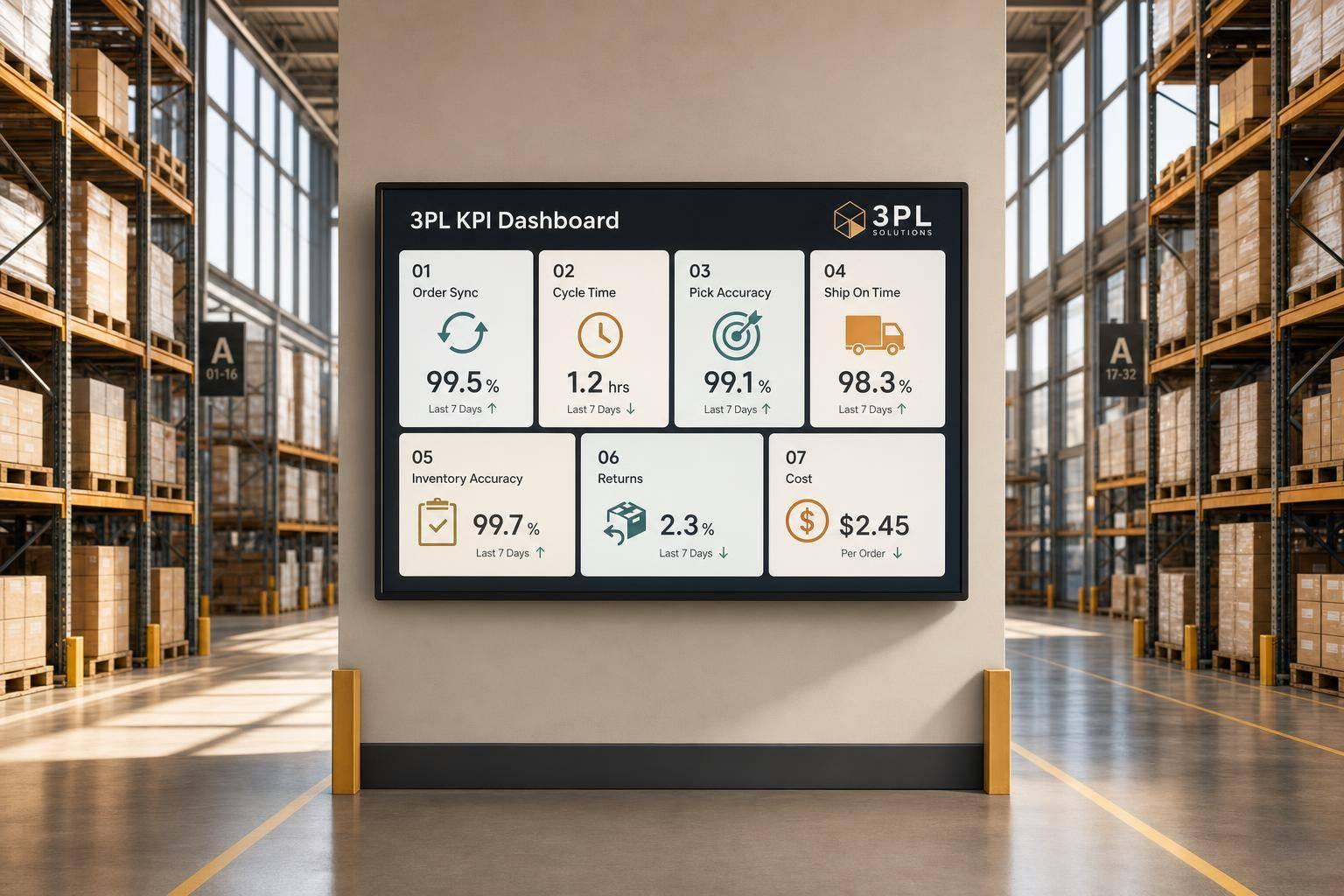
7 WooCommerce 3PL KPIs Teams Track

Centralized vs Decentralized Replenishment
