
Inventory Turnover Ratio Calculator
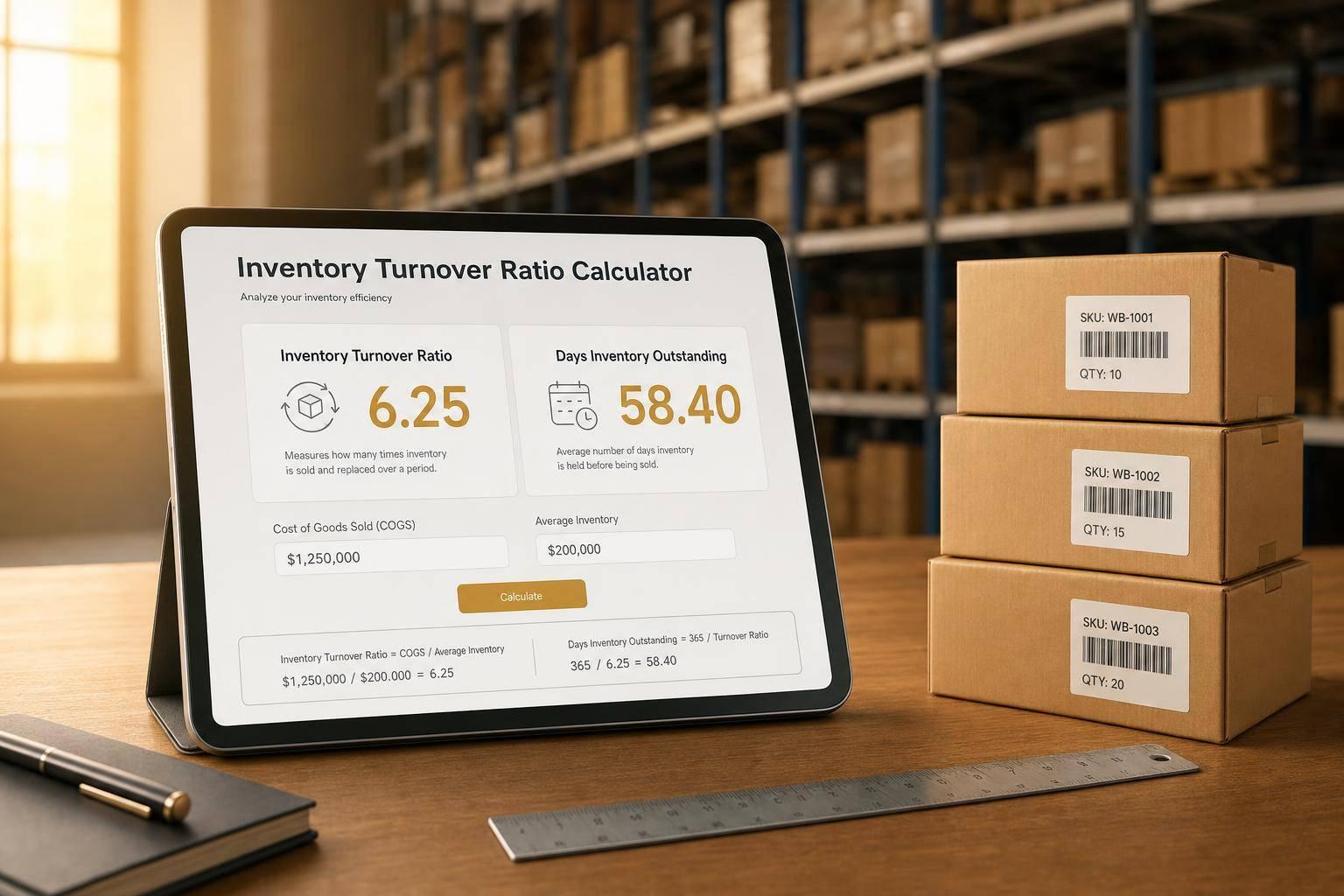
Understand How Fast Inventory Is Moving
An inventory turnover ratio calculator helps you measure how efficiently stock is being sold over a specific period. For finance teams, warehouse managers, and retail or manufacturing operators, this metric can highlight whether inventory is moving quickly, sitting too long, or tying up working capital. Instead of calculating it by hand, you can enter COGS and inventory values to get a clean result in seconds.
What the Calculator Measures
The tool uses standard accounting inputs to find average inventory and then divides cost of goods sold by that amount. If you already know your average inventory, you can enter it directly and override the beginning and ending balances. It also estimates days inventory outstanding, which turns the ratio into a more intuitive time-based metric.
Why It Matters
A solid inventory turnover ratio can support better purchasing decisions, stock planning, and cash flow management. Faster turnover may suggest efficient sales and replenishment, while slower movement can point to overstocking or demand issues. These are general signals, not hard rules, since healthy turnover levels vary widely by industry. This calculator keeps the process simple, accurate, and easy to interpret without adding unnecessary complexity.
FAQs
What does inventory turnover ratio tell me?
Inventory turnover ratio shows how many times a business sells through and replaces its inventory during a given period. A higher number usually means inventory is moving more quickly, while a lower number can suggest slower sales, excess stock, or purchasing patterns that tie up cash. That said, the right range depends a lot on the industry, product type, and operating model, so it should be treated as a reference point rather than a universal benchmark.
When should I use direct average inventory instead of beginning and ending inventory?
Use direct average inventory when you already have a reliable average from your accounting system, ERP, or internal reporting. This can be especially helpful if your inventory fluctuates a lot during the period and a simple beginning-and-ending average doesn't reflect reality very well. In this calculator, direct average inventory overrides the beginning and ending values so the result is based on the figure you trust most.
What is days inventory outstanding, and why does it matter?
Days inventory outstanding, often shortened to DIO, estimates how many days inventory sits before it's sold. It's calculated by dividing the period length by the inventory turnover ratio. This metric is useful because it translates turnover into a time-based number that's often easier to interpret in day-to-day operations. Lower DIO generally points to faster movement, but ideal levels vary by business model, seasonality, and supply chain strategy.
Related Articles
7 WooCommerce 3PL KPIs Teams Track

Centralized vs Decentralized Replenishment
