
How 3PLs Ensure Returns Compliance
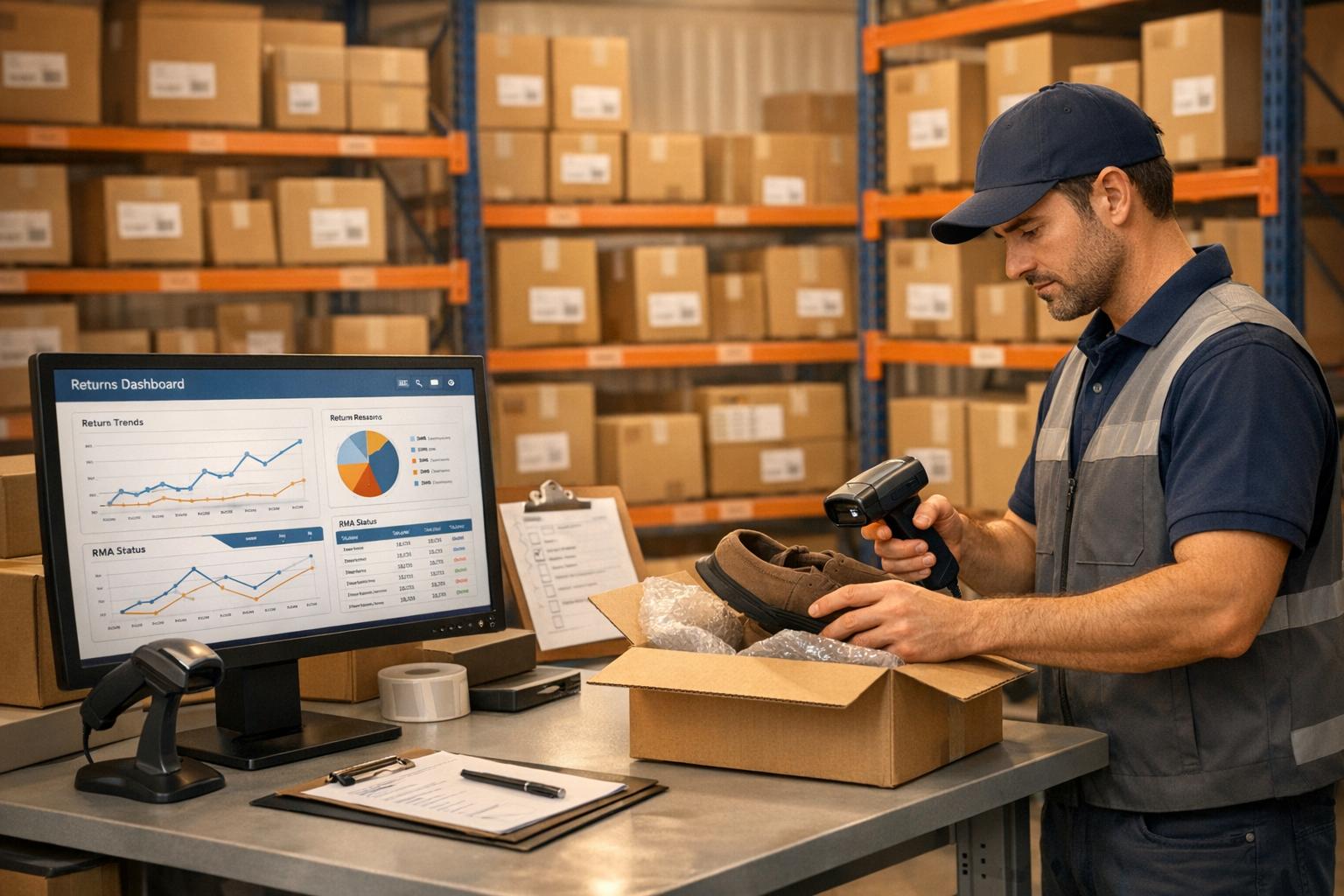
Returns compliance is a critical aspect of e-commerce operations, especially in the U.S., where strict federal, marketplace, and safety regulations apply. Non-compliance can result in hefty penalties, damaged reputation, and operational challenges. Third-party logistics providers (3PLs) play a key role in helping businesses navigate these complexities.
Key Takeaways:
- Returns Surge: In 2023, 17.6% of online purchases were returned, costing retailers $247 billion.
- Regulations: Federal laws like CPSA and DOT rules govern product safety, hazardous materials, and record-keeping.
- Penalties: Violations can result in fines of up to $100,000 per incident, capped at $15.15 million for related offenses.
- 3PL Solutions: Providers manage recalls, ensure proper handling of hazardous goods, and use advanced tech like AI, blockchain, and RMS systems to streamline compliance.
- High-Risk Categories: Returns for electronics, health products, and food require specialized protocols to meet safety and legal standards.
Compliance Challenges:
- Product Safety: Monitoring recalls, isolating defective items, and adhering to safety certifications.
- Hazardous Materials: Following DOT rules for transport, storage, and disposal of dangerous goods.
- Data Management: Maintaining accurate records and audit trails for inspections and legal compliance.
How 3PLs Help:
- Inspection & Grading: Systematic checks to sort items for resale, refurbishment, or disposal.
- Technology Integration: Real-time tracking, RMA systems, and AI to flag issues and prevent fraud.
- Training: Staff equipped with up-to-date knowledge to handle regulations and product-specific requirements.
- Specialized Protocols: Tailored processes for high-risk categories like electronics, food, and beauty products.
Why It Matters:
Efficient returns compliance not only avoids penalties but also protects brand reputation and customer trust. With reverse logistics costing U.S. businesses $100 billion annually, partnering with a capable 3PL ensures smoother operations and cost savings.
Example Provider: JIT Transportation offers integrated systems, 24/7 operations, and specialized services like quality assurance and hazardous material handling, making compliance more manageable for businesses of all sizes.

Returns Compliance Statistics and Penalties for E-commerce Businesses
Main Compliance Requirements for Returns Processing
Handling returns isn't just about issuing refunds or restocking inventory - there's a maze of federal regulations that third-party logistics providers (3PLs) must navigate. These rules, covering product safety, hazardous materials, and data management, are designed to shield both businesses and their customers. By meeting these demands, 3PLs help secure the supply chain and keep e-commerce operations running smoothly.
Product Safety and Consumer Protection Rules
Under the Consumer Product Safety Act (CPSA) Section 19, it's illegal to sell, distribute, or import recalled products. This means 3PLs have to stay vigilant, monitoring recalls issued by the Consumer Product Safety Commission (CPSC) and isolating any affected items to prevent accidental resale. Violating these rules isn't cheap - penalties can reach $100,000 per violation, capped at $15,150,000 for related offenses.
In addition to recalls, 3PLs must ensure products meet certification standards. For example, children's products require Children's Product Certificates (CPC) and permanent tracking labels with details like the manufacturer’s name, production date, and batch number. Items like strollers and cribs must include postage-paid registration cards for safety tracking. When recalls happen, 3PLs implement reverse logistics plans to manage the process - deciding whether products should be repaired, replaced, or destroyed.
Recent cases highlight the complexity of staying compliant. In January 2026, Isla Rae recalled 13,200 chargers due to explosion risks, requiring refunds and regulated disposal. Similarly, Vasicar had to recall 4,155 dressers under the STURDY Act, ensuring proper disposal before issuing refunds.
"A retailer with information that indicates a product may be a health or safety risk... is legally obligated to report that information immediately to the CPSC, unless they have actual knowledge that the CPSC has already been fully informed." - CPSC
3PLs also need to be ready for unannounced inspections. CPSC staff have the authority to check warehouses during normal business hours to ensure compliance with safety rules . These inspections are just one part of the strict oversight that extends to handling hazardous materials.
Hazardous Materials and Environmental Rules
Managing hazardous materials, like lithium batteries, aerosols, and cleaning solutions, involves a completely different set of regulations. These items fall under Department of Transportation (DOT) rules, particularly the HM-253 rule from the Pipeline & Hazardous Materials Safety Administration (PHMSA), which governs their transport from retail locations back to distribution centers .
Handling hazardous returns requires specialized training and processes. Employees must be trained to identify dangerous goods, follow handling protocols, and document their compliance. Many 3PLs simplify this by requiring all hazardous returns to be shipped via ground transportation, as air transport rules for such items are far more stringent.
"Hazardous materials or dangerous goods (DG) make up an increasing number of manufactured items and include batteries and battery-powered devices, electronics, paints and coatings, perfumes, aerosols, cleaning solutions, smoke detectors, and even cosmetics." - Mike Pagel, Senior Consultant for Labelmaster
For items that can't be resold or refurbished, disposal must comply with local and state hazardous waste laws. For instance, in January 2026, Joyful Journeys recalled 9,300 baby loungers that violated Infant Sleep Product standards, requiring documented consumer disposal before refunds were issued. This documentation ensures recalled items don’t re-enter the market.
Since customers are technically considered "shippers" when returning hazardous items, 3PLs often provide special packing materials, hazmat labels, and clear instructions to ensure compliance. In some cases, it’s safer and more cost-effective to send a replacement product while guiding the customer on proper local disposal methods. These rigorous procedures naturally tie into the need for accurate data tracking.
Data Privacy and Record-Keeping
Keeping detailed records is at the heart of returns compliance. 3PLs use Return Merchandise Authorization (RMA) numbers to track returned products, creating a clear audit trail for every transaction . These systems often integrate with Warehouse Management Systems (WMS), automating inspections, updating inventory in real-time, and generating reports on returns, including reasons and resolution times.
CPSC inspections aren’t limited to products - they can also review books, records, and other documentation related to compliance. This means 3PLs must maintain thorough records detailing how returns were handled, whether they were restocked, refurbished, or destroyed.
To stay ahead, many 3PLs turn to advanced technology. AI and machine learning tools analyze historical data to spot patterns, flagging suspicious return behaviors or mismatched item conditions. Blockchain technology is also gaining traction, offering secure, tamper-proof tracking of products across the reverse logistics chain.
For recalled items that require specific disposal, 3PLs might collect photos of destroyed products or cut power cords as proof before issuing refunds. This level of documentation not only ensures compliance but also protects businesses and customers alike.
sbb-itb-eafa320
How 3PLs Put Returns Compliance into Practice
Meeting compliance on paper is one thing - putting it into action every day is a whole different challenge. Third-party logistics providers (3PLs) take complex regulations and turn them into clear, repeatable processes that protect businesses and customers alike. Here's how they bring compliance to life in their warehouse operations.
Standard Operating Procedures for Returns
Every efficient and compliant returns process starts with detailed Standard Operating Procedures (SOPs). These step-by-step instructions guide every stage of the returns journey, from intake to final disposition.
When a return arrives, 3PLs rely on Return Merchandise Authorization (RMA) numbers to verify the return and create an audit trail for quality checks [8,18]. Items are then quickly sorted - usually within a 24-hour window - into categories like A-grade (ready for resale), B-grade (requires refurbishment), C-grade (to be liquidated or recycled), and D-grade (scrap or disposal).
Inspection protocols can get quite specific. For example, in the apparel sector, staff might conduct "smell tests", check pockets for forgotten items, and ensure hang tags or SKU labels are still intact [18,19]. To maintain both product and staff safety, black glove inspections are often performed. In certain high-risk categories, such as food, the rules are even stricter. For safety reasons, returned food products are discarded and never resold [3,18].
The most critical moment in the process is deciding what happens to each item. SOPs must align with safety standards, environmental laws, and marketplace requirements. Items unsuitable for resale are sent to responsible disposal channels - electronics go to certified e-waste recyclers, textiles to donation centers, and hazardous materials to specialized facilities [8,18]. Once sorted, the Warehouse Management System (WMS) updates inventory in real time, ensuring restockable items are immediately available for sale, which helps prevent overselling [8,9].
"Over 60% of consumers read through a return policy before making a purchase, and 62.58% expect retailers to allow for returns within 30 days of purchase" – Soocial
These structured processes lay the groundwork for technology to further streamline and automate compliance.
Using Technology to Track Every Return
Technology transforms the challenge of compliance into an automated and auditable system. 3PLs use cutting-edge tools to track returns from start to finish.
Returns Management Systems (RMS) handle the entire return lifecycle, from customer-facing portals for return requests to generating prepaid shipping labels with accurate RMA data. These systems ensure that only returns meeting policy criteria are approved, preventing non-compliant items from reaching the warehouse. Once a return arrives, the WMS takes over, guiding items to the right zones, automating inspections, and updating inventory instantly [8,21].
At grading stations, photo-capture technology records item conditions for audits. For high-value goods like electronics or luxury items, some 3PLs use blockchain technology to create unchangeable records that verify authenticity and condition at every step.
AI and machine learning add another layer of protection by spotting patterns in returns that might signal fraud or policy abuse. For instance, they can flag excessive returns from a single customer or mismatched item conditions [8,20].
Direct API integrations connect 3PL systems with e-commerce platforms and payment processors, synchronizing refunds with inventory updates. This seamless integration eliminates manual reconciliation errors, ensuring financial records match physical inventory movements [3,18]. By blending technology with returns management, 3PLs establish a solid compliance framework.
Staff Training and Process Updates
While technology plays a big role, well-trained staff are essential for maintaining compliance. Regulations evolve, new product categories emerge, and best practices shift - so continuous training is key.
Video-based training has become the go-to method for teaching inspection techniques, showing staff exactly what "acceptable" versus "unacceptable" quality looks like for different products. Specialized training also covers industry-specific rules, such as FDA guidelines for health and beauty items, warranty verification for electronics, or protocols for handling hazardous materials. This visual approach ensures consistency across all shifts and locations.
Beyond training, 3PLs constantly refine their processes. They analyze issues, conduct root cause investigations, and implement corrective actions to keep operations aligned with compliance standards.
Regular audits also play a critical role. These checks ensure that processing times, handling methods, and customer service standards meet compliance benchmarks. Audits not only prepare warehouses for unexpected inspections but also feed valuable data back into training programs. This feedback loop helps reduce return rates and improves product alignment with customer expectations.
Compliance for High-Risk Product Categories
When it comes to handling returns, some product categories require extra care due to heightened compliance risks. These risks often stem from safety regulations, hygiene requirements, or laws related to environmental protection. To address these challenges, third-party logistics (3PL) providers implement tailored protocols to ensure returns are managed in line with strict industry standards.
Health, Beauty, and Personal Care Products
Returns for health and beauty products demand meticulous attention because of their sensitivity to hygiene and safety. 3PLs manage these returns by implementing batch tracking, monitoring expiration dates using methods like FEFO (First-Expired, First-Out) or FIFO (First-In, First-Out), and providing controlled storage environments to prevent product degradation. Quality control checkpoints help identify any damage, while adherence to regulations from agencies like the FDA, Health Canada, and EU authorities ensures compliance and consumer safety. These strict measures not only protect brands but also maintain consumer trust. With the health and beauty e-commerce market expected to hit $358.4 billion by 2026 - a 77% growth rate - ensuring smooth and compliant returns is more important than ever.
"Wellness products live at the intersection of health, beauty, and lifestyle. Customers buy more than a product. They buy into a promise of self-care, consistency, and trust." – Bergen Logistics
Electronics and High-Value Items
Electronics returns bring unique challenges, including the need to secure sensitive data, maintain product integrity, and prevent theft. 3PL providers address these issues with advanced security measures such as round-the-clock surveillance, biometric access controls, and digital safeguards like multi-factor authentication, data encryption, and regular system audits. Each returned item undergoes thorough testing to determine whether it should be repaired, recycled, or restocked. For high-value electronics, additional precautions include specialized packaging and real-time tracking to ensure accountability. These measures help achieve impressive inventory accuracy rates of 99.5% and order accuracy rates of 99.9%.
While electronics focus on security and tracking, food and beverage products demand entirely different measures centered on safety and contamination prevention.
Food and Beverage Products
Handling food and beverage returns involves some of the most stringent compliance protocols due to the high risk of contamination. In most cases, returned food products are immediately discarded.
"The exception is food products, which are discarded due to safety concerns." – Red Stag Fulfillment
Facilities designate specific quarantine areas to separate returned food items from the rest of the inventory. Detailed written procedures document every step of the process, from receipt to disposal, ensuring complete transparency. Warehouse management systems quickly flag these returns for destruction, preventing them from accidentally re-entering the supply chain. Compliance with FSMA standards is a must, as violations can result in penalties of up to $100,000 per infraction and $15,150,000 for a series of related violations. Additionally, a 24-hour triage process ensures perishable or hazardous items are identified and disposed of promptly. Analyzing return data also helps uncover recurring issues, allowing for systemic improvements and better long-term compliance.
How to Build a Compliant Returns Program with a 3PL
What to Look for in a 3PL's Compliance Capabilities
When choosing a 3PL partner, the first step is to assess their operational systems and technology. A solid provider should offer features like automated RMA generation and real-time tracking capabilities. It's also crucial that their WMS or RMS integrates seamlessly with your e-commerce platform, enabling instant inventory updates.
Beyond the basics, check whether they have specialized workflows for tasks like restocking, refurbishment, RTV (return-to-vendor), or disposal. For businesses dealing with high-risk product categories, it's worth confirming if the 3PL offers services such as data wiping for electronics, component testing, cleaning for apparel, or white-glove handling for high-value items. If cross-border returns are part of your operations, ensure the provider has experience managing customs documentation and reverse customs clearance to prevent legal delays.
A good 3PL should also have strict inspection protocols, dedicated returns zones to avoid cross-contamination, and transparent audit trails. These measures not only help recover value from returns but also ensure compliance with regulatory requirements. Evaluating these capabilities lays the groundwork for aligning your internal policies with the 3PL's strengths.
Setting Up Policies and Performance Metrics
After selecting a 3PL, it’s essential to define clear policies and performance benchmarks. Start by mapping out disposition codes - like A-grade for resale, B-grade for refurbishment, and C-grade for liquidation - into the WMS and financial systems. This eliminates confusion for warehouse staff and ensures consistent application of your returns policies.
Service Level Agreements (SLAs) should outline specific timelines, such as completing initial inspections within 24–48 hours. Including photo capture at grading stations can help support warranty claims and detect fraud. To monitor performance, track metrics like return-cycle time, resale capture rate (the percentage of returns restocked as A-grade), cost per return, and restocking accuracy. A daily dashboard can also spotlight the top three return reasons - like fit issues, defects, or late delivery - so these can be escalated weekly to your quality or product teams. Keep in mind that 89% of shoppers are likely to revisit an online store if their returns experience is positive.
How JIT Transportation Simplifies Returns Compliance
JIT Transportation makes returns compliance easier by integrating directly with popular e-commerce platforms like Shopify, WooCommerce, Magento, BigCommerce, and Amazon FBA/SFP. Their APIs provide real-time inventory tracking, ensuring that every returned item is accounted for while maintaining strong data privacy and record-keeping practices.
With 2.5 million ft² of operational space across 14 U.S. locations and 24/7 operations, JIT Transportation is equipped to handle seasonal return spikes without slowing down processing times. They also offer value-added services like quality assurance, product testing, specialized kitting and assembly, and white-glove handling. These services ensure that returned items meet safety standards before being restocked or liquidated, helping businesses avoid hefty penalties - up to $100,000 per violation under federal law.
Conclusion
Returns compliance isn't just a box to check - it plays a crucial role in safeguarding your business's reputation and bottom line. Non-compliance can lead to penalties as high as $100,000 per violation. Beyond the legal risks, the financial impact is staggering, with the average retailer losing $165 million for every $1 billion in sales due to returns. On top of that, reverse logistics costs U.S. e-commerce companies around $100 billion annually. Considering that 80% of consumers see the returns process as a key part of their shopping experience, efficient management of returns is not optional - it's essential.
A dependable third-party logistics (3PL) partner can turn the headache of returns into an opportunity for revenue recovery. With tools like automated RMA systems, real-time warehouse management, and specialized inspection protocols, they ensure returned items comply with safety standards while maximizing their resale potential. These providers also handle the intricate demands of federal regulations, hazardous materials disposal, and data privacy, allowing your business to stay compliant while focusing on growth.
JIT Transportation stands out in this space. They simplify the returns process with advanced technology and services like quality assurance and white-glove handling. Their infrastructure is designed to handle seasonal surges effortlessly, maintaining fast processing times and strict compliance.
FAQs
How do 3PL providers ensure compliance during the returns process?
Third-party logistics (3PL) providers rely on advanced technology to simplify and ensure compliance in the returns process. These modern systems handle tasks like automatically generating Return Merchandise Authorizations (RMAs), creating prepaid shipping labels, and consolidating customer return requests into one platform. At the warehouse level, tools such as barcode scanners and warehouse management systems (WMS) confirm item details, update inventory in real time, and maintain a detailed record to meet customs, tax, or hazardous material regulations.
With the help of analytics and real-time tracking, 3PLs can identify returns that fall outside policy guidelines, such as those exceeding the allowed return window, and redirect them for proper handling - whether that means restocking, refurbishment, or environmentally responsible disposal. These technologies also give retailers valuable insights into return trends and product conditions, enabling precise reporting and compliance with federal and state consumer protection laws.
JIT Transportation uses these tools to provide efficient and compliant returns management. Its proprietary systems streamline processing, cut labor costs, and create a seamless, fully trackable workflow. This approach not only keeps e-commerce businesses compliant but also enhances customer satisfaction.
What compliance challenges do 3PLs face with high-risk products, and how do they address them?
Third-party logistics providers (3PLs) face tough compliance hurdles when managing high-risk products like consumables, electronics, and personal-care items. These products come with strict regulations that demand precise labeling, safety testing, and detailed documentation to meet both federal and state standards. Even small mistakes can lead to fines, shipment delays, or legal troubles.
To manage these complexities, 3PLs need to focus on a few critical areas:
- Proper product handling: Items like food or hazardous materials often require temperature-controlled environments or specialized storage solutions.
- Accurate labeling and documentation: Labels, certifications, and hazard symbols must be spot-on to avoid customs delays or regulatory violations.
- Returns compliance: Reverse logistics for high-risk goods can be tricky, often involving extra steps like hazardous waste disposal or meeting consumer protection laws.
Specialized providers such as JIT Transportation tackle these challenges using advanced technology, dedicated compliance teams, and regular audits to ensure products are managed efficiently while staying within legal requirements.
How does partnering with a 3PL like JIT Transportation improve returns management?
Partnering with a 3PL like JIT Transportation can make your returns process much more efficient. By cutting labor costs by about 25% and improving processing times by 40–50% with advanced automation, they help businesses save time and money. Their services include real-time tracking, detailed inspections, and efficient handling, ensuring everything runs smoothly while staying compliant with returns regulations.
On top of that, offering a hassle-free returns process can significantly boost customer satisfaction and loyalty. In fact, 92% of shoppers are more likely to shop again from businesses that make returns easy. With JIT Transportation’s expertise, you can handle high volumes of returns effectively while keeping your customers happy.
Related Blog Posts
Related Articles
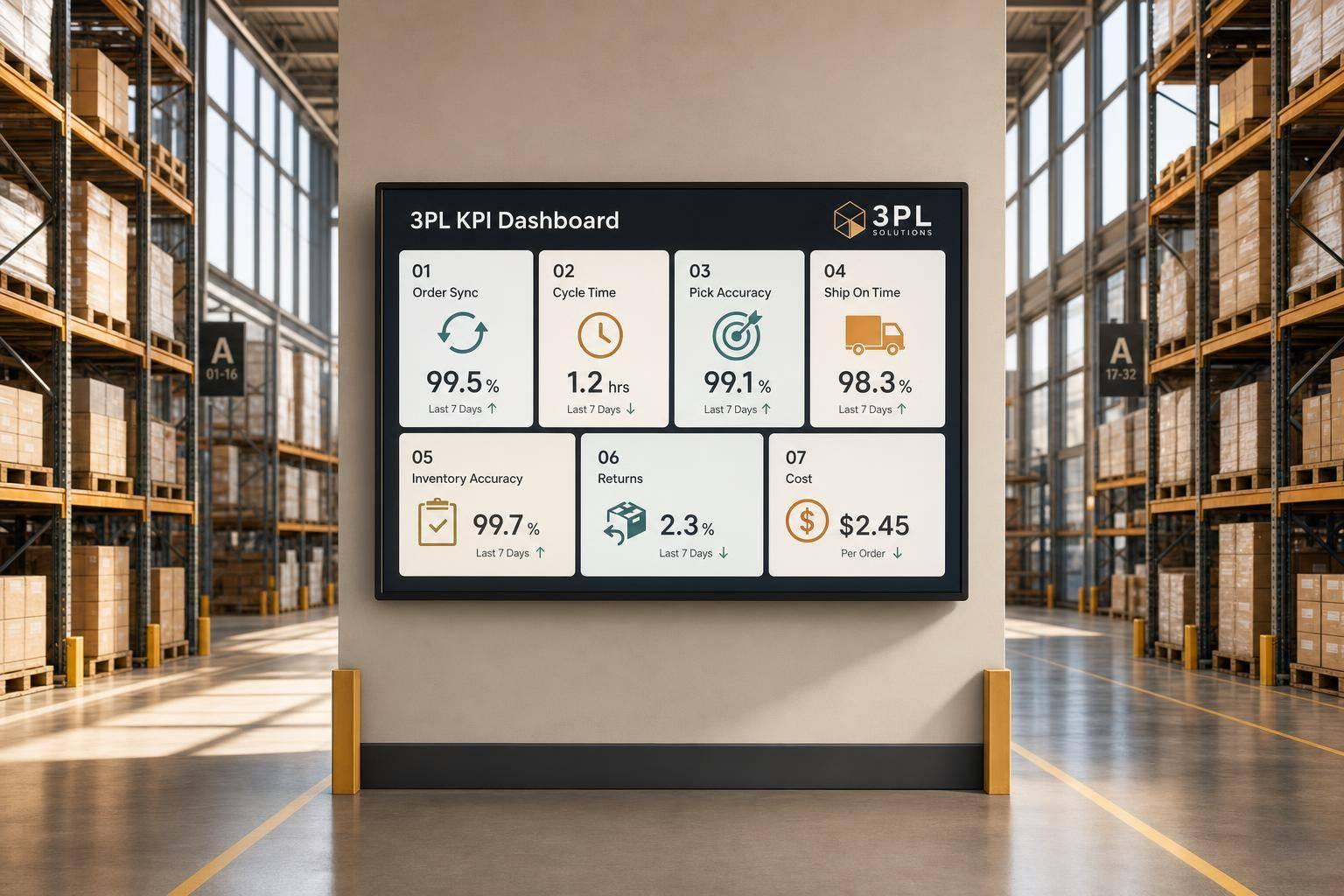
7 WooCommerce 3PL KPIs Teams Track

Centralized vs Decentralized Replenishment
