
How 3PLs Simplify Returns for E-commerce
Returns are a costly challenge for U.S. e-commerce brands, especially in high-return categories like fashion and electronics. Poor returns processes can hurt profits and drive customers away, while efficient systems can improve satisfaction and loyalty. Third-party logistics (3PL) providers specialize in managing returns, offering solutions like return authorization, inspection, restocking, and recycling. By outsourcing returns to a 3PL, businesses can reduce costs, speed up refunds, and focus on growth.
Key takeaways:
- Returns can cost up to 7% of gross sales if not managed well.
- 3PLs handle the entire process: from return labels to restocking or recycling.
- Faster processing leads to happier customers and quicker inventory turnover.
- Additional services like refurbishment and resale maximize the value of returned items.
- Integration with e-commerce platforms ensures accurate, real-time updates.
A well-designed returns strategy with a 3PL can protect profits, improve customer trust, and simplify operations for e-commerce brands.
eCommerce Order Fulfillment: How a 3PL Handles eCommerce Returns
How 3PLs Handle E-commerce Returns

How 3PLs Process E-commerce Returns: Step-by-Step Workflow
What 3PLs Do in Returns Management
When a customer returns a product, a third-party logistics provider (3PL) takes charge of the entire reverse logistics process. It all starts with return authorization (RMA). The 3PL's system applies your specific return policies - like time limits, item condition requirements, and restocking fees - to either approve or deny the return automatically. Once approved, the system generates a prepaid return label with tracking information through major carriers, which is then sent to the customer.
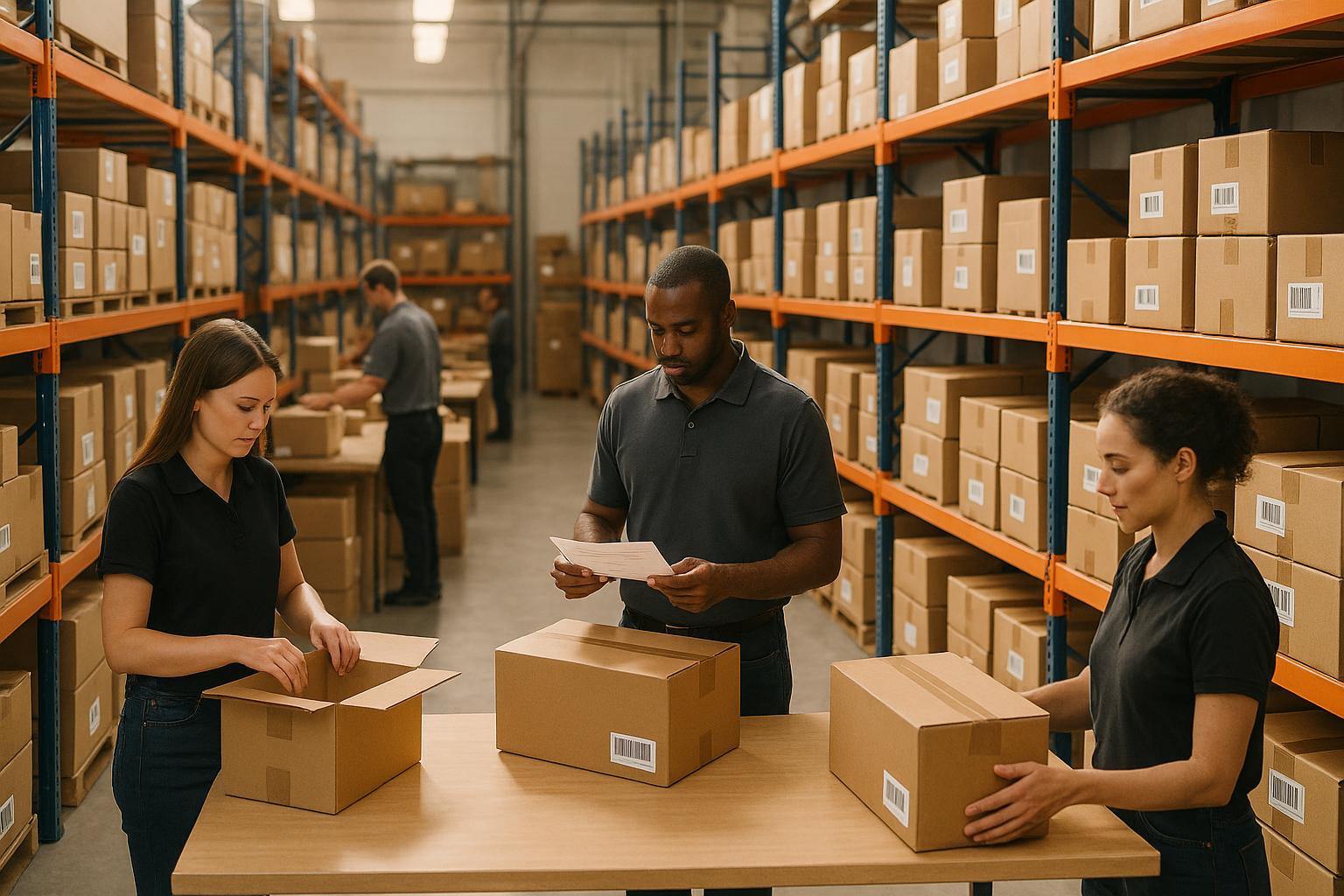
At the returns facility, incoming parcels are scanned and matched to their respective RMAs. Staff verify the product’s identity, quantity, and condition. Each item is inspected and categorized based on its state, following your disposition rules. For example, saleable goods are restocked, repairable items are refurbished, and unsaleable products are sent for recycling. During this process, the team checks for functionality, damage, missing components, and packaging issues, assigning condition codes such as "new", "like new", "damaged", or "defective."
The warehouse management system (WMS) updates your inventory in real time, syncing with your e-commerce platform or ERP. This ensures accurate stock levels, helping to maintain online availability and avoid overselling. Once the return is verified, the 3PL sends a return event to your system, which triggers refunds, store credits, or exchanges. While the 3PL doesn’t handle refunds directly, their efficient processing ensures smooth operations and enhances the overall customer experience.
Faster Returns Improve Customer Satisfaction
Speed makes a big difference when it comes to returns. By using dedicated returns teams, streamlined workflows, and automation tools like barcode scanning and WMS-driven processes, 3PLs can inspect and process returned items in just a few days instead of weeks. This means saleable inventory gets back on the shelves faster, and refunds or exchanges are issued sooner - keeping customers happy.
A quick and hassle-free returns process builds loyalty. Shoppers who receive fast refunds and regular updates about their return status are more likely to buy from you again, even if their first purchase didn’t work out. Additionally, 3PLs can handle high return volumes during busy periods, like post-holiday rushes, without needing extra staff or warehouse space, ensuring operations stay smooth.
Additional Services for Returned Products
3PLs don’t just stop at basic returns processing - they offer additional services to maximize the value of returned products. These services might include testing electronics, making light repairs, reboxing or relabeling items, and creating open-box or refurbished products for discounted resale. They can also break down product kits into individual components, reassemble items into new bundles, or separate B-stock for outlet or secondary sales channels. For unsaleable goods, they handle recycling or certified destruction.
For instance, JIT Transportation offers services like testing, upgrades, and kitting & assembly. These processes allow returned products to be refurbished, reassembled, or quality-checked before being reintroduced into inventory or resale channels. This not only helps recover margins from returns but also aligns with the sustainability expectations of many U.S. consumers who prefer to support environmentally responsible brands.
Building a Customer-Friendly Returns Process with a 3PL
Creating a smooth and efficient returns process is essential for keeping customers happy, and integrating your return policies with your 3PL strategy can make all the difference.
Setting Up Clear Return Policies
Start by defining a straightforward return policy. For example, you might offer a 30-day return window, requiring items to be returned unopened, tagged, unworn, and in their original packaging. Be transparent about shipping fees - whether you provide free prepaid labels, charge a flat fee, or ask customers to cover the cost. Make sure your 3PL can support your approach with the right carrier integrations and label-generation tools.
Refund timelines should also be realistic and aligned with your 3PL's processing capabilities. For instance, you could promise, "Refunds are issued within 3–5 business days after the item is received at our warehouse." To avoid confusion, repeat these key details in order confirmations and shipping emails. Clarity and consistency here can build trust with your customers.
Planning the Customer Return Experience
Every step of the return process should be mapped out with clear responsibilities. For example, customers could initiate returns through an online portal, automatically generating an RMA and a prepaid label. From there, your 3PL would handle receiving, scanning, and inspecting the item, with real-time updates on its status. These updates can trigger refunds, exchanges, or follow-up communications, ensuring customers stay informed.
Divide responsibilities efficiently: your brand oversees policies and customer communication, while the 3PL focuses on logistics and status updates. To give customers more flexibility, consider offering options like exchanges or store credit in addition to refunds. This approach can help reduce shipping costs and streamline processing. Partnering with an experienced provider, such as JIT Transportation, can make the entire process more transparent and reliable.
Deciding What Happens to Returned Items
Work closely with your 3PL to establish a clear plan for handling returned items. For instance:
- Like-new or unopened items: Restock and make them available for sale as quickly as possible, using real-time updates in your warehouse management system.
- Open-box but functional products: Refurbish and sell these through outlet or clearance channels.
- Damaged but repairable items: Send them to repair partners or refurbishment centers.
- Unsellable goods: Set up protocols for recycling, donating, or disposing of them responsibly, depending on the product type and local regulations.
Establish service-level agreements (SLAs) to ensure efficiency. For example, aim for a 24–48-hour inspection turnaround, high accuracy in grading returns, and same-day restocking for items that can go back on sale. Use 3PL reporting to track key metrics like return rates by SKU, reasons for returns, and the average time from the customer’s ship-back scan to refund issuance. This data can help you refine your policies, improve product descriptions, and enhance the overall customer experience.
sbb-itb-eafa320
Connecting Technology and Operations with Your 3PL
A well-connected system between your business and your 3PL can make the difference between a smooth returns process and a logistical nightmare. When technology and operations align, returns move effortlessly - from the moment a customer initiates them to inspection and reintegration into inventory - without the need for manual intervention or risking data errors. Let’s break down how automation can streamline your returns process.
Connecting Systems for Automated Returns
Integrating your e-commerce platform, WMS (Warehouse Management System), and ERP (Enterprise Resource Planning) with your 3PL through API or EDI ensures seamless data flow. This connection allows critical information - like return authorizations (RMAs), order IDs, SKUs, and quantities - to move quickly to your 3PL. At the same time, updates such as inspection results, inventory adjustments, and refund triggers are sent back in real time.
Two-way integration keeps your store, accounting, and inventory systems in sync. For example, when a customer initiates a return through your online portal, the system automatically generates an RMA, creates a shipping label, and sends the return details directly to your 3PL’s WMS. This means the warehouse is ready to receive and process the return as soon as it arrives. By removing the need for manual data entry, this setup minimizes errors, offers customers real-time updates, and helps your 3PL efficiently allocate resources like labor and storage space.
Creating Standards for Inspections and Data
Consistency is key when managing returns. Start by standardizing return reasons across all platforms. Common categories might include Wrong Size, Not as Described, Damaged in Transit, Defective, Ordered by Mistake, or Changed Mind. Every return should be assigned at least one primary reason, and these codes should match across your e-commerce platform, ERP, and your 3PL’s WMS to ensure uniform reporting.
In addition to return reasons, capture structured data such as sales channel, SKU, order date, return window, carrier used, inspection results, and final disposition. Regularly review this data with your 3PL to identify trends. For instance, if "Damaged in Transit" returns spike for a specific product, you might need to revisit packaging or carrier selection to prevent future issues and cut costs.
Establish clear inspection standards with condition grades like New, Like New, Refurbishable, and Scrap. These grades help determine whether items should be restocked, refurbished, or recycled. With standardized data and inspection protocols in place, you can automate returns processing to meet your service-level agreements (SLAs).
Setting Up Returns Handling Procedures
Create detailed SOPs (Standard Operating Procedures) for every step of the returns process, including receiving, inspecting, grading, disposition, and restocking. Set specific SLAs to ensure timely processing - such as inspecting returns within 24–48 hours of check-in and issuing refunds within a defined period. Clearly outline key scan events like package arrival, inspection completion, disposition, and restocking to maintain end-to-end visibility.
For items requiring special handling, partner with a 3PL like JIT Transportation, which can integrate value-added services such as refurbishment or repackaging directly into the returns workflow. This approach helps recover more value from returned products. Additionally, plan for peak seasons like Q4 and post-holiday returns by leveraging automation - such as automated sorting, label creation, and RMA matching - to maintain speed and accuracy. Confirm that your 3PL has the staffing and facility flexibility to handle higher volumes while keeping operations running smoothly.
Tracking and Improving Returns Performance
Once you’ve established solid systems and procedures, the next step is to measure how well they’re working to protect your profitability. Clear metrics are essential - they help you understand how your returns process impacts your bottom line. By tracking these metrics, you can connect operational efficiency to long-term financial success.
Metrics to Track for Returns
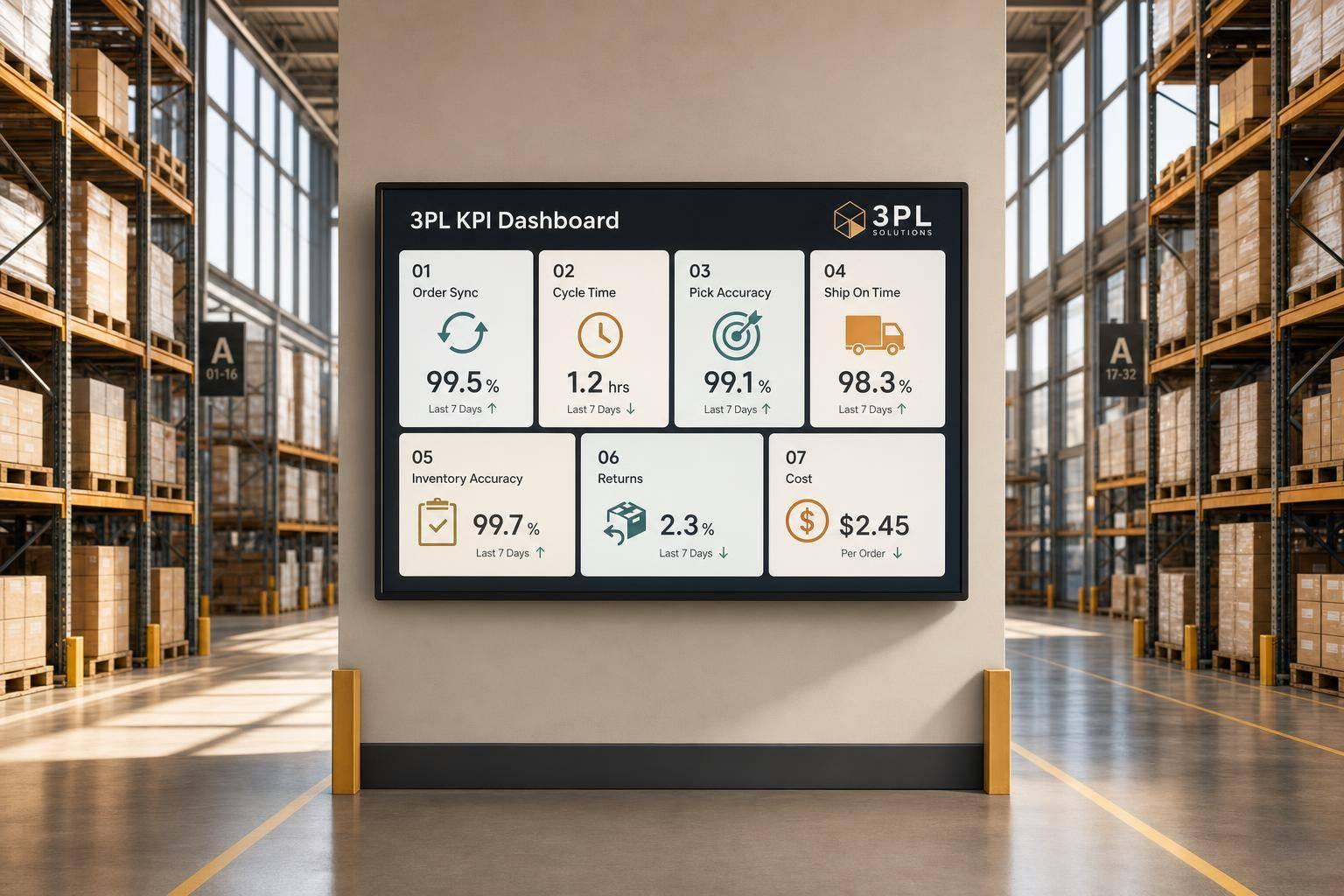
Start by collaborating with your 3PL to define a core set of KPIs. Key metrics include:
- Return rate: This is the percentage of orders or units that are returned. It can help you identify issues with products, listings, or customer expectations.
- Time to refund: Measure the number of days from when a return is initiated to when the refund is issued.
- Time to restock: Track how long it takes to move items from return receipt to being ready for resale. Faster processing means salable inventory gets back on shelves sooner, boosting cash flow.
- Restock percentage: Monitor the proportion of returned units that are restocked versus those that are refurbished, liquidated, donated, or scrapped. This shows how much value is recovered.
- Cost per return: Include all associated costs - transportation, handling, labor, and write-offs - to understand the financial impact of each return.
- Inventory accuracy for returns: Keeping track of returned items accurately helps reduce overselling and stockouts.
Focusing on these metrics not only helps streamline operations but also enhances the customer experience by ensuring quicker refunds and better product availability.
Regular Reviews and Data Sharing
Set up monthly and quarterly reviews with your 3PL to examine trends in your KPIs and uncover root causes of any issues. Use tools like shared dashboards from your 3PL’s warehouse management system to track live metrics and item-level statuses. Automated data feeds integrated with your e-commerce platform and ERP system can also provide deeper insights.
Weekly summaries and monthly scorecards are especially useful - they highlight trends and financial impacts in U.S. dollars, helping you model margins more precisely. For example, if you notice a high rate of “Damaged in Transit” returns for certain SKUs, you might adjust packaging, refine size charts, update product descriptions, or even switch carriers through your 3PL. These insights allow you to make data-driven decisions and adjust capacity planning as your business grows.
Growing Your Returns Capacity
As your business scales, so will your returns volume. Partnering with a scalable 3PL that has a nationwide network can help you handle these increases without the need to invest in additional buildings or staff. This is especially critical during peak seasons, like the post-holiday return surge in January.
Providers such as JIT Transportation offer flexible 3PL solutions, including transportation, distribution, fulfillment, and value-added services. They can redistribute resources across their network to manage volume spikes while maintaining speed and accuracy.
To maintain service quality as demand fluctuates, define SLA targets in your 3PL contract. These should include timelines for receiving, inspecting, and processing returns, along with acceptable accuracy rates and maximum backlog thresholds. This approach ensures your returns process remains efficient and customer-friendly, even as your business continues to grow.
Conclusion
Teaming up with a 3PL for returns management can transform returns from a financial drain into a strategic advantage. By entrusting complex reverse logistics - like authorization, inspection, disposition, and restocking - to experts, you gain access to specialized facilities, skilled teams, and advanced technology that would be expensive and time-consuming to develop internally. The payoff? Faster refunds, quicker restocking, and happier customers who are more likely to shop with you again.
Operationally, the benefits are clear: Returns processing can account for up to 7% of gross sales for retailers. Streamlining this process not only cuts losses but also speeds up cash flow. When returned items are processed and restocked quickly, you recover more value from each return, improving overall efficiency.
Scalable, pay-as-you-grow models offered by 3PLs make these solutions accessible to businesses of all sizes. By pooling resources across multiple clients, 3PLs provide cost-effective solutions that free up your team to focus on core priorities like product innovation and enhancing the customer experience. This mix of efficiency and scalability gives your business a competitive edge.
"Working with JIT has made a tangible difference in our efficiency and customer satisfaction." - Armando Otiz, Manager 3PL/Inventory, Exclusive Networks
The advantages are clear: streamlined operations, satisfied customers, and a proactive approach to growth. It might be time to reassess your current returns process and consider partnering with a 3PL. Not only can this reduce operational headaches, but it can also foster stronger customer loyalty and position your business for long-term success.
FAQs
How does working with a 3PL make e-commerce returns easier?
Partnering with a third-party logistics provider (3PL) can take a huge load off your e-commerce returns process. They handle the logistics side of things with precision, ensuring returns are processed quickly and correctly. This not only lightens the burden on your team but also helps keep your customers satisfied.
Services like pick and pack, kitting, and white glove handling make the returns process smoother and more efficient. Plus, with their scalable systems and advanced tech, 3PLs can speed up turnaround times, ensuring your operations stay on track and your customers remain happy.
How can a 3PL help e-commerce businesses manage high return volumes during busy seasons?
Handling returns during busy shopping seasons can be a logistical nightmare for e-commerce businesses. That’s where partnering with a third-party logistics provider (3PL) can make all the difference. These providers offer flexible systems to tackle the ups and downs of return volumes, helping businesses stay on top of fluctuating demand without getting bogged down by delays.
By simplifying the returns process, 3PLs help ensure quicker turnaround times, cutting down on operational slowdowns. Even more importantly, they play a key role in boosting customer satisfaction by processing returns efficiently and accurately. This kind of reliability is vital for building trust and loyalty, especially during peak shopping periods. With a 3PL managing the tricky logistics of returns, businesses can shift their focus to scaling and growth, leaving the heavy lifting to seasoned experts.
How does working with a 3PL improve the e-commerce returns process?
Partnering with a 3PL can take the hassle out of managing e-commerce returns by connecting directly with your platform for real-time data sharing and automated return handling. This means return requests are processed quickly and accurately, cutting down on delays for both your business and your customers.
On top of that, a 3PL simplifies inventory updates, allowing you to restock returned items or issue refunds more efficiently. By reducing manual work and boosting operational efficiency, 3PLs play a key role in keeping your customers happy and your business running seamlessly.
Related Blog Posts
Related Articles
7 WooCommerce 3PL KPIs Teams Track

Centralized vs Decentralized Replenishment
