
Returns Refurbishment with Green Logistics Partners
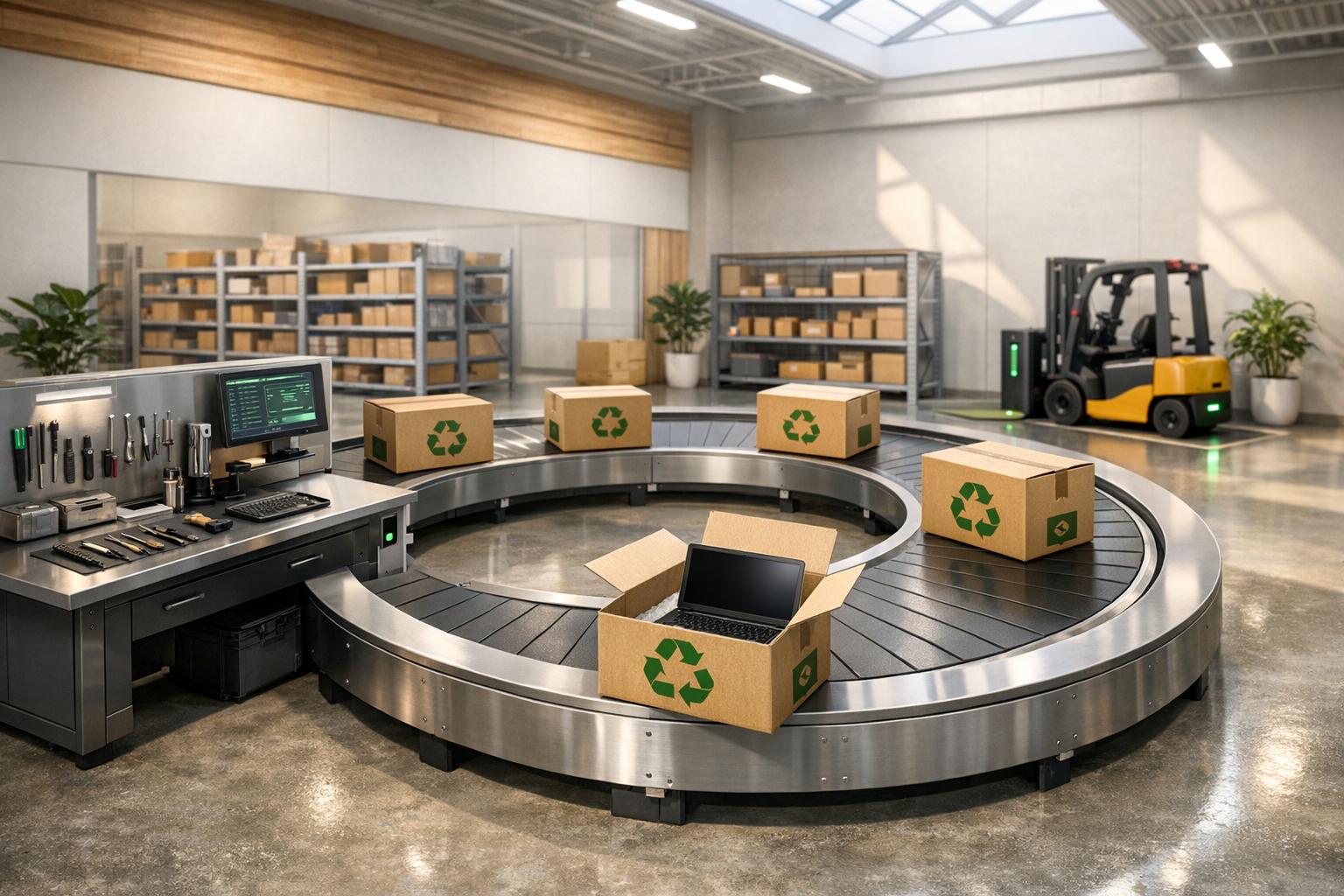
Refurbishing returned products isn’t just about reducing waste; it’s a smart way to recover up to 90% of a product’s value. By integrating reverse logistics with eco-friendly practices, businesses can cut costs, lower emissions, and improve customer loyalty. Here’s how:
- Efficient Returns Management: Green logistics partners optimize routes, consolidate shipments, and reduce transportation emissions by up to 30%.
- Customer Impact: 92% of shoppers prefer retailers with easy returns, and knowing returned items are refurbished builds trust.
- Sustainability Gains: Refurbishing products can reduce CO₂ emissions by as much as 70%, while recycling programs can halve landfill waste.
- Cost Savings: Companies save up to 15% on logistics expenses and recover valuable materials like metals and plastics.
Partnering with specialized logistics providers like JIT Transportation ensures faster inspections, centralized hubs, and scalable solutions - maximizing recovery while minimizing environmental impact. This approach transforms returns from a cost burden into a profitable, eco-conscious opportunity.
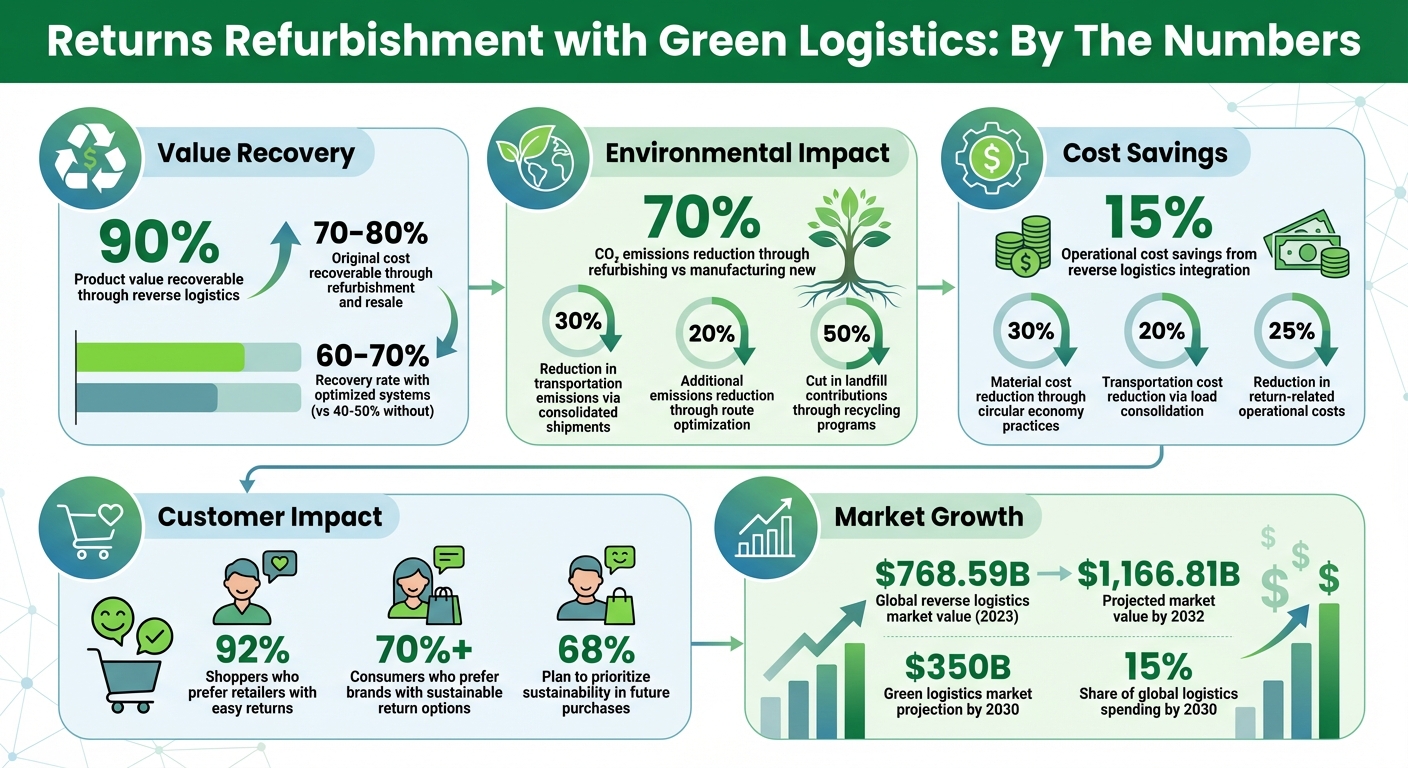
Green Logistics Returns Refurbishment: Key Statistics and Benefits
Returns at a Crossroads: The State of Reverse Logistics & Circularity
sbb-itb-eafa320
How Green Logistics Supports Returns Management
Green logistics takes the principles of the circular economy and applies them to returns management, turning what could be waste into opportunities for reuse and recovery.
Sustainability in Reverse Logistics
Returns can be more than just a logistical headache - they can become environmental assets. By channeling returned products through a well-organized reverse logistics system, companies can avoid sending them to landfills. Instead, these items can re-enter the supply chain as refurbished goods, spare parts, or even raw materials. This process aligns with the circular economy, where the goal is to keep products and materials in use for as long as possible.
The environmental benefits are clear. For instance, consolidating transportation for returns can reduce mileage and emissions by up to 30%. Optimizing return routes adds another 20% reduction in transportation emissions. Companies that implement recycling and reuse programs within this system can cut landfill contributions by as much as 50%. As Transport Works aptly states, reverse logistics is "the backbone of [the circular economy] model, ensuring that products and materials are returned to the supply chain rather than discarded".
Another advantage of green reverse logistics is resource recovery. Take electronics, for example: returned devices can be disassembled to extract valuable metals and plastics, reducing the need for virgin materials. This process can lower material costs by 30%. Considering that about 8.8% of global e-commerce orders are returned annually, the potential for resource recovery is enormous. Quick inspection and sorting upon return are key to ensuring products are refurbished or harvested for parts instead of being wasted.
From here, green logistics strategies refine these efforts even further.
Green Practices for Returns Refurbishment
To minimize the environmental impact of returns and maximize their recovery value, logistics providers use several targeted strategies.
- Consolidated shipments: Combining multiple returns into a single load improves vehicle efficiency and cuts fuel consumption.
- Localized return hubs and lockers: These reduce the need for individual home pickups, which are among the most carbon-heavy aspects of reverse logistics.
- Eco-friendly carriers: Partnering with carriers that use electric vehicles or carbon-offset programs significantly lowers emissions.
- Data-driven route optimization: Identifying the most efficient paths for return shipments reduces unnecessary travel and emissions.
These strategies aren’t just good for the planet - they make financial sense too. Companies that integrate reverse logistics into their sustainability efforts can achieve operational cost savings of up to 15%.
| Strategy | Sustainability Gain | Economic Benefit |
|---|---|---|
| Consolidated Transport | Cuts emissions by up to 30% | Reduces fuel and logistics costs |
| Immediate Inspection & Sorting | Prevents landfill overuse | Faster restocking and resale |
| Lockers/Drop-off Points | Reduces transit mileage | Improves customer convenience |
| Route Optimization | Reduces emissions by up to 20% | Lowers transportation expenses |
Quick inspections ensure that returned items are either resold, repaired, or dismantled for parts, making the most of their value while keeping waste to a minimum.
These strategies create a strong foundation for specialized providers like JIT Transportation to push sustainable refurbishment even further.
JIT Transportation's Green Solutions
JIT Transportation stands out in sustainable returns management with its focus on rapid inspection and value recovery through its specialized RMA services. Their testing and revision upgrades allow returned products to be assessed, repaired, and upgraded to resale standards. This extends product lifecycles and minimizes waste.
The company’s nationwide network of strategic warehouse locations supports efficient consolidation of return shipments, cutting down on transportation distances and emissions. Additionally, their ERP integration gives businesses real-time visibility into return flows, enabling them to track environmental metrics like waste reduction and refurbished product volumes. This transparency not only supports sustainability reporting but also demonstrates a commitment to environmentally responsible practices to customers and investors.
JIT Transportation also offers value-added services such as kitting, assembly, and repackaging, which prepare refurbished products for resale without extra handling or transportation. Their scalable 3PL solutions handle varying return volumes, ensuring consistent sustainability efforts even during peak periods. By incorporating pool distribution and consolidations, they enhance vehicle utilization and shrink the carbon footprint of the returns-to-refurbishment process.
Strategies for Returns Refurbishment
Managing returns refurbishment effectively is key to recovering value and contributing to circular economy initiatives. The best strategies integrate advanced sorting technologies, efficient transportation planning, and strong partnerships with specialized logistics providers.
Inspection and Sorting for Refurbishment
Using advanced technology, returns can be sorted automatically for refurbishment, resale, or recycling, ensuring no time is wasted and inventory retains its value. This immediate sorting process is crucial for keeping operations smooth.
Specialized companies like Arrive Recommerce and ReCircled follow strict inspection protocols to maintain consistency across thousands of items. These standardized methods significantly improve recovery rates. For instance, optimized reverse logistics systems can recover 60–70% of returns, compared to only 40–50% in less efficient setups.
A dedicated reverse logistics team is essential for tracking workflows and making quick refurbishment decisions. This approach not only speeds up the process but also has environmental benefits - refurbishing products can cut CO₂ emissions by as much as 70% compared to manufacturing new items.
Once sorting is streamlined, efficient transportation becomes the next critical step in the refurbishment process.
Transportation Optimization for Returns
Efficiently moving returned items to refurbishment facilities requires rethinking traditional transportation methods. Consolidating loads can reduce transportation costs by up to 20% while also cutting down on unnecessary trips. This strategy also addresses the issue of "empty backhauls", where vehicles return empty, adding avoidable emissions.
Multi-carrier setups allow for selecting the most direct and eco-friendly routes, reducing excess mileage. Additionally, local return hubs and "Return Bars" help shorten long-haul trips, minimizing the carbon footprint of the initial return journey. Data-driven tools further enhance efficiency by identifying high-emission routes and bottlenecks, enabling continuous improvements.
Since 92% of consumers are more likely to make repeat purchases when the returns process is seamless, optimizing transportation not only supports sustainability but also strengthens customer loyalty. Efficient logistics set the stage for successful collaboration with specialized partners.
Working with Logistics Partners
The complexity of refurbishing returned products often requires the expertise of specialized third-party logistics (3PL) providers. These partners bring significant advantages, such as faster processing, compliance with e-waste regulations, and streamlined repackaging.
Centralized dashboards and integrated warehouse management systems (WMS) offer real-time visibility into inventory, transportation schedules, and product status. This transparency allows businesses to track metrics like waste reduction and refurbished product volumes, enhancing sustainability efforts.
JIT Transportation demonstrates the benefits of collaboration by offering testing, repair, and upgrade services within the same facility that handles distribution. This approach eliminates unnecessary transportation steps, speeding up the process and reducing handling costs. Their scalable infrastructure also accommodates fluctuations in return volumes during peak seasons.
Strategic partnerships extend recovery options. By working with repair departments, certified electronics recyclers, and liquidation companies, businesses can maximize the value of returned items. Even products that can’t be resold directly can contribute to the circular economy through parts recovery or material recycling, turning returns into assets instead of waste.
Benefits and Challenges of Green Logistics in Refurbishment
Environmental and Economic Benefits
Green logistics offers clear advantages for both the environment and business operations. By incorporating reverse logistics into sustainability plans, companies can cut operational costs by as much as 15%. Similarly, adopting circular economy practices can slash material costs by up to 30%. Considering that logistics contributes 11% of global greenhouse gas emissions, optimizing return routes alone can reduce transportation emissions by up to 20%.
The financial gains are just as impressive. For example, Xerox generates over $1 billion annually from remanufactured printers and parts, while Dell's Asset Recovery Services has recovered more than 2.6 billion pounds of electronics since 2007. Recycling and reuse initiatives can also halve landfill contributions, helping companies sidestep hefty EU regulatory fines that can reach €10 million or 5% of annual revenue.
Consumer behavior further amplifies the importance of green logistics. Over 70% of consumers prefer brands with sustainable return options, and 68% plan to prioritize sustainability in future purchases. The market for green logistics is projected to hit $350 billion by 2030, accounting for 15% of global logistics spending. Despite these promising outcomes, operational challenges can complicate efforts to fully capitalize on these benefits.
Operational Challenges
Handling returns costs retailers an average of 4.4% of their total revenue, with manual processing driving up labor and storage expenses. Additionally, the initial investment in electric fleets and green technologies can be daunting. Coordinating activities across multiple suppliers and partners adds another layer of complexity to the supply chain.
Limited visibility exacerbates these challenges. Without real-time tracking, companies face difficulties in forecasting return volumes, leading to inefficient staffing and delayed cash recovery. Inventory shrinkage is another concern - parts removed during repairs can disappear into unauthorized resale channels if traceability systems are inadequate. Traditional bulk liquidation often recovers only 10–20% of a product's original value, whereas structured refurbishment can recover 50% or more. This gap highlights the need for advanced sorting and assessment processes.
Compliance with regulations adds to the complexity. Improper disposal of electronics or hazardous materials, such as batteries, can result in EPA fines and legal liabilities. As Ana Eislyn Cabrera Garcia, Varsha Gurumuthy, and Dr. Sreedevi Rajagopalan from MIT/SCMR emphasize:
"Reverse logistics is no longer an afterthought. It is a space for innovation. Let's start treating it that way".
To address these hurdles, companies are turning to automation, activity-based costing, and serial scanning for better tracking and efficiency. Performance studies further illustrate how these strategies can mitigate operational challenges.
Research Data on Performance
Real-world examples highlight the effectiveness of green refurbishment strategies. Green Wave Electronics, for instance, introduced a traceable reverse logistics program in 2018 for a multi-state system integrator. Using a tablet-based serial scanning app for field technicians, the company reduced new part usage by nearly 10% within the first full quarter. Over 75% of used parts were tested, repaired, refurbished, and redeployed, with half of the remainder applied as warranty credits.
Research also shows that decentralized supply chains, which rely on third-party refurbishers, can outperform integrated systems by increasing refurbishment rates and cutting scrap costs. The global reverse logistics market, valued at $768.59 billion in 2023, is expected to grow to $1,166.81 billion by 2032, underscoring its strategic importance.
Specific technologies are driving measurable improvements. For example, motion-activated LED lighting in warehouses can lower energy use by up to 75% compared to traditional systems. Electric trucks can reduce logistics costs by up to 33.3% while cutting carbon emissions by nearly 56%. Digital return management systems save between $5 and $10 per returned unit, and consolidating returns into regional sorting hubs can cut cycle times by as much as 25%. These figures demonstrate how investments in green logistics can lead to both operational efficiencies and environmental gains, while also laying out the challenges that need to be addressed for optimal results.
Conclusion
Green logistics has evolved from being a luxury to an absolute must-have for businesses managing product returns. Studies show that companies can recover 70% to 80% of a product's original cost through refurbishment and resale, all while slashing return-related operational costs by up to 25%. With the global reverse logistics market valued at $768.59 billion in 2023, the financial benefits are undeniable.
But it’s not just about the numbers. Refurbishing products has a much smaller carbon footprint compared to manufacturing new ones. Consolidated transportation strategies further reduce emissions, reinforcing the environmental case for reverse logistics. As the Reverse Logistics Association highlights, "Companies can recover up to 90% of a product's value through reverse logistics", turning what was once a loss into a profitable opportunity.
JIT Transportation plays a crucial role in enabling these gains. With 14 strategically placed warehouses across the United States and over 2.5 million square feet of warehouse space, they provide the backbone for managing reverse logistics on a large scale. Their specialized services - like testing, kitting, assembly, and white glove handling - help businesses quickly refurbish and resell returned goods.
Operationally, their network of more than 500 carriers and a fleet of over 200 trucks ensures efficient routing to cut down travel distances and emissions. By integrating with major eCommerce platforms, they automate returns management, scaling sustainability without increasing costs. Key logistics hubs in cities like Los Angeles, Memphis, and Houston provide nationwide coverage while minimizing transportation distances and environmental impact.
For U.S. businesses aiming to adopt sustainable return practices, the solution is straightforward: work with providers offering end-to-end refurbishment services. This approach eliminates the need for multiple vendors, speeds up the refurbishment process, and ensures returned goods are inspected and ready for resale as soon as they arrive. Such strategies not only maximize financial returns but also support a circular economy. With 92% of consumers favoring retailers that make returns easy, adopting green logistics isn’t just an ethical choice - it’s a smart business move in today’s competitive landscape.
FAQs
Which returned items should be refurbished vs. recycled?
Items that are in near-perfect condition or have only minor flaws are excellent candidates for refurbishment and resale. On the other hand, products that are heavily damaged, excessively worn, or outdated should be recycled to responsibly recover materials. This approach helps reduce waste while extracting the most value from returned items.
What data should I track to prove emissions and cost savings from returns?
Tracking key metrics like return processing time, associated costs, resale percentages, and real-time emissions data (such as the carbon footprint per shipment) can make a big difference. These insights not only highlight potential cost savings but also showcase the environmental advantages of handling returns more effectively.
How fast can JIT Transportation inspect and route returns for resale?
JIT Transportation processes and routes returns for resale in just 1 to 2 days. Leveraging advanced technology and a broad nationwide network, they simplify reverse logistics to handle and redistribute returned items efficiently.
Related Blog Posts
Related Articles
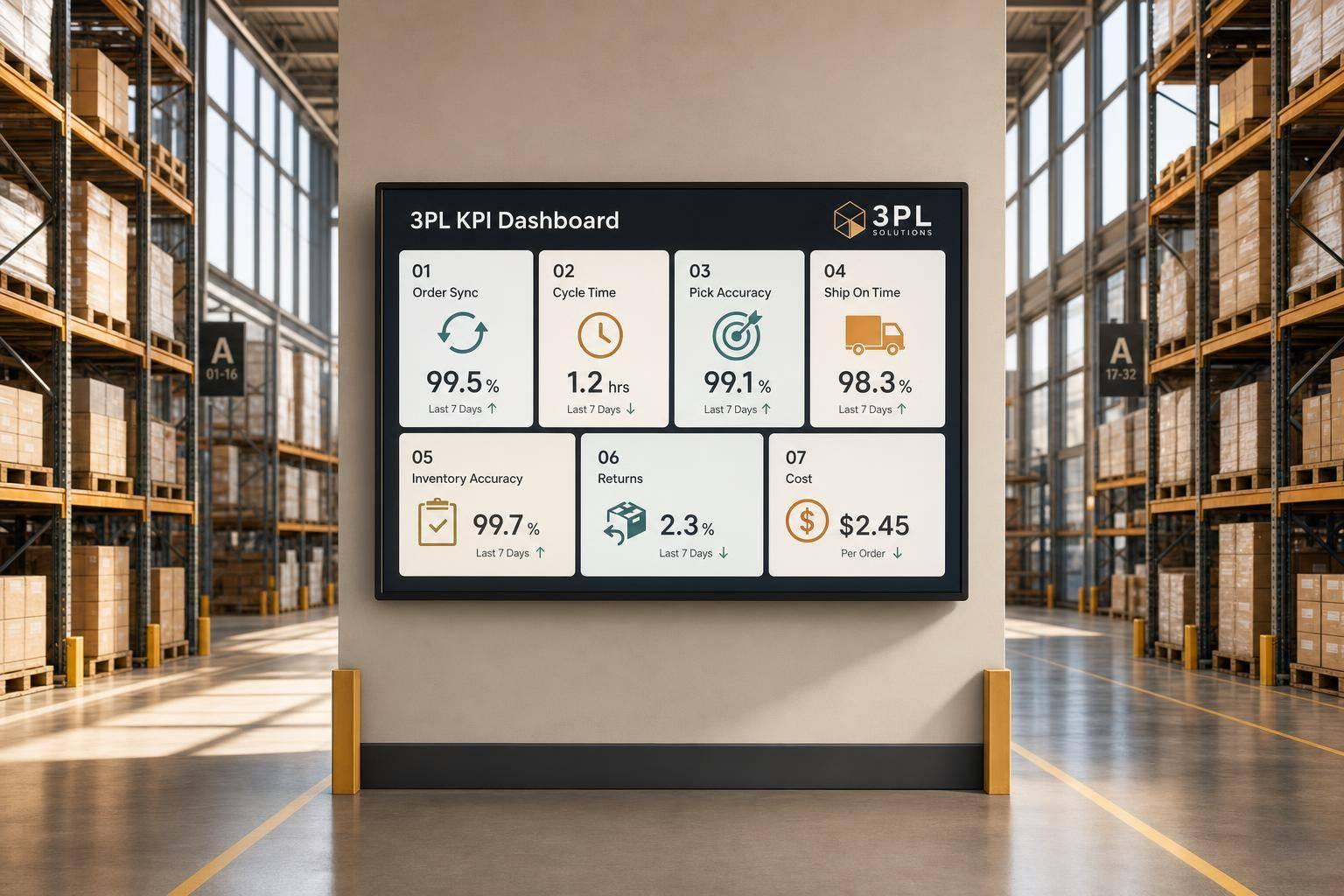
7 WooCommerce 3PL KPIs Teams Track

Centralized vs Decentralized Replenishment
