
Secure Warehousing for High-Value Goods in Los Angeles

Los Angeles is a key hub for global logistics, but storing high-value goods here comes with serious risks like cargo theft, cyber threats, and environmental challenges. Warehouses must adopt advanced security measures to protect items like electronics, pharmaceuticals, and luxury goods. Here's how secure warehousing addresses these challenges:
- High-Risk Items: Consumer electronics, aerospace components, and rare collectibles require specialized storage and handling.
- Threats in LA: Sophisticated theft methods, including GPS spoofing and drone surveillance, are on the rise.
- Security Measures: AI-driven surveillance, biometric access controls, and real-time tracking are essential.
- Regulations: Compliance with California laws (e.g., AB 701, Cal/OSHA) ensures safety and legal protection.
- 3PL Solutions: Specialized providers offer secure storage, climate control, and insured transport.
For businesses managing high-value inventory, partnering with a secure 3PL provider ensures protection at every stage of the supply chain.
Security Risks and Compliance Requirements in Los Angeles
Cargo Theft in Southern California
Navigating security risks and compliance requirements is essential for effective warehousing in Los Angeles. Southern California’s dense freight activity makes it particularly vulnerable to cargo theft. As Crossdock Insights aptly notes:
"Southern California has long been one of the most cargo-theft-exposed regions in the United States, largely because it concentrates too much freight in too small a geographic footprint."
In 2025 alone, the Los Angeles–Inland Empire corridor reported between 200 and 300 cargo theft incidents. Thieves have moved beyond smash-and-grab methods, adopting more advanced tactics like using stolen carrier credentials and orchestrating full-load diversions. Adding to the complexity, small drones are now being used to identify security blind spots. These evolving strategies highlight the importance of meeting stringent regulatory standards to mitigate risks.
Regulatory and Compliance Standards to Know
Warehouses in Los Angeles face a complex web of regulations that go far beyond basic safety codes. Some of the most critical standards include:
- Cal/OSHA Title 8, Section 3203 (IIPP): Requires employers to maintain a written Injury and Illness Prevention Program (IIPP); applies to all California employers
- Cal/OSHA Heat Illness Prevention: Mandates access to water, rest, and shade at 82°F, and requires engineering controls such as air conditioning at 87°F; applies to indoor warehouse operations
- Assembly Bill 701 (AB 701): Restricts production quotas that interfere with employee breaks or workplace safety requirements; applies to warehouses with 100+ employees at a single site or 1,000+ employees statewide in California
- Assembly Bill 98 (AB 98): Establishes location restrictions and sustainability requirements for large warehouse developments; beginning January 1, 2026, new facilities of 250,000 square feet or more must maintain a 900-foot buffer from schools, hospitals, and residential areas
- C-TPAT / TAPA: Covers federal and industry supply chain security standards; applies to businesses handling imported or high-value goods
- California Commercial Code 7210: Governs warehouse liens and legal documentation requirements for stored goods; applies to all warehouse operators and requires warehouse receipts to include serial numbers and accurate business names to preserve lien rights
Common Internal Security Gaps
Security challenges don’t just come from outside threats - internal vulnerabilities can be equally damaging. Some of the most common internal issues include over-reliance on badge or PIN systems that are easy to share, as well as inadequate behavioral monitoring.
Inventory management is another weak spot. Without real-time geo-fencing for high-value assets, unauthorized movements inside the warehouse may go unnoticed until discrepancies are found during a physical inventory count. Malicious insiders can exploit these gaps by tampering with IoT devices or introducing vulnerabilities into Warehouse Management Systems to execute thefts that leave little evidence behind.
Environmental risks add yet another layer of complexity. Warehouses in Los Angeles and Orange County must prepare for seismic activity, ensuring racking systems are securely anchored to prevent collapse during earthquakes. Additionally, wildfire disruptions, often exacerbated by Santa Ana winds, can hinder facility access and compromise security operations. These region-specific risks demand careful planning and proactive measures in every security strategy.
sbb-itb-eafa320
Core Security Measures for High-Value Warehousing
Perimeter and Building Security
Securing a warehouse starts at the property boundary. This means installing sturdy fencing, reinforced entry points, controlled access gates, and securing windows - all customized to match the facility's layout and the type of inventory stored. A one-size-fits-all approach doesn’t cut it here. A detailed on-site risk assessment is key to building a security plan that truly works. Once physical barriers are in place, advanced surveillance systems step in to provide an additional layer of protection.
Surveillance and Monitoring Systems
Modern surveillance has evolved far beyond simple cameras. AI-powered video analytics now play a major role in detecting theft and safety breaches automatically. Cutting-edge systems combine multiple sensors - thermal cameras, radar, and acoustic sensors - with traditional CCTV to minimize false alarms. With AI-driven sensor fusion, these systems can differentiate between harmless environmental noise and actual threats with over 99% accuracy. In Los Angeles, some large warehouses are even using autonomous drones to patrol rooftops and storage yards, tackling blind spots that ground-based systems might miss.
"The future of warehouse security is predictive, intelligent, and unified." - Secure Guard Security Services
Round-the-clock remote monitoring ties everything together. Live footage not only discourages theft but also provides a documented record for investigations and insurance claims when incidents occur.
Workforce Controls and Incident Protocols
Technology alone isn’t enough - human vigilance plays a critical role in comprehensive security. Effective workforce controls are essential, starting with strict background checks and limiting employees’ access to only the areas they need. To go a step further, many warehouses are moving away from traditional badge systems and adopting biometric authentication. Tools like palm vein scanners, facial recognition with liveness detection, and gait analysis are making it harder for bad actors to exploit credentials while also flagging unusual behavior.
Unified command platforms are also becoming standard. These systems combine video feeds, access logs, and building controls into one dashboard, allowing security teams to act quickly - whether locking down the facility or coordinating an emergency response.
"The presence of security officers also serves as a deterrent to potential criminals. When would-be thieves see a strong security presence, they are more likely to think twice about attempting to breach security measures." - MPS Security and Protection
To prepare for sophisticated threats, warehouses are increasingly running drills that simulate scenarios like a physical breach during a cyberattack. These exercises ensure teams can respond efficiently, even if technology is compromised.
Technology for Inventory Control and Visibility
Technology has become a cornerstone for managing inventory and safeguarding it from both physical and digital threats. It ensures precise control, enhances visibility, and fortifies cybersecurity measures.
Warehouse Management Systems (WMS)
A Warehouse Management System (WMS) does much more than simply track stock levels. For facilities handling high-value goods, modern WMS platforms integrate with AI-driven video analytics to provide real-time object recognition. This allows the system to instantly detect if a pallet is moved or missing from its designated spot.
When paired with RFID 2.0 and Bluetooth Low Energy (BLE) tags, tracking becomes even more precise. These technologies offer real-time location updates and can send alerts if an item leaves a geo-fenced area or is accessed during restricted hours. This level of detail is critical, especially when the average theft incident results in losses of $214,104.
Digital Access Controls and Cybersecurity
Securing access isn’t just about physical barriers; it extends to every connected device within the warehouse. From forklifts to automated systems, each device poses a potential cybersecurity risk. A Zero-Trust architecture mitigates this by assigning secure digital identities to every user and device. This system requires continuous verification for every session, moving beyond the vulnerabilities of one-time logins.
To further enhance security, digital access controls can integrate with HR systems. This ensures that an employee’s access is automatically revoked if their role changes or they leave the company, eliminating the need for manual updates. Additionally, regular vulnerability scans of networked devices - like cameras and access readers - are essential, as these are increasingly targeted by cybercriminals. By 2026, many insurers are expected to mandate specific cybersecurity measures for warehouses storing high-value goods.
"If you think technology can solve your security problems, then you don't understand the problems, and you don't understand the technology." - Bruce Schneier
Strong audit trails complement these defenses, ensuring every inventory interaction is recorded and traceable.
Chain of Custody and Audit Trails
Tracking inventory location is only part of the equation. To truly secure goods, it’s essential to know who handled them, when, and why. This is where blockchain-integrated digital seals shine, creating an unalterable record of every handoff and condition check from receipt to shipment.
Automation further enhances this process. Smart contracts can flag discrepancies automatically, halting operations until issues are resolved - no manual review required. This is particularly effective against strategic cargo theft, a tactic involving fraudulent credentials that saw a 600% increase between 2021 and 2022.
"Blockchain-based digital seals on containers provide an immutable record of custody from origin to destination." - Secure Guard Security Services
3PL Solutions Built for High-Value Goods in Los Angeles

3PL Insurance Coverage Types for High-Value Goods in Los Angeles
When it comes to high-value goods, having a Warehouse Management System (WMS) and digital access controls is only part of the equation. The way your items are physically handled, transported, and protected under contract is just as critical. In Los Angeles, specialized 3PL providers cater specifically to these needs, offering a comprehensive approach that combines meticulous handling, secure transit, and robust contractual safeguards.
Specialized Handling and Storage Procedures
Handling high-value goods isn’t business as usual for these 3PL providers. For instance, inbound shipments are photographed upon arrival to document their condition, which helps resolve any potential damage claims later. These measures, paired with advanced surveillance systems and digital access controls, create a strong layer of protection. Items are then stored in segregated areas, accessible only through tiered key-card systems and mandatory escorts.
For delicate items such as fine art, electronics, or collectibles, the facilities maintain museum-quality climate control, adhering to the preservation standard of 70°F and 50% relative humidity. On the outbound side, tamper-evident security tape and unbranded outer packaging are used to deter theft during delivery.
"When we needed to store our entire antiquities collection during a three-year building expansion, VIP Transport was the only facility that met our museum-grade requirements." - Dr. Marcus Whitfield, Director of Collections, Graceland Archives
Secure Transportation and White Glove Services
Once storage is secured, the focus shifts to transportation. Moving high-value goods across Los Angeles - whether to Beverly Hills, Santa Monica, or the bustling port areas - requires more than just a delivery van. Trusted providers rely on climate-controlled vehicles and two-person handling teams to maintain the integrity of shipments and ensure an unbroken chain of custody.
For items valued at $500 or more, carriers like FedEx and UPS automatically enforce signature requirements. For higher-value shipments exceeding $2,000, FedEx Express is recommended, as FedEx Ground has a lower declared value cap. Additionally, choosing 3PL providers located near Los Angeles and Long Beach ports can significantly reduce dwell times, which is crucial for high-value goods.
Insurance and Service-Level Agreements
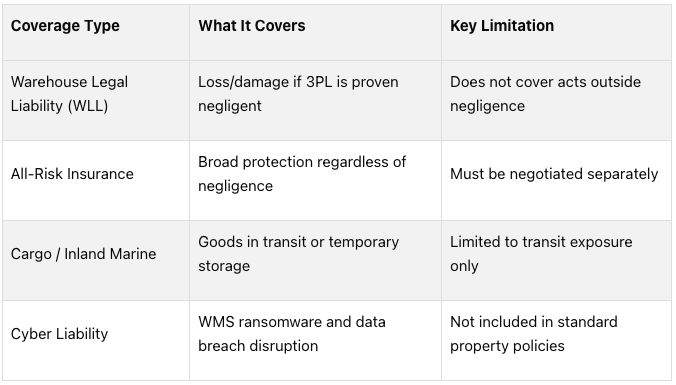
Insurance is often an overlooked aspect of working with 3PL providers. Standard 3PL contracts typically limit liability to $0.50 per pound, which is far below the actual value of items like electronics, jewelry, or artwork. This limitation exists because warehouse legal liability (WLL) coverage only compensates if the provider is proven negligent.
"Warehouse legal liability coverage does not cover products in storage. It only provides coverage for the 3PL if they were found to be negligent in the handling or storing of their product." - Flex Logistics
To ensure adequate protection for high-value inventory, businesses should take proactive steps:
- Request a Certificate of Insurance (COI) to confirm coverage limits.
- Negotiate full-value coverage in the Service-Level Agreement (SLA) instead of default weight-based limits.
- Clearly define when the 3PL assumes legal responsibility for your goods.
- Specify any special handling needs - like climate control or restricted access - in the contract.
Revisiting insurance coverage quarterly is a smart practice, especially when introducing new high-value products or preparing for peak seasons.
 Conclusion: Protecting High-Value Goods with the Right Warehousing Partner
Securing high-value goods in Los Angeles calls for a multi-layered approach. This includes robust physical controls, advanced digital systems, strict personnel protocols, and solid contractual agreements to mitigate both financial and reputational risks.
Key Security Recommendations
To create a secure environment, consider measures like controlled access to the facility's perimeter, designated storage zones for high-value items, and detailed condition reporting. Pair these with a dependable Warehouse Management System (WMS) that offers real-time inventory tracking, zero-trust access protocols, and regular audits that address both cyber and physical security.
"A reactive security model is a recipe for financial disaster. The 2026 standard is a predictive, intelligence-driven, and unified strategy." - Secure Guard Security Services
These foundational steps provide the groundwork for specialized third-party logistics (3PL) providers to deliver comprehensive supply chain protection. By integrating these strategies, 3PL services ensure security measures are not just theoretical but operationally effective.
How 3PL Providers Support End-to-End Security
Specialized 3PL providers, like JIT Transportation, combine infrastructure, expertise, and adaptability to meet the specific needs of high-value goods. Services such as white glove handling, climate-controlled storage, ERP system integration, and vendor-managed inventory are seamlessly managed under a single partnership. This ensures security is maintained at every stage of the supply chain.
Strategically located warehouses near the Port of Los Angeles and LAX play a critical role in reducing transit risks. By minimizing the time goods spend in vulnerable transition phases, these locations help protect shipments from potential threats.
This cohesive approach aligns with the advanced strategies outlined earlier, ensuring every link in the supply chain is secure. Beyond safeguarding storage, the focus extends to maintaining a documented chain of custody from origin to destination. With a partner capable of adapting to new challenges and threats, businesses can confidently protect their high-value goods.
FAQs
What security features should a high-value LA warehouse have?
A top-tier warehouse in Los Angeles needs to prioritize security, especially when dealing with sensitive or high-value inventory. Key features should include biometric or electronic access controls to manage who enters the facility and high-definition CCTV systems with real-time monitoring for constant oversight. Employing trained security personnel adds another layer of protection.
To go further, incorporating RFID or IoT-based inventory tracking ensures precise monitoring of goods, while secure perimeter fencing, alarm systems, and adequate lighting help deter unauthorized access. For cutting-edge protection, AI-driven threat detection systems can identify potential risks in real time, providing a robust defense against theft or damage.
How do I verify a 3PL’s insurance really covers full item value?
When working with a 3PL (third-party logistics provider), it’s crucial to request proof of their insurance and carefully review the policy terms. Start by asking for a certificate of insurance (COI) that clearly outlines the coverage limits. Make sure the coverage applies specifically to your inventory and matches its full value.
If your goods include high-value items, consult your insurance advisor to confirm the policy aligns with your needs. Pay close attention to ensure the coverage goes beyond basic warehouse liability, providing adequate protection for your specific situation. This step is essential to safeguard your assets and avoid unexpected risks.
Which LA regulations can impact my warehousing operations?
Warehousing operations in Los Angeles must follow specific regulations, particularly around security measures. These include employing qualified security guards and meeting strict after-hours protection standards. Local authorities enforce these rules to ensure facilities are compliant and to protect high-value goods stored on-site.
Related Blog Posts
Related Articles
7 WooCommerce 3PL KPIs Teams Track

Centralized vs Decentralized Replenishment
