
Warehousing Near Port of Los Angeles: Benefits for Importers
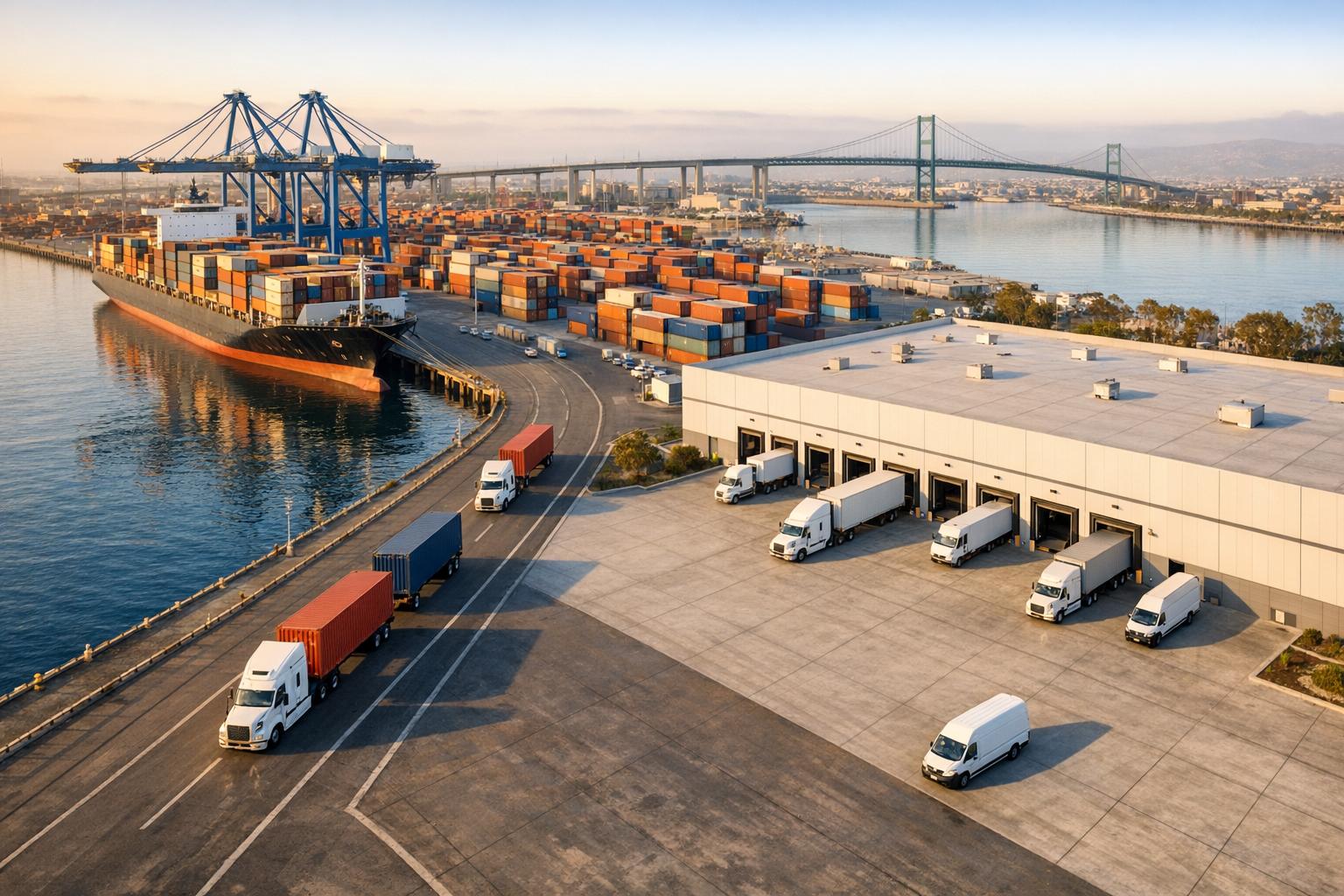
Warehousing near the Port of Los Angeles can save you time and money. Here's why:
- Lower Costs: Drayage fees drop by up to 50% when using warehouses close to the port versus inland options.
- Faster Operations: Containers can be processed the same day they clear customs, cutting delays and reducing demurrage fees.
- Improved Efficiency: Near-port facilities support transloading and cross-docking, which speed up delivery and reduce storage needs.
- Regulatory Benefits: Facilities in Foreign Trade Zones (FTZs) help defer or eliminate duty payments, saving up to 20% on certain products.
Key Challenges Addressed:
- Port Congestion: Avoid delays caused by crowded terminals and limited truck capacity.
- High Transportation Costs: Shorter drayage distances mean significant savings.
- Fragmented Logistics: Integrated services streamline customs, warehousing, and delivery.
For importers managing large shipments or e-commerce operations, near-port warehousing simplifies supply chains, reduces costs, and ensures quicker delivery to customers.
Importers rush to LA bonded warehouses amid tariff pause with China
sbb-itb-eafa320
Key Challenges Importers Face at the Port of Los Angeles

The Port of Los Angeles presents a range of operational hurdles for importers. Addressing these issues effectively is crucial to maintaining smooth supply chain operations.
Port Congestion and Long Container Dwell Times
When multiple vessels arrive at the port simultaneously, terminal operations can grind to a halt. Overcrowded yards, extended truck turnaround times, and a lack of available chassis can ripple through the entire supply chain. On top of that, labor negotiations and stricter CDL regulations in California have reduced the availability of truck drivers in recent years.
For importers, delays can quickly become costly. Once the free time for a container expires, demurrage and detention fees - ranging from $150 to $300 per container per day - can eat into profit margins. A week-long delay can have a significant financial impact.
High Drayage and Inland Transportation Costs
The cost of transporting goods from the port depends heavily on distance. For instance, moving a 40-foot container to a local hub in Los Angeles typically costs between $500 and $800. If the destination is further, such as Riverside County in the Inland Empire, costs can climb to $800–$1,200. Longer trips bring additional challenges like traffic congestion, driver hour restrictions, and chassis rental fees.
Adding to these expenses are California’s environmental regulations. Programs like the Warehouse Indirect Source Rule (WAIRE) and the Advanced Clean Fleets (ACF) initiative require operators to meet strict emissions standards or face mitigation fees of $1,000 per non-compliance point. With trucking capacity shrinking and freight rates expected to rise sharply by 2026, importers are bracing for even higher costs. These financial pressures make it harder to keep operations flexible and responsive.
Disconnected Import and Distribution Operations
A common issue for importers is the reliance on separate providers for customs clearance, drayage, and warehousing. This fragmented approach often leads to communication breakdowns, slower handoffs, and delays in moving goods from the port to store shelves. Idle containers and bottlenecks in the process disrupt the flow of goods, undermining supply chain efficiency.
"Storing goods in 3PL warehouses near Los Angeles creates more flexibility and adaptability in your logistics strategy." - Devin Cummins, Vice President, Cummins Logistics
Setting up an in-house operation to avoid these inefficiencies is often not feasible. Real estate costs in Los Angeles County are steep, with warehouse space typically priced at over $300 per square foot to purchase. This high upfront cost forces many importers to rely on fragmented solutions, which can lead to further delays and inefficiencies. Streamlining these processes is key to improving the overall flow from port to distribution centers.
Benefits of Warehousing Near the Port of Los Angeles

Near-Port vs. Inland Warehousing: Cost & Speed Comparison for LA Importers
The hurdles of demurrage fees, rising drayage costs, and fragmented operations share a common solution: warehousing close to the container drop zone. Facilities near the port address these challenges in ways that inland alternatives simply can't.
Lower Transportation Costs and Faster Container Turns
Warehousing near the port significantly reduces transportation costs and speeds up container handling, offering clear advantages.
Drayage expenses highlight the savings. Moving a 40-foot container to a near-port hub costs between $500–$800, while hauling the same container to Riverside County can cost $800–$1,200. That’s up to $400 saved per container - a major difference when dealing with high volumes.
Quick-turnaround operations are another benefit. Drivers can drop off a container and pick up an empty one for return to the terminal, avoiding the lengthy queues often seen at inland hubs. This approach cuts trucker wait times by up to 30% and reduces demurrage fees, directly protecting profit margins.
For importers managing large shipments, transloading - moving cargo from ocean containers into domestic trailers or rail - offers additional savings. Consolidating shipments into full truckloads at near-port facilities can lower per-unit freight costs by up to 20%. Plus, on-dock rail access at major terminals can reduce inland transit times by as much as 30% compared to relying on trucks alone.
Faster, More Efficient Supply Chain Operations
Being close to the port speeds up the entire supply chain. A warehouse just 15 miles from the port - like those in Paramount, CA - can start processing a container the same day it clears customs. Inland facilities, often 60 miles or more away, simply can't match that.
Cross-docking is especially useful for fast-moving products. Instead of sitting in storage, goods flow directly from arriving containers to outbound delivery trucks. This minimizes order cycle times and reduces storage costs. For e-commerce businesses, this efficiency translates directly into quicker fulfillment and happier customers.
Access to Compliance and Value-Added Services
Near-port warehouses provide more than just speed and cost savings - they also offer compliance and specialized services.
Facilities within Foreign Trade Zone #202 (Los Angeles) or FTZ #50 (Long Beach) - which handled over $1 trillion in merchandise in 2022 - let importers defer duty payments until goods enter U.S. commerce. For products that are re-exported, duties can be avoided entirely, potentially lowering landed costs by up to 20% depending on the product.
Bonded warehouses near the port add another layer of flexibility. They allow duty-free storage for imported goods for up to five years, giving businesses the option to time duty payments strategically.
"Managers of warehouses located near the Ports of Los Angeles and Long Beach have a deep understanding of port operations, local roadways, and sources of delays." - Devin Cummins, Vice President, Cummins Logistics
Additionally, near-port 3PLs are better equipped to handle California’s strict environmental regulations. Facilities compliant with the WAIRE program (Rule 2305) and the Advanced Clean Fleets (ACF) initiative help importers avoid costly mitigation fees of $1,000 per non-compliance point. This ensures businesses stay on the right side of local rules while avoiding unnecessary penalties.
These advantages create a strong case for using near-port 3PL solutions to streamline operations and reduce costs.
JIT Transportation's Near-Port 3PL Solutions
Unlocking the benefits of near-port warehousing takes more than just location - it requires precise execution. JIT Transportation turns the advantages of near-port operations into a fully integrated logistics solution. Here's a closer look at the key components of their approach.
End-to-End Warehousing and Distribution Services
JIT manages the entire supply chain, from customs clearance to final delivery. Once a container clears customs, JIT’s fleet - consisting of over 200 trucks and more than 300 trailers - moves it directly to a near-port facility. From there, transloading and cross-docking services ensure freight is transferred to domestic trailers within 24–48 hours, cutting down on expensive demurrage fees.
Their outbound distribution covers all bases, including full truckload (FTL), less-than-truckload (LTL), and white glove delivery. With a network of over 500 vetted carriers, JIT ensures nationwide coverage, providing a smooth journey from port to destination - no need to coordinate with multiple vendors.
"JIT has been a trusted logistics partner for Seagate for years, and their reliability is unmatched. Day in and day out, they prove their commitment to seamless operations, ensuring our supply chain stays on track." - Hal Shapiro, Seagate Technology
Flexible Storage and E-Commerce Fulfillment
JIT offers 2.5 million square feet of warehouse space spread across 14 U.S. locations, providing adaptable storage solutions. Businesses can choose between fixed and variable storage options, tailoring their space to match demand.
For e-commerce and omni-channel brands, JIT goes beyond storage. They handle pick-and-pack, kitting, custom packaging, and automated returns management - all within the near-port facility. By completing kitting and labeling at this stage, products can be shipped Amazon-ready or retail-ready, eliminating the need for additional downstream processing. This approach not only speeds up fulfillment but also trims vendor costs.
Real-Time Visibility and Scalable Operations
JIT’s Warehouse Management System (WMS) and Transportation Management System (TMS) provide live updates on inventory and shipments at every stage. Custom API integrations with major e-commerce platforms simplify order management.
When peak seasons hit, JIT’s variable service model and extensive network of over 500 carriers allow businesses to scale operations quickly without compromising on delivery performance. As Curtis Martin, Senior Operations Manager at Synnex, remarked:
"JIT sets the bar high in logistics. Their on-time performance, ability to handle last-minute requests, and expertise in material handling are game-changers for us."
How Importers Can Get the Most Out of Near-Port Warehousing
How to Choose the Right Near-Port Facility
When selecting a near-port facility, focus on options that enhance efficiency through strategic location, advanced technology, adaptable contracts, and deep local knowledge. Look for providers that use technology to offer real-time updates on inventory, orders, and shipments. Integrated warehouse management systems can smooth the transition from import to distribution. Flexible month-to-month contracts are another plus, allowing you to scale capacity as your business needs change.
Local expertise is equally critical. Ask about the provider’s familiarity with Port of LA terminal operations, drayage patterns, and common causes of delays. To get an honest assessment of performance, speak with current clients.
Once you’ve chosen the right facility, you can focus on designing an efficient workflow to move goods seamlessly from import to distribution.
Building an Efficient Import-to-Distribution Workflow
For e-commerce businesses, near-port facilities in Los Angeles can be a game-changer. Their proximity to the port allows for faster FBA (Fulfillment by Amazon) preparation and forwarding, cutting transportation costs and reducing delays. Since FBA preparation errors can result in costly rejection fees, it’s smart to work with a provider that follows certified processes, such as Amazon SPN certification.
"Port proximity warehousing is a strategic advantage that reduces costs (drayage, demurrage), speeds delivery, and improves supply chain resilience." - Xavier Chu, Cubework
To further streamline operations, organize inventory using ABC analysis. This method prioritizes high-turnover items by placing them closest to packing stations, which reduces processing times and keeps operations running smoothly.
Handling Seasonal Peaks and Business Growth
Once your workflow is optimized, it’s essential to prepare for seasonal demand spikes and long-term growth. Peak seasons can reveal weaknesses in your operations, but near-port facilities can help alleviate congestion and capacity issues. Secure capacity commitments early, and work with providers that offer scalable solutions to handle these fluctuations.
JIT Transportation’s flexible service model and extensive logistics network make it easier for importers to adjust operations as demand shifts, without adding fixed costs. For businesses targeting national growth, a near-port facility in the LA area offers a strategic advantage. From this single location, you can achieve 2-day ground shipping to key Western states like California, Arizona, Nevada, Oregon, and Washington. This reach supports Western U.S. distribution while delaying the need for a more complex, multi-warehouse strategy.
Conclusion: Making Near-Port Warehousing Work for Your Import Business
Warehousing near the Port of Los Angeles offers more than just convenience - it’s a strategic advantage. By cutting drayage costs by 30–50% and speeding up container pickups, businesses can sidestep costly demurrage fees. Add to that the benefits of a transloading model, which can shrink delivery timelines from over 35 days to about 5 days. For fast-growing e-commerce brands, these efficiencies lead to better cash flow, quicker inventory turnover - jumping from an average of 4 cycles per year to 12 or more - and happier customers. The full impact of these benefits is unlocked when paired with modern, scalable third-party logistics (3PL) solutions.
JIT Transportation’s near-port 3PL services are built to deliver on these promises. They offer flexible storage, streamlined e-commerce fulfillment, real-time inventory tracking, and smooth end-to-end distribution. From the moment containers are released at the terminal, JIT ensures goods move quickly and efficiently, aligning perfectly with the cost-saving and speed-enhancing strategies discussed in this article.
While location sets the stage, the right 3PL partner turns these logistical advantages into real business results. A facility’s potential is maximized when supported by cutting-edge technology, dependable capacity, and expert operations.
FAQs
How close is 'near-port' in Los Angeles?
In Los Angeles, the term 'near-port' usually describes warehouses situated just a few miles from the Port of Los Angeles and the Port of Long Beach. These two ports make up the busiest shipping hub in North America, processing more than 40% of the United States' containerized imports.
Warehouses in this area are a strategic choice for importers. Why? They help cut transportation costs and speed up delivery times, offering a clear advantage in supply chain efficiency.
When should I use transloading vs. cross-docking?
Transloading involves shifting cargo between different transportation modes - like moving goods from a ship to a truck. This method works well for handling large or intricate shipments that may need reorganizing, repackaging, or consolidating. On the other hand, cross-docking focuses on speed. It transfers pre-sorted goods directly from incoming transport to outgoing transport with minimal storage time. This approach helps cut down delivery times and holding costs.
Choose transloading for managing complex supply chains and cross-docking when you need quick redistribution of high-demand products. Both methods can streamline your supply chain, depending on your specific needs.
Do I qualify for FTZ or bonded warehousing benefits?
If your business deals with importing goods, you might be eligible for benefits through Foreign Trade Zones (FTZ) or bonded warehousing. These options allow you to defer duties, reduce tariffs, and potentially cut supply chain costs. They work by offering strategies such as delaying duty payments or lowering tariff expenses, which can streamline your operations. To figure out which option suits your business best - and to ensure compliance - it's a good idea to consult with an expert.
Related Blog Posts
Related Articles
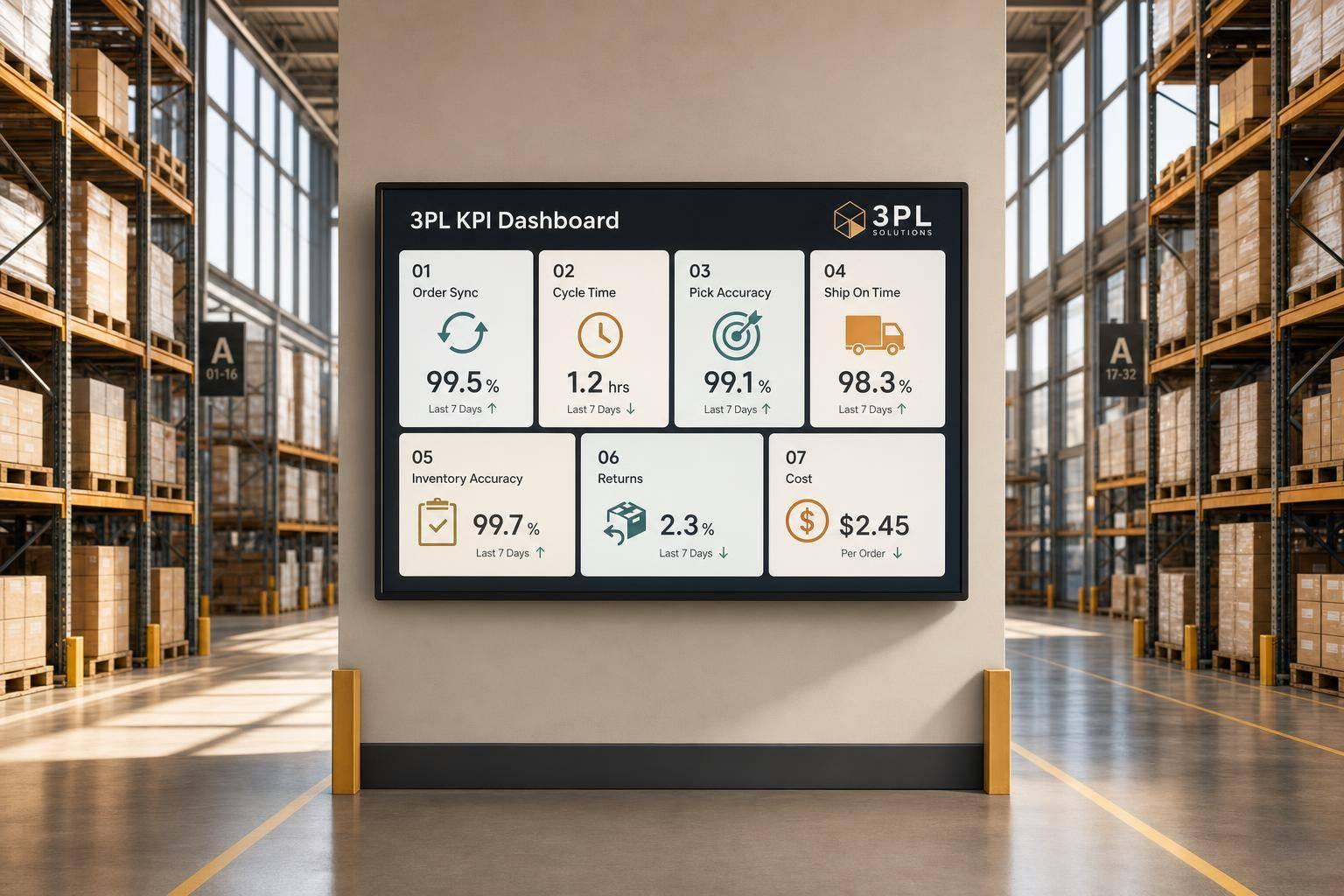
7 WooCommerce 3PL KPIs Teams Track

Centralized vs Decentralized Replenishment
