
White Glove Logistics for E-commerce Growth

White glove logistics is transforming how e-commerce brands handle deliveries, especially for high-value, bulky, or delicate items like furniture, fitness equipment, and appliances. Unlike standard shipping, this premium service offers careful handling, room-of-choice delivery, professional assembly, and debris removal - enhancing the customer experience and protecting your brand's reputation.
Here’s why it matters:
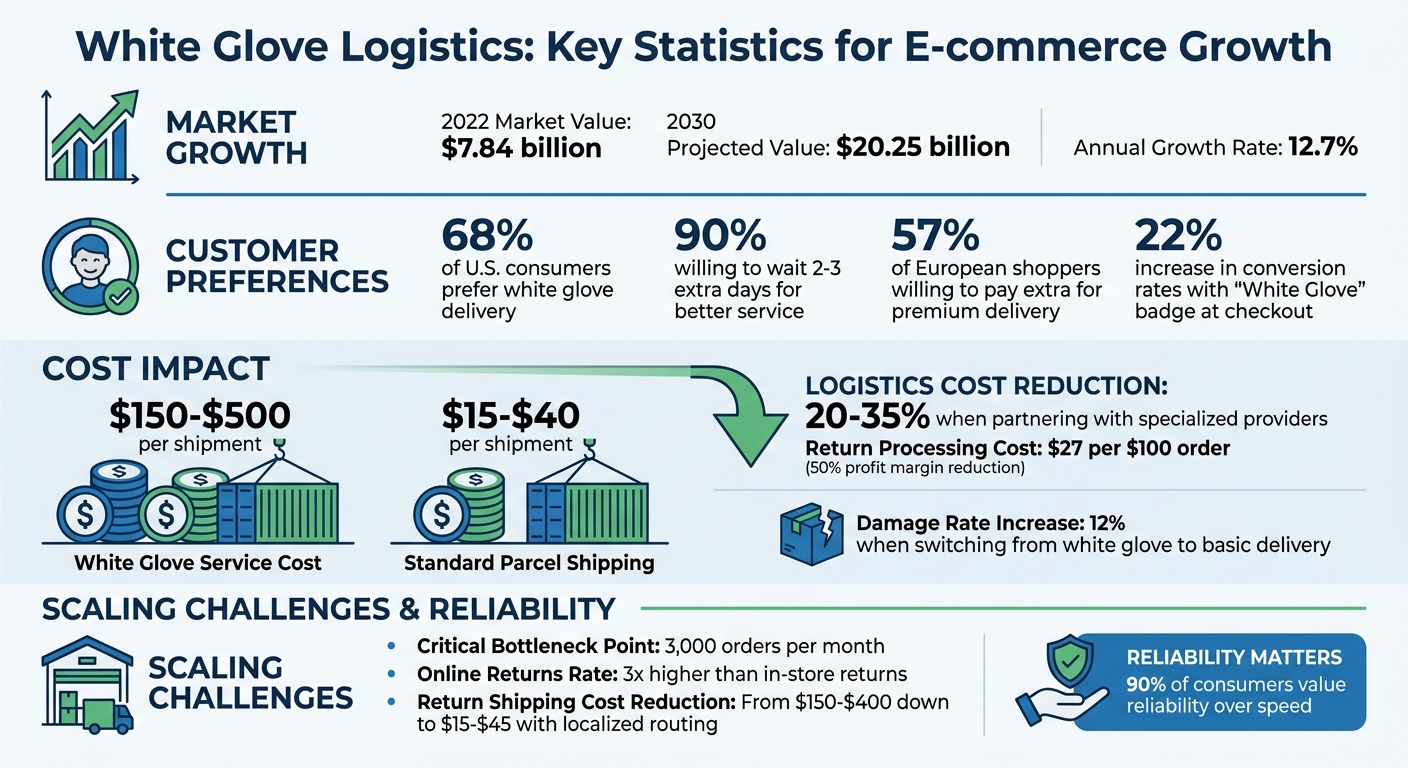
- Damage Prevention: Switching to basic delivery can increase damage claims by 12%, leading to higher return costs and lost customer trust.
- Customer Preference: 68% of U.S. consumers prefer white glove delivery, and 90% are willing to wait 2–3 extra days for better service.
- Cost Efficiency: Though white glove service costs $150–$500 per shipment, it reduces return expenses and protects profit margins.
White glove logistics isn’t just about delivery; it’s a solution for scaling e-commerce operations without compromising quality. Whether you're shipping $2,000 treadmills or delicate electronics, this service ensures products arrive safely and customers remain satisfied.
White Glove Logistics Statistics and ROI for E-commerce Brands
More Shippers Turn to White Glove & Final Mile Services Management in E-Commerce
sbb-itb-eafa320
Logistics Challenges Facing Fast-Growing E-commerce Brands
As e-commerce brands grow, their logistics systems often struggle to keep up. What once worked for a few hundred orders can quickly become a bottleneck when scaling to thousands. This shift can impact revenue, strain customer relationships, and slow down growth. Let’s take a closer look at how increasing order volumes disrupt fulfillment processes.
Order Fulfillment Bottlenecks During Growth
Many e-commerce brands hit a critical point when they reach 3,000 orders per month. At this stage, internal systems often become overwhelmed. Sudden volume spikes - like going from 100 to 10,000 orders during a major campaign - can lead to inventory mistakes, an influx of customer inquiries, and a shift in focus from strategic growth to time-consuming manual tasks.
"A fulfillment bottleneck can tank a major launch - or next raise." - JIT Transportation
The financial impact of these bottlenecks is significant. Delayed shipments, mispacked orders, and inefficient returns eat into profit margins. Tasks like assembling gift bundles or influencer kits can become nearly impossible to manage consistently. In some cases, brands even decline wholesale opportunities or press coverage because they’re unable to handle the increased demand.
Product Damage and Mishandling During Shipping
Shipping mishandling can create a ripple effect of costly problems. For instance, when a luxury furniture brand switched from white glove service to basic threshold delivery to save $50 per shipment, damage claims jumped by 12%. This kind of mishandling can lead to a vicious cycle where the combined costs of shipping, inspection, and repairs outweigh the product’s value.
Returns can be particularly expensive. For a $100 order, processing a return can cost merchants about $27, cutting profit margins by nearly 50%.
"If your 'standard' shipping results in a 10% damage rate, the $200 you save on freight is being wiped out by the $500 you lose in inventory and customer trust." - Closo
Poor Delivery Experiences Hurting Customer Satisfaction
The last mile of delivery plays a huge role in how customers perceive your brand. A single bad delivery experience can damage loyalty. Standard parcel carriers, which cost $15–$40 per shipment, often lack the protocols needed for premium or bulky items.
This disconnect between customer expectations and delivery performance often overwhelms customer service teams, pulling their focus away from building relationships and forcing them to resolve fulfillment issues instead. For premium brands, relying on standard delivery channels can hurt repeat purchase rates and diminish customer lifetime value.
"Logistics is no longer a back-office function - it's mission-critical." - JIT Transportation
These challenges highlight the need for solutions like white glove logistics to elevate the last-mile experience.
What White Glove Logistics Includes
White glove logistics focuses on transporting sensitive, high-value, or critical shipments with care from the warehouse to their final setup. The name comes from the white gloves delivery professionals wear, symbolizing the premium attention to detail this service provides.
"White glove service goes beyond traditional transportation. It combines specialized equipment, trained handlers, and secure delivery protocols to ensure every asset arrives safely, on schedule, and ready for operation." – JIT Transportation
In 2022, the U.S. white glove services market was valued at $7.84 billion and is expected to hit $20.25 billion by 2030, growing at an annual rate of 12.7%. This surge reflects changing consumer preferences - 68% of U.S. consumers now favor white glove delivery for its superior service, and 57% of European shoppers are willing to pay extra for this premium option.
Core Services in White Glove Delivery
White glove delivery stands out by offering services that go far beyond standard shipping. For example, inside delivery ensures items are placed exactly where they’re needed - whether that means navigating tight spaces, climbing stairs, or accessing specialized facilities. To protect delicate shipments, providers use tools like liftgate trucks and climate-controlled trailers.
The service also includes professional setup and cleanup. This means items are assembled, connected, tested, and even upgraded upon arrival, with all packaging materials removed afterward. For temperature-sensitive goods, climate control is maintained throughout the journey.
Other standout features include custom protective packaging designed to guard against shocks and vibrations, real-time tracking for full shipment visibility, and additional support to ensure accuracy in order fulfillment. These offerings help e-commerce brands streamline operations, minimize damages, and improve customer satisfaction. Together, these specialized services address common delivery challenges in today’s fast-paced market.
Industries That Use White Glove Logistics
Many industries depend on white glove logistics to handle complex delivery needs. For instance, technology and data centers rely on these services to safely transport servers and semiconductor equipment, where even small mistakes can lead to expensive downtime. Similarly, the medical and laboratory fields use white glove care for delicate equipment requiring precise handling and temperature control.
High-value electronics, such as large TVs and other advanced devices, benefit from expert handling and fewer touchpoints, reducing the risk of damage. Furniture and appliance retailers also take advantage of white glove delivery to ensure items are placed in the desired location and properly assembled, transforming a potentially stressful process into a smooth experience. Additionally, e-commerce brands dealing with oversized or fragile products increasingly turn to white glove logistics to meet rising customer expectations and cut down on return rates caused by shipping damage.
How White Glove Services Address E-commerce Scaling Issues
White glove logistics is designed to handle the challenges of scaling e-commerce operations, especially when dealing with high-order volumes and delicate or valuable products. By combining specialized handling, expert delivery teams, and adaptable infrastructure, these services ensure product safety while creating a standout delivery experience.
Better Protection for Fragile and High-Value Products
Handling fragile or high-value items requires precision, and white glove services excel in this area. Skilled professionals use custom packaging, crating, and shock-absorbing materials tailored for sensitive goods. For temperature-sensitive items, padded or climate-controlled vehicles provide an extra layer of protection. Additionally, dedicated routing and careful handling reduce touchpoints, minimizing the risk of damage.
"Trained handlers and protective packaging reduce breakage, especially for fragile or oversized items." – Joao Vieira, CRO at CARRIYO
This level of care is especially important in industries where even small handling errors can lead to significant costs. For example, sectors like semiconductor machinery, medical devices, and data center equipment rely on precise handling to avoid operational disruptions. Real-time tracking and proof of delivery further enhance accountability, safeguarding both the product and your brand's reputation.
Better Last-Mile Delivery and Customer Experience
The last mile of delivery is a critical moment for shaping customer perceptions. White glove services go beyond simply dropping off a package - they include placement in the customer’s room of choice, professional assembly, and ensuring everything is set up and operational before leaving. This eliminates the hassle of DIY assembly and enhances customer satisfaction.
This premium approach also helps reduce return rates. On-site inspections during delivery allow teams to catch potential issues early, ensuring that products meet customer expectations. Considering that online returns are three times higher than in-store returns, this added protection is crucial for scaling operations.
Studies reveal that 90% of consumers value reliability over speed, with many willing to wait 2–3 days for dependable service. Professional delivery crews, often uniformed and highly trained, serve as the final point of contact for your brand, leaving a lasting impression that reflects the quality of your products.
Flexible Infrastructure for Growing E-commerce Operations
Scaling e-commerce operations requires more than just careful handling - it demands flexible logistics. White glove providers like JIT Transportation offer shared warehouse networks that help manage storage costs and adapt to seasonal demand spikes or viral sales events. This eliminates the need to invest in your own facilities or navigate complex local real estate and labor challenges when entering new markets.
The cost benefits are notable. Partnering with specialized logistics providers can lower overall logistics expenses by 20–35%, and 90% of shippers report positive experiences with their 3PL (third-party logistics) partners. For businesses dealing with heavy or sensitive products, these providers also offer specialized equipment and trained personnel that standard carriers often lack.
"By doing this, we have found that we have more control over our shipping commitments." – Eric Farlow, COO, Manly Bands
JIT Transportation’s extensive network and scalable solutions allow businesses to manage sudden surges in orders without the need for temporary hires or rushed onboarding. Their custom packaging options and specialized routing ensure consistent service quality as your product catalog grows, making it easier to maintain high standards even as you scale up.
Benefits of White Glove Logistics with JIT Transportation
Higher Customer Satisfaction and Repeat Business
JIT Transportation's white glove service transforms deliveries into a full-service experience. Their teams handle everything from inside delivery to installation and on-site coordination, taking the hassle of setup off customers' shoulders. Plus, with real-time tracking through custom API integrations with platforms like Shopify, Amazon, and WooCommerce, customers enjoy full transparency and proof of delivery every step of the way.
The uniformed, well-trained crews represent your brand during these critical interactions. For high-value shipments like medical devices or data center equipment, JIT's careful handling ensures items arrive in perfect condition and are ready for immediate use. This meticulous attention to detail not only boosts customer satisfaction but also encourages repeat orders while helping to reduce overall costs.
Lower Costs Through Reduced Returns
Preventing damage during transit is a direct way to protect your profits. JIT employs specialized equipment, skilled handlers, and climate-controlled vehicles to safeguard delicate inventory. Their dedicated routing plans further minimize handling errors, cutting down on the number of costly returns.
"JIT sets the bar high in logistics. Their on-time performance, ability to handle last-minute requests, and expertise in material handling are game-changers for us. Add to that their competitive pricing and professional service, and it's clear why they're one of our most valued partners." – Curtis Martin, Senior Operations Manager, Synnex
JIT also streamlines reverse logistics with automated returns management, helping brands recover value faster while reducing the manual workload. For e-commerce businesses, this efficiency is critical during growth phases, where profitability can be impacted by high return rates. By minimizing returns and optimizing processes, JIT supports a smoother and more cost-effective supply chain.
More Efficient Supply Chain Operations
JIT's infrastructure tackles the scaling challenges that many e-commerce brands face. With 14 warehouses across the U.S. covering over 2.5 million square feet of space, along with a fleet of 200+ trucks and a network of over 500 carriers, JIT allows businesses to expand without the expense of maintaining their own real estate. Their 24/7/365 operations ensure that even time-sensitive orders are fulfilled on schedule, including during peak demand periods.
Efficiency is further amplified through service consolidation. Instead of juggling multiple vendors for tasks like kitting, assembly, testing, and delivery, JIT offers all these services under one roof. Their ERP integration syncs directly with your storefront, automating inventory tracking and reducing errors. This seamless approach not only cuts down on administrative work but also ensures consistent service quality as your product offerings grow.
"After 35 years in global logistics, I can confidently say JIT is the best team I've ever worked with. Their professionalism, problem-solving skills, and unwavering commitment to excellence stand out." – Mandy Findlator, Senior Manager Global Logistics, Harmonic
How to Add White Glove Logistics to Your E-commerce Operations
Identifying Which Products Need White Glove Service
Start by reviewing your return data for clues. Products with frequent "damaged in transit" claims or assembly issues are prime candidates for white glove handling. Focus on items that are bulky, fragile, or high-value. For instance, oversized goods like sofas and fitness equipment, delicate electronics, and appliances, or premium items requiring installation - like smart beds or high-end espresso machines - often need more than just a doorstep delivery.
Take a closer look at your high Average Order Value (AOV) products. If a single damaged return costs $600 in freight and $200 in labor, spending $150–$500 per shipment on white glove service can save money in the long run. Plus, adding a "White Glove" badge at checkout has been shown to increase conversion rates by 22% in certain areas.
Using white glove service for VIP customers, even for smaller items, can elevate their experience and strengthen your brand's reputation. Once you've identified which products need this extra care, the next step is finding the right logistics partner to handle them.
Choosing the Right Logistics Provider
After identifying the products that need specialized handling, focus on finding a logistics partner with both competitive pricing and strong performance. Ask for data like "In-Home Claims" and "Assembly Success Rates" to evaluate their capabilities.
The U.S. white glove services market is expected to hit $20.25 billion by 2030, growing at a 12.7% annual rate. To keep up, your provider should offer specialized tools like climate-controlled vehicles for sensitive items, custom crating for unique products, and liftgate trucks for heavier goods. These features ensure safe delivery and precise handling.
Take JIT Transportation, for example. They provide a wide-reaching network capable of scaling operations while offering the geographic coverage needed for growth. Technology is equally critical - your provider's systems should integrate seamlessly with your e-commerce platform, enabling real-time tracking and digital proof of delivery.
Before rolling out white glove logistics nationwide, test your strategy in key metro areas to refine and optimize your processes.
Tracking Performance and Making Improvements
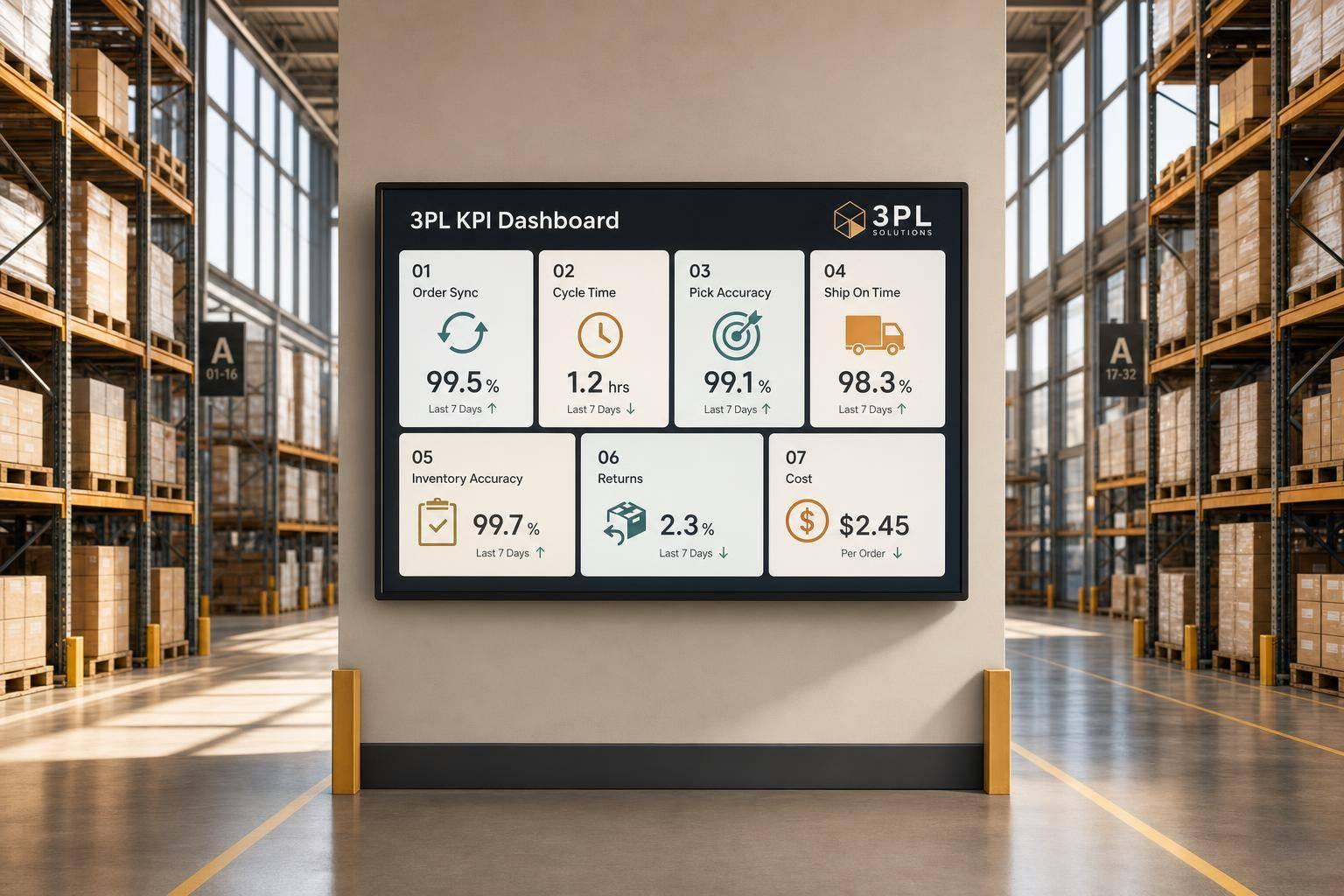
Use dashboards to monitor delivery success rates, damage-free shipments, and on-time performance. These insights help you quickly address any service issues and maintain high customer satisfaction. Feedback from customers on delivery crew professionalism and communication is also critical since these teams represent your brand in their homes.
"In logistics, reliability builds reputation. In white glove logistics, it protects it." – JIT Transportation
Ensure consistency by comparing service quality across different regions and ZIP codes. For reverse logistics, track how quickly pickups and returns are scheduled and completed.
Finally, measure the financial impact of white glove logistics. Compare damage claims and return shipping costs before and after implementation. Many e-commerce brands have discovered that switching from centralized warehouses to localized hub routing can slash return shipping costs - from $150–$400 down to $15–$45.
Conclusion
When it comes to tackling the challenges of scaling, white glove logistics stands out as a game-changer. Rapidly growing e-commerce brands often grapple with issues like damaged shipments, subpar delivery experiences, and operational bottlenecks that can hinder growth. White glove logistics offers a solution by providing meticulous handling, inside delivery, installation support, and real-time tracking - services that go far beyond what standard freight can offer. For high-value or fragile items, this approach not only protects inventory but also safeguards your brand's reputation. Spending $150–$500 on white glove services can be a smart investment compared to the steep costs of shipment damage and delivery delays. The benefits? Fewer damage claims, reduced return costs, happier customers, and ultimately, stronger margins and repeat business.
JIT Transportation's white glove services are designed to provide the infrastructure and routing needed to scale your operations without compromising on quality. With a nationwide network, climate-controlled vehicles, and advanced tracking technology, every shipment gets the attention it deserves. As the U.S. white glove services market heads toward a projected $20.25 billion by 2030, brands that focus on delivering exceptional customer experiences and operational efficiency have a clear opportunity to gain an edge. JIT Transportation's tailored services address the exact challenges discussed here - from preventing in-transit damage to ensuring seamless last-mile delivery - helping your e-commerce business grow while building customer trust and loyalty.
FAQs
When should I offer white glove delivery?
White glove delivery is perfect for shipments that require extra care - think medical devices, servers, or semiconductor equipment. These are high-value or sensitive items where specialized handling isn't just helpful; it's necessary. This service goes beyond standard delivery by offering perks like inside delivery, installation support, and even climate-controlled transport. The goal? To ensure your items arrive safely, in perfect condition, and ready to use. If your shipment demands top-tier protection and expert attention from start to finish, white glove delivery is the way to go.
How do I calculate ROI for white glove logistics?
To figure out the ROI for white glove logistics, you'll need to weigh the financial gains against the costs. Here's the formula to use: ROI = (Additional Revenue + Cost Savings - Additional Costs) / Additional Costs. Key factors to examine include growth in sales, stronger customer loyalty, and fewer product returns. Conducting a cost-benefit analysis can give you a clearer picture of whether the investment in this high-end service aligns with its effects on revenue and customer satisfaction.
What should I track to measure white glove performance?
To gauge the effectiveness of white glove service, keep an eye on key performance metrics such as:
- Delivery accuracy: Are the correct items being delivered to the right locations?
- Timeliness: Are deliveries happening as scheduled, without delays?
- Item condition: Are products arriving without damage or defects?
- Installation success: Is the setup or assembly completed correctly and efficiently?
- Customer satisfaction: Are customers happy with the overall experience?
It's also crucial to have real-time visibility throughout the entire process. This ensures you can maintain control and provide transparency every step of the way.
Related Blog Posts
Related Articles
7 WooCommerce 3PL KPIs Teams Track

Centralized vs Decentralized Replenishment
