
3PL Warehouse in Los Angeles for High-Value Products
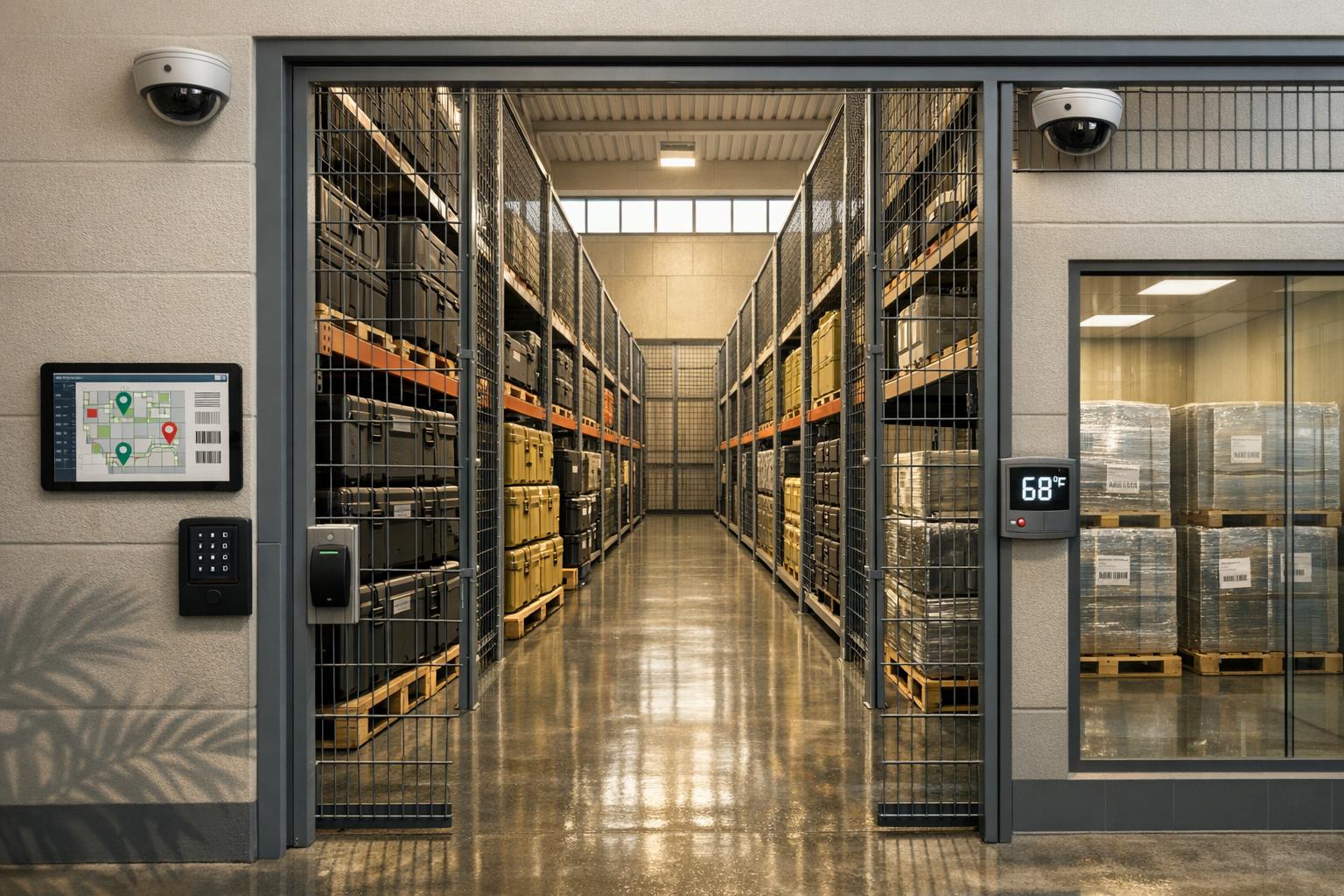
Managing high-value products requires more than just storage - it demands precision, security, and specialized care. Los Angeles, with its proximity to major ports and airports, is an ideal hub for these operations. Third-party logistics (3PL) providers in the area offer services tailored to protect and handle sensitive items like electronics, pharmaceuticals, and luxury goods. Here's what you need to know:
- High-value products include items like semiconductors, medical devices, fine art, and luxury cosmetics, all of which require stringent handling and environmental controls.
- Los Angeles' logistics advantages: Access to the Port of Los Angeles, LAX, and quick shipping to western U.S. markets make it a key location for distribution.
- Key 3PL features: Controlled-access storage, climate-controlled environments, real-time tracking, and specialized handling protocols safeguard products and ensure compliance.
- Risks addressed: Theft, damage, and regulatory issues are mitigated through advanced security measures, IoT monitoring, and staff training.
- Fulfillment and shipping: Custom workflows, protective packaging, and reliable shipping networks ensure product integrity and timely deliveries.
Bottom Line: Partnering with a Los Angeles-based 3PL ensures your high-value goods are stored, managed, and shipped with precision and care.
Core Requirements for High-Value Warehousing in Los Angeles
Handling high-value goods in Los Angeles warehouses is about much more than just space. It demands vigilant risk management, strict compliance measures, and operational precision. These elements work together to protect premium inventory, and skipping any of them could leave goods vulnerable.
Key Risks for High-Value Products
High-value goods come with unique risks, and addressing them requires careful planning:
- Theft and Tampering: Prevent theft with tools like RFID tags, tamper-detection systems, and strict chain-of-custody protocols.
- Environmental Damage: Items sensitive to temperature or humidity - such as pharmaceuticals, semiconductors, or luxury cosmetics - can be ruined by environmental fluctuations. Real-time IoT monitoring allows warehouse teams to act quickly to prevent damage.
- Handling Damage: Fragile items like fine china or luxury watches benefit from custom packaging and specialized handling training, reducing the risk of damage during storage or transit.
- Human Error: Mistakes happen, but regular training, simulation drills, and real-time feedback can significantly lower the chances of errors.
Compliance and Insurance for High-Value Goods
Regulations for high-value goods vary widely depending on the product type. For instance:
- Pharmaceuticals, Supplements, and Medical Devices: These require FDA-registered facilities.
- Hazardous Materials: Items like lithium batteries or certain chemicals need Hazmat certification.
- Retail Standards: Selling through major retailers often requires compliance with standards such as EDI and GS1-128 labeling to avoid costly fines or chargebacks.
When it comes to insurance, standard carrier liability often falls short for high-value items. Partnering with insurers who specialize in luxury or high-value products ensures coverage gaps are closed.
"Standard warehousing is not enough for today's specialized industries." - Three Way Logistics
Adding robust access controls and traceability measures further strengthens these protections.
Process and Access Control Requirements
Day-to-day operations in a high-value warehouse must go beyond physical security. Controlled-access zones help prevent unauthorized entry to sensitive areas. Two-step order verification and weight checks can catch discrepancies before they escalate.
Traceability is another crucial element. Tracking lot and serial numbers at the SKU level not only supports product recalls but also aids in warranty management and regulatory compliance.
"Accuracy isn't accidental - it's systematic." - Fulfillment Express
For businesses importing goods, proximity matters. Warehouses located within 10 miles of the Port of Los Angeles can cut drayage costs and speed up customs clearance - an important advantage for securing high-value supply chains.
sbb-itb-eafa320
Security and Storage Controls in Los Angeles 3PL Warehouses
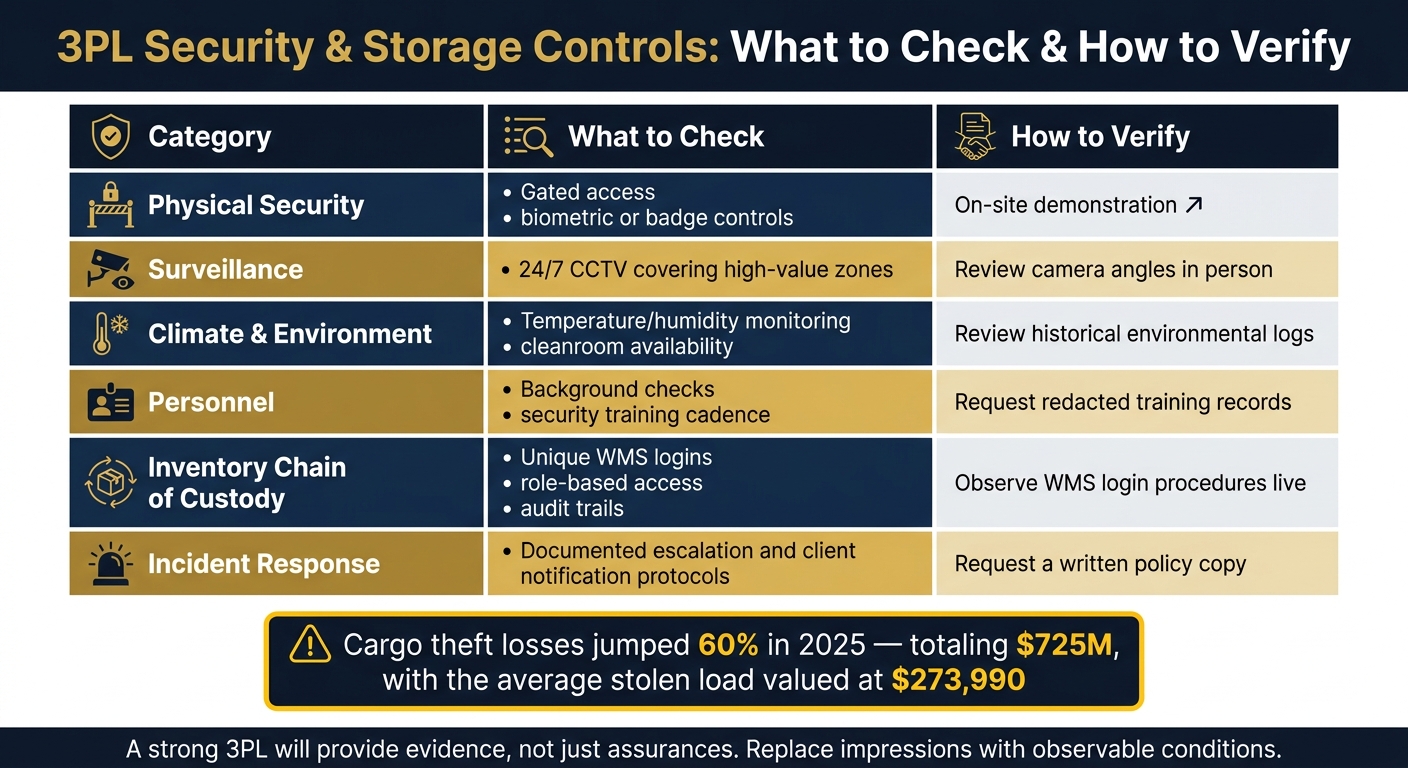
3PL Security & Storage Controls Checklist for High-Value Products in LA
When it comes to managing high-value goods, understanding risks is only part of the equation. The real challenge lies in implementing systems that effectively mitigate those risks. In Los Angeles 3PL warehouses, robust physical security measures and environmental controls are essential for safeguarding valuable products.
Physical Security Measures and Access Controls
For high-value 3PL operations in Los Angeles, physical security starts with a multi-layered approach. This includes 24/7 CCTV monitoring across all critical areas, such as entry and exit points, pick-and-pack zones, and high-value storage sections. This constant surveillance ensures there are no blind spots. Gated perimeters, biometric or badge-based access systems, and role-based entry controls further enhance security, following a "zero-trust" framework that minimizes opportunities for internal theft.
To complement these measures, personnel training is tightly integrated with digital tracking systems. Every inventory movement is logged using a unique WMS (Warehouse Management System) login, creating an auditable chain of custody for each item.
The importance of these measures cannot be overstated. Cargo theft losses jumped 60% in 2025, amounting to $725 million, with the average stolen load valued at $273,990. Warehouses near the Port of Los Angeles are particularly vulnerable, making these precautions critical for the region.
But physical security is only part of the story. Environmental factors also play a significant role in product preservation.
Climate-Controlled Storage for Sensitive Products
While theft is a major concern, some high-value products are more at risk from environmental conditions. Items like electronics, cosmetics, pharmaceuticals, and biotech products can deteriorate if temperature or humidity levels fall outside acceptable ranges. To address this, advanced 3PL facilities in Los Angeles deploy integrated climate control systems with 24/7 automated monitoring. These systems alert staff to any fluctuations, allowing them to act before any damage occurs.
"Our 3PL warehouse facility in Los Angeles County is equipped with temperature and humidity control systems to preserve their quality and extend their shelf life." - Cummins Logistics
Certain industries, such as aerospace and semiconductor manufacturing, have even stricter requirements. These sectors often demand cleanroom-compatible environments free of foreign object debris (FOD) to ensure product quality and safety. In Los Angeles, these features are more than just optional upgrades - they’re essential for meeting industry standards.
Checklist for Evaluating Security and Storage Controls
When selecting a 3PL in Los Angeles for high-value goods, don’t just take their word for it. Request evidence. The table below outlines the key areas to assess during a site visit or audit and how to verify their claims:
- Physical Security: Verify the facility has gated access and biometric or badge-controlled entry systems; confirm through an on-site demonstration
- Surveillance: Ensure 24/7 CCTV monitoring is in place for high-value storage and operational zones; review camera coverage and angles in person
- Climate & Environment: Check for temperature and humidity monitoring systems, along with cleanroom capabilities if required; validate by reviewing historical environmental logs
- Personnel: Confirm employees undergo background checks and receive regular security training; request redacted copies of training records for verification
- Inventory Chain of Custody: Review whether the WMS uses unique logins, role-based access controls, and audit trails; observe live WMS login and tracking procedures
- Incident Response: Ensure documented escalation procedures and client notification protocols exist; request a written copy of the incident response policy
"A good warehouse security audit checklist exists to force specificity. It replaces impressions with evidence and turns broad claims into observable conditions." - G10 Fulfillment
One key takeaway: be wary of 3PL providers that dodge specific questions or rely on vague "industry standard" responses. A facility that truly excels in security and storage controls will have no hesitation in providing clear evidence and demonstrating their systems in action.
Inventory Management for High-Value Goods
Once you’ve established strong physical and environmental safeguards, the next step is ensuring accurate, real-time tracking for every single unit. When it comes to high-value goods, rough estimates simply won’t cut it. You need to know exactly where each item is at every stage - from the moment it arrives at the dock to when it ships out. This level of precision not only streamlines order processing but also protects the integrity of your valuable inventory.
Tools for Real-Time Inventory Visibility
A Warehouse Management System (WMS) is the cornerstone of managing high-value inventory. These systems allow for real-time tracking, covering everything from receiving to shipping, while automating billing and order orchestration. By integrating directly with sales channels and back-office systems, WMS platforms ensure inventory data remains accurate across all touchpoints. Through custom APIs, a 3PL’s WMS can sync seamlessly with platforms like Shopify, Amazon, or enterprise ERPs, keeping stock levels updated in real time.
Barcode-enabled tracking adds another layer of precision by creating timestamped records of inventory movements. Meanwhile, a cloud-based dashboard provides 24/7 access to inventory levels, order statuses, and detailed reporting. For brands dealing with B2B shipments, Electronic Data Interchange (EDI) becomes essential. EDI manages Advanced Shipping Notices (ASNs) and ensures compliance with routing guides, helping to avoid costly retail chargebacks.
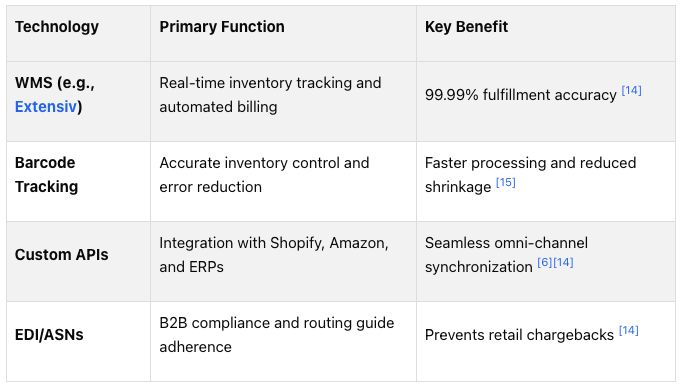 These technologies work hand-in-hand with the security measures discussed earlier to create a comprehensive system for managing high-value goods.
Day-to-Day Practices for High-Value Inventory
Technology alone isn’t enough - it needs to be supported by effective daily practices. For high-value items, bin-level tracking is a must. This means each unit is assigned a specific location within the warehouse, rather than being placed in a general area. Pairing this with serial number or lot number management ensures complete traceability for every item.
Automated alerts are another invaluable tool. Setting up notifications for events like low stock, discrepancies during receiving, or departures of high-value orders allows your team to address issues before they escalate. For sensitive products such as medical devices or aerospace components, customized Standard Operating Procedures (SOPs) should govern every step of the process - from receiving to final handoff.
For instance, in 2025, jam-n Logistics, an omnichannel fulfillment provider based in Rancho Dominguez and Carson, CA, processed 2.4 million orders with a 99.99% accuracy rate. Their operations supported brands across e-commerce, marketplace, and wholesale channels, demonstrating the effectiveness of precise inventory practices.
Key Metrics to Track for High-Value Inventory
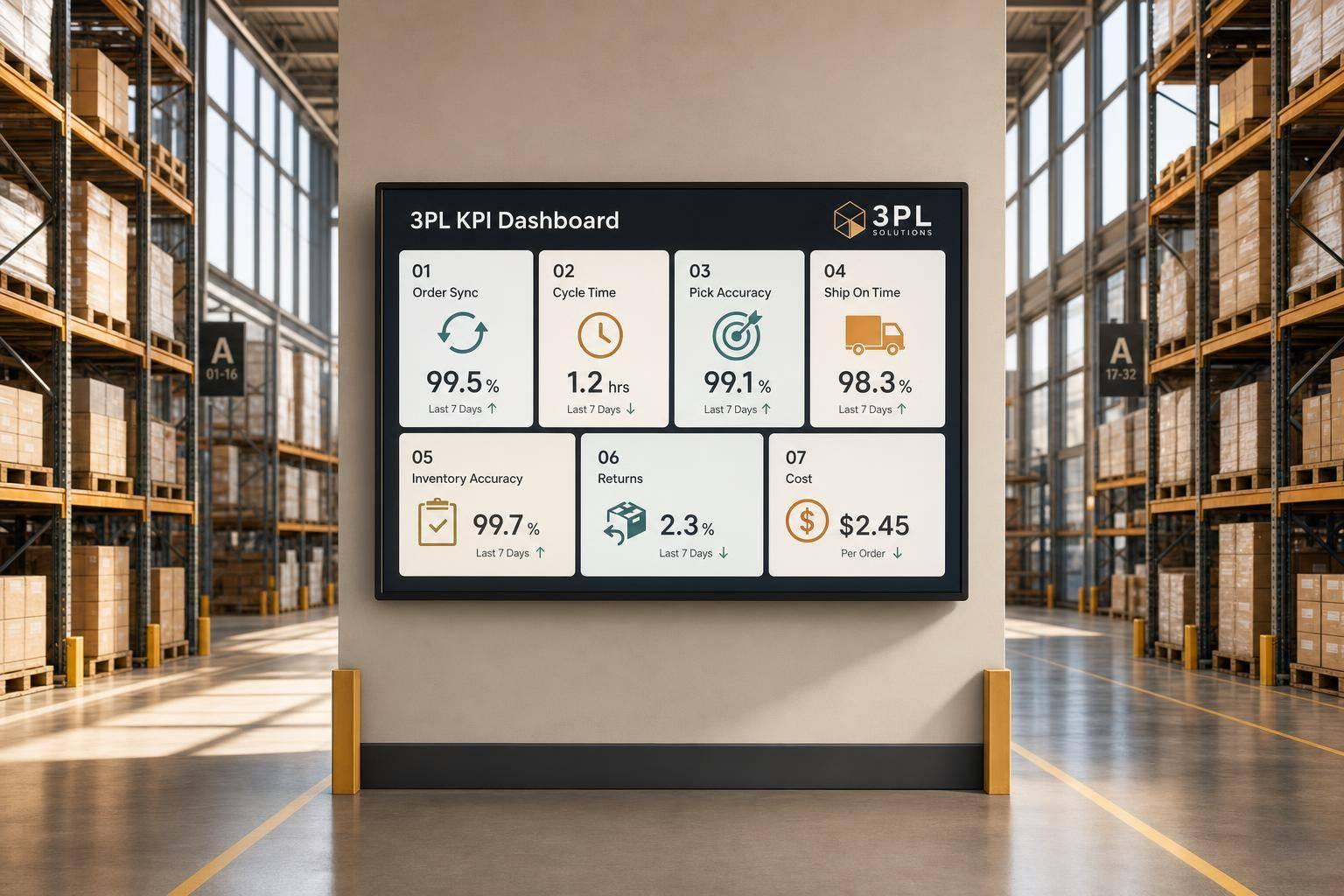
Maintaining operational excellence requires tracking specific performance metrics. These metrics validate the performance of your 3PL and ensure your inventory is managed with precision. Targets should include inventory accuracy rates above 99.9%, minimal shrinkage under clear SLA terms, and near-perfect order accuracy.
"Our inventory management platform guarantees precise stock control, self-generating reports, adaptable processes, and external system compatibility." - Three Way Logistics
Another critical metric is on-time receiving and shipping performance. The longer a high-value item sits unprocessed at the dock, the higher the risk. Monitoring timeliness at both ends of the fulfillment cycle minimizes this exposure. Together, these metrics confirm that detailed inventory management ensures product integrity and timely delivery throughout the supply chain.
Fulfillment and Value-Added Services for High-Value Products
When it comes to high-value products, managing the picking, packing, and shipping process with precision is just as crucial as tracking inventory. While solid inventory management ensures goods are organized, accurate fulfillment reduces risks during shipment. A single mishandled package could lead to financial loss, unhappy clients, or even compliance issues. That’s why 3PL providers in Los Angeles focus on creating fulfillment workflows that prioritize both protection and precision for premium goods.
Custom Fulfillment Workflows for High-Value Orders
The process for fulfilling high-value orders often begins with a detailed verification step. Each item is scanned during the picking stage to confirm accuracy. From there, products are moved to a secure staging area, separate from the general workflow, where they undergo inspection and are prepared for shipment under controlled conditions. For industries like aerospace or medical devices, these staging areas are often designed to prevent contamination, ensuring the highest standards are met.
For deliveries requiring extra care, white glove services take the process a step further. This includes final-mile delivery, careful unboxing, and even on-site installation when needed. These services are particularly important for sectors like medical equipment or data center hardware, where premium handling is expected in the Los Angeles market. When time is of the essence, 3PLs can expedite shipments using "Next Flight Out" (NFO) freight services, cutting transit times down to mere hours for urgent, high-stakes deliveries.
Protective Packaging and Kitting for Premium Products
Shipping high-value goods demands more than standard packaging. Custom-fitted materials, shrink wrapping, and polybagging are commonly used to shield products from impact, moisture, and tampering during transit.
Kitting services also play a critical role in fulfillment. Beyond bundling items for subscription boxes or promotional sets, kitting for premium goods integrates quality control steps to identify and address defects before shipping. For brands selling through retail, kitting workflows often include GS1 labeling, barcode application, and creating retail display setups to meet strict compliance standards.
However, protective packaging and kitting are just part of the equation. The fulfillment cycle isn’t complete without efficient shipping and returns management.
Shipping and Returns Management
In a market like Los Angeles, where minimizing time-in-transit is key, high-value goods are most vulnerable while on the move. Asset-based 3PL providers, such as JIT Transportation with its fleet of over 200 trucks and access to 500+ carriers, ensure reliable on-time deliveries. This reliability is essential for avoiding missed installation deadlines or compliance penalties.
Once outbound shipping is handled, a robust returns process helps maintain asset protection. Managing returns goes beyond restocking; it involves thorough damage inspections, warranty tracking, and, when necessary, refurbishment or repair to recover as much value as possible. Automated returns systems, integrated with platforms like Shopify or Amazon, streamline handling and speed up processing, ensuring a quick turnaround for returned items.
Building a 3PL Strategy for High-Value Products in Los Angeles
When it comes to high-value products, finding a 3PL partner isn’t just about managing outbound shipping and returns. The real challenge lies in selecting a provider equipped to handle the unique demands of these goods.
Steps to Select and Set Up a 3PL Partnership
Start by conducting a thorough risk assessment. This means identifying potential vulnerabilities like temperature sensitivity, theft risks, compliance challenges, and handling complexities. Site visits are essential to verify how well a facility is organized and whether its operations meet your standards. Once you’ve narrowed down your options, consider initiating a trial project. This trial allows you to gauge the provider’s accuracy, responsiveness, and ability to meet service level agreements under real-world conditions.
Integration is another critical factor. Make sure their Warehouse Management System (WMS) connects smoothly with your sales channels - whether that’s Shopify, Amazon, or NetSuite. This reduces the chance of manual errors and ensures a seamless flow of information. These steps help ensure that your chosen 3PL is prepared to meet the precise needs of high-value goods.
"Choosing the best 3PL company in California is more than ticking a checkbox; it requires evaluating multiple factors rather than focusing on a single parameter." - Nenad Aleksic, Contributor, Red Stag Fulfillment
How JIT Transportation Supports High-Value Product Needs
Once you’ve established your criteria, it’s crucial to find a provider that aligns with those needs. JIT Transportation’s facility near Los Angeles International Airport (LAX) is part of a nationwide network with over 2.5 million square feet across 14 warehouses, operating 24/7/365 to handle time-sensitive shipments. For high-value goods, JIT offers specialized services like White Glove handling, climate-controlled storage, kitting, custom packaging, light assembly, and quality assurance. These services are designed to minimize how often items are handled, reducing the risk of damage or theft.
Real-time visibility is another standout feature of JIT’s model. Their system integrates with platforms such as Shopify, WooCommerce, BigCommerce, and Amazon FBA/SFP through custom APIs. Paired with a dedicated fleet of over 200 trucks and access to more than 500 carriers, JIT ensures reliable and traceable deliveries - an essential requirement for brands dealing with high-value products.
Weighing Costs Against Risk and Service Quality
In California, warehousing costs typically range from $15 to $30 per pallet per month for ambient storage, with higher rates for specialized or climate-controlled options. Additional fees for services like pick-and-pack, receiving, or value-added tasks can increase costs. However, these expenses should be weighed against the potential cost of damage or loss. For instance, a single damaged shipment of medical equipment or stolen luxury electronics could cost far more than several months of storage fees.
Asset-based providers - those that own their warehouses and trucks rather than relying on subcontractors - often provide better operational control and reduce risks associated with handoffs. This level of control is especially critical for high-value goods. The focus shouldn’t just be on finding the lowest-cost option but on partnering with a provider whose service quality and security measures protect the value of your shipments.
FAQs
What security proof should I ask for during a 3PL site visit?
When you visit a 3PL site, it's essential to verify their security measures to protect high-value products. Ask for proof of advanced surveillance systems, robust access controls, and climate-controlled storage facilities. Don't stop there - dig into their cybersecurity protocols and data protection practices, particularly if sensitive information is part of the deal. These steps help ensure the safety of both physical inventory and digital data.
How do I know a 3PL can meet my product compliance requirements?
To determine if a 3PL provider aligns with your compliance needs, assess their experience with high-value goods, security protocols, and quality control processes. Look for certifications or adherence to industry-specific compliance standards. For instance, companies like JIT Transportation showcase their capabilities with features like scalable warehousing, advanced inventory management systems, and specialized services such as climate-controlled storage. These offerings highlight their ability to manage sensitive items while adhering to strict compliance requirements.
What KPIs should I include in an SLA for high-value inventory?
Key performance indicators (KPIs) for an SLA that manages high-value inventory should focus on precision and speed. Important metrics include:
- Inventory accuracy: Aim for at least 98% to minimize discrepancies and maintain trust.
- Order accuracy: Strive for 99.9% to ensure orders are fulfilled correctly and efficiently.
- Dock-to-stock time: Keep this under 24 hours to guarantee quick processing and seamless operations.
These benchmarks are critical for ensuring the secure and efficient management of premium goods.
Related Blog Posts
Related Articles
7 WooCommerce 3PL KPIs Teams Track

Centralized vs Decentralized Replenishment
