
LA Port Drayage and Warehousing Solutions for Importers
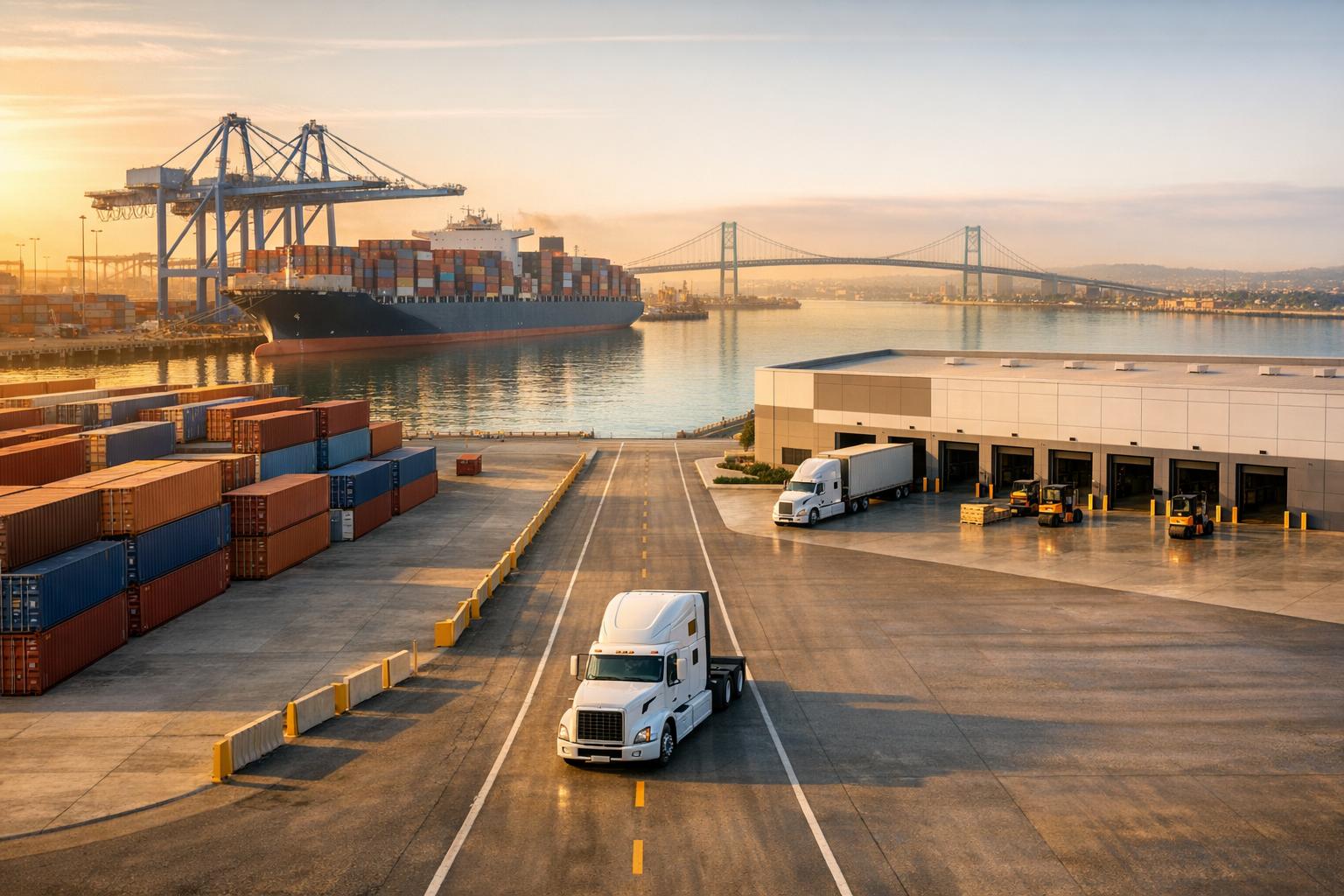
Getting goods from the Port of Los Angeles to their next destination doesn’t have to be complicated or costly. Here’s what you need to know:
- Drayage: Short-haul trucking from port to warehouse or rail. Efficient drayage avoids demurrage fees ($100–$200/day per container).
- Warehousing: Near-port facilities save time and costs, cutting transit from 15 days to 1–3 days. Services include transloading, cross-docking, and cold storage.
- Compliance: Stay on top of terminal appointments, weight limits, and required permits to avoid delays.
- Integrated Partners: Using a single logistics provider for drayage, warehousing, and delivery simplifies operations and reduces errors.
Port Drayage Basics
What Is Port Drayage?
Port drayage refers to the short-haul trucking process that moves containers from a port terminal to the next point in the supply chain. There are several types of drayage operations, including:
- Pier drayage: Directly transporting containers to warehouses or rail connections.
- Shuttle drayage: Temporary moves when the final destination isn't ready to receive the shipment.
- Expedited drayage: Fast-tracked services for same-day or next-day deliveries.
These operations play a crucial role in the logistics chain, ensuring smooth transitions for goods leaving the port.
"Drayage is the unsung hero of international trade. It is the short trip that decides whether your supply chain feels smooth or stressful." - TEU Global
The Port of Los Angeles as a Drayage Hub
The Port of Los Angeles has maintained its position as the top U.S. container port for 25 years, stretching across 43 miles of waterfront. Its location is a major advantage, serving as the closest gateway to Asian manufacturing hubs. Ocean transit times from Asia to this port typically range from 12 to 16 days, which is about half the time it takes to reach East Coast ports.
This efficiency is supported by a network of over 450 local drayage companies and advanced digital tools. For instance:
- Signal: Provides forecasts of container arrivals.
- Return Signal: Tracks the return of empty containers.
Additionally, the Overweight Container Corridor allows trucks with the right permits to carry loads up to 95,000 lbs. All trucks operating at the port must also comply with the Clean Truck Program (CTP) and adhere to California's strict emissions regulations. Together, these features create a well-oiled system that minimizes delays, reduces costs, and boosts distribution efficiency for importers.
How Drayage Benefits Importers
Efficient drayage offers a clear financial advantage by helping importers avoid demurrage fees. These fees, which range from $100 to $200 per container per day, are charged when containers remain at the terminal beyond the allowed free time. Quick container movement is essential to sidestep these costs.
Another cost-saving strategy is using near-port transloading facilities located within 30 minutes of the terminals. These facilities can cut drayage expenses by 30–50% compared to longer inland hauls. This approach seamlessly connects international shipments to domestic distribution networks, ensuring a smooth and cost-effective supply chain.
sbb-itb-eafa320
Understanding Line Items in Drayage Pricing (Ports of Los Angeles)
Warehousing Near the Port
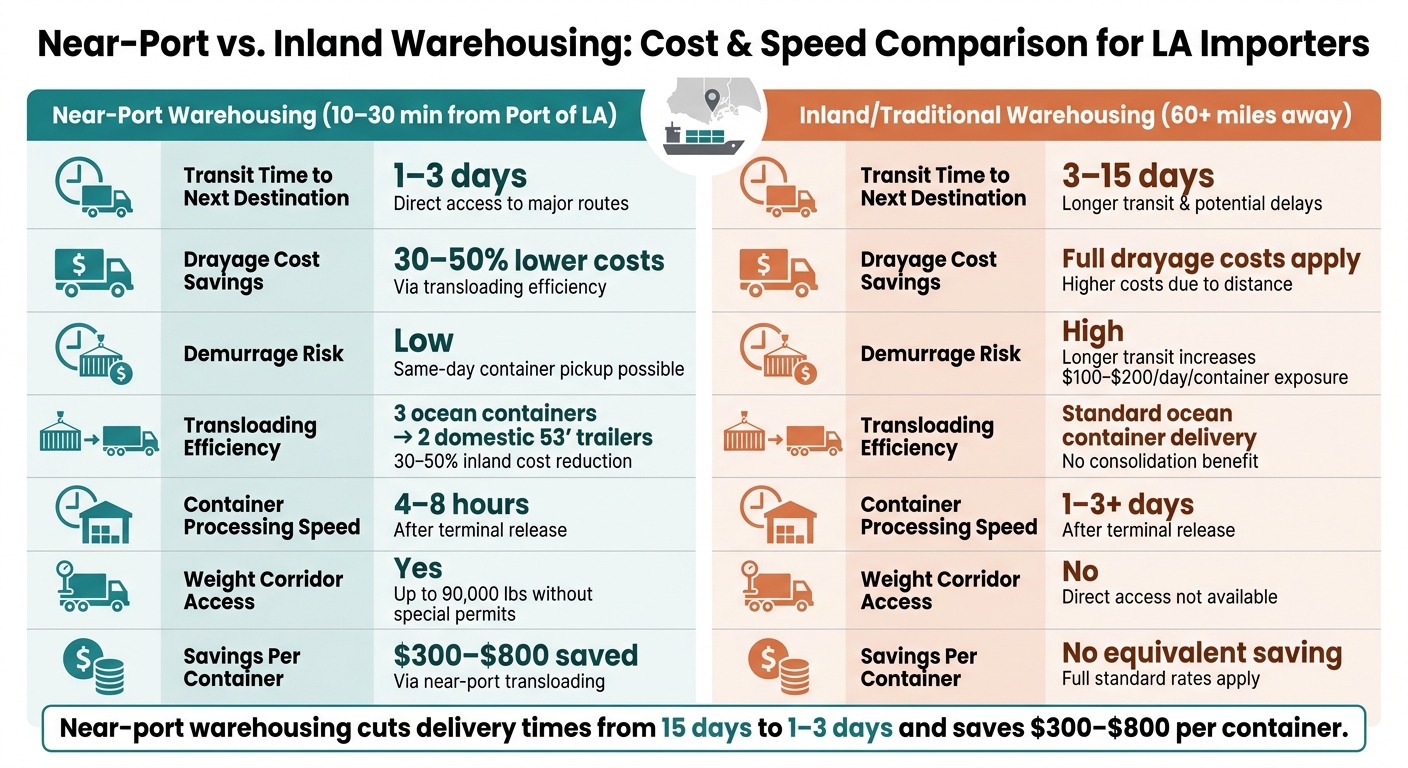
Near-Port vs. Inland Warehousing: Cost & Speed Comparison for LA Importers
Benefits of Being Close to the Port
Being near the port isn’t just convenient - it can make or break your logistics strategy. A warehouse located just 10–30 minutes from the Port of Los Angeles terminals can help avoid costly delays. With such proximity, same-day container pickups and faster empty returns become possible, cutting down on demurrage costs.
Speed is another major perk. Near-port transloading can move cargo to its next destination in just 1–3 days. Compare that to traditional inland warehousing, which might take anywhere from 3 to 15 days. Faster deliveries mean quicker inventory turnover and a supply chain that’s more responsive to market demands.
Another highlight? Access to heavyweight corridors. These routes allow trucks to carry loads up to 90,000 lbs without needing special permits. This added capacity can be a game-changer for certain shipments.
All these advantages pave the way for more specialized warehousing services.
Types of Warehousing Services Available
Warehouses located near ports offer more than just storage. They provide a variety of services tailored to the needs of importers and exporters. Here’s a quick look at some common options:
- Transloading: This involves transferring goods from ocean containers into domestic 53' trailers. For instance, three ocean containers might be consolidated into two domestic trailers, cutting inland transport costs.
- Cross-docking: Perfect for time-sensitive goods like retail products, this process involves sorting inbound shipments and transferring them directly to outbound trucks with minimal storage time.
- Deconsolidation: This service breaks down large container loads into smaller shipments for delivery to multiple destinations.
- Yard Storage: Provides secure, 24/7 staging for containers, either wheeled or grounded. This helps manage overflow and avoid demurrage fees.
- Cold Storage: Ideal for perishable goods, these facilities handle nearly 1 million metric tons of fruit annually, offering services like blast freezing and USDA inspections.
For businesses managing high-value imports, Foreign Trade Zone (FTZ) warehousing is worth considering. FTZ 202, run by the Port of Los Angeles, spans about 5,400 acres and offers benefits like deferred duties, reduced landed costs, and streamlined customs processes.
Scaling Warehousing for High-Volume Imports
As import volumes rise, the infrastructure around the port evolves to meet the demand. Many logistics providers adopt a "port campus" model, where multiple buildings are clustered together. This setup allows them to share labor and handle volume spikes without creating bottlenecks.
Take GEODIS as an example. Their facility in Carson, just 11 miles from the port, offers over 250,000 sq. ft. of space, 50 dock positions, and 300 trailer storage spots. With the ability to expand to more than 1 million sq. ft. across six buildings, they’re prepared to handle both steady operations and seasonal surges.
This scalable approach means importers can grow their operations without needing to switch providers. Labor-sharing across multiple buildings ensures that even during peak seasons, operations run smoothly and efficiently.
Core Services Importers Should Use
When it comes to optimizing supply chains, these key services can help importers save time and cut costs, all while maintaining efficiency and reliability.
Drayage and Transloading
Drayage is the process of moving containers from a terminal to a nearby warehouse or rail ramp. A smart move here is to use a "pre-pull" - this means securing the container early to avoid steep demurrage fees, which can range from $100 to $200 per container per day.
Transloading works hand-in-hand with drayage by transferring cargo from ocean containers (typically 20′ or 40′) into larger domestic 53′ trailers. By doing this, importers can combine three ocean containers into just two domestic trailers, slashing inland transport costs by 30% to 50%. For those dealing with heavy industrial goods, having a partner in the Southern California heavyweight corridor is a game-changer. Trucks in this zone can legally carry up to 90,000 lbs without needing special permits.
Together, drayage and transloading set the stage for smooth cross-docking and deconsolidation operations.
Cross-Docking and Deconsolidation
For goods that need to move fast, cross-docking is invaluable. This process involves unloading containers and immediately sorting the cargo onto outbound trucks, cutting down on storage time. Near-port facilities can handle containers within 4 to 8 hours after terminal release, which shrinks the port-to-market timeline to as little as 1 to 3 days.
Deconsolidation is ideal for shipments heading to multiple destinations. It breaks a single container into five or more smaller outbound loads, sorted by retailer, region, or SKU. When one provider manages both cross-docking and deconsolidation, the efficiency gains are even greater.
Once shipments are organized, the next priority becomes managing cost-effective and timely final-mile delivery.
Final-Mile Delivery and Pool Consolidation
Final-mile delivery ensures goods reach their ultimate destination, whether that’s a store, warehouse, or customer. Pool consolidation takes this a step further by combining multiple inbound shipments into one regional load, lowering per-unit transport costs.
For high-volume retail operations, a DC bypass strategy is a smart option. This approach sends goods straight from the port to individual stores, skipping the retailer’s central distribution center entirely. By reducing handling and shortening the port-to-shelf timeline, this method increases efficiency. Companies like JIT Transportation specialize in pool distribution and consolidation services built around this model, offering importers a single point of accountability from port pickup to final delivery.
Compliance and Port Requirements
Efficient drayage and warehousing operations rely heavily on strict adherence to port regulations. At the Port of Los Angeles, even minor missteps in compliance can lead to delays, fines, or containers being held at the terminal longer than expected.
Terminal Appointment Timing
Every container pickup requires a scheduled terminal appointment. Missing this appointment can result in costly demurrage fees ranging from $100 to $200 per container per day. To help manage these logistics, the Port of Los Angeles provides real-time tools like "Signal" for tracking container arrivals and "Return Signal" for monitoring empty container return restrictions and dual-transaction opportunities. Additionally, the port publishes "Fulfilled Gate Appointments" data, offering insights into terminal-specific success rates, which can help optimize scheduling. These tools play a vital role in ensuring smooth operations for drayage and warehousing.
Chassis Coordination and Weight Limits
Chassis availability often becomes a bottleneck, especially during high-volume periods. The standard pool chassis system can experience shortages, leading to delays. For heavy freight, adhering to specific chassis weight limits is critical.
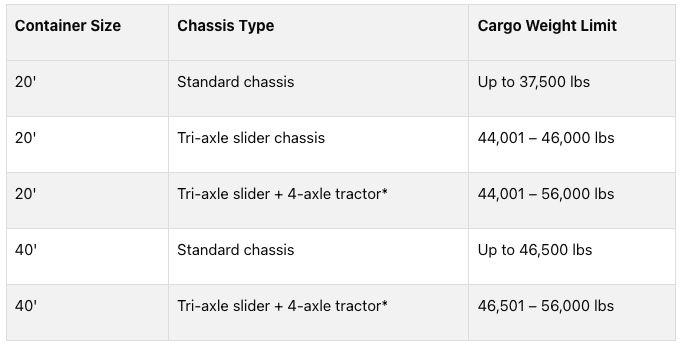 *Requires access to the Overweight Container Corridor with proper permits.
The Overweight Container Corridor permits a gross vehicle weight of up to 95,000 lbs, provided the truck is equipped with the necessary permits and equipment. Permits must be obtained from all jurisdictions the truck passes through, including the City of Los Angeles, City of Long Beach, County of Los Angeles, and Caltrans. Additionally, carriers must show proof of auto liability insurance with a minimum coverage of $1 million. Some importers opt for private chassis fleets to avoid pool shortages, allowing for greater control over scheduling.
Documentation and Regulatory Readiness
Proper documentation is a non-negotiable step in avoiding delays. Submitting the Importer Security Filing (ISF) ahead of vessel arrival and securing customs clearance before docking are crucial. Entry documents can be managed through tools like the ACE Cargo Release or Document Image System.
A regulatory change effective August 25, 2025, requires Full-Container Load shipments flagged for Merchandise Enforcement Team (MET) or Agriculture (AQI) exams to use a CES-affiliated trucker - not the importer's preferred carrier - for transporting containers to the Centralized Examination Station. While customs brokers can still choose the CES during entry, the operator assigns the trucker, with movements tracked via CBP Form 3461 (or its electronic equivalent). Furthermore, all drayage trucks must be registered under the Clean Truck Program (CTP) and comply with the Port of Los Angeles Tariff Section 20 to gain terminal access. Ensuring compliance in these areas is just as important as selecting the right warehousing solutions to streamline your supply chain.
How to Choose a Port Logistics Partner
Selecting the right logistics partner near the Port of Los Angeles is critical for keeping your import operations running smoothly. With challenges like compliance requirements, chassis shortages, and tight terminal schedules, the wrong partner can add unnecessary complications.
Key Selection Criteria
The process begins with evaluating factors like location, capacity, and contract flexibility to ensure your operations are built on a solid foundation.
Start with location. A warehouse situated 10–30 minutes from port terminals minimizes drayage costs and offers more flexibility when terminal appointment schedules change. While facilities located 60+ miles away might come with lower rent, the extra drayage fees and slower response times can end up costing more overall. Always calculate your total landed cost, not just the storage rate.
Next, consider whether the provider is asset-based or brokerage-based. Asset-based providers own their equipment, like trucks and chassis, which ensures consistent capacity and stable pricing. In contrast, brokerage-based operations rely on third-party resources, making them more vulnerable to market fluctuations and unpredictable spot rates. This is especially important in the LA/Long Beach area, where owning equipment is a distinct advantage.
"In the LA/Long Beach chassis-constrained environment, owning equipment is a significant competitive advantage." - Precision Worldwide Logistics
Also, confirm that the partner can handle a full range of services under one roof, including drayage, transloading, cross-docking, and additional services like kitting and labeling. Month-to-month contracts can provide added flexibility, allowing you to adapt as your needs change.
Finally, assess the partner's technology capabilities to ensure smooth integration with your systems.
Technology and Shipment Visibility
Technology is just as important as location and capacity when it comes to operational efficiency. A partner's digital tools can make or break your ability to manage shipments effectively.
Look for a Warehouse Management System (WMS) that supports EDI and API integration. This ensures their systems can communicate directly with your ERP or order management platform, eliminating manual data entry and keeping inventory records accurate in real time.
For high-volume operations, end-to-end visibility is non-negotiable. You need to track every step of a container's journey - from terminal discharge to transloading, warehousing, and final-mile delivery. Partners offering real-time tracking dashboards and automated alerts help you stay ahead of delays and port congestion, reducing costly disruptions.
Signs of a Reliable Partner
To identify a dependable partner, you’ll need to look beyond flashy marketing claims and focus on real-world performance.
In the fast-paced, compliance-heavy port environment, a strong track record is the best indicator of reliability. Ask for client references and take the time to speak directly with their current customers - not just the ones highlighted in polished case studies.
"The best way to understand what it might be like to work with a potential partner is to talk to their current customers. Any vendor that takes pride in their services will happily put you in touch with available clients." - Devin Cummins, Vice President, Cummins Logistics
Beyond references, check for tangible infrastructure capabilities. Look for features like 90,000 lb container handling equipment for overweight cargo, 24/7 security, dedicated chassis pools, and expertise in port compliance processes such as ISF filing and customs clearance. These details separate partners who can scale with your needs from those who may falter when demand increases.
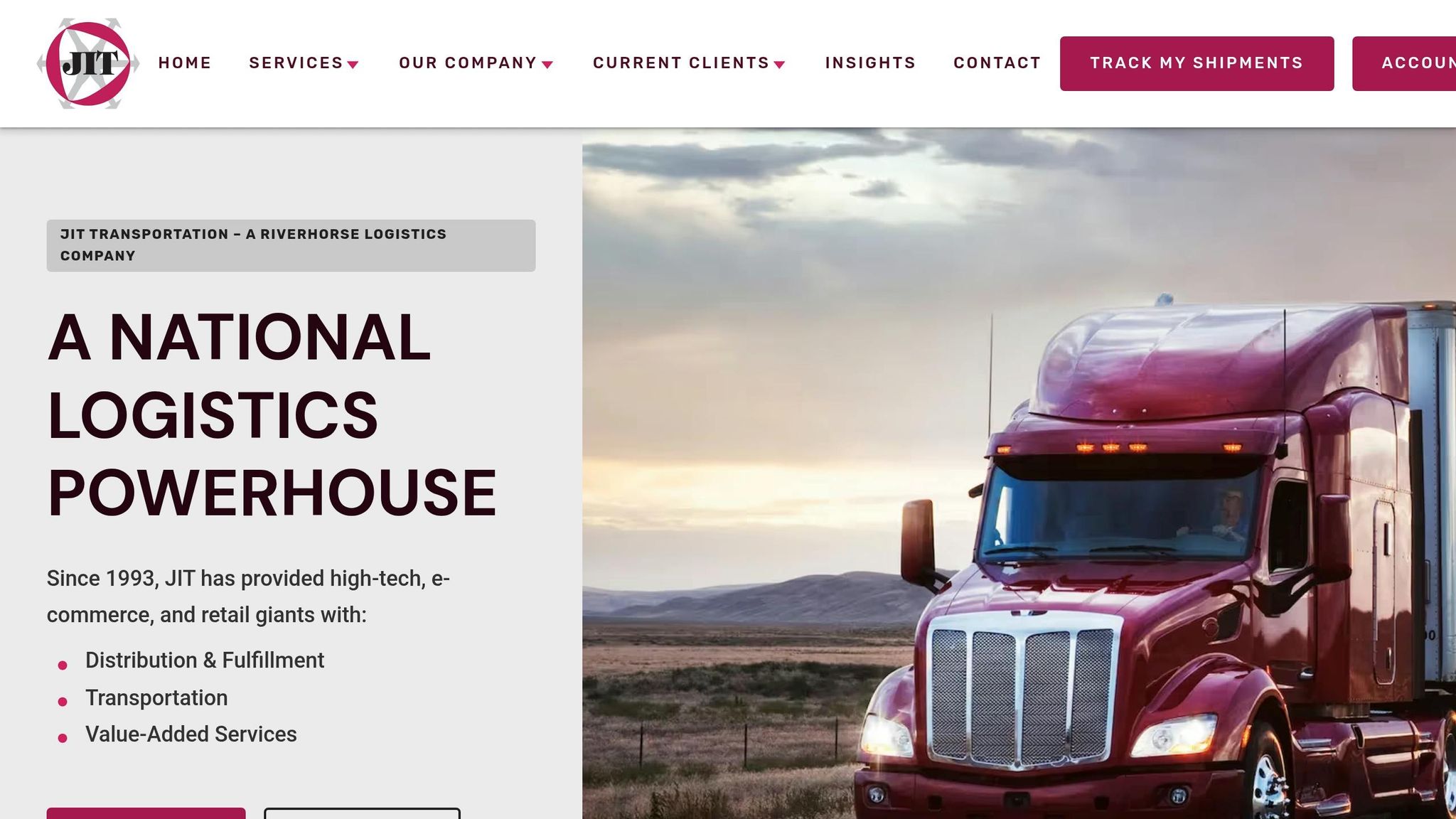
JIT Transportation's Port Logistics Approach
Integrated Transportation and Distribution
JIT Transportation oversees the entire import process, from picking up containers at the terminal to delivering the goods to their final destination. Instead of juggling multiple providers like drayage companies, transloaders, and warehouse operators, importers can rely on a single partner to handle everything in sequence.
The company operates a dedicated fleet of over 200 trucks and collaborates with a network of 500+ vetted carriers. This ensures adequate capacity, even during peak seasons or periods of port congestion. Their Los Angeles hub is strategically located near the San Pedro Bay port complex, facilitating quick container pickups and transloading. With round-the-clock operations every day of the year, JIT ensures that containers don’t sit idle. This streamlined approach allows for smoother and more efficient logistics.
"JIT has been a trusted logistics partner for Seagate for years, and their reliability is unmatched. Day in and day out, they prove their commitment to seamless operations." - Hal Shapiro, Seagate Technology
Value-Added Services
JIT goes beyond basic transportation by managing critical steps between receiving and shipping. Their range of value-added services includes kitting, assembly, testing, hardware upgrades, and white glove delivery - all handled within their extensive warehouse network.
This approach is particularly advantageous for technology importers. For example, Synnex depends on JIT for specialized material handling and the ability to accommodate last-minute logistics requests that other providers might struggle to fulfill.
"JIT sets the bar high in logistics. Their on-time performance, ability to handle last-minute requests, and expertise in material handling are game-changers for us." - Curtis Martin, Senior Operations Manager, Synnex
The demand for white glove services has been increasing, especially for handling high-value AI hardware and data center equipment. These services require secure chain-of-custody protocols and precise handling to ensure the safety and integrity of sensitive items.
- Fulfillment: Includes pick-and-pack services, kitting, and assembly operations; helps businesses scale output without increasing internal headcount
- Technology & Upgrades: Covers testing, system upgrades, and AI hardware support; reduces installation delays and minimizes technical errors
- Specialized Delivery: Encompasses white glove services and data center delivery; ensures safe transport and handling of high-value, sensitive equipment
- Inventory Management: Includes cross-docking and temperature-controlled storage solutions; supports product integrity while improving speed to market
These specialized services can easily adapt to meet the needs of growing businesses.
Scalable Solutions for Growing Businesses
With 2.5 million square feet of warehouse space spread across 14 U.S. locations, JIT is well-equipped to support businesses as they grow. Their operations are powered by API-driven, real-time inventory integration, which synchronizes multi-channel operations. This technology enhances scheduling and inventory management, helping importers handle high-volume SKUs across various channels while keeping fulfillment on track.
"In logistics, consistency is everything - and that's exactly what JIT delivers. Their transportation services are dependable, seamless, and backed by a team that truly understands our business needs." - Armando Otiz, Manager 3PL/Inventory, Exclusive Networks
Building a Scalable Import Operation
Receiving and Staging Inbound Containers
The foundation of a scalable import operation lies in quickly transferring containers from the terminal to a staging area. This process starts well before the ship even docks. Sharing vessel schedules, container details, and customs clearance status with your logistics partner in advance is key. Facilities located just 5–11 miles from San Pedro Bay are particularly advantageous, as they minimize drayage runs and help avoid costly demurrage fees, which can soar to $100–$200 per container per day once free time expires.
"The closer your 3PL Los Angeles operation is to the port, the more control you have over your freight." - GEODIS
Once containers are staged efficiently, the focus shifts to managing inventory quickly and effectively.
Inventory Management and Fulfillment Transfer
After containers arrive at a near-port facility, the speed of unloading and processing inventory directly impacts the flow of goods downstream. Same-day put-away and real-time inventory updates are crucial to avoid backlogs, especially during peak periods. Using a Warehouse Management System (WMS) with EDI integration ensures that every SKU is tracked from the moment it leaves the terminal.
Transloading at near-port facilities offers another time-saving advantage. By transferring freight from ocean containers into domestic trailers or palletized loads, businesses can shave 2 to 12 days off transit times compared to first routing goods through inland distribution centers. This approach keeps inventory moving smoothly and prevents bottlenecks further down the supply chain.
Strong inventory control is the backbone of efficient outbound distribution.
Improving Outbound Distribution
When it comes to outbound logistics, the DC bypass model is a game-changer for importers operating near the Port of Los Angeles. Instead of routing freight through central distribution centers, goods move directly from near-port warehouses to retail locations or regional distribution points. This eliminates an extra handling step, saving both time and money.
Consolidating partial loads is another effective strategy, cutting shipping costs by 20–40% and reducing drayage expenses by 30–50%. For businesses that experience seasonal surges, working with a provider that operates a campus-style facility can provide much-needed flexibility. These setups allow multiple buildings to share labor and overflow space, enabling businesses to scale their output during busy periods without committing to fixed, year-round capacity.
Conclusion
Improve your LA Port import operations by combining near-port warehousing, dependable drayage, and integrated logistics services. This approach can significantly optimize your supply chain, cutting delivery times from 15 days down to just 1–3 days and saving $300–$800 per container through near-port transloading alone.
With San Pedro Bay handling over 18 million TEUs annually, accounting for more than 40% of all U.S. containerized imports, the stakes are incredibly high for importers operating in this corridor. Even minor inefficiencies can quickly escalate into major costs.
"If your freight moves through the Ports of Long Beach or Los Angeles, you can't afford to split drayage, warehousing, and distribution across multiple providers." - GEODIS
This insight highlights the importance of integrated solutions. That’s where a partner like JIT Transportation offers a real advantage. By providing integrated transportation, distribution, value-added services, and scalable warehousing, JIT ensures single-point accountability - closing coordination gaps that often disrupt operations.
Whether you're dealing with seasonal demand spikes, managing overweight cargo, or expanding your SKU range, choosing the right port logistics partner can help safeguard your margins and keep your freight moving efficiently. By adopting these streamlined practices, importers can maintain tighter control over their operations and protect their profitability.
FAQs
How do I know if I need near-port warehousing?
If your business relies on importing large volumes through the Port of Los Angeles or Long Beach, near-port warehousing could be a game-changer. This approach helps cut down on delays, minimize congestion, and manage costs more effectively.
Near-port facilities are especially useful when you need quick turnarounds, flexible storage options, or specialized services like transloading. Being close to the port means faster container pickups, shorter transit times, and smoother inventory management. This is particularly critical during peak shipping seasons or when ports face heavy congestion.
What should I do first to avoid demurrage fees?
To keep demurrage fees at bay, make sure to pick up your containers from the port as quickly as possible to avoid unnecessary dwell time and extra costs. Stay in close contact with your drayage provider the moment your containers arrive, and have a solid plan in place to move them to your warehouse or storage facility. Partnering with local drayage services and utilizing secure yard space can make the process smoother and help you avoid delays.
What paperwork and permits can delay my pickup?
Delays in pickups often stem from missing or incomplete paperwork and permits. This can include documents for hazardous materials, overweight loads, or temperature-controlled containers. Following port authority regulations is another crucial factor. Certified carriers manage these requirements during terminal pickups, ensuring the process runs as smoothly as possible.
Related Blog Posts
Related Articles
7 WooCommerce 3PL KPIs Teams Track

Centralized vs Decentralized Replenishment
