
How 3PLs Improve Delivery Speed for E-commerce
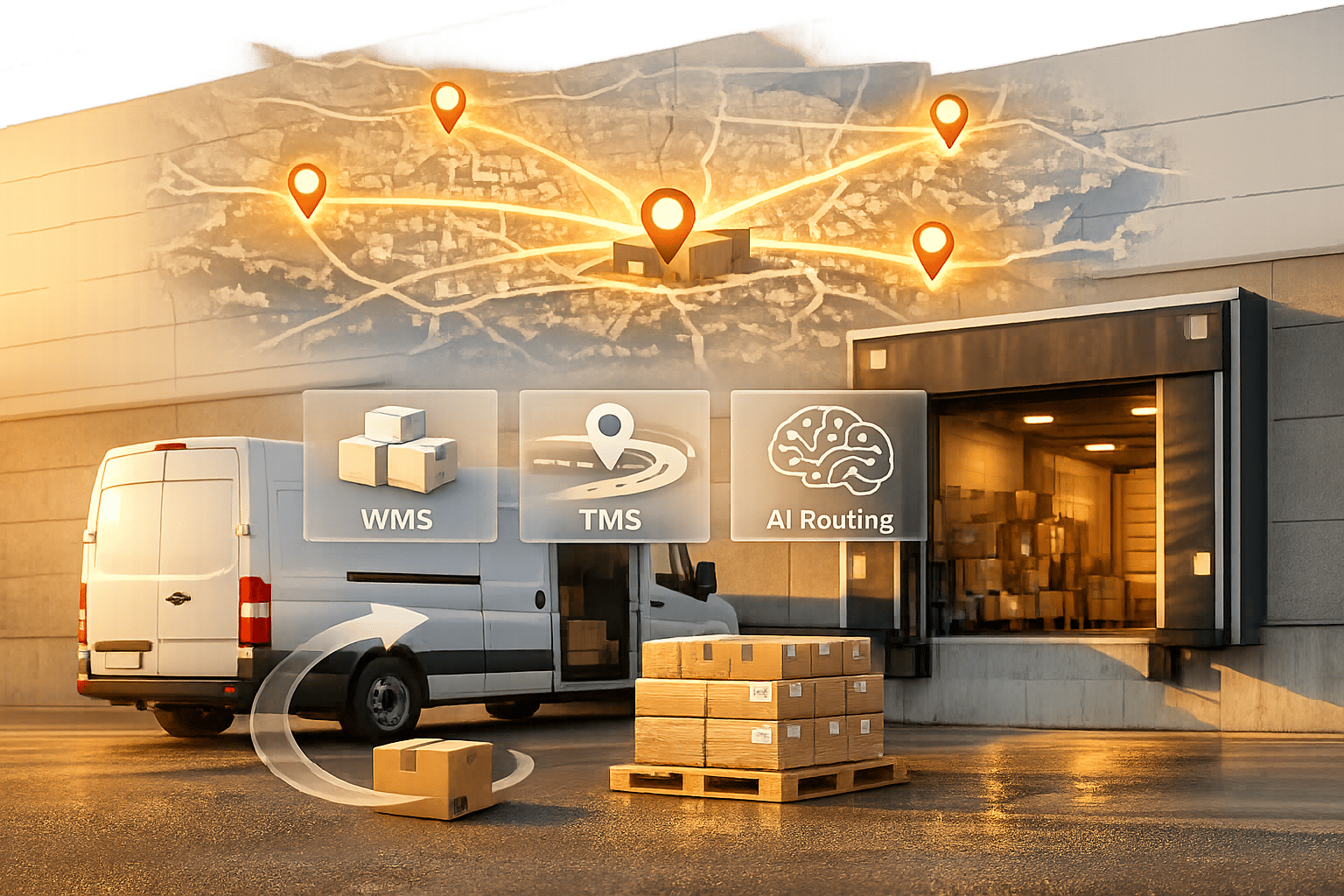
Fast delivery isn't optional in e-commerce anymore - it's expected. Customers demand next-day or even same-day shipping, and failing to deliver can mean losing business. Here's how third-party logistics (3PL) providers help online retailers meet these expectations:
- Warehouse Networks: 3PLs use multiple regional warehouses to keep inventory closer to customers, cutting delivery times and costs.
- Technology Integration: Real-time tracking, AI-driven routing, and automated systems speed up order processing and improve delivery accuracy.
- Route Optimization: Data-driven tools adjust routes on the fly to avoid delays, while partnerships with regional carriers ensure faster deliveries.
- Value-Added Services: Services like pick & pack, kitting, and returns management streamline operations and reduce errors.

How 3PLs Reduce Delivery Costs and Times: Key Statistics
How a 3PL Works [E-commerce Fulfillment Process Explained]
sbb-itb-eafa320
Using Warehouse Networks to Reduce Last-Mile Delivery Times
Last-mile delivery - the journey from warehouse to doorstep - is both the most expensive and slowest part of the shipping process, accounting for up to 53% of total shipping costs. For example, shipping a package across the country can cost $12–$15 and take 5–7 days. These delays and high costs make traditional methods less efficient. However, using a distributed warehouse network can change the game, cutting both delivery times and expenses. This is why localized fulfillment strategies are becoming increasingly important.
Proximity Fulfillment for Faster Shipping
The idea is simple: keep inventory closer to your customers. When a 3PL (third-party logistics provider) operates multiple regional fulfillment centers, long-haul shipments are replaced with short-haul ground transit. For instance, a warehouse within 300 miles of a customer can deliver packages in 2–3 days using affordable ground shipping.
"Multiple warehouse locations put inventory closer to customers, turning expensive expedited shipping into affordable ground shipping." - Rush Order
This proximity is more than just a convenience - it's becoming a necessity. Today, 67% of consumers expect 2-day delivery as the standard, and 22% abandon their carts if delivery seems too slow. With the right software, 3PLs can automatically route orders to the nearest fulfillment center, allowing shipments to move at Zone 2–4 rates instead of the pricier Zone 7–8 rates. The payoff? A 20–25% reduction in total fulfillment costs and significantly faster delivery times.
Distributing Inventory Across Multiple Locations
Proximity fulfillment works best when combined with strategic inventory distribution. By using machine learning and historical sales data, businesses can predict regional demand and stock products accordingly. Fast-moving items are placed in all regional hubs, while slower-moving products remain centralized to save on storage costs.
Take VAHDAM India, a global tea brand with over 2 million customers. By partnering with Amazon Multi-Channel Fulfillment, they implemented a distributed warehouse strategy, cutting fulfillment costs by 15% while achieving an impressive 400% year-over-year sales growth. Another advantage? Redundancy. If one warehouse faces disruptions - like a natural disaster or carrier delays - orders can be rerouted to another location without major setbacks.
Of course, this strategy comes with its challenges. Businesses may need to increase their total inventory by 15–30% to maintain adequate safety stock. But for companies shipping over 500 orders per month across a broad geographic area, the savings far outweigh the added complexity. Even moving from a single warehouse to just two locations can slash total fulfillment costs by 20–25%.
Technology Integration: Real-Time Visibility and Faster Order Processing
Speed in logistics isn't just about how quickly packages move - it's about how efficiently data flows. When a 3PL's systems communicate in real time, orders are processed faster, routes are adjusted instantly, and customers always know the status of their shipments. The difference between a late delivery and an on-time one often hinges on how seamlessly technology connects warehouses, carriers, and customers. This real-time data exchange not only improves tracking accuracy but also powers operational automation effortlessly.
Real-Time Order Tracking and Updates
Live tracking does more than just provide updates - it enables quick responses to unexpected transport issues. For example, a Transportation Management System (TMS) monitoring shipments in real time can reroute trucks instantly to avoid traffic jams, bad weather, or accommodate new orders. The results are tangible: AI-based routing and real-time visibility have been shown to increase stops per route by 16% year-over-year, while predictive alerts can improve first-time delivery success rates by 18%.
But the benefits don't stop there. When Warehouse Management Systems (WMS) and TMS platforms share data, they create what’s often referred to as a "single source of truth." This ensures that inventory is ready to ship the moment a carrier arrives. By leveraging AI-powered optimization, some 3PL providers have achieved on-time delivery rates as high as 99.2%, largely because they can predict and address potential disruptions before they cause delays.
"On-time delivery is the bedrock of trust in logistics. An AI-native platform uses predictive congestion patterns and live data to stay ahead of disruptions before they affect customers." - Raunaq Singh, Product Marketing Manager, FarEye
For e-commerce businesses, this means fewer "where's my order?" inquiries and happier, returning customers. Real-time dashboards give businesses and shoppers alike the ability to track performance metrics, monitor order accuracy, and follow delivery timelines. This level of transparency isn’t just a perk - it’s a competitive edge. It also sets the stage for automated order lifecycle management, which we’ll delve into next.
Automation and ERP Integration for Faster Operations
The most efficient 3PLs do more than track shipments - they automate the entire order lifecycle. By integrating systems with e-commerce platforms and ERP solutions, orders from direct-to-consumer websites, retail portals, and distributors are synced instantly. This eliminates manual data entry, reduces errors, and speeds up order processing.
Automation doesn’t just save time - it transforms operations. Predictive alerts and automated workflows can lead to a 22% year-over-year reduction in dispatch times. Additionally, AI-driven constraint modeling can increase capacity utilization by 12% and cut the average cost per delivery by 18%. However, these improvements depend on having accurate, clean data. Before implementing automation, 3PLs must ensure service times and geocodes are correct to build reliable plans that drivers and customers can count on.
"Modern fulfillment isn't siloed. Brands need data to flow seamlessly between sales channels, ERPs, carriers, and warehouses." - JIT Transportation
Route Planning and Carrier Management for Faster Deliveries
Even the best warehouse network can fall short if routes are inefficient or carriers are unreliable. Shipping makes up nearly 90% of total order fulfillment costs, with last-mile delivery being the biggest contributor. To meet the fast delivery expectations of e-commerce customers, optimizing routes is a must. That’s why 3PLs heavily invest in route optimization technologies and strong carrier partnerships - every saved mile means quicker deliveries and reduced costs. These advanced route planning systems leverage real-time technology to speed up delivery processes even further.
Using Data-Driven Route Optimization
AI-powered route optimization tools analyze live data, including traffic patterns, weather conditions, and delivery schedules, to adjust routes on the fly. For example, if a delivery truck encounters unexpected traffic, the system can reroute it instantly, avoiding delays before they happen. This proactive approach significantly boosts delivery performance.
Transportation Management Systems (TMS) add another layer of efficiency by automating carrier selection. Rather than manually comparing rates and transit times, TMS evaluates each order and assigns it to the most cost-effective shipping option in seconds. For e-commerce brands, this often means accessing pre-negotiated bulk shipping rates, enabling faster options - like next-day delivery - at prices individual businesses couldn’t achieve on their own. Big data analytics further enhance this process by identifying bottlenecks and making real-time adjustments to keep deliveries on track.
"Distance equals time and money, and cutting distance down can save a lot of dollars while maintaining or even improving service levels." - Michael Keenan, Shopify
This dynamic routing approach lays the groundwork for building dependable carrier partnerships.
Building Reliable Carrier Relationships
Technology alone isn’t enough; fast deliveries also depend on reliable carrier partnerships. Successful 3PLs don’t rely exclusively on major carriers like UPS or FedEx. Instead, they collaborate with regional carriers that often offer better rates and quicker delivery times in specific areas. This diversified approach allows orders to avoid carrier-specific delays and reach customers faster through the most efficient channel.
Accountability is key to these partnerships. By sharing performance metrics - such as on-time delivery rates and customer satisfaction scores - 3PLs encourage carriers to continuously improve. Real-time visibility tools, including GPS trackers and RFID tags, ensure both the 3PL and the carrier can monitor shipments and resolve issues before they escalate. Businesses working with 3PLs typically experience an average 13% reduction in logistics costs, thanks to the expertise these providers bring in choosing the right carrier for each delivery zone and order type.
Value-Added Services That Speed Up Fulfillment
3PLs don't just stop at warehousing and transportation - they go further with specialized services that can drastically improve fulfillment speed. These value-added services, such as pick & pack, kitting, and returns management, play a crucial role in ensuring orders are processed and dispatched swiftly, especially for brands managing high volumes or complex product setups.
Pick & Pack and Kitting for Faster Operations
The pick and pack process is all about efficiency - finding items in the warehouse and packaging them properly. When 3PLs take over this task, they bring a level of speed and accuracy that's hard to replicate in-house. The average pick-and-pack fee is at least $3.13 per item, but this cost often pays off by reducing errors and speeding up order processing.
With tools like barcode scanners, robotics, and AI-driven systems, items are located and packed in mere seconds. During high-demand periods, such as Black Friday, 3PLs can scale operations quickly without the delays of hiring and training temporary staff. Kitting services add another layer of efficiency by pre-assembling bundles of items, eliminating the need to pick components individually for each order. Even customized packaging is seamlessly integrated into the process, ensuring timely dispatch.
"If you want to be taken seriously as a brand, you need to be able to fulfill orders within a business day, communicate the tracking number to the customer, and follow up with them when the package is delivered." - Jessica Postiglione, Founder, Bonny
Mistakes in order fulfillment can lead to costly returns, especially since e-commerce consumers return up to 30% of their orders. That's why many 3PLs include double-check verification steps, where orders are inspected against packing slips before being sealed. Automating data transfers between e-commerce platforms and fulfillment systems further reduces manual errors, ensuring faster and more accurate deliveries.
Returns Management and Reverse Logistics
Fast forward logistics lose their edge if returns are handled poorly. About 72% of luxury brands now track cross-channel returns, recognizing that efficient reverse logistics are key to maintaining inventory flow. 3PLs take charge of the entire returns process - receiving items, inspecting them for damage, updating inventory, and processing refunds or exchanges. This approach ensures returned items are quickly made available for resale instead of sitting idle.
Automation plays a big role here too. Barcode scanning systems sort returned goods for restocking, refurbishment, or disposal, cutting down on manual handling delays. By centralizing return data on a unified platform, inventory levels across all sales channels are updated in real time, preventing overselling and delivery hiccups. For example, Ryder’s partnership with BJC Health System in April 2026 boosted hospital order fulfillment rates from 90% to over 99% and improved on-time delivery rates from 27% to 75% through operational expertise and real-time inventory control.
Analyzing return trends can also uncover issues like product defects or sizing problems, which can then be addressed in the forward supply chain to reduce the volume of returns. Self-service portals where customers initiate returns kick off automated workflows, speeding up the entire process. When reverse logistics are handled as efficiently as forward logistics, they not only enhance delivery speed but also improve customer satisfaction, turning a potential pain point into a competitive edge.
JIT Transportation: Delivering Speed and Reliability Nationwide
JIT Transportation has mastered the art of delivering speed and reliability across the country. For e-commerce brands looking for a 3PL partner with a wide reach and advanced technology, JIT offers the perfect blend of both. With 14 strategically located warehouses across the US spanning 2.5 million ft², JIT ensures swift deliveries. The company boasts impressive metrics: 99% on-time shipping, 99% inventory accuracy, and 99% on-time receiving. These numbers translate into quicker deliveries and happier customers.
Nationwide Network for Scalable Solutions
JIT’s network is strategically designed to cut down on shipping distances and transit times. With warehouse locations in key cities like San Francisco, Sacramento, Los Angeles, Reno, Austin, Houston, Shreveport, Memphis, and Olive Branch, brands can position inventory closer to their customers. This setup enables same-day or next-day shipping, meeting the high expectations of today’s shoppers. As part of Riverhorse Logistics, JIT taps into a vast network of over 500 carriers and operates a fleet of more than 200 trucks, ensuring consistent capacity even during peak seasons. Around-the-clock operations mean orders are processed without delay.
"JIT sets the bar high in logistics. Their on-time performance, ability to handle last-minute requests, and expertise in material handling are game-changers for us." – Curtis Martin, Senior Operations Manager, Synnex
JIT’s network is built to support omnichannel fulfillment seamlessly. Whether it’s direct-to-consumer, B2B wholesale, or retail distribution, all orders are managed from a unified inventory pool. The integrated system eliminates the need for separate warehouses, making operations more efficient. Cross-docking services further speed up the process by moving goods directly from inbound to outbound transportation, cutting out storage delays. Integrated technologies enhance these operations, ensuring every step of the shipping process is optimized.
Technology for Real-Time Logistics Management
JIT’s tech solutions address one of the biggest challenges in the industry: visibility. A reported 67% of e-commerce brands struggle with visibility issues when working with 3PL providers. JIT tackles this with advanced Warehouse Management Systems (WMS) and Transportation Management Systems (TMS). These tools provide full end-to-end visibility, with the TMS using smart algorithms to optimize routes and offering live, minute-by-minute tracking. Meanwhile, the WMS automates picking and scanning processes, ensuring near-perfect accuracy.
Direct integrations with major e-commerce platforms like Shopify and Magento allow for instant order synchronization. Custom API connections link client ERPs to JIT’s fulfillment platform, creating a centralized dashboard where brands can track performance, order accuracy, and delivery timelines in real time. This transparency is invaluable, especially since every "Where Is My Order?" query can cost brands between $5 and $8 in customer service resources.
Value-Added Services for E-commerce Brands
JIT doesn’t just stop at warehousing and transportation - it offers a range of specialized services that accelerate order fulfillment. From automated pick & pack and kitting to white glove handling and efficient returns management, JIT provides solutions tailored to e-commerce needs. Their RMA support ensures returns are processed, inspected, and reintegrated quickly, keeping inventory moving. For products requiring extra care, JIT offers temperature-controlled, bonded, and high-security storage options without compromising fulfillment speed.
Additional services like subscription box fulfillment, product localization, and vendor-managed inventory (VMI) help brands scale their operations effortlessly.
"In logistics, consistency is everything - and that's exactly what JIT delivers. Their transportation services are dependable, seamless, and backed by a team that truly understands our business needs." – Armando Otiz, Manager 3pl/Inventory, Exclusive Networks
Conclusion
Delivery speed has become a critical factor in staying competitive. Over 60% of consumers now cite fast shipping as a key reason behind their purchasing choices, and 85% expect a guaranteed delivery date. To meet these rising expectations, businesses need strategic warehouse placement and smart, tech-enabled order management. The 3PLs that excel combine precise operations with cutting-edge technology to deliver faster results.
"Delivery speed starts in operations, not in marketing." - CommerceBlitz
By partnering with a nationwide 3PL provider, brands can simplify e-commerce fulfillment while boosting efficiency. These partnerships provide access to integrated systems that optimize warehouse management, carrier agreements, and technology platforms. For instance, high-demand products are strategically placed near packing stations, automated systems route orders to the nearest fulfillment center, and real-time rate shopping selects the fastest and most cost-effective shipping options. These strategies can significantly cut costs - streamlined warehouse management has been shown to reduce order processing expenses by as much as 80%.
JIT Transportation offers a clear example of how these strategies work in practice. With a robust nationwide network, advanced technology, and deep industry expertise, they help e-commerce brands achieve reliable shipping and precise inventory control. Their seamless integration with major e-commerce platforms eliminates manual delays, ensuring smooth operations and faster deliveries.
As logistics continues to evolve, brands that embrace advanced 3PL solutions are gaining a clear edge. AI-powered route optimization, warehouse robotics, and predictive analytics are no longer futuristic - they’re driving results today. Companies leveraging these tools are achieving up to 20% faster deliveries while cutting operational costs by 15–25%. With the last-mile delivery market projected to hit $123 billion by 2030, the divide between brands using advanced 3PL partnerships and those managing logistics solo will only grow. In this landscape, speed, precision, and scalability are more than operational goals - they’re the building blocks of customer satisfaction and sustained growth.
FAQs
When should I switch to a 3PL to speed up shipping?
When delays in your logistics process start affecting customer satisfaction or sales, it might be time to think about working with a 3PL. Some red flags include regular late deliveries, poor route planning, or struggling to keep up with rising order volumes.
A 3PL can help by using advanced logistics systems, strategically placed warehouses, and real-time analytics. These tools allow them to optimize delivery routes and improve fulfillment efficiency, helping you provide faster and more dependable service that meets your customers' expectations.
How many fulfillment locations do I really need?
The number of fulfillment centers you need hinges on factors like your business size, where your customers are located, and your shipping objectives. Having multiple centers in key locations can help you deliver orders faster, cut down on shipping costs, and boost customer satisfaction by offering localized shipping options. If you're a smaller business, starting with one or two centers near your largest customer bases might be enough. As your sales and customer reach expand, you can add more locations to keep up with demand and ensure quick delivery times.
What integrations does a 3PL need for faster delivery?
To ensure quicker deliveries, 3PLs need to adopt advanced tools like a Transportation Management System (TMS). This system supports real-time tracking, dynamic route planning, and performance analytics, making logistics more efficient. On top of that, AI-powered route optimization takes things a step further by adjusting delivery routes based on live data, saving both time and resources.
Meanwhile, Warehouse Management Systems (WMS) play a crucial role in maintaining accurate inventory, automating the picking process, and enabling real-time order processing. Together, these technologies create a smoother supply chain, leading to faster and more dependable deliveries.
Related Blog Posts
Related Articles
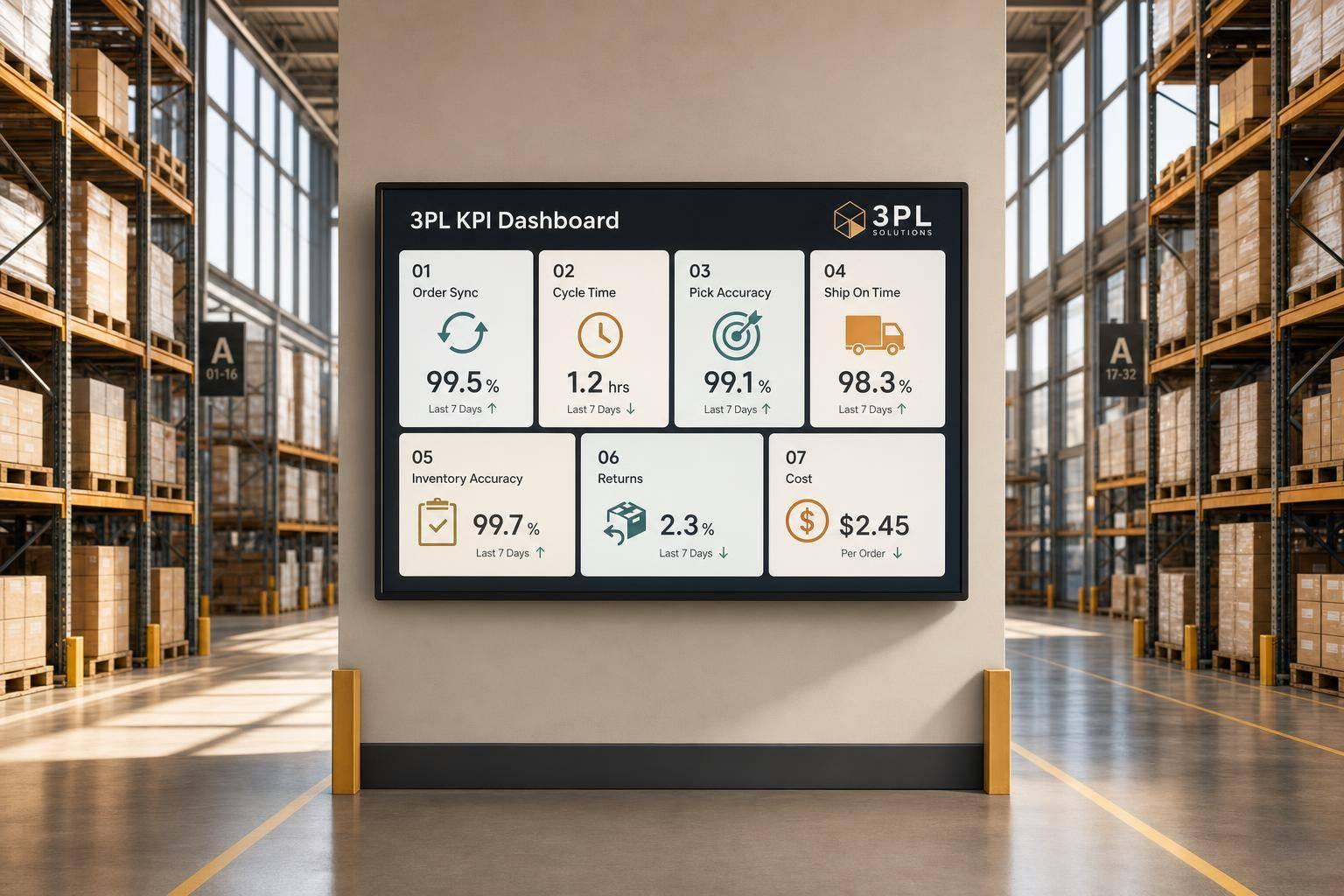
7 WooCommerce 3PL KPIs Teams Track

Centralized vs Decentralized Replenishment
