
Blockchain in 3PL: Improving Supply Chain Visibility
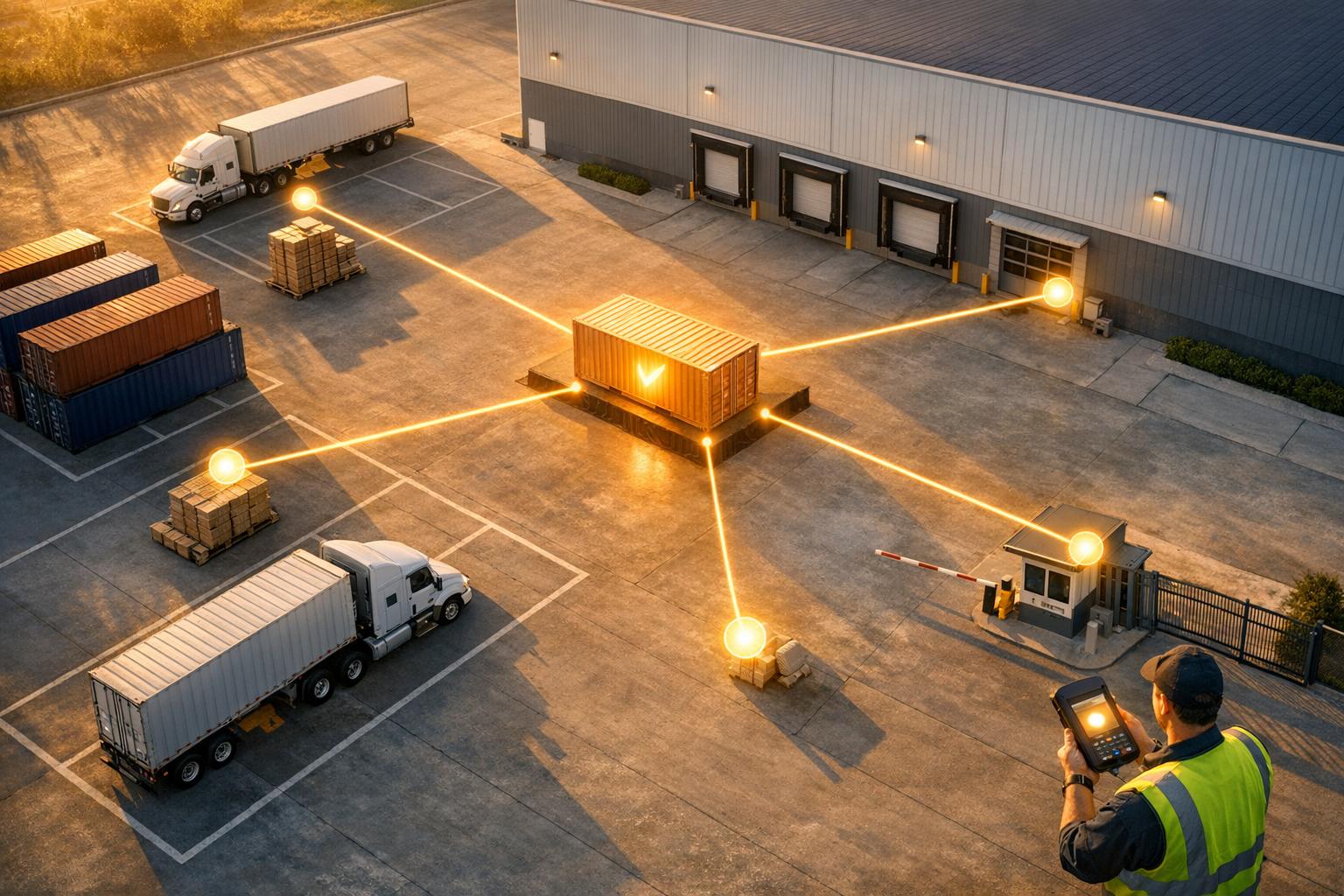
Blockchain is transforming the logistics industry by addressing key visibility challenges in third-party logistics (3PL). Here's how it helps:
- Real-Time Tracking: Blockchain integrates with IoT devices to provide immediate updates on shipment location, condition, and status.
- Tamper-Proof Records: Data entered into the blockchain cannot be altered, ensuring accuracy and trust among all stakeholders.
- Smart Contracts: Automates processes like payments and compliance checks, reducing manual errors and delays.
- Unified Data Sharing: Eliminates fragmented systems by creating a single, shared ledger accessible to all authorized participants.
For 3PL providers, this means fewer delays, better traceability, and increased trust across supply chain networks. Companies like Mitsubishi Logistics and Walmart Canada have already shown how blockchain reduces errors, speeds up processes, and improves transparency. However, successful implementation requires clean data, stakeholder collaboration, and scalable systems.
Blockchain in Supply Chain & Walmart Case
Common Visibility Challenges in 3PL Logistics
Many 3PL operations face difficulties in providing stakeholders with a transparent, real-time view of supply chain activities. These challenges often stem from outdated systems and fragmented processes. This is where blockchain technology shows potential by offering real-time, unchangeable data.
Fragmented Data Across Stakeholders
In a typical 3PL network, shippers, carriers, warehouses, and distributors often work on separate systems that rarely communicate. This creates data silos - isolated pockets of information that don’t flow freely across the network. The result? A lack of consistent information, where some stakeholders have a full picture, while others remain in the dark. As one study explains:
"The classic centralized systems of supply chain management are not always capable of being able to offer real-time traceability and data integrity which is dependable and effective in contract enforcement." - Naim Ayadi et al., MDPI Computers Journal
Adding to the problem, many operations still rely on manual methods like phone calls, paper documents, and spreadsheets. These processes slow down data exchange and increase the risk of errors. Confidentiality concerns also lead companies to closely guard their data, further isolating information. The result is a network that’s technologically connected but still fragmented in practice.
This lack of integration causes delays and reduces the accuracy of status updates.
Delayed and Inaccurate Status Updates
Fragmented data systems often lead to outdated or incorrect updates. Traditional tools rely on scheduled exports, end-of-day summaries, or manual check-ins to track shipments. By the time stakeholders receive an update, the situation on the ground may have already changed.
Take the case of RJ Logistics, a 3PL company based in Southfield, Michigan. They faced significant challenges tracking cross-border shipments through Mexico using traditional ELD-based systems. The process was unreliable, forcing their team to manually track freight locations. After adopting a universal API to automate GPS data into their McLeod TMS, RJ Logistics saw dramatic improvements. They reduced manual check calls by over 70% and increased tracking data points by 20 times, achieving more than 95% tracking coverage with updates every 15 minutes.
"With Rectangle, we went from spending hours chasing updates to having live tracking data flow directly into McLeod. It's changed how we operate and how our customers see us." - Ben Murchison, Director of Technology, RJ Logistics
These delays and inaccuracies don’t just cause frustration - they can lead to real financial losses. For example, outdated inventory data might show stockouts on storefronts while warehouses still have available units. On platforms like Amazon or Walmart, late shipment confirmations can trigger automated penalties, creating costly disruptions.
Lack of Trust in Shared Data
Another major challenge is the lack of trust in shared data. Traditional supply chains rely on records that can be altered, deleted, or entered incorrectly. Without a reliable, unchangeable record, stakeholders often hesitate to trust the information they receive. This mistrust leads to inefficiencies - a single product delivery can involve up to 200 separate communications among stakeholders, many of which are redundant checks to verify data accuracy. The result? Manual audits pile up, disputes arise, and overall efficiency takes a hit.
"Mistrust among the partners of a supply chain is a significant issue, which hinders collaboration." - Houssein Hellani, LIUPPA, Université de Pau et des Pays de l'Adour
Adding to the problem is the "oracle problem": even if a digital system records data correctly, there’s no guarantee that the data entered - whether through sensors or manual input - is accurate. Traditional systems lack a built-in way to verify the integrity of the source data, further fueling skepticism among partners.
How Blockchain Improves Supply Chain Visibility
Blockchain tackles the long-standing issues of fragmented data and delayed updates in supply chains. It replaces isolated, editable records with a distributed ledger that is accessible to all authorized participants, ensuring no single party can unilaterally alter the data.
Real-Time Tracking and Data Sharing
Blockchain's ability to track goods in real-time becomes even more powerful when combined with IoT devices. Think GPS trackers, temperature monitors, and humidity sensors - all feeding data directly into the blockchain. These sensor readings are timestamped and instantly shared with authorized stakeholders. Unlike traditional systems that rely on manual updates or scheduled data exports, blockchain provides immediate access, cutting down on delays and inefficiencies.
For example, smart contracts - automated programs that execute predefined conditions - reduce the need for manual checks. Companies like JIT Transportation use blockchain-enabled solutions to create fast, reliable visibility across their supply chain operations. This seamless data sharing ensures traceability at every stage.
"The era of opaque freight is giving way to a new dawn of freight transparency, promising profound benefits for businesses, consumers, and the global economy at large." - Supply Chain Informs
End-to-End Traceability and Tamper-Proof Records
Blockchain's design ensures every entry is cryptographically linked to the previous one, making tampering nearly impossible. Simulations have shown a 100% detection rate for any attempts to alter the ledger. This feature is especially useful in 3PL (third-party logistics) operations, where goods frequently change hands. Every transfer is recorded as a permanent entry, providing a reliable record in case of disputes over issues like damage or cold-chain failures.
A great example of this in action comes from Mitsubishi Logistics Corporation and Takeda Pharmaceutical. In July 2023, they expanded their "ML Chain" blockchain platform to manage transportation subcontractors. Smart contracts ensure that subcontractors meet strict quality standards - like having valid permits and passing Good Distribution Practice audits - before the workflow continues.
"Through our partnership with Mitsubishi Logistics, we will be able to even more reliably deliver the high-quality medicines that patients need." - Greg Timmons, Head of Global Manufacturing & Supply Japan, Takeda Pharmaceutical
Blockchain also speeds up traceability. For instance, it can reduce the time needed to trace a product's journey from 95 seconds to just 8 seconds - a stunning 91.5% improvement.
A Single Source of Truth for Supply Chain Data
Beyond tracking and security, blockchain solves a major pain point: fragmented records. Traditional 3PL networks often rely on manually shared spreadsheets, leading to discrepancies and confusion when partners operate with different versions of the same data. Blockchain eliminates this issue by creating a unified ledger that all pre-approved participants - manufacturers, carriers, 3PLs, and retailers - can access.
"Blockchain is a convenient tool to overcome trust and collaboration issues in a supply chain. It is called the 'truth machine,' and discourages companies from any misconduct." - MDPI Logistics Journal
This doesn't mean all data is open to everyone. Permissioned blockchains, like Hyperledger Fabric, allow organizations to control access. For example, sensitive details such as negotiated rates stay private, while shipment status, custody transfers, and compliance records are shared with relevant parties. This balance ensures both transparency and confidentiality.
Blockchain Use Cases in 3PL Operations
In the world of third-party logistics (3PL), where trust and real-time data are paramount, blockchain technology steps in to simplify and enhance every stage of the process. By introducing verified, real-time visibility, blockchain transforms the way shipments are tracked, warehouses are managed, and products are authenticated. From the warehouse to the customer’s doorstep, this technology offers capabilities that traditional systems simply can't match.
Shipment Tracking and Transportation Visibility
Blockchain provides a shared, real-time view of a shipment’s entire journey for all authorized stakeholders - shippers, carriers, and receivers. Every event along the way, whether it’s dispatch, carrier pickup, arrival at sorting hubs, or final delivery, is logged as a timestamped entry on the blockchain ledger. This eliminates the need for manual updates or constant follow-ups.
The efficiency it brings is a major advantage. For instance, disputes over payments - amounting to over $130 billion daily - can be resolved much faster with blockchain’s tamper-proof, timestamped records. These records offer a transparent audit trail, making it easier for all parties to identify and address discrepancies without delays.
Warehouse and Fulfillment Visibility
Within warehouses, blockchain acts as a safeguard for inventory data. When paired with IoT sensors, it monitors environmental conditions such as temperature, humidity, and light. Any deviations from set thresholds are automatically recorded on the blockchain, which is especially important for sensitive items like pharmaceuticals or perishables. A single unnoticed breach could ruin an entire shipment, but blockchain ensures such issues are logged and addressed promptly.
Smart contracts add another layer of efficiency by automating key processes. Tasks like quality checks, compliance validation, and order releases can be triggered automatically when preset conditions are met. This eliminates the need for manual approvals, reducing both human error and delays caused by back-and-forth coordination between warehouse staff and logistics teams.
"Blockchain technology, with features such as being highly secure and distributed, can help... enhance information sharing and supply chain visibility." - Sunil Tiwari, Professor
Blockchain’s role doesn’t stop at internal operations; it also strengthens product integrity through advanced authentication systems.
Product Authentication and Fraud Prevention
Counterfeiting and cargo fraud are long-standing challenges in global supply chains. Blockchain combats these issues by establishing a cryptographic chain of custody. Each time a product batch changes hands, a new record is added to the blockchain, mathematically linked to the previous one. This structure makes tampering immediately detectable because altering one entry would disrupt the entire chain. Simulations have shown a 100% detection rate for tampering attempts.
A practical example of this is Walmart’s use of IBM Food Trust in 2022. By employing a blockchain-based traceability system, Walmart could trace the source of food contamination in seconds instead of days. For 3PL providers dealing with high-value or regulated goods, this kind of traceability builds confidence with clients and consumers alike.
These examples highlight how blockchain addresses key challenges in 3PL operations, offering solutions that enhance transparency, efficiency, and trust across the supply chain.
sbb-itb-eafa320
Key Considerations for Implementing Blockchain in 3PL
Integrating blockchain into third-party logistics (3PL) operations isn't a plug-and-play process. It requires a solid foundation of digital readiness and strong collaboration among stakeholders. These elements are crucial for successful adoption in modern logistics.
Data Integration and Digital Readiness
Blockchain's reliability hinges on the quality of the data it processes. If data entry is manual or reliant on paper records, errors can become permanent and undermine the system. This is a classic case of "garbage in, garbage out", and it's often overlooked when adopting blockchain.
To avoid this pitfall, all supply chain data must be digitized and integrated. Using tools like APIs, IoT devices, and RFID tags ensures a steady flow of accurate information. Trusted oracles play a key role in verifying data before it's recorded on the blockchain. For 3PLs managing sensitive goods, trusted execution environments can secure this verification process, ensuring that data captured - whether in a warehouse or during transit - is accurate before triggering smart contracts.
Once the data is clean and consistent, the next step is ensuring that all stakeholders are aligned for effective blockchain use.
Stakeholder Collaboration and Governance
Even with digitized data, blockchain in 3PL only works when all parties - shippers, carriers, warehouse operators, customs brokers - are on the same page. Everyone must agree on how data is shared, who has access, and who takes responsibility when issues arise.
A well-structured governance model is essential. A three-tier approach - covering strategic, technological, and interoperability aspects - clarifies roles and data standards. Without this framework, even the best blockchain system can falter due to disagreements among participants.
Standardizing data formats using global frameworks like GS1 helps avoid creating new silos. It's also important to provide clear incentives for participation. If suppliers and carriers don't see tangible benefits, adoption will lag. Defining measurable KPIs tied to data-sharing activities can help align everyone's efforts.
"Blockchain is like a trust infrastructure that works as a cover over existing systems instead of taking their place." - Dipen Patel, CTO, TRooTech
A practical example of governance in action: In July 2023, Mitsubishi Logistics and Takeda Pharmaceutical launched "ML Chain", a platform using smart contracts to verify compliance of transportation subcontractors in real time. This system automatically checked permits, licenses, and audit records against GDP (Good Distribution Practice) standards, eliminating the need for manual verification across multiple parties.
"Through our partnership with Mitsubishi Logistics, we will be able to even more reliably deliver the high-quality medicines that patients need." - Greg Timmons, Head of Global Manufacturing & Supply Japan, Takeda Pharmaceutical
Interoperability and Scalability
Most 3PL companies rely on a mix of ERP systems, warehouse management tools, and transportation management software. A blockchain solution that can't integrate with these existing systems is more of a hindrance than a help. Integration ensures that blockchain complements real-time tracking and end-to-end traceability, rather than complicating workflows.
Permissioned blockchains are often the better choice for 3PL operations. These networks offer faster transaction speeds, stronger access controls, and the confidentiality needed in logistics. For example, a study on a 15-node, multi-tier supply chain showed that permissioned blockchains achieved an average transaction delay of just 210 ms, compared to 520 ms for centralized systems, while handling 120 transactions per minute.
To handle growing volumes, techniques like sharding and off-chain storage (where only cryptographic proofs are stored on-chain) can prevent bottlenecks. The goal is to create a system that scales effortlessly as the business grows, avoiding the need for costly overhauls with every expansion.
Benefits, Limitations, and Best-Fit Scenarios for Blockchain in 3PL

Blockchain in 3PL: Key Stats & Real-World Impact
Key Benefits of Blockchain in 3PL
Blockchain's potential in logistics isn't just theoretical - it's been proven in real-world applications. Take Walmart Canada, for instance. In January 2020, they teamed up with DLT Labs and Bison Transport to roll out a blockchain-based freight payment system. The results? Invoice discrepancies dropped from 70% to less than 1%, and freight claim disputes plunged by 98.5% across over 500,000 annual shipments involving 70 third-party carriers.
"We knew the root causes were systems issues and not people problems. We also knew we were definitely not blockchain experts and if we were to go down that path, we would need a partner willing to co-create with us." - John Bayliss, EVP, Chief Transformation Officer, Walmart Canada
Blockchain also stands out for its tamper-proof records. These records provide unmatched security, with a 100% detection rate for attempted data tampering, even if up to 30% of the network nodes are compromised. This level of reliability is especially critical in scenarios like recalls, audits, or resolving high-stakes disputes.
Challenges and Limitations
Despite its benefits, blockchain in 3PL isn't without its challenges. One major technical hurdle is the oracle problem - blockchain's accuracy depends entirely on the data it receives. For example, if an IoT sensor feeding data into the blockchain is miscalibrated or compromised, the incorrect information becomes a permanent part of the ledger. Blessing Takawira from the Institute of Transport and Logistics Studies explains:
"Blockchain integration with IoT is often proposed as a trust-enabling mechanism, its practical implementation remains constrained by unresolved tensions - such as oracle reliability, high integration costs, and the lack of interoperable standards."
Other obstacles include high integration costs, compatibility issues with legacy systems, and challenges in getting all stakeholders on board. Blockchain's power lies in its shared ledger, but if even one major player opts out, the system's value diminishes significantly.
When Blockchain Makes the Most Sense
Blockchain shines in situations where multiple parties need to share data, but trust is limited, and errors come with a high cost. For example, cold chain logistics for pharmaceuticals is a standout use case. A blockchain-based 3PL platform for vaccine supply chains achieved an operational accuracy of 93.21% and a precision of 90.23%. In an industry where supply chain failures can have life-or-death consequences, these metrics are invaluable.
Another ideal application is high-volume freight payment reconciliation, as demonstrated by Walmart Canada. Blockchain also fits well in regulated industries where subcontractor compliance needs constant and automated verification. However, if your supply chain involves just a few trusted partners, straightforward routes, and minimal disputes, the complexity and cost of blockchain may not be worth it. But for operations riddled with visibility gaps and data conflicts, blockchain offers a compelling solution. It enhances real-time visibility and builds trust, making it a game-changer for complex 3PL networks.
How JIT Transportation Fits into Blockchain-Enabled 3PL
JIT's Technology-Forward Infrastructure
One of the biggest hurdles to blockchain adoption is integrating fragmented data systems. This is where a 3PL's existing tech setup becomes a game-changer.
JIT Transportation has an integrated tech stack that includes TMS, WMS, and ERP systems. These tools ensure the availability of clean, standardized, and real-time data - exactly what's needed for blockchain functionality. Whether it’s shipment milestones, inventory movements, proof-of-delivery confirmations, or exception events, everything is digitally captured and shared through API and EDI connections.
"Technology is the digital backbone of high-performance logistics." - JIT Transportation
JIT's ability to connect with widely-used ERP systems like SAP, Oracle, and Microsoft Dynamics makes integrating blockchain pilots more straightforward. Critical events such as order creation, pickup scans, cross-dock arrivals, and final-mile delivery confirmations can all be recorded on the blockchain as signed, time-stamped transactions. This capability significantly reduces risks and costs for U.S. shippers working within tight schedules and budgets.
Scalable 3PL Services Built for Complex Supply Chains
JIT doesn’t just rely on its tech foundation - it also uses its value-added services to produce detailed, on-chain event data. Services like pick & pack, kitting & assembly, testing, and white glove handling create granular data points that enhance blockchain traceability. For instance, during a kitting operation, records are generated to show which components were combined into a finished product. Testing and white glove services add inspection results and condition checkpoints. Each of these steps becomes a unique on-chain event, creating a comprehensive and auditable product history that aids in quality assurance, warranty validation, and recall management.
With 14 warehouses, over 2.5 million square feet of warehouse space, and a carrier network of more than 500 carriers across the U.S., JIT is well-positioned to support blockchain initiatives on a large scale. Once event schemas and data standards are established at one location, they can be consistently applied across JIT's entire network. This provides shippers with the standardized data structures needed to maximize the power of a shared ledger as it grows. For industries like pharmaceuticals, medical devices, electronics, and automotive - where traceability and multi-tier supplier networks are critical - JIT's operational depth and tech capabilities make it an ideal partner for scaling blockchain visibility from pilot projects to full-scale programs.
"Our systems are built for visibility and responsiveness - so you can make decisions confidently, even during peak demand." - JIT Transportation
Conclusion: Blockchain's Role in the Future of 3PL Logistics
Blockchain is no longer just a buzzword in logistics - it’s a practical solution tackling the visibility gaps that cost U.S. shippers both time and money. Issues like fragmented data, unreliable updates, and a lack of trust in multi-party supply chains are all addressed through a single, tamper-proof record that authorized stakeholders can access.
Rather than replacing current systems, blockchain enhances them. Permissioned blockchains safeguard sensitive business data while providing the transparency partners rely on. Smart contracts streamline administrative tasks, and when combined with IoT sensors, blockchain ensures that critical events - like temperature changes, delivery confirmations, or warehouse transfers - are recorded instantly and permanently. These features directly address the challenges of disorganized data and delayed updates mentioned earlier.
Here’s a key takeaway:
"Blockchain is not merely a tool for incremental improvement; it is an architectural shift that will redefine the competitive landscape of logistics and global trade." - Supply Chain Informs
The technology delivers the greatest value in high-stakes industries such as pharmaceuticals, electronics, luxury goods, and food logistics. In these sectors, the ability to trace products and prevent counterfeits or missed recalls outweighs the cost of implementing blockchain systems. This traceability is at the core of blockchain’s effectiveness.
JIT Transportation exemplifies how blockchain can work in real-world logistics. With its nationwide warehouse network, API-driven system integrations, and services that capture detailed event data at every step, JIT provides the digital and operational backbone needed to make blockchain adoption not just feasible but impactful. For shippers looking to move beyond fragmented visibility and embrace a fully connected supply chain, this infrastructure offers a clear starting point.
Explore more about JIT Transportation’s capabilities here.
FAQs
What data should go on-chain vs stay private?
To strike a balance between transparency and privacy, it's best to record essential, unalterable data on the blockchain. This could include things like shipment updates, quality checks, or compliance information (e.g., maintaining proper temperature). However, sensitive business details - such as transaction volumes, pricing rates, supplier identities, and sale prices - should remain private or be stored within permissioned systems.
Many companies choose to log only major milestones or violations on the blockchain, while storing routine data in secure databases. Permissioned blockchains offer an added layer of control by allowing role-based access to sensitive information, ensuring that only authorized individuals can view or manage it.
How do we ensure IoT tracking data is trustworthy?
Trusting IoT tracking data becomes much easier with the integration of blockchain as a decentralized trust layer. IoT sensors gather real-time data, but they aren't immune to errors or even tampering. Blockchain tackles this challenge by recording sensor data in an immutable and tamper-proof ledger. To add another layer of reliability, trusted oracles verify the data before it gets stored, ensuring that only accurate information makes it to the ledger. Companies like JIT Transportation are leveraging these technologies to provide clear and transparent supply chain visibility.
What’s the fastest way to pilot blockchain with a 3PL?
The fastest way to test blockchain with a third-party logistics provider (3PL) is through blockchain-as-a-service (BaaS) platforms and cloud tools like Amazon EKS or Oracle Blockchain Platform. These tools come with ready-to-use modules for smart contracts and supply chain transparency. JIT Transportation takes things further by offering smooth API integrations and real-time tracking, ensuring the accurate, dependable data required to support and verify blockchain systems effectively.
Related Blog Posts
Related Articles

8 Ways 3PLs Handle Seasonal Workforce Swings

Marketplace API vs EDI for Fulfillment
