
Ethics of AI in Warehouse Operations
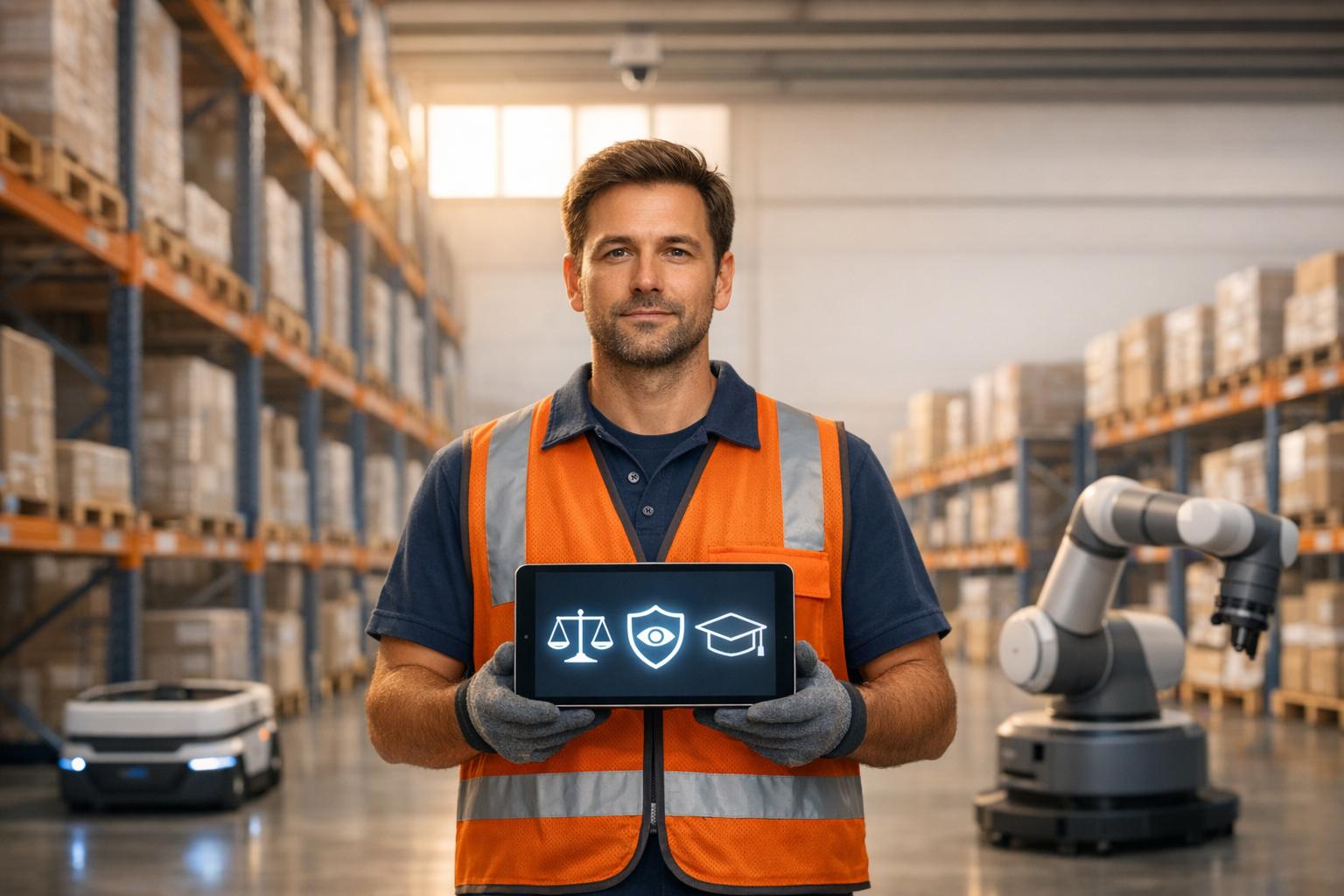
AI is transforming warehouse operations, but it's raising serious ethical questions. From automating tasks to tracking worker performance, AI systems are everywhere in modern warehouses. While they boost efficiency, they also create challenges like job losses, biased decision-making, and privacy concerns. Here's what you need to know:
- Automation cuts jobs: Advanced AI systems can reduce warehouse staff by nearly 40% within 18 months, with entry-level roles being the most affected.
- Bias in algorithms: AI often reinforces existing biases, leading to unfair task allocation or performance evaluations.
- Worker surveillance: Over 68% of employees report being monitored, which increases stress and reduces privacy.
- Training gaps: Only 21% of workers have the skills needed for new AI-driven roles, leaving many displaced or underpaid.
To address these issues, companies must ensure transparency, reduce bias in AI systems, and provide proper training for employees. Ethical AI practices can help balance efficiency with worker well-being, but only if businesses take deliberate action.

Impact of AI Automation on Warehouse Workers: Key Statistics
AI and the Paradox of Self-Replacing Workers | Madison Mohns | TED

sbb-itb-eafa320
Main Ethical Concerns in AI-Driven Warehouse Automation
As AI technology becomes more integrated into warehouse operations, it raises some tough ethical questions. These challenges go beyond just improving efficiency - they touch on issues like job security, fairness, and the dignity of workers.
Worker Displacement and Job Changes
Automation is having a major impact on warehouse jobs. Studies reveal that advanced automation systems lead to workforce reductions averaging 38.4% within 18 months of being deployed. Entry-level roles like picking are hit the hardest, with a staggering 64.7% displacement rate, followed by packing roles at 51.3%. For every ten automation systems introduced, only one or two technical roles are created, while three to four jobs are eliminated.
The shift isn’t just about job losses - it’s also about a growing skills gap. Only 21.3% of warehouse workers have the qualifications needed for these new technical roles. For displaced workers, finding new employment takes an average of 7.2 months, nearly double the 3.8-month average in other manufacturing sectors. And when they do find work, nearly half (47.6%) accept jobs with wages 22.3% lower than their previous positions.
A clear example of this trend is the U.S. Postal Service’s use of autonomous mobile robots at its Pennwood Place sorting center. This move cut salary costs for power industrial vehicle drivers by 14.8%, showing how automation reduces the need for human labor in specific tasks. This has led to what researchers call a "bifurcation" of the workforce: manual roles face stagnant wages, while a small number of technical roles see higher pay.
Automation also affects the quality of work. Many jobs are reduced to repetitive tasks, stripping away worker autonomy and making the work feel less meaningful. Algorithmic management systems, which set pace-based targets, often increase stress and physical strain on employees. Additionally, digital technologies are enabling more temporary contracts and subcontracting, creating job instability. These disruptions lay the groundwork for further ethical challenges.
Algorithmic Bias in Task Assignment
AI systems often determine work pace and task assignments through algorithms, but these systems are far from transparent. For example, "the rate" is an algorithmically determined target that dictates how fast workers must complete tasks like picking or packing. These systems function as opaque black boxes, leaving workers in the dark about how their performance is evaluated or how to challenge unfair targets.
"Rather than only analysing specific AI technologies being deployed, we should look at the overall infrastructural system that is changing through AI." - Dr. Funda Ustek Spilda, Lead Author, Fairwork
This lack of transparency can lead to biased task allocation. Algorithms may unintentionally assign unequal workloads or prioritize efficiency over fairness. In some cases, this results in job roles being narrowed to repetitive, deskilled tasks. The heavy reliance on digital interfaces for task coordination also reduces human interaction, which can isolate workers and weaken workplace relationships. Vulnerable groups, like migrants and workers with impairments, are often disproportionately affected by these changes.
Employee Surveillance and Privacy Issues
Another major concern is the rise of workplace surveillance. In the U.S., 68% of workers report being electronically monitored, and 8 out of 10 of the largest private-sector companies use some form of productivity tracking. In warehouses, 34% of workers say their schedules are assigned automatically by AI systems.
This constant monitoring has real consequences for worker well-being. Among workers who are monitored "all the time", 46% feel pressured to work at unhealthy speeds, compared to just 15% of those who aren’t monitored. Additionally, 9% of constantly monitored workers report workplace injuries, nearly double the 4% injury rate for those who aren’t monitored.
"Algorithmic management ratchets up the devaluation of work, leads to the deterioration of working conditions and creates risks to workers' health and safety." - AI Now Institute
Surveillance practices also reveal troubling disparities. For instance, 82% of Black workers and 73% of Hispanic workers report being monitored, compared to 65% of White workers. Larger companies are even more likely to use monitoring, with 88% of employees in organizations with 1,000+ workers reporting some form of electronic tracking.
Beyond productivity tracking, surveillance data is sometimes used to make decisions about pay, safety, or even access to resources, creating a power imbalance. Some companies have even used monitoring to discourage union organizing or collective action. There’s also growing concern about data being shared with third parties or combined with government records, amplifying privacy risks. These practices highlight the urgent need for ethical guidelines that protect workers while maintaining operational goals.
Best Practices for Ethical AI Implementation in Warehouses
To implement AI ethically in warehouses, companies must balance automation with clear communication, fairness, and worker development. By addressing challenges like worker displacement, algorithmic bias, and surveillance, these practices offer actionable solutions. Organizations that adopt these principles can benefit from AI without neglecting their social responsibilities, shifting from a purely efficiency-driven approach to one that prioritizes both operational success and ethical considerations.
Enhancing AI Transparency
Transparency in AI systems is critical, especially in environments like warehouses. Moving away from opaque "black box" models, Explainable AI (XAI) allows users to trace decisions back to their source data and understand the reasoning behind them. This is particularly valuable in warehouses, where workers benefit from knowing how performance metrics are calculated or how tasks are assigned.
"Explainable AI is the ability to trace back an algorithm to the data that it is built on, and find the logical chain of association from secure and trustworthy data." – DHL
To make AI systems more transparent, companies can take steps like:
- Providing confidence scores for AI-based decisions.
- Keeping detailed audit logs for accountability.
- Allowing human overrides to maintain control.
- Enabling workers to review the data collected about them.
These measures help ensure that AI supports human judgment rather than replacing it. However, only 24% of logistics firms currently have clear policies addressing AI accountability.
Reducing Bias in AI Systems
Transparency alone isn’t enough - reducing bias in AI systems is equally crucial. Bias often stems from training data or system design flaws. Regular impact assessments can identify and address potential discrimination in AI systems used for tasks like performance management.
Instead of removing large amounts of data to balance datasets, newer methods like Data Debiasing with Datamodels (D3M) offer a more precise solution. Developed by MIT researchers Kimia Hamidieh and Andrew Ilyas in December 2024, this technique uses the TRAK algorithm to pinpoint and remove specific data points that contribute to bias. Tests on three machine-learning datasets showed that D3M improved "worst-group accuracy" while retaining 20,000 additional data points compared to traditional methods.
As Hamidieh explains:
"There are specific points in our dataset that are contributing to this bias, and we can find those data points, remove them, and get better performance."
Beyond technical fixes, companies should create feedback channels where workers can report perceived biases in AI-driven decisions. Using diverse datasets that reflect varying conditions - such as lighting, warehouse layouts, and worker demographics - can further reduce biased outcomes. Additionally, organizations should provide layered explanations of AI decisions, tailoring the level of detail to the audience: technical insights for administrators, operational context for managers, and straightforward explanations for workers.
Training Workers for AI-Driven Changes
Technical improvements must be paired with effective worker training. A phased approach - combining manuals, workshops, and hands-on demonstrations - helps employees adapt to new systems gradually. It’s essential to emphasize that AI is a tool to assist workers, not replace their expertise.
Engaging employees early in the implementation process is also critical. Human-centered design involves including workers and their representatives in decision-making from the start. Workers need clear explanations of how AI systems operate, how their data is used, and how these tools will impact their roles. Pilot programs in select areas, involving worker representatives, can help identify potential issues and build trust before full-scale deployment.
Training should go beyond teaching employees how to use AI systems. It should also focus on developing human skills like intuition, empathy, and problem-solving - qualities that complement machine efficiency. As Rayid Ghani, Professor of Machine Learning and Public Policy at Carnegie Mellon University, notes:
"The AI that we're looking at now is immature. There are no standards, no professional body, no certifications. Everybody figures out how to do it, figures out their own internal norms."
Continuous education is key as AI evolves, ensuring workers remain central to operations rather than being sidelined by automation. These practices lay the groundwork for applying ethical AI in real-world logistics settings, as explored in the next case study.
Case Study: Ethical AI Integration in Logistics
AI-Driven Optimization in Distribution and Fulfillment
JIT Transportation has made ethical AI integration a cornerstone of its operations, particularly in managing high-value freight. By blending predictive inventory models with real-time data, the company transforms supply chains into smart, just-in-time systems. This approach is especially vital for industries like AI hardware and semiconductor equipment, where projects often demand completion within tight 48-hour deadlines.
A key feature of JIT's ethical framework is its Chain of Custody system, which meticulously documents every handoff and update during the shipping process. The system relies on digital audit trails, electronic receipts, and time-stamped photos to ensure transparency and accountability. As the company explains:
"In high-value, high-risk freight environments, chain of custody isn't just a best practice - it's a business requirement."
Instead of replacing human workers, JIT embraces a human-first approach, where technology enhances the capabilities of trained delivery teams. For example, GPS geofencing tools are used to support, not substitute, human expertise in managing sensitive shipments like AI hardware and semiconductor components. To further address ethical concerns, the company prioritizes data security by incorporating encrypted tracking systems and cyber-aware handling practices that protect both physical goods and sensitive information. By aligning cutting-edge tracking tools with human oversight, JIT ensures transparency and mitigates the potential negative impacts of automation on its workforce.
Scalable Solutions for Growing Businesses
JIT Transportation extends its ethical AI practices to scalable kitting and assembly services, enabling businesses to grow without compromising operational integrity. With strategically located hubs across the country, the company helps brands ramp up production and launch new products while maintaining consistent performance standards.
Curtis Martin, Senior Operations Manager at Synnex, highlights the impact of these services:
"JIT's on-time performance and material handling expertise are game-changers."
The increasing demand for such solutions is reflected in the projected growth of the logistics automation market, which is expected to rise from $88 billion in 2025 to $213 billion by 2032, with an annual growth rate of about 13.4%. This trend underscores the need for logistics providers like JIT to balance technological innovation with ethical responsibility as they scale their operations to meet future challenges.
Conclusion: Balancing Innovation and Responsibility
The rapid integration of AI in warehouse operations has placed the logistics industry at a pivotal moment. Automation offers the potential for impressive efficiency gains - it's estimated that 80% of warehouses will employ robotics by 2028. However, this progress brings ethical challenges that can’t be ignored. Striking a balance between advancing technology and maintaining responsibility is essential.
Studies from logistics hubs in Belgium, Poland, and the UK reveal a mixed impact. On one hand, automation can ease physical workloads; on the other, it may lead to work intensification and heightened surveillance. This duality underscores the importance of designing AI systems with transparency and accountability from the start. Transparent algorithms not only improve worker trust but also help smooth the transition to new technologies.
Involving workers in the design and governance of AI systems can transform automation into a tool that enhances their roles rather than undermining them. As Dr. Funda Ustek Spilda pointed out, failing to ask the right questions about AI risks harming workers significantly. These insights highlight the core practices that must guide the ethical implementation of AI systems.
Key Takeaways for Ethical AI in Warehouse Operations
For companies adopting AI-driven warehouse technologies, the focus should remain on:
- Ensuring transparency in algorithmic decision-making.
- Promoting meaningful collaboration between humans and robots.
- Providing ongoing training to address algorithmic bias and support worker adaptability.
Well-designed AI systems should complement human expertise by prioritizing reskilling, clear accountability, and regular ethical reviews. As Benedict Jun Ma and Maria Jesus Saenz from the MIT Digital Supply Chain Transformation Lab emphasize:
"The future of warehouse operations hinges on a delicate balance between human capability and robot autonomy, empowered by AI."
At JIT Transportation, we are dedicated to integrating ethical AI practices into our logistics framework. Our goal is to ensure that technological advancements not only drive innovation but also enhance human expertise, making warehousing safer and more efficient.
FAQs
How can companies ensure AI in warehouse operations is ethical and unbiased?
To make sure AI systems in warehouses operate responsibly, businesses should prioritize transparency, fair practices, and ongoing monitoring. A key step is creating AI systems that are easy to understand, making their decision-making processes clear and accountable. Regular checks on algorithms can uncover and fix biases that might unfairly impact workers or disrupt operations.
Setting clear ethical standards for AI is just as important. This means using accurate and well-rounded data for training models while safeguarding privacy. Including diverse teams in the development and deployment of AI systems can also help reduce bias and encourage fairness. By promoting a strong sense of ethical responsibility, companies can ensure their AI tools are both efficient and fair in warehouse environments.
How can workers' privacy be safeguarded from AI surveillance in warehouses?
Protecting workers' privacy from AI surveillance in warehouse operations calls for a mix of well-thought-out policies and practical measures. Companies need to set specific guidelines and legal safeguards to limit how surveillance is used and to ensure they follow privacy laws. Being upfront is critical - employees should know what data is being collected, how it will be used, and why it’s necessary.
To reduce unnecessary intrusion, employers should limit monitoring to tasks that are directly tied to operational needs and avoid surveillance in areas where privacy is especially important. Open communication is essential; creating opportunities for workers to voice concerns - whether individually or through unions or worker organizations - can help ensure fair privacy practices. Striking the right balance between efficiency and respecting privacy rights builds a workplace that feels more ethical and fosters trust.
How can warehouse workers adapt to AI-driven roles after job displacement?
Warehouse workers impacted by automation have opportunities to shift into AI-focused roles through specialized retraining programs. These initiatives aim to teach workers how to operate, maintain, and work alongside AI and robotic systems. Options for training often include collaborations with colleges, online learning platforms, and programs led by industry experts, ensuring workers gain the skills needed for more advanced roles in automated settings.
Additional support from federal and state policies, along with union-driven efforts, can offer resources like funding and safety nets to help workers navigate this transition. By combining efforts from businesses, public programs, and local communities, workers can adapt to the changing demands of AI-driven warehouse environments.
Related Blog Posts
Related Articles

8 Ways 3PLs Handle Seasonal Workforce Swings

Marketplace API vs EDI for Fulfillment
