
How Simulations Improve Supply Chain Resilience
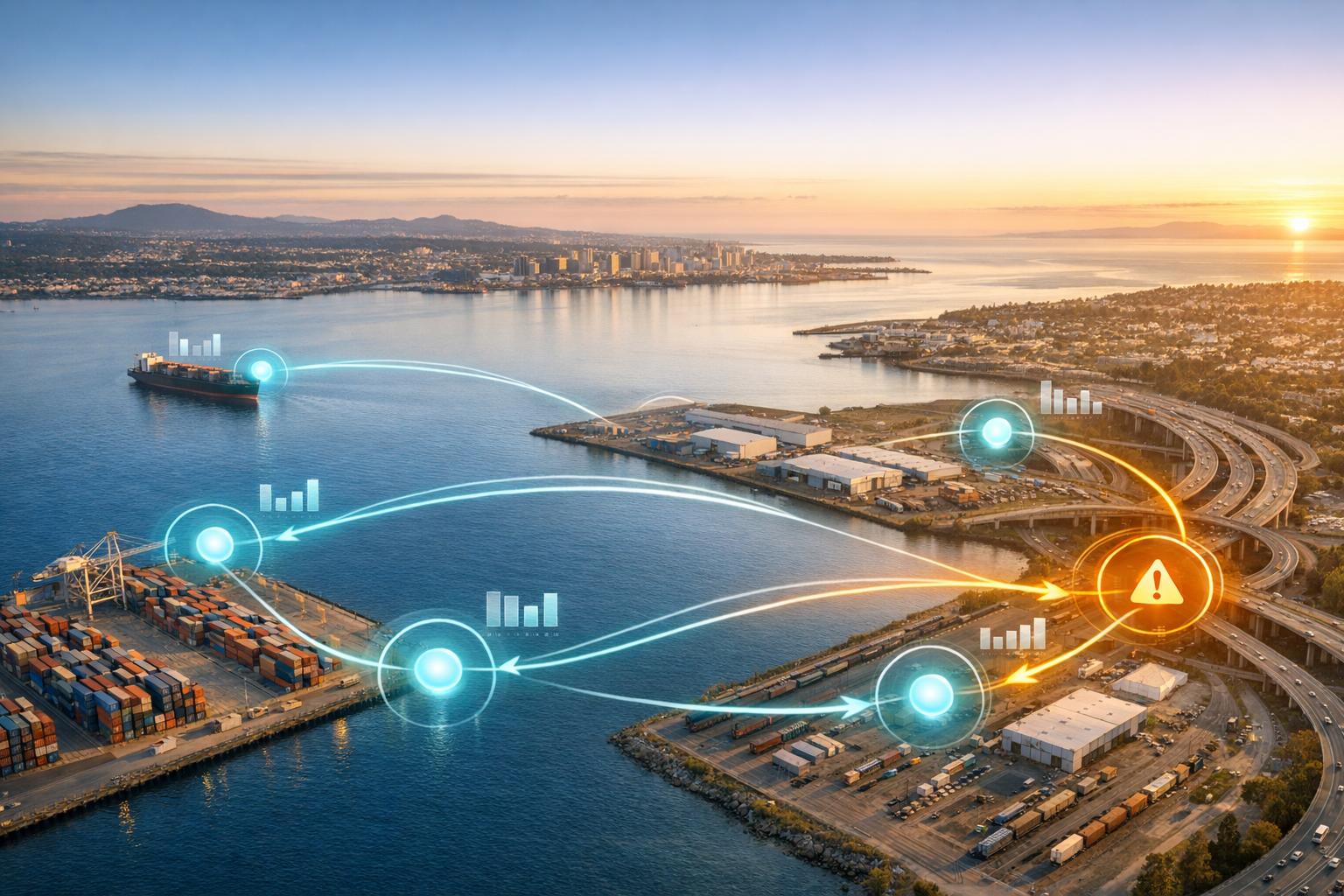
Supply chain disruptions are inevitable. Whether it's port closures, supplier failures, or demand spikes, these events can cost companies millions. Simulations offer a way to predict and prepare for these challenges, creating a "digital twin" of your supply chain to test scenarios without risking real-world operations.
Key takeaways:
- Predict risks before they happen: Simulate events like supplier delays or facility closures to see their impact and plan solutions.
- Improve decision-making: Balance costs, service levels, and risks by testing strategies in a controlled environment.
- Optimize inventory: Avoid stockouts and reduce excess inventory by analyzing supply chain dynamics.
- Save time and money: Use AI-powered tools to run multiple scenarios quickly, cutting decision-making time by up to 40%.
Supply chain simulation, AI and digital twins: theory to use cases and implementation blueprints
sbb-itb-eafa320
Supply Chain Vulnerabilities in E-commerce

Supply Chain Disruption Statistics and Impact on E-commerce Operations
External Disruptions and Their Impact
E-commerce supply chains are highly sensitive to external disruptions, which can bring operations to a standstill. Studies reveal that 80% of organizations experienced at least one supply chain disruption over the past year, with each disruption costing an average of $1.5 million per day in losses. Alarmingly, major disruptions now occur every 3.7 years on average, compared to every 5 years just a decade ago.
Geopolitical tensions and fluctuating trade policies often force shipping reroutes, extend lead times, and increase fuel prices. New tariffs can raise landed costs by 10–25%, creating unpredictable shipping cycles. For example, in early 2026, China's exports surged by 21.8% as importers rushed to stock up before impending tariff hikes took effect.
Major U.S. ports face their own challenges. Labor disputes and closures at key gateways like Los Angeles lead to widespread delays. In September 2025, an FMCSA emergency rule sidelined 200,000 drivers overnight, worsening truckload capacity shortages.
"Logistics lives in perpetual disruption. Every season brings its own capacity swings... But the real market shifts come from the unexpected - COVID shutting down the country, hurricanes and polar vortexes."
- JJ Lewis, SVP of Truckload at WWEX Group
Natural disasters further complicate matters. After Hurricane Helene struck in late 2024, a Baxter International IV fluid plant in North Carolina - responsible for supplying 60% of the U.S. market - sustained damage, disrupting supplies for 86% of U.S. hospitals. Cyberattacks are another growing threat. For instance, in 2024, JAS Worldwide suffered a ransomware attack that disrupted customs clearance and cargo tracking for over 72 hours, leading to an estimated $120 million in lost revenue and penalties.
While these external factors create significant challenges, internal inefficiencies within supply chains often magnify the impact.
Internal Operational Challenges
External disruptions are often exacerbated by internal vulnerabilities within e-commerce supply chains. One common issue is single-source dependency, where seemingly diverse vendors rely on the same upstream raw material supplier or shipping route.
Inaccurate demand forecasting also plays a major role, leading to the bullwhip effect - small changes in consumer demand can cause large inventory swings upstream. Outdated tools like spreadsheet-based planning and inventory synchronization delays of over 30 minutes worsen overselling during supply shortages. The lack of contingency plans adds to the problem, as expedited shipping costs can be 3–10 times higher than standard rates.
Static safety stock formulas based on historical data leave businesses exposed to unexpected risks. Modern supply chains need real-time, dynamic algorithms that can adapt to signals like port congestion or severe weather. A relevant example comes from Ford Motor Company, which stress-tested its supply chain of 4,400 supplier sites and $80 billion in procurement. The company found that while disruptions at 61% of supplier sites had no financial impact, disruptions at just 2% of sites could cause substantial losses. This analysis allowed Ford to focus its risk mitigation efforts on the most critical areas.
How Simulations Address Supply Chain Problems
What Are Supply Chain Simulations?
Supply chain simulations use computational models to replicate your supply chain, allowing you to test decisions and strategies in a risk-free environment.
"A simulation model is a mathematical and computational representation of a supply chain system. It acts like a real-world supply chain, enabling businesses to simulate different scenarios, predict outcomes and assess the impact of decisions and strategies without disrupting actual operations."
These models are perfect for exploring "what-if" scenarios. For instance, what would happen if a major supplier failed to deliver on time? Or how would closing a facility impact your distribution network? Simulations analyze the ripple effects across the entire supply chain - like how a port closure might lead to warehouse shortages and delivery delays. Unlike traditional methods that depend on spreadsheets and historical data, simulations dive deeper, using detailed, SKU-level data to map out every step, from sourcing to final delivery. This level of precision helps businesses tackle both operational and strategic risks more effectively, while also paving the way for advanced tools that strengthen supply chain resilience.
Key Features of Scenario-Based Simulations
Modern simulation platforms go beyond basic modeling by offering features like dynamic modeling, which tracks system performance over time. This allows businesses to see how suppliers, warehouses, transportation routes, and customer demand interact, helping to identify bottlenecks and predict potential inventory shortages before they occur.
With predictive analytics powered by AI and machine learning, simulations become even more accurate. These systems analyze historical data to suggest specific crisis responses, such as rerouting shipments or pulling inventory from well-stocked locations. Additionally, sensitivity analysis tests how your supply chain holds up when variables shift. Thanks to cloud-based platforms, hundreds of these scenarios can be run simultaneously, cutting decision-making time by as much as 40%.
Another standout feature is the use of stochastic methods, which account for real-world uncertainties. Instead of relying on fixed assumptions, these models include probability distributions that reflect actual variability - like late shipments or supplier quality issues. This makes the simulations more realistic and better equipped to show how your supply chain might perform under stress.
Benefits of Simulations for Supply Chain Resilience
Anticipating Disruptions
Simulations allow businesses to identify risks and vulnerabilities before they escalate into real-world problems. By running "what-if" scenarios, companies can test the effects of events like port closures, supplier failures, or sudden demand spikes without disrupting actual operations.
Take an example from March 2026: Google Cloud's Supply Chain Twin simulated a 14-day closure of the Port of Los Angeles (March 1–15, 2026). The simulation tracked in-transit shipments, calculated the "at-risk value" of affected units, and provided AI-driven recommendations to reroute shipments via the Port of Oakland and Port of Seattle. This exercise forecasted a 15–25% increase in shipping costs and a 3-day delay in transit, enabling the team to plan effective contingencies well in advance.
By proactively managing risks, businesses can adapt their contingency plans to evolving circumstances. For instance, major automotive manufacturers have cut production line downtime by as much as 30% by using simulation-driven disruption models. These insights also aid in fine-tuning inventory levels and cost strategies, ensuring smoother operations.
Optimizing Inventory and Cost Management
Simulations are invaluable for striking the right balance between avoiding stockouts and minimizing excess inventory. They can determine the ideal size of inventory buffers and suggest how stock can be redistributed between warehouses to address shortages.
The financial benefits are clear. Early identification of "at-risk" scenarios can help companies sidestep emergency expediting costs, which can climb to $5,000 per warehouse-product combination. Additionally, simulations can analyze how taxes, duties, and alternative transport routes affect overall costs, helping businesses uncover the most cost-effective logistics strategies.
In September 2024, a prominent FMCG company collaborated with NTT DATA Supply Chain Consulting to tackle operational risks. Using simulation modeling, they evaluated whether their infrastructure could handle increased production volumes. They also identified the root causes of supply shortages, enabling them to develop robust contingency plans for future growth.
Once inventory is optimized, simulations can also validate strategic changes in a low-risk, controlled environment.
Testing and Validating Decisions
Simulations go beyond risk management and cost optimization by providing a controlled space to test strategic decisions. Businesses can virtually experiment with strategies like supplier diversification, alternative distribution routes, or adjustments to buffer stock before committing resources.
Modern supply chain platforms, especially cloud-based ones, can run scenarios 40% faster than traditional desktop tools. Hyperscaling technology even allows users to conduct hundreds or thousands of sensitivity analyses simultaneously with a single click.
"The most valuable part is not any single simulation but the practice of regularly stress-testing your supply chain before real disruptions force you to."
- Nawaz Dhandala, Author
This continuous testing ensures that decisions remain effective even when variables like lead times or demand fluctuate. Over time, this approach builds a more resilient and adaptable supply chain.
Steps to Implement Simulations in Your Supply Chain
Turning simulations into practical tools for a stronger, more adaptable supply chain involves a structured approach. These steps can help you tap into the predictive insights and flexibility discussed earlier.
Data Collection and Model Development
Start by setting clear goals - whether it's cutting lead times, improving inventory turnover, or enhancing resilience. These objectives will guide your data collection efforts.
Pull high-quality data from various sources, including internal ERP systems, supplier records, historical delivery logs, and market research. Pay attention to key operational metrics like production processes, stock levels, logistics constraints, infrastructure capacity, and flow volumes. Clean this data to remove anomalies and ensure it's ready for decision-making.
Once your data is clean, validate it by comparing the simulation's outputs to historical performance. Adjust parameters as needed to fine-tune accuracy. Collaboration is crucial here - bring in teams from procurement, logistics, IT, and finance to ensure all critical variables are accounted for.
With a validated model in place, you’re ready to simulate specific disruptions.
Running Scenarios and Analyzing Results
Define potential disruption scenarios, such as port closures, supplier failures, demand surges, or transportation delays. Use coding to ensure these scenarios can be repeated consistently.
Run the simulations to see how disruptions ripple through your network. Identify which warehouses might run out of stock, which customers could face delays, and the financial implications of these issues. Cloud-based platforms can speed up this process and allow for simultaneous sensitivity analyses. Tools like Tableau or Power BI can help you turn complex simulation data into clear, actionable insights for decision-makers.
Continuous Monitoring and Improvement
Once you’ve run your scenarios, keep the model up-to-date with regular data inputs. Continuously refresh it with production, inventory, and supplier updates to maintain its relevance. Running critical risk scenarios periodically ensures you’re always prepared for potential disruptions.
"Continuously monitor and improve the simulation model with new data and insights. It's an ideal dynamic tool for ongoing supply chain management and continuous improvement."
- Darsono Tjokroamidjojo, Director, NTT DATA Supply Chain Consulting
Centralize your simulation results to compare different scenarios and track resilience metrics over time. This ongoing process ensures your supply chain remains agile and ready to handle future challenges.
How 3PL Providers Improve Simulation Effectiveness
Simulations are only as reliable as the data that powers them. Accurate simulations depend on detailed data about volumes, flows, inventory, and transportation. This granular information is critical for building a realistic digital supply chain model - without it, simulations remain purely theoretical.
A 3PL helps define the essential components of the supply chain, such as sourcing points, manufacturing facilities, and distribution centers, as well as the logistics lanes that connect them. This structure forms the backbone of any simulation model. When analyzing potential disruptions, having precise details about warehouse locations, carrier routes, and inventory positioning ensures that simulations mirror real-world constraints instead of idealized scenarios. This connection between data and reality is what allows simulations to provide actionable insights.
Advanced Logistics Technology
Advanced logistics technology plays a critical role in keeping simulation models accurate and up to date. Providers like JIT Transportation integrate with ERP systems to enable real-time data capture. This ensures that simulations reflect current conditions rather than outdated snapshots. Real-time tracking through tools like VMI (Vendor Managed Inventory) offers insights into stock levels, replenishment cycles, and consumption patterns.
ERP integration also supports sensitivity analysis, allowing companies to test how their supply chain holds up under changing variables. By automatically capturing operational data, these tools help ensure that simulations remain relevant and aligned with real-world dynamics.
Nationwide Networks for Scalability
A broad network of warehouses and carriers is another advantage that 3PL providers bring to the table. This infrastructure allows for detailed last-mile delivery simulations, enabling businesses to test strategies for fast and reliable fulfillment across diverse customer locations.
Such networks also facilitate the evaluation of alternative routing options to mitigate regional disruptions. For example, the "power of two" strategy benefits immensely from these networks. By modeling redundant nodes, simulations can explore backup plans in case one facility becomes inoperable. This approach ensures inventory is strategically distributed, offering flexibility and resilience in the face of disruptions.
Custom Solutions for Resilient Supply Chains
3PL providers also offer tailored services that enhance the precision and utility of simulations. Services like pick and pack, kitting and assembly, testing, and white-glove handling allow businesses to adjust quickly based on simulation insights. These custom solutions provide the flexibility needed to adapt to changing conditions.
For instance, when deciding between nearshoring manufacturing or continuing with offshore production, a 3PL's expertise in customs, cross-border logistics, and domestic distribution offers invaluable data points. Providers like JIT Transportation also offer value-added services such as returns management and revision upgrades, enabling companies to refine their supply chain strategies based on simulation outcomes. This adaptability ensures that simulations drive meaningful, informed decisions about supply chain design and operations.
Conclusion
Supply chain simulations have evolved from mere theoretical concepts into critical tools for navigating uncertainty. By using digital twins - virtual replicas of physical supply chains - companies can experiment with scenarios, pinpoint weaknesses, and refine operations, all without incurring unnecessary costs or risking interruptions. Considering that global supply chain disruptions can drain up to 45% of a company's annual profits over a decade, proactive preparation has become an undeniable financial priority.
This approach marks a shift from reactive problem-solving to a forward-thinking methodology. As Patsnap Eureka explains:
"The ultimate goal is to transform supply chain design from a reactive discipline to a proactive science, where potential disruptions are anticipated and mitigated through simulation-informed decision making".
Achieving this shift depends on accurate data, cutting-edge technology, and the ability to act on insights effectively. This is where collaboration with specialized logistics partners becomes invaluable.
For example, working with JIT Transportation enhances the value of simulations by grounding them in real-world operations. With tools like ERP integration, VMI systems, and a nationwide logistics network, JIT ensures simulations align with actual operational constraints. Whether simulations suggest adding backup nodes, rerouting shipments, or repositioning inventory, having a partner with the infrastructure and adaptability to implement these changes is key.
The focus today is less about avoiding every disruption and more about creating systems that bounce back quickly. As Richard Watson, Global Cybersecurity Leader at EY, aptly says:
"Resilience is about how you get the organization back online".
Simulations provide the blueprint for recovery, while 3PL providers deliver the agility needed to execute those plans. Together, they ensure supply chains not only endure disruptions but also recover and adapt with speed and efficiency.
FAQs
What data do I need to build a reliable supply chain digital twin?
To build a dependable supply chain digital twin, you’ll need real-time data that captures inventory movement, transit delays, system performance, and external influences. Adding scenario testing features allows you to simulate potential disruptions and fine-tune responses, ultimately strengthening the resilience of your supply chain.
How often should we re-run simulations to stay prepared for disruptions?
Simulations are a key tool for staying ready to handle disruptions. Running them regularly helps pinpoint weak spots and strengthens your supply chain's ability to adapt. By testing frequently, you can ensure your strategies stay relevant and effective, even as circumstances shift.
How can JIT Transportation help turn simulation insights into real operational changes?
JIT Transportation uses its robust infrastructure, cutting-edge technology, and well-thought-out contingency plans to turn simulation data into practical strategies. By providing flexible transportation options, real-time tracking, and disaster readiness, JIT empowers businesses to make critical adjustments. These include rerouting shipments, fine-tuning inventory distribution, and improving response plans for unexpected disruptions. The result? A stronger, more efficient supply chain.
Related Blog Posts
Related Articles

8 Ways 3PLs Handle Seasonal Workforce Swings

Marketplace API vs EDI for Fulfillment
