
Benefits of Green Fleet Maintenance for E-commerce
E-commerce fleets face rising costs, stricter regulations, and customer demand for lower emissions. Green fleet maintenance offers practical solutions to tackle these challenges while saving money. Here's how it works:
- Cost Savings: Predictive maintenance reduces emergency repairs and downtime by up to 40%, cutting costs by 17.3% per vehicle over 100,000 miles.
- Regulatory Compliance: Avoid hefty fines and meet emissions standards with cleaner vehicles and better fuel strategies.
- Customer Trust: Lower emissions improve brand reputation and meet consumer expectations for sustainability.
Switching to low-emission vehicles, using telematics for route optimization, and adopting preventive maintenance can cut emissions by 15%-25% and save $12,000–$18,000 annually per vehicle.
This isn’t just about saving the planet - it’s about creating a leaner, more efficient fleet that stays competitive in a demanding market.
Sustainable Fleet or Profitable Business? With Webfleet, You Can Have Both | CO2 Emissions Solutions
sbb-itb-eafa320
Problems E-commerce Fleets Face
E-commerce fleets are grappling with escalating costs as operating expenses continue to outpace revenue growth. Factors like fluctuating fuel prices and costly emergency repairs add to the financial strain. To illustrate, one fleet managed to cut costs from $1.4 million to $940,000 while boosting vehicle availability from 84% to 96% by adopting predictive maintenance strategies.
Rising Operating Costs
Operating costs are climbing on multiple fronts. Labor expenses are surging as the demand for drivers pushes up wages, bonuses, and benefits. The cost of new trucks has also skyrocketed due to supply chain disruptions, inflation, and the integration of advanced safety systems. For example, a diesel Class 8 truck now costs between $130,000 and $180,000, while electric models range from $250,000 to $450,000. Insurance premiums are another pain point, driven higher by litigation risks and "nuclear verdicts" in the trucking industry.
Even minor inefficiencies have a big impact. Something as simple as underinflated tires can increase fuel consumption by up to 3%. On top of that, as much as 25% of scheduled calendar-based maintenance is considered unnecessary, representing wasted time and resources.
Meeting Emissions Regulations
"The regulatory landscape in 2026 is, as one industry analyst put it, 'not simpler - it is fractured'".
The regulatory environment is becoming increasingly complex. Starting in April 2026, the EPA will repeal 100% of federal greenhouse gas emission standards for motor vehicles, while states like California and others under "Section 177" are ramping up enforcement through measures like the CARB Clean Truck Check. California fleets, for instance, face fines of up to $10,000 per vehicle per day and DMV registration holds for non-compliance.
Looking ahead, the 2027 Heavy-Duty Low-NOx rule will require an 82.5% reduction in NOx emissions, forcing fleets to adopt new engine platforms that come with a hefty $8,000 to $12,000 price increase per truck. Compounding the issue, over 60% of major shippers now demand documented sustainability data from their carriers to maintain contracts. Additionally, e-commerce companies must adhere to California SB 253 and EU CSRD mandates for reporting Scope 1, 2, and 3 emissions. These regulatory demands not only strain budgets but also put fleet operators at risk of damaging their brand reputation.
Damage to Brand Reputation
Falling short on sustainability can cost fleets both contracts and customers. As Matthew Short from FleetRabbit remarked in 2026:
"Inability to provide structured emissions documentation leads to contract loss - not just preference disadvantage".
Many enterprise clients now expect their logistics partners to align with their Science Based Targets commitments. Fleets unable to demonstrate lower carbon footprints are being dropped from approved carrier lists. The repercussions extend beyond business relationships - 65% of employees value their employer's commitment to sustainability, making green fleet practices essential for retaining talent.
Operational setbacks can further harm reputation. Fleets barred from urban Low-Emission Zones face delivery delays, which directly undermine customer trust. These challenges highlight the growing importance of sustainable fleet management, a topic explored in the next section.
Solutions for Green Fleet Maintenance
E-commerce fleets face growing challenges with rising costs and stricter regulations. However, they can address these issues effectively through three main strategies: preventive maintenance, smart technology, and cleaner vehicles. These approaches deliver measurable results without requiring a complete fleet overhaul.
Regular Maintenance to Boost Efficiency
Preventive maintenance is a proven way to cut costs significantly. Take the example of a regional delivery fleet with 120 vehicles. By switching from calendar-based to usage-based maintenance schedules, they slashed their annual maintenance costs from $1.4 million to $940,000 - a 33% reduction. Additionally, their fleet availability improved from 84% to 96%, while roadside breakdowns decreased by 62%.
The math is simple: for every $1 spent on preventive maintenance, fleets save between $4 and $8 in emergency repairs, towing, and downtime. Structured programs like these also reduce unplanned breakdowns by 30% to 40% and extend vehicle lifespans by 15% to 20%.
Most fleets use tiered service schedules - Class A through D - based on mileage or engine hours instead of arbitrary dates. For instance, Class A inspections, which focus on safety, cost between $250 and $500 and occur every 5,000 to 15,000 miles. On the other hand, comprehensive Class C services, costing $1,500 to $3,500, are scheduled every 50,000 to 60,000 miles. This method avoids unnecessary maintenance while identifying potential issues early. Condition-based replacements have also been shown to extend tire life by 18%, brake pads by 22%, and batteries by 30%.
When combined with proactive maintenance, smart technology can further reduce wasted miles and emissions.
Telematics and Route Optimization
Smart telematics builds on preventive maintenance by enhancing fleet efficiency. Tools like GPS tracking and route planning software help eliminate wasted miles and reduce idling. Advanced route optimization alone can cut total miles driven by 10% to 15%, while eco-driving programs save an additional 5% to 15% on fuel. In 2023, Geotab, a telematics company, reported an 8.5% reduction in emissions intensity for heavy-duty vehicles using data-driven efficiency strategies.
Telematics also supports predictive maintenance by identifying mechanical issues - such as cooling system failures or engine misfires - before they worsen. This approach can lower maintenance costs by 25%. Additionally, load planning tools improve trailer utilization, increasing it from an average of 65% to over 85%. This not only reduces emissions per unit but also cuts freight costs.
Switching to Low-Emission Vehicles
In addition to maintenance and technology, adopting low-emission vehicles helps fleets tackle both financial and regulatory pressures. Different vehicle technologies are suited to specific operational needs, offering tailored solutions for reducing costs and meeting compliance requirements.
- Battery electric vehicles (BEVs) are ideal for urban routes under 150–200 miles per day, cutting around 2 tons of CO2 per vehicle annually.
- Hybrid electric vehicles lower fuel consumption by 25% to 35% on routes with frequent stops and don’t require charging infrastructure.
- For fleets not ready to replace vehicles entirely, renewable diesel (HVO) provides a drop-in solution. It reduces lifecycle emissions by 60% to 80% without any engine modifications.
A great example of progress is New York City's municipal fleet, which surpassed its 2025 target by deploying over 5,000 plug-in electric vehicles by early 2026. Dr. Jennifer Martinez, a fleet sustainability consultant, emphasizes:
"Fleet operators who wait for perfect electric vehicle solutions miss the reality that 70% of achievable emissions reductions come from operational improvements and existing technology available today".
The financial return on investment for fleet EVs can be realized in as little as 18 months. Electrifying just 30% to 40% of a light vehicle fleet can reduce its carbon footprint by 25% to 30% within two years.
Benefits of Green Fleet Maintenance for E-commerce

Green Fleet vs Conventional Fleet Cost Savings Comparison
Green fleet maintenance offers e-commerce businesses three major advantages: cost savings, compliance with regulations (plus financial perks), and improved customer trust. Together, these benefits help businesses enhance their profitability and competitive edge.
Lower Total Cost of Ownership
Switching to green fleet maintenance can significantly cut costs. For example, a green fleet reduces total costs by $11,250 per vehicle over 100,000 miles, which is a 17.3% savings compared to traditional fleet operations.
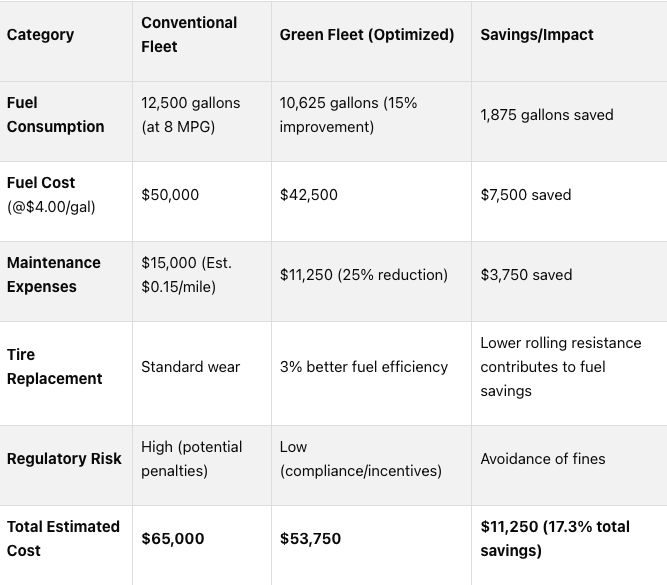 These savings are driven by strategies like predictive maintenance, route optimization, and maintaining proper tire pressure. On top of that, annual fuel savings per vehicle can range from $12,000 to $18,000 when these techniques are applied.
Better Compliance and Access to Incentives
Green fleet practices aren't just about cutting costs - they also help businesses stay on the right side of increasingly strict regulations. Meeting standards like the EPA's greenhouse gas rules or California's Advanced Clean Fleets regulation keeps companies in compliance and avoids penalties. Plus, many of these regulations come with government subsidies or financial incentives for businesses that meet sustainability goals.
Moreover, 78% of enterprise buyers now require carbon reporting from their logistics providers. This makes sustainability metrics essential for retaining contracts with major brands. As the green logistics market is expected to hit $2.3 trillion by 2030, shippers are even willing to pay a 5% to 10% "green premium" for eco-friendly services.
Operational changes like reducing idle time and optimizing routes can cut emissions by 15% to 25%, often paying for themselves within 6 to 12 months. This creates a cycle where cost savings fund further investments in sustainability.
Stronger Brand Loyalty and Customer Trust
Sustainability is no longer optional - it’s a key factor in how customers and employees perceive e-commerce companies. With 58% of fleet operators now setting formal sustainability goals, green fleet maintenance has become a way to stand out in a crowded market.
Using computerized maintenance management systems to track and share CO2 emissions data provides the transparency that today’s consumers expect. This is especially important because 69% of shoppers won’t return to a brand after a single poor shipping experience. Delays caused by poorly maintained fleets can harm a company’s reputation just as much as missed deliveries.
The benefits also extend to hiring and retaining talent. 65% of employees value their employer’s commitment to sustainability. Green fleet practices signal that a business is forward-thinking and operationally efficient, which can attract both customers and skilled workers in a competitive marketplace.
These advantages pave the way for how customized 3PL solutions can further refine sustainable fleet operations.
How JIT Transportation Supports Green Fleet Maintenance
E-commerce businesses aiming for greener fleet operations need a logistics partner that offers tailored 3PL services and a well-connected, efficient network. JIT Transportation delivers on both fronts.
Custom 3PL Solutions for Eco-Friendly Logistics
JIT Transportation's customized services help e-commerce companies lower their environmental impact while maintaining efficiency. Their pick & pack and kitting services consolidate shipments, reducing delivery trips by up to 30%. Fewer trips mean less fuel consumption and fewer emissions, directly supporting greener fleet maintenance.
In addition to transportation, JIT provides value-added services like testing, assembly, and white glove handling, which improve supply chain efficiency. These services reduce waste and optimize vehicle usage by ensuring shipments are fully prepared before leaving the warehouse. Their ERP integration enhances inventory management and demand forecasting, aligning fleet operations with actual needs and avoiding unnecessary routes.
"JIT isn't just another trucking company - they are true logistics innovators. Their ability to anticipate industry shifts, build long-term relationships, and deliver tailored, high-impact solutions sets them apart as a leader in the field." - Ron Okamoto, Nippon Express USA, INC.
These services, combined with an efficient network and advanced technology, ensure ongoing operational improvements.
Nationwide Network and Technology
JIT's strategic warehouse locations across major U.S. cities like San Francisco, Los Angeles, Austin, Houston, and Memphis enable shorter haul distances and smarter route planning. Their extensive network supports backhauls, reducing empty return trips and cutting fuel use and emissions.
The company’s technology platform offers real-time vehicle tracking, predictive maintenance alerts, and AI-driven route optimization. These tools help minimize detours, reduce idle times, and discourage aggressive driving habits that waste fuel. Together, these efforts contribute to fuel savings of 15% to 25%, advancing sustainable fleet operations. JIT’s scalable infrastructure adjusts to fluctuating e-commerce demands, ensuring high vehicle utilization and minimal idle time - key factors in maintaining an eco-friendly fleet. These solutions collectively support e-commerce fleets in achieving cost-effective and sustainable operations.
Conclusion
Green fleet maintenance offers a practical way for e-commerce logistics to cut costs while lowering emissions. By focusing on preventive maintenance to reduce fuel use, leveraging advanced technology to optimize routes, and adopting low-emission vehicles, businesses can achieve emission and cost reductions of 15% to 25%. These strategies allow e-commerce fleets to improve efficiency and sustainability without requiring steep upfront investments. Plus, the resulting operational savings help businesses stay compliant with regulations and boost their public image.
Using data-driven platforms to track emissions not only ensures adherence to stricter government standards but also opens the door to incentives that lower total ownership costs. Beyond meeting regulations, sustainable fleet management fosters public trust. Working with logistics providers that prioritize sustainability directly addresses environmental concerns, which resonates with consumers and helps attract top talent - especially since 65% of employees value their employer's commitment to sustainability.
JIT Transportation integrates these sustainability practices into its custom 3PL solutions. By combining optimized routes, predictive maintenance, and strategic warehousing, JIT helps e-commerce businesses reduce emissions while maintaining the speed and reliability customers expect. Their nationwide network, predictive maintenance tools, and ERP integration enable shipment consolidation, route efficiency, and strategic warehouse use, turning sustainability into measurable operational savings.
Ultimately, moving toward greener fleet operations is more than just an environmental choice - it’s a step toward building a more efficient, cost-effective supply chain that aligns with today’s expectations and prepares for tomorrow’s challenges.
FAQs
What’s the fastest way to start green fleet maintenance?
Improving operational efficiency is the fastest way to kick off green fleet maintenance. Start with strategies like route optimization, adjusting driver behaviors, preventive maintenance, and cutting down idle time. These steps can cut emissions by 15–25% with little upfront cost. Even better, they often pay for themselves within 18 months. Plus, these changes lay the groundwork for bigger sustainability goals, like transitioning to electric vehicles in the future.
How do I measure and report fleet emissions accurately?
To keep track of fleet emissions with precision, consider using tools like IoT devices and dashboards. These can monitor things like energy use, fuel consumption, and emissions data in real time. Leveraging AI for route optimization and analyzing live traffic conditions can also cut down on fuel usage and emissions. Make it a habit to review and analyze this data regularly. Doing so not only helps you track your fleet's carbon footprint but also ensures clear reporting and compliance with environmental regulations.
When does it make sense to switch to EVs or renewable diesel?
Switching to electric vehicles (EVs) or renewable diesel often becomes a smart financial move when the total cost of ownership (TCO) starts working in your favor. For most, this happens within 2 to 4 years. Why? Fuel savings, reduced maintenance expenses, and federal incentives all play a big role - especially for fleets operating on routes under 300 miles. To make the best decision, analyze your fleet's unique requirements and costs to figure out the right time to make the transition.
Related Blog Posts
Related Articles
How 3PLs Cut Last-Mile Costs for DTC Brands

AI Inventory Integration for Multi-Warehouse 3PL
