Green Logistics Trends in US Regulations

The logistics industry is shifting as regulations, technology, and consumer demands push for cleaner practices. By 2030, the global green logistics market is projected to reach $2.3 trillion, with U.S. spending exceeding $350 billion. Key drivers include cost savings, regulatory mandates, and growing consumer interest in sustainability.
Here are the highlights:
- Federal Deregulation: In 2026, the EPA repealed the Greenhouse Gas Endangerment Finding, removing federal GHG standards for vehicles.
- State-Level Action: California leads with zero-emission truck mandates, adopted by six other states, creating a fragmented regulatory environment.
- Incentives: Federal programs like NEVI and tax credits support electric trucks and infrastructure, while California's HVIP offers vouchers over $60,000 for heavy-duty ZEVs.
- Challenges for 3PLs: High upfront costs for fleet electrification, compliance with Scope 3 emissions reporting, and data transparency issues.
- Solutions: AI for route optimization, warehouse upgrades (LED lighting, solar panels), and emissions tracking tools like ITS Logistics’ Sustainability Dashboard.
As regulations evolve, logistics providers must balance compliance, operational costs, and consumer expectations to stay competitive.
EPA Regulations: A Green Win or a Red Flag? Guest: Michael Kucharski, JKC Trucking
sbb-itb-eafa320
Key US Regulations Impacting Green Logistics

Federal and State Green Logistics Incentive Programs Comparison
EPA SmartWay Program
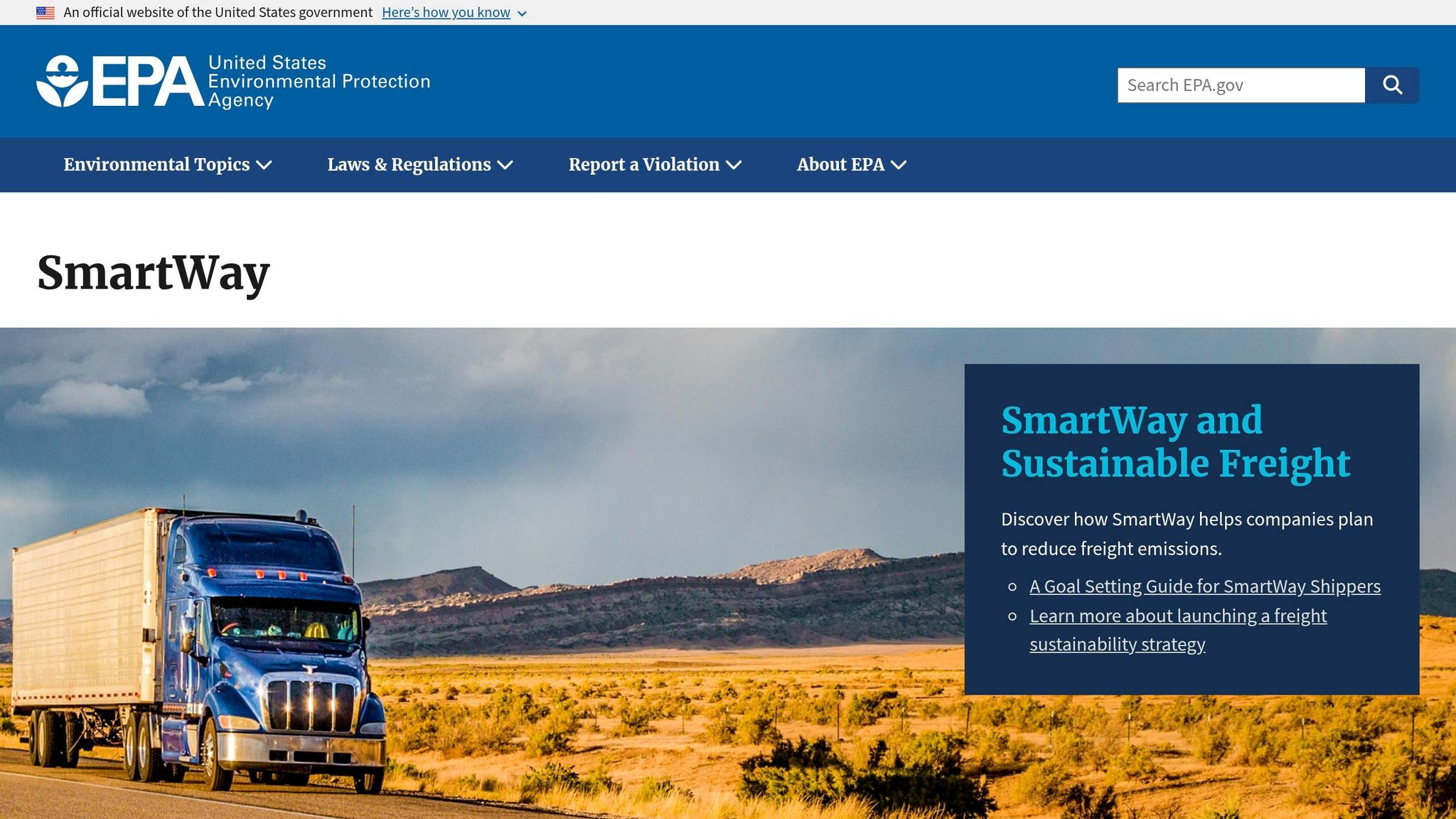
The EPA SmartWay Program, launched in 2004, is a voluntary partnership between the public and private sectors. It provides logistics companies, shippers, and carriers with tools to measure, benchmark, and improve freight transportation efficiency. Since its start, the program’s partners have saved $55.4 billion in fuel costs and significantly reduced emissions. It also offers standardized tools to help companies select carriers and assess performance. Today, more than 4,000 partners participate in the program, with the SmartWay Excellence Award recognizing the top 2% of shippers and truck carriers for their environmental efforts.
"EPA's SmartWay program helps companies advance supply chain sustainability by measuring, benchmarking, and improving freight transportation efficiency." – US EPA
With U.S. freight operations moving an average of 51 million tons of goods daily, the importance of efficient and eco-friendly logistics cannot be overstated. By 2050, freight transport emissions worldwide could even outpace those from passenger vehicles.
While the EPA SmartWay Program enhances national efficiency, state-level measures also play a major role in shaping logistics practices.
California Advanced Clean Fleets Regulation
In October 2025, the California Air Resources Board updated the Advanced Clean Fleets (ACF) regulation, removing certain requirements for private and federal fleets, including drayage truck mandates. However, state and local government fleets in California are still required to achieve 100% zero-emission vehicle (ZEV) purchases by 2030.
The Advanced Clean Trucks (ACT) rule, which complements the ACF regulation, remains in place. It mandates that manufacturers achieve 100% ZEV sales for Class 7–8 tractors by 2036. This shift is already influencing vehicle availability across the U.S., with states like New York, New Jersey, and Washington adopting similar standards.
"The ACT rule is the strictest EV truck mandate in the United States - and it's already reshaping how fleets buy vehicles." – Matthew Short, Fleet Compliance Expert
Transitioning to ZEVs involves more than just purchasing vehicles. Logistics operations must adapt to high-voltage safety protocols (400–800V), specialized technician certifications (NFPA 70E), and updated inspection requirements for components like battery thermal systems and orange cables. Building depot charging infrastructure for heavy-duty trucks can take 12 to 24 months due to necessary grid upgrades. California’s HVIP program helps ease this transition by offering vouchers of $60,000 or more for qualifying heavy-duty ZEVs. These vehicles also come with long-term benefits, such as up to 50% lower maintenance costs compared to diesel alternatives.
While state regulations drive regional progress, federal programs provide broader incentives to accelerate green logistics.
Federal Incentives for EVs and Alternative Fuels
Federal programs are helping to make eco-friendly logistics more accessible. The National Electric Vehicle Infrastructure (NEVI) program is expanding charging networks across the country, while tax credits at both the federal and state levels help offset the upfront costs of electric and hydrogen trucks, as well as sustainable warehouse upgrades.
In November 2024, CEVA Logistics introduced its "FORPLANET" sub-brand, focusing on low-carbon transport solutions that include alternative fuels, modal shifts, and electric vehicle adoption. Similarly, in July 2024, DHL International GmbH partnered with Envision Group to secure Sustainable Aviation Fuel (SAF), aiming for a 30% SAF blend in air transport by 2030.
- EPA SmartWay: Focuses on emissions tracking; helps 3PLs benchmark performance, reduce fuel costs, and strengthen CSR reporting
- NEVI Program: Supports EV infrastructure; provides access to a growing nationwide commercial charging network
- Federal Tax Credits: Targets EV adoption and warehouse upgrades; helps offset upfront costs for zero-emission vehicles (ZEVs) and facility retrofits
- California HVIP: Drives fleet electrification; offers vouchers of $60,000+ per qualifying heavy-duty zero-emission vehicle
These programs and incentives present both challenges and opportunities for third-party logistics (3PL) providers as they navigate the shift toward greener operations.
Challenges and Opportunities for 3PL Providers
Costs of Compliance
The push toward green logistics brings hefty upfront expenses that can weigh heavily on 3PL operations. Transitioning to electric fleets, building charging stations, and upgrading warehouses to be energy-efficient all demand significant investments before any financial benefits are realized. For instance, operating a 200,000-square-foot warehouse can cost between $180,000 and $300,000 annually in electricity alone. While energy-efficient upgrades can help reduce these costs over time, the initial outlay can be a major hurdle.
Data transparency is another pressing challenge. California's SB 253 mandates Scope 3 emissions reporting starting in 2027, based on 2026 data, which means 3PL providers must quickly adopt advanced tracking systems. The lack of reliable supplier data complicates this further - 70% of supply chain professionals cite this as the biggest obstacle to accurate reporting. Alarmingly, 66% of companies still rely on spreadsheets for Scope 3 tracking, which falls far short of the audit-ready standards required by enterprise clients. With carbon metrics now making up 18% of 3PL RFP scoring, verified emissions data has shifted from being optional to essential. These challenges highlight the urgent need for technological advancements in tracking and reporting.
Using Technology for Green Logistics
To manage these costs and meet compliance demands, many 3PL providers are leveraging advanced technology. Instead of viewing compliance as a burden, they're turning it into an opportunity. For example, AI-powered route optimization can cut travel distances by up to 30% and fuel consumption by 52%, helping providers save money while reducing emissions. Automated systems also address the long-standing issue of incomplete outsourced carrier data, making Scope 3 reporting more reliable.
In 2025, ITS Logistics introduced a Sustainability Dashboard that tracks emissions at both fleet and shipment levels using its Fleet Sustainability Index. Josh Allen, Chief Commercial Officer at ITS Logistics, explained:
"Our dashboard incorporates the Fleet Sustainability Index... making reporting far more accurate and defensible".
This real-time tracking tool helps large shippers, such as Fortune 1,000 companies, close reporting gaps and comply with regulations like California's Climate Corporate Data Accountability Act.
Warehouse upgrades also offer cost-saving and compliance benefits. Switching to LED high bay lighting can cut energy use by 50–75%, with payback periods typically ranging from three to five years. Similarly, installing solar panels on warehouse rooftops can offset 20–40% of a facility's annual energy needs, reducing operating costs while helping meet regulatory standards.
Case Study: JIT Transportation's Green Initiatives
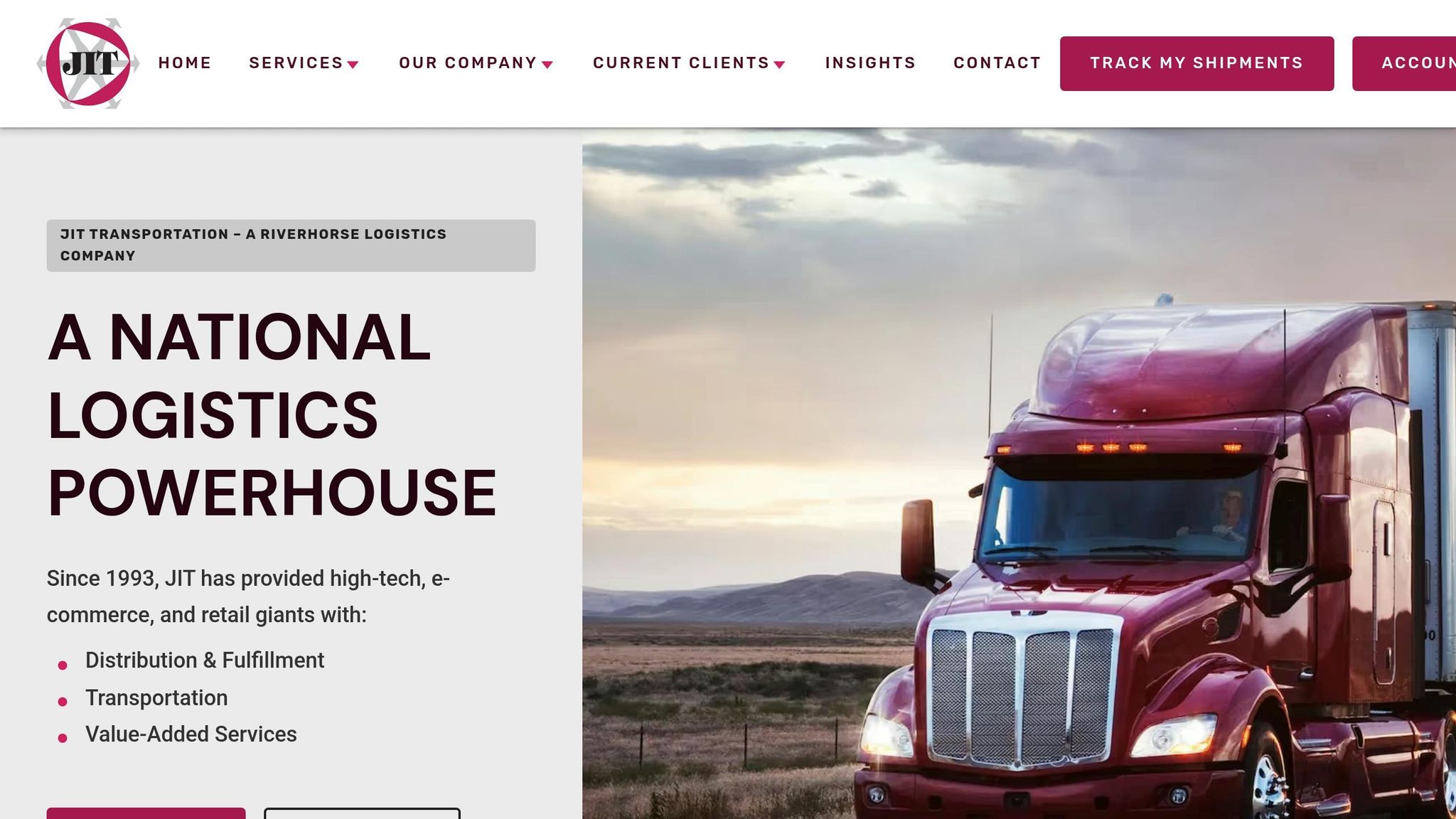
JIT Transportation illustrates how smart investments in technology and infrastructure can address regulatory challenges. The company has integrated advanced ERP systems to enable real-time emissions tracking across its transportation network. This provides clients with detailed, shipment-level carbon data, ensuring compliance with Scope 3 reporting standards. By tackling the transparency issues that affect 70% of supply chain professionals, JIT Transportation delivers audit-ready emissions metrics that align with California's SB 253 requirements. Additionally, their system supports clients in RFP evaluations, where carbon metrics now account for 18% of scoring criteria.
Practical Strategies for Green Logistics Compliance
Fleet Electrification and Alternative Fuels
Transitioning to an electric fleet doesn’t have to happen overnight. A phased approach can make the process smoother and less risky. For instance, Battery Electric Vehicles (BEVs) are a great fit for local routes (0–300 miles), while hydrogen fuel cells are starting to show promise for long-haul and heavy-haul applications exceeding 80,000 pounds.
The financial benefits are hard to ignore. By August 2025, UPS had deployed 13,000 electric delivery vehicles, cutting fuel costs by 60% and maintenance expenses by 40%, with a payback period of just over three years. Similarly, FedEx reported a 75% drop in operating costs after introducing 2,400 electric vehicles to its regional fleet. While a Class 8 electric truck has a steep upfront cost of $450,000 compared to $180,000 for a diesel truck, the 10-year total cost of ownership flips the equation - $370,000 for electric versus $590,000 for diesel, saving 37% in the long run. Federal and state incentives can further slash vehicle costs by 50%–70%, but acting quickly is key since funding per truck ($120,000–$185,000) is limited.
Charging infrastructure is another piece of the puzzle. Depot charging stations with load management systems can help avoid high utility demand charges by operating during off-peak hours. Costs vary: Level 2 AC chargers range from $5,000 to $8,000, while DC fast chargers cost between $35,000 and $75,000. For routes where full electrification isn’t yet feasible, alternatives like compressed natural gas (CNG) and biodiesel offer practical interim solutions. Ocean Spray, for example, teamed up with CSX to shift freight from trucks to rail, cutting transportation CO2 emissions by 20% and achieving up to 65% lower emissions on intermodal lanes.
These efforts often go hand-in-hand with sustainable practices in warehousing and data management, creating a more comprehensive approach to green logistics compliance.
Warehousing Solutions for Sustainability
Warehouses can be surprisingly large contributors to a logistics company’s carbon footprint, accounting for 20%–30% of emissions. But targeted upgrades can make a big difference - and fast. For example, switching to LED lighting can cut energy use by 50%–70%, with payback periods of just 12–24 months. Adding occupancy sensors can push savings even further, reducing energy use by an additional 15%–30% and paying for themselves in as little as six months.
Bigger investments, like rooftop solar panels, can cover 30%–80% of a facility’s electricity needs over time. Meanwhile, material handling offers its own opportunities for cost and energy savings. Replacing propane forklifts with electric ones can slash operational costs by 40%–60% over their lifespan, with energy costs dropping from $3.50–$5.00 per hour to just $1.00–$1.50. Lithium-ion batteries make the switch even smoother by allowing "opportunity charging" during breaks, eliminating the need for dedicated battery rooms.
Simple adjustments can also make a big impact. Caterpillar, for instance, reduced its annual CO2 emissions by 340–730 tons by switching from heavy steel containers to lighter plastic ones and consolidating shipments. At loading docks, installing strip curtains, dock seals, and automatic door closers can help retain conditioned air and reduce HVAC loads without requiring major investments. When paired with digital tracking systems, these upgrades create a well-rounded approach to sustainability.
Data-Driven Emissions Management
Tracking emissions, especially Scope 3 emissions, has long been a challenge. But modern tools are changing the game. Today’s sustainability dashboards provide shipment-level detail instead of relying on broad fleet averages. For example, ITS Logistics’ 2025 Sustainability Dashboard delivers precise fleet-level emissions data, helping Fortune 1,000 companies fill reporting gaps and meet mandatory compliance standards.
Integrating Transportation Management Systems (TMS) with telematics offers real-time insights into fuel usage and idling times. Using standardized frameworks like the Global Logistics Emissions Council (GLEC) ensures emissions calculations are both auditable and comparable across different transport modes. The goal is to turn data into actionable insights that drive ongoing improvements.
As Stanislav Dobrolezha, Business Systems Analyst at Trinetix, puts it:
"Carbon measurement isn't something you do once and forget about... It makes carbon reduction part of everyday operations, tied directly to cost and performance - not just another reporting task."
The Road Ahead for Green Logistics
In the U.S., green logistics is no longer optional - it’s a requirement. New York's Climate Corporate Data Accountability Act, passed in February 2026, now mandates companies with over $1 billion in revenue to disclose their Scope 1, 2, and 3 emissions starting in 2027. This shift underscores how sustainability has become a core strategy for improving both resilience and cost efficiency.
Projections for the global green logistics market are striking. It's expected to grow from $1.94 trillion in 2026 to $3.75 trillion by 2034, with an annual growth rate of 8.6%. On top of that, the EPA's Phase 3 standards aim to cut greenhouse gas emissions for certain vehicles by up to 60% by 2032. These changes are imminent - the first phase kicks in with the 2027 model year. For logistics providers, the time to act is now. Adapting to this evolving landscape will require both innovation and a focus on operational efficiency.
Third-party logistics (3PL) providers like JIT Transportation play a pivotal role in navigating these changes. By leveraging advanced technologies, nationwide networks, and scalable solutions, 3PLs can streamline operations, minimize empty miles, and incorporate cleaner fleet technologies.
The regulatory framework is also becoming more technology-neutral, offering flexibility in how companies meet emissions standards. Federal guidelines allow the use of various technologies, including advanced internal combustion engines, hybrids, battery-electric vehicles, and hydrogen fuel cells. This adaptability means 3PLs can turn compliance into a competitive advantage by tailoring solutions to specific needs. For instance, they might use depot charging stations for local deliveries or hydrogen fuel cells for heavy-duty transport, depending on routes and infrastructure availability.
Kris Pazhayanoor, Senior Product Manager at Aptean, captures this shift perfectly:
"In 2026, logistics technology trends will move beyond automation toward intelligence - enabling faster, smarter decisions in real time".
Ultimately, the future of green logistics isn’t just about meeting regulations. It’s about using these changes to drive smarter operations, harness better data, and build strong strategic partnerships. Compliance isn't just a box to check - it’s an opportunity to gain a competitive edge.
FAQs
Which US green logistics rules matter most for my lanes?
The U.S. has introduced several regulations aimed at reducing emissions in logistics. One major rule is the EPA 2027 NOx regulation, which mandates that heavy-duty trucks reduce nitrogen oxide (NOx) emissions by 90% starting in 2027. Another important framework focuses on greenhouse gas standards, which encourage cleaner and more efficient transportation methods.
These regulations are reshaping supply chains by pushing companies to adopt greener logistics practices, such as using low-emission vehicles and implementing sustainable strategies.
How do I prepare for Scope 3 emissions reporting by 2027?
To gear up for Scope 3 emissions reporting by 2027, it's crucial to stay informed about new standards and regulations. For instance, Verra’s Scope 3 Standard is set to launch in 2026, and California SB 253 introduces specific reporting requirements.
Start by developing systems to collect shipment-level emissions data. Automating carbon tracking processes will save time and reduce errors, while robust verification mechanisms will ensure your data is reliable and ready by 2026. Planning ahead not only helps meet compliance deadlines but also transforms Scope 3 data into a valuable tool for driving business strategy.
What’s the fastest way to cut emissions without buying new trucks?
The fastest way to cut emissions without investing in new trucks is by focusing on smarter operations. Tactics like consolidating loads, reducing empty miles, and switching to sustainable fuels can make a big difference. With the help of modern technology and shifting regulations, these changes not only shrink your carbon footprint but also make your logistics more efficient.
Related Blog Posts
Related Articles

AI Inventory Integration for Multi-Warehouse 3PL

Cross-Border Customs Forms: Checklist