
How 3PLs Handle Pool Distribution
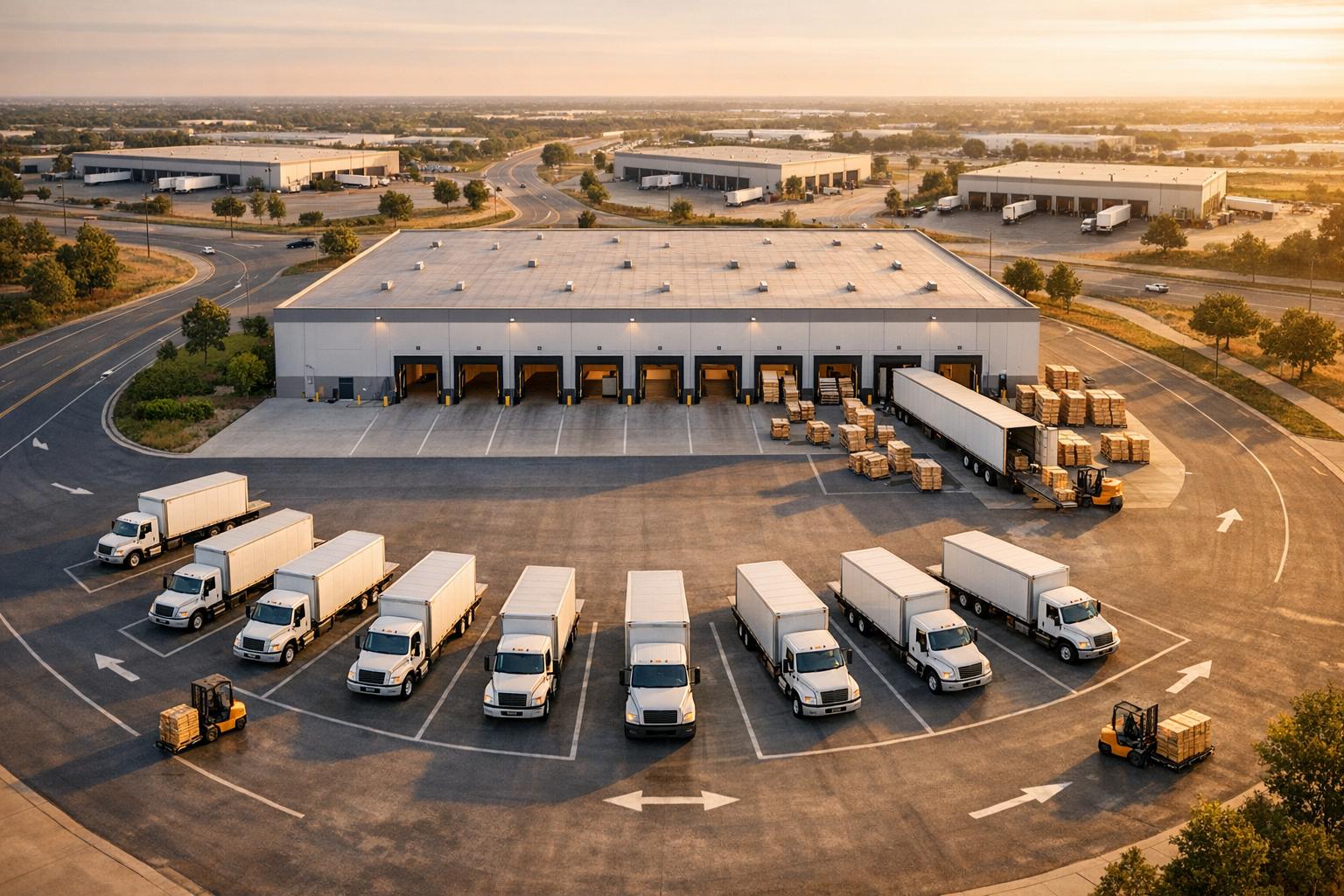
Pool distribution streamlines shipping by consolidating multiple smaller shipments into a single truckload, reducing costs, transit times, and damage risk. It involves three main steps: bundling freight at the origin, transporting it to a central hub (pool point), and sorting it for final delivery. Businesses often rely on third-party logistics (3PL) providers for this process due to their expertise, infrastructure, and technology like Transportation Management Systems (TMS), which enable real-time tracking and cost savings of 15%-30%. However, challenges like fluctuating shipment volumes, poor visibility, and coordination issues can arise. 3PLs address these by offering custom networks, flexible infrastructure, and advanced tracking tools, ensuring efficient, reliable, and scalable solutions for businesses.

How 3PL Pool Distribution Works: 3-Step Process from Origin to Delivery
Common Pool Distribution Challenges
While pool distribution has its perks, managing it effectively isn't always smooth sailing. Companies that attempt to handle pooling on their own - or work with an ill-suited partner - often face three major hurdles that can throw the entire strategy off course.
Fluctuating Shipment Volumes and Schedules
For pool distribution to work, you need steady, high-volume shipments moving to the same region. When order patterns are unpredictable or shipment volumes vary week to week, keeping trucks full becomes a serious challenge. This can force businesses into holding extra stock or falling back on traditional LTL (less-than-truckload) shipping.
The situation gets even trickier with the demand for faster delivery. Shorter lead times leave less room to coordinate matching loads for shared lanes. Combine this with warehouse labor shortages - where there aren't enough workers to load and unload shipments - and you could see skyrocketing demurrage charges. JP Wiggins, Co-Founder and Vice President of Logistics at 3Gtms, highlights the issue:
"The biggest labor shortage may be at the warehouse where there aren't enough people to load and unload shipments. Demurrage charges are skyrocketing. You need technology to figure this all out to make the right decisions".
These challenges with fluctuating volumes and tight schedules underline the importance of enhanced tracking, as discussed in the next section.
Poor Visibility Across the Supply Chain
Pool distribution involves multiple handoffs: freight is consolidated at the origin, transported to a regional hub, offloaded, scanned, sorted, and reloaded for final delivery. Without real-time tracking, visibility drops sharply once shipments leave the distribution center. This lack of insight can lead to poor decisions, such as dispatching half-empty trucks just to meet delivery deadlines - essentially defeating the cost-saving benefits of pooling. Meanwhile, customer service teams get overwhelmed with "Where Is My Order" (WISMO) calls, and logistics managers struggle to make informed choices about routing or carrier selection.
DispatchTrack emphasizes the impact of this lack of visibility:
"Without [visibility], you're likely sending trucks out half-full to meet customer windows, inundated by WISMO (where is my order) calls and blind to what's actually happening to your deliveries in the field".
Coordinating Multiple Partners
Managing the various players in pool distribution - suppliers, carriers, and distribution centers - can feel like juggling with too many balls. When one partner misses a critical window, the entire system can grind to a halt.
This coordination becomes even more difficult when partners resist adapting their processes. Some suppliers stick to rigid shipping schedules, while certain carriers may not have the capacity to meet pooling requirements. Without a 3PL (third-party logistics provider) to manage these relationships and enforce consistent procedures, the complexity can overwhelm most businesses trying to handle it in-house.
sbb-itb-eafa320
How 3PLs Manage Pool Distribution
Third-party logistics providers (3PLs) play a crucial role in pool distribution by combining technology, infrastructure, and expertise to ensure freight moves smoothly from origin to destination. Their ability to consolidate shipments effectively is a game-changer for reducing costs and improving efficiency.
Shipment Consolidation and Hub Operations
The process kicks off with origin consolidation, where 3PLs combine multiple less-than-truckload (LTL) shipments, often from several clients, into a single full truckload (FTL) bound for a specific region. This consolidated load is then transported via long-haul "line-haul" to a strategically located regional hub, or "pool point", which helps lower per-unit shipping costs by utilizing FTL rates for the majority of the journey.
Once the shipment reaches the pool point, the freight is sorted based on its destination, schedule, or product type. At this stage, the consolidated load is broken down and reorganized for local delivery. By scanning and reloading shipments directly onto local vehicles, 3PLs minimize handling, which not only speeds up the process but also reduces the risk of damage. Traditional LTL shipments may pass through up to seven terminals, but pool distribution significantly cuts down on these touchpoints, offering a safer and more reliable option.
"Utilizing both Averitt Truckload and LTL provides more visibility and transparency of the shipments from start to finish. We work with our customers to find the best point to drop their pool distribution freight so that freight gets sent directly to the destination".
- Amos Rogan, LTL Operations Leader at Averitt
Technology Integration for Real-Time Tracking
To streamline the process, 3PLs rely on advanced Transportation Management Systems (TMS). These systems automate tasks like pool point selection, multi-carrier financial management, and real-time tracking of shipments within pooled loads. Using AI, TMS platforms analyze shipping lanes and volumes to suggest optimal pooling strategies, helping shippers save on fuel surcharges and accessorial fees. At regional hubs, shipments are scanned upon arrival and during offloading, maintaining a clear chain of custody as the bulk load transitions to final-mile delivery.
JP Wiggins, Co-Founder and Vice President of Logistics at 3Gtms, highlights the importance of automation in these operations:
"The key is it has to be simple and fully automated all the way through to the financials. Agreements are automated via TMS, ensuring cost and time efficiency. It will use the pool points when it makes sense for cost and time considerations".
This technology-driven approach enables shippers to cut LTL costs by an average of 15% to 30%, while also addressing visibility issues throughout the supply chain.
Value-Added Services for Smoother Operations
In addition to transportation, 3PLs offer a range of services that enhance the efficiency of pool distribution. Kitting and assembly services help businesses bundle multiple SKUs into finished products like subscription boxes, club packs, or retail displays before shipping. Retail compliance labeling ensures shipments adhere to requirements like GS1-128 barcodes, RFID tags, and price tickets, helping avoid delays and costly chargebacks.
For example, JIT Transportation offers a full suite of value-added services, including pick and pack, kitting and assembly, testing, revision upgrades, and white-glove handling. These services integrate seamlessly into pool distribution, allowing businesses to customize products at the warehouse level and coordinate specialized final-mile delivery. By combining efficient hub operations with these additional services, 3PLs ensure freight moves faster, arrives in optimal condition, and is ready for immediate use by the end customer. This level of coordination supports a well-connected distribution network that benefits both businesses and consumers.
Solutions for Pool Distribution Challenges
Third-party logistics providers (3PLs) tackle pool distribution challenges by focusing on strategic planning, adaptable infrastructure, and clear communication. These solutions help address operational disruptions and control costs effectively.
Custom Network Design
A well-designed network is the backbone of successful pool distribution, starting with smart placement of pool points. 3PLs strategically position regional hubs near high-demand delivery zones, manufacturing sites, seaports, or key border crossings such as Laredo. This minimizes final-mile distances and cuts down costs. For instance, a Pennsylvania-based company shipping to Alabama and Mississippi could collaborate with a 3PL to consolidate shipments into a single truckload bound for a central hub in Nashville, Tennessee, before breaking it down for local deliveries.
These custom networks also involve matching carriers to specific shipment volumes and delivery areas. By blending national, regional, and niche carriers, 3PLs create an efficient mix that accommodates diverse shipment sizes and delivery needs. Some providers even incorporate intermodal rail for long-haul routes, boosting capacity while keeping costs in check. For businesses managing returns or recalls, 3PLs can implement "reverse pool distribution" systems that consolidate goods from multiple locations into a single return shipment. This tailored approach ensures scalability, even as shipment volumes shift.
Flexible Infrastructure for Volume Changes
Managing fluctuating shipment volumes requires infrastructure that can adapt quickly. 3PLs excel here by consolidating freight from multiple shippers in real-time, filling trailers efficiently, reducing routes, and adjusting replenishment cycles based on current demand. This multi-shipper strategy, combined with regional cross-dock facilities, ensures shipments are redirected as needed.
JIT Transportation demonstrates this adaptability with scalable warehouse solutions and a vast carrier network that adjusts to changing volumes. By offering Vendor Managed Inventory (VMI) programs integrated with client ERP systems, 3PLs support high-speed operations while reducing waste. Centralized inventory hubs equipped with advanced Inventory Management Systems (IMS) enhance supply chain responsiveness by holding inbound freight until destinations are confirmed. This aligns seamlessly with Just-in-Time (JIT) logistics, delivering goods precisely when needed and avoiding excess inventory during demand spikes. Such flexibility also fosters stronger communication among all partners.
Better Collaboration with Partners
Effective pool distribution relies on seamless communication across all partners. Acting as a central coordinator, 3PLs manage the complex interplay between regional carriers, hubs, and final-mile delivery teams. This single-point-of-contact approach eliminates the confusion of dealing with multiple contacts, ensuring everyone stays aligned.
Advanced Transportation Management Systems (TMS) simplify operations by automating carrier agreements, managing invoicing for multiple parties, and providing real-time tracking throughout the supply chain. These tools ensure transparency and keep all stakeholders informed at every step.
Benefits of 3PL-Managed Pool Distribution
The strategies and technologies behind 3PL-managed pool distribution translate into clear, measurable advantages for businesses.
Lower Costs and Better Resource Use
One of the biggest perks of 3PL-managed pool distribution is its ability to cut costs. By consolidating multiple LTL (less-than-truckload) shipments into a single full truckload for the bulk of the journey, businesses can avoid the rising costs of LTL shipping. Traditional LTL shipments traveling over 2,000 miles might pass through up to seven different terminals, which adds complexity and cost.
Reducing the number of touchpoints during transit also lowers the risk of damage, with damage rates hovering around 0.5% - significantly better than standard LTL or parcel shipping. As Jameson Goforth, Vice President – Final Mile at ITS Logistics, puts it:
"Every touchpoint comes with the risk of freight being lost or damaged, which is why reducing touchpoints is such a standout benefit of pool distribution".
Additionally, businesses can skip the expense of maintaining their own regional distribution centers, long-haul fleets, and staffing. 3PLs coordinate delivery windows to minimize unloading bottlenecks, optimize labor, and simplify pricing with straightforward weight-and-mileage-based rates. This makes budgeting easier compared to the complex formulas used in traditional LTL shipping. These efficiencies also pave the way for faster, more dependable deliveries.
Faster Delivery Times and Greater Reliability
3PLs use advanced TMS (transportation management systems) and regional hubs to speed up delivery times. By consolidating shipments into direct long-haul routes with fewer stops, they avoid delays caused by multiple terminal transfers. In some cases, advanced pooling even allows for same-day delivery when inventory is stored at a regional hub.
While standard parcel and LTL services often have broad delivery windows ranging from several hours to days, pool distribution can narrow those windows to as little as 15 minutes to a few hours. Granular tracking systems and efficient cross-docking operations - where goods move directly from long-haul trailers to local delivery vehicles - further reduce storage time and handling. This precision enables daily or even multiple deliveries per day for retailers with multiple nearby locations.
Scalability for Growing Businesses
Beyond cost and speed, 3PL-managed pool distribution offers the flexibility to grow with your business. With access to established regional hubs and pool point networks, businesses can scale operations without investing in expensive distribution centers. During peak seasons or periods of rapid growth, 3PLs can quickly handle increased shipment volumes.
Pooling freight from multiple clients not only ensures efficient distribution but also reduces operational complexity through centralized carrier management using a unified TMS. Additionally, businesses can switch between shipping modes - like moving from truckload to intermodal - to maintain reliability even when market conditions are tight or capacity is limited.
These advantages make partnering with a 3PL provider - such as JIT Transportation, a US-based leader in custom 3PL solutions - a smart move for businesses looking to optimize costs, improve delivery speed, and scale efficiently.
Conclusion: Working with a 3PL for Pool Distribution
Handling pool distribution requires significant investment in infrastructure, advanced technology, and a reliable network of carriers. For many businesses, teaming up with a 3PL provider is a more efficient and cost-effective solution. These providers come equipped with established pool point networks and the know-how to manage shipment consolidation across various clients.
A well-chosen 3PL partner can simplify what might otherwise involve coordinating with over 20 regional carriers, juggling delivery schedules, and navigating multiple tracking systems. By consolidating these processes, they not only streamline communication and billing but also enhance operations with carton-level tracking, lower damage rates, and delivery windows as precise as 15 minutes to a few hours. This level of detail and efficiency highlights the importance of selecting the right partner.
When assessing potential 3PL providers, check that their pool point locations align with your target markets and that their technology integrates seamlessly with your systems. Additionally, consider providers that offer extra services like "trap and hold" warehousing, kitting, or preparing floor-ready merchandise. These options can further optimize operations at the final destination.
For example, JIT Transportation specializes in custom 3PL solutions designed to address these challenges. With a nationwide network of strategically located warehouses, advanced ERP integration, and services like pool distribution and consolidation, JIT helps transform fixed logistics costs into flexible, scalable solutions - perfect for peak seasons or geographic expansion.
FAQs
How do 3PL providers manage fluctuating shipment volumes in pool distribution?
Third-party logistics (3PL) providers manage fluctuating shipment volumes in pool distribution by utilizing dynamic carrier networks and adjustable infrastructure. This setup allows them to respond quickly to shifts in demand, ensuring on-time deliveries while keeping expenses under control.
Through shipment consolidation and route optimization, 3PLs simplify operations, cut down transit times, and lower costs. Additionally, their use of advanced logistics technology helps track volume patterns and make proactive changes to keep distribution running smoothly.
How does technology improve visibility in pool distribution?
Technology plays a key role in improving visibility within pool distribution, primarily through real-time tracking and shipment management. With advanced transportation management systems, 3PL providers can oversee the entire distribution process, ensuring every shipment is tracked and accounted for. These systems also simplify tasks like sorting, inspection, and routing, boosting both efficiency and clarity in operations.
Tools such as AI and advanced analytics take things a step further by minimizing delays, optimizing delivery routes, and providing detailed insights to support smarter decisions. Using these technologies, businesses can streamline logistics, cut costs, and maintain smooth supply chain operations - all while staying efficient and adaptable.
What steps can businesses take to collaborate effectively with multiple partners in pool distribution?
To work seamlessly with multiple partners in pool distribution, businesses need to prioritize clear communication and real-time coordination. This means sharing shipment updates, syncing schedules, and keeping communication channels open to tackle challenges head-on and keep operations running smoothly.
Leveraging tools like a Transportation Management System (TMS) can make a big difference. These systems help centralize tracking, automate routing, and fine-tune load optimization, simplifying the entire process. On top of that, forming solid partnerships and aligning objectives with regional carriers and other stakeholders can improve collaboration, making it easier to consolidate shipments and ensure timely deliveries.
At its core, success in pool distribution relies on three pillars: transparency, integrating technology, and proactively solving problems to navigate the complexities of working with diverse partners.
Related Blog Posts
Related Articles
7 WooCommerce 3PL KPIs Teams Track

Centralized vs Decentralized Replenishment
