
How 3PLs Handle Returns Reconciliation
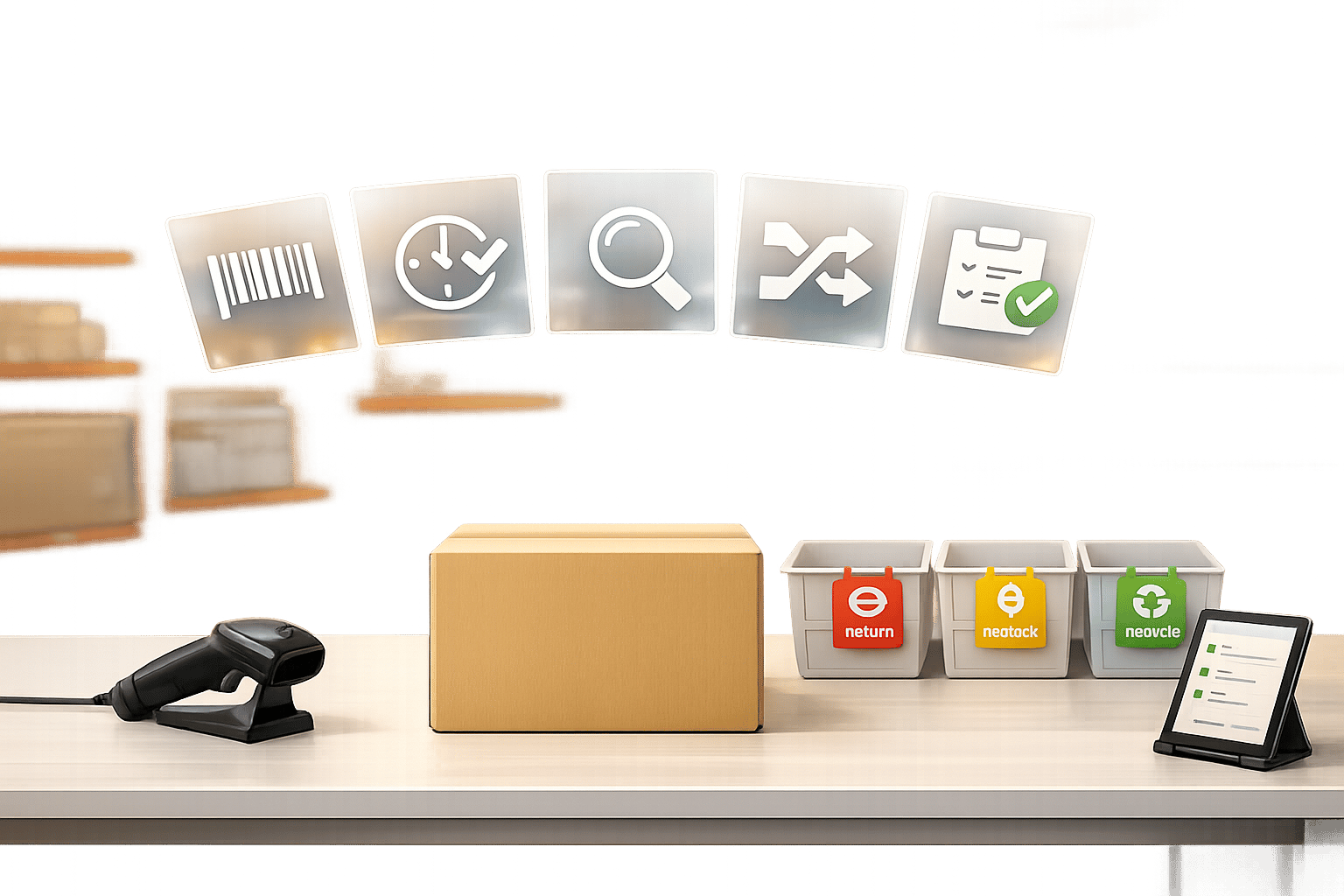
Returns reconciliation is a critical process for e-commerce and retail businesses. Third-party logistics (3PL) providers specialize in managing returns efficiently, helping businesses save time, reduce costs, and improve customer satisfaction. Here's what you need to know:
- Why it matters: 30% of online orders are returned, costing retailers $106 million per $1 billion in sales. Poorly managed returns lead to inventory errors, financial losses, and customer dissatisfaction.
- Key challenges: Manual grading errors, delayed inventory updates, and shrinkage (lost or misplaced items) are common issues. These problems can reduce the value of returned goods by up to 20%.
- How 3PLs help: 3PLs use advanced systems to handle returns - from inspection and grading to restocking or disposal. They provide real-time inventory updates, reduce processing times, and improve accuracy.
- Customer impact: A smooth returns process builds trust, with 76% of consumers preferring retailers that offer easy returns. Faster refunds or exchanges enhance loyalty.
- Business benefits: Efficient returns management can boost 3PL revenues by 10%-30%, matching the return rate, while cutting costs for their clients.
In short, outsourcing returns reconciliation to a 3PL ensures faster processing, better inventory accuracy, and higher recovery rates for returned goods.
Common Challenges in Returns Reconciliation
Managing returns, whether in-house or through third-party logistics (3PL) providers without specialized systems, often brings a host of challenges. These issues can disrupt inventory accuracy, complicate financial reporting, and erode the value of returned goods. Let’s break down some of the most pressing problems and the costs they impose.
Manual Inspection and Inconsistent Grading
Relying on manual grading introduces a lot of room for error. What one staff member considers "like new" might not align with another's judgment - or even meet the brand's quality standards. This lack of consistency can lead to expensive mistakes. For instance, items that could be resold at full value might be unnecessarily liquidated, while damaged goods could mistakenly end up restocked, only to be returned again.
Take this example: In 2024, a mid-market apparel brand discovered that 15% of items graded as "like new" were returned again due to customer complaints about their condition. This doubled the processing costs for those returns. Even the inspection process itself is time-consuming - basic visual checks take 2–3 minutes per item, while more thorough tests can stretch to 10 minutes.
"A 3PL can achieve 98% inventory accuracy while making poor disposition choices (liquidating items that should restock, or restocking items that should liquidate)." - Cahoot.ai
Delayed Inventory Updates and Overbilling
Batch updates to inventory systems, often done at the end of a shift instead of in real time, create "phantom stock" - items that are physically present but not yet recorded in the system. This can lead to missed sales opportunities and financial discrepancies. For example, one brand faced $10,000 in annual overbilling errors and $8,000 in labor costs due to these delays.
The lack of real-time integration also complicates tracking refunds, fees, and storage costs. In late 2024, a mid-market brand reported spending 15–20 staff hours each month on manual reconciliation and billing disputes. Adding to the complexity, many Warehouse Management Systems (WMS) are not designed to track items in the returns process. This means 3PLs often don’t know when a return will arrive or what condition it will be in until it’s manually processed.
Shrinkage and Poor Disposition Decisions
Manual workflows come with a risk of inventory shrinkage, which can range from 2% to 5%. Shrinkage happens when items are misplaced, stolen, or incorrectly written off due to data entry errors. On top of that, delays in triaging returned items can reduce their value by as much as 20%. Products that could have been resold at full price may lose market value while sitting idle in review queues, all while taking up valuable warehouse space.
"The real risk in 3PL returns is not software, but loss of visibility and accountability after the package arrives." - Cahoot.ai
Without standardized grading systems and automated processes to determine whether to restock, refurbish, liquidate, or discard items, 3PLs often struggle to make efficient decisions. Processing a single return can cost anywhere from 20% to 65% of the product’s original price. Solving these issues is essential for improving profit margins and ensuring accurate inventory management.
sbb-itb-eafa320
How 3PLs Streamline Returns Reconciliation
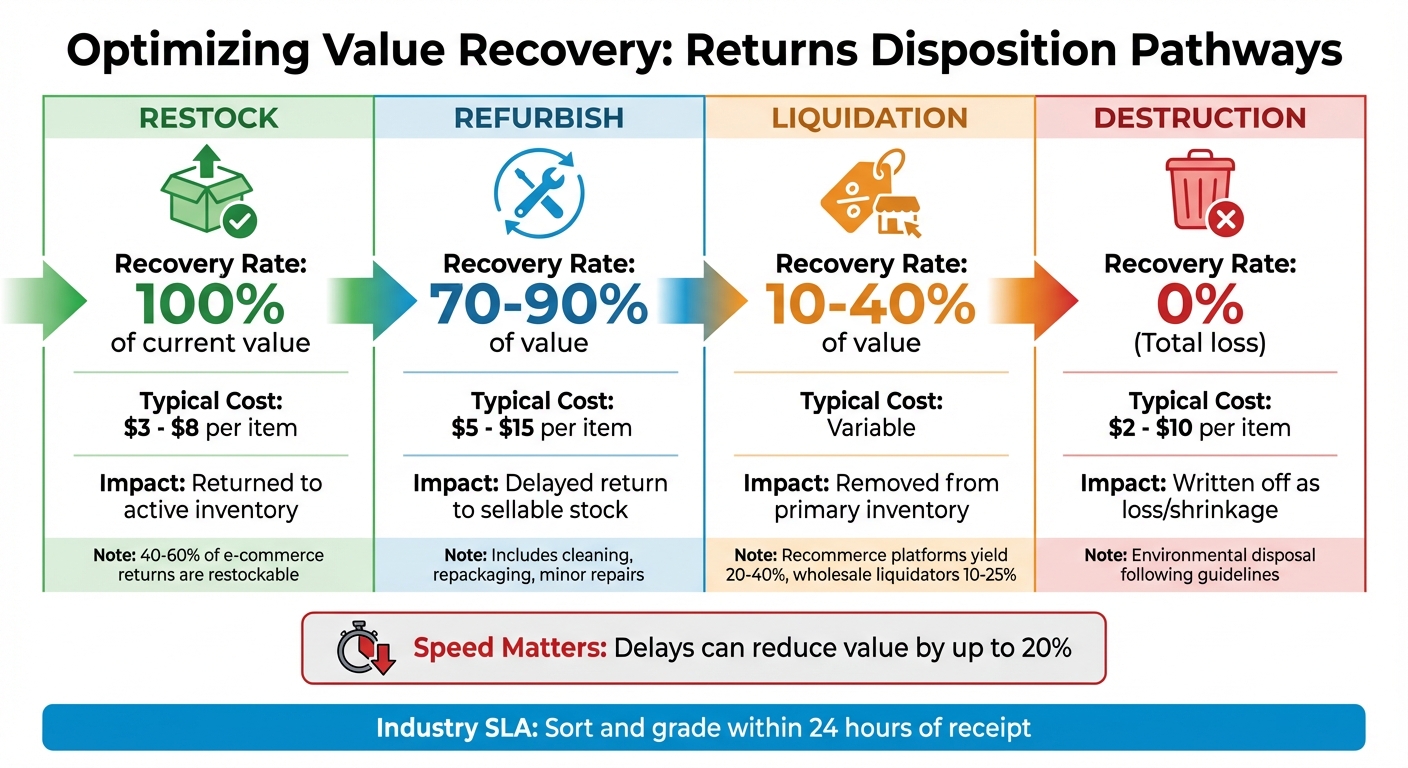
Returns Disposition Pathways: Recovery Rates and Costs Comparison
Top-tier 3PLs have shifted away from outdated, manual processes, adopting structured workflows that ensure inventory accuracy and help recover as much value as possible from returned goods. Here's a closer look at how they make it happen.
Step-by-Step Returns Processing Workflow
Every return starts with an RMA number (Return Merchandise Authorization), which validates the return and tracks it through to its final outcome. Once the package arrives at the warehouse, it's logged against the RMA, triggering automated notifications to the seller and the customer.
Next, warehouse staff inspect the returned items, checking for damage, wear, and completeness. Based on these evaluations, items are categorized as restockable, repairable, or damaged, which determines their next step.
- Restockable items in new condition are cleaned, repackaged to meet brand standards, and added back to active inventory.
- Repairable items undergo minor fixes or refurbishment to make them sellable again.
- Damaged or unsellable goods are recycled, donated, or disposed of, following environmental guidelines and seller instructions.
The final step is financial reconciliation. By integrating the 3PL's system with the seller's payment processor, refunds or replacement shipments happen automatically and on time. Technology plays a big role here, ensuring fast and accurate updates throughout the process.
Using Technology for Accurate Reconciliation
Modern 3PLs rely on advanced technology to connect their Warehouse Management System (WMS) with Enterprise Resource Planning (ERP) and Order Management System (OMS) platforms. This integration links returns to their original orders, creating audit-ready records and keeping inventory synchronized in real time. Instead of waiting for batch updates, these systems update inventory within 2–4 hours of processing, helping sellers maintain sales momentum.
Handheld devices and mobile scanning tools make it easy for associates to log reason codes and condition grades as soon as returns are received. Photo capture at grading stations adds an extra layer of accountability, supporting warranty claims and reducing fraud.
Cloud-based dashboards give both 3PLs and their clients visibility into critical metrics like return cycle times, inventory status, and root-cause analytics. These tools improve inventory accuracy to 99% and can cut processing times by 40–50%. By addressing challenges like inconsistent grading and delayed updates, these systems make returns management faster and more reliable.
Optimizing Disposition Pathways
Once reconciliation is complete, the next step is to maximize value recovery through optimized disposition pathways. 3PLs use decision trees to route items based on their condition and the seller's policies. Here's how different pathways stack up:
| Disposition Path | Recovery Rate | Typical Cost | Impact on Inventory |
|---|---|---|---|
| Restock | 100% of current value | $3 – $8 | Returned to inventory |
| Refurbish | 70–90% of value | $5 – $15 | Delayed return to sellable stock |
| Liquidation | 10–40% of value | Variable | Removed from primary inventory |
| Destruction | 0% (Total loss) | $2 – $10 | Written off as loss/shrinkage |
Industry data shows that 40–60% of e-commerce returns are restockable, meaning they can recover their full value. Items needing light refurbishment (cleaning, repackaging, or minor repairs costing $5–$15 per item) typically recover 70–90% of their value. Even liquidation through recommerce platforms can yield 20–40% recovery, outperforming the 10–25% offered by wholesale liquidators.
Speed matters. Delays in processing returned goods can cause value to drop by up to 20%. To prevent this, many 3PLs set Service Level Agreements (SLAs) requiring returned items to be sorted and graded within 24 hours of receipt. This ensures margins are protected and inventory keeps moving.
Key Metrics and Performance Standards in Returns Management
Metrics and performance standards play a crucial role in ensuring returns are processed quickly while recovering as much value as possible. Leading third-party logistics providers (3PLs) use Service Level Agreements (SLAs) and measurable benchmarks to make returns reconciliation a more accountable and efficient process.
SLAs for Returns Processing
SLAs are the backbone of effective returns management. Top-performing 3PLs typically aim to process 98% of returns within 48 hours. This means that items are checked in, inspected, graded, and routed - whether for restocking, refurbishment, or disposal - within just two days.
The clock starts ticking as soon as a return arrives. Using dock-to-stock lanes, returns are checked in within 24–48 hours. At the grading station, technicians follow a strict 24-hour triage timeline. Equipped with handheld scanners and guided workflows, trained staff can process each item in less than 90 seconds - far faster than the 5–10 minutes it might take untrained personnel.
SLAs often include automated triggers that streamline refunds and exchanges. For example, once a product is scanned and marked as restockable, the system can automatically issue a refund or ship a replacement. This reduces manual intervention, speeds up resolutions, and leads to fewer customer service inquiries. These streamlined processes enhance customer satisfaction and build loyalty.
Audits and Accuracy Metrics
Regular audits are vital for keeping returns operations on track. Monthly reviews monitor metrics like restocking rates, shrinkage, and grading accuracy, helping to pinpoint recurring issues - whether they stem from warehouse errors, unclear product descriptions, or actual defects.
Many 3PLs use an A-to-D grading system to classify returns:
- A-grade: Resale-ready items.
- B-grade: Items needing minor refurbishment.
- C-grade: Products sent to secondary channels like liquidation.
- D-grade: Items designated for disposal.
Photo documentation during grading creates a digital record, which is invaluable for processing warranty claims and combating fraud - a concern for 93% of retailers.
Tracking return reasons is equally important. By analyzing trends like "fit too small" or "arrived damaged", operators can identify systemic problems. For example, if a specific SKU has a return rate exceeding 10%, it might indicate a need for adjustments to the product page or a deeper quality review. Weekly meetings with account managers help catch these patterns early, especially during high-return seasons.
Reducing Processing Times with Advanced Systems
Technology has revolutionized returns processing, turning what was once a slow, manual task into a streamlined, data-driven operation. When advanced Warehouse Management Systems (WMS) integrate with Returns Management Systems (RMS), return cycle times can drop from 10–15 days to just 2–4 days - a reduction of over 50% compared to manual processes. Features like automated label generation and self-service return portals eliminate the delays often caused by email-based initiation, shaving an additional 1–3 days off the process.
The financial benefits are significant. On average, 3PLs spend $4.00 per return, compared to $7.00 for in-house manual handling. With the reverse logistics market expected to grow to $954 billion by 2029, investing in advanced systems is more than an operational improvement - it’s a smart business strategy.
"By offering returns management, a 3PL can increase its revenues by 10%–30%, which is basically the return rate" - Gaurav Saran, CEO, ReverseLogix
These standards and systems not only optimize current processes but also pave the way for tackling more complex reconciliation challenges in the future.
How JIT Transportation Solves Reconciliation Challenges
JIT Transportation builds on advanced reconciliation systems to tackle operational challenges, offering solutions that streamline returns and billing processes.
End-to-End Returns Management Services
JIT Transportation oversees the entire returns process using 14 strategically located warehouses covering 2.5 million square feet. With automated systems starting at the RMA stage, real-time inventory updates help avoid overbilling and stockouts.
The company reduces shrinkage and grading issues by conducting on-site quality checks and testing. Returned items are inspected, graded, and either restocked, refurbished, or disposed of as needed. For high-value or sensitive items, JIT employs white glove handling to minimize damage or loss, addressing a common issue in returns management. Additionally, their kitting and re-packaging services speed up the restocking process, turning returned goods into sellable inventory faster than manual methods.
Custom SLAs and Transparent Reporting
JIT integrates seamlessly with major e-commerce platforms like Shopify, WooCommerce, Magento, BigCommerce, and Amazon FBA/SFP through custom APIs. This ERP integration ensures accurate data flow between the warehouse and your systems, helping to prevent overbilling caused by inventory mismatches. By reconciling charges close to billing, businesses can resolve discrepancies within the 30–60 day dispute windows typically allowed by carriers and 3PLs.
On average, businesses recover 2–8% of their total freight spend by identifying overcharges, duplicate billing, and other errors during reconciliation. Beyond cost recovery, automated reconciliation improves general ledger accuracy and creates reliable audit trails, reducing unexpected issues at the end of financial periods. JIT's detailed reporting allows logistics teams to identify recurring overcharges, monitor performance, and ensure partners adhere to contract terms.
In addition to accurate billing and reporting, JIT's broad warehousing network supports scalability during busy periods.
Nationwide Warehousing for Scalability
JIT's infrastructure includes partnerships with over 500 carriers and a fleet of more than 200 trucks, providing the flexibility to scale returns operations during peak seasons. The company offers both fixed and variable warehousing models, enabling businesses to align their returns infrastructure with demand, rather than maintaining excess capacity year-round.
This distributed warehouse network not only cuts storage costs but also positions inventory closer to customers for faster restocking. When a return is processed and deemed resale-ready, it can be quickly redistributed through the nearest fulfillment center, speeding up the process of turning returned items into sellable inventory. This scalable setup helps businesses handle seasonal surges - like post-holiday returns - without the delays and bottlenecks that often slow down reconciliation and processing times.
Conclusion
Handing over returns reconciliation to a specialized 3PL can take a significant load off your reverse logistics process, allowing your team to focus on driving business growth. With return rates affecting billions in sales, efficient handling of returns can boost revenues by an impressive 10% to 30%, thanks to smoother operations and faster processing.
Beyond cost savings, this strategy speeds up refunds and exchanges, which plays a big role in strengthening customer loyalty - something that matters more than ever in today’s market. JIT Transportation’s extensive infrastructure and nationwide reach offer the flexibility to handle seasonal spikes, while real-time ERP integration keeps inventory accurate and financial records audit-ready.
In the fast-paced world of e-commerce, returns reconciliation isn’t just a back-end task - it’s a strategic tool for growth, operational stability, and keeping customers coming back.
FAQs
What data should I send a 3PL with each return?
When returning items to a 3PL, make sure to include critical information to avoid delays. This typically involves providing the Return Merchandise Authorization (RMA) number or tracking number, along with detailed item information like the SKU, description, and condition. Attaching relevant documents, such as the original invoice, is also essential.
To make the process even smoother, consider including the reason for the return and any special handling instructions. These extra details help ensure the return is processed efficiently and accurately.
How do 3PLs decide whether to restock or liquidate a return?
Third-party logistics providers (3PLs) decide whether to restock or liquidate returned items based on key factors like the product's condition and its potential resale value. During the inspection process, items are carefully evaluated for usability, damage, and whether all components are intact.
Restockable items are repackaged and prepared for resale. On the other hand, products that are damaged or deemed unsellable are liquidated. This can involve disposal, recycling, or selling them at a reduced price.
To streamline this process, 3PLs rely on technology such as barcode scanning and warehouse management systems (WMS). These tools ensure accurate assessments and help process returns efficiently.
What returns SLAs should I require in my 3PL contract?
Your 3PL contract needs to outline service level agreements (SLAs) that set clear benchmarks. Aim for order accuracy rates between 99.5% and 99.9%, and on-time delivery rates ranging from 95% to 99%. It should also include provisions for real-time inventory tracking and defined response times to address any issues. These standards are key to ensuring smooth operations and keeping customers happy.
Related Blog Posts
Related Articles
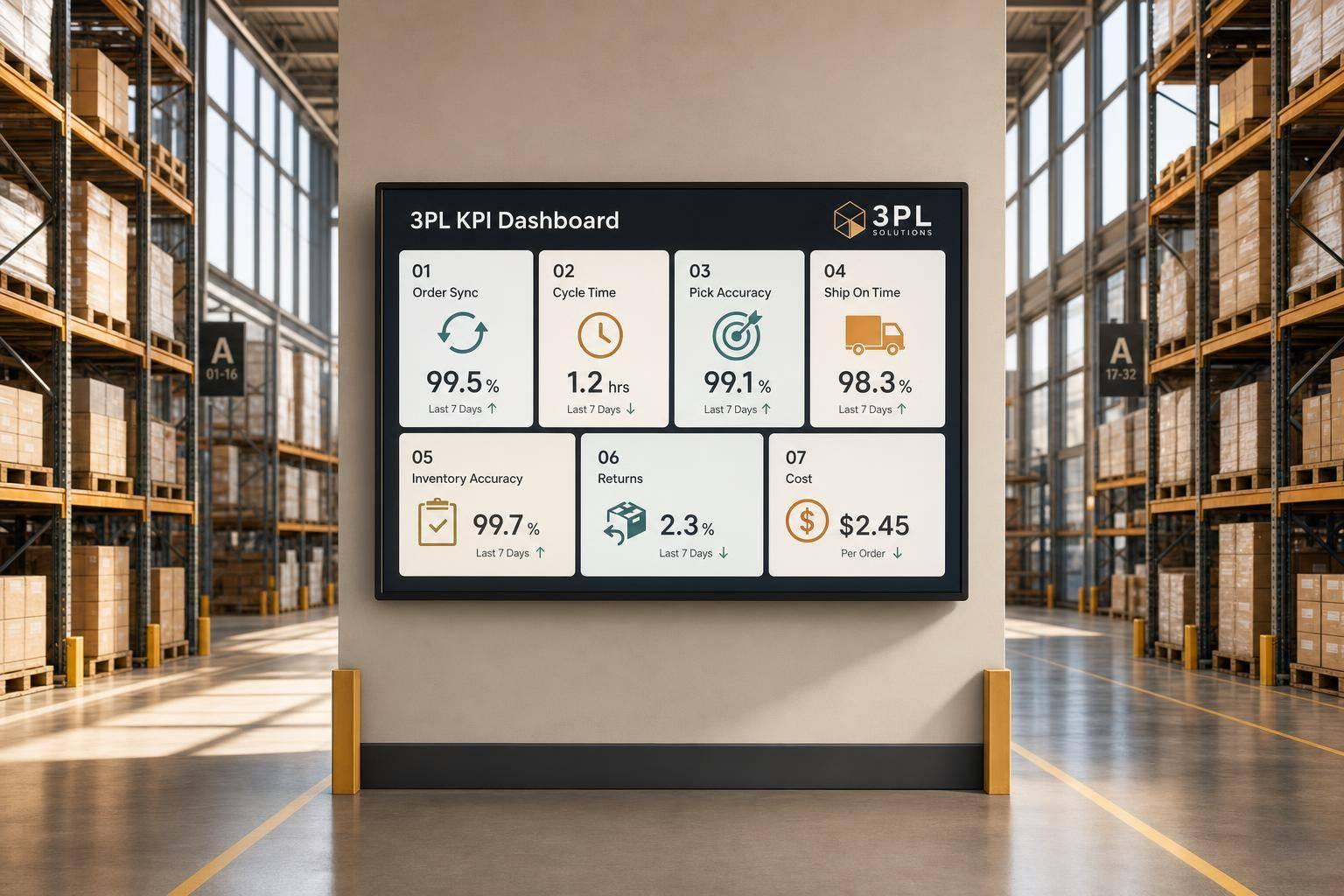
7 WooCommerce 3PL KPIs Teams Track

Centralized vs Decentralized Replenishment
