
How 3PLs Improve Subscription Box Delivery Times
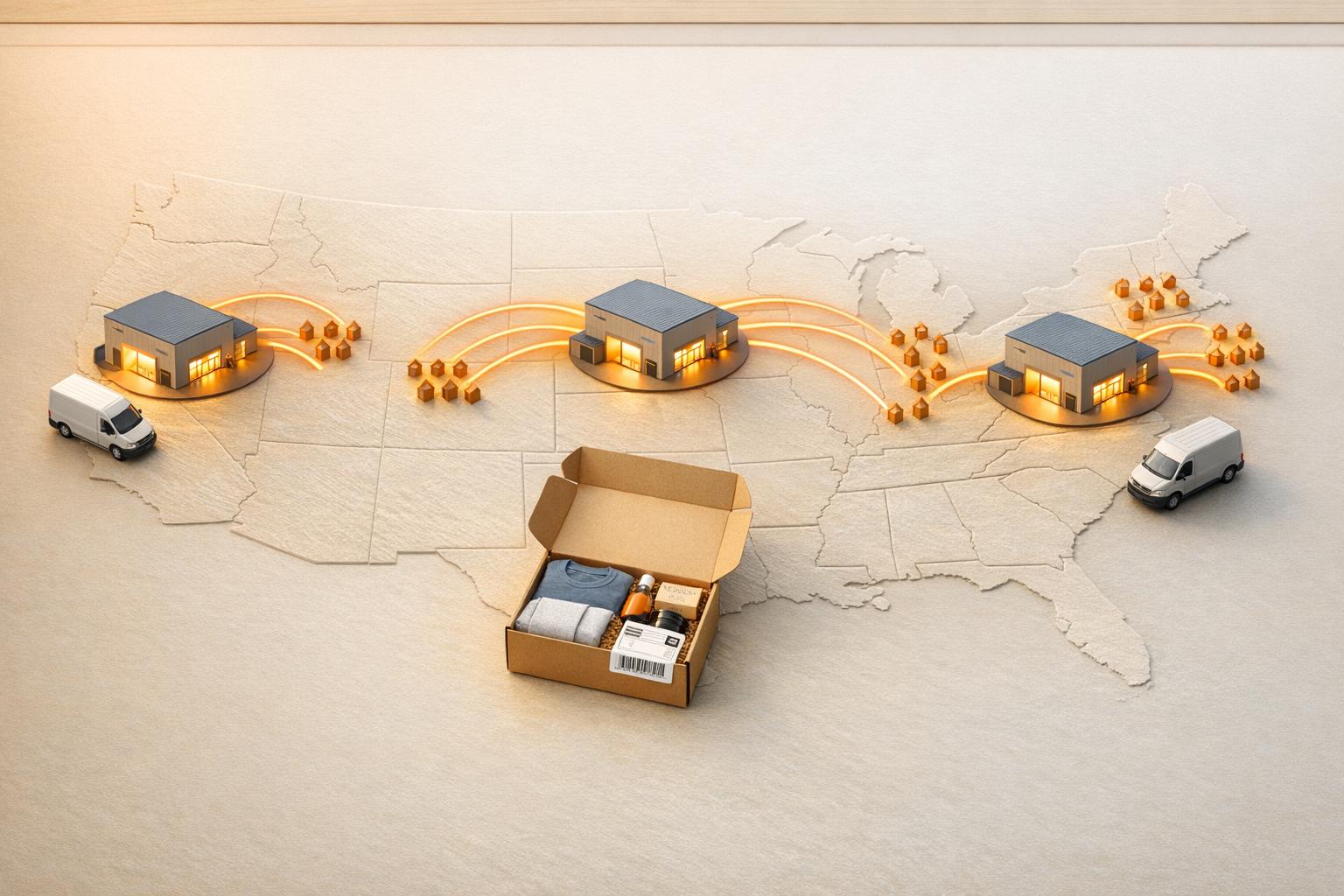
Subscription box brands rely on fast, reliable deliveries to keep customers happy and reduce churn. This is where third-party logistics (3PL) providers make a difference. By distributing inventory across multiple warehouses, automating fulfillment processes, and using advanced technology, 3PLs help businesses ship faster, cut costs, and handle seasonal demand spikes. Here’s how they do it:
- Faster Shipping: Multiple warehouse locations reduce transit times by shipping from the nearest facility, meeting 2–3 day delivery expectations.
- Cost Savings: Regional shipping lowers costs by up to 25% compared to cross-country shipping.
- Handling Volume Spikes: Flexible capacity ensures smooth operations during high-demand periods like holidays.
- Technology Integration: Real-time inventory systems and automated picking improve accuracy and speed.
- Custom Services: Kitting, white glove handling, and tailored packaging elevate the customer experience.
These strategies not only improve delivery times but also enhance efficiency, helping subscription brands focus on growth instead of logistics challenges.

How 3PLs Reduce Subscription Box Delivery Times and Costs
What Is a Subscription Box 3PL & Do You Need One?
sbb-itb-eafa320
Using Multiple Warehouse Locations to Speed Up Delivery
Relying on a single warehouse for all inventory can significantly delay shipments to customers in distant regions. For instance, while local deliveries might take 2–3 days, customers on the opposite coast could face wait times of 5–7 days. These delays can lead to frustration and erode customer trust.
Third-party logistics providers (3PLs) solve this problem by distributing inventory across multiple regional fulfillment centers. Take JIT Transportation as an example: they operate 14 warehouses strategically located near major transportation hubs across the U.S., offering a combined capacity of over 2.5 million square feet. Their locations - such as Los Angeles for West Coast coverage and Memphis for central distribution - ensure packages travel shorter distances, cutting down transit times.
The financial benefits of this approach are clear. Shipping a package cross-country from one central warehouse costs roughly $12–$15. In contrast, shipping from a regional warehouse reduces costs to $8–$10. Additionally, using distributed fulfillment shifts up to 40–50% of orders from pricier distant shipping zones (Zones 5–8) to more affordable nearby zones (Zones 2–4). For businesses shipping over 500 orders monthly, adopting a two-location strategy can lower total fulfillment costs by 20–25%.
Shortening Transit Times with Distributed Fulfillment Centers
Positioning inventory within 300 miles of customers enables 2–3 day ground shipping without resorting to expensive air freight. With 67% of consumers expecting 2-day delivery, meeting this expectation is critical. By utilizing three key regions - West Coast, East Coast, and Central - subscription brands can cover 60–70% of the U.S. population within this timeframe. Automated order routing systems further streamline operations by instantly assigning orders to the nearest warehouse, removing the need for manual intervention and ensuring maximum efficiency.
This distributed model not only speeds up deliveries but also builds resilience. If a natural disaster or a carrier disruption impacts one facility, orders can be rerouted to another, preventing delays and minimizing customer churn.
Handling Volume Spikes with Flexible Warehouse Capacity
Unlike traditional e-commerce, subscription box fulfillment often follows a production calendar, with order volumes surging during holiday launches or promotional campaigns. These spikes can increase kitting volume by three to five times the usual rate. A 3PL with adaptable capacity can scale labor and resources to handle these fluctuations without sacrificing performance.
"Our warehousing, transportation, and fulfillment infrastructure is designed to flex with your volume. Whether you're scaling up during peak season or launching into new markets, we offer both fixed and variable models to support consistent performance." – JIT Transportation
Labor models are another critical factor. Shared labor pools often struggle during peak times, while semi-dedicated models - where specific associates are assigned to kitting tasks - help maintain efficiency even when demand surges. When selecting a 3PL, it's essential to confirm whether they use shared or semi-dedicated labor to ensure they can handle high volumes without delays.
On top of flexible capacity, advanced technology plays a key role in streamlining inventory management and speeding up order processing.
Technology Systems That Speed Up Fulfillment
Relying on manual counts and paper-based picking can significantly slow down fulfillment operations. During high-demand events, like limited-edition launches, these outdated methods often fall apart. Modern third-party logistics providers (3PLs) have embraced advanced tools like Warehouse Management Systems (WMS) and real-time inventory platforms to streamline processes from receiving to shipping.
Real-time inventory management systems track inventory changes as they occur - whether from purchases, deliveries, or returns - providing instant visibility across multiple warehouse locations. This automation eliminates time-consuming manual data entry and reduces the need for frequent physical counts, saving businesses more than 10 hours per month on average. For subscription box companies with tight production schedules, WMS technology is indispensable. It ensures every item, or SKU, follows a precise route from storage to staging, coordinating complex kitting and assembly tasks to meet strict shipping deadlines.
Tracking Inventory in Real Time
Keeping an accurate count of stock is critical for avoiding stockouts and overselling - two major obstacles to timely deliveries. In 2022, U.S. businesses saw logistics costs rise by 19.6%, with carrying costs making up 52% of that increase. Real-time inventory systems help manage safety stock more effectively, ensuring businesses can stay on track with delivery schedules even when suppliers face delays. Retailers using these systems often see up to a 40% increase in in-store conversion rates by leveraging accurate, up-to-date stock information.
Technologies like barcode scanners, RFID tags, and IoT sensors play a key role in syncing physical inventory with digital records. They also trigger reorder alerts when stock levels run low, helping businesses maintain precise inventory control, which directly supports faster and more reliable deliveries.
"Having all our tooling and commerce data unified in a single platform was a real driving factor... All our sales channels display the same stock availability, and we can run a promotion online and in-store concurrently without worrying about overselling." – Alexandra McNab, COO, Bared Footwear
With accurate inventory data in place, automation takes order processing to the next level.
Automating Order Picking and Packing
Even a small manual error rate of 0.5% can result in 500 mispicked orders per 100,000, leading to costly delays. Automated picking systems address this by using tools like scan-verification, weight checks, and photo validation, ensuring near-perfect accuracy at every step. Additionally, direct integration between subscription platforms and WMS allows for automatic generation of Bills of Materials (BOMs) for each order, eliminating the slow and error-prone process of manual list-matching.
This level of automation becomes especially valuable during peak periods, like holiday launches or limited-edition drops, when subscription box volumes can spike three to five times above normal rates. By treating ship dates as non-negotiable deadlines, automation transforms fulfillment into a highly efficient operation.
"In a supply chain built on speed and precision, technology is the difference between 'on time' and 'too late.'" – JIT Transportation
To further enhance efficiency, integrating core systems ensures seamless data flow across the supply chain.
Connecting ERP and Order Management Systems
Disconnected systems can bottleneck fulfillment operations. When Enterprise Resource Planning (ERP) systems, order management platforms, and carrier systems don’t communicate, teams lose valuable time manually transferring data. Integration solves this by unifying information from sales channels, ERPs, carriers, and warehouses into a single source of truth. Orders from direct-to-consumer sites and retail portals sync instantly, enabling fulfillment centers to act without delays.
This seamless integration not only speeds up turnaround times but also allows brands to monitor order accuracy and delivery performance from one dashboard. For subscription-based businesses - where a single late or incorrect shipment can lead to customer churn - this level of visibility is crucial for maintaining customer loyalty and lifetime value.
Integrated systems also use predictive analytics to improve warehouse planning. By forecasting demand, 3PLs can prepare resources in advance, ensuring they are ready to handle volume spikes before they occur. This proactive approach keeps fulfillment operations running smoothly, even during the busiest times.
Working with Nationwide Shipping Carriers
Efficient nationwide shipping relies on strong partnerships with major carriers and advanced technology to streamline operations. Leading 3PL providers don’t put all their eggs in one basket - they work with multiple U.S. shipping carriers. Why? This approach allows them to compare rates, transit times, and service quality to find the best fit for every shipment. By leveraging this multi-carrier system, 3PLs can shop for competitive rates based on package weight, delivery zones, and speed. They also implement strategies like zone skipping, where subscription boxes heading to the same region are consolidated and shipped in bulk closer to their final destination. This method reduces costs and speeds up deliveries.
Consolidating Shipments to Reduce Costs and Transit Time
To cut down costs and delivery times, 3PLs strategically distribute inventory across regional warehouses - often spanning more than 70 locations. This setup allows them to ship products from the warehouse nearest to the customer. For brands with repeat subscribers or bundled orders, combining shipments heading to the same address reduces handling and processing time. Additionally, by keeping a close eye on carrier fees and optimizing inventory placement for fast-moving products, 3PLs ensure even greater cost efficiency.
These strategies are key to setting the stage for smoother and faster final deliveries.
Improving Last-Mile Delivery Performance
The last-mile delivery is where the subscription experience can either shine or stumble. For 3PLs, ship dates aren’t just guidelines - they’re firm production deadlines. Meeting these deadlines is crucial for keeping subscribers happy and loyal, especially during busy periods when maintaining capacity is essential.
"Every ship date in a subscription operation is a production deadline, not an estimate." – Productiv Team
To ensure accuracy, 3PLs use quality control measures like scan verification, weight checks, and photo documentation. Even a small error rate - say, 0.5% - can lead to 500 incorrect shipments out of 100,000, which could result in canceled subscriptions and lost trust. Advanced technology plays a big role here. By integrating subscription platforms like Recharge or Ordergroove with their warehouse management systems, 3PLs provide automated tracking and real-time updates to customers, boosting confidence in delivery reliability.
At JIT Transportation, we combine these carrier strategies with cutting-edge technology and scalable infrastructure to ensure your subscription boxes arrive on time, every time, delivering a smooth and dependable experience for your subscribers.
Specialized Services That Improve Subscription Box Fulfillment
Subscription box fulfillment goes beyond just warehousing and shipping - it’s about precision and customization. With advanced fulfillment technology as the backbone, specialized services like kitting and white glove handling ensure that subscription brands can meet their unique demands without delays.
Custom Pick & Pack and Kitting for Subscription Boxes
Subscription boxes are all about delivering a curated experience, which means assembling multiple SKUs into a single, cohesive package complete with personalized inserts and branded materials. This process, known as kitting, is more than just packing - it’s a production workflow.
Top-tier 3PLs treat kitting as a systemized process. They use tools like barcode scanning, weight checks, and photo documentation to confirm every component is correct before shipping. Even the smallest mistake here can impact subscriber satisfaction and retention.
"Personalization at scale is a systems problem, not just a labor problem." – Productiv Team
To streamline operations, leading 3PLs integrate platforms like Recharge and Cratejoy with their Warehouse Management Systems (WMS). This automation generates per-order Bills of Materials (BOMs) tailored to customer preferences or loyalty tiers. During peak times, when promotional campaigns can increase kitting demand by 3× to 5×, 3PLs rely on semi-dedicated labor models to maintain efficiency and meet shipping deadlines.
As for costs, mid-level subscription box kitting typically ranges from $3 to $8 per kit. Some providers charge per component, while others offer a flat rate per completed box, aligning their pricing with operational efficiency.
At JIT Transportation, our kitting services are designed to meet these demands with precision. By integrating directly with subscriber data, we automate personalization, apply rigorous quality checks at every step, and maintain capacity during high-demand periods. This ensures your ship dates are treated as non-negotiable production deadlines.
But for subscription boxes containing high-value items, even more care is required.
White Glove Services for High-Value Items
When your subscription box includes luxury items like electronics or premium beauty products, standard handling isn’t enough. These boxes demand white glove services, which focus on protecting both the products and the customer experience.
For high-value subscriptions, flawless packaging is key. Even minor mistakes can lead to churn, as noted by an industry expert:
"Pack quality is directly tied to subscriber lifetime value in a way it isn't in transactional commerce." – Productiv Team
White glove handling involves extra layers of quality control, such as barcode scanning, weight verification, and photo documentation at the work-cell level. For consumables like gourmet food or skincare, 3PLs use lot tracking and First-Expired, First-Out (FEFO) protocols to ensure freshness. Temperature-controlled storage safeguards sensitive items during warehousing.
Unlike standard operations, high-value subscription kitting often uses semi-dedicated labor models. This ensures that your boxes receive the focused attention they need, rather than being handled by shared labor pools.
JIT Transportation’s white glove services provide this level of specialized care. From lot tracking to photo documentation, we protect your products and your subscriber relationships. With our approach, every box arrives in perfect condition and on time, reinforcing trust and satisfaction with your brand.
Measuring and Improving Delivery Performance
Once your operations are running smoothly, the next step is keeping tabs on performance to ensure your processes consistently deliver on-time shipments. By tracking specific, actionable metrics, you can identify weak points that might hurt subscriber retention or drive up costs.
Performance Metrics to Track
For subscription boxes, on-time delivery rate is the most critical metric. A reliable 3PL should maintain a rate of 98% or higher, while anything below 95% is unacceptable. This matters because 69% of shoppers are less likely to return to a brand after a late delivery. For subscription businesses, even one missed shipment can lead to customer churn.
Another key metric is order accuracy, which should range between 99.5% and 99.9%. Why is this so important? A single error can have a big impact - 16% of customers will stop buying from a retailer after just one incorrect shipment. For every 100,000 boxes shipped, a 0.5% error rate means 500 incorrect orders. This level of precision is particularly crucial for subscription boxes, where mistakes can damage your brand's reputation.
Fulfillment speed is also a priority. This measures the time from order placement to when the package is handed off to the carrier. Leading operations aim for same-day fulfillment or within 24 hours to meet the 2–3 day delivery window customers expect. Similarly, dock-to-stock time, which tracks how quickly new inventory is processed and ready for sale, should stay under 72 hours. Delays here can cause artificial stockouts and missed opportunities.
Other essential metrics include:
- Inventory accuracy: Should be 99.5% or higher to avoid overselling.
- Return processing time: Aim for completion within 24 hours.
- Cost per unit shipped: Keep it around $8.50 per order.
- Ship-date reliability during spikes: Promotional campaigns can increase kitting volumes by 3× to 5×, making this metric especially important.
Using Analytics Dashboards for Better Decisions
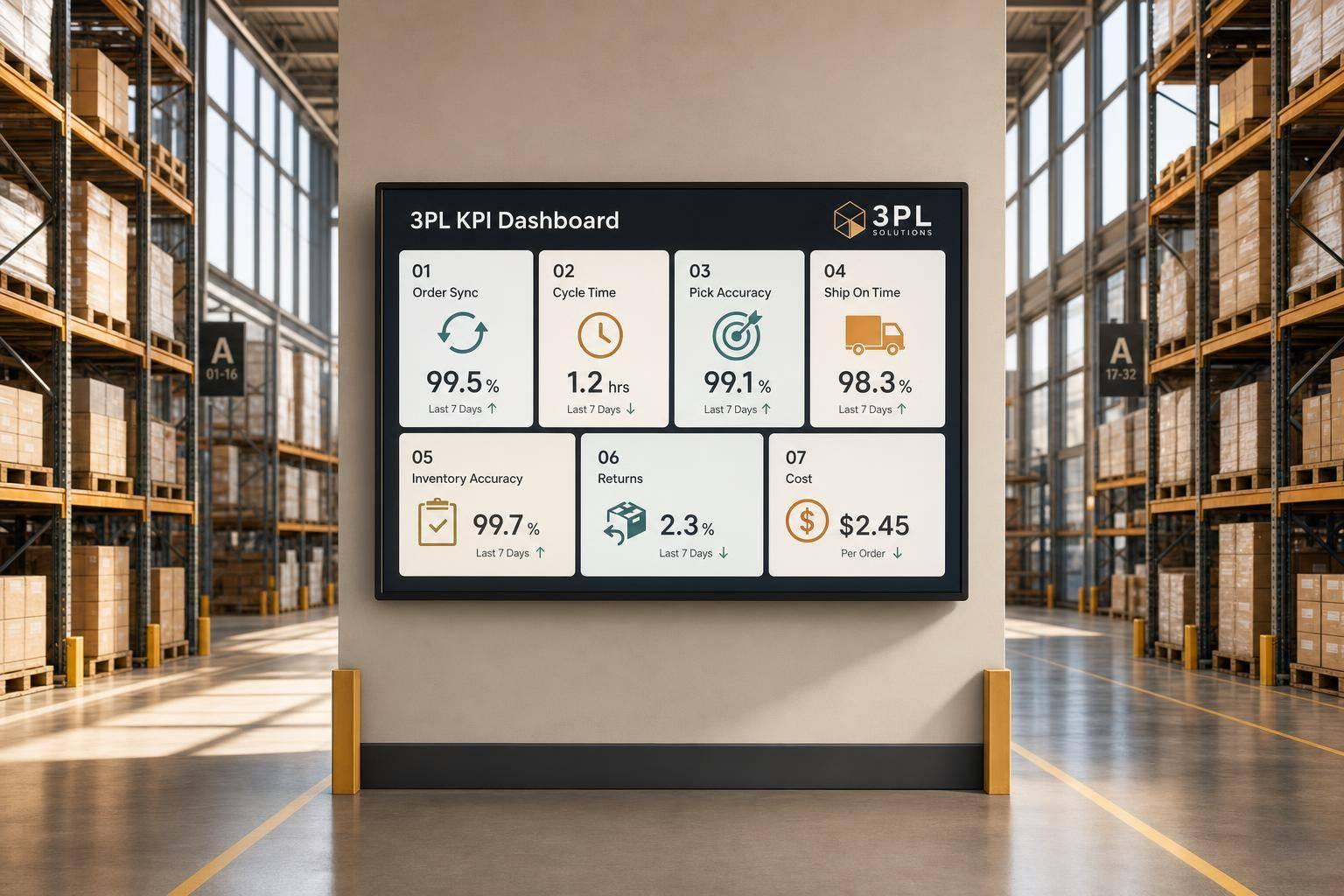
Once you’ve set clear performance goals, real-time dashboards can help you stay on track. The best 3PLs offer automated reports, allowing you to monitor performance continuously instead of spotting issues weeks down the road.
Advanced dashboards, integrated with platforms like Recharge and Cratejoy, can even predict inventory shortfalls 6–8 weeks in advance, giving you time to adjust. During high-volume periods, these tools can track throughput to ensure you have enough labor to meet deadlines.
Monitoring quality at the work cell level (instead of just at the shipping stage) helps 3PLs catch problems before orders leave the facility.
"Clear data drives effective decision-making." – Xavier Chu, Cubework
To ensure accountability, establish Service Level Agreements (SLAs) in your contract. For example, set targets like 99%+ order accuracy and 98%+ on-time delivery. Use dashboards to audit these SLAs weekly. Regular strategy sessions to review metrics like costs, inventory accuracy, and long-term trends can further refine your operations.
JIT Transportation offers real-time dashboard access, giving you complete visibility into your subscription box fulfillment. From tracking order accuracy to maintaining consistent performance, these analytics tools empower you to meet customer expectations with confidence.
Conclusion
Subscription box brands face the ongoing challenge of meeting customer expectations while handling on-time shipments, intricate kitting processes, seasonal demand surges, and rising complexities in logistics. Partnering with a specialized 3PL provider can simplify these hurdles by offering distributed inventory placement, carrier optimization, and real-time tracking - all within a unified system.
To tackle these demands, 3PLs implement strategies that speed up fulfillment at every stage. For instance, splitting inventory across multiple regions reduces the last-mile delivery time, which enhances cart-to-door speeds. Access to major carriers allows for optimized routing and priority delivery. Additionally, 3PLs can scale operations during peak seasons, avoiding delays and ensuring smooth workflows.
Beyond operational improvements, working with a 3PL lets brands reclaim valuable time and resources. Instead of managing warehouse layouts, negotiating carrier contracts, or dealing with reverse logistics, business leaders can concentrate on core goals like product innovation, customer acquisition, and expanding their brand. In today’s competitive landscape, logistics isn’t just a back-end task - it’s a critical driver of success.
JIT Transportation delivers the infrastructure, technology, and expertise that subscription box brands need to excel. With services like custom pick-and-pack, kitting, real-time dashboards, and white-glove handling, JIT ensures fulfillment remains efficient while maintaining the high-quality experience customers expect. By leveraging cutting-edge technology and a nationwide network, JIT Transportation transforms logistics from a challenge into a strength - helping brands deliver on time and focus on growth.
FAQs
How many warehouses do I need to hit 2–3 day delivery?
Achieving delivery within 2–3 days often means setting up multiple warehouses in strategic locations across the U.S. The number of facilities you'll need depends on two key factors: your shipment volume and the regions you aim to serve effectively. By placing warehouses closer to your customers, you can streamline shipping times and ensure faster deliveries.
What should I ask a 3PL about peak-season capacity?
When talking about peak-season capacity with a 3PL, it’s important to ask whether they can manage higher order volumes without compromising delivery accuracy. Make sure they have the infrastructure to scale, can meet tight shipping deadlines, and respond quickly to changing demand. These questions will help you determine if your 3PL is equipped to support your business during those high-demand times.
Which fulfillment KPIs matter most for subscription boxes?
When it comes to subscription box fulfillment, a few key performance indicators (KPIs) stand out: delivery accuracy, timeliness, and overall customer satisfaction. These metrics ensure your operations run smoothly and your subscribers stay happy.
- On-time delivery rate: This tracks how often your boxes reach customers as scheduled, an essential factor for recurring subscriptions.
- Order accuracy: Getting the right items into the right box is non-negotiable. Mistakes here can erode trust quickly.
- Inventory turnover: Keeping stock moving efficiently helps manage costs and avoid overstock or shortages.
Hitting deadlines and keeping errors to a minimum are the cornerstones of building trust with your subscribers while keeping your fulfillment process efficient.
Related Blog Posts
Related Articles
7 WooCommerce 3PL KPIs Teams Track

Centralized vs Decentralized Replenishment
