
How 3PLs Use Automation to Optimize Workflows
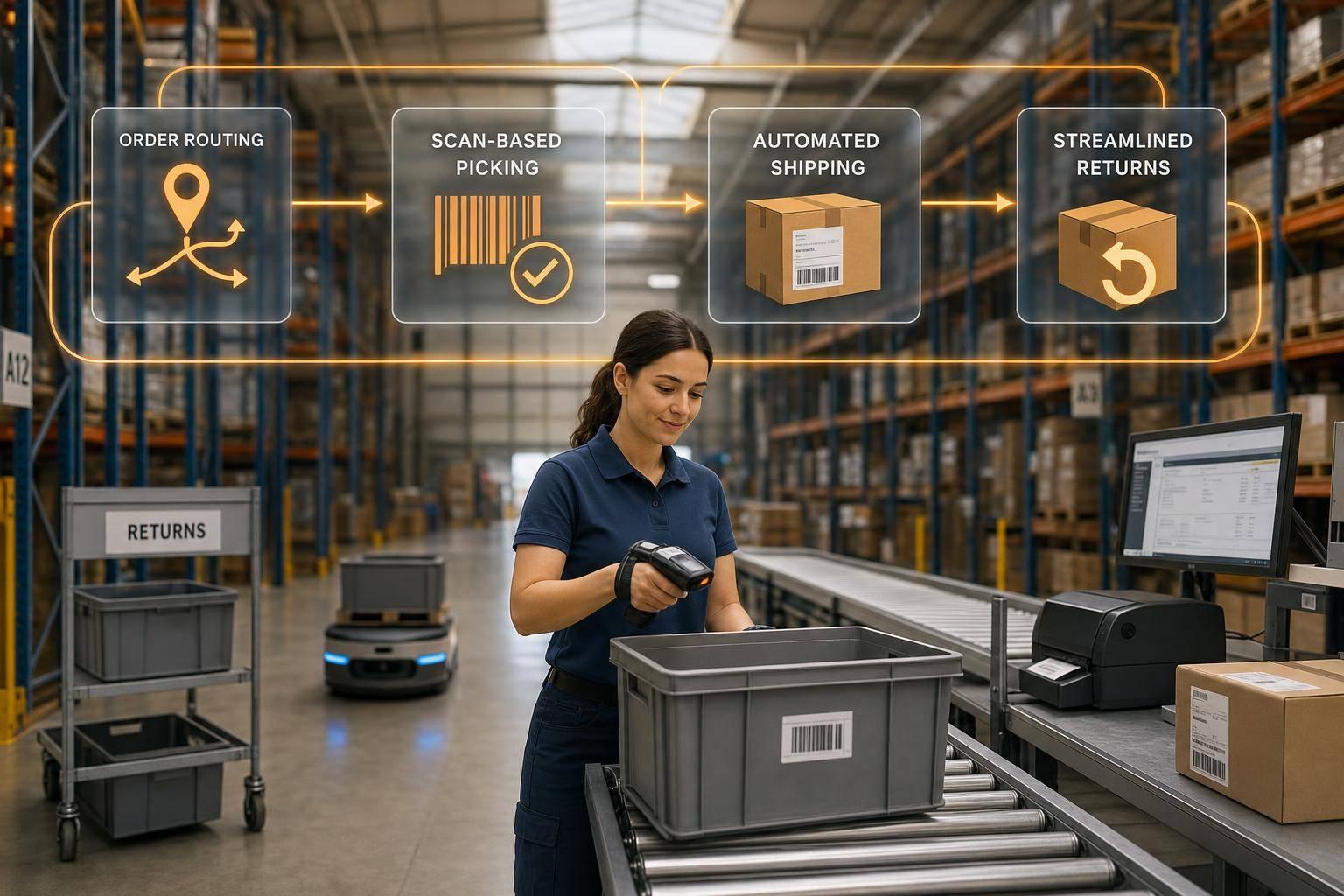
If I had to sum it up in one line: 3PL automation cuts manual work at the points where fulfillment usually slows down most - order intake, picking, packing, shipping, inventory, and returns.
Once a brand moves past 3,000+ orders per month, small process gaps can turn into late shipments, bad inventory counts, and extra labor cost. I’d focus first on scan-based receiving, rule-based order routing, system-led picking, automated shipping choices, and a set returns flow. That’s where many teams see the biggest lift in speed and accuracy.
Here’s the short version:
- Manual order entry leads to delays and preventable mistakes.
- Paper-based picking and packing slows output as volume climbs.
- Weak scan discipline causes inventory drift, stockouts, and overselling.
- Manual shipping decisions can add carrier cost and miss cutoffs.
- Loose returns processes create backlogs and more rework.
- Rules, APIs, EDI, WMS, barcode scans, and AI alerts help move work with less back-and-forth.
- Results can be large: barcode scanning can cut pick and pack errors by 60%+, WISMO tickets can drop by 72%, and returns processing time can fall by up to 95%.
What matters most is this: automation works best when I use it to remove repeat manual steps, not just add more tools. The goal is simple - fewer errors, faster order flow, lower labor drag, and more stable service as volume grows.

3PL Automation Impact: Key Stats & Workflow Gains
The Biggest Workflow Bottlenecks in 3PL Fulfillment
Manual Order Processing Causes Delays and Errors
These slowdowns hit hardest at order intake, on the warehouse floor, and after shipment. If orders come in with messy SKU names or missing bundle rules, teams have to fix them by hand before anything can move.
That might sound like a small cleanup job. It isn’t. During peak season, manual routing and priority calls can pile up fast. Backlogs start to form, and then the whole flow downstream slows down. It gets worse when D2C, retail, and wholesale orders are all fighting for the same labor and inventory at the same time.
Pick, Pack, and Inventory Workflows Break Down Under Volume
When pick paths aren’t set up well, associates can walk miles in a single shift just to fill orders. That adds fatigue, and tired teams make more mistakes. If a picker can’t find an item, everything pauses. Throughput drops, and one missing product can ripple across the rest of the shift.
Packing has its own problems. If carton rules aren’t standardized, people choose boxes differently from one order to the next. That can drive up dimensional weight fees and lead to more damaged shipments.
Inventory drift is another headache. It happens when WMS counts don’t match what’s actually on the shelf, often because receiving and put-away skip barcode scans or because cycle counts aren’t linked to item velocity. Once inventory is off in the system, overselling and stockouts become much more likely. At that point, teams often have to stop what they’re doing and verify stock by hand before releasing more orders.
Shipping, Returns, and Value-Added Services That Stay Too Manual
The same gaps show up after the order leaves the building. Manual rate shopping can push shipping spend higher than it needs to be. Without shipping software tied into the workflow, teams may pick carrier service levels out of habit instead of using rules. That leads to extra spend and missed carrier cutoffs that could have been avoided.
Exception handling is another drag on output. Manual triage can take 4–8 minutes per issue, and claims often stall while the shipper, 3PL, and carrier each wait on someone else to act.
Kitting and assembly can slow things down too. If work instructions aren’t standardized, errors start to slip in. Then rework grows, and shipments take longer to get out the door.
sbb-itb-eafa320
How 3PLs Use Automation to Improve Speed, Accuracy, and Throughput
Integrated Order Management and Rule-Based Routing
A lot of the mess gets fixed at the intake stage.
Integrated order management removes the lag that comes with manual intake. API and EDI connections pull orders from ecommerce, marketplace, and ERP systems, and the 3PL uses preset rules to validate those orders and send exceptions to review. In many cases, that means 40% to 60% of inbound orders can be fully auto-routed within six weeks of adding an automation layer.
Routing gets more consistent too. Orders can go to the right warehouse or workflow based on geography, service level, and real-time inventory availability. That helps avoid split shipments and cut transit times. Real-time WMS-TMS sync also keeps outbound pick priorities lined up with carrier status, which can prevent more than 80% of coordination errors that often turn into service credits.
Once orders are routed, warehouse systems step in to direct the work on the floor.
Automated Warehouse Execution for Picking, Packing, and Inventory Control
At that point, the WMS tracks SKUs and inventory, while the WCS sends instructions to warehouse equipment and workers. Think of it like this: one system knows what needs to happen, and the other helps make sure it happens in the right place at the right time.
Cobots can triple pick rates and cut walking time in half, while barcode scanning reduces pick-and-pack errors by more than 60%. System-directed cycle counts and other automated inventory checks also help keep records accurate without stopping day-to-day operations for full physical counts.
Automated Shipping, Returns, and Value-Added Task Flows
Automation doesn't stop once an order is packed.
Automated rate shopping compares carrier options in real time and picks the best service level based on cost, transit time, and delivery commitment. Label generation and real-time carrier status updates happen in the same workflow, which helps catch address errors and delivery failures sooner. Proactive shipment tracking can reduce "Where Is My Order" (WISMO) inquiries by 72%.
Returns get the same treatment. Branded self-service portals let customers start returns, generate labels, and check status without contacting support. Automated returns solutions can cut returns processing time by up to 95%. Digital work instructions also help standardize non-core tasks across shifts and facilities.
What It Takes to Make 3PL Automation Work
Automation makes good processes faster. It also makes bad processes fail faster. If the workflow is messy, adding software, robots, or scanners won’t fix it.
Map Current Processes and Fix the Highest-Impact Problems First
Start by mapping every handoff from order intake to carrier pickup. Then go after the steps that cause the most errors. For many 3PLs, that means starting with cycle counting and scan-based receiving procedures.
After that, focus on the areas that create the most rework across the floor:
- order intake
- picking
- packing
- shipping
- returns
These are usually the first places where automation can show clear, measurable wins.
Once you’ve mapped the highest-friction steps, the next job is picking systems that can handle change without forcing the team into manual workarounds.
Build on Flexible Systems and Clear Operating Rules
Automation at scale depends on systems that can shift as the business shifts. Modular hardware, such as autonomous mobile robots (AMRs), lets 3PLs rework workflows as client needs change, peak-season volume swings, and mixed order types hit the floor, without getting stuck with fixed infrastructure. There is never a single-model approach to automation.
Hardware is only part of the picture. Operating rules matter just as much.
Instead of hard-coding every client rule into the system, strong 3PLs use plain-language SOP rules. So if a client changes a packaging spec or adjusts a claim threshold, the team can update it in minutes without calling in a developer. That keeps multi-client operations from turning into a mess as volume grows.
Use KPIs, Training, and Exception Management to Hold the Gains
Once automation is live, the focus shifts from launch to control. You need to track whether it’s cutting rework and reducing exception time.
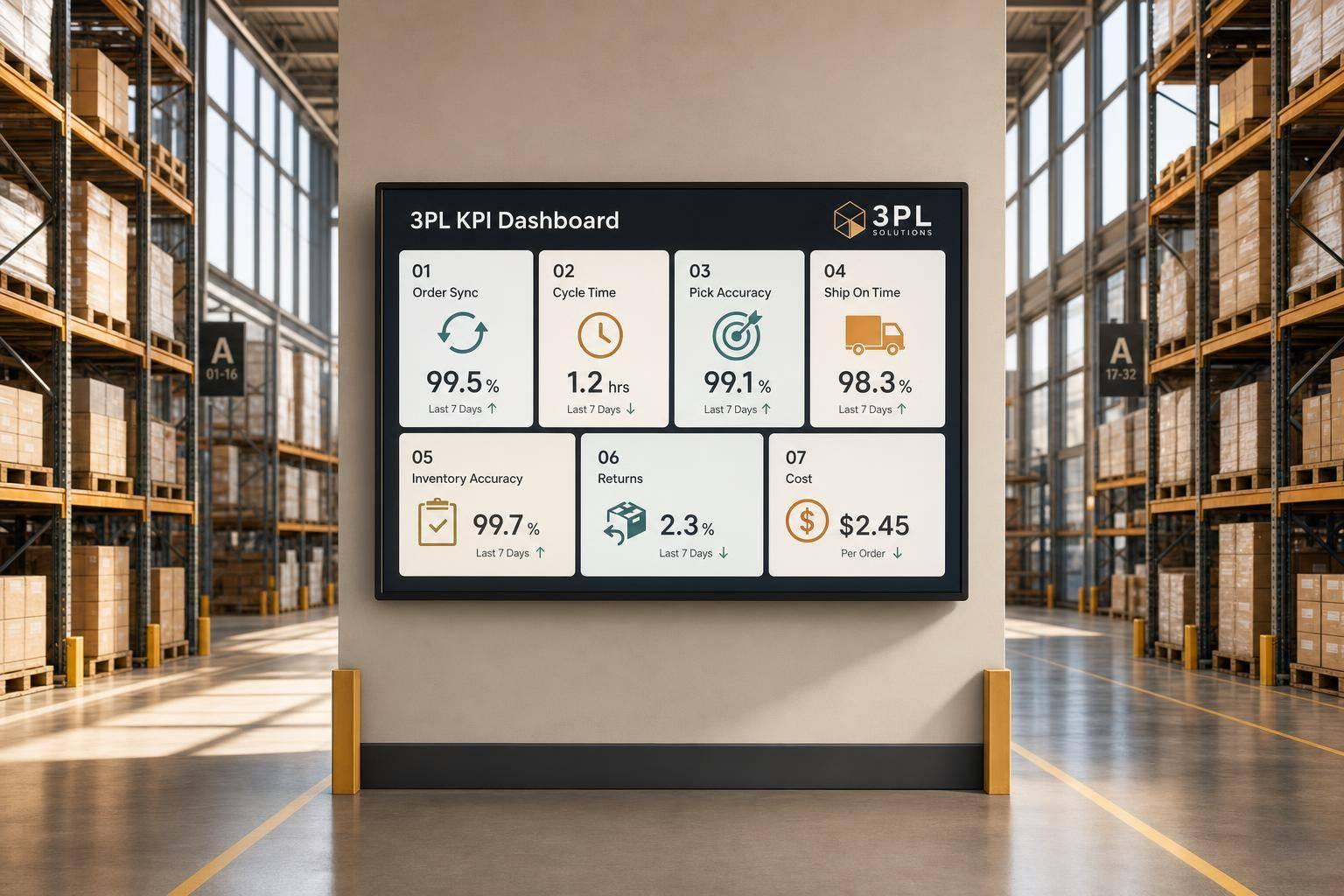
The main KPIs in 3PL fulfillment are order accuracy for intake and picking, inventory accuracy for receiving and put-away, lines per labor hour for floor throughput, and exception triage time for shipping issues. Top operations target 99.9% order accuracy. Average operations run at 97% to 98%.
Training is what turns system features into day-to-day execution. Guided workflows with scan-validated steps cut the mental load on staff and make cross-training much easier. A worker can move across receiving, picking, counts, and packout using the same devices and the same basic flow.
Exception management is what closes the loop. AI tools can flag at-risk orders before SLA breaches, cutting triage labor by 60% to 80%. That means staff spend less time hunting for problems and more time fixing them.
Conclusion: How Automation Helps 3PLs Scale Fulfillment More Reliably
3PL automation isn't about piling on more tools. It's about cutting manual drag out of the full fulfillment workflow before that drag turns into a serious cost problem.
The numbers make that plain. Automated facilities process orders 89% faster than manual operations. They can hit error rates as low as 0.09%, compared with 0.8% to 1.2% in manual processing. And predictive inventory positioning can reduce average shipping distances by 43%, which cuts transportation costs in a direct way.
Those gains don't come from one system in one corner of the warehouse. They depend on a 3PL that can put automation to work across the whole operation. A tech-enabled 3PL operator like JIT Transportation can apply these workflows across transportation, fulfillment, and value-added services, giving brands room to grow as volume and service demands increase.
That leads to a fulfillment operation that scales without giving up control. Automation does its job when it links intake, floor execution, and post-shipment workflows - cutting manual work, improving accuracy, and making growth more dependable.
FAQs
When should a 3PL automate?
A 3PL should look at automation when manual work starts slowing the operation down. If day-to-day workflows are causing bottlenecks, more errors, or SLA misses that cut into margins, that's a clear sign.
It also matters when staffing gets harder to manage. Labor shortages, high turnover, and seasonal volume swings can make it tough to keep accuracy steady from one week to the next.
If work like order processing, document handling, or travel-heavy picking is limiting throughput, automation can help steady performance. The best time to automate is when your data shows it can improve efficiency, scalability, and consistency - while still backing your customer service goals.
What should a 3PL automate first?
Start with accurate, real-time data from scan-based work before spending money on hardware like robotics. A 3PL can't automate its way out of bad data, billing problems, or poor slotting.
Once paper-based work is gone and every step is scanned, focus automation where SLAs break down. If missed deadlines or rework are the main problem, put guided mobile picking, pack verification, and on-device label checks at the top of the list. If receiving is the choke point, start with dock scheduling and point-of-receipt labeling.
How do 3PLs measure automation ROI?
3PLs measure automation ROI by weighing direct labor savings against the total cost of the automation system. In most cases, full payback lands within 18 to 36 months.
They also look at softer gains that still matter a lot: lower turnover and hiring costs, higher throughput, better client retention, and lower insurance premiums. To track those gains, they compare results against baseline metrics such as travel time, picks per hour, and error rates.
Related Blog Posts
Related Articles
7 WooCommerce 3PL KPIs Teams Track

Centralized vs Decentralized Replenishment
