
How Custom Packaging Boosts DTC Customer Experience
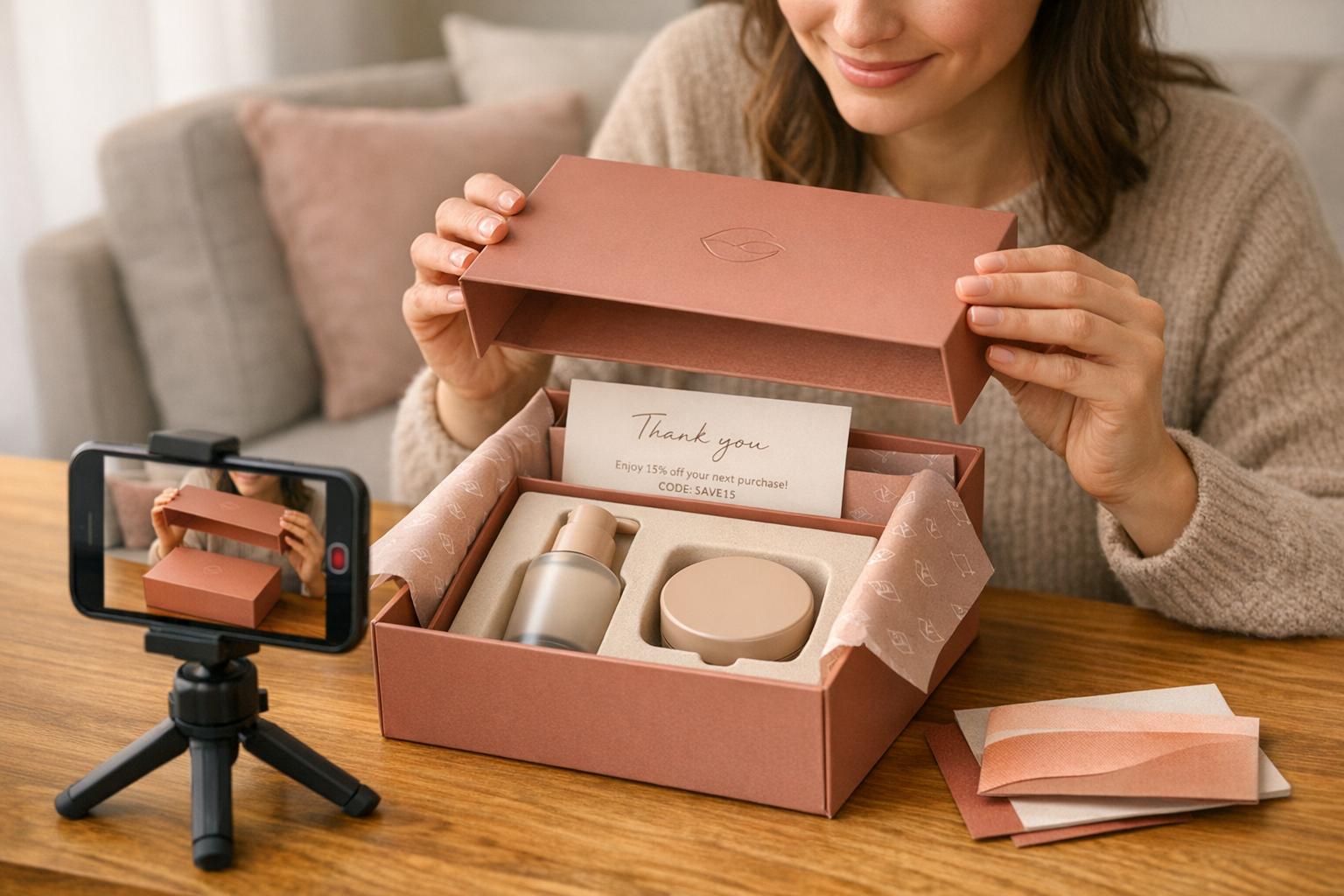
Custom packaging is more than just a shipping box - it’s a powerful tool for building customer loyalty and driving repeat purchases. Here’s why it matters for direct-to-consumer (DTC) brands:
- 100% Open Rate: Unlike email marketing, every package is guaranteed to be opened, making it a dependable branding opportunity.
- Influences Buying Decisions: Packaging alone can sway up to 33% of purchase decisions, with nearly 50% of buyers more likely to repurchase after a premium unboxing experience.
- Boosts Social Sharing: Eye-catching designs encourage customers to share unboxing moments online, creating organic marketing.
- Improves Product Protection: Custom-fit packaging reduces damage and returns, cutting costs and improving customer satisfaction.
- Increases Perceived Value: Premium packaging enhances the perceived worth of your product, with 61% of consumers more likely to buy again from brands that invest in quality packaging.
Custom packaging isn’t just about aesthetics - it’s about creating a memorable customer experience, protecting your products, and driving long-term growth. This article explores how to design, implement, and measure the impact of custom packaging for your DTC brand.

Custom Packaging Impact on DTC Customer Experience: Key Statistics
Key Benefits of Custom Packaging for DTC Brands
Custom packaging offers measurable advantages that go beyond simply shipping products. It becomes a strategic tool that enhances your brand, strengthens customer relationships, and directly impacts your bottom line.
Increased Brand Recognition
Packaging is often the first physical interaction a customer has with your brand, making it a crucial opportunity to establish trust and showcase quality. A custom design featuring your logo, brand colors, and distinctive fonts serves as a silent ambassador for your company, immediately communicating your identity and values. In fact, 72% of consumers say that packaging design influences their purchasing decisions.
"Packaging customization for D2C matters because your customer's first physical interaction with your brand is not the product. It is the box".
This initial touchpoint sets a tone of care and quality, creating a foundation for lasting relationships. Beyond this, custom packaging can turn the simple act of opening a box into a memorable experience.
Better Unboxing Experience
The unboxing experience can transform a routine purchase into a moment of joy. Thoughtful packaging - like branded tissue paper, custom inserts, or handwritten notes - adds layers of excitement and emotional connection. These elements not only enhance the experience but also strengthen the bond between the customer and the brand.
For example, a skincare company that switched to branded packaging saw their Net Promoter Score jump from 6.8 to 8.9 within three months. Additionally, custom packaging can include inserts or QR codes that share your brand's story or offer exclusive content, making the experience even more engaging. While it creates excitement, custom packaging also serves another critical function: protecting your product.
Improved Product Protection
Custom-fit packaging ensures your products arrive safely by eliminating unnecessary movement during transit. This reduces the risk of damage, which accounts for 20% of returns caused by shipping issues. Features like custom inserts, dividers, and molded pulp provide extra protection for fragile items, ensuring they reach customers in perfect condition.
"Most of the customers who come to us from another 3PL, their challenges have always been access to their data, order accuracy and efficiency... Inconsistent packaging affects all three areas because it often leads to damaged items".
Right-sizing your packaging not only protects products but also trims shipping costs by 20-30%. By avoiding dimensional weight surcharges from carriers like UPS and FedEx, you pay only for the space your product actually occupies, eliminating wasted space and unnecessary costs.
Greater Shareability and Social Proof
Custom packaging doesn’t just impress customers - it turns them into advocates. Visually appealing designs encourage customers to share their unboxing experiences on social media. In fact, over 40% of consumers say they are likely to share photos of attractive packaging online.
This user-generated content amplifies your brand’s reach, serving as authentic social proof that paid ads struggle to replicate. A well-designed package can spark a wave of organic marketing, as each shared post introduces your brand to new audiences. Many brands now intentionally design their packaging to be "social media-ready", encouraging customers to document and share their experiences.
Higher Perceived Value and Customer Retention
Premium packaging signals exclusivity and care, elevating the perceived value of your product. 61% of consumers are more likely to buy again from a brand that uses high-quality packaging, and 52% say premium packaging directly influences their decision to make repeat purchases.
This attention to detail reduces buyer's remorse by reinforcing the idea that the purchase was worth the investment. For instance, a skincare brand saw a 22% increase in repeat purchases after upgrading to branded packaging. By combining an immediate sense of value with long-term loyalty, custom packaging can drive sales growth by as much as 30%.
sbb-itb-eafa320
How to Implement Custom Packaging
Bringing custom packaging to life requires thoughtful planning and execution. The aim is to create packaging that not only protects your products but also reflects your brand story and scales effectively as your business expands. Here's how to get started.
Use Personalization and Storytelling
Packaging is often your customer's first interaction with your brand, making it a critical opportunity to set expectations and showcase your personality.
You don't need to dive straight into expensive, fully custom-printed boxes. Start small with cost-effective touches like branded stickers, signature colors, or printed thank-you cards. These simple elements can leave a lasting impression without eating into your profits. For instance, a personalized insert card can introduce a new product, share your brand's backstory, or even include a QR code that links to loyalty programs or assembly instructions.
"A generic brown box does its job, but a customized package does your storytelling." - G10 Fulfillment
Consistency is crucial. Whether your orders ship from a warehouse in California or New Jersey, customers should experience the same unboxing moment. To achieve this, document every step of your packaging process in Standard Operating Procedures (SOPs) and integrate these into your warehouse scanning systems.
"You want everything to be scanned in the warehouse, nothing done on paper. Scanning ensures that each order receives the correct packaging treatment, insert selection, and protective elements." - Connor Perkins, Director of Fulfillment, G10
Your choice of materials should align with your brand identity. Luxury brands might opt for premium wraps, while lifestyle or eco-conscious brands might favor recyclable materials. Personalization pays off - brands that prioritize it see 40% higher revenue, and 70% of U.S. shoppers are more likely to purchase when they encounter content that feels personally relevant.
Once your brand story is clear, the next step is to align your packaging choices with environmentally friendly practices.
Focus on Sustainability
Today's consumers, especially Millennials and Gen Z, expect eco-friendly packaging. Nearly one in five consumers rate minimal shipping packaging as extremely important. Choosing sustainable options isn't just practical - it also communicates your brand's values.
Opt for materials that are 100% recyclable and require no extra effort from customers. This could include uncoated paper, water-based or soy-based inks, and twisted paper handles instead of plastic or polyester ropes. Steer clear of materials like plastic laminates, wax coatings, and adhesives that hinder recyclability.
Right-sizing is another smart strategy. Designing boxes that fit your products precisely reduces waste, cuts shipping costs, and avoids dimensional weight surcharges from carriers. This approach not only saves money but also reinforces your commitment to reducing environmental impact.
When protective fillers are necessary, use eco-friendly alternatives like molded pulp or paper air pillows instead of plastic bubble wrap. And don't forget to test your packaging under real-world conditions, such as drop tests, to ensure it protects your products while maintaining your brand's image.
Apply Data-Driven Customization
The best packaging decisions are guided by customer feedback. Use surveys, social media comments, and post-purchase reviews to understand what matters most to your audience. For example, if customers frequently mention excessive packaging, consider offering a "minimal packaging" option at checkout.
By 2026, AI-powered personalization has become a game-changer. Brands now analyze customer data - like purchase history, browsing habits, and search behavior - to customize product recommendations and packaging inserts at scale. This level of detail can significantly boost customer engagement and loyalty.
Mapping the customer journey is essential to ensure your packaging delivers consistent visual and tactile cues at every touchpoint. Document every interaction - from online orders to retail pickups and returns - to make sure your brand's identity is reinforced throughout. Set clear guidelines for logo placement, brand colors, typography, and material choices to prevent inconsistencies as you grow.
Create a unified system of packaging materials - mailers, boxes, tape, and tissue - that maintains a cohesive look across all product sizes. Centralize dielines, material weights, and artwork files to ensure uniformity across suppliers and fulfillment centers. This standardization is especially vital as more direct-to-consumer (DTC) brands outsource their fulfillment to manage the complexities of custom packaging. In fact, by the end of 2024, 73% of high-growth DTC brands had adopted this approach.
Integrating Custom Packaging with 3PL Fulfillment
As your direct-to-consumer (DTC) brand grows, handling custom packaging in-house can quickly become overwhelming. When monthly orders hit the 1,000 to 1,500 range, manual fulfillment processes often start to falter. This can lead to errors, delays, and a decline in customer satisfaction. To maintain the quality of your unboxing experience while scaling, it’s crucial to partner with a logistics provider that not only handles storage and shipping but also preserves the unique packaging experience your customers love.
This shift to outsourcing highlights the increasing demand for adaptable fulfillment solutions in the DTC space. Unlike traditional warehouses designed for bulk pallet storage, DTC-focused 3PL providers offer facilities tailored to the needs of smaller, custom orders. These fulfillment centers are equipped with pick-and-pack zones, shelving for individual items, and packing stations that can accommodate the demands of custom packaging.
Value-Added Services for Custom Packaging
3PL providers like JIT Transportation offer a range of value-added services designed to support your custom packaging strategy. Services such as pick & pack, kitting & assembly, and white glove handling allow you to scale your efforts without sacrificing quality as order volumes grow. For instance, JIT Transportation’s kitting & assembly services ensure that every detail of your unboxing experience - from personalized inserts to subscription box assembly - is handled with precision. For premium products, their white glove handling ensures extra care, reinforcing the sense of luxury that aligns with your brand’s identity.
Managing Scalability and Efficiency
DTC brands often experience unpredictable surges in orders during sales events, product launches, or viral moments on social media. A well-equipped 3PL can handle these fluctuations seamlessly, ensuring your packaging standards and delivery timelines remain intact. JIT Transportation, for example, uses advanced Warehouse Management Systems (WMS) to provide real-time inventory tracking, preventing issues like overselling custom packaging materials. Their multi-channel integrations with platforms like Shopify and Amazon automate the order process, guaranteeing consistent packaging across all sales channels.
Measuring the Impact of Custom Packaging on Customer Experience
Evaluating the effects of custom packaging goes beyond aesthetics - it’s about understanding its real contribution to your business. Once you’ve invested in custom packaging, it’s crucial to assess if it’s delivering the expected benefits. Packaging impacts everything from operational efficiency in your warehouse to how loyal your customers are, so tracking multiple metrics is key. Each packaging KPI should tie back to your overall business goals.
Key Metrics to Track
Start with metrics that directly affect your bottom line. For example, monitor the damage rate - look for issues like broken items, crushed corners, or leaks to get accurate data. Even a 9% reduction in box costs might backfire if it leads to higher refund and replacement expenses due to poor protection.
Other metrics to watch include the total packaging cost per order, which factors in labor, tape, inserts, and void fill. Also, track pack-out time, as even small efficiency gains can save significant labor costs. For instance, a fulfillment center saved the equivalent of 1.8 full-time employees by switching from mixed carton stock to right-sized shippers.
Don’t forget to measure the impact of dimensional weight. A box that’s just one inch too tall can push your shipping costs into a higher tier, significantly affecting your expenses.
When it comes to customer experience, consider metrics like Net Promoter Score (NPS), customer reviews about unboxing, and social media engagement, including unboxing videos and shares. These indicators highlight how your packaging resonates with customers and reinforces the brand image discussed earlier.
Collecting and Analyzing Customer Feedback
Numbers can tell part of the story, but customer feedback often uncovers details that metrics alone can’t. For example, use specific reason codes for returns - distinguish between “transit damage” and “leakage” instead of lumping them under general returns. This approach helps identify actual packaging issues. Joel Malmquist, VP of Customer Experience at G10, sums it up well:
"Packaging that fails does more than disappoint customers. It triggers returns. Damaged goods frustrate shoppers and distort inventory levels".
Track customer reviews for phrases like “arrived damaged” or “cheap box” to identify structural or design flaws. Additionally, tools like barcode scanning for custom inserts ensure consistent branding and reduce errors that could lead to negative feedback. Encourage customers to share their unboxing experiences online - this creates organic social proof. Research shows that 70% of U.S. consumers are influenced by packaging appearance, and 83% are willing to pay more for eco-friendly options.
These insights validate design updates and strengthen the integration with 3PL fulfillment services mentioned earlier.
Calculating ROI of Custom Packaging
To understand the financial impact of custom packaging, calculate ROI using the formula: (Net Benefit / Total Investment) x 100. For packaging, “Net Benefit” includes both cost savings and potential revenue growth. As Packwire puts it:
"Your packaging is the only marketing channel with a 100% open rate".
Don’t overlook the value of user-generated content and social media mentions tied to the unboxing experience. For instance, switching to right-sized mailers can reduce shipping costs - sometimes enough to offset the cost of the new packaging design. Features like auto-lock bottoms can save about 30 seconds per order, which adds up to 40 labor hours saved monthly for every 1,000 orders.
Broken products also carry hidden costs, including lost goods, initial shipping fees, and the labor required to resolve complaints.
Track ROI over different timeframes - 30, 90, and 180 days - to capture repeat purchases and long-term customer lifetime value (LTV). A solid LTV to Customer Acquisition Cost (CAC) ratio of 3:1 or higher is a good benchmark. Instead of focusing solely on the first purchase, consider the lasting value customers bring, especially since packaging can influence up to one-third of buying decisions.
Conclusion
Custom packaging serves as the first tangible connection between a brand and its customers, setting the tone for how the brand is perceived. For DTC brands, treating packaging as more than just a shipping container - seeing it as a tool for customer retention - can create a noticeable advantage. The unboxing moment doesn’t just deliver a product; it builds trust and reinforces the brand’s commitment to quality.
Unlike email campaigns or other digital touchpoints, physical packaging reaches every single customer. It skips over concerns like privacy regulations and low engagement rates, delivering an experience that’s impossible to ignore. Thoughtful design can spark joy, encourage social sharing, and even minimize operational challenges like product damage and returns. Smartly engineered packaging can also help brands manage costs while encouraging repeat purchases.
The financial benefits are hard to ignore. Using right-sized packaging can lower shipping fees tied to dimensional weight, custom inserts can encourage customers to come back, and less breakage means fewer replacement costs. As shown in earlier examples, brands that invest in custom packaging often see boosts in repeat purchase rates, higher Net Promoter Scores, and better returns on ad spend.
Scaling these efforts doesn’t have to be overwhelming. Partnering with fulfillment experts like JIT Transportation ensures that custom packaging can be integrated across various distribution points efficiently. Services like kitting, assembly, and custom inserts can be streamlined into daily operations, allowing brands to deliver high-end experiences without sacrificing speed or precision.
When paired with scalable logistics, well-designed packaging transforms every delivery into a moment of connection and brand reinforcement. Custom packaging isn’t just a nice-to-have - it’s a deliberate investment in customer loyalty, satisfaction, and sustainable growth. Brands that prioritize both the practical and emotional aspects of packaging will continue to rise above the competition, creating loyal communities that naturally advocate for them.
Make every shipment count - invest in custom packaging to elevate your brand with every delivery.
FAQs
What custom packaging upgrades have the biggest impact for a small DTC brand?
For small DTC brands, making thoughtful changes to custom packaging can elevate the unboxing experience, reinforce brand identity, and encourage customer loyalty. Some effective upgrades include custom labels, sturdy branded packaging, and personalized details like handwritten notes or decorative tissue paper. These touches not only leave a lasting impression on customers but also inspire social media sharing, helping smaller brands look polished and build deeper connections with their audience.
How do I measure the ROI of custom packaging beyond unboxing aesthetics?
To understand the return on investment (ROI) of custom packaging beyond just its visual appeal, focus on how it influences sales, brand recognition, and customer loyalty. Look at metrics such as sales growth - sometimes even a slight uptick can cover the costs - along with repeat purchase rates and customer reviews. Pay attention to customer feedback, social media mentions, and the popularity of unboxing videos to assess brand awareness and engagement. These data points provide a clearer picture of the measurable benefits custom packaging brings to your business.
When should I outsource custom packaging to a 3PL like JIT Transportation?
Outsourcing custom packaging to a 3PL like JIT Transportation can transform how customers experience your brand. By offering personalized, high-quality packaging, you can leave a lasting impression. This is especially helpful for emerging brands handling small-batch fulfillment or needing to adjust quickly to changing market trends. A 3PL also takes care of inventory management, ensures compliance with regulations, and delivers a polished, professional look that connects with your audience.
Related Blog Posts
Related Articles

8 Ways 3PLs Handle Seasonal Workforce Swings

Marketplace API vs EDI for Fulfillment
