
How LA-Based Warehousing Reduces Time to Market
Los Angeles-based warehousing is transforming supply chains by addressing common bottlenecks like port congestion, long inland transit times, and inventory visibility issues. Here's how it helps businesses move inventory faster and more efficiently:
- Port Proximity: Warehouses near the Ports of Los Angeles and Long Beach reduce drayage delays, with goods reaching facilities within 4–8 hours compared to days for inland hubs.
- Efficient Drayage: Short-haul trucking saves 30–50% in costs and eliminates common delays like chassis shortages.
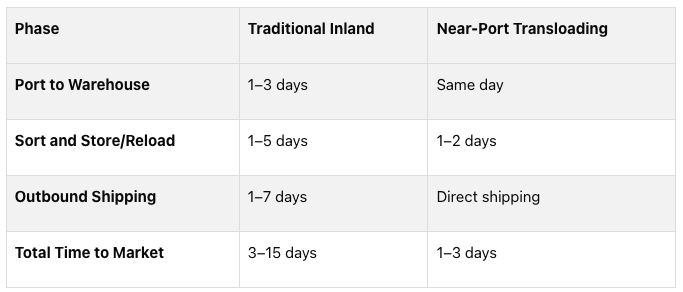
- Faster Transloading: Near-port facilities enable same-day container processing, cutting total fulfillment time from up to 15 days to just 1–3 days.
- Tech Integration: Advanced warehouse management systems (WMS) provide real-time inventory tracking, improving order accuracy and reducing stockouts.
- Nationwide Reach: LA’s infrastructure, including rail and trucking networks, supports quick delivery across the U.S., with same-day or next-day service for West Coast consumers.
The Problems with Standard Fulfillment Models
Many e-commerce brands rely on inland centers or fragmented third-party networks to move goods from ports to customers. While these models may seem cost-effective on the surface, they create friction throughout the supply chain. These inefficiencies highlight why LA-based warehousing, with its streamlined approach, is crucial for reducing time to market.
Long Ocean and Inland Transit Times
Once a container clears customs, the delays begin. Routing freight to inland hubs adds extra steps, leading to scheduling conflicts, missed handoffs, and higher expenses. Flex Logistics explains it well:
"Distance introduces friction at every stage of the supply chain. Longer haul times, increased linehaul variability, and inefficient last-mile routing can quietly turn a 'low-cost' warehouse into a high-cost distribution liability."
Inland facilities also force brands to maintain larger buffer inventories to compensate for the unpredictability of long-haul transit. This ties up working capital and increases storage costs, directly impacting the growth potential of high-volume e-commerce sellers.
Port Congestion and Drayage Gaps
In addition to extended inland transit, congestion at ports creates further setbacks. Drayage, the short-haul trucking that moves goods from a port terminal to a nearby warehouse, sounds simple but is often a major bottleneck. Up to 60% of import container delays stem from first-mile drayage issues like missed terminal appointments, chassis shortages, and long driver wait times.
The problem worsens during peak congestion at major ports. For example, containers at the Ports of Los Angeles and Long Beach can sit on berth for an average of 5 to 8 days during busy periods. On top of that, demurrage and detention fees - charged when containers aren't picked up or returned on time - can range from $150 to $300 per day per container. For brands handling large volumes, these costs pile up quickly.
Chassis shortages add another layer of complexity. Even when a container clears customs, it might remain idle due to a lack of chassis to move it. In fragmented networks that depend on multiple brokers and carriers, these coordination gaps are frequent and hard to predict. Such delays disrupt end-to-end visibility, increasing the risk of stockouts.
Poor Inventory Visibility and Stockout Risks
Fragmented supply chains often lack real-time tracking, making it difficult to monitor SKU velocity and restocking needs. This lack of visibility leads to poorly aligned replenishment cycles and, during demand surges, costly stockouts.
"When containers slow down at the port, the ripple effects hit inventory, cash flow, and customer satisfaction in equal measure." - CXTMS
For Amazon FBA sellers, the consequences can be even more severe. Poor visibility during the transloading phase - such as issues with labeling or palletization - can result in shipment rejections at fulfillment centers. This can delay inventory availability by days or even weeks.
sbb-itb-eafa320
How LA-Based Warehousing Speeds Up Fulfillment
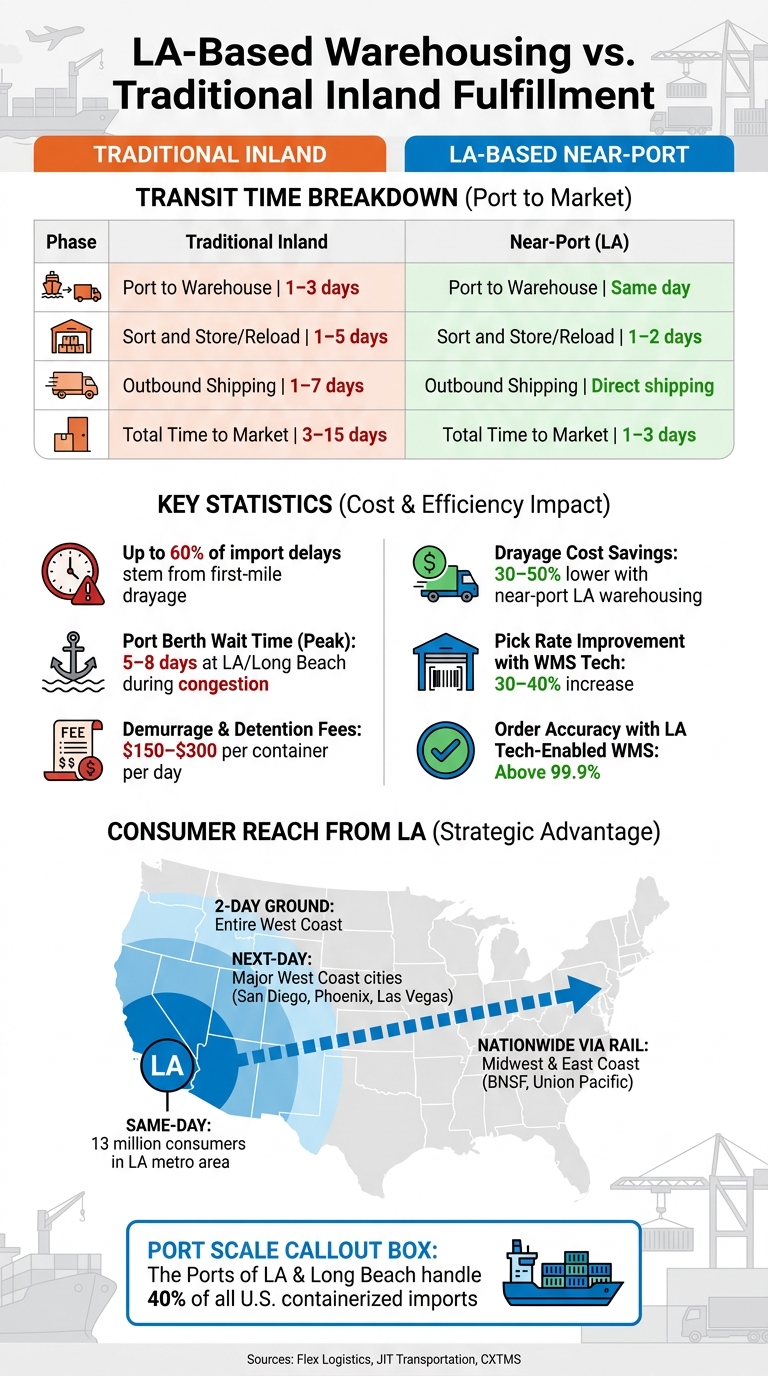
LA-Based Warehousing vs. Traditional Inland Fulfillment: Time & Cost Comparison
By tackling common supply chain hurdles, LA-based warehousing helps businesses achieve faster and more dependable fulfillment.
The challenges of drayage delays, port congestion, and limited inventory visibility don't have to disrupt operations. Warehouses in Los Angeles strategically position inventory closer to entry points and end customers, streamlining the entire process.
Port Proximity and Efficient Drayage
The Ports of Los Angeles and Long Beach handle a staggering 40% of all containerized imports entering the U.S.. Warehouses located within a 30-mile radius of these ports can receive containers within 4–8 hours of terminal release, a significant improvement over the days-long wait times typical of inland facilities.
This proximity is particularly important for direct drayage. JIT Transportation, for example, operates a fleet of over 120 trucks and 300 trailers, ensuring smooth and uninterrupted operations. This direct control over drayage eliminates one of the most frequent and costly bottlenecks in the supply chain.
"Getting cargo off the port efficiently can make or break your supply chain performance." - Jon Deritis, Precision Worldwide Logistics
Short-haul drayage to nearby facilities is also more cost-effective, reducing expenses by 30–50% compared to long-haul inland moves. These savings directly impact per-unit fulfillment costs, making the process both faster and cheaper.
This quick movement from port to warehouse also enables faster transloading, setting the stage for a more efficient supply chain.
Faster Transloading and Deconsolidation
Once containers reach an LA-based warehouse, the focus shifts to transloading - moving goods from international containers into domestic distribution channels. This step is crucial in speeding up the process.
 Source:
For high-volume e-commerce businesses, this streamlined approach is a game-changer. Quicker transloading not only frees up containers and chassis faster but also helps avoid costly demurrage and detention fees. Facilities like those operated by JIT Transportation offer additional services - such as re-labeling, palletizing, kitting, and FBA prep - so goods are ready for immediate outbound shipping.
Inventory and Order Management Powered by Technology
Beyond physical efficiencies, modern LA-based warehouses leverage advanced technology to optimize operations. EDI-capable Warehouse Management Systems (WMS) help coordinate port drayage schedules, dock appointments, and carrier pickups.
"Modern warehouse management systems provide the visibility companies need to monitor inbound shipments, inventory levels, order fulfillment status, and transportation activity in real time." - Flex Logistics
JIT Transportation integrates its systems with ERP platforms and e-commerce tools, giving brands real-time inventory visibility. This integration supports lean inventory management and faster replenishment. For Amazon FBA sellers, having inventory staged at an LA warehouse ensures compliance with FBA requirements for facilities like ONT8 or SAC1, reducing the risk of shipment delays or rejections.
Scaling Nationwide Distribution from LA
LA-based warehousing offers a strong advantage for businesses aiming to move inventory quickly to customers across the country.
Fast Delivery to West Coast Markets
Los Angeles is strategically located in one of the most densely populated regions in the U.S. From a single warehouse in the LA area, businesses can reach millions of consumers in major cities like Los Angeles, San Diego, Phoenix, and Las Vegas - often within same-day or next-day delivery windows. Warehouses in coastal areas like Paramount and Carson are just 15 miles from the ports, enabling later carrier pickups. For example, UPS and FedEx pickups in these areas can occur as late as 6–8 PM, compared to the earlier 4–5 PM cutoffs for inland facilities. This later window allows businesses to process more orders each day, keeping fulfillment timelines tight. Efficient West Coast delivery through LA lays the groundwork for expanding distribution across the entire country.
Reaching Customers Across the U.S.
LA's infrastructure makes it a national distribution powerhouse, not just a regional one. For businesses shipping beyond the West Coast, LA provides direct access to major transcontinental rail lines like BNSF and Union Pacific. These rail networks, much of which are double-tracked, ensure a smooth flow of goods. Rail becomes a cost-effective solution for long-haul shipments to the Midwest and East Coast, while trucking remains ideal for quicker, short-haul deliveries on the West Coast.
The Inland Empire - covering areas like Ontario, Riverside, and San Bernardino - further boosts LA's distribution capabilities. As Flex Logistics puts it: "The Inland Empire... is not simply a logistics cluster. It is a compression point for cost, time, and distribution complexity.". Large warehouses in this region act as consolidation hubs, redistributing inventory to other key markets like San Francisco, Sacramento, Reno, Austin, Houston, and Memphis. With support from JIT Transportation, businesses can manage nationwide fulfillment from a single starting point, eliminating the need for multiple regional facilities. This positions LA as a central hub for building a faster, more streamlined supply chain.
Conclusion: Using LA Warehousing to Cut Time to Market
Traditional fulfillment models often come with challenges: high drayage costs from distant ports, slow import-to-shelf timelines, and limited inventory visibility that complicates decision-making. These hurdles can add days to the fulfillment process, ultimately affecting customer satisfaction. However, as discussed in this article, LA's close proximity to the Ports of Los Angeles and Long Beach directly addresses these issues - reducing transit times and minimizing delays like those highlighted in the "Problems with Standard Fulfillment Models" section.
Warehouses located within 7 miles of the Port of Los Angeles help cut drayage costs and allow for faster devanning. Technology such as pick-to-light systems, barcode scanning, and weight verification increases pick rates by 30–40% while maintaining order accuracy above 99.9%. Additionally, real-time access to warehouse management systems (WMS) ensures continuous inventory tracking, enabling quicker and more informed restocking decisions.
This results in a faster, more dependable fulfillment process. Same-day order processing can reach 13 million consumers in the LA area, while 2-day ground shipping covers the entire West Coast. For nationwide distribution, zone skipping via LA’s extensive rail and trucking networks reduces both transit times and shipping costs. These logistical efficiencies pave the way for seamless, integrated fulfillment across the country.
JIT Transportation brings these benefits together in a scalable 3PL model tailored for high-growth e-commerce businesses. With over 2.5 million square feet of warehouse space spread across 14 U.S. locations, a fleet of more than 120 trucks, and integrations with platforms like Shopify and Magento, JIT delivers large-scale fulfillment without compromising speed or accuracy. Additional services like cross-docking, kitting, and white-glove handling offer brands the flexibility to meet complex supply chain needs through a single partner.
As Hal Shapiro of Seagate Technology shared:
"JIT has been a trusted logistics partner for Seagate for years, and their reliability is unmatched. Day in and day out, they prove their commitment to seamless operations, ensuring our supply chain stays on track."
For companies looking to accelerate their time to market, leveraging LA-based warehousing isn’t just a regional convenience - it’s a critical strategy for driving growth and improving operational efficiency.
FAQs
Is LA-based warehousing worth it for my order volume?
Choosing a warehouse in Los Angeles can make sense depending on your business needs, the type of products you sell, and your growth goals. Being close to major ports in LA means faster restocking, lower transportation costs, and quicker delivery times - a big advantage if you deal with high or seasonal order volumes.
That said, smaller operations might find inland warehouses more budget-friendly. While they often come with reduced costs, they could lead to longer shipping times. Ultimately, your decision should hinge on your order volume and how much you value speed and flexibility in your logistics.
How does near-port warehousing reduce demurrage and detention fees?
Near-port warehousing plays a key role in cutting down demurrage and detention fees. By allowing for quick container pickups, it reduces terminal dwell times and helps avoid daily per-diem charges, which typically fall between $100 and $200 per container once the free time expires. These facilities simplify logistics, ensuring goods move faster and unnecessary expenses are kept at bay.
What systems integrate with your WMS for real-time inventory?
Our WMS works seamlessly with ERP systems and eCommerce platforms such as Shopify, Magento, and WooCommerce, along with major shopping carts. This integration enables real-time inventory updates and ensures smooth order processing, making your operations more efficient.
Related Blog Posts
Related Articles
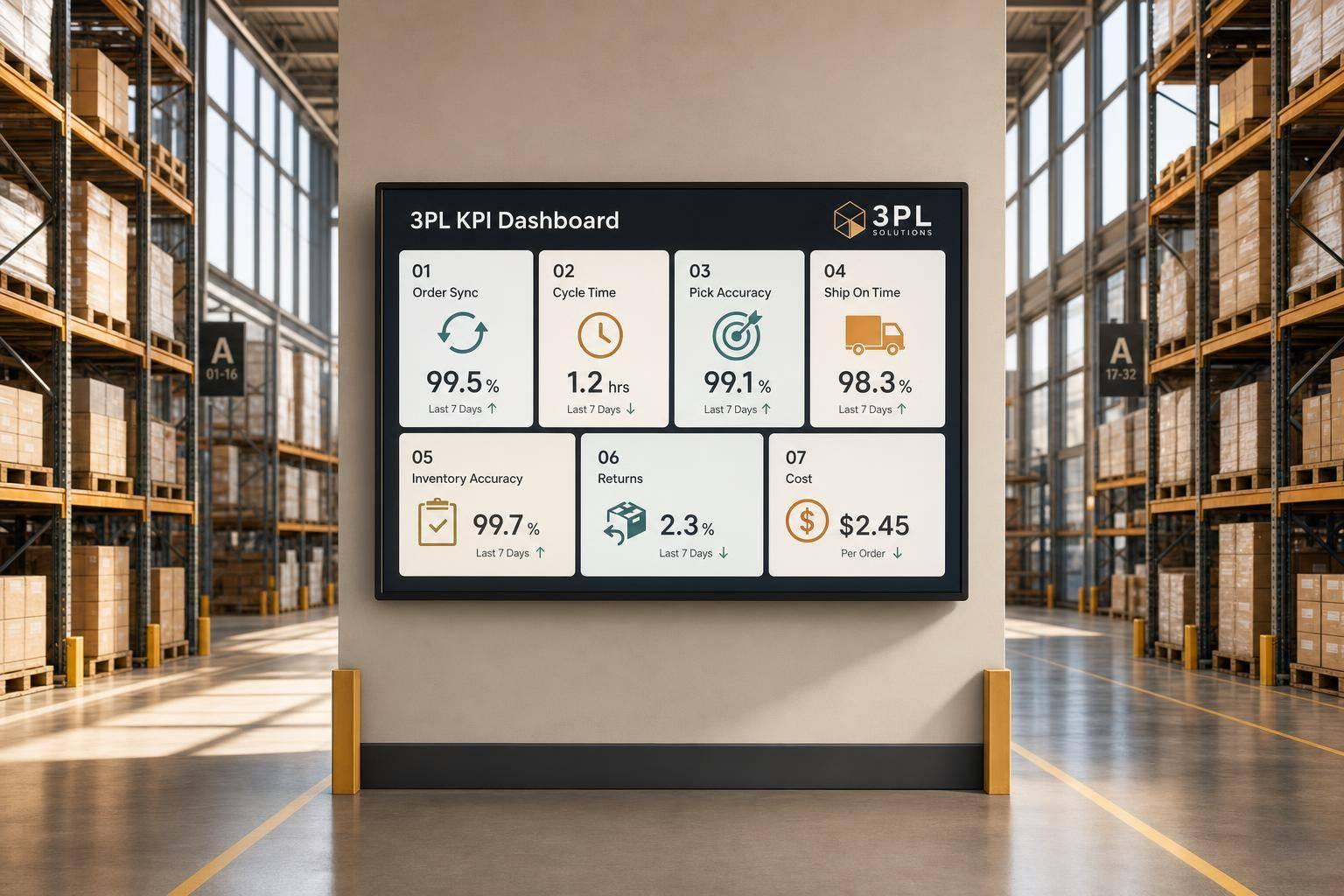
7 WooCommerce 3PL KPIs Teams Track

Centralized vs Decentralized Replenishment
