
Top Tools for Multi-Channel Replenishment
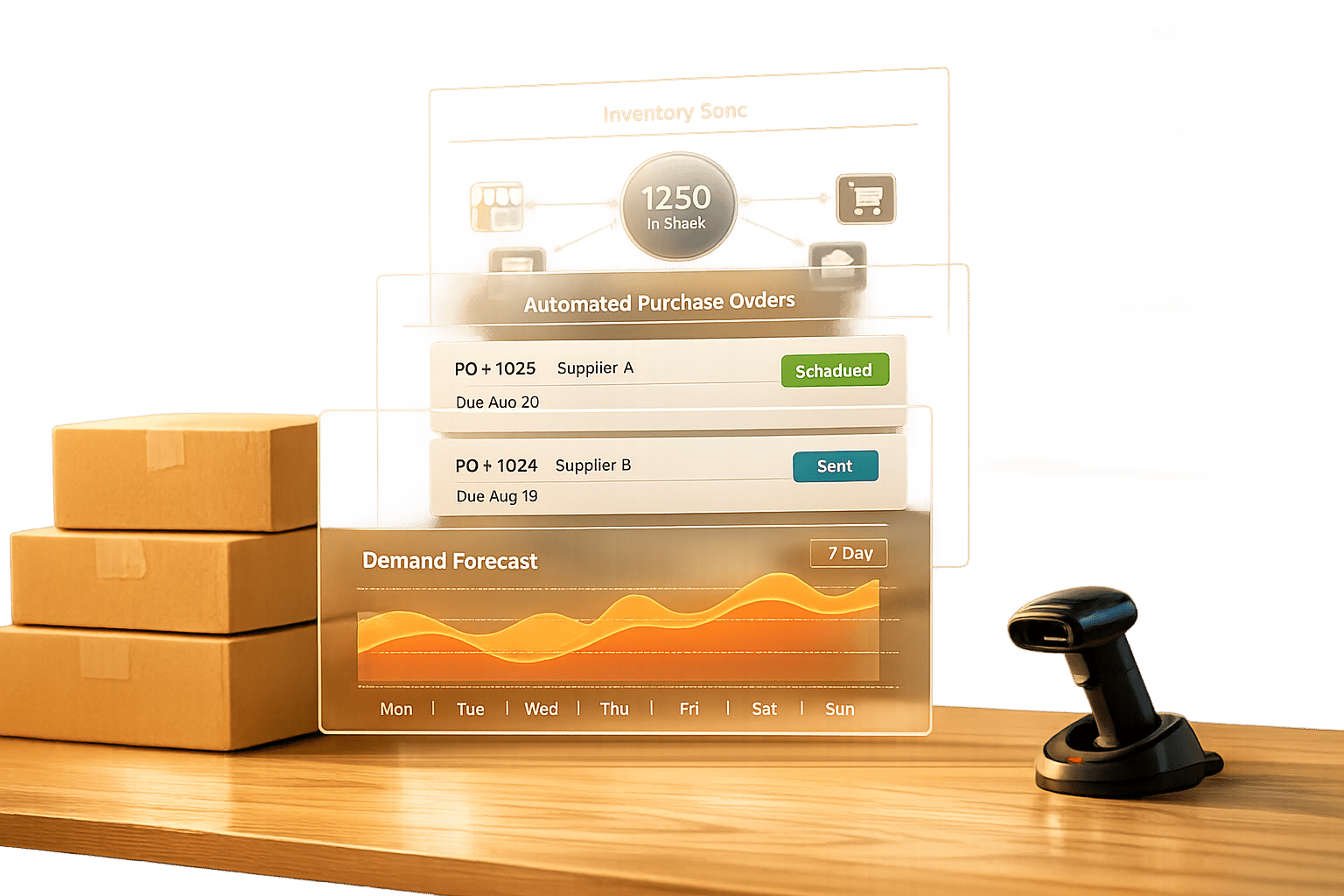
Managing inventory across multiple sales channels can be overwhelming, especially with the risks of stockouts, overstocking, and overselling. Multi-channel replenishment tools solve these challenges by syncing inventory in real time, automating purchase orders, and using demand forecasting to optimize stock levels. Here’s a quick summary of the top tools:
- Optiply: Automates up to 94% of purchasing tasks with AI forecasting, integrates with 50+ platforms, and is ideal for mid-sized e-commerce and wholesale businesses.
- Relex Solutions: Tailored for large retailers, offering advanced demand forecasting and ERP integration for multi-location inventory needs.
- Eazystock: Works with ERP systems for manufacturers and distributors, providing demand-driven ordering and raw materials planning.
- Prediko: Affordable option for Shopify-based brands, offering AI-driven demand planning starting at $49/month.
- Cin7 ForesightAI: Supports complex inventory needs like multi-location transfers and BOM tracking, starting at $349/month.
- Sumtracker: Simplifies inventory management for multi-channel sellers, syncing stock across platforms like Amazon, eBay, and Etsy, starting at $59/month.
Each tool caters to different business sizes and needs, from small Shopify stores to large enterprises. Tools like Optiply and Relex Solutions excel in automation and forecasting, while Prediko and Sumtracker are budget-friendly options for simpler setups.
Quick Comparison:
| Tool | Best For | Starting Price | Key Features |
|---|---|---|---|
| Optiply | Mid-sized e-commerce/wholesale | Quote-based | AI forecasting, automates 94% of purchasing, integrates with 50+ platforms |
| Relex Solutions | Large retailers | Quote-based | Advanced forecasting, ERP integration, multi-location inventory management |
| Eazystock | Manufacturers/distributors | Quote-based | ERP integration, demand-driven ordering, raw materials planning |
| Prediko | Shopify brands | $49/month | AI-driven demand planning, real-time Shopify sync |
| Cin7 ForesightAI | Complex inventory needs | $349/month | Multi-location transfers, BOM tracking, advanced stock control |
| Sumtracker | Multi-channel sellers | $59/month | Real-time stock sync, supports Amazon, eBay, Etsy, and others |
Choose a tool that aligns with your sales channels, inventory complexity, and budget to streamline operations and improve efficiency.
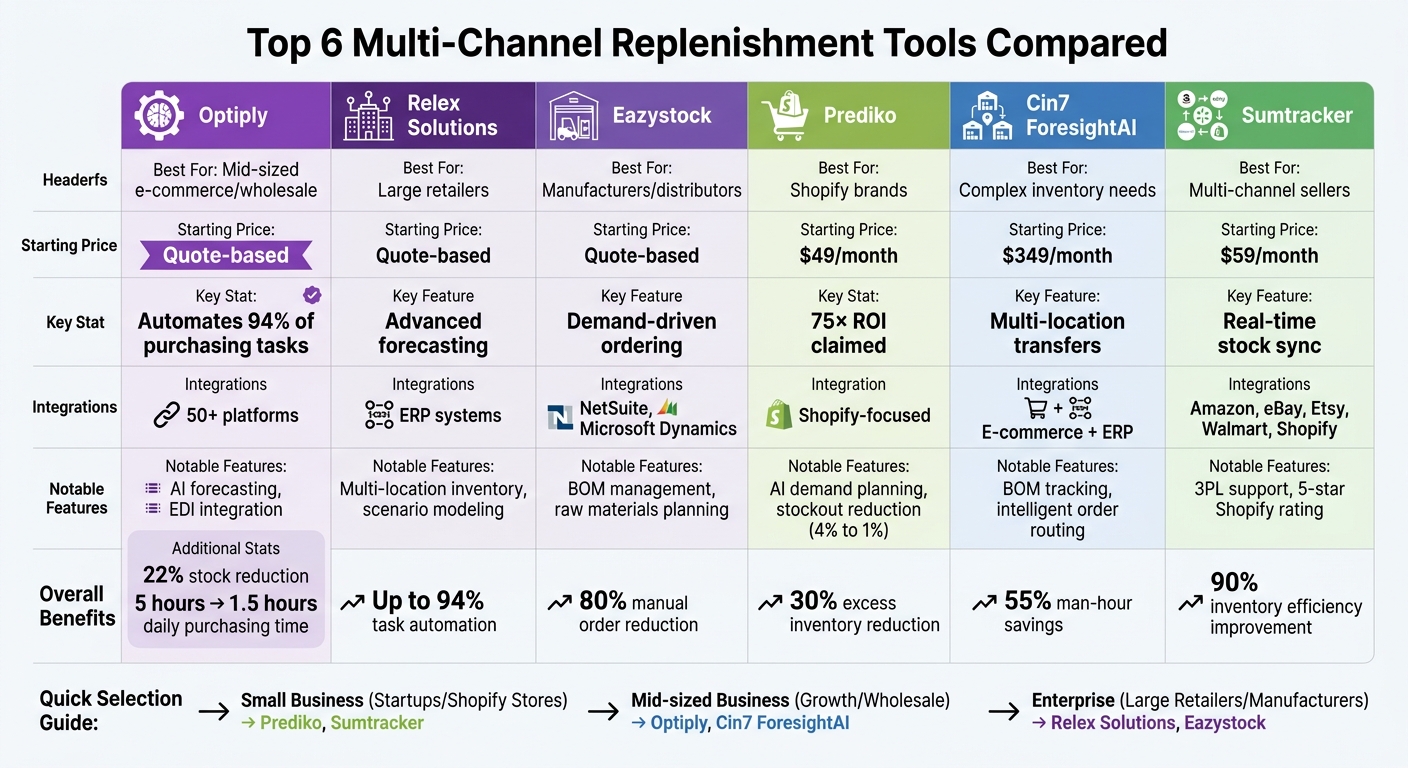
Multi-Channel Replenishment Tools Comparison: Features, Pricing, and Best Use Cases
Top 3 Best Multi-Channel E-commerce Software And Tools Platform
sbb-itb-eafa320
Best Multi-Channel Replenishment Tools
Here’s a closer look at some of the leading multi-channel replenishment tools designed to tackle inventory challenges for growing e-commerce businesses.
Optiply
Optiply focuses on automated replenishment for e-commerce and wholesale businesses. It uses over 40 forecasting models to analyze factors like sales history, seasonality, and trends. The platform automates purchase orders and integrates with more than 50 platforms, including Shopify, Amazon, and major ERP systems, ensuring seamless inventory synchronization. Orders can be sent directly to suppliers via EDI or email.
The results speak for themselves. Tygo Bril from Travelbags shared that their daily purchasing time dropped from five hours to just 1–1.5 hours after adopting Optiply. Meanwhile, owner John Horstra noted a 22% reduction in stock levels since 2019. Martijn Janssen of Fitwinkel also highlighted how the tool saved significant time by automating calculations and sales analysis.
Optiply is ideal for businesses looking to replace manual spreadsheets with near-total automation. Pricing is quote-based and tailored to mid-sized operations.
Relex Solutions
Relex Solutions is built for large retailers managing complex, multi-location inventory needs. It excels at advanced demand forecasting across sales channels and integrates with ERP systems to align inventory planning with broader business strategies. Pricing is quote-based, reflecting its focus on enterprise-level requirements.
Eazystock
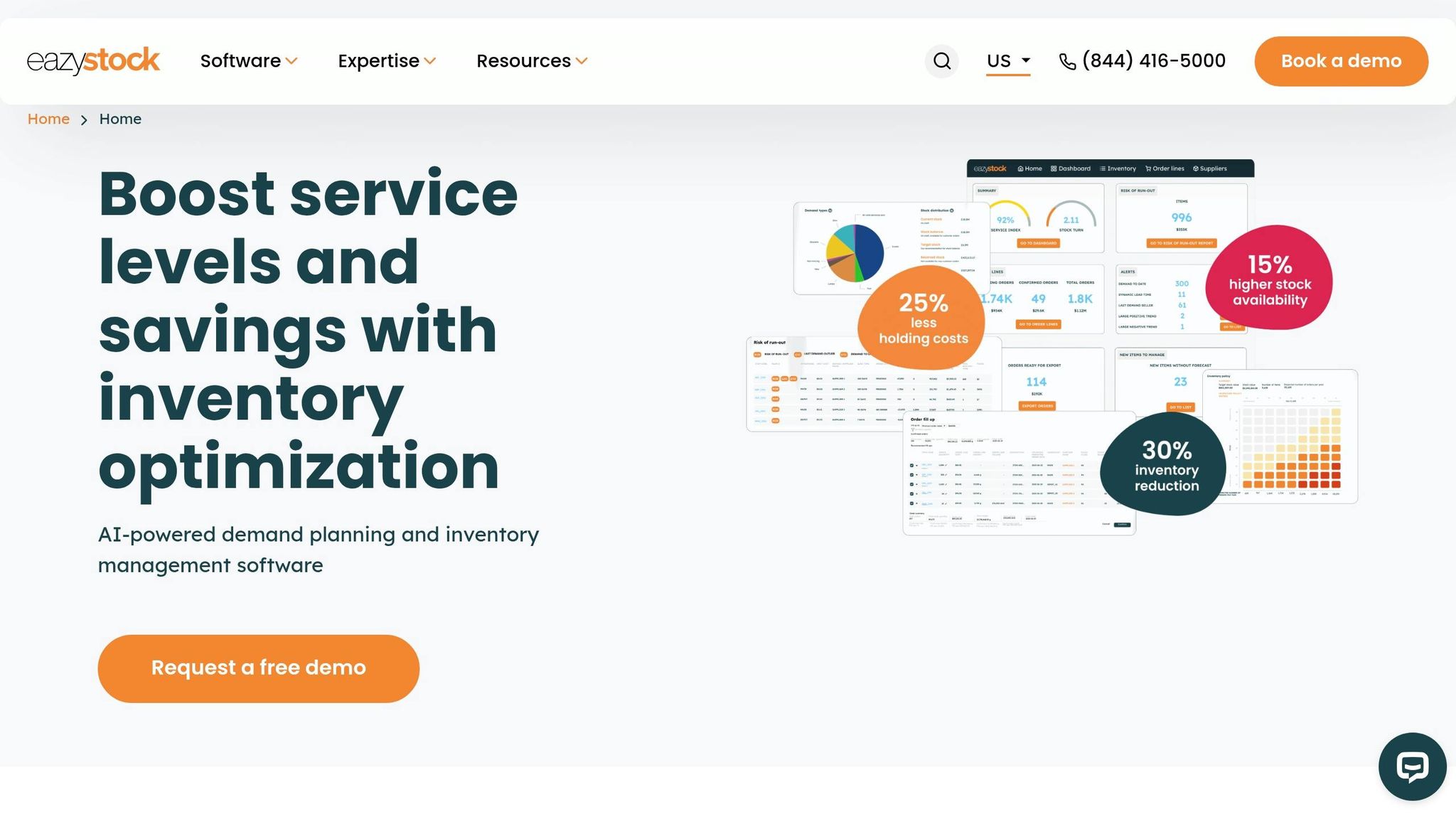
Eazystock integrates seamlessly with ERP systems for manufacturers, wholesalers, and distributors. It works with platforms like NetSuite and Microsoft Dynamics to pull sales data and generate replenishment recommendations. The tool automates demand-driven ordering, calculates reorder points based on lead times and supplier schedules, and supports Bill of Materials (BOM) management along with raw materials planning.
Prediko
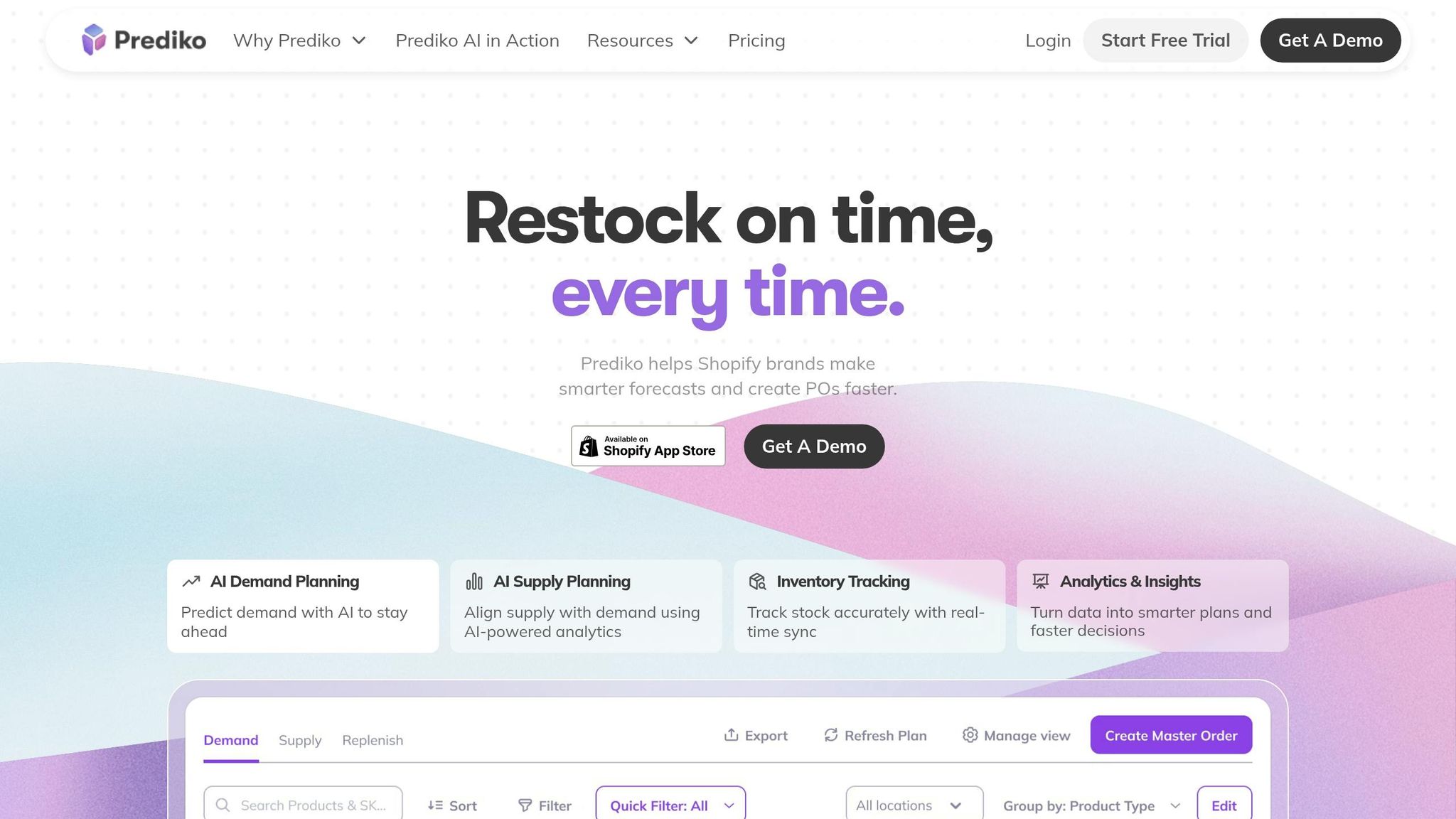
Prediko is designed specifically for direct-to-consumer brands on Shopify. Starting at $49 per month, it offers AI-driven demand planning and inventory analytics for small and medium-sized e-commerce businesses. The platform integrates directly with Shopify, enabling it to forecast demand, pull sales data, and generate purchase orders based on stock predictions.
In 2025, Healf’s operations team, led by Billy Kavanagh, used Prediko to cut stockouts from 4% to just 1% in two months, unlocking hundreds of thousands of dollars in extra annual revenue.
"Since relying on Prediko for forecasting and replenishment planning, we have not experienced unexpected stockouts. Supply planning and ordering are probably 90% easier",
said Dodes Stevenson, VP of Operations.
Prediko also allows businesses to connect multiple Shopify stores to a single dashboard, offering real-time synchronization and claiming a 75× return on investment through its AI-powered planning features.
Cin7 ForesightAI
Cin7 ForesightAI provides robust multi-channel inventory management for expanding retail and wholesale businesses. Starting at $349 per month, it offers advanced stock control, automated replenishment, and forecasting across multiple warehouses. The platform integrates with major e-commerce sites, marketplaces, and ERP systems, handling complex tasks like multi-location stock transfers, BOM tracking, and intelligent order routing. Cin7 ForesightAI is a great match for businesses with intricate inventory needs.
Sumtracker
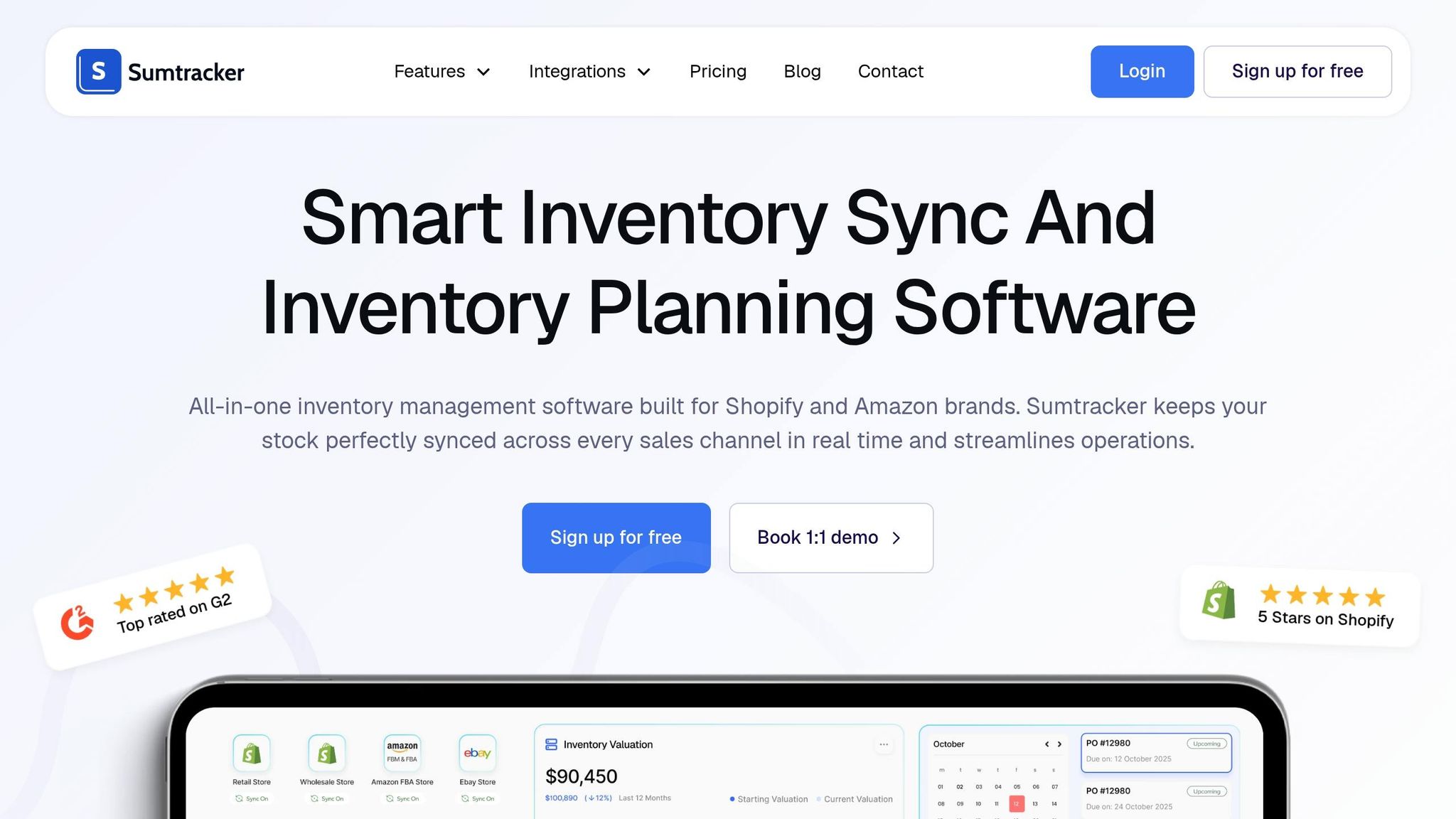
Sumtracker simplifies centralized inventory management for multi-channel sellers, with pricing starting at $59 per month. It synchronizes stock levels in real time across Shopify, Amazon, eBay, Walmart, and Etsy. The platform also generates purchase orders automatically based on reorder points and works with multiple third-party logistics providers.
For instance, Babymaxi, a business managing hundreds of SKUs, transitioned from an in-house warehouse to multiple 3PL providers while maintaining real-time stock visibility using Sumtracker. With a 5-star rating on Shopify, Sumtracker is a solid option for businesses seeking straightforward inventory synchronization without heavy customization.
Next, we’ll compare these tools to help you determine the best fit for your inventory replenishment strategy.
Tool Comparison: Features and Use Cases
Picking the right replenishment tool comes down to factors like business size, sales channels, and automation requirements. For Shopify-based businesses operating on tighter budgets, Prediko ($49/month) and Sumtracker ($59/month) stand out. These tools offer synchronized inventory data and are simple to set up, making them ideal for companies that don't need the complexity of enterprise-level systems.
For mid-sized businesses managing multiple warehouses or manufacturing operations, more advanced tools are necessary. Cin7 ForesightAI ($349/month) supports multi-location stock transfers and BOM (Bill of Materials) tracking, while Eazystock integrates seamlessly with ERP systems like NetSuite and Microsoft Dynamics, automatically calculating safety stock based on supplier lead times. If you're dealing with high-volume operations and need robust warehouse management, Finale Inventory ($499/month) is equipped to handle stockouts across several 3PL providers.
Automation levels also vary significantly between tools. Optiply stands out by automating up to 94% of purchasing tasks, effectively reducing the workload for procurement teams - what typically takes three buyers can be managed by one. In contrast, platforms like Inventory Planner still require significant manual oversight. For businesses looking for end-to-end automation, Optiply’s AI-powered purchasing calendar and EDI integration can save substantial time.
Enterprise retailers with thousands of SKUs and multiple distribution centers need tools designed for complex operations. Relex Solutions is an excellent choice for large grocery chains and retail networks, offering advanced scenario modeling and workforce planning. However, its capabilities come with the need for significant customization and resources.
Integration capabilities are another critical consideration, especially as businesses scale. While Prediko focuses solely on Shopify, tools like Fulfil support multiple sales channels, including Amazon, TikTok Shop, eBay, Etsy, and Faire, with AI-powered ERP features. Before investing in a platform, map out all your sales channels and warehouse locations to ensure the tool can handle your integration needs. Delays in data synchronization could force you to maintain higher safety stock levels. Evaluating integration options is essential when connecting to advanced 3PL solutions.
Connecting Replenishment Tools with 3PL Services
Replenishment software works best when it’s directly integrated with your 3PL's warehouse management system. Instead of juggling spreadsheets and emails, an API-first integration creates a centralized data hub for all your fulfillment locations. When a customer places an order, the system automatically routes it to the nearest 3PL facility based on real-time stock levels. This not only cuts shipping costs but also speeds up delivery times. Essentially, this seamless flow of data drives every efficiency improvement in your supply chain.
Another major benefit of this integration is eliminating "phantom inventory." For example, your Shopify store might show stock that's actually tied up in transit or sitting in a different warehouse. With this connection, you gain SKU-level visibility across 3PL warehouses, FBA, and even in-transit shipments. A Supply Chain Manager from a multi-warehouse retailer shared, "Having real-time inventory visibility across 3PLs and channels helped us identify slow movers early and rebalance stock faster. Our replenishment planning is far more confident now".
Vendor-managed inventory (VMI) becomes much more practical when your replenishment tool can share dashboards with suppliers or 3PLs. The system analyzes real-time demand to calculate reorder quantities based on actual sales velocity and lead times. This real-time data sharing strengthens the connection between replenishment tools and 3PL operations. For companies working with providers like JIT Transportation, this integration means distribution and fulfillment services sync directly with your replenishment platform. The system tracks everything - goods received, inter-location transfers, and returns - making restocked items immediately available for sale across all channels.
The results are hard to ignore. Companies using unified supply chain systems report up to 55% savings in man-hours and a 90% improvement in inventory efficiency. When returns are processed at a 3PL and restocked, the replenishment tool updates inventory levels across every sales channel instantly, eliminating the need for manual CSV uploads. Automation even extends to cycle counting, with the software triggering counts by SKU or location to catch discrepancies before they disrupt fulfillment.
For businesses handling high volumes, EDI integration ties planning directly to execution. Once orders are triggered, the tool automatically sends purchase orders to suppliers and 3PLs electronically. Intelligent routing and transfer alerts ensure stock moves exactly where it’s needed, reducing both safety stock requirements and expedited shipping costs. These integrations streamline operations and lay the groundwork for a stronger, more efficient inventory strategy.
Conclusion
A well-chosen multi-channel replenishment tool can transform inventory management. By automating up to 94% of purchasing tasks, reducing manual orders by 80%, and cutting excess inventory by as much as 30%, these tools streamline operations. Plus, real-time synchronization ensures accurate stock availability, preventing overselling and keeping customers satisfied.
The real game-changer, though, comes from integrating these tools with your fulfillment network. When replenishment software links directly with 3PL services like JIT Transportation, it provides a unified view of inventory across distribution centers, retail outlets, and fulfillment partners. This connection automates order routing and creates a closed-loop system where forecasts generate purchase orders, and receipts instantly update planning systems.
Businesses leveraging such integrated systems often see noticeable gains in efficiency and cost reductions. The seamless flow of data between automated replenishment tools and 3PL services drives measurable improvements across the supply chain.
For the fast-paced e-commerce world, this unified approach is a must. Start by mapping out your sales channels and fulfillment locations to see how replenishment affects your multi-channel strategy. Then, test your chosen tool with your top 100 SKUs over 6–8 weeks to track improvements in stockouts and purchase order cycles. Prioritize tools with native integrations for your current tech stack and 3PL partners to avoid data silos and maintain a single source of truth across operations.
FAQs
How do I choose the right replenishment tool for my sales channels?
To choose the best replenishment tool, pay attention to features like real-time inventory tracking, multi-channel management, automation, and forecasting capabilities. Make sure the tool integrates smoothly with your current systems and supports platforms such as Amazon or Shopify. Key functionalities to look for include centralized control, automated reorder points, and the ability to scale as your business grows. These features can help you maintain optimal stock levels and avoid problems like overstocking or running out of stock. Always select a tool that matches your operational goals and future growth plans.
What integrations should I prioritize to prevent overselling?
To avoid overselling across various e-commerce platforms, focus on real-time inventory synchronization. This setup ensures that stock levels are updated immediately on platforms like Shopify and Amazon whenever sales, returns, or transfers occur. On top of that, linking your inventory system with forecasting tools and inbound logistics can provide more precise stock management. By integrating with logistics partners like JIT Transportation, you can streamline shipment coordination and enhance stock visibility, which helps minimize overselling and keeps customers happy.
How do replenishment tools work with 3PLs like JIT Transportation?
Replenishment tools work seamlessly with third-party logistics providers (3PLs) like JIT Transportation by syncing real-time inventory data and automating critical supply chain tasks. By integrating with warehouse management systems (WMS), these tools ensure accurate stock visibility, trigger replenishment automatically, and help avoid both stockouts and overstocking.
Some advanced systems take it a step further by synchronizing inventory across multiple sales channels, simplifying purchase orders, and improving the efficiency of inbound shipments. This makes it easier for businesses to collaborate and scale their e-commerce operations effectively.
Related Blog Posts
Related Articles
7 WooCommerce 3PL KPIs Teams Track

Centralized vs Decentralized Replenishment
