Pallet Calculator
Pallet Calculator for Smarter Warehouse Planning
Estimate pallet loads quickly
A reliable pallet calculator can save time when you're planning storage, staging, or outbound freight. Instead of estimating by eye, you can compare pallet and carton dimensions to see how many boxes fit per layer and whether rotating the case improves the layout. That matters in busy warehouse environments where a few inches can change the number of cartons per pallet and affect handling efficiency.
Why pallet efficiency matters
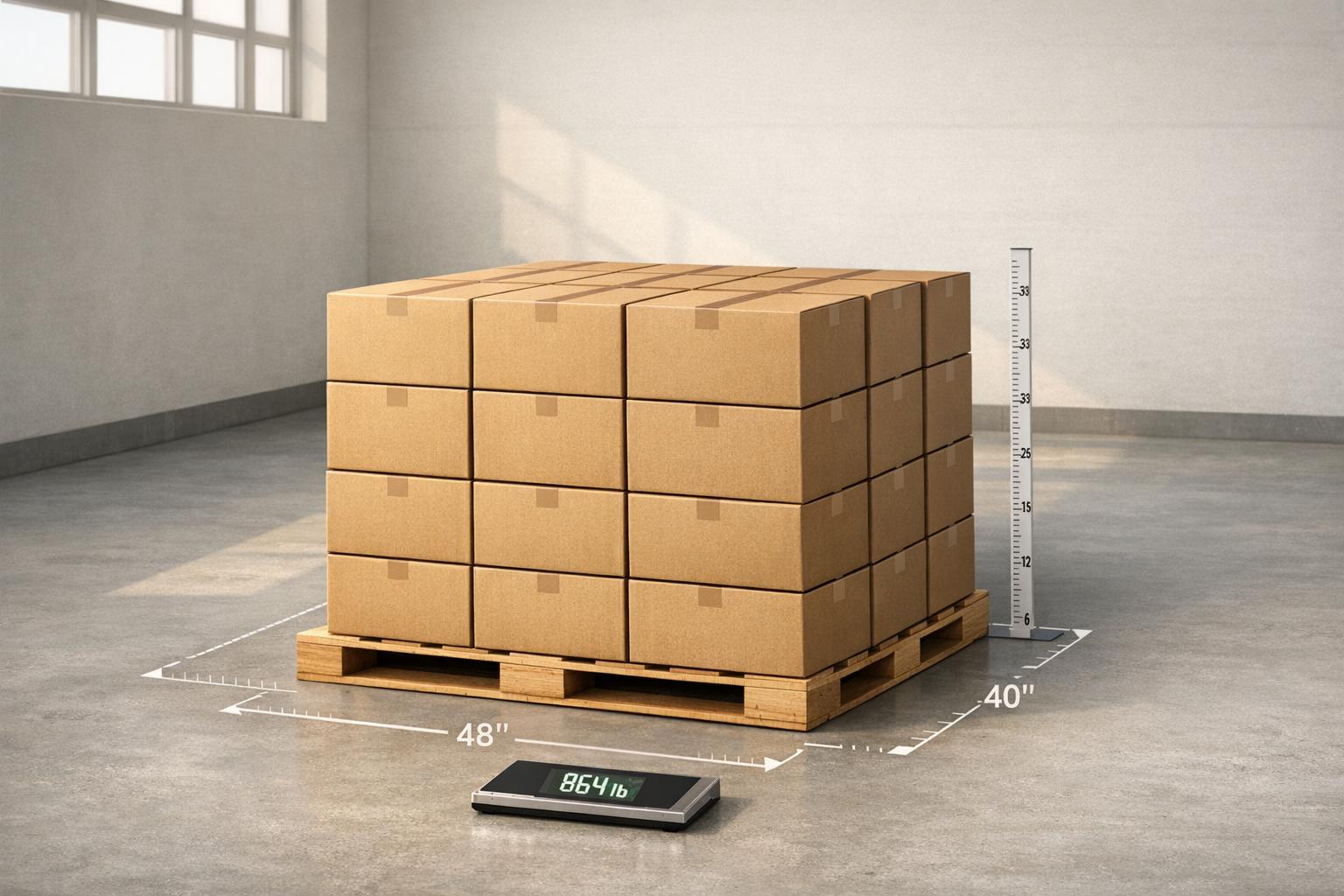
Better pallet use helps reduce wasted floor space, improve trailer utilization, and make shipment prep more predictable. This tool is especially useful when you're working with box dimensions, pallet height limits, and shipment weight targets. By showing layer count, total loaded height, and load weight, it gives operations teams a quick planning reference before product is wrapped and moved.
Built for practical freight prep
This pallet load calculator is designed for real-world use, with support for inches or centimeters, optional overhang, box rotation, and pallet count planning for a full order quantity. While actual stacking patterns can vary based on product strength, interlocking methods, and wrap requirements, the estimate gives you a strong starting point for warehouse packing and freight preparation.
FAQs
How does the calculator decide how many boxes fit on a pallet?
It compares the pallet's usable footprint against the box footprint in one or two base orientations. First, it calculates how many boxes fit along the pallet length and width using whole numbers only, since partial boxes can't be loaded. If box rotation is allowed, it also tests the rotated layout and keeps the better result. That gives you the boxes per layer before height and weight are considered.
Why might the real pallet pattern be different from the result?
This tool gives a fast planning estimate based on straight, grid-style stacking. In real operations, teams may use interlocking patterns for stability, leave room for edge protection, avoid overhang for fragile products, or reduce stack height for crush risk and stretch wrap needs. So the result is best used as a practical baseline for warehouse planning and freight prep, not as a substitute for load testing or handling rules.
What happens if I don't enter a maximum load height?
If you skip the maximum allowed load height, the calculator can still show boxes per layer, which is often enough for quick footprint planning. Layers and total boxes per pallet depend on how high you're allowed or willing to stack, so those values need a height limit to be calculated reliably. If you do enter pallet height and a max loaded height, the tool subtracts the pallet height first and then works out the number of full box layers that fit.
Related Articles

Demand-Driven Replenishment for Multi-Node 3PL

3PL Models Compared for Reverse Logistics Carbon