VMI for E-commerce: Best Practices
Vendor-Managed Inventory (VMI) is a system where suppliers manage inventory levels for retailers, ensuring stock is replenished based on real-time data. For e-commerce, this approach reduces stockouts, cuts inventory costs by 30–40%, and boosts sales by 24%. It also stabilizes supply chains by aligning production with demand. Setting up VMI involves clear contracts, accurate data sharing, automated technology, and performance tracking through KPIs like fill rates and inventory turnover. Integrating 3PL services further supports efficient distribution and scaling.
Key takeaways:
- Suppliers monitor and replenish inventory based on sales data.
- Reduces stockouts and carrying costs while increasing sales.
- Requires automation (EDI, APIs) for real-time collaboration.
- Performance measured through clear KPIs like fill rates (97–99%).
- 3PLs enhance logistics and scalability with nationwide networks.

VMI for E-commerce: Key Benefits & Performance Benchmarks
How to Set Up a Vendor-Managed Inventory System
Defining Roles, Responsibilities, and Agreements
Clear roles and responsibilities are the backbone of a successful Vendor-Managed Inventory (VMI) system. Without them, confusion can derail the process.
Vendors are typically responsible for monitoring stock levels, forecasting demand, and ensuring timely replenishment to avoid stockouts. On the other hand, brands must provide accurate, real-time sales data, establish minimum and maximum stock thresholds, receive shipments, verify quantities, and flag unexpected demand changes - like a sudden surge from a viral product.
Contracts should leave no room for ambiguity. They need to cover critical details like when inventory ownership transfers, storage limits, how to handle unsold goods, and steps to address stock issues. Many VMI programs fail because these key points are left undefined.
"A lack of clarity around inventory ownership can create tension. Once, we assumed our supplier would auto-replenish based on old patterns - but our usage spiked, and they weren't watching as closely as we thought. We fixed it by setting clear SLAs and weekly check-ins." - Brian Koreker, Owner, Little Rock Printing
A good way to start is by piloting the VMI system with a single, trusted vendor and a small set of fast-moving SKUs. This allows you to work out any issues in data sharing or contracts without putting your entire inventory at risk.
Once roles are defined, it’s time to create specific replenishment rules to make the system work.
Setting Clear Replenishment Rules
With responsibilities in place, the next step is to establish precise replenishment guidelines. These rules should be data-driven. For example, minimum inventory levels should account for your average lead time plus a safety stock buffer. Maximum levels, meanwhile, help prevent vendors from overstocking to meet their own goals.
You’ll also need to agree on replenishment frequency - whether it’s daily, twice a week, or weekly - and set a target fill rate. High-performing VMI programs often aim for a 97–99% fill rate. Additionally, decide on a response time for stockouts, such as arranging emergency deliveries within 24 hours.
Another useful tool is a blanket purchase agreement. This approach locks in pricing while allowing suppliers to store finished goods based on your forecast. That way, shipments can be sent immediately when inventory hits the reorder point. Sharing production schedules with vendors can also help them prepare for demand surges ahead of time.
Integrating Technology for Real-Time Collaboration
Once you’ve set thresholds and agreements, technology becomes essential to ensure everything runs smoothly. Manual data sharing is too slow for VMI - automation is a must.
Electronic Data Interchange (EDI) and APIs are two key tools for automating data exchange. While both enable real-time collaboration, APIs are more flexible and integrate seamlessly with platforms like Shopify or WooCommerce. For vendors with limited technical capabilities, a supplier portal can be a simpler solution, allowing direct access to your system.
Before automating, audit your SKUs to ensure consistency across all systems. Issues like mismatched units of measure or duplicate SKUs are common culprits behind VMI breakdowns.
"VMI delivers the most value when the supplier sees not just current consumption but future production plans." - User Solutions Team
sbb-itb-eafa320
Best Practices for Managing VMI in E-commerce
Sharing Accurate and Timely Data with Vendors
Having access to accurate, real-time data is essential for vendors to make informed replenishment decisions. The best way to achieve this is by providing vendors with continuous visibility into inventory levels, sales trends, and demand forecasts through a cloud-based dashboard. This approach is far more efficient than relying on periodic spreadsheet updates. Adding automated alerts for events like unexpected demand shifts or upcoming promotions ensures vendors can respond quickly.
Maintaining clean data is just as important as sharing it frequently. Make it a habit to regularly reconcile SKU codes, units of measure, and pricing across all platforms. A formalized data-sharing agreement can also help by outlining update schedules, file formats, and security measures like encryption.
This strategy can lead to impressive results. For example, FreshBlend Vitamins, a health supplement brand, shared daily e-commerce sales data with its co-packing partner for its top protein powder lines. By providing real-time insights, the brand reduced expediting fees by 40% and improved fill rates from 82% to 95% during seasonal promotions.
"Ease of integration with your current systems should be key. Ideally, VMI vendors are already subscribed to gateways like SPS Commerce or Commerce Hub. This enables ease of onboarding SKUs, inventory, and order processing." - Keith Gorney, Head of Supply Chain, Pivotree
Using reliable data also makes it easier to measure performance through clear KPIs.
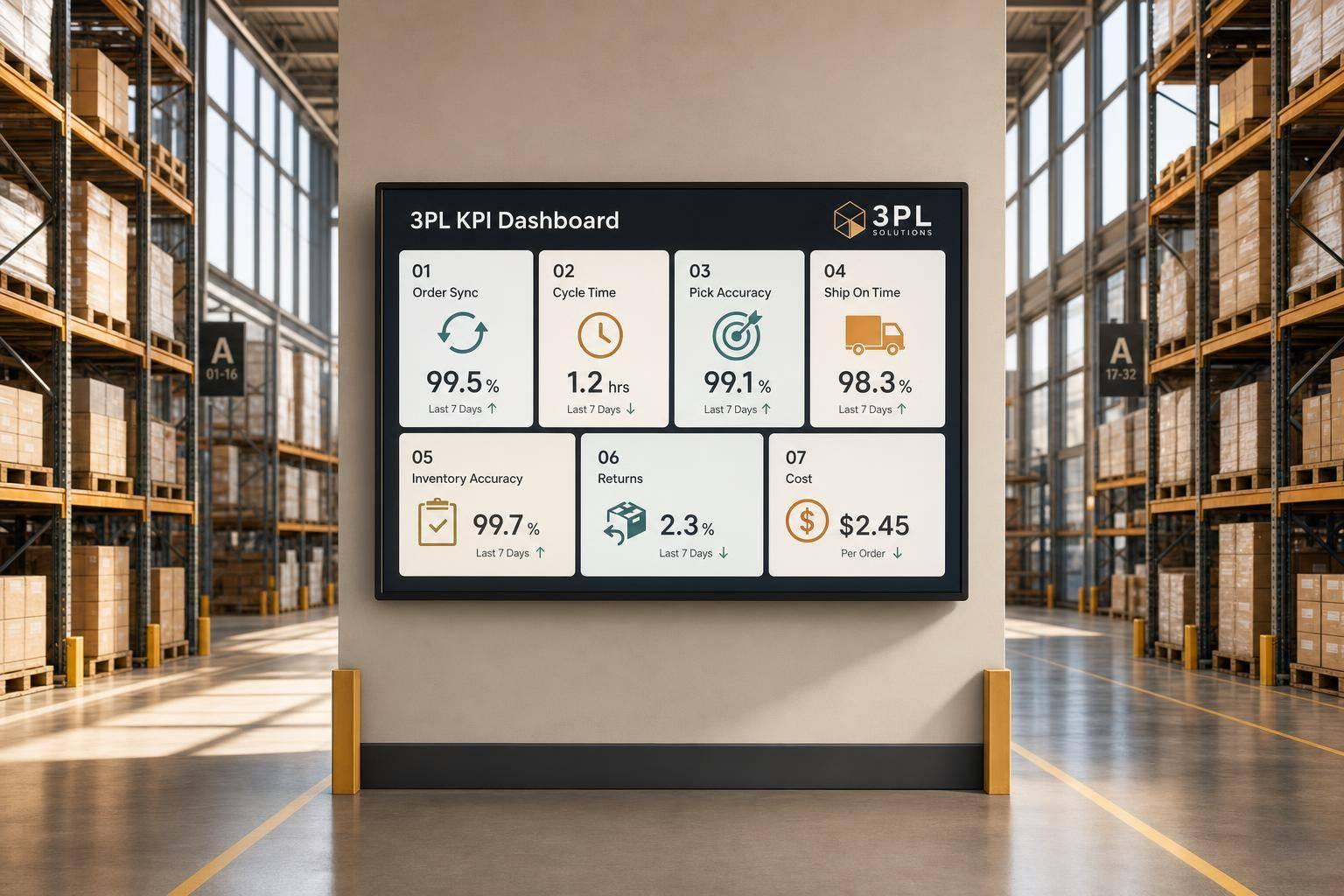
Tracking VMI Performance with KPIs
Once your VMI program is up and running, it’s crucial to track its effectiveness. Without defined metrics, you could miss early signs of trouble.
Here are some essential KPIs to monitor:
| KPI Category | Metric | What to Watch For |
|---|---|---|
| Service Level | Fill Rate | Target 97–99%; drops indicate replenishment issues |
| Inventory Health | Inventory Turnover | Higher turnover means less capital tied up in stock |
| Reliability | Stockout Rate | Aim for fewer than 1 stockout per quarter |
| Accuracy | Forecast Accuracy | Compare predicted vs. actual sales each period |
| Financial | Carrying Costs | Should decrease as VMI optimizes stock levels |
| Efficiency | PO Reduction | Well-run VMI can cut manual POs by 60–80% |
Conduct monthly supplier scorecard reviews to discuss these metrics. This keeps both parties accountable and allows for adjustments to thresholds before minor issues escalate into stockouts.
Planning for Seasonality and Demand Shifts
Tracking performance is only part of the equation. Preparing for seasonal demand spikes is just as important.
Order volumes in retail and CPG can surge by 50–200% within weeks during peak seasons. A poorly prepared VMI system will struggle to handle such shifts. The solution? Share forward-looking demand signals with your vendors. This means going beyond current inventory data to include details about upcoming promotions, marketing plans, and production schedules. This proactive approach gives suppliers enough time to stage inventory before demand surges.
Adjust your min/max thresholds based on past seasonal data. For instance, reorder points that work in September might fall short in November. Make these updates 60–90 days before major sales periods. During high-volume times, consider using a consignment VMI model, where the supplier retains ownership of goods until they’re sold. This can help protect your cash flow when demand is at its peak.
Vendor Managed Inventory (VMI) Explained | Types of VMI | How VMI Works with Examples | Pros & Cons
Using Logistics Solutions to Support Your VMI Strategy
An effective Vendor Managed Inventory (VMI) program isn’t just about sharing data and setting up replenishment rules. The physical movement of inventory - how it’s transported, handled, and delivered - plays an equally important role. That’s where partnering with a third-party logistics (3PL) provider can make all the difference.
How 3PL Services Support Distribution and Fulfillment
When your replenishment system is automated, your fulfillment process needs to keep up with its speed and precision. A 3PL steps in to manage the execution, handling everything from receiving inbound shipments to picking, packing, and shipping orders through local, less-than-truckload (LTL), or full-truckload (FTL) freight.
Take JIT Transportation, for example. Their logistics solutions integrate seamlessly with major e-commerce platforms like Shopify, Magento, and WooCommerce, as well as ERP systems through custom APIs. This integration ensures that vendor replenishment signals sync perfectly with warehouse fulfillment, creating a real-time, automated workflow without the need for manual intervention. As a result, JIT closes the loop between digital signals and physical operations. Their performance metrics speak for themselves: 99% on-time receiving, 99% on-time shipping, and 99% inventory accuracy.
"JIT has been a trusted logistics partner for Seagate for years, and their reliability is unmatched. Day in and day out, they prove their commitment to seamless operations, ensuring our supply chain stays on track." - Hal Shapiro, Seagate Technology
Value-Added Services That Work Alongside VMI
Logistics providers can also offer additional services that enhance your VMI program. While VMI ensures inventory reaches its destination on time, these services ensure products are ready to ship as soon as they arrive.
- Kitting and assembly: Prepares bundled products for promotions, eliminating last-minute scrambling.
- Testing and revision upgrades: Adds a quality assurance step for high-tech or sensitive items, ensuring they meet specifications before being counted as available inventory.
- White glove handling: Provides specialized care for premium or fragile goods, protecting both the product and your brand’s reputation.
- Returns management (RMA): Streamlines the reverse logistics process, reconditioning returned items and re-entering them into inventory quickly to maintain replenishment accuracy.
"JIT sets the bar high in logistics. Their on-time performance, ability to handle last-minute requests, and expertise in material handling are game-changers for us." - Curtis Martin, Senior Operations Manager, Synnex
Scaling Your VMI with a Nationwide Logistics Network
As your e-commerce business grows, your VMI system needs to scale with it. A logistics partner with a broad, nationwide network can help position inventory closer to customers, reducing transit times and minimizing regional stockouts.
JIT Transportation, for instance, operates 14 warehouses across the U.S., offering over 2.5 million square feet of storage space. Their fleet includes 120+ trucks and 300+ trailers, supported by a brokerage network of 500+ carriers. This infrastructure allows businesses to handle seasonal peaks without overburdening internal resources.
For companies importing goods, strategically located warehouses within Foreign Trade Zones (FTZ) - like FTZ #83 - provide additional benefits. These zones allow businesses to defer duty payments until goods are distributed within the U.S., improving cash flow during high-volume periods.
"JIT's VMI programs combine forecasting accuracy, automated replenishment, and transparent reporting. We manage the complexity so your team can focus on what matters: fulfilling customer orders and growing revenue." - JIT Services
Conclusion and Key Takeaways
Vendor Managed Inventory (VMI) transforms inventory management into a collaborative, data-focused strategy. When done right, it minimizes stockouts, lowers carrying costs, and allows your team to concentrate on business growth instead of juggling purchase orders.
Key Benefits of VMI for E-commerce Brands
VMI offers tangible benefits for e-commerce businesses. It can cut inventory levels and carrying costs by 30–40%, reduce stockouts by about 20%, and lower supply chain costs by around 25%. By improving product availability, sales can increase by an average of 24%. Additionally, automated replenishment can eliminate 60–80% of procurement transactions, saving teams 5 to 15 hours per week on high-volume items.
"VMI reduces guesswork. It aligns supply with actual demand while minimizing excess inventory and emergency orders." - Clear Spider
These gains are achievable with a well-executed system. The checklist below outlines the essential steps to get started.
Final Checklist for VMI Implementation
To ensure a successful VMI rollout, follow these steps:
- Conduct a readiness audit: Verify that your ERP and EDI systems can support accurate, real-time data sharing.
- Start with a pilot: Test the system with one key supplier or a high-volume product category.
- Rationalize your SKUs: Simplify tracking by consolidating duplicate or similar SKUs.
- Define min/max thresholds: Establish reorder points based on lead times and demand patterns.
- Formalize your VMI agreement: Clearly outline inventory ownership, replenishment rules, payment terms, and liability for excess stock.
- Integrate real-time data streams: Automate data sharing through EDI or APIs to provide suppliers with live sales and inventory updates.
- Set measurable KPIs: Aim for fill rates of 98% or higher and OTIF (on-time, in-full) delivery rates of 95% or more.
- Build an exception handling plan: Develop procedures for handling demand spikes, system outages, or supply disruptions.
- Train your internal teams: Ensure procurement and warehouse staff understand their roles in the new system.
- Schedule quarterly reviews: Keep communication open and adjust thresholds as the partnership evolves.
By following this structured approach, your VMI system will remain flexible and responsive, aligning with the proactive strategy discussed earlier.
Implementing a full-scale VMI program typically takes 6 to 12 months, requiring seamless real-time data exchange. Starting small, maintaining open communication with your vendor, and partnering with a reliable logistics provider like JIT Transportation can set the stage for long-term success.
FAQs
Is VMI a good fit for my e-commerce business size?
Vendor-Managed Inventory (VMI) is a smart choice for e-commerce businesses, no matter their size. It simplifies inventory management by automating replenishment, which helps minimize stockouts and keeps carrying costs in check. For smaller brands, VMI can make operations smoother and more manageable. Larger businesses, on the other hand, gain the advantage of efficient, data-focused inventory control across multiple sales channels. This system also frees up valuable time for teams, allowing them to concentrate on scaling and driving growth.
What data do I need to share for VMI to work well?
To make a Vendor-Managed Inventory (VMI) system run smoothly, it's essential to share accurate, real-time data. This includes details like current inventory levels, point-of-sale (POS) data, and historical sales trends. Additionally, keep vendors informed about factors that could impact demand, such as upcoming promotions, new product launches, or seasonal changes. Regular cycle counts and thorough data validation are also critical. These steps help ensure the information shared is reliable, reducing the risk of stockouts or excess inventory.
How can a 3PL like JIT Transportation support a VMI program?
A 3PL such as JIT Transportation plays a key role in supporting a Vendor-Managed Inventory (VMI) program by providing the tools, systems, and know-how to streamline stock management and automate restocking. With real-time inventory tracking and seamless ERP integration, JIT enables full visibility to anticipate demand and initiate orders when needed. Their network of 14 warehouses across the country offers flexible storage solutions, along with additional services like kitting, assembly, and pick-and-pack, ensuring smooth and efficient inventory operations.
Related Blog Posts
Related Articles

AI Inventory Integration for Multi-Warehouse 3PL

Cross-Border Customs Forms: Checklist