
9 Ways 3PLs Solve DTC Scalability Problems
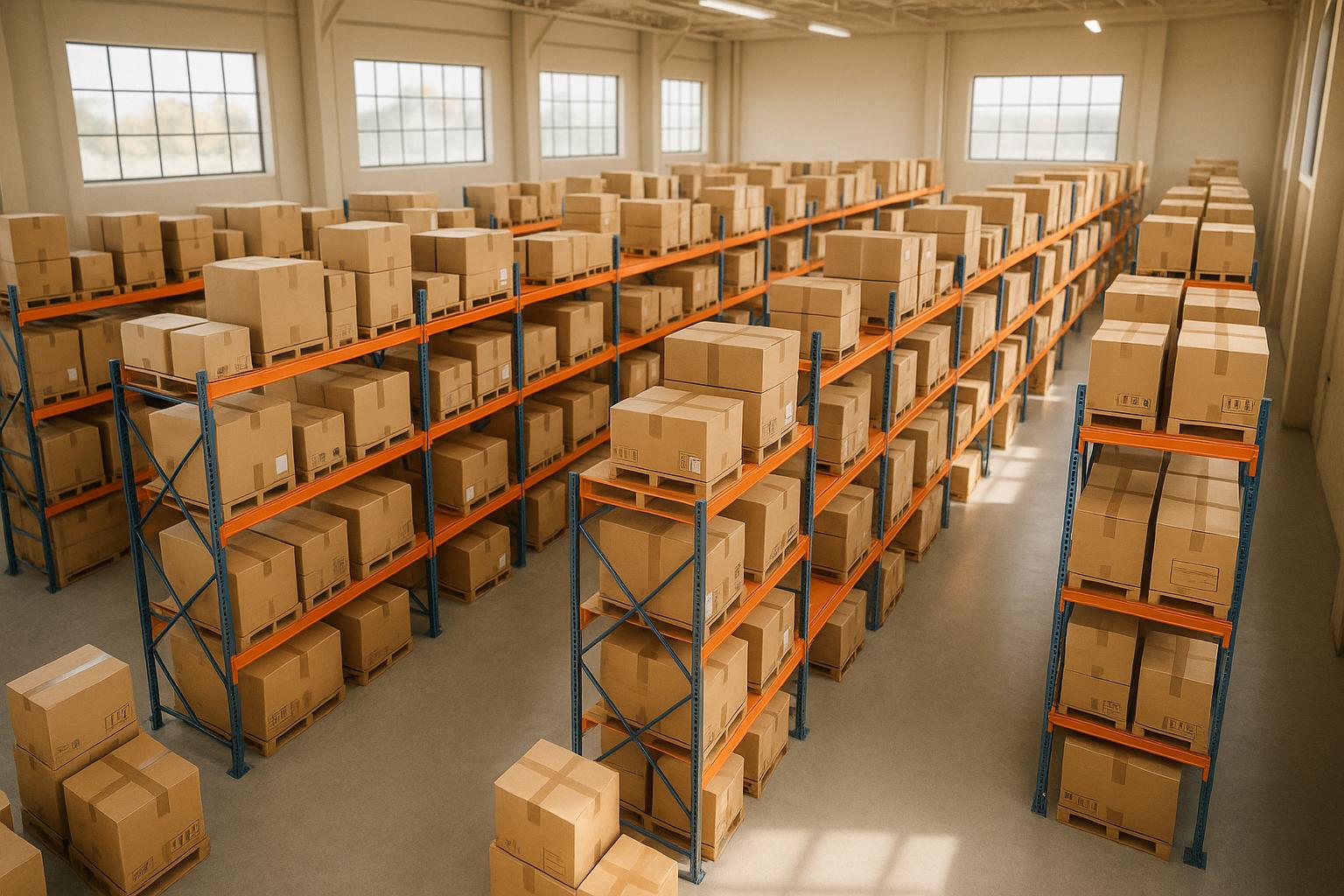
Scaling a direct-to-consumer (DTC) brand is tough, especially when order volumes surge during promotions or holidays. Managing inventory, shipping, and returns can overwhelm internal teams, leading to delays, higher costs, and unhappy customers. Third-party logistics (3PL) providers offer a solution by streamlining operations and reducing fixed costs. Here's how they help:
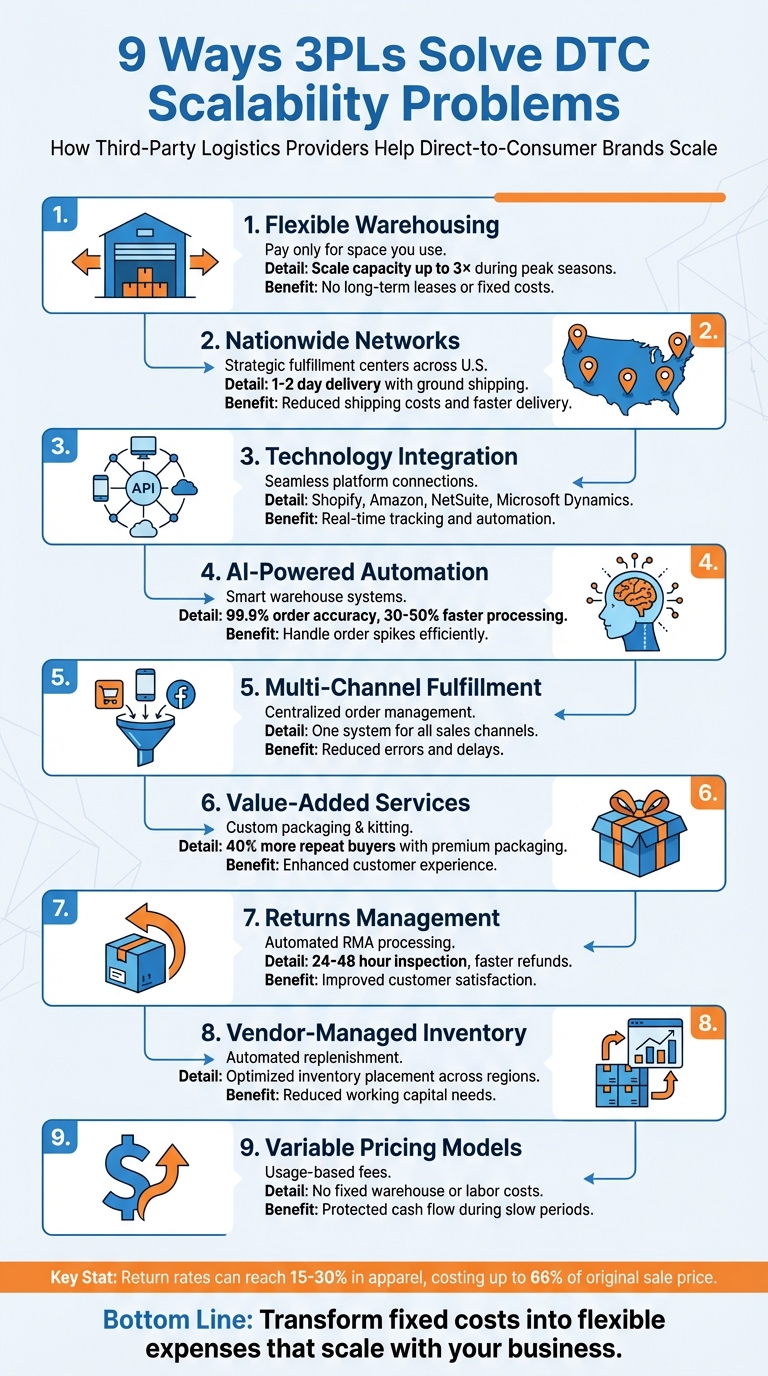
- Flexible Warehousing: Pay only for the space and labor you need, scaling up or down with demand.
- Nationwide Networks: Distribute inventory across U.S. regions to cut shipping times and costs.
- Technology Integration: Connect seamlessly with platforms like Shopify and Amazon for real-time tracking and automation.
- AI-Powered Automation: Handle order spikes efficiently with tools like robotic picking and predictive analytics.
- Multi-Channel Fulfillment: Centralize orders from multiple sales channels, reducing errors and delays.
- Value-Added Services: Offer custom packaging, kitting, and assembly to improve customer experience.
- Returns Management: Simplify returns with automated systems and faster processing.
- Vendor-Managed Inventory (VMI): Automate stock replenishment and optimize inventory placement.
- Variable Pricing Models: Replace fixed costs with usage-based fees to protect cash flow.
9 Ways 3PLs Solve DTC Scalability Problems
The Role of 3PL in B2C | Scalable Logistics Solutions by Warehousing Express
How 3PLs Help DTC Brands Scale
When you partner with a third-party logistics provider (3PL), you’re handing over the entire logistics process - from receiving inventory to delivering orders. This means your team can focus on what really matters: growing your business. Instead of juggling warehouse leases, hiring staff, or negotiating with carriers, 3PLs take care of these complexities for you. The result? A smoother operation that sets the stage for financial and operational improvements.
The financial perks kick in right away. 3PLs combine resources across multiple clients, giving them leverage to secure top-tier shipping discounts with carriers like UPS and DHL - discounts that single DTC brands typically can’t access on their own. These savings are passed on to you, no matter your order volume. Plus, you only pay for the warehouse space and labor you actually use. No more paying for empty warehouse space during slow months or scrambling to find extra capacity during peak seasons.
Shipping also becomes faster and more reliable, which keeps customers happy. By distributing inventory across multiple fulfillment centers nationwide, 3PLs reduce transit times and shipping zones. Your brand can appear “local” to customers across the country without needing physical offices in every region. This operational efficiency is a game-changer for scaling, as Curtis Martin, Senior Operations Manager at Synnex, explains:
"JIT sets the bar high in logistics. Their on-time performance, ability to handle last-minute requests, and expertise in material handling are game-changers for us. Add to that their competitive pricing and professional service, and it's clear why they're one of our most valued partners."
Technology plays a huge role, too. Advanced warehouse management systems integrate directly with your e-commerce platforms, automating order routing and providing real-time inventory updates. This prevents overselling, streamlines operations during busy periods, and ensures consistent branding with custom packaging - all without requiring you to invest in building these systems yourself. These tools make scaling up both efficient and accurate.
3PLs also make it easier to test new markets. If your logistics partner already operates facilities in key regions, expanding becomes much simpler. Want to gauge demand in the Southeast or on the West Coast? Your 3PL can shift inventory within their network, sparing you from signing new leases or hiring regional staff. This flexibility improves efficiency and enhances customer satisfaction, as Armando Otiz, Manager 3PL/Inventory at Exclusive Networks, highlights:
"In logistics, consistency is everything - and that's exactly what JIT delivers. Their transportation services are dependable, seamless, and backed by a team that truly understands our business needs. Working with JIT has made a tangible difference in our efficiency and customer satisfaction."
1. Flexible Warehousing and Capacity Scaling
For growing DTC brands, finding warehouse space that fits their needs can feel like navigating a maze. That’s where the flexible warehousing model offered by 3PLs comes in. Instead of being locked into paying for unused space during slow months - or scrambling to add capacity during peak times like Black Friday - you only pay for the space you actually use. During busy periods, a 3PL can increase capacity by up to 3× by leveraging its existing network, all without the hassle of signing new leases or hiring more staff. When the rush is over, costs naturally scale back down. This dynamic system is powered by technology that monitors and forecasts demand, ensuring smooth operations.
Cloud-based Warehouse Management Systems take this flexibility a step further. They provide real-time visibility into your current usage and available capacity, making adjustments as simple as a few clicks. For example, a rapidly growing DTC apparel brand used regional facilities to access extra space during the holiday season without committing to long-term leases or additional staffing. This allowed them to focus on marketing and sales, leaving logistics in capable hands.
JIT Transportation is a prime example of this approach, offering a scalable, nationwide infrastructure that adjusts to seasonal demand. As JIT explains, "With a national footprint and flexible network, JIT scales with your demand - wherever and whenever you need it". This adaptability ensures that DTC brands can handle fluctuating needs without being tied down by fixed costs or logistical headaches.
2. Nationwide Network for Geographic Expansion
When a brand grows beyond the capacity of a single warehouse, managing additional facilities can become a major drain on resources. A 3PL with a nationwide network changes the game by giving brands access to fulfillment centers strategically located across key U.S. regions, including the West Coast, Midwest, and East Coast.
This approach not only adds flexibility but also fuels growth for DTC brands. Take this scenario: A brand operating out of a single Midwest warehouse might face delivery times of 4–5 days for shipments heading cross-country. By distributing inventory across facilities in states like Nevada, Texas, and Mississippi, shipping distances are significantly reduced. This setup ensures most orders can reach customers within just 1–2 business days using ground services. The shorter distances not only speed up delivery but also cut down on carrier costs per package, eliminating the need for expensive air shipping.
JIT Transportation exemplifies this strategy with its network of nine strategically located warehouses in cities such as San Francisco, Los Angeles, Sacramento, Reno, Austin, Houston, Memphis, Shreveport, and Olive Branch. This setup allows DTC brands to position inventory closer to major population centers and transportation hubs. For instance, a customer in California could receive their order from a nearby facility, while someone in the Southeast might get theirs from a hub in Mississippi, ensuring faster and more cost-efficient delivery.
The best part? Expansion is seamless. When demand surges in a specific region, the 3PL can quickly reallocate inventory without requiring the brand to lease new spaces, set up systems, or hire additional staff. The 3PL takes care of daily operations, carrier negotiations, and labor, freeing up the brand to focus on strategic growth and demand planning.
Additionally, automated systems ensure orders are routed to the nearest facility - like shipping from Nevada for a California-based customer or from Illinois for one in Ohio. This streamlined network not only improves delivery times and costs but also sets the stage for future technological advancements in order fulfillment.
3. Advanced Technology and ERP Integration
Expanding on the ideas of flexible warehousing and geographic reach, integrating advanced technology takes operational efficiency to the next level. As DTC brands grow, outdated systems can quickly become a bottleneck. Tech-savvy 3PLs bridge that gap by seamlessly connecting with your existing platforms - think Shopify, NetSuite, Microsoft Dynamics, or Amazon - using API and EDI connections. This setup ensures that orders, inventory updates, and shipment confirmations flow automatically between your sales channels and the 3PL’s systems. The result? No more manual data entry, fewer errors, and a single source of truth for your data.
One of the biggest advantages of these integrations is real-time inventory visibility. Instead of relying on outdated end-of-day reports, you can log into a dashboard to see on-hand, allocated, and available-to-sell quantities for each SKU across all your U.S. fulfillment centers. Alerts and reports provide actionable insights, helping you avoid overselling during high-demand periods like Black Friday. With detailed tracking, you stay in control without needing to step foot in a warehouse. As orders come in from your website or marketplaces, the 3PL’s order management system (OMS) updates your master inventory and sales channels instantly. This automation prevents overselling and intelligently routes orders to the best warehouse based on stock levels, customer ZIP codes, and service-level requirements. For finance and operations teams, this means accurate reporting in U.S. dollar format (e.g., $125,000.00) and alignment with accounting periods and tax regulations. The smooth data flow simplifies decision-making and boosts operational efficiency.
Take JIT Transportation as an example. They integrate ERP systems into their tailored 3PL solutions, offering real-time visibility across their nationwide network. Their systems sync seamlessly with your business software to ensure inventory, orders, and shipments are always up to date. When paired with their transportation services, this integration creates a synchronized workflow, giving you tighter control over lead times across your U.S. distribution network. This capability pairs perfectly with scalability, keeping your brand agile as market demands shift.
What’s the payoff? Access to analytics and reporting dashboards that reveal SKU-level velocity, days of supply, historical sales patterns, and carrier performance metrics. These insights enable you to fine-tune demand forecasts, adjust reorder points, and strategically position inventory across regions. With this data in hand, you’re equipped to make proactive, informed decisions that drive sustainable growth.
4. AI-Powered Automation and Optimization
AI-powered automation is transforming warehouse operations, especially for DTC brands experiencing growth and seasonal order spikes. As order volumes increase - think holiday rushes or major sales events - manual processes can become a serious bottleneck. To tackle this, modern 3PL providers leverage AI-driven warehouse management systems (WMS) and automation tools. These systems handle tasks like inventory tracking and robotic picking with machine vision for pick verification and dynamic slotting, ensuring fast-moving SKUs are positioned for quicker packing. The result? Order accuracy rates as high as 99.9% in high-demand environments. This level of precision not only minimizes errors but also keeps operations running smoothly when demand surges.
Automation tools, including robotic process automation (RPA), take efficiency even further by cutting order processing times by 30–50% during peak periods. What’s more, this is achieved without requiring additional labor or capital investment. These systems automatically adapt to fluctuating volumes, reconfigure inventory across fulfillment centers, and optimize picking routes in real time. Whether it’s a Black Friday rush or a product launch, the scalable infrastructure of 3PL providers ensures operations stay on track.
AI also plays a key role in predictive analytics. By analyzing historical sales trends, seasonal patterns, and real-time data, AI algorithms forecast demand spikes before they happen. This allows 3PLs to adjust staffing and inventory placement across their U.S. networks, helping to avoid stockouts during critical sales periods. Providers like JIT Transportation are leading the way by integrating advanced technology into their nationwide operations. Their systems streamline pick-and-pack processes and optimize freight bookings with real-time adjustments, scaling effortlessly to maintain speed and accuracy as order volumes rise.
The benefits are hard to ignore: fulfillment times improve by 20–40%, overhead costs drop thanks to variable pricing models, and service-level agreement (SLA) compliance rates climb. With advanced warehouse automation, growing DTC brands can achieve greater efficiency without making large capital investments. This technology offers a reliable path to scalable and efficient operations in a competitive market.
sbb-itb-eafa320
5. Multi-Channel Order Fulfillment
Direct-to-consumer (DTC) brands today operate across a variety of platforms - whether it's their own Shopify store, Amazon, Walmart Marketplace, eBay, or even wholesale partnerships with retailers. Managing these diverse sales channels without the help of a third-party logistics provider (3PL) can quickly become chaotic. Brands often find themselves juggling different systems, dealing with inconsistent packing requirements, and risking overselling or shipping delays. Solving these multi-channel hurdles is crucial for scaling DTC businesses successfully.
3PLs simplify this complexity by centralizing order processing through integrated systems like an Order Management System (OMS) and a Warehouse Management System (WMS). These systems connect directly to ecommerce platforms, marketplaces, and EDI feeds using APIs and pre-built connectors. This means that all orders - whether they come from an online store, Amazon, or a retail partner - are funneled into one centralized queue. From there, orders are automatically prioritized, matched with inventory, and routed for picking and packing. This streamlined approach gives brands a single dashboard to monitor orders and inventory, eliminating the need to switch between multiple systems.
By consolidating inventory management, brands can reduce stockouts and prevent overselling. Orders from all channels are synced into one system, ensuring accurate inventory tracking. Standardized processes for picking, packing, and shipping also help brands meet customer expectations for fast delivery - whether it's a 2-day or next-day promise - while saving time on order reconciliation. This efficiency allows teams to shift their focus to core activities like marketing and product innovation.
3PLs also handle the specific requirements of each sales channel from a single inventory pool. Their WMS stores customized packing rules and workflows, ensuring that every channel's unique packaging and compliance standards are met. For instance, when an order comes in, the system directs it to the appropriate workflow, guaranteeing precise packing, labeling, and even an exceptional unboxing experience - all while adhering to retailer compliance standards.
Taking this a step further, specialized fulfillment workflows add another layer of efficiency. For example, JIT Transportation integrates seamlessly to manage channel-specific order routing. As orders come in, JIT's system allocates inventory and generates tailored instructions - whether it’s branded packaging for DTC orders, Amazon-compliant prep, or case-packed shipments for retailers. By consolidating transportation, distribution, and additional services like pick-and-pack or kitting, JIT enables brands to scale without unnecessary labor or redundant workflows. This level of integration not only supports multi-channel growth but also highlights the cost-efficient, scalable benefits of partnering with a 3PL.
6. Value-Added Services like Pick & Pack and Kitting
Scaling a DTC brand involves more than just speeding up shipments. Today’s customers expect a memorable unboxing experience - custom packaging, curated bundles, and personalized touches that elevate a simple delivery into something special. However, managing these details in-house can quickly become a logistical and financial burden, requiring significant warehouse space, equipment, and staff that many growing brands simply can’t justify.
This is where 3PL providers step in, seamlessly integrating value-added services into their fulfillment process. Take pick & pack, for example - it covers everything from receiving and storing inventory to selecting and packing individual SKUs according to a brand’s specific guidelines. Then there’s kitting, which goes a step further by pre-assembling multiple items into a single bundle, such as subscription boxes, gift sets, or starter kits. These services not only speed up order processing but also reduce errors. According to Dotcom Distribution, 40% of consumers are more likely to become repeat buyers when a brand uses premium packaging, and 52% are swayed by branded packaging.
But it doesn’t stop there. Many 3PLs offer additional services like light assembly, quality checks, labeling, and even white-glove handling for fragile or high-value items. These extras enable brands to deliver “ready-to-use” products, complete with custom boxes, tissue paper, thank-you notes, and promotional inserts - without the need for extra staff or storage. One subscription brand, for instance, reported a 20% boost in customer lifetime value simply by using kitting and branded packaging through a 3PL, compared to plain-packaged shipments.
By outsourcing these tasks, DTC brands can shift their focus to what they do best - marketing, product innovation, and customer acquisition - while the 3PL takes care of the heavy lifting. Pricing for these services typically follows a variable model: $1–$3 for the first pick, $0.20–$0.75 for additional picks, and $0.50–$2.00+ per kit. This pay-as-you-go approach helps brands avoid the fixed costs of in-house operations and easily scale up during peak seasons like Q4 or major sales events.
The real game-changer is partnering with a 3PL that uses a warehouse management system capable of handling custom rules for packaging, inserts, and kitting. This ensures every order - whether it’s a branded DTC shipment or a bulk wholesale carton - is processed correctly without manual oversight. For DTC brands aiming to grow without compromising on customer experience, these value-added services transform logistics from a back-end necessity into a strategic advantage.
7. Efficient Returns Management (RMA)
Returns are often referred to as the "hidden side of eCommerce" because many DTC brands underestimate how complicated and costly they can become as operations grow. In the U.S., return rates for categories like apparel can reach as high as 15–30%, and processing just one return might cost up to 66% of its original sale price. These costs can pull resources away from essential growth efforts.
A reliable 3PL can take charge of the entire returns process, from issuing RMAs through integrated portals to receiving and inspecting returned items. They handle everything: sorting inventory into categories like resellable, refurbish, quarantine, or scrap; updating the warehouse management system in real time; and initiating replacements or refunds. Because top-tier 3PLs link their warehouse and order management systems directly with eCommerce platforms, returns are seamlessly connected to original orders. This means inventory counts update almost instantly, customers are notified automatically, and refunds are processed faster - all without requiring manual work from your team. This level of automation not only simplifies the returns process but also boosts overall operational efficiency.
More importantly, this approach helps maintain customer satisfaction and loyalty by offering fast, transparent returns that feel effortless and in line with the brand’s standards, even when logistics are outsourced. Standardized processes, such as inspecting returns within 24–48 hours and issuing refunds within a set timeframe, ensure consistency - even during busy periods like the January post-holiday return rush. For DTC brands selling through multiple channels (e.g., their own website, Amazon, Walmart), a 3PL can consolidate returns from all sources into a single inventory pool. This improves inventory accuracy and reduces the risk of stockouts.
Many 3PL providers also offer customized, brand-specific solutions to handle returns. These can include services like functional testing, re-kitting, or light repairs for returned items. For instance, a provider like JIT Transportation - which specializes in distribution, fulfillment, and value-added services such as testing and white-glove handling - can manage complex returns that need detailed inspections or refurbishment. This ensures that only high-quality inventory gets restocked. Such meticulous handling is especially important for protecting both brand reputation and profit margins, particularly in high-return categories like fashion, electronics, and cosmetics.
8. Vendor-Managed Inventory (VMI) and Pool Distribution
As DTC brands expand their product lines and venture into new U.S. markets, managing inventory placement becomes increasingly complex. Vendor-managed inventory (VMI) simplifies this by allowing the 3PL to take charge of inventory levels, demand forecasting, and automatic replenishment - eliminating the need for brands to manually place purchase orders. By linking its warehouse management system with the brand's ecommerce and ERP platforms, the 3PL can establish SKU-specific stock thresholds and locations. Using historical sales data and seasonal trends, it generates rolling replenishment orders. For instance, a growing U.S. brand might maintain higher safety stock at West Coast facilities for fast-moving items, while setting tighter reorder points in Midwest warehouses for slower-moving SKUs. This strategy keeps working capital in check while ensuring inventory is where it needs to be. Alongside VMI, pool distribution offers another layer of efficiency for regional shipments.
Pool distribution works by consolidating multiple shipments bound for the same region into a single move to a regional hub. At the hub, orders are sorted and prepared for final delivery. Instead of shipping each order individually from a fulfillment center, the 3PL consolidates outbound orders into full truckloads directed to pool points near major cities like Dallas, Chicago, or Atlanta. From there, packages are injected into local parcel networks for final delivery. This method boosts trailer utilization, lowers the average cost per package, and can even shorten transit times, especially when combined with zone-skipping and carrier contracts. Together, these strategies create a scalable and cost-efficient supply chain.
By leveraging advanced technology and strategically distributed warehouses, VMI and pool distribution optimize the supply chain for DTC brands on the rise. With VMI, the 3PL ensures that inventory is always in the right place without requiring manual adjustments, while pool distribution keeps per-order shipping costs low. For example, a 3PL might maintain optimal inventory levels at facilities on the West Coast and in the Midwest, then run consolidated truckloads from these centers to regional hubs near high-demand areas. This approach not only reduces costs but also adapts seamlessly to shifting demand patterns.
Providers like JIT Transportation play a key role in enabling these strategies. Offering tailored 3PL solutions - including transportation, distribution, fulfillment, VMI, and pool distribution - JIT serves as the operational backbone for growing brands. With its nationwide network and advanced technology, JIT provides real-time inventory visibility, automated replenishment systems, and consolidated shipping lanes. This allows brands to expand into new markets with faster 2-day delivery coverage across more ZIP codes, all while reducing working capital needs and transportation costs.
To make VMI and pool distribution work effectively, clean, real-time data is essential. This requires integrating the brand's ecommerce platforms - like Shopify, Amazon, and Walmart - with the 3PL's warehouse management system to ensure inventory updates instantly with every order or return. Historical sales data and supplier lead times are used to fine-tune forecasts and align reorder thresholds with operational realities. Key performance indicators (KPIs) to track success include inventory turns, days of inventory on hand, order fill rates, average shipping costs per order, and on-time delivery percentages.
9. Cost-Effective Variable Pricing Models
Running your own fulfillment operation comes with hefty fixed costs - think warehouse leases and full-time staff salaries. These expenses don’t disappear during slow sales periods, which can create cash flow challenges, especially if you’re trying to reinvest in growth. This is where a variable pricing model can make all the difference, helping align costs with sales performance.
Third-party logistics (3PL) providers turn those fixed overheads into flexible, variable costs. Instead of paying for warehouse space and labor regardless of order volume, you’re only charged for what you use - storage, handling, and shipping. Labor costs that would typically be tied to salaries and benefits are baked into per-order fees, and technology access is included in usage-based rates, eliminating the need for separate software licenses. This shifts fulfillment expenses from a rigid fixed cost to an adaptable operating expense that scales with your business.
When demand spikes, a 3PL can quickly ramp up labor, storage, and shipping capacity to meet your needs. Conversely, during slower months like January or February, your costs naturally decrease. You’re not stuck paying for empty warehouse space or idle employees. This flexibility protects your margins and working capital, helping you stay profitable even as order volumes fluctuate.
To make the most of these cost-saving advantages, you’ll need to carefully evaluate your pricing model. Calculate the total cost per order for both in-house and 3PL fulfillment. For in-house, include all fixed overheads, and for 3PL, factor in line-item rates for services. Run scenarios at different order volumes - such as 10,000 versus 50,000 orders per month - to pinpoint the break-even point and determine whether investing in your own infrastructure makes financial sense.
Take JIT Transportation as an example. They offer tailored 3PL solutions that grow with your business. With a nationwide network, advanced technology, and scalable capacity, JIT can handle volume surges without locking you into long-term fixed costs. Their modular services - like pick & pack, kitting, testing, and white-glove handling - are available as add-ons, so you only pay for what you need. This pricing flexibility ensures your unit economics stay healthy as your order volumes and sales channels evolve across the U.S. market. By adopting such adaptable pricing models, DTC brands can scale efficiently while minimizing risk.
Conclusion
Growing a DTC brand comes with its fair share of challenges. But the nine strategies we've covered here can transform those challenges into opportunities for growth. By shifting fixed costs into flexible, variable expenses, you can scale without taking on the financial burden of building your own infrastructure. Whether you're managing a Black Friday rush or expanding into new markets, a 3PL offers the capacity and technology to help you grow efficiently.
Beyond just saving money, partnering with a 3PL lets you focus on what you do best: developing products, marketing your brand, and enhancing the customer experience. Instead of getting bogged down by the complexities of fulfillment logistics, you gain a partner skilled in inventory management, multi-channel order processing, and handling returns. This operational support allows you to channel your energy into driving your business forward.
The right 3PL doesn't just handle logistics - it elevates your entire supply chain. With tools like real-time tracking, AI-driven automation, and seamless ERP integration, you can make informed, data-backed decisions. Scaling fulfillment to match demand means avoiding bottlenecks during busy periods and reducing waste during slower times.
If you're ready to grow without the overhead, JIT Transportation offers tailored 3PL solutions specifically designed for DTC brands. With a nationwide network, advanced technology, and scalable infrastructure, they take care of everything from transportation and fulfillment to value-added services like pick & pack and kitting. Their flexible model ensures you only pay for what you use, keeping your unit costs in check as you expand across the U.S.
These strategies show that a 3PL isn't just about outsourcing logistics - it’s about building a supply chain that grows alongside your brand. Get a custom quote to see how the right 3PL can simplify your operations and set you up for long-term success.
FAQs
How do 3PLs help DTC brands ship orders faster?
3PLs play a key role in helping DTC brands deliver orders faster by leveraging a nationwide network, cutting-edge technology, and flexible infrastructure. These tools streamline order processing, fine-tune delivery routes, and improve the efficiency of last-mile logistics.
With strategically located warehouses near customers and the use of data-driven strategies, 3PLs reduce transit times and ensure dependable deliveries, enabling brands to meet the high expectations of their customers.
How can a 3PL help reduce costs for a growing DTC business?
Partnering with a 3PL, such as JIT Transportation, can help growing DTC brands cut costs by removing the need for hefty upfront investments in warehousing and logistics. Instead of committing to fixed infrastructure, you can scale your operations as your business grows, paying only for the resources you actually use.
3PLs also utilize cutting-edge logistics technology to simplify workflows, fine-tune shipping routes, and minimize handling expenses. This not only reduces costs but also speeds up delivery times and improves reliability for your customers - helping you stay competitive without breaking the bank.
How do 3PLs streamline inventory management for multi-channel fulfillment?
Third-party logistics providers (3PLs) simplify inventory management for businesses handling orders across multiple channels. They do this by using flexible warehousing options, real-time inventory tracking systems, and scalable tools. These resources help maintain accurate stock levels and ensure inventory is allocated efficiently across all sales channels.
By combining advanced technology with streamlined logistics processes, 3PLs make it possible to speed up order fulfillment while minimizing problems like overstocking or running out of stock. This ensures your operations stay efficient and adaptable as your business expands.
Related Blog Posts
Related Articles
7 WooCommerce 3PL KPIs Teams Track

Centralized vs Decentralized Replenishment
