
White Glove Logistics for Medical Device Companies
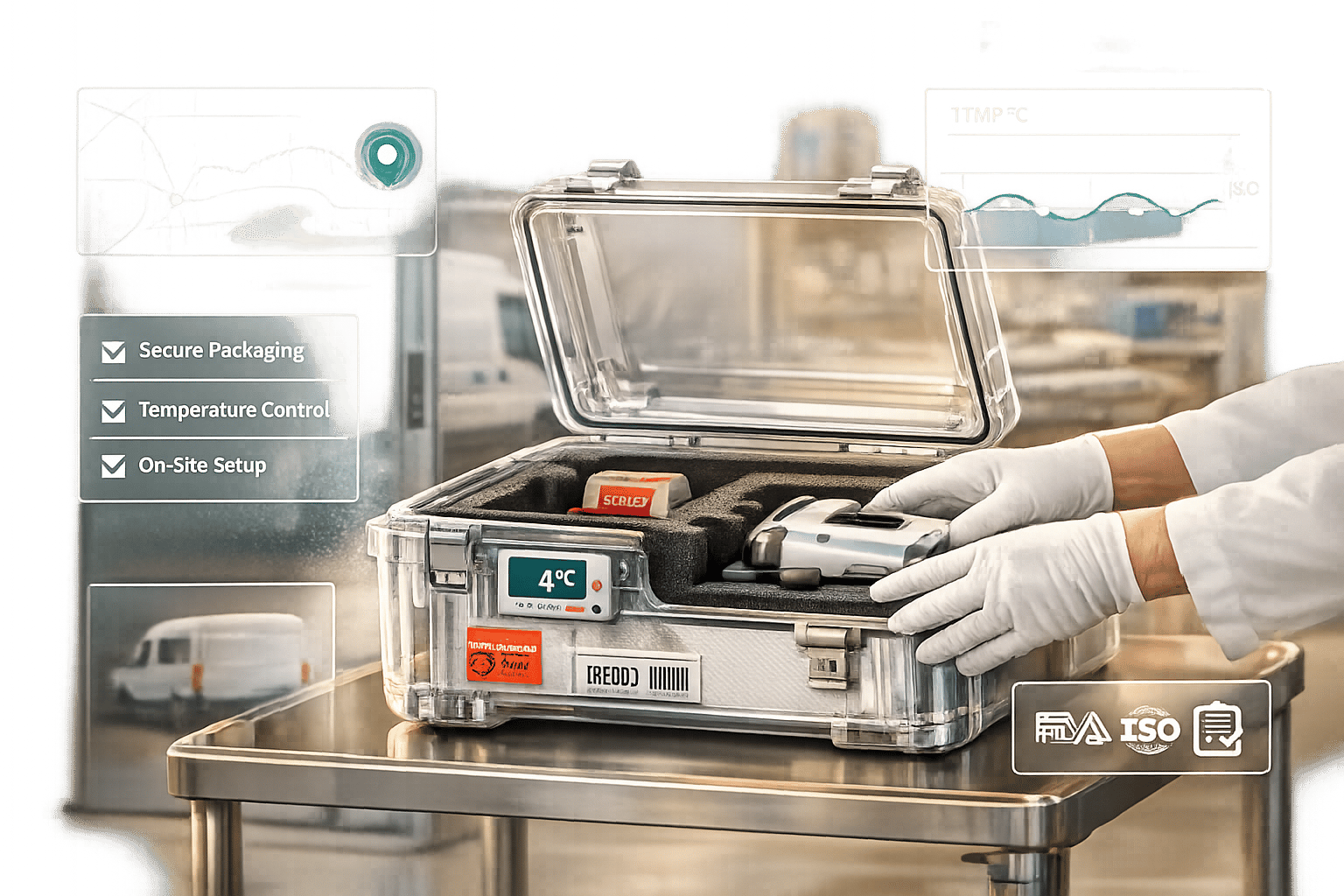
White glove logistics ensures that medical devices are handled with precision, care, and compliance at every stage of transport. Unlike standard delivery, this service includes specialized handling, climate-controlled transport, on-site setup, and strict adherence to FDA regulations. Here's what makes white glove logistics essential for medical device companies:
- Specialized Handling: Protects fragile components like lenses and electronics from damage during transport.
- Regulatory Compliance: Meets FDA standards, ISO 13485 certification, and chain-of-custody documentation.
- Environmental Controls: Maintains specific temperature and humidity levels to prevent damage.
- On-Site Services: Includes equipment setup, calibration, and removal of packaging materials.
- Traceability: Uses advanced tracking systems to monitor shipments in real-time and maintain detailed records.
With the stakes high for medical device safety and functionality, white glove logistics ensures devices arrive ready for immediate use, safeguarding patient care and healthcare operations.

5 Essential Components of White Glove Logistics for Medical Devices
Regulatory and Compliance Requirements
Key Regulations for Medical Device Transportation
Transporting medical devices in the United States involves navigating a web of federal regulations. A significant change came into effect on February 2, 2026, when the FDA's Quality Management System Regulation (QMSR) incorporated ISO 13485:2016 standards.
"The Quality Management System Regulation (QMSR), became effective on, February 2, 2026, amending the device current good manufacturing practice (CGMP) requirements of 21 CFR part 820 and incorporating by reference... ISO 13485:2016." - FDA
Additionally, under 21 CFR Parts 821 and 807, Class II and III devices require strict tracking protocols. These include locating undistributed devices within three working days and ensuring annual registration of establishments. Devices must not be stored in unsanitary conditions, as this would render them adulterated. Similarly, misbranding occurs if labeling is false, misleading, or lacks critical manufacturer details, as outlined in Sections 501 and 502 of the FD&C Act. Logistics providers must also comply with Medical Device Reporting (MDR) requirements under 21 CFR Part 803, which mandate reporting incidents where a device may have caused injury or death.
Given these stringent rules, robust documentation systems are essential to ensure traceability throughout the transportation process.
Documentation and Traceability Requirements
Accurate documentation is a cornerstone of compliance for white glove logistics providers. Both manufacturers and logistics partners must implement written Standard Operating Procedures (SOPs) to manage, maintain, and audit tracking data. These SOPs should address methods for recording missing data and tracking any system changes to ensure all updates during transport are properly documented.
The Unique Device Identifier (UDI) system is central to maintaining traceability. Each device must have a UDI that includes both a device identifier and a production identifier, such as a lot number, serial number, or expiration date. Documentation systems must also capture additional details like shipment dates, lot and serial numbers, and the contact information for distributors and prescribing physicians. Importers bear even greater responsibility, as they are treated as manufacturers for tracking purposes and must retain all records within the United States.
"The purpose of device tracking is to ensure that manufacturers of certain devices establish tracking systems that will enable them to promptly locate devices in commercial distribution." - FDA
To ensure accuracy, firms must perform quality assurance audits of their tracking systems. These audits should occur at least every six months during the first three years of distribution and annually thereafter. Additionally, manufacturers are required to keep tracking records for the "useful life" of the device, which spans the period the device is in use or available for distribution. This rigorous approach ensures that if a safety issue arises, devices can be quickly located to safeguard patients and healthcare providers.
sbb-itb-eafa320
Handling and Environmental Controls
Temperature and Humidity Control
Maintaining precise environmental conditions is critical for the safety and functionality of medical devices during transport. Typical conditioning atmospheres include ambient conditions at 73°F with 50% relative humidity, but they can also involve more extreme settings, such as tropical environments at 104°F with 90% humidity or frozen storage at 0°F. Alarmingly, about 20% of temperature-sensitive goods suffer damage during transit, resulting in annual losses of $35 billion across the pharmaceutical and medical device sectors.
To combat these challenges, modern white glove logistics employ advanced technology like real-time cellular and satellite trackers. These systems provide instant alerts for issues like cooling failures or open doors, allowing for quick corrective action. Starting January 2026, regulations will mandate temperature tracking at every stage - storage facilities, transfer points, and cross-docks - with records required to be maintained for two years.
"Medicines need to arrive exactly as the manufacturer intended." - Tive Team
The decision to use passive or active cooling systems depends on factors such as the mode of transport, journey duration, and seasonal temperature fluctuations. Pre-chilling products and pre-cooling transport units before loading are essential steps to ensure the required temperature range is maintained from the outset. Additionally, temperature-controlled environments must undergo rigorous validation processes, including Installation Qualification (IQ), Operational Qualification (OQ), and Performance Qualification (PQ), to meet regulatory standards. These measures, combined with white glove services, ensure every stage of handling adheres to strict quality and regulatory requirements.
Beyond monitoring, secure packaging plays a crucial role in preserving the integrity of sensitive medical equipment during transit.
Packaging and Secure Handling Methods
Protective packaging for medical devices involves more than just basic materials. Sterile barrier systems made from polyethylene and Tyvek protect devices from contaminants like microbes, dust, and moisture. Meanwhile, shock-absorbent materials such as foam and bubble wrap shield items from vibrations and physical impacts during transport. Before distribution testing, medical packaging must undergo environmental conditioning for 72 to 216 hours to stabilize.
"Proper conditioning isn't optional - it's the foundation that makes any distribution simulation meaningful. If the packaging hasn't been stabilized to the right environment, the data that comes after simply isn't trustworthy." - Matthew Emrick, Packaging & Testing Specialist, LSO
Custom blocking and bracing systems are used to prevent movement within shipping containers, while anti-static packaging safeguards electronic components from static discharge. For particularly delicate equipment, partial or full disassembly may be necessary to protect internal mechanisms. Medical goods must be transported in dedicated containers, separate from non-medical items like food or fuel, to avoid cross-contamination. Tamper-evident seals provide clear evidence that sterility has been maintained throughout the supply chain, and all labeling must remain legible even when exposed to extreme environmental conditions.
Additional Services for Medical Device Logistics
On-Site Installation and Setup
White glove logistics goes beyond transportation by offering on-site installation and setup services, ensuring medical devices are seamlessly integrated into healthcare environments. These services complement strict handling and documentation protocols, guaranteeing devices are installed to meet healthcare standards.
Technicians handle the challenges of navigating elevators, stairs, and tight spaces to deliver equipment precisely where it’s needed. Before delivery, providers conduct site inspections to identify potential obstacles, determine ideal placement, and assess if specialized tools - like cranes - are required.
At the delivery site, technicians carefully unbox, inspect, assemble, and stage the equipment, ensuring everything is undamaged and ready for use. The technical setup process includes powering up devices, performing routine maintenance, and calibrating equipment to verify functionality. Once installation is complete, all packaging materials, crates, and debris are removed, leaving the space clean and ready for patient care. A final sign-off confirms the equipment is operational and meets the facility's needs.
For facilities replacing outdated equipment, reverse logistics services handle the de-installation and removal of older devices, ensuring they are responsibly disposed of or recycled.
Technician Training and Certifications
The complexity of medical devices demands technicians with specialized skills and training. These professionals must be adept at handling a wide range of equipment, from imaging systems to surgical tools and diagnostic devices. Certifications like ISO 13485 demonstrate their ability to meet rigorous safety and regulatory standards. Additionally, HIPAA training ensures compliance with decontamination protocols and data privacy requirements. For devices containing hazardous materials, technicians must also hold relevant HAZMAT certifications, such as 49 CFR, IATA, and IMDG, to safely manage items like lithium batteries or radioactive components.
"Working with a 3PL partner that employs certified and trained technicians is essential. These professionals understand the intricacies of handling sensitive medical devices and have the experience to mitigate risks associated with transport and installation." - Metro Supply Chain
Ongoing training and strict adherence to standardized procedures help minimize errors and maintain high-quality service throughout the logistics process. These specialized skills and certifications enhance the safety and reliability of medical device operations, ensuring they support patient care effectively.
How JIT Transportation Supports Medical Device Companies
Custom 3PL Solutions for Medical Devices
JIT Transportation operates 14 compliance-ready warehouses covering 2.5 million square feet, specifically designed to support critical medical supply chains. These facilities adhere to ISO 13485:2016 standards, which are essential for medical device logistics.
"JIT ensures your goods move quickly, safely, and efficiently every time... with nationwide reach, compliance‐ready operations, and tailored fulfillment solutions." – JIT Transportation
Their services go beyond basic logistics. With white glove handling, specialized packaging, and secure delivery, JIT ensures that every shipment is treated with care. They also offer value-added services like quality assurance, kitting, labeling, testing, and light assembly. These processes streamline pre-distribution workflows while safeguarding product quality. Their advanced technology supports traceability and compliance through real-time tracking and custom API integrations. All of these features work together to create a seamless and efficient delivery system across their extensive network.
Nationwide Network and Technology
JIT leverages a robust network of over 500 carriers and a dedicated fleet of more than 200 trucks to ensure nationwide coverage. Their 14 strategically located warehouses - positioned in states like California, Nevada, Texas, Tennessee, Mississippi, and Louisiana - operate around the clock to provide fast and cost-effective fulfillment.
Their technology platform offers real-time visibility through an integrated Warehouse Management System (WMS) and tracking tools. This system connects effortlessly with major ERP platforms and e-commerce solutions like Shopify, Magento, and WooCommerce via custom APIs. This integration supports automated order fulfillment and precise inventory management. With a 98.5% on-time performance rate for regional less-than-truckload services, JIT demonstrates a commitment to reliability. This combination of advanced technology and operational excellence is key to meeting the unique demands of medical device logistics.
Scalable Supply Chain Management
JIT Transportation provides flexible supply chain solutions that adapt to seasonal fluctuations or periods of rapid growth. Their facilities include options like temperature-controlled storage, bonded warehouses, and high-security areas, all tailored for sensitive medical equipment. This scalability allows medical device companies to maintain the meticulous handling their products require while navigating strict regulatory requirements. With over 30 years of experience in logistics, JIT offers the stability and expertise needed to support companies as they expand their distribution networks.
Medical Device storage, handling and transport validation | Patient Guard
Conclusion
White glove services offer distinct advantages for medical device logistics, addressing challenges that standard delivery methods simply cannot handle. These services ensure specialized handling, strict regulatory compliance, and comprehensive end-to-end support tailored to the unique needs of high-value medical equipment. From precise handling and environmental controls to thorough documentation, every detail is designed to safeguard product quality. Services like unpacking, room-specific placement, professional installation, and debris removal ensure compliance with regulations and protect sensitive devices at every step.
JIT Transportation brings all these critical elements together with its robust infrastructure and specialized teams trained to manage delicate medical equipment. Their real-time tracking capabilities and custom API integrations enable full chain-of-custody documentation, while value-added services streamline workflows even before distribution begins. This integrated approach ensures seamless and secure delivery.
Unlike traditional logistics, white glove services go beyond delivery - they include installation, testing, and packaging removal on-site, ensuring devices are operational upon arrival. This meticulous care minimizes the risk of damage to fragile components like lenses, gauges, and computer chips, which are particularly vulnerable to improper handling.
JIT Transportation operates around the clock to meet the reliability demands of medical device companies. With specialized facilities, shock-absorbent packaging, and movement indicators, they ensure that products arrive at healthcare facilities ready for immediate use.
For medical device companies, partnering with a provider that specializes in white glove logistics is crucial. It ensures product integrity, regulatory compliance, and uninterrupted healthcare operations. These services deliver the precision and dependability that medical device supply chains require.
FAQs
Which medical devices need white glove logistics?
Medical devices like MRI machines, CT scanners, dialysis equipment, and other specialized tools often fall into categories such as high-value, fragile, bulky, or sensitive. These characteristics make them ideal candidates for white glove logistics. This specialized service ensures careful handling, secure delivery, and proper setup, all of which are crucial to maintaining their functionality and safety during transit.
What documentation is required for FDA-compliant device shipping?
FDA-compliant shipping of medical devices involves strict attention to detail and proper documentation. This includes maintaining chain-of-custody records to track every handoff, following cleanroom protocols to prevent contamination, and keeping temperature control logs to ensure sensitive devices remain within safe temperature ranges. These measures are essential for meeting regulatory standards and ensuring the devices are safely handled throughout transit.
How is temperature monitored end-to-end during transit?
Temperature monitoring during transit depends on cutting-edge tracking tools and carefully designed packaging to keep sensitive medical shipments within safe temperature limits. Devices such as data loggers and sensors deliver real-time or near-real-time updates, immediately flagging any temperature changes. To maintain stability, insulated containers and materials like phase change substances are used. These measures help ensure regulatory compliance and protect the quality of medical products throughout their journey.
Related Blog Posts
Related Articles
7 WooCommerce 3PL KPIs Teams Track

Centralized vs Decentralized Replenishment
